Strategic Compensation Plan For Talent Management
Description

Get your form ready online
Our built-in tools help you complete, sign, share, and store your documents in one place.
Make edits, fill in missing information, and update formatting in US Legal Forms—just like you would in MS Word.
Download a copy, print it, send it by email, or mail it via USPS—whatever works best for your next step.
Sign and collect signatures with our SignNow integration. Send to multiple recipients, set reminders, and more. Go Premium to unlock E-Sign.
If this form requires notarization, complete it online through a secure video call—no need to meet a notary in person or wait for an appointment.
We protect your documents and personal data by following strict security and privacy standards.

Make edits, fill in missing information, and update formatting in US Legal Forms—just like you would in MS Word.

Download a copy, print it, send it by email, or mail it via USPS—whatever works best for your next step.

Sign and collect signatures with our SignNow integration. Send to multiple recipients, set reminders, and more. Go Premium to unlock E-Sign.

If this form requires notarization, complete it online through a secure video call—no need to meet a notary in person or wait for an appointment.

We protect your documents and personal data by following strict security and privacy standards.
Looking for another form?



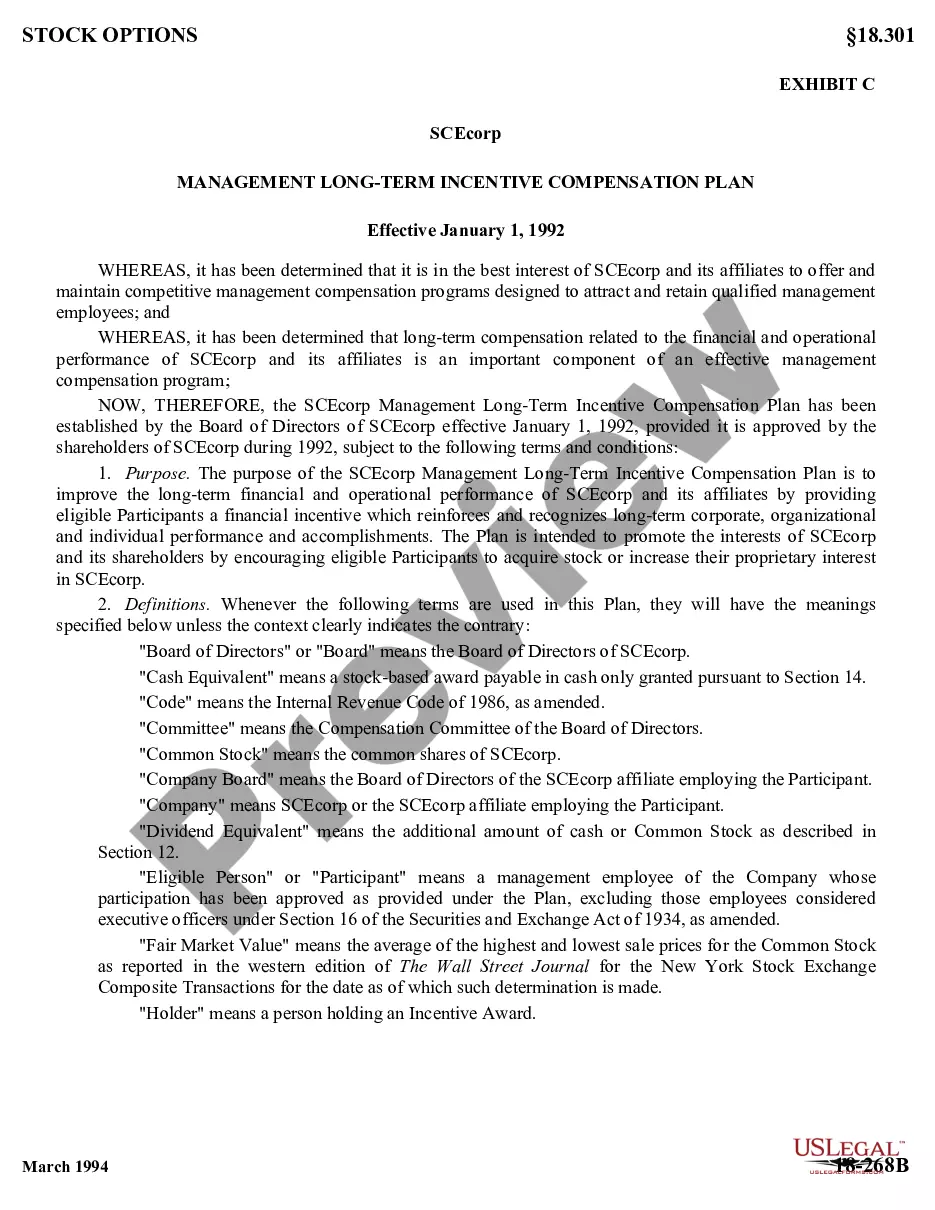
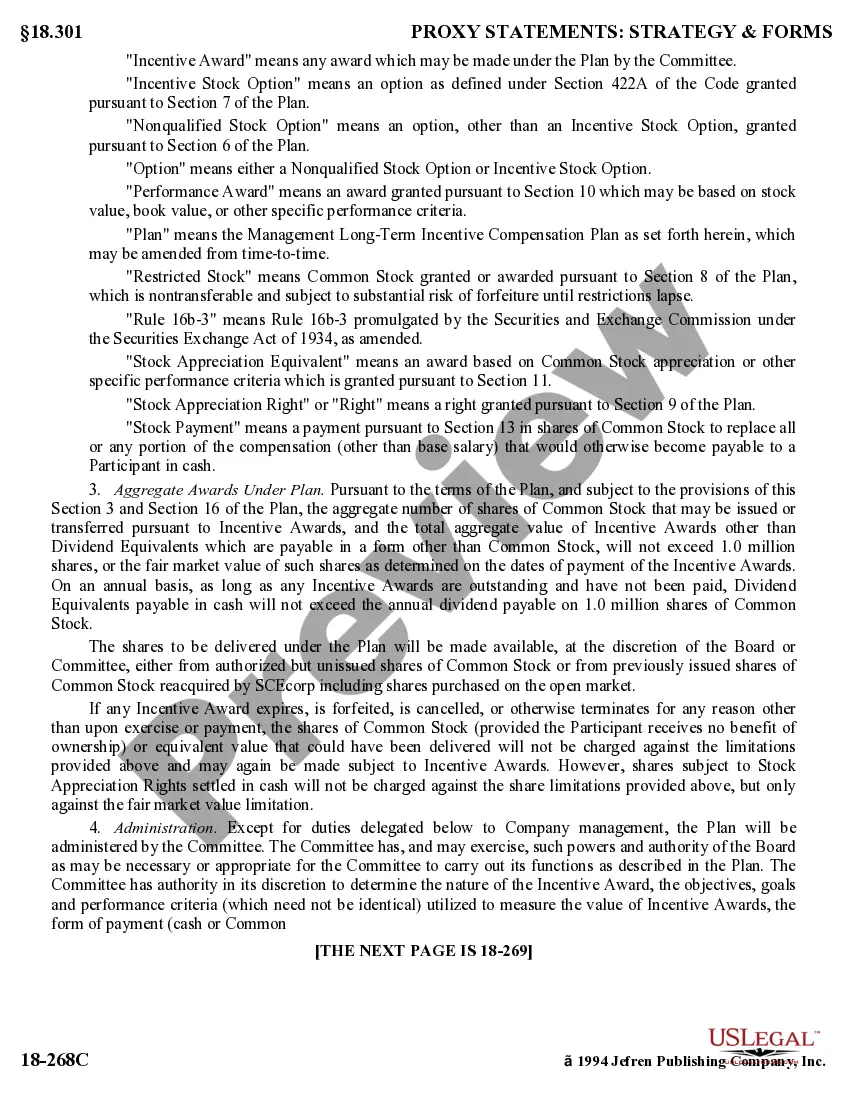
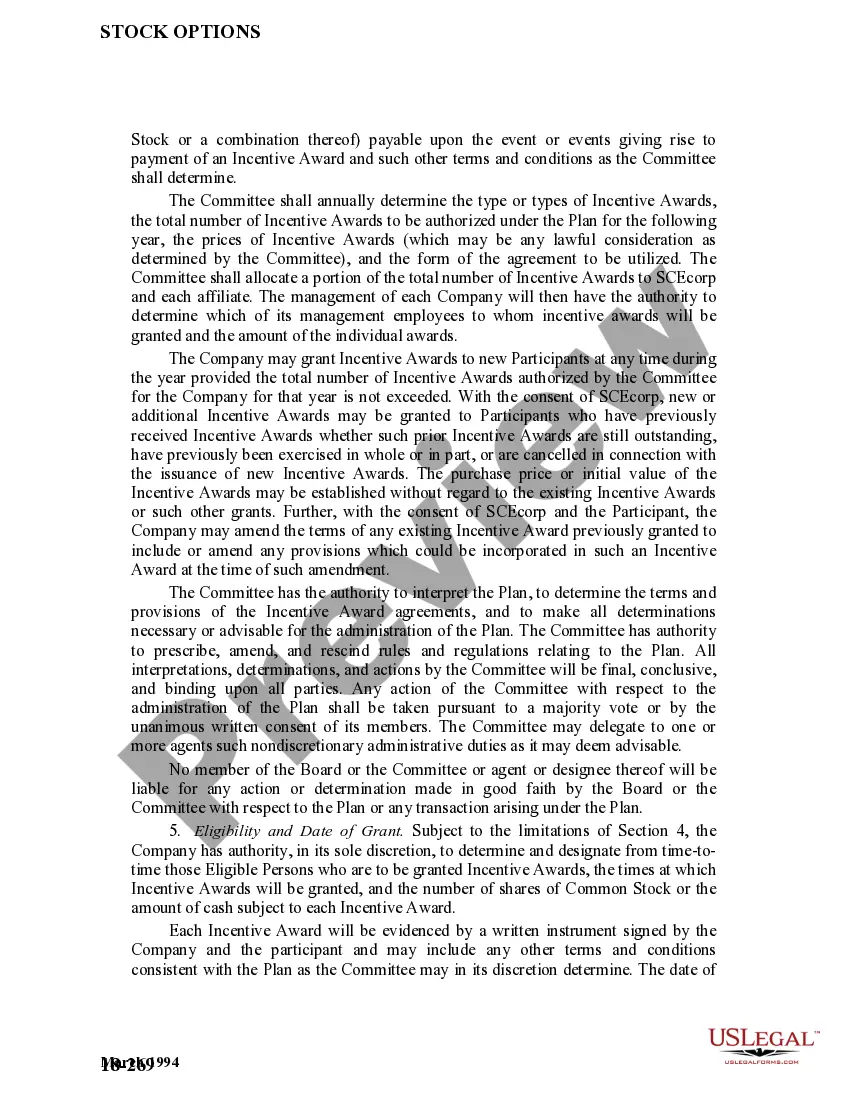
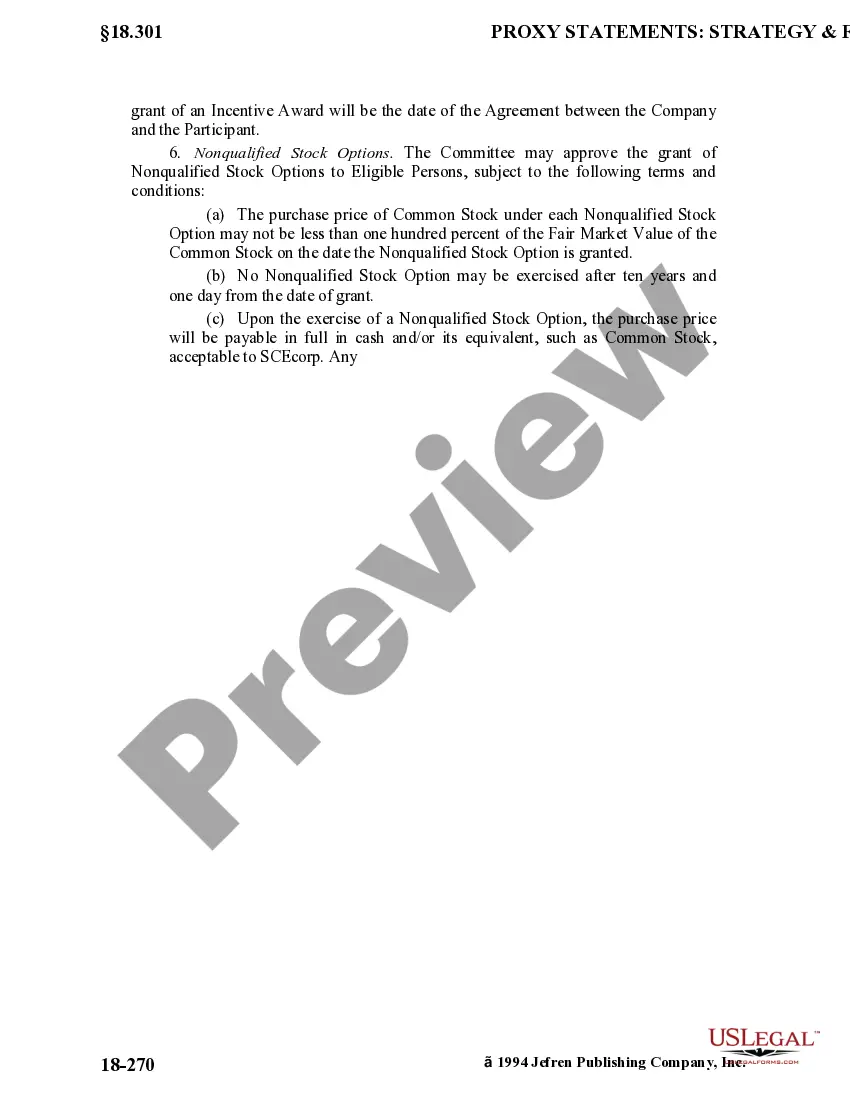
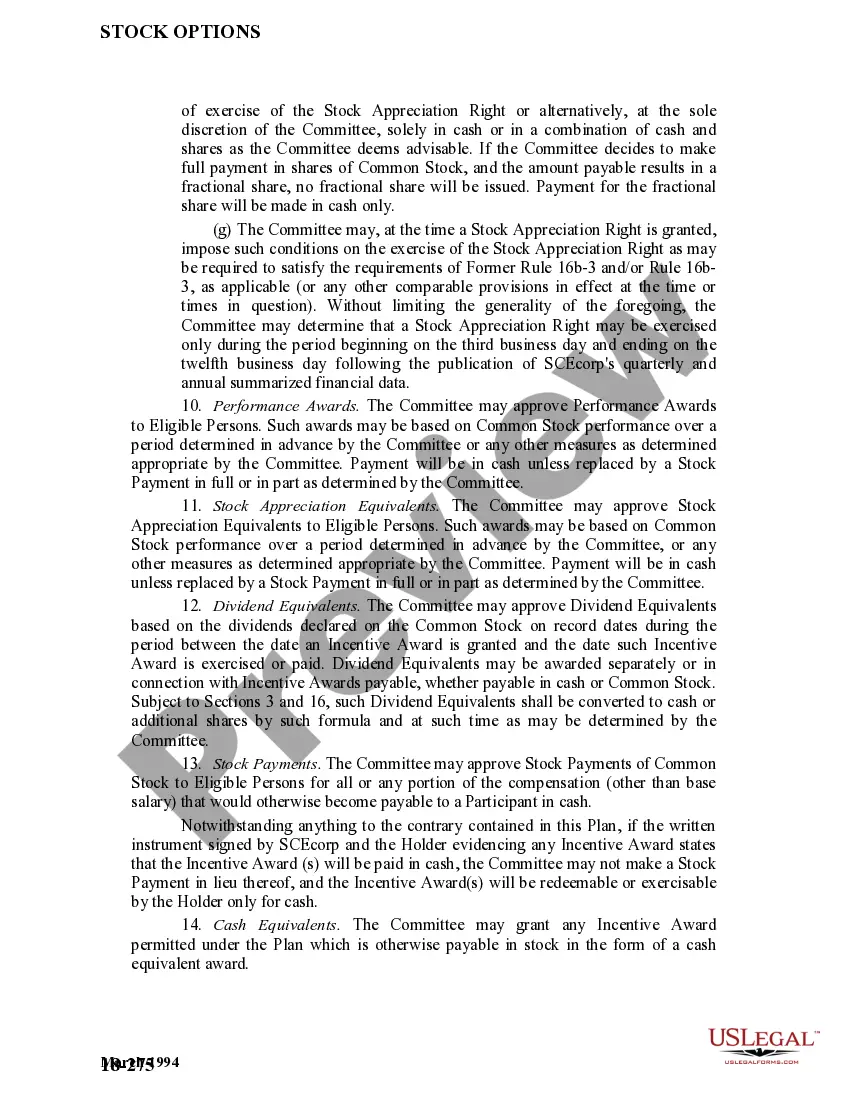
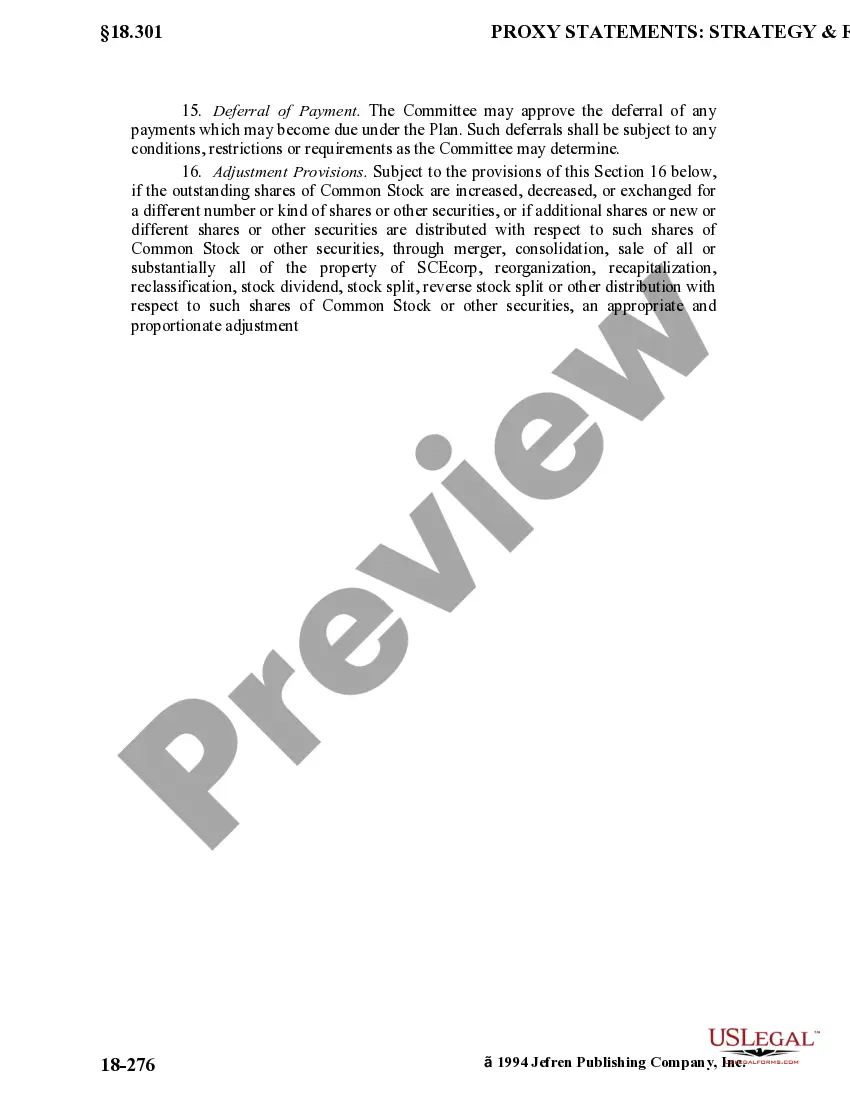
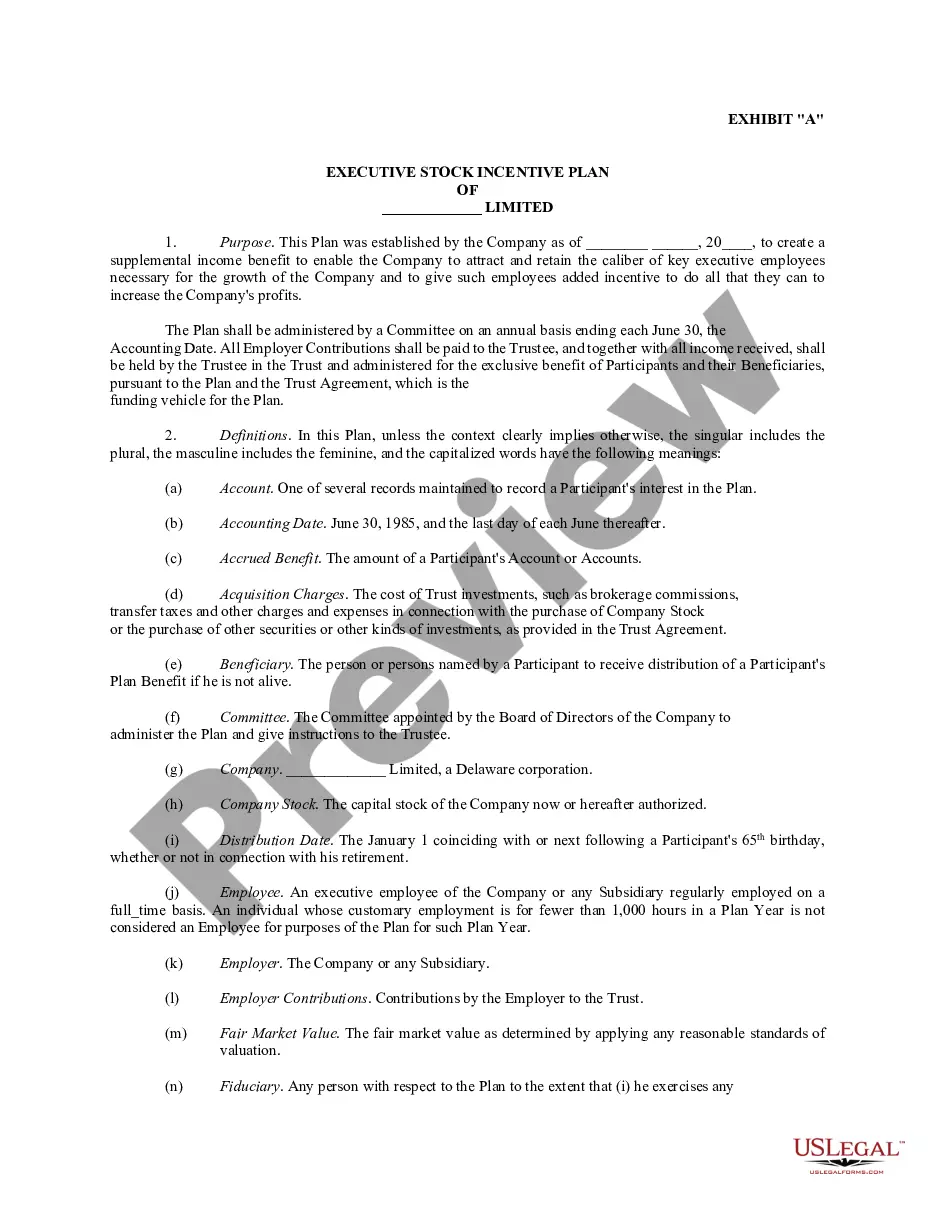
How to fill out Management Long Term Incentive Compensation Plan Of Of SCEcorp?
- If you are a returning user, simply log in to your account and download your desired form template by clicking the Download button. Check that your subscription is currently active; if not, renew it according to your plan.
- For first-time users, start by reviewing the Preview mode and form description of the legal templates available. Ensure the selected form aligns with your specific needs and local jurisdiction requirements.
- If the form doesn't match your needs, utilize the search feature at the top to explore other templates that might suit your situation better. Move forward only when you find the right document.
- Proceed to purchase your selected document by clicking the Buy Now button. Choose a suitable subscription plan and be ready to create an account for full access to the library resources.
- Finalize your purchase by entering your payment information using a credit card or your PayPal account.
- Once your transaction is complete, download your form directly to your device. You can also find it later in the My Forms section of your profile.
By following these steps, you can leverage US Legal Forms' robust library to integrate a strategic compensation plan into your talent management strategy.
Get started today to ensure you have the right legal documents at your fingertips!
Form popularity
FAQ
To align your employee compensation and talent management strategies, start by ensuring that your compensation structures reflect your organizational values and goals. Develop a strategic compensation plan for talent management that links performance with rewards, encouraging employees to strive for excellence. Additionally, regularly review and adjust your strategies based on employee feedback and market trends to sustain alignment and engagement.
Writing a compensation plan involves several key steps. First, conduct market research to understand competitive salary benchmarks for relevant roles in your industry. Next, outline the components of your compensation plan, including base salary, bonuses, and benefits, while ensuring it supports your strategic compensation plan for talent management. Lastly, clearly communicate the plan to your team to promote transparency and motivation.
To plan a strategic talent management strategy, start by clearly defining your organizational goals. Align your talent management processes with these goals by assessing current workforce capabilities. Next, implement a strategic compensation plan for talent management to attract and retain top talent. Finally, regularly evaluate and adjust your strategy to ensure ongoing alignment with your business needs.
A talent management strategy typically includes workforce planning, employee development, and performance management systems. It should integrate recruitment processes and methods for evaluating employee performance. Additionally, a strategic compensation plan for talent management is critical in ensuring that the entire strategy supports your organizational goals and drives employee motivation and satisfaction.
The six B's of talent management are Brand, Buy, Build, Bind, Bridge, and Balance. Each of these elements represents a key activity in managing talent effectively. For instance, ‘Brand’ focuses on how your organization attracts talent, while ‘Bind’ emphasizes retention strategies. A strategic compensation plan for talent management is crucial in maintaining that balance across all six B's.
The five steps of talent management include planning, recruiting, developing, retaining, and transitioning talent. Start by identifying your organization's talent needs and creating a recruitment strategy that fits those needs. Once hired, focus on employee development to enhance skills, and implement retention strategies that keep top talent engaged, all supported by a strategic compensation plan for talent management.
Yes, compensation is an essential element of talent management. It influences how you attract, retain, and motivate employees within your organization. A well-structured strategic compensation plan for talent management helps ensure that your employees feel valued and recognized for their contributions, promoting overall business success.
The three C's of talent management are Competence, Commitment, and Contribution. Competence involves ensuring that employees have the skills necessary for their roles. Commitment refers to fostering engagement and loyalty within the workforce. Contribution emphasizes recognizing and rewarding employee efforts, which ties closely to a strategic compensation plan for talent management.
Planning a strategic talent management strategy involves analyzing current workforce capabilities and identifying future needs. Set clear objectives, consider employee development opportunities, and ensure alignment with your overall business strategy. Integrating a strategic compensation plan for talent management within this process allows for a comprehensive approach to support both employee growth and business success.
An effective compensatory strategy might include a combination of base salary, commissions, and benefits tailored to each role. This multifaceted approach can motivate employees, attract top talent, and reduce turnover rates. Implementing such a strategy within your strategic compensation plan for talent management can drive overall organizational effectiveness.