Stock Options Plan
Description
Get your form ready online
Our built-in tools help you complete, sign, share, and store your documents in one place.
Make edits, fill in missing information, and update formatting in US Legal Forms—just like you would in MS Word.
Download a copy, print it, send it by email, or mail it via USPS—whatever works best for your next step.
Sign and collect signatures with our SignNow integration. Send to multiple recipients, set reminders, and more. Go Premium to unlock E-Sign.
If this form requires notarization, complete it online through a secure video call—no need to meet a notary in person or wait for an appointment.
We protect your documents and personal data by following strict security and privacy standards.

Make edits, fill in missing information, and update formatting in US Legal Forms—just like you would in MS Word.

Download a copy, print it, send it by email, or mail it via USPS—whatever works best for your next step.

Sign and collect signatures with our SignNow integration. Send to multiple recipients, set reminders, and more. Go Premium to unlock E-Sign.

If this form requires notarization, complete it online through a secure video call—no need to meet a notary in person or wait for an appointment.

We protect your documents and personal data by following strict security and privacy standards.
Looking for another form?



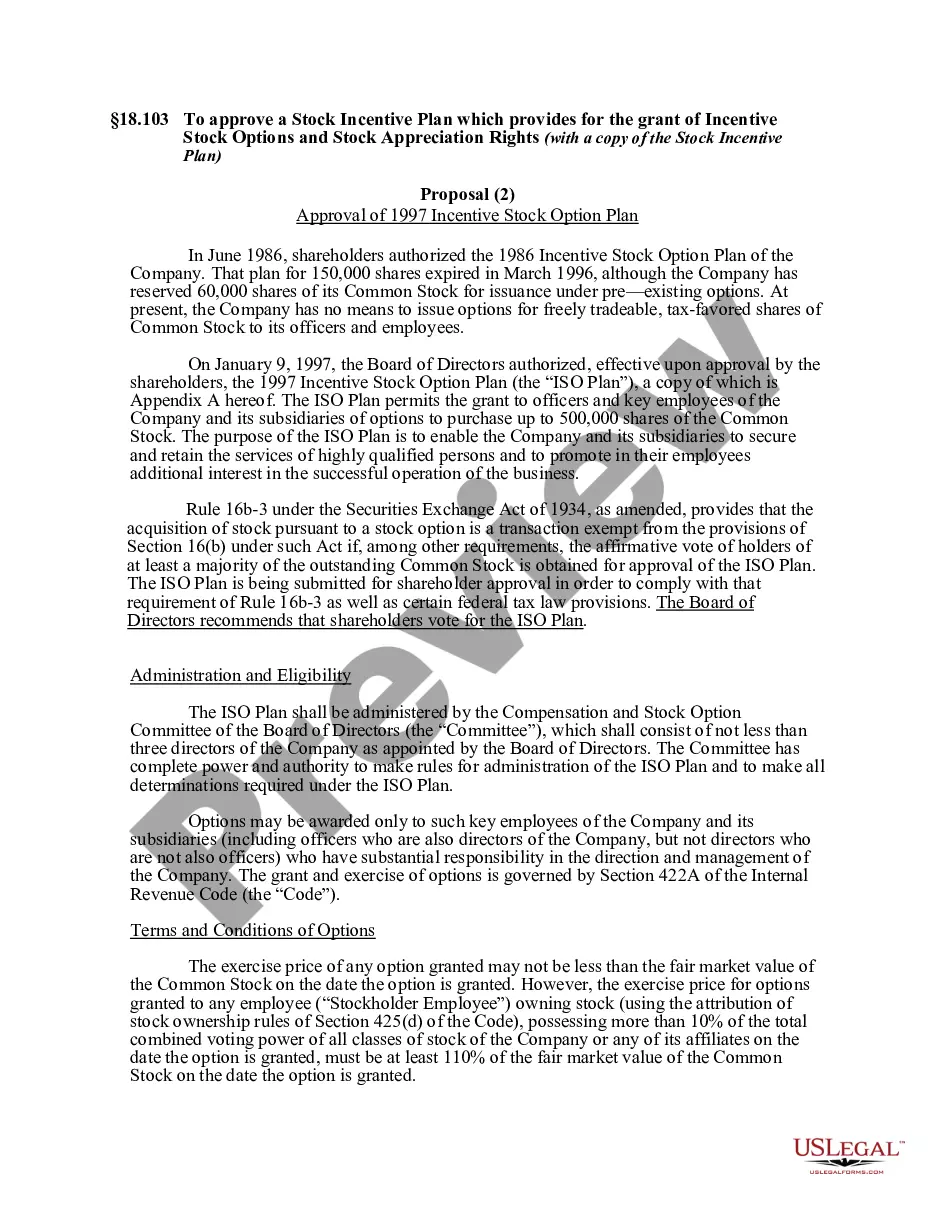
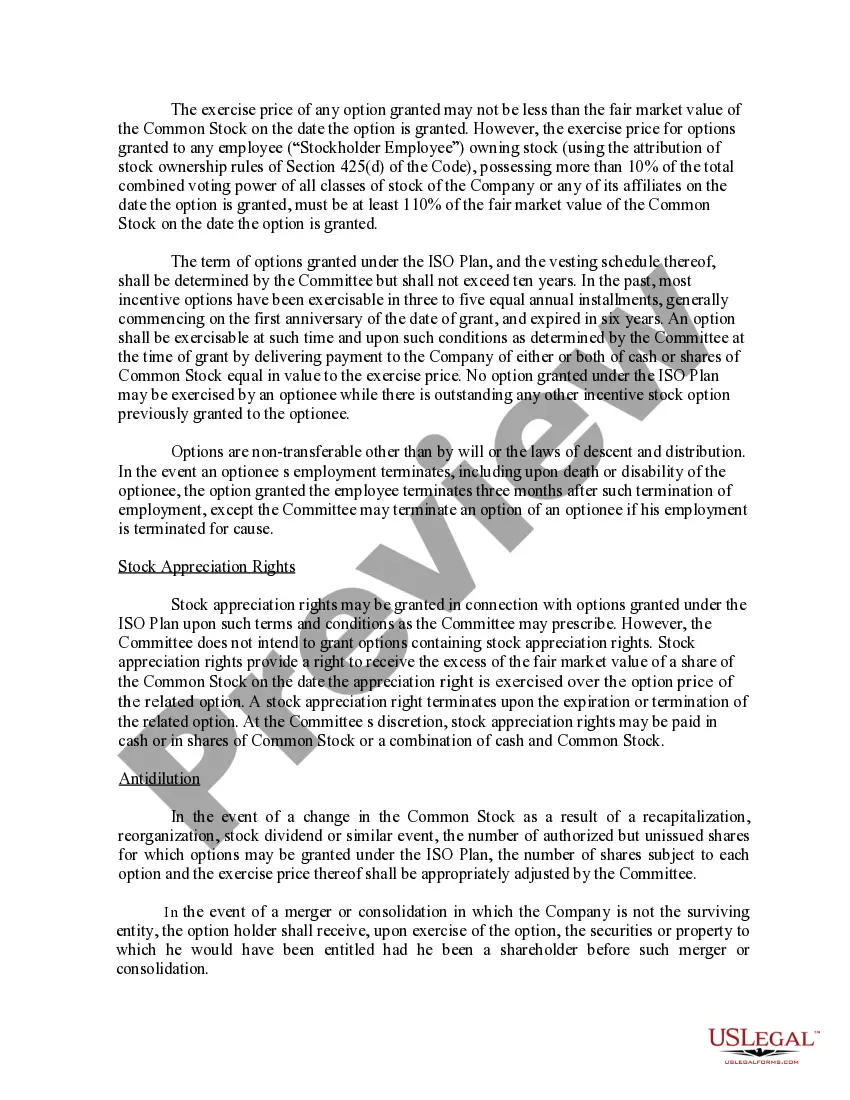
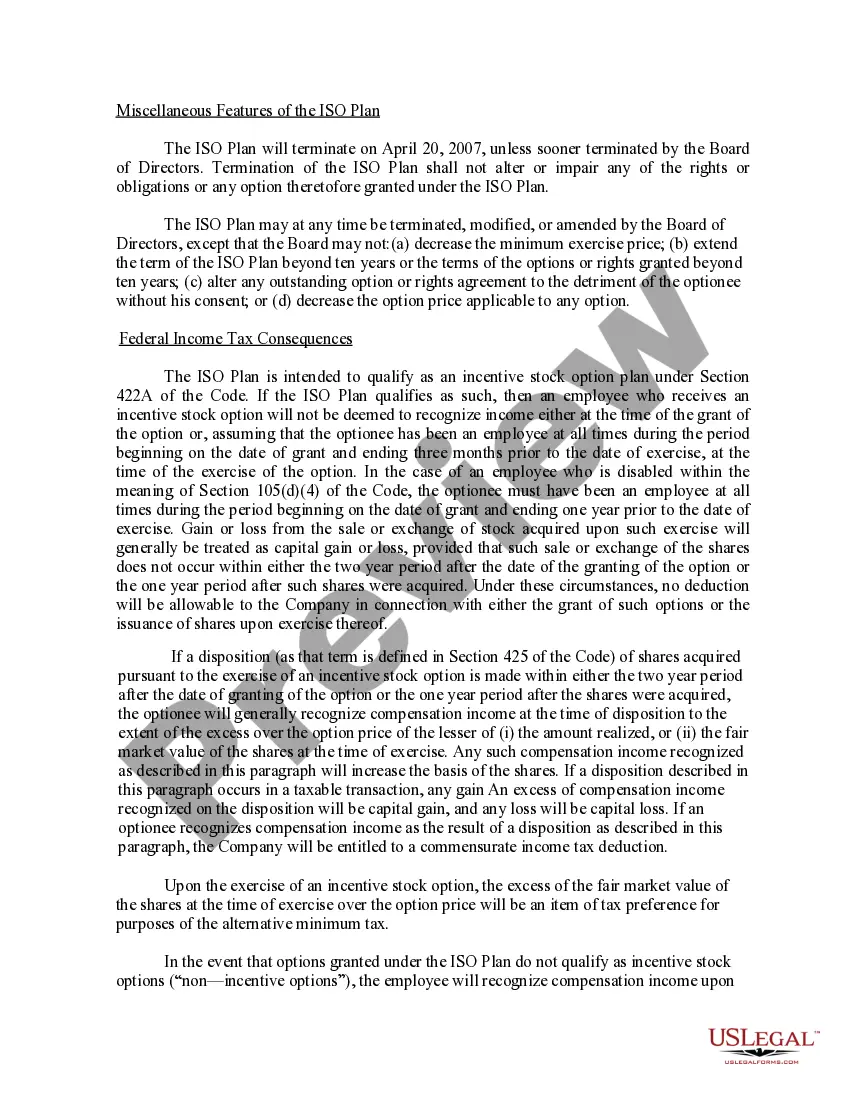
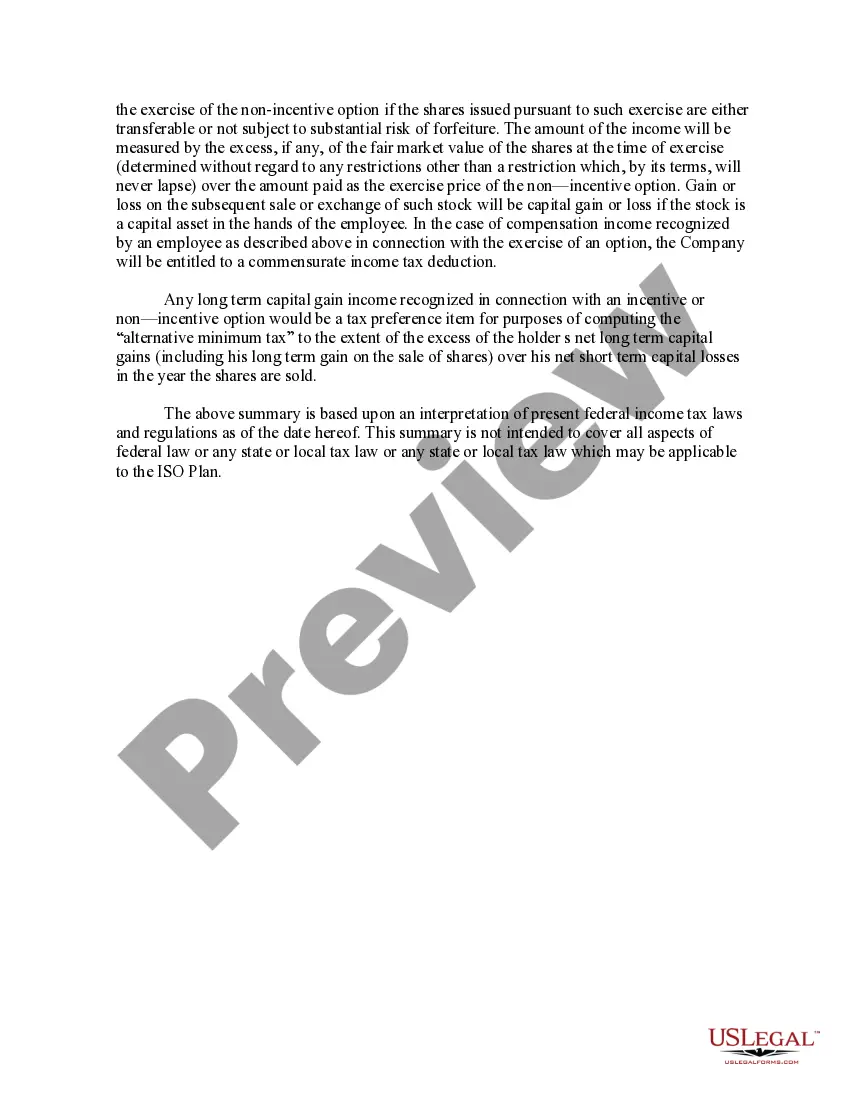
How to fill out Approval Of Incentive Stock Option Plan?
- If you already have an account, log in and ensure your subscription is active. Download the required form using the Download button.
- In case you haven’t used US Legal Forms before, start by reviewing the form preview and description to ensure it suits your needs and complies with local regulations.
- If you need other templates, utilize the Search functionality to find the appropriate ones. Make sure they align with your requirements.
- Once you find the right document, click on the Buy Now button and select a subscription plan that works for you. Registration is necessary for accessing the library.
- Complete your purchase by entering your credit card details or logging into PayPal to process your subscription payment.
- After payment, download your document and save it on your device. You can also access it anytime from the My Forms section of your profile.
In conclusion, using US Legal Forms can simplify the process of obtaining a stock options plan and other legal documents. With its vast library and premium support, you can ensure that your documentation is accurate and legally compliant. Don't hesitate; explore the options today!
Form popularity
FAQ
The issuance of a 1099 for stock options depends on how you receive the income from those options. If you sell your shares acquired through stock options, the brokerage typically issues a 1099-B to report your gains. However, it’s crucial to distinguish between exercising stock options and selling the shares, as each may have different tax reporting requirements. US Legal Forms can provide templates to help you understand your reporting needs.
The $100,000 rule refers to the limit on the value of stock options that can qualify for favorable tax treatment in a given year. Specifically, it means that options granted in a year that exceed $100,000 may lose their tax-advantaged status. It’s essential to consider this rule while designing your stock options plan to maximize tax benefits.
Setting up a stock options plan involves several steps, starting with drafting the plan document that outlines all critical details, such as eligibility, terms of options, and the exercise process. Consult legal and financial advisors to ensure the plan complies with regulations. Utilizing resources from US Legal Forms can simplify documentation and provide peace of mind.
Deciding if it's worth buying stock options largely depends on your investment strategy and risk tolerance. A stock options plan can be appealing if you believe in the company's future growth and are prepared to make an informed decision. However, you should weigh the potential rewards against the inherent risks. Consider leveraging tools from US Legal Forms to evaluate your options and make informed choices.
Several downsides exist with a stock options plan that you should keep in mind. If the company's stock does not perform as expected, your options might become worthless. Additionally, stock options can complicate your financial planning, leading to tax implications that you need to manage. Consulting with experts and utilizing resources from US Legal Forms can guide you through these challenges effectively.
Whether a stock options plan is a good idea depends on your personal financial goals and the company's potential for growth. Stock options can provide an opportunity for significant returns if the company's stock performs well. However, they also involve risks and uncertainties, which require careful consideration. Using a reputable platform like US Legal Forms can help you understand the implications of a stock options plan.
To receive stock options, you usually need to be an employee of a company offering a stock options plan as part of your compensation. Companies may grant options based on various factors such as job position or performance metrics. It's essential to understand the terms associated with these options, including expiration dates and vesting schedules. If you are unsure about receiving stock options or want to formalize the process, our US Legal Forms can provide essential templates and documents.