Stock Option Plan
Description
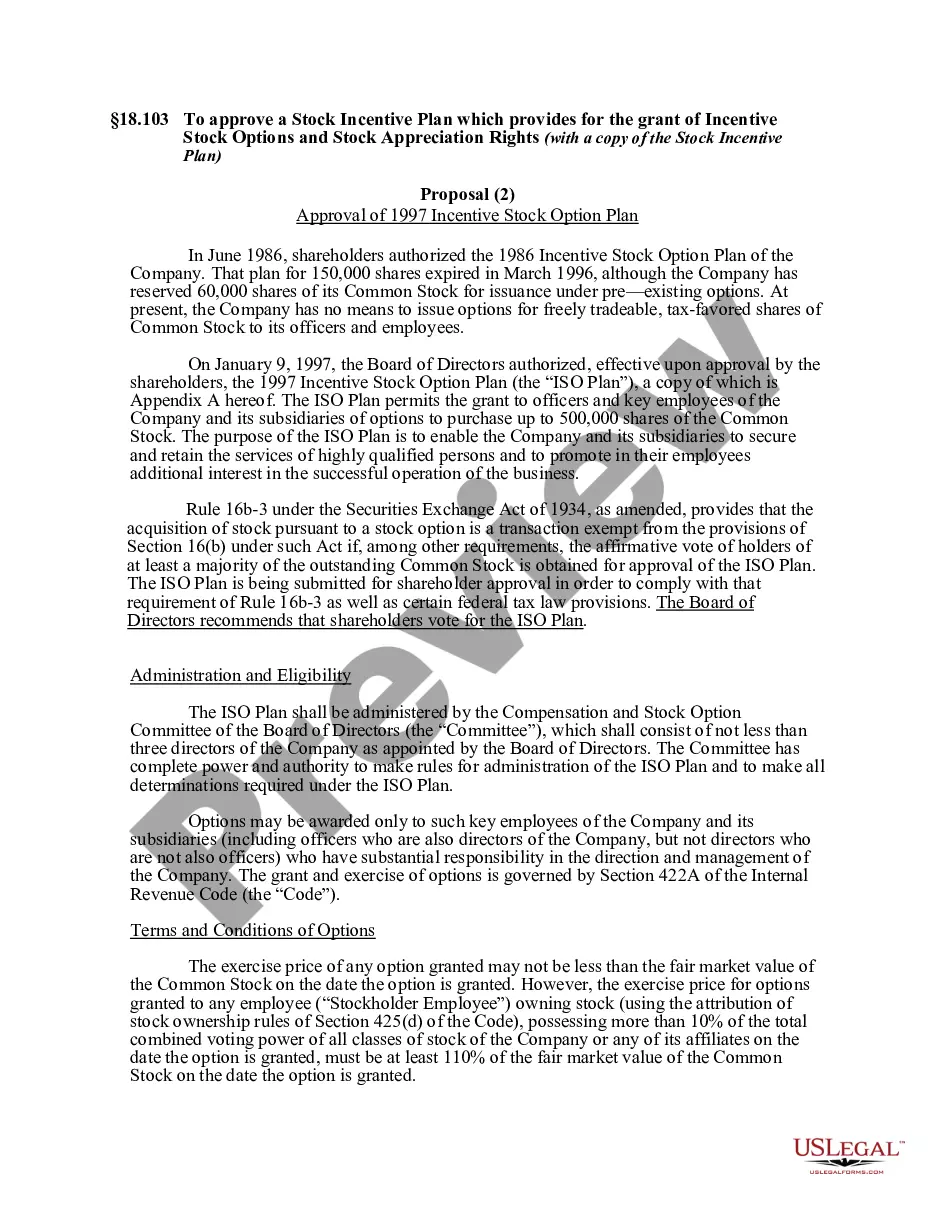
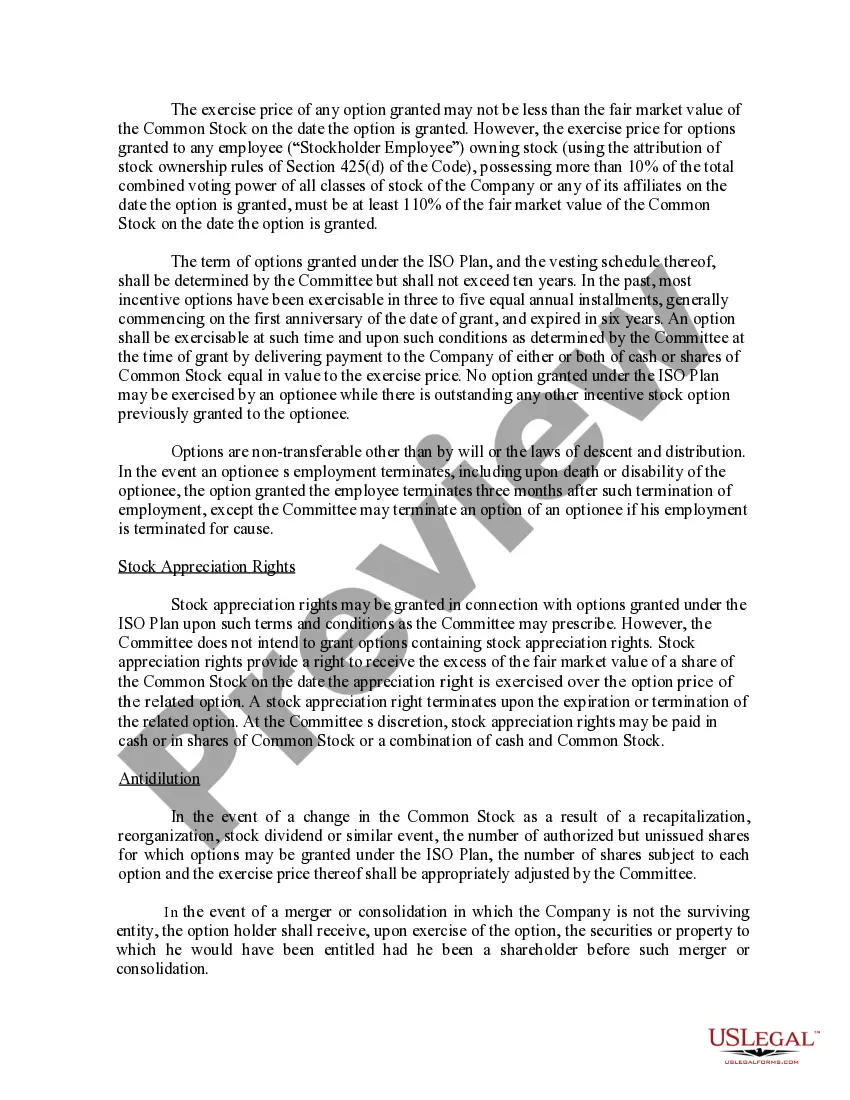
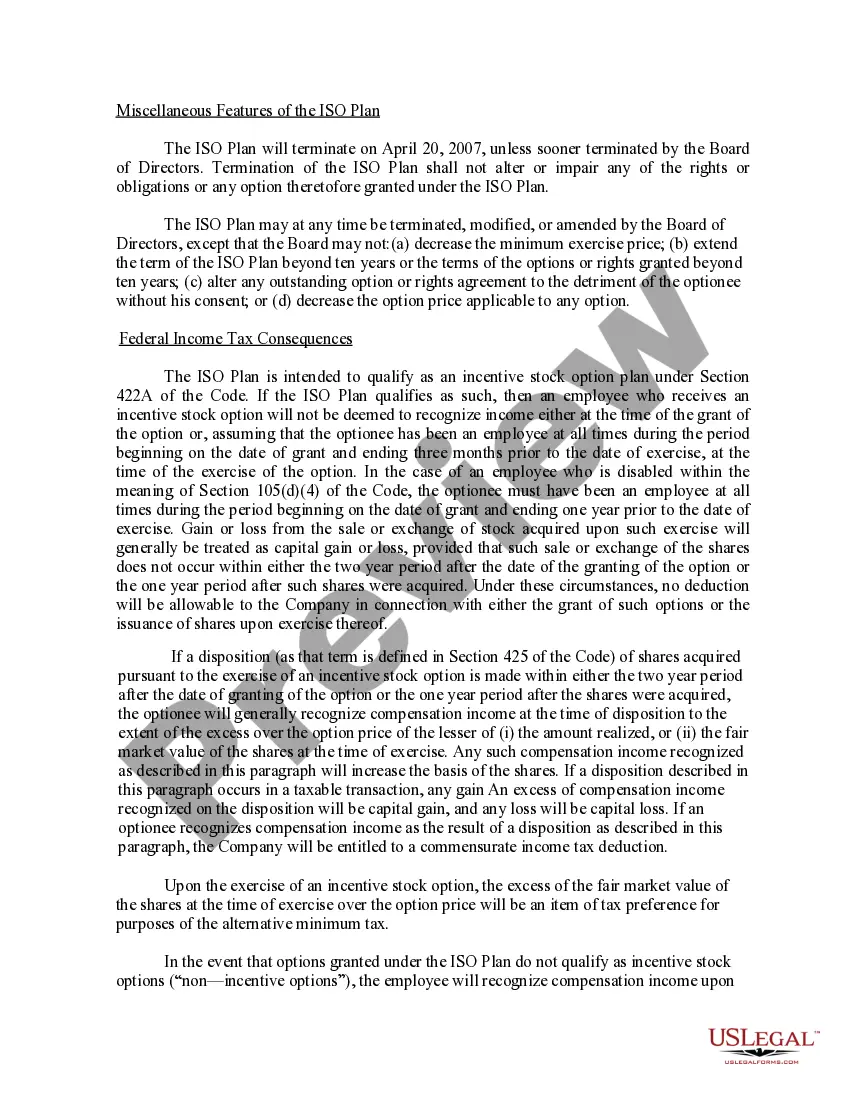
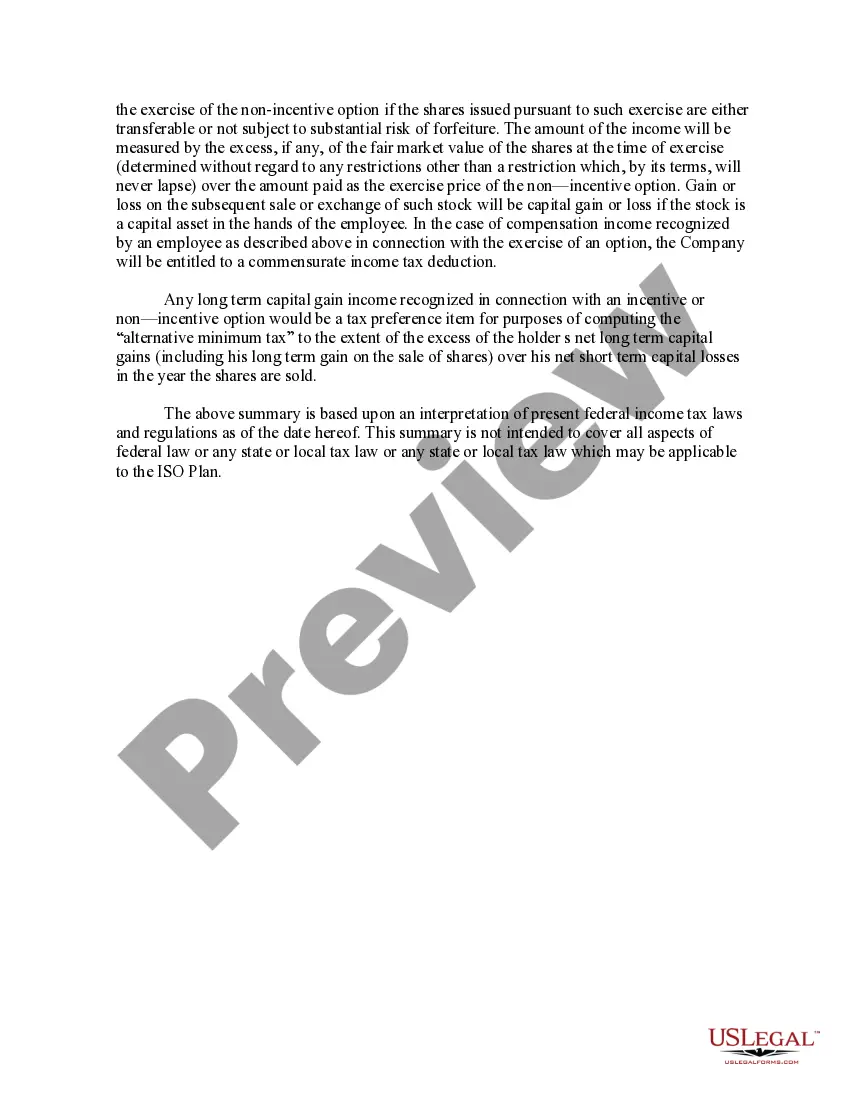
Get your form ready online
Our built-in tools help you complete, sign, share, and store your documents in one place.
Make edits, fill in missing information, and update formatting in US Legal Forms—just like you would in MS Word.
Download a copy, print it, send it by email, or mail it via USPS—whatever works best for your next step.
Sign and collect signatures with our SignNow integration. Send to multiple recipients, set reminders, and more. Go Premium to unlock E-Sign.
If this form requires notarization, complete it online through a secure video call—no need to meet a notary in person or wait for an appointment.
We protect your documents and personal data by following strict security and privacy standards.

Make edits, fill in missing information, and update formatting in US Legal Forms—just like you would in MS Word.

Download a copy, print it, send it by email, or mail it via USPS—whatever works best for your next step.

Sign and collect signatures with our SignNow integration. Send to multiple recipients, set reminders, and more. Go Premium to unlock E-Sign.

If this form requires notarization, complete it online through a secure video call—no need to meet a notary in person or wait for an appointment.

We protect your documents and personal data by following strict security and privacy standards.
Looking for another form?
How to fill out Approval Of Incentive Stock Option Plan?
- If you're a returning user, log into your account, ensuring your subscription is current, and click 'Download' to easily access the required template.
- For first-time users, start by checking the Preview mode and the detailed description of the forms available to ensure they meet your local jurisdiction's requirements.
- If needed, utilize the Search tab to find alternative templates that match your requirements precisely. Once you find the right one, proceed to the next step.
- Purchase the desired document by clicking the 'Buy Now' button. Choose a subscription plan that fits your needs, and register for an account to access the full library.
- Complete your purchase by providing payment information through your credit card or PayPal.
- Finally, download your form and save it to your device. You can revisit it at any time via the My Forms section in your profile.
With US Legal Forms, you gain access to a vast collection of over 85,000 legal documents, ensuring you can find exactly what you need. Additional resources, including expert assistance for form completion, are available for accurate document preparation.
Empower your business with a comprehensive stock option plan today! Join US Legal Forms and simplify your legal document management.
Form popularity
FAQ
While stock option plans offer valuable incentives, they also have disadvantages. Employees may experience uncertainty regarding the stock's future value, and if not structured properly, the plan could lead to dilution of shares. Additionally, companies may face tax complexities and accounting challenges, making thorough planning essential.
Yes, an LLC can implement a stock option plan, although the mechanics might differ from a corporation. In this scenario, the LLC may offer membership units instead of traditional stock options. It's important for LLCs to consult legal and financial advisors to structure the plan effectively and ensure compliance with regulations.
In most cases, stock options do not require a 1099 form at the time of grant. However, once employees exercise their stock options and sell the shares, they may need to report the income on their taxes. Proper documentation and understanding of tax implications are essential, which is where resources like USLegalForms can provide valuable guidance.
The rule of 100,000 typically refers to the cap on the value of incentive stock options that can be exercised in a single year without tax consequences. This designation is crucial for employees considering their stock option plan, as exceeding this limit can alter tax benefits. By understanding this rule, employees can effectively strategize their option exercises. As a result, maintaining awareness of this regulation is key to optimizing benefits from stock options.
The 100,000 incentive stock option limit refers to the maximum fair market value of stock options that can be granted to an employee, which may vest in a calendar year. If the value exceeds this limit, the excess options can lose their incentive tax status. This limit is vital for future financial planning under any stock option plan. Therefore, understanding how this limit works helps employers design effective compensation strategies.
The $100,000 rule for stock options indicates the maximum amount of incentive stock options that can vest for an employee each year without losing favorable tax treatment. This rule is critical for ensuring compliance with IRS regulations. Employees and employers should work together to monitor the exercising of these options within the guidelines of their stock option plan. Staying informed about this limit helps maximize options benefits while minimizing tax implications.
The $100,000 rule under code 422 D pertains to the limit on the value of incentive stock options that can become exercisable in a given year. This rule allows employees to benefit from tax advantages on stock options, but only to a threshold of $100,000. Any amount exceeding this limit may lose its favorable tax treatment, thus complicating the employee's stock option plan. It's essential to understand these regulations when setting up your stock option plan.