Exempt Properties For Epc
Description
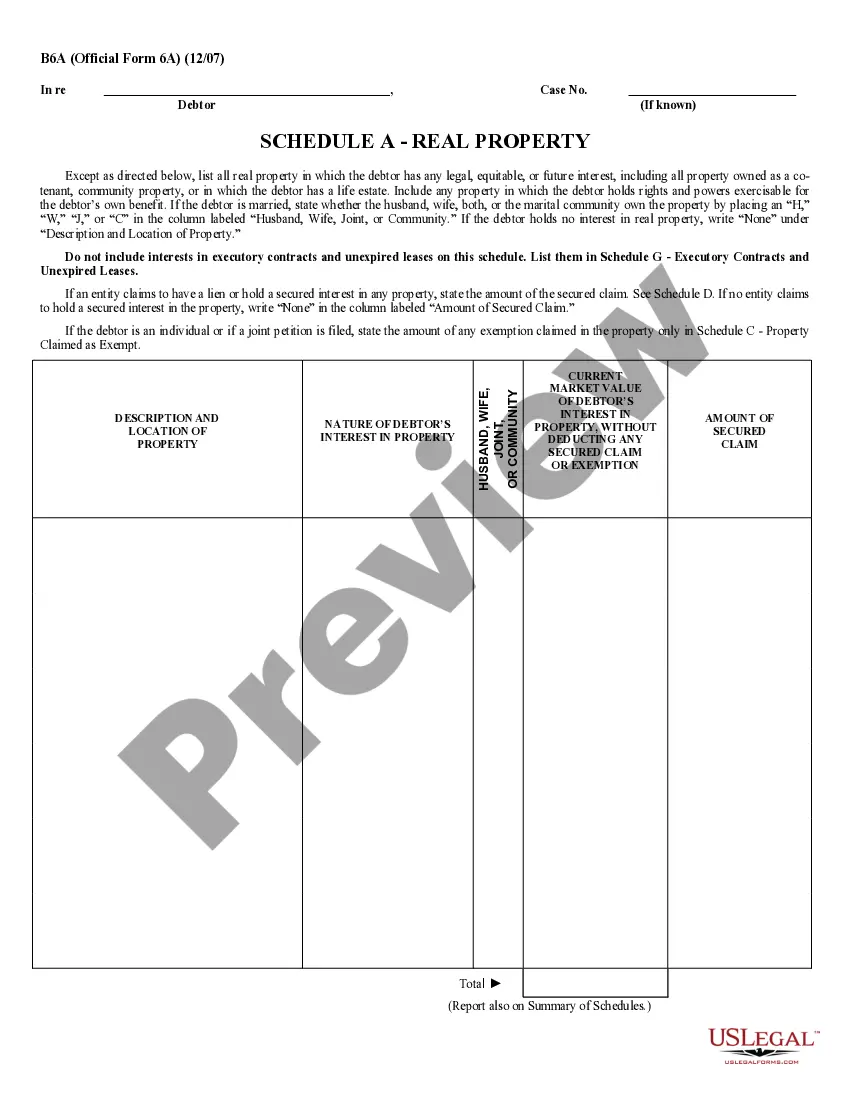


How to fill out Property Claimed As Exempt - Schedule C - Form 6C - Post 2005?
Handling legal documents can be exasperating, even for experienced professionals.
When you need to find Exempt Properties For Epc and lack the time to search for the right and current version, the process can be taxing.
Utilize sophisticated tools to complete and manage your Exempt Properties For Epc.
Access a wealth of articles, guides, and reference materials pertinent to your concerns and requirements.
- Conserve time and effort in locating the documents you require, and use US Legal Forms' advanced search and Preview feature to identify Exempt Properties For Epc and obtain it.
- If you possess a monthly subscription, Log In to your US Legal Forms account, search for the form, and acquire it.
- Check the My documents section to review the documents you have previously saved and manage your files as desired.
- For newcomers to US Legal Forms, create a complimentary account and gain unlimited access to all the resources of the library.
- Following the retrieval of your desired form, take these steps.
- An extensive online form library can revolutionize the way anyone manages these issues effectively.
- US Legal Forms stands as a frontrunner in digital legal forms, providing over 85,000 state-specific legal documents accessible whenever needed.
- With US Legal Forms, you can efficiently handle your legal form requirements.
Form popularity
FAQ
Several exemptions apply to EPC requirements in Scotland. For instance, buildings that are listed as historical or those undergoing major renovation may qualify for exemptions. Additionally, temporary buildings and some types of agriculture-related properties often fall outside EPC mandates. To fully understand your options, reviewing the criteria for exempt properties for EPC is essential.
If you have an existing tenancy in Scotland, you must provide an EPC to your tenants upon renewal or before marketing the property. It's important to keep energy performance in mind, as this can influence tenant satisfaction. The rules also consider potential exemptions for EPC that could apply to specific types of properties. Always verify your obligations to stay compliant.
EPC calculations consider various factors, including the building's design, heating systems, and materials used. A qualified assessor evaluates these elements and assigns an energy efficiency rating. This rating ranges from A (most efficient) to G (least efficient). Understanding how these calculations work can help property owners improve their ratings and identify possible exempt properties for EPC.
Yes, if you offer a holiday let in Scotland, you are required to obtain an EPC. This applies regardless of the duration of the rental. Ensuring compliance with EPC regulations can enhance your property's appeal and market value. If you're unsure about eligibility for exempt properties for EPC, seek advice from professionals.
The new EPC rules in Scotland emphasize stricter energy efficiency standards for buildings. As of recent updates, properties must achieve a minimum energy rating to be legally habitable. This is crucial as it aligns with goals for reducing carbon emissions. Knowing the exemptions for EPC allows property owners to find alternatives if their property qualifies.
Yes, commercial properties in Scotland require an Energy Performance Certificate (EPC) when they are built, sold, or rented. This requirement is part of efforts to promote energy efficiency and sustainability. Understanding exempt properties for EPC can help business owners navigate regulations more effectively. For more guidance, consider using resources like USLegalForms.
A contract is a legal document. If both parties sign a letter of agreement, it qualifies as a contract. With no signatures or only one signature, a letter of agreement simply outlines the terms of an agreement, but neither party can enforce it in court.
When an individual goes to the supermarket to buy their groceries, they enter into a contract with the supermarket to make payment of money in exchange for food and drink. Employees enter into a contract with their employer to perform their work in exchange for a monthly or weekly salary.
There is no Maryland state law requiring an LLC to have an operating agreement. However, if you don't have one, your LLC will be governed by Maryland's default LLC statutes, and you may run into difficulty if you need to prove your ownership of the LLC or if you face a lawsuit.
A contract is an agreement between parties, creating mutual obligations that are enforceable by law. The basic elements required for the agreement to be a legally enforceable contract are: mutual assent, expressed by a valid offer and acceptance; adequate consideration; capacity; and legality.