Family Right
Description
Get your form ready online
Our built-in tools help you complete, sign, share, and store your documents in one place.
Make edits, fill in missing information, and update formatting in US Legal Forms—just like you would in MS Word.
Download a copy, print it, send it by email, or mail it via USPS—whatever works best for your next step.
Sign and collect signatures with our SignNow integration. Send to multiple recipients, set reminders, and more. Go Premium to unlock E-Sign.
If this form requires notarization, complete it online through a secure video call—no need to meet a notary in person or wait for an appointment.
We protect your documents and personal data by following strict security and privacy standards.

Make edits, fill in missing information, and update formatting in US Legal Forms—just like you would in MS Word.

Download a copy, print it, send it by email, or mail it via USPS—whatever works best for your next step.

Sign and collect signatures with our SignNow integration. Send to multiple recipients, set reminders, and more. Go Premium to unlock E-Sign.

If this form requires notarization, complete it online through a secure video call—no need to meet a notary in person or wait for an appointment.

We protect your documents and personal data by following strict security and privacy standards.
Looking for another form?



How to fill out Employee Rights Memo Under The Family And Medical Leave Act?
- Start by logging into your US Legal Forms account. If you’re a new user, you can create an account by visiting the signup page.
- Once logged in, browse the extensive library or use the search function to find the specific family right form you need.
- Check the form preview and description to ensure it meets your jurisdiction's requirements.
- If necessary, refine your search for a more suitable form until you find the one that best fits your needs.
- Select the desired document and click the 'Buy Now' button to choose a subscription plan that suits you.
- Complete the payment process by entering your credit card information or using PayPal.
- After your purchase, download the form to your device. You can always access it later in your 'My Forms' section.
By following these steps, you'll be equipped with the appropriate legal documents to safeguard your family rights. With US Legal Forms, you have the support and tools needed to navigate your legal matters confidently and efficiently.
Ready to take the next step? Visit US Legal Forms today and ensure your family rights are well protected!
Form popularity
FAQ
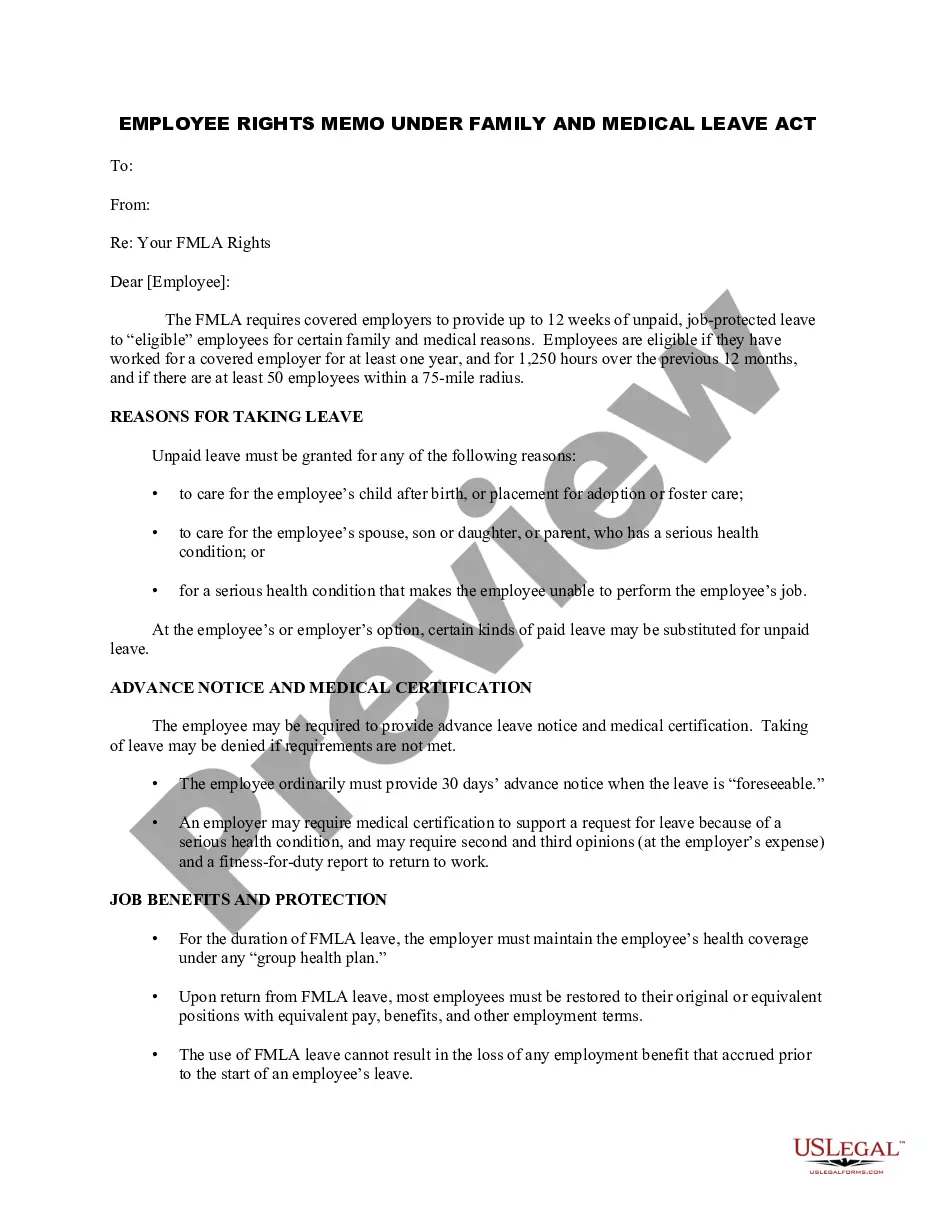
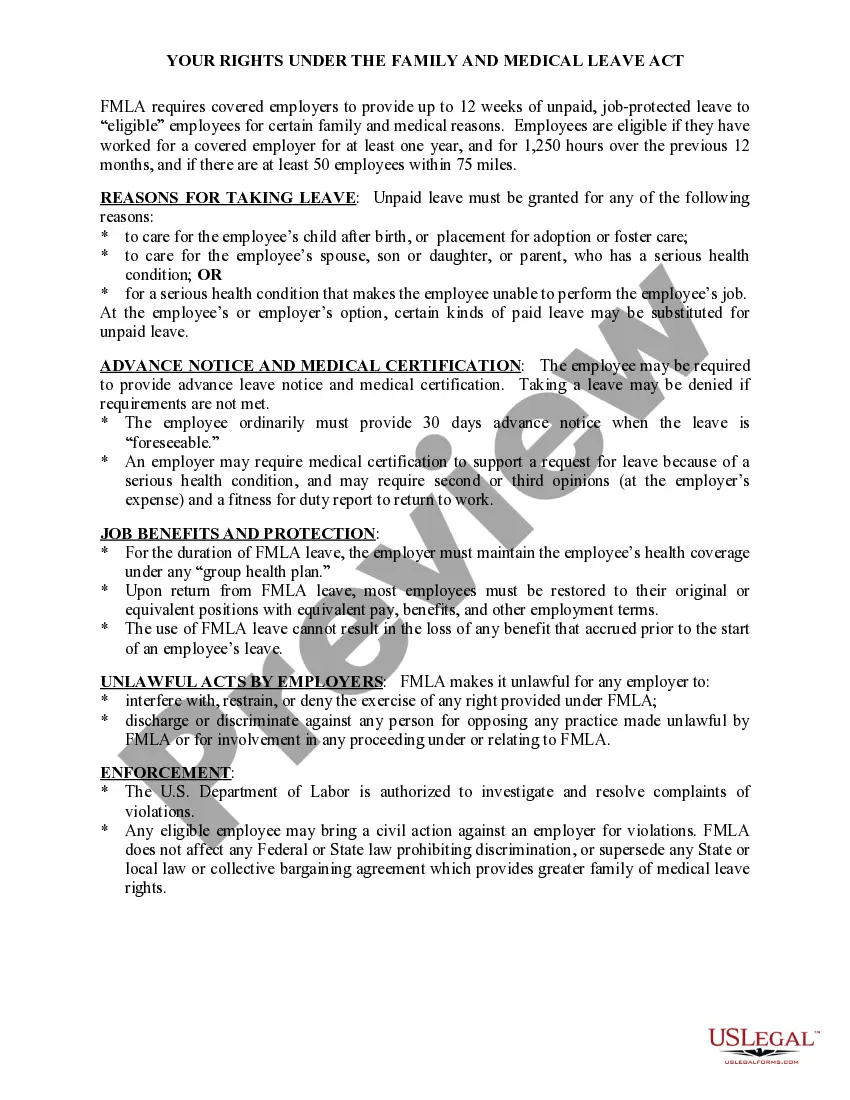
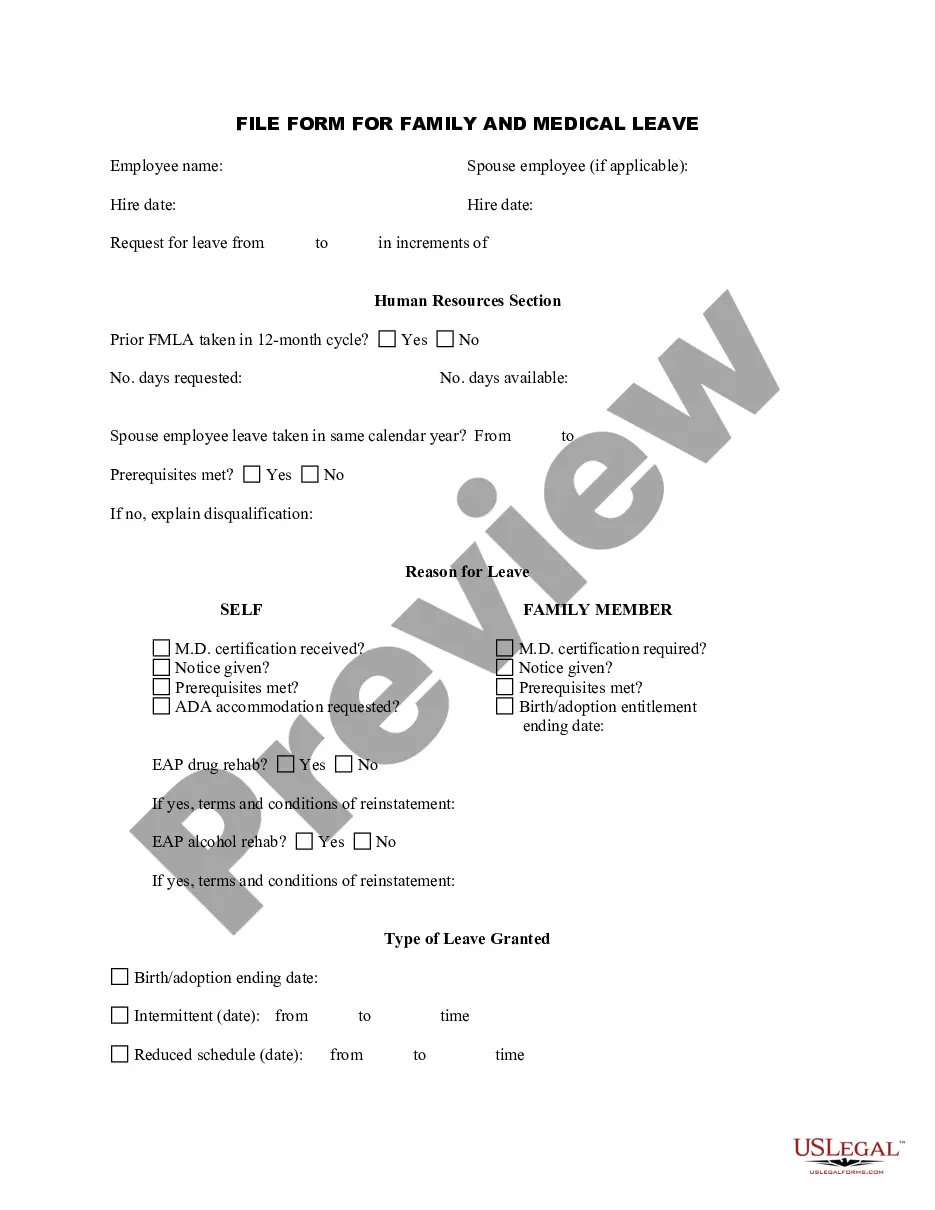
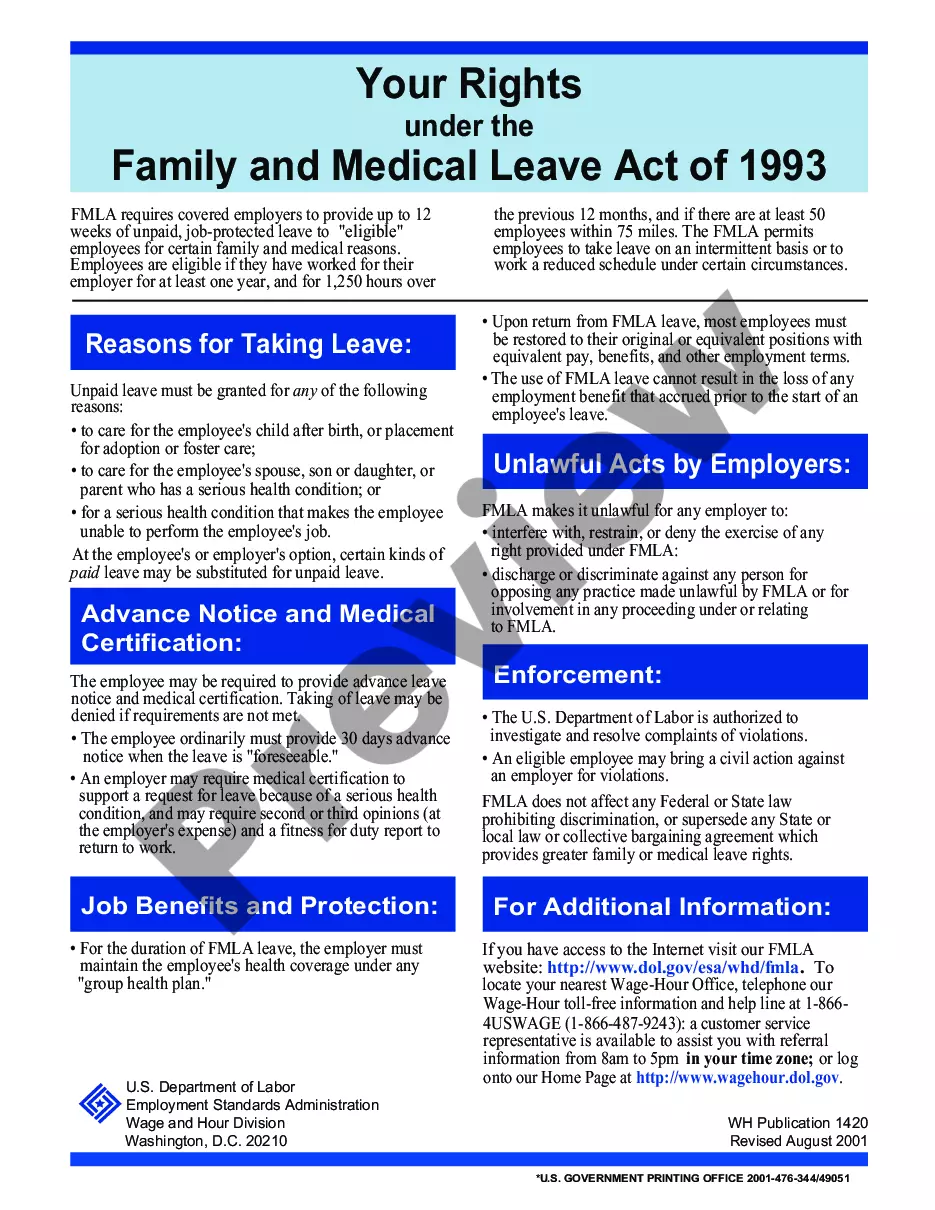
FMLA provides eligible employees with the right to take unpaid leave for specified family and medical reasons while ensuring job protection. Employees can take up to 12 weeks of leave within a 12-month period for personal or family health issues, or for the birth or adoption of a child. To navigate the complexities of FMLA effectively and protect your family rights, consider resources available on platforms like US Legal Forms.
Tennessee's family support program aims to assist families facing financial or emotional challenges. This program provides resources such as counseling, financial assistance, and parenting education. By utilizing available family support programs, you can strengthen your family's situation and uphold your family rights.
The Family and Medical Leave Act (FMLA) and the California Family Rights Act (CFRA) both provide job-protected leave for employees, but there are key differences. FMLA offers up to 12 weeks of unpaid leave for family and medical reasons, while CFRA also allows for bonding leave but has specific eligibility criteria. Knowing the distinctions between these acts helps you understand your family rights—particularly in the workplace.
Dealing with a missing family member can be emotionally taxing. It's important to reach out to law enforcement and report the missing person, as they can initiate a search. Additionally, you may consider utilizing resources such as support groups and community organizations that focus on family rights and assistance during such crises.
The Family Rights Act is legislation designed to protect and promote the rights of families, particularly focusing on child protection and welfare. This act ensures that family involvement is prioritized in decisions regarding child placements and foster care. Familiarizing yourself with the Family Rights Act can help you advocate effectively for your family's interests.
Family right refers to the legal rights and entitlements families have regarding their relationships and responsibilities. These rights encompass areas such as custody, guardianship, and financial support. Understanding family rights is essential for addressing issues that affect family dynamics and ensuring that each family member's needs are met.
Fixing family problems often starts with a willingness to listen and understand each other’s perspectives. Conflict resolution techniques, such as family meetings or mediations, can foster dialogue and encourage compromise. Platforms like US Legal Forms offer resources to help establish agreements that address family issues directly. Remember, pursuing harmony is a fundamental family right.
To stop letting your family hurt you, it’s vital to identify and communicate your needs clearly. Engaging in open dialogue about what behaviors are harmful can lead to positive changes. Additionally, seek support from friends, therapists, or online resources to help navigate your feelings. Your right to a healthy family life should always come first.
To prevent toxic family dynamics from affecting you, cultivate a strong sense of self and establish firm boundaries. Surround yourself with positive influences that reinforce your self-worth. When facing negativity, remind yourself that maintaining your mental health is a crucial family right. Practicing mindfulness can also shield you from harmful interactions.
Emotional detachment from family can be a healthy step in reclaiming your peace. Start by recognizing the negative patterns in your interactions and consciously choose to limit those engagements. Practicing self-care and focusing on supportive relationships can help you maintain emotional distance without guilt. Protecting your family rights to a harmonious life is important.