Harassment Sentence
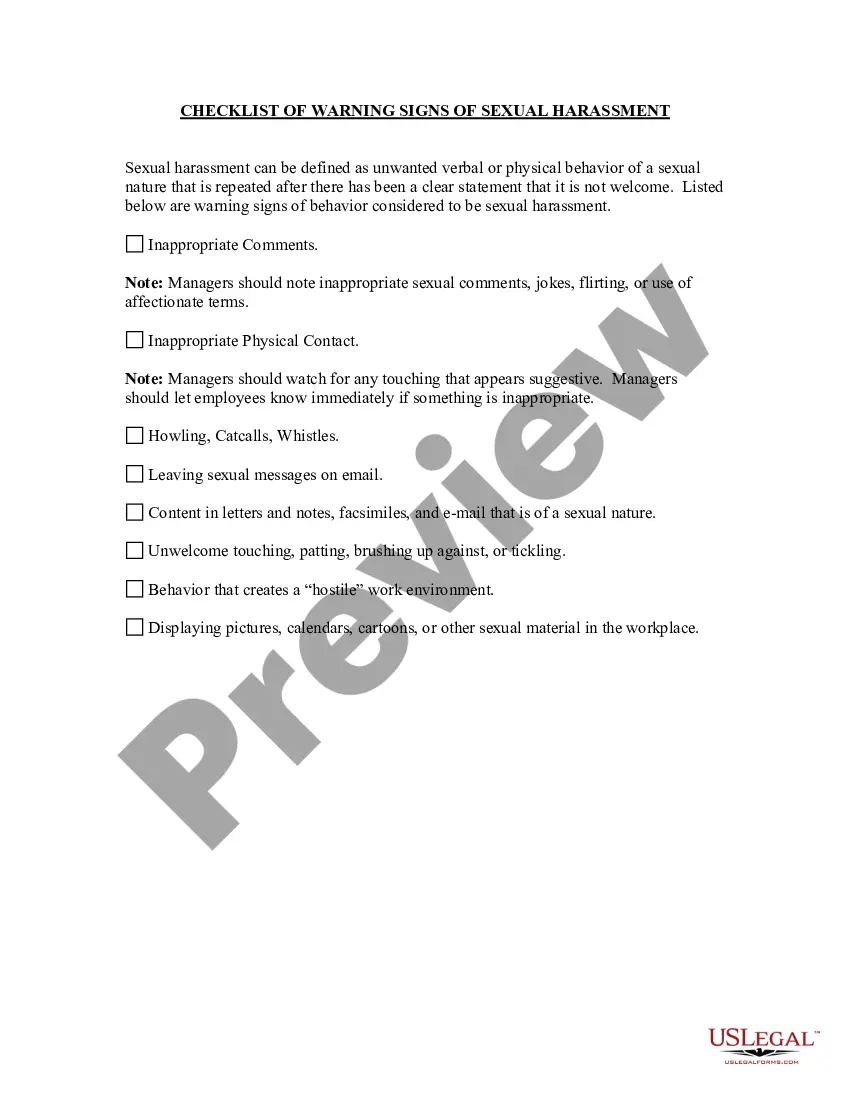
Description
Get your form ready online
Our built-in tools help you complete, sign, share, and store your documents in one place.
Make edits, fill in missing information, and update formatting in US Legal Forms—just like you would in MS Word.
Download a copy, print it, send it by email, or mail it via USPS—whatever works best for your next step.
Sign and collect signatures with our SignNow integration. Send to multiple recipients, set reminders, and more. Go Premium to unlock E-Sign.
If this form requires notarization, complete it online through a secure video call—no need to meet a notary in person or wait for an appointment.
We protect your documents and personal data by following strict security and privacy standards.

Make edits, fill in missing information, and update formatting in US Legal Forms—just like you would in MS Word.

Download a copy, print it, send it by email, or mail it via USPS—whatever works best for your next step.

Sign and collect signatures with our SignNow integration. Send to multiple recipients, set reminders, and more. Go Premium to unlock E-Sign.

If this form requires notarization, complete it online through a secure video call—no need to meet a notary in person or wait for an appointment.

We protect your documents and personal data by following strict security and privacy standards.
Looking for another form?






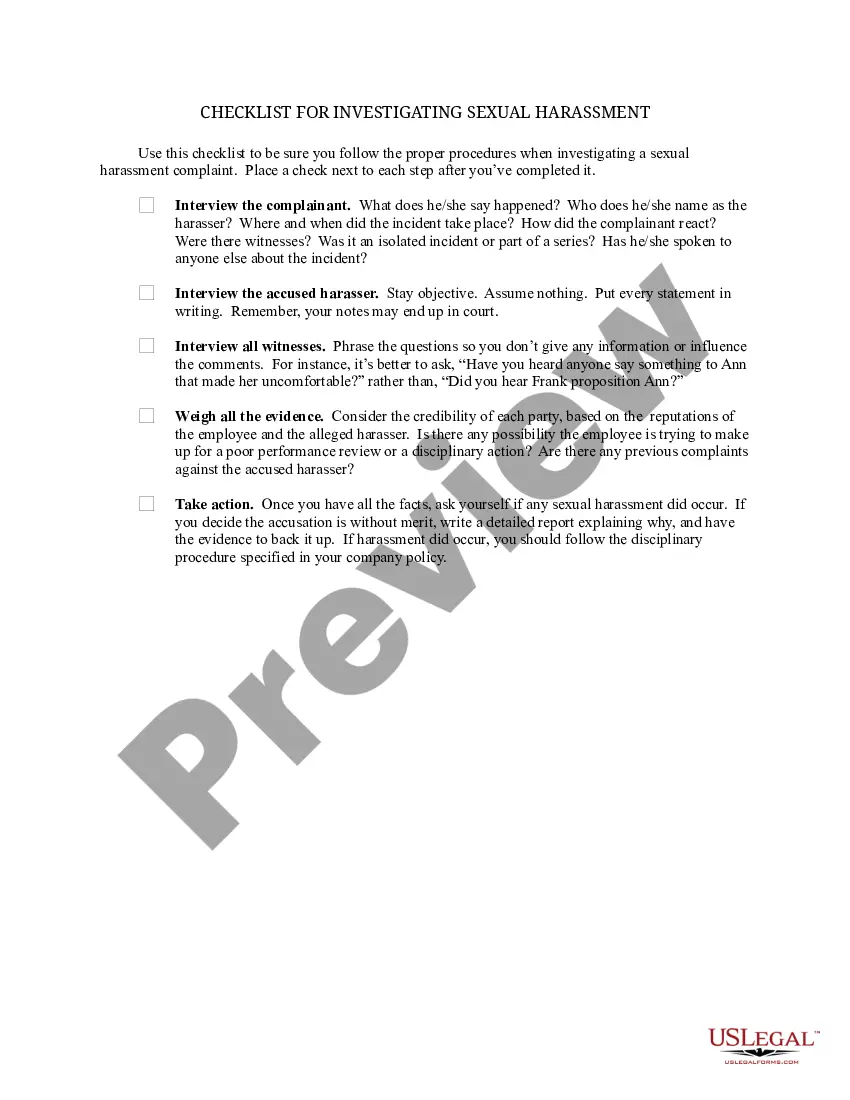
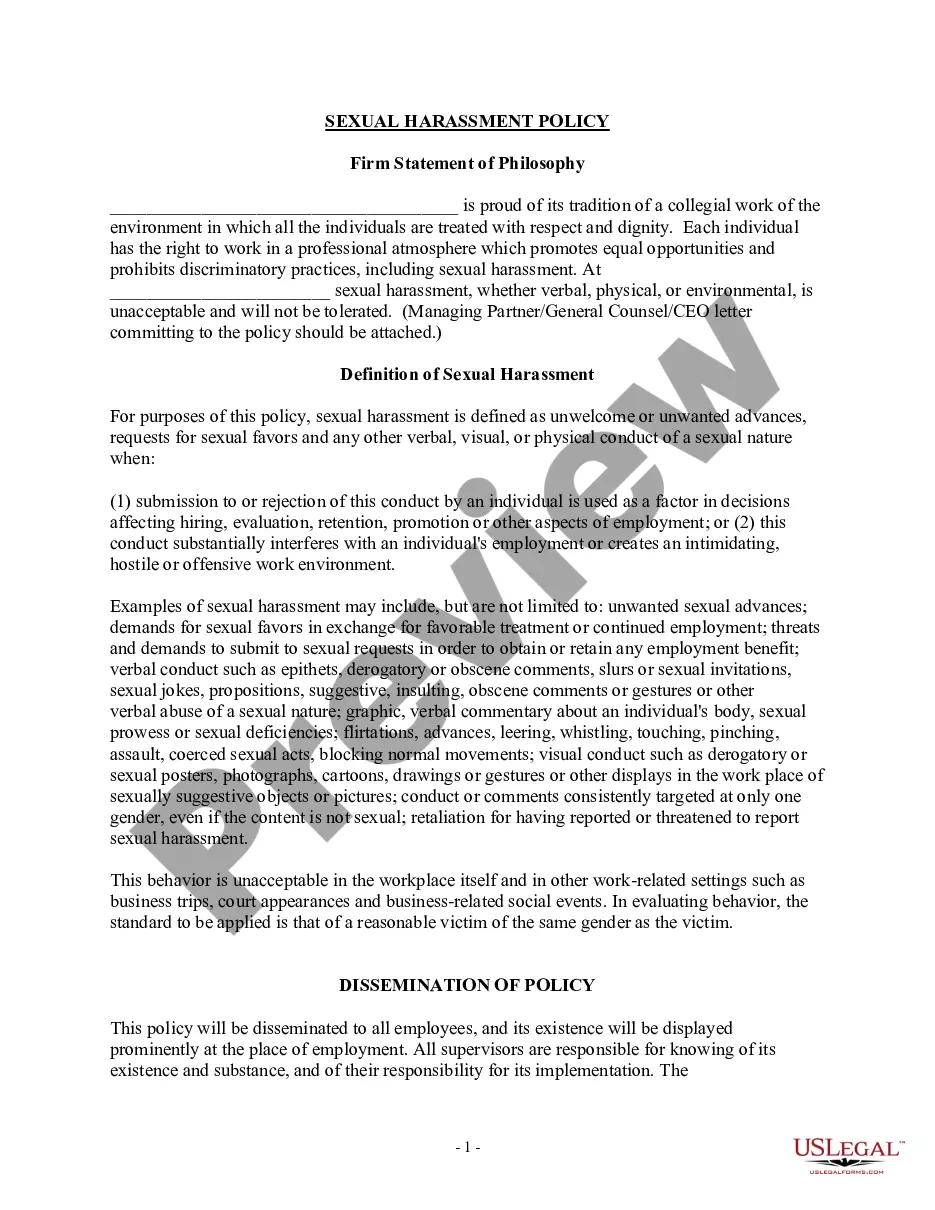
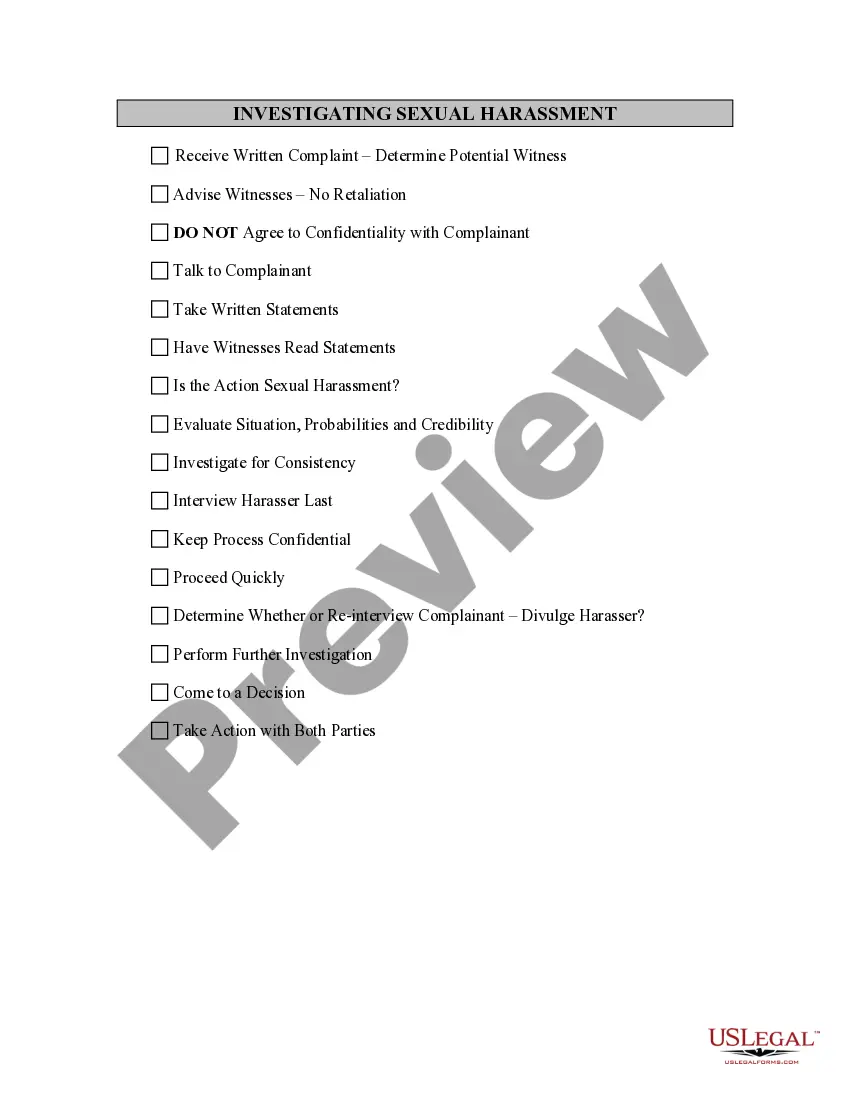
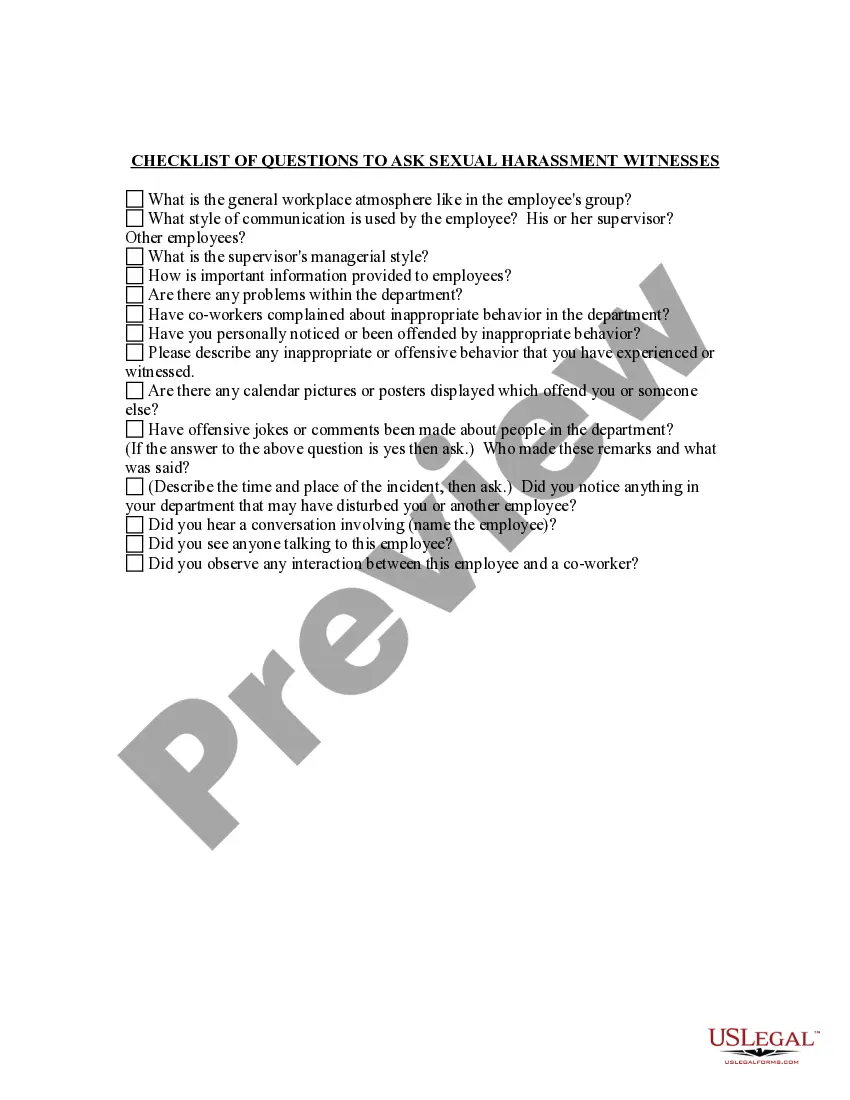
How to fill out Checklist For Investigation Sexual Harassment - Workplace?
- Log in to your account if you're a returning user and download your needed template by clicking the Download button. Ensure your subscription is still active or renew it if necessary.
- If you're new to US Legal Forms, start by browsing the extensive online library. Preview the forms and descriptions to select one that fits your harassment case and local jurisdiction requirements.
- Should you need a different template, utilize the Search tab to find other forms that align with your requirements.
- Once you've found the right form, select 'Buy Now' and choose an appropriate subscription plan. You'll need to create an account for full access to the library.
- Complete your payment by entering your credit card information or using your PayPal account to finalize the purchase.
- Download the form directly to your device, where it will also be available in the 'My Forms' section of your profile for future use.
By following these straightforward steps, you can easily access the legal forms necessary for your harassment case. US Legal Forms not only saves time but also ensures that you can find the right documents tailored to your needs with expert assistance.
Take control of your legal documentation today by visiting US Legal Forms and start accessing the resources you need!
Form popularity
FAQ
A good sentence for harassment should be one that adequately reflects the severity of the behavior while aiming for rehabilitation. Sentences may include protective orders, community service, counseling, or even jail time, depending on the circumstances. A fair sentence balances accountability with the opportunity for the individual to make amends. If you find yourself in a situation involving harassment, seeking legal advice is wise.
The length of a harassment sentence can vary significantly based on the severity of the offense and local laws. For minor cases, individuals may receive short sentences of probation or a few days in jail. However, repeat offenders or more serious cases may result in longer sentences, sometimes extending to several months. Knowing potential sentence lengths helps individuals steer clear of behaviors that could lead to legal trouble.
A simple sentence on harass could be: 'He decided to harass his neighbor with loud music at night.' This sentence captures the essence of harassment by illustrating disruptive behavior. Using such examples helps clarify what harassment entails in day-to-day scenarios. Creating awareness is crucial to avoiding unlawful actions.
Harassment can take many forms, and it typically includes actions that create a hostile environment. Three common examples are repeated unwanted phone calls, sending threatening messages, and stalking behavior. These actions disrupt the peace and safety of individuals, leading to serious legal consequences. Understanding what constitutes harassment is essential to prevent misunderstandings.
The minimum sentence for harassment varies by state and the specifics of the case. Generally, a first-time offender may face a penalty that includes fines, community service, or even probation. In some instances, the minimum harassment sentence can involve jail time, typically shorter for minor offenses. Staying informed about state laws regarding harassment sentences helps you understand the potential consequences.
Reporting harassment is often worth it, as it can lead to action being taken against the offender and create a safer environment for others. By speaking up, you not only advocate for yourself but also help protect colleagues or peers who may be suffering in silence. A well-documented account, including a harassment sentence, can strengthen your case when you report the behavior.
If you experience harassment, the first step is to document the incidents in detail. Write down dates, times, locations, and the individuals involved. This evidence can be essential for reporting the behavior to authorities or seeking legal help, helping you craft an impactful harassment sentence.
A good example of harassment is when someone repeatedly sends inappropriate messages despite being asked to stop. This kind of persistent behavior can lead to emotional distress for the victim. Knowing how to articulate such experiences effectively can be crucial in creating a strong harassment sentence that communicates the seriousness of the situation.
Using harassment in a sentence involves identifying the context of the behavior. For example, you might say, 'The coworker faced consequences for their persistent harassment, which created a hostile work environment.' This usage highlights the serious nature of unwanted behavior and illustrates how to construct a meaningful harassment sentence.
To write a harassment statement, start by clearly stating the incident, including who was involved, what happened, and when it occurred. Use precise language to describe the harmful actions and their impact on you. Make sure to include relevant details that support your experience, as a strong harassment sentence can provide clarity for those reviewing your case.