Types Of Harassment Complaints
Description

Get your form ready online
Our built-in tools help you complete, sign, share, and store your documents in one place.
Make edits, fill in missing information, and update formatting in US Legal Forms—just like you would in MS Word.
Download a copy, print it, send it by email, or mail it via USPS—whatever works best for your next step.
Sign and collect signatures with our SignNow integration. Send to multiple recipients, set reminders, and more. Go Premium to unlock E-Sign.
If this form requires notarization, complete it online through a secure video call—no need to meet a notary in person or wait for an appointment.
We protect your documents and personal data by following strict security and privacy standards.

Make edits, fill in missing information, and update formatting in US Legal Forms—just like you would in MS Word.

Download a copy, print it, send it by email, or mail it via USPS—whatever works best for your next step.

Sign and collect signatures with our SignNow integration. Send to multiple recipients, set reminders, and more. Go Premium to unlock E-Sign.

If this form requires notarization, complete it online through a secure video call—no need to meet a notary in person or wait for an appointment.

We protect your documents and personal data by following strict security and privacy standards.
Looking for another form?









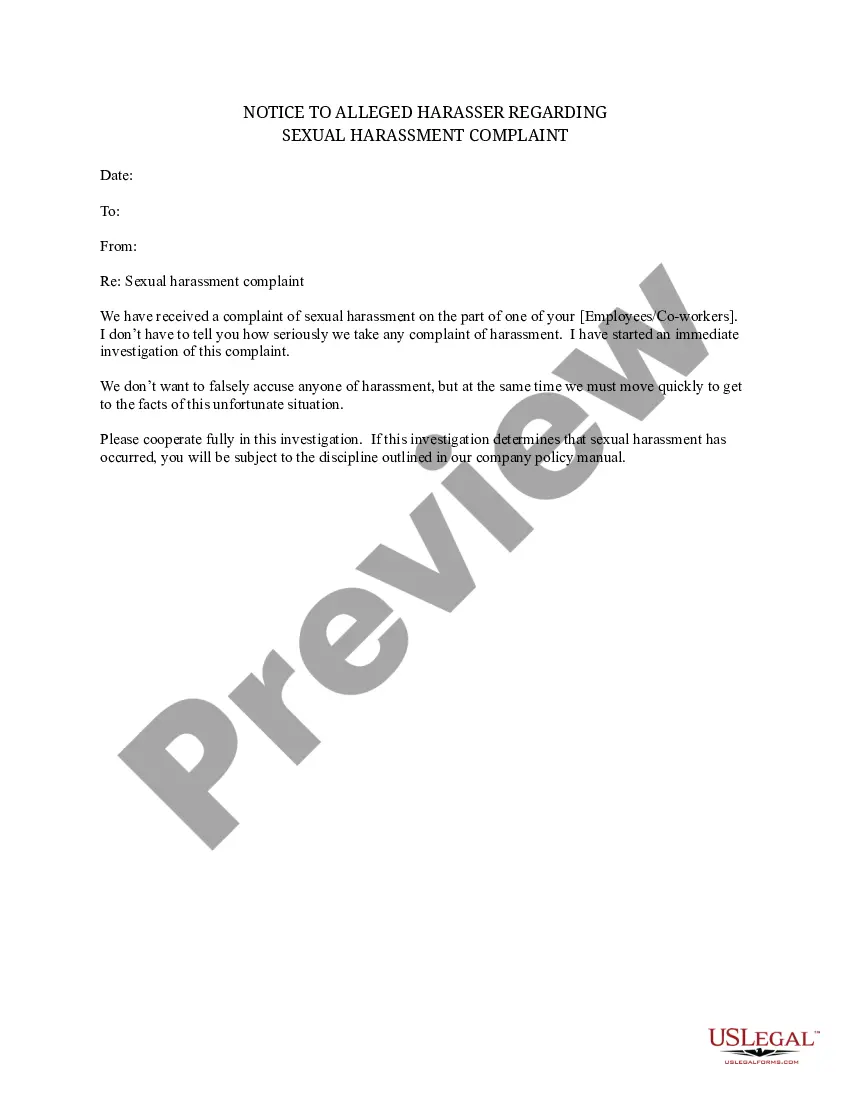
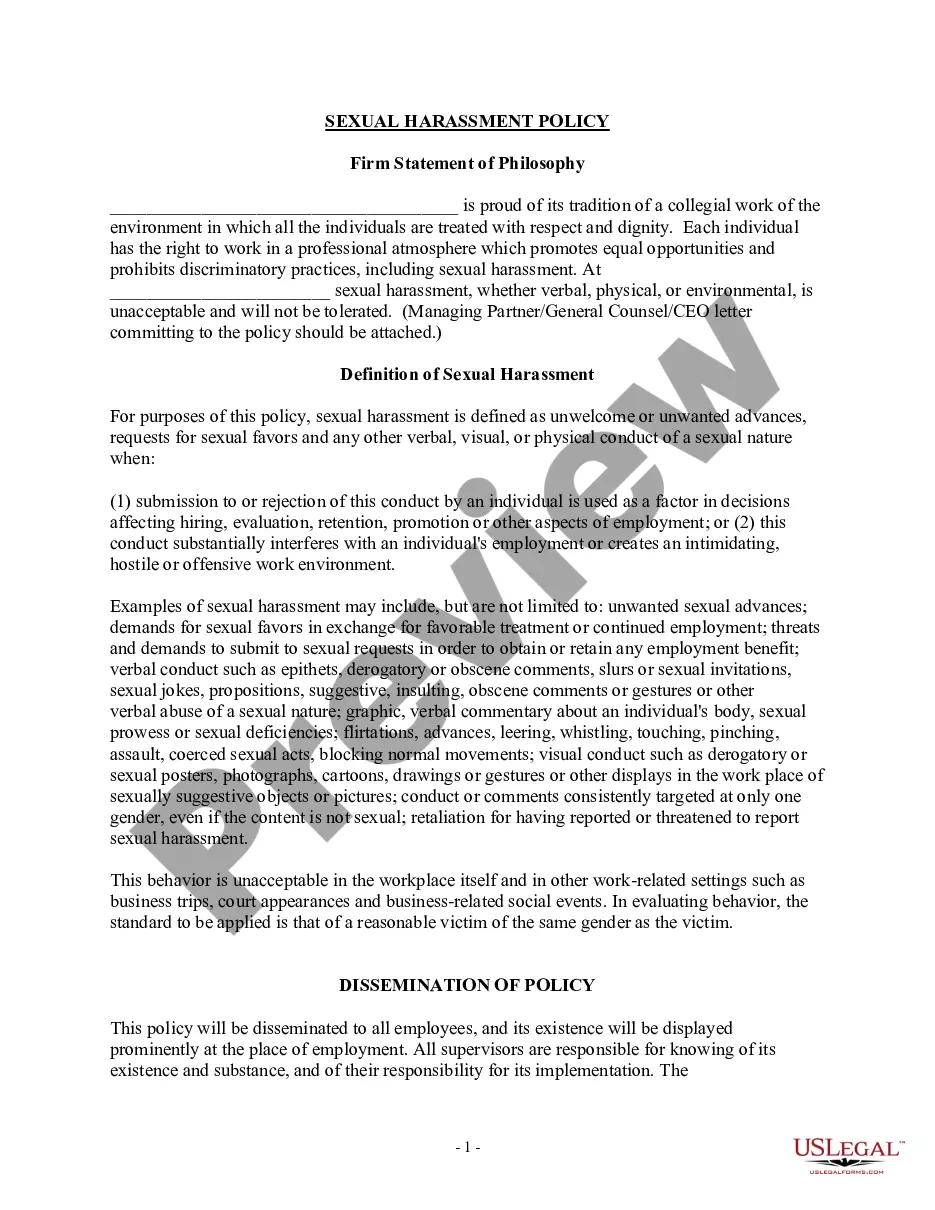
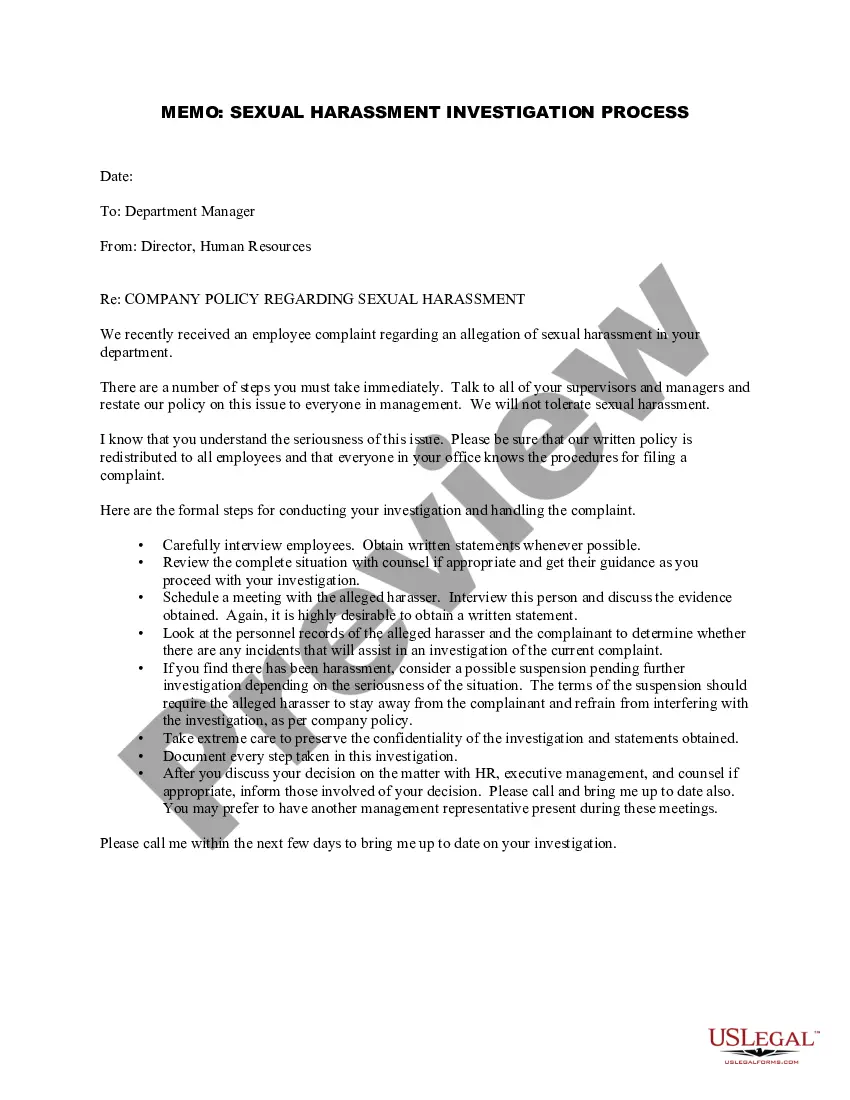
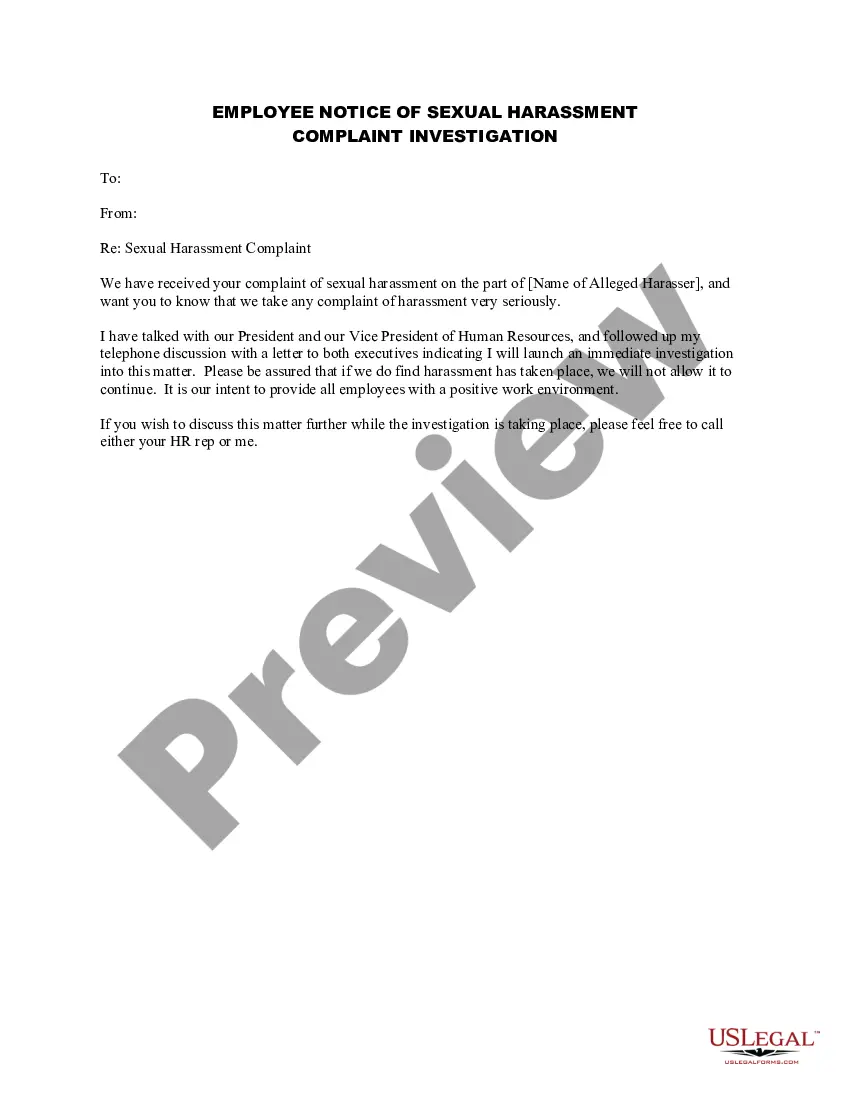
How to fill out Notice To Alleged Harasser Regarding Sexual Harassment Complaint - Workplace?
Identifying a reliable venue to retrieve the latest and suitable legal samples constitutes a significant portion of navigating bureaucracy.
Selecting the appropriate legal documents demands accuracy and meticulous attention, which is why it is crucial to obtain samples of Types Of Harassment Complaints exclusively from reputable sources, such as US Legal Forms. An incorrect template can squander your time and impede your current situation. With US Legal Forms, you can have peace of mind.
Eliminate the stress associated with your legal documentation. Explore the comprehensive US Legal Forms library where you can locate legal samples, assess their applicability to your circumstances, and download them immediately.
- Utilize the library navigation or search feature to find your sample.
- Examine the form’s description to determine if it meets your state and region's requirements.
- Preview the form, if available, to ensure it is the correct template you need.
- If the Types Of Harassment Complaints doesn't meet your needs, continue your search and find the right template.
- Once you are confident about the form’s pertinence, download it.
- If you are a registered user, click Log in to verify and access your selected forms in My documents.
- If you do not possess an account yet, click Buy now to acquire the form.
- Choose the payment plan that suits your preferences.
- Proceed to register to complete your purchase.
- Finalize your purchase by selecting a payment method (credit card or PayPal).
- Choose the document format for downloading Types Of Harassment Complaints.
- Once you have the form on your device, you can modify it using the editor or print it out and complete it by hand.
Form popularity
FAQ
The two main types of harassment include verbal harassment and physical harassment. Verbal harassment can encompass name-calling, threats, or offensive jokes that undermine an individual’s dignity. Conversely, physical harassment involves unwanted touching, intimidation, or any form of aggressive physical action. Understanding these categories of harassment complaints is crucial for victims seeking support, and US Legal Forms offers guidance on how to navigate these situations.
When you think about types of harassment complaints, it’s essential to recognize two main categories: workplace harassment and sexual harassment. Workplace harassment often involves inappropriate behavior, bullying, or discrimination in a professional setting, making it difficult for victims to perform their duties. On the other hand, sexual harassment includes unwelcome sexual advances or requests for sexual favors, which create a hostile work environment. Addressing these issues promptly is vital, and platforms like US Legal Forms provide resources to help individuals file their complaints effectively.
Writing a powerful complaint letter involves clarity, detail, and a call to action. Start by stating the issue clearly, then describe the incidents of harassment, citing types of harassment complaints you've experienced. Use concise language and emphasize the impact on you to convey your message effectively; consider using resources like uslegalforms for guidance.
To write a formal harassment complaint, use a professional tone and format. Begin with your contact information and the recipient's details, then clearly state the purpose of your letter. Include specific examples and desired outcomes to ensure your complaint addresses the relevant types of harassment complaints prominently.
When drafting a harassment complaint, start with a clear introduction of your situation. Outline specific incidents, including dates, times, and witnesses, to provide context. Using a precise structure will make your example stronger as you address various types of harassment complaints in a straightforward manner.
To report harassment, gather any available evidence that supports your claims. This can include emails, text messages, audio recordings, or witness statements that corroborate your experience. Having clear documentation will enhance your case and provide a solid foundation for the types of harassment complaints you may file.
When composing your harassment complaint, consider using words that convey seriousness and urgency. Terms such as 'unacceptable', 'abusive', and 'intimidating' can effectively highlight the nature of your experiences. Strong language reinforces the importance of your claims, especially when discussing types of harassment complaints.
Behavior that counts as harassment includes actions that make someone feel uncomfortable, threatened, or intimidated. This encompasses a range of activities, from offensive jokes to persistent unwanted attention. Each case is unique, and recognizing the spectrum of behavior is important for types of harassment complaints. Always listen to your instincts and seek help if you feel harassed.
Harassment varies by context, but it generally consists of unwanted behaviors that cause distress. Types of harassment complaints often cover physical, verbal, or online abuse that targets an individual based on personal characteristics or circumstances. It's essential to understand that harassment can be both subtle and overt. Always take your feelings seriously when assessing whether an action qualifies as harassment.
To effectively document instances of harassment, keep a detailed log of events. Include dates, times, locations, descriptions of incidents, and any witnesses. Also, save all communications related to the harassment, such as emails or texts. Doing so not only helps in filing types of harassment complaints but also helps you maintain clarity in your experiences.