Harassment With Intent
Description
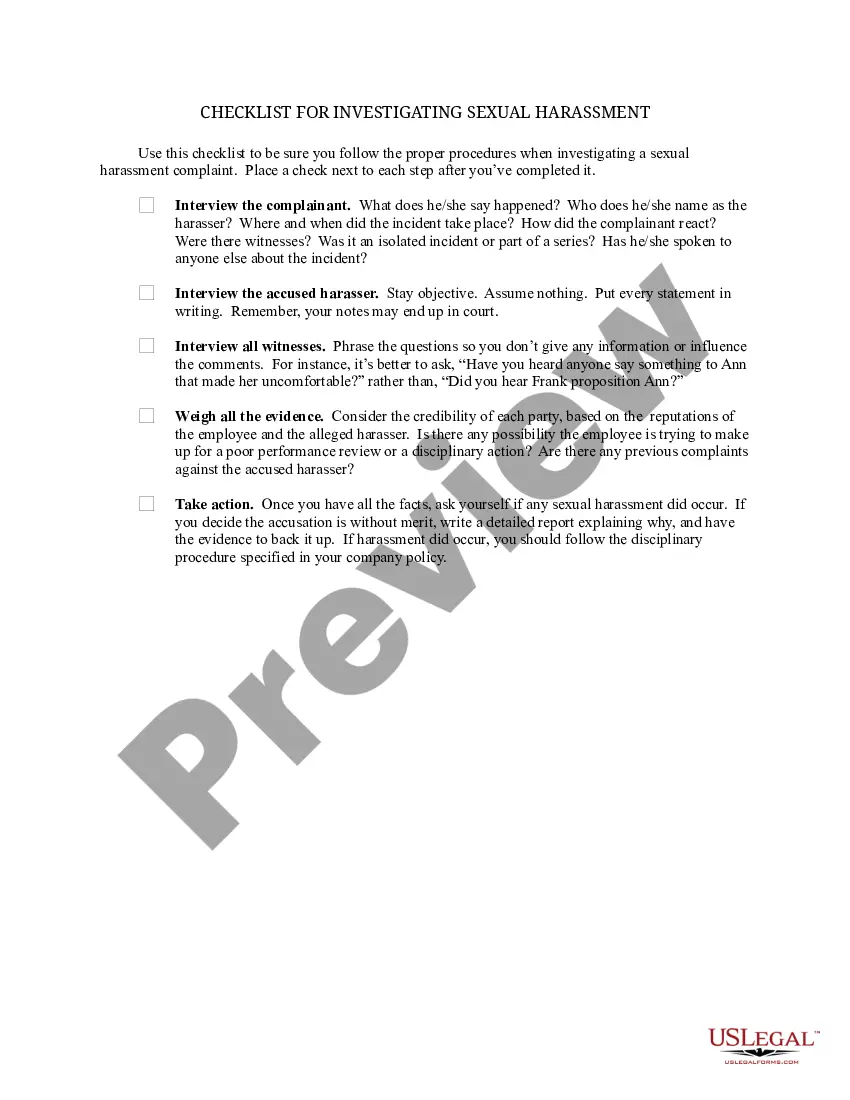
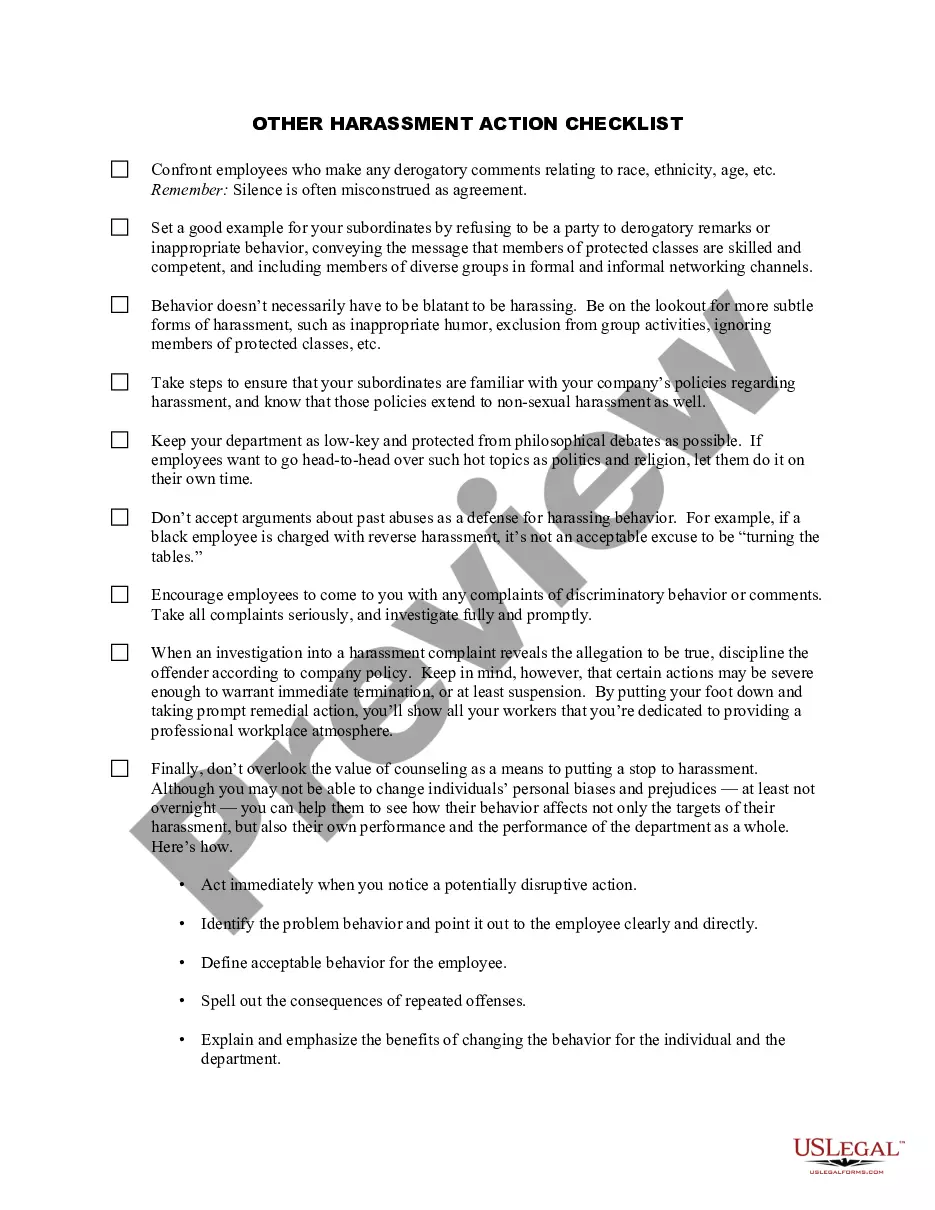
Get your form ready online
Our built-in tools help you complete, sign, share, and store your documents in one place.
Make edits, fill in missing information, and update formatting in US Legal Forms—just like you would in MS Word.
Download a copy, print it, send it by email, or mail it via USPS—whatever works best for your next step.
Sign and collect signatures with our SignNow integration. Send to multiple recipients, set reminders, and more. Go Premium to unlock E-Sign.
If this form requires notarization, complete it online through a secure video call—no need to meet a notary in person or wait for an appointment.
We protect your documents and personal data by following strict security and privacy standards.

Make edits, fill in missing information, and update formatting in US Legal Forms—just like you would in MS Word.

Download a copy, print it, send it by email, or mail it via USPS—whatever works best for your next step.

Sign and collect signatures with our SignNow integration. Send to multiple recipients, set reminders, and more. Go Premium to unlock E-Sign.

If this form requires notarization, complete it online through a secure video call—no need to meet a notary in person or wait for an appointment.

We protect your documents and personal data by following strict security and privacy standards.
Looking for another form?
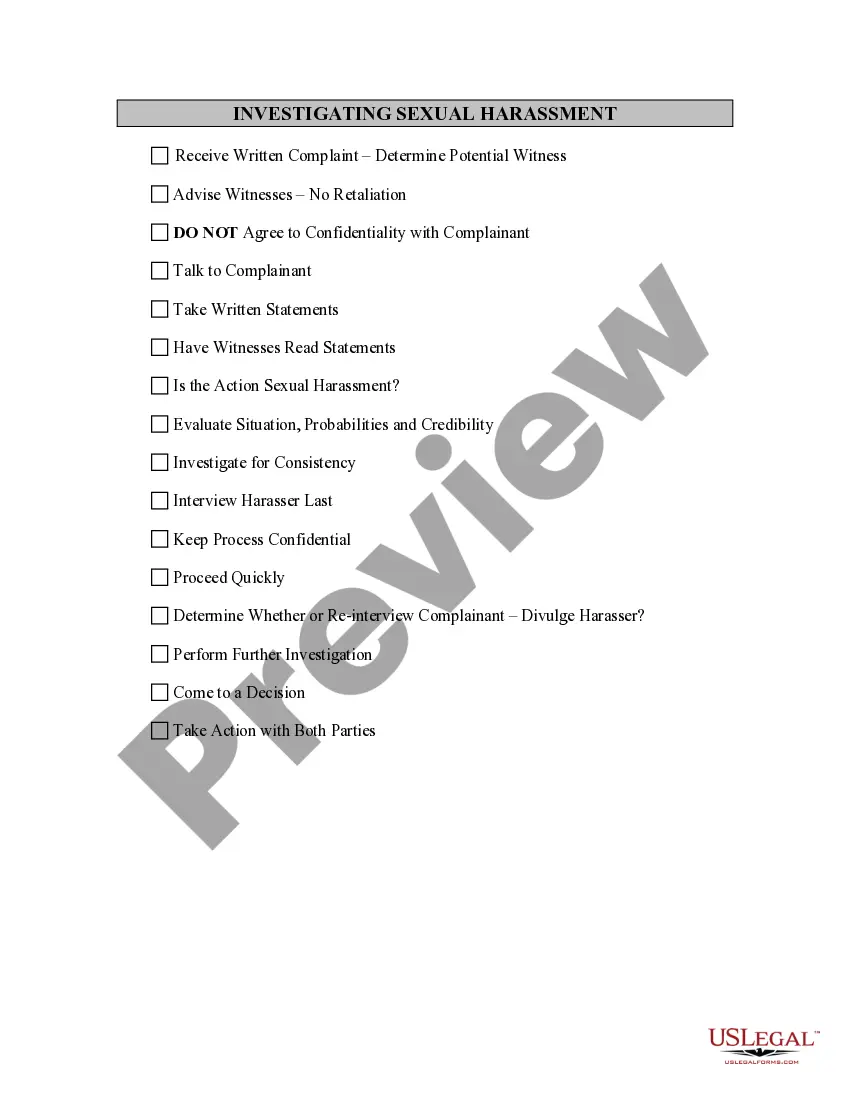
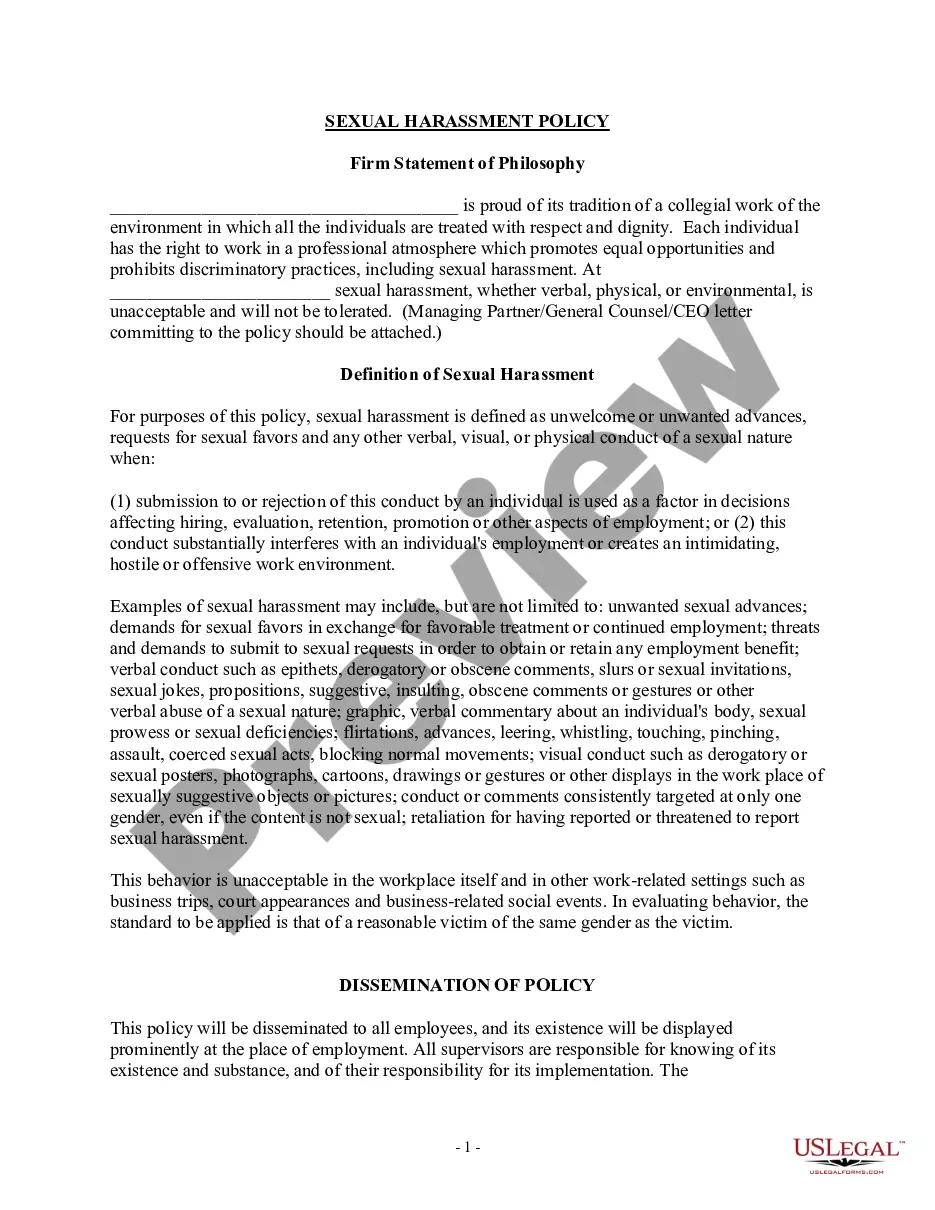
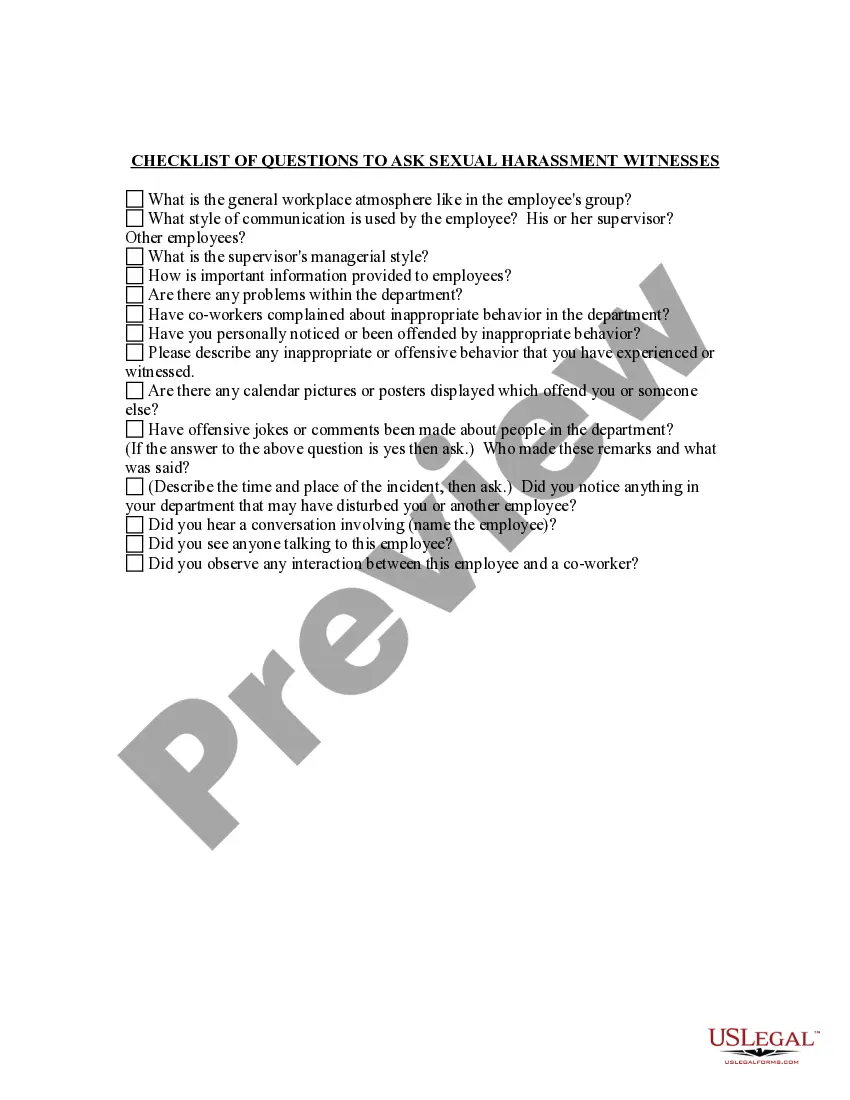
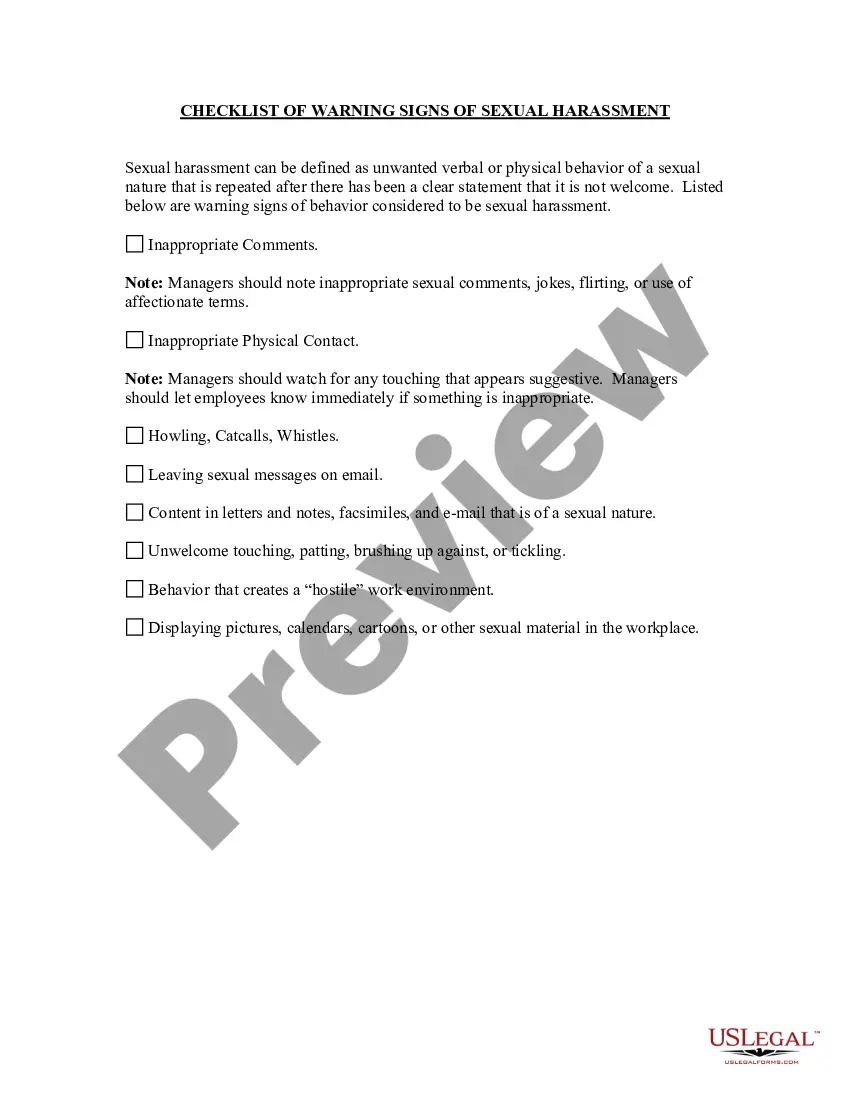
How to fill out Investigating Sexual Harassment Checklist - Workplace?
- If you are a returning user, log in to your account and verify your subscription status. Download the required form by clicking the Download button.
- For first-time users, begin by exploring the Preview mode and reviewing the form description to ensure it meets your specific needs.
- If the form doesn't fit your requirements, utilize the Search tab to find an alternative that follows your local jurisdiction's guidelines.
- Proceed to purchase the document by clicking the Buy Now button and selecting a subscription plan. You will need to create an account to access the legal forms library.
- Enter your payment details, either through credit card or PayPal, to finalize your subscription and make the purchase.
- Once completed, download the form to your device and you can always access it later in the My Forms section of your profile.
US Legal Forms stands out with its vast collection of over 85,000 easily fillable legal forms, providing both individuals and attorneys with comprehensive options to ensure legal compliance.
Don't wait until it's too late. Start utilizing US Legal Forms today and take charge of your legal needs!
Form popularity
FAQ
Establishing harassment involves showing that the behavior was intentionally harmful or threatening. You should gather evidence that demonstrates repeated actions, unwanted attention, or any communication that fits the definition of harassment with intent. This evidence supports your claim and can be essential in any legal proceedings. Utilizing resources such as US Legal Forms can guide you through documenting your case effectively.
To get someone charged with harassment, you first need to report the incident to law enforcement. This includes detailing the occurrences of harassment with intent and presenting any evidence you may have. Law enforcement will then evaluate the situation and decide if there is enough basis to file charges. Ensuring you document everything is essential in this process.
In a harassment case, the burden of proof lies with the victim. The individual must demonstrate that harassment with intent occurred by providing evidence of harmful behavior and the intent behind it. This may involve testimonies, documented incidents, or other relevant material. Knowing the burden of proof can help you prepare your case effectively.
Yes, intent plays a vital role in harassment cases. To establish harassment with intent, the perpetrator must have purposefully engaged in behavior meant to torment or intimidate the victim. This intent helps define the severity of the action and guides the legal process. Understanding this aspect can be crucial when you seek to address harassment-related issues.
To legally define harassment, four core elements must typically be established: unwelcome conduct, a clear intent to harm, a connection to protected classes, and the impact on the victim's wellbeing. These elements together outline the specifics of harassment with intent, ensuring that concerns are taken seriously. Relying on platforms like UsLegalForms can help you effectively navigate these legal definitions.
The three main forms of harassment include verbal, physical, and visual harassment. Verbal harassment consists of inappropriate remarks or insults, while physical harassment involves unwanted physical contact. Visual harassment includes displaying offensive images or materials. Recognizing these forms can aid in understanding harassment with intent.
Harassment with intent can involve various behaviors, including unwanted touching, threatening remarks, or persistent unwanted communication. It may also encompass spreading rumors or making offensive jokes targeting an individual. Understanding these behaviors can help you identify and combat harassment effectively.
Dealing with indirect harassment requires a careful approach. First, document specific incidents to establish a pattern and seek support from colleagues or supervisors if appropriate. Consider using legal platforms like UsLegalForms for guidance on filing complaints, ensuring your rights are protected as you navigate this troubling situation.
Yes, intent plays a significant role in defining harassment with intent. To establish harassment, one must usually show that the behavior was not only inappropriate but also that it was intended to cause distress or harm. Without a clear intention behind the actions, it can be challenging to prove that harassment occurred in a legal context.
Understanding what does not qualify as harassment with intent is crucial. Examples include expressing differing opinions in a respectful manner, engaging in friendly teasing without malice, and offering constructive criticism aimed at improvement. These behaviors do not demonstrate the intended harm or pattern of coercion that harassment entails.