Harassment With Bodily Fluids
Description
Get your form ready online
Our built-in tools help you complete, sign, share, and store your documents in one place.
Make edits, fill in missing information, and update formatting in US Legal Forms—just like you would in MS Word.
Download a copy, print it, send it by email, or mail it via USPS—whatever works best for your next step.
Sign and collect signatures with our SignNow integration. Send to multiple recipients, set reminders, and more. Go Premium to unlock E-Sign.
If this form requires notarization, complete it online through a secure video call—no need to meet a notary in person or wait for an appointment.
We protect your documents and personal data by following strict security and privacy standards.

Make edits, fill in missing information, and update formatting in US Legal Forms—just like you would in MS Word.

Download a copy, print it, send it by email, or mail it via USPS—whatever works best for your next step.

Sign and collect signatures with our SignNow integration. Send to multiple recipients, set reminders, and more. Go Premium to unlock E-Sign.

If this form requires notarization, complete it online through a secure video call—no need to meet a notary in person or wait for an appointment.

We protect your documents and personal data by following strict security and privacy standards.
Looking for another form?






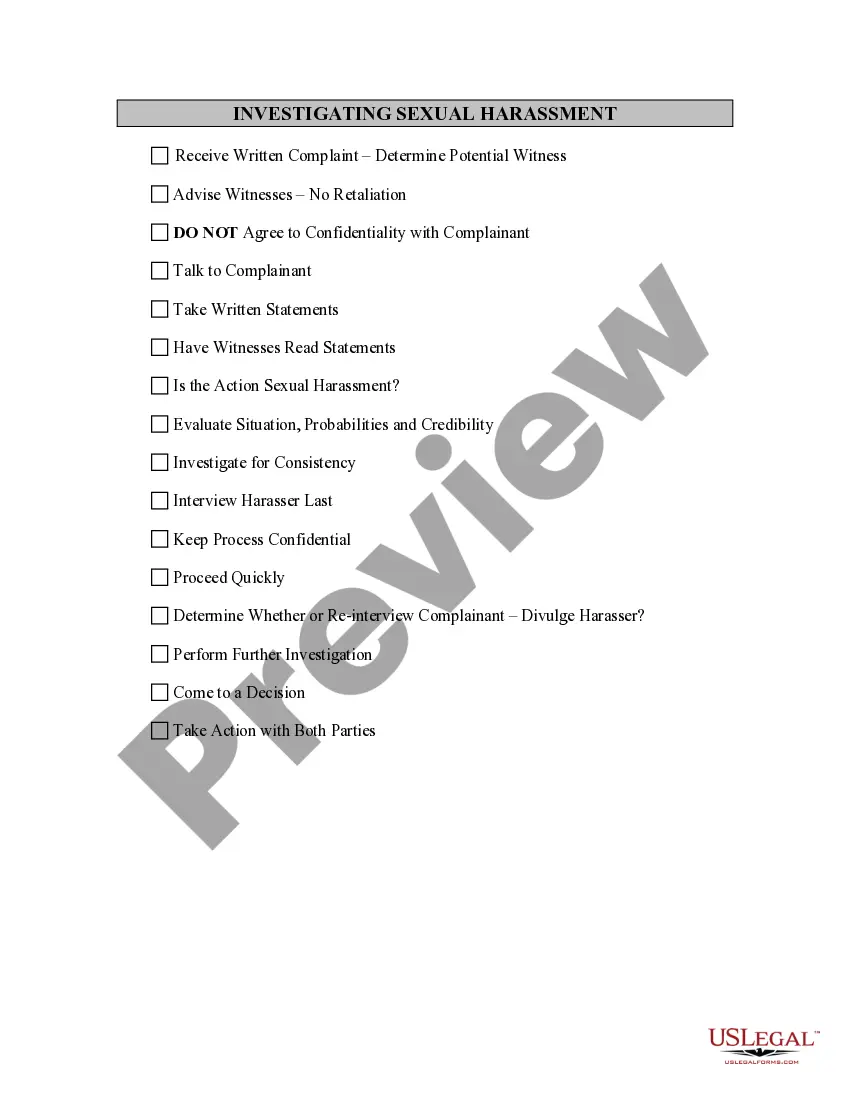
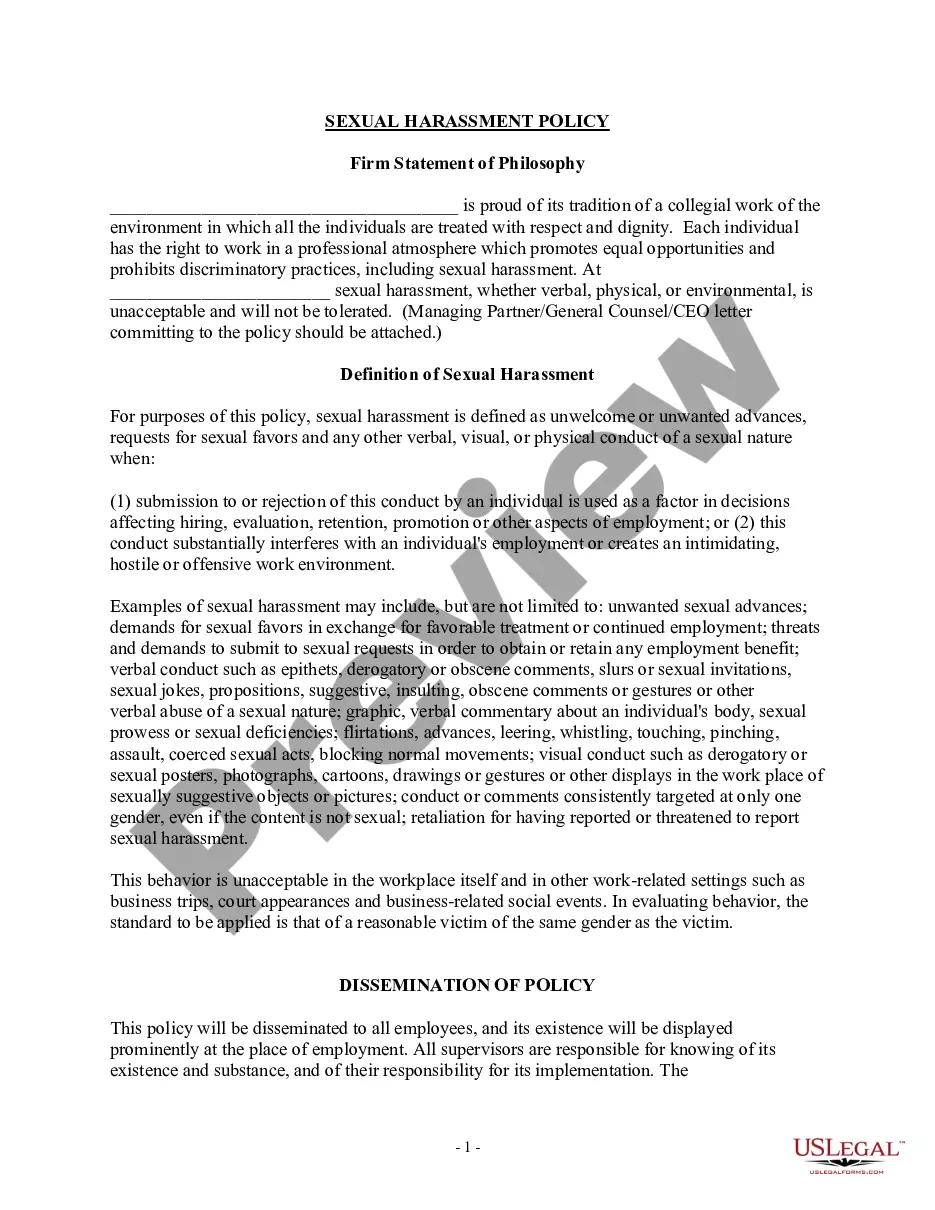
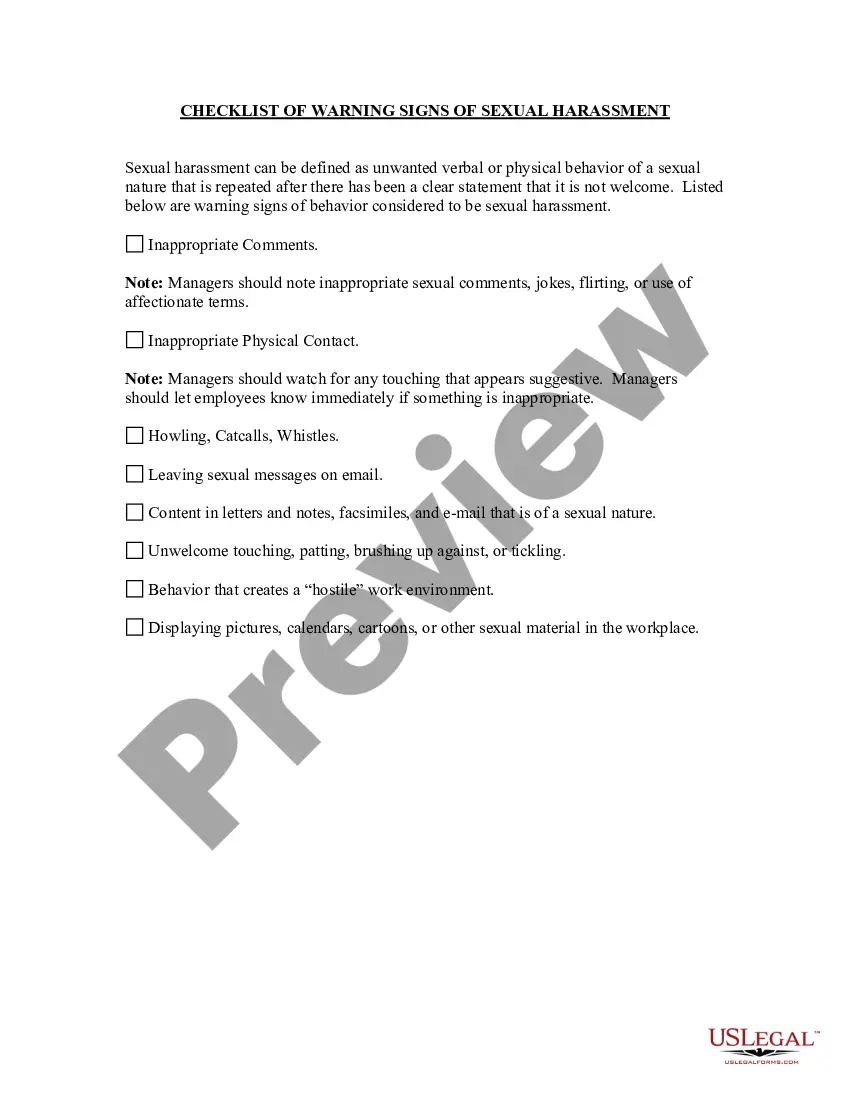
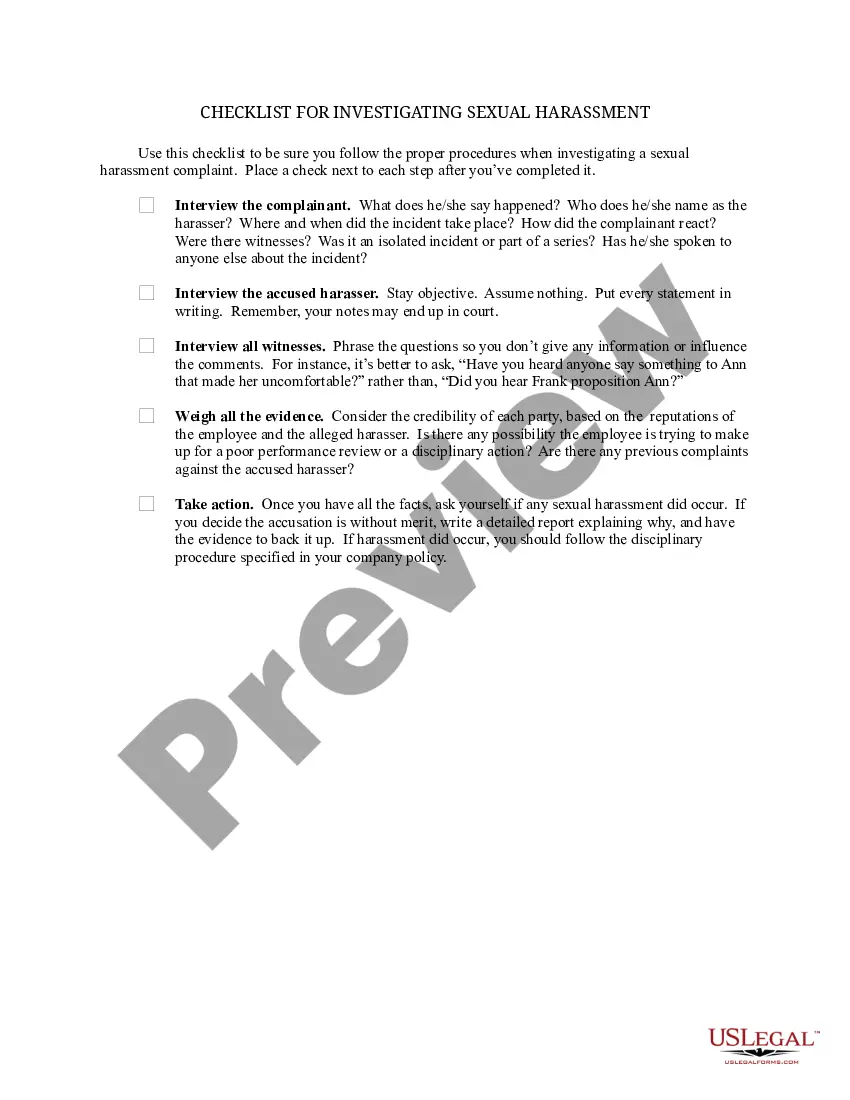
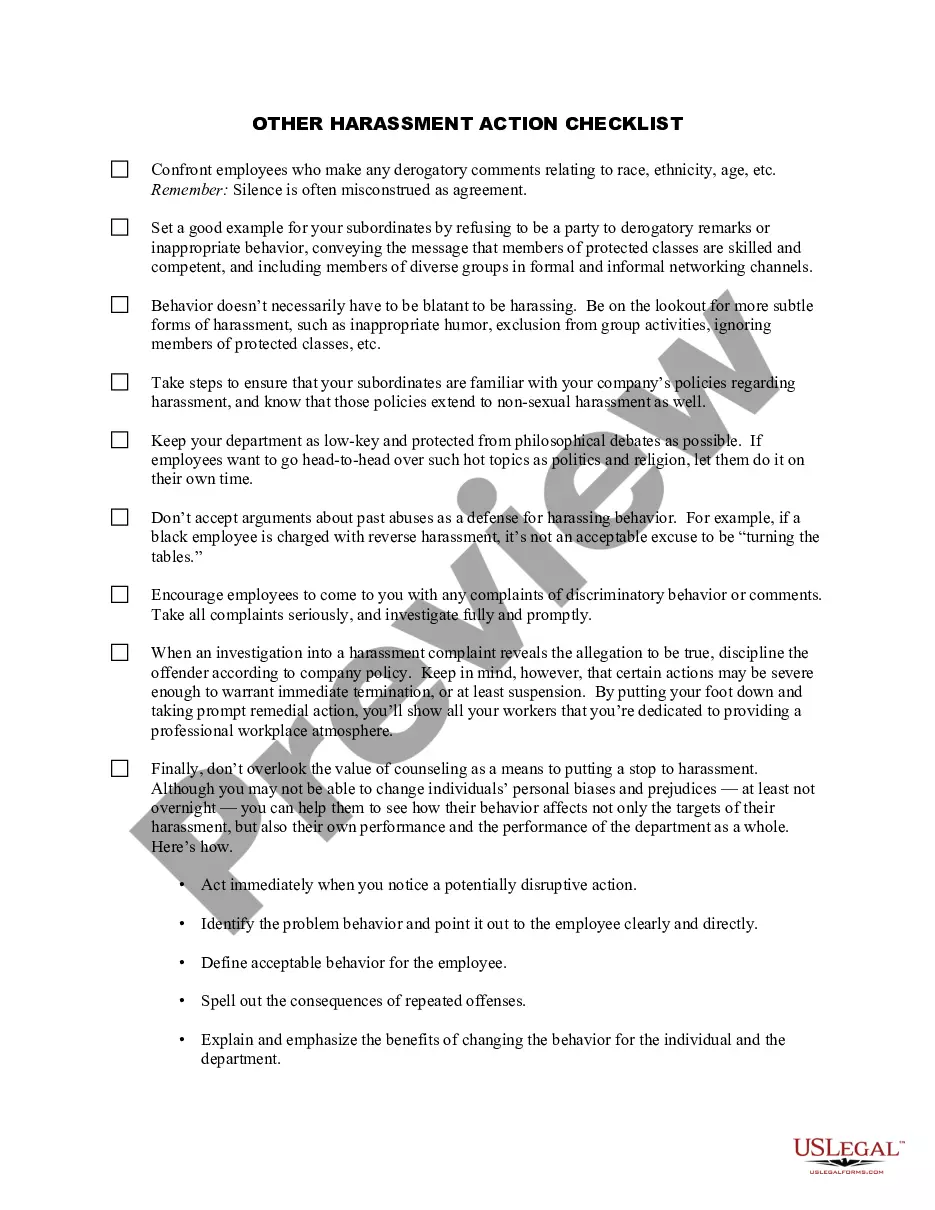
How to fill out Investigating Sexual Harassment Checklist - Workplace?
- Visit the US Legal Forms website and log in to your account if you are a returning user. Ensure your subscription is current to avoid any interruptions.
- If you're a new user, begin by reviewing the form descriptions and previews to ensure you select the correct template that aligns with your legal requirements.
- Utilize the Search tab to find alternative templates that suit your specific circumstances if your initial choice doesn’t meet your needs.
- Proceed to purchase your selected document by clicking on the Buy Now button, where you'll be prompted to choose a subscription plan.
- Enter your payment information either through credit card or PayPal to complete your purchase.
- Download the necessary form to your device and access it anytime through the My Forms section of your profile.
By following these straightforward steps, you can easily obtain the essential legal documents related to harassment with bodily fluids, ensuring you are well-equipped to handle your situation.
Take control of your legal needs today! Visit US Legal Forms to get started with your legal documents.
Form popularity
FAQ
Assault is typically defined as an intentional act that causes another person to fear imminent harm. This may include physical actions or threats that instill fear, regardless of whether actual physical contact occurs. When discussing harassment with bodily fluids, it is crucial to understand how this fits within the broader definition of assault. For comprehensive legal documentation and advice, consider exploring the resources provided by US Legal Forms.
Assault with bodily fluids in Pennsylvania involves the intentional act of spitting, throwing, or otherwise using bodily fluids on another person. This action can lead to serious legal consequences, especially if it causes emotional or physical harm. Understanding the nuances of this offense is vital for both victims and offenders. If you need further information on this topic, US Legal Forms offers valuable resources.
Not every unwanted physical interaction qualifies as assault. For example, minor accidental contact or gestures without intent to harm generally does not meet the legal definition of assault. It is essential to recognize that while harassment with bodily fluids can escalate to assault, not every incident does. Familiarizing yourself with these distinctions can help clarify your rights.
In Pennsylvania, the crime code for harassment falls under 18 Pa.C.S. § 2709. Harassment with bodily fluids is a serious offense that involves unwanted behavior causing distress to another person. Understanding the specific crime code can help you navigate legal situations more effectively. If you encounter issues related to harassment, consider using US Legal Forms for documentation and support.
Yes, throwing blood on someone is considered an assault in most jurisdictions, including the context of harassment with bodily fluids. This act can lead to criminal charges due to the intentional act of causing harm or fear. If you find yourself involved in such a situation, turning to resources available on the US Legal platform can help clarify the legalities and proceedings related to assault with bodily fluids.
In Ohio, harassment by inmates involves actions where a prisoner uses bodily fluids or other means to disturb or intimidate others, including staff and fellow inmates. This type of behavior can lead to severe disciplinary action and legal repercussions. Understanding the dynamics of harassment with bodily fluids in such environments is vital for both legal representatives and affected individuals. The US Legal platform can provide insights into legal protections in these cases.
Assault with bodily fluids occurs when an individual intentionally contacts another person with their bodily fluids, like blood or saliva, to cause apprehension or harm. This act not only poses a physical danger but also carries significant emotional and psychological implications for the victim. If you're unsure about the legal definitions or consequences, consider visiting the US Legal platform for detailed information and guidance.
Assault with bodily fluids can be classified as a felony, depending on the circumstances and the jurisdiction. In many states, this type of assault is taken seriously due to the potential health risks and psychological harm it can inflict. If you are dealing with legal issues related to harassment with bodily fluids, US Legal Forms offers valuable resources to help you navigate your situation.
Bodily fluids are substances produced by the human body, including blood, saliva, urine, sweat, and other secretions. These fluids can play a crucial role in various medical and biological contexts. Understanding the implications of harassment with bodily fluids is essential for recognizing the potential legal ramifications of such actions.
In Alabama, assault with bodily fluids refers to intentionally throwing or exposing another person to bodily fluids, such as saliva or blood, in a way that causes harm or fear. This act is taken very seriously under Alabama law, as it can threaten the physical and emotional well-being of individuals. If you find yourself facing charges related to harassment with bodily fluids, you can explore resources on the US Legal platform to gain a better understanding of your rights and options.