Salaried Employee Guidelines For Time Off
Description
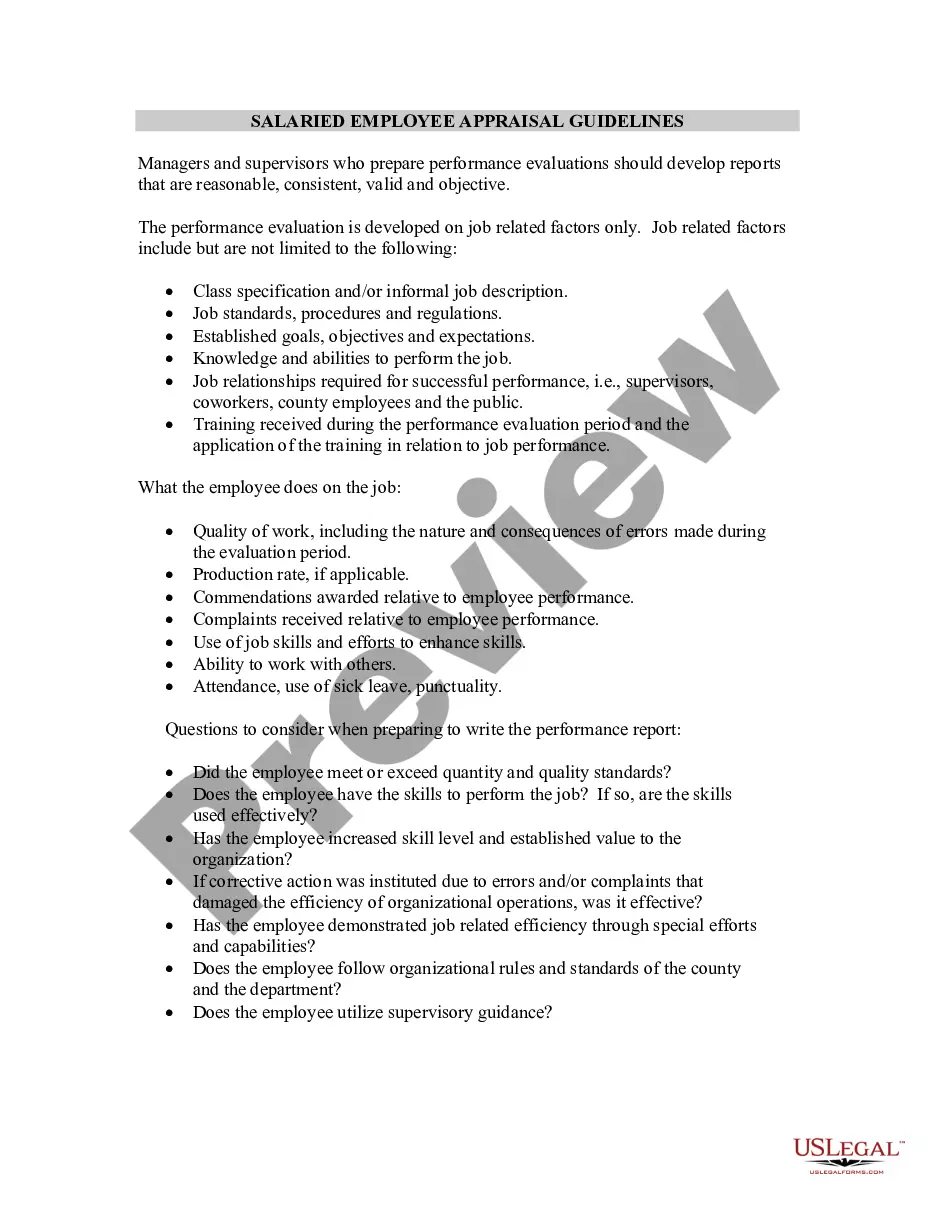
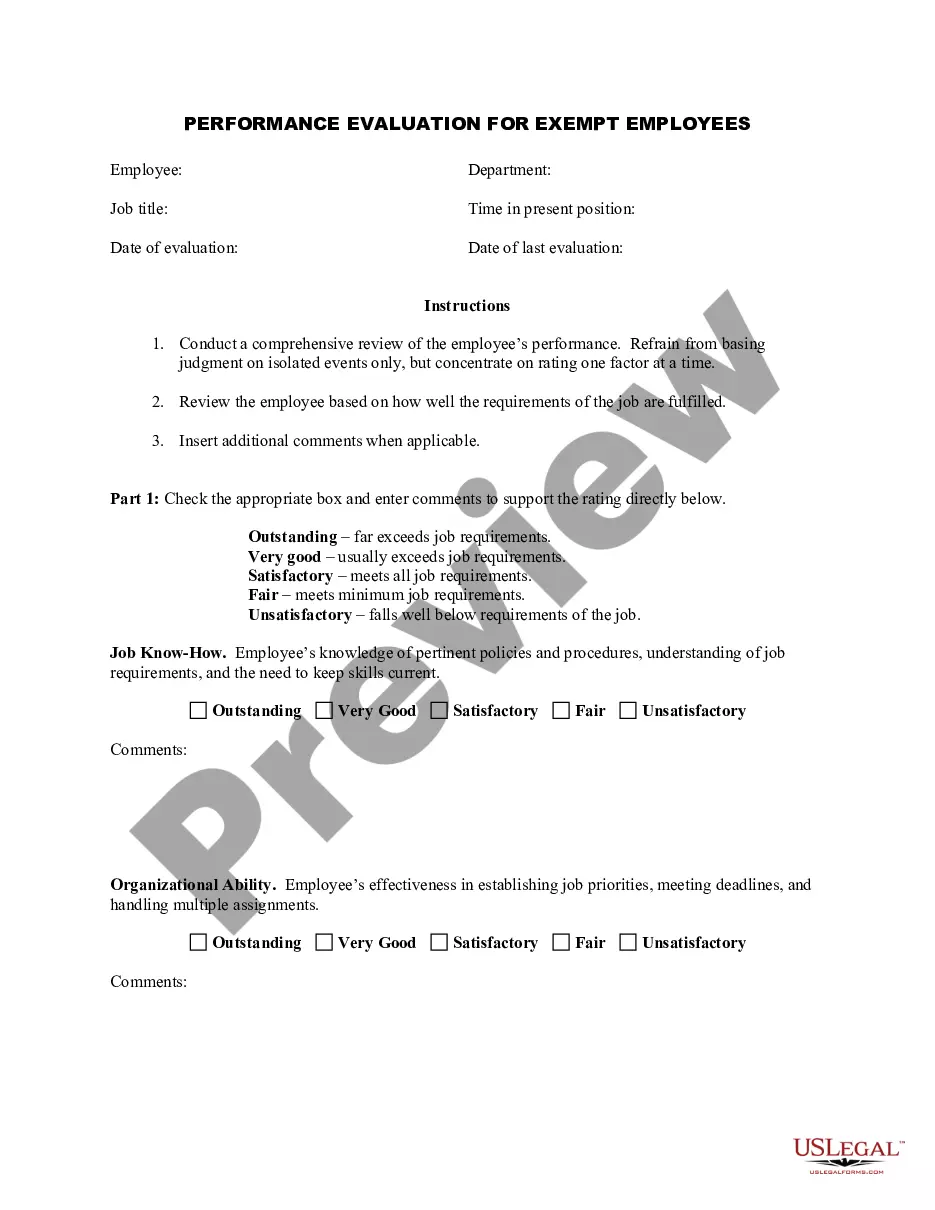
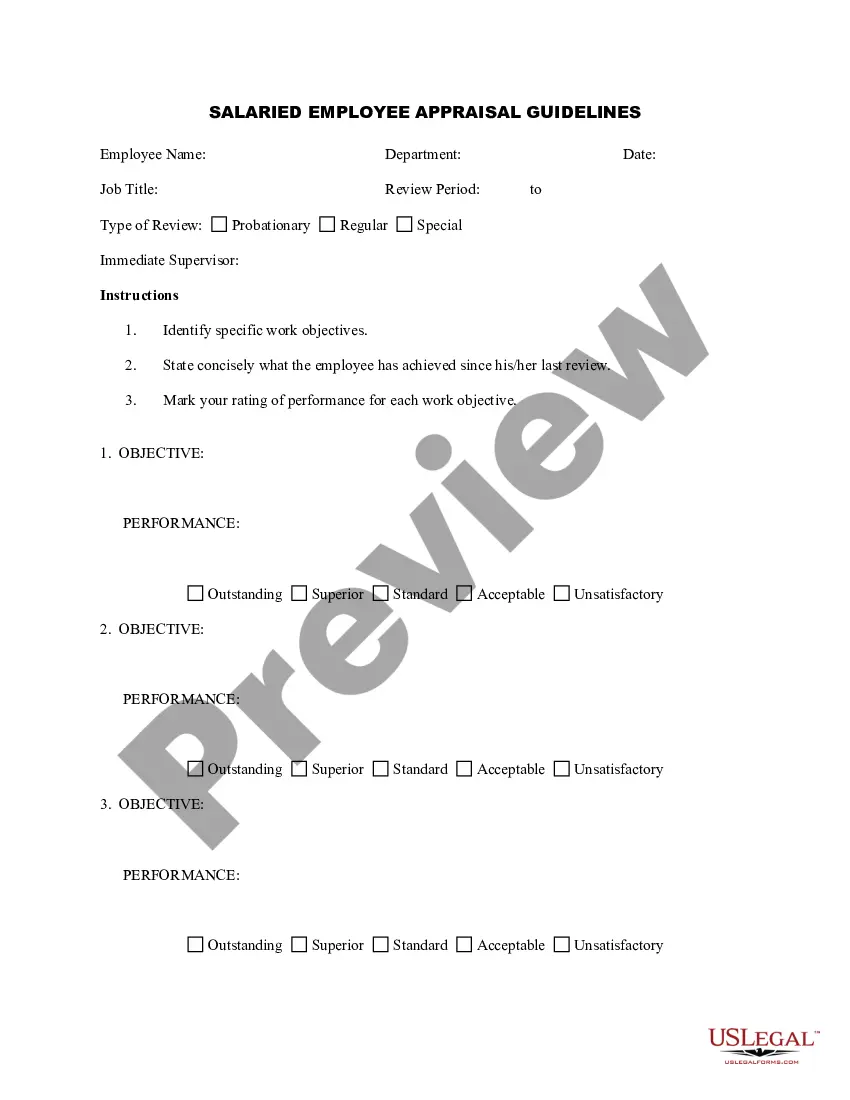


How to fill out Salaried Employee Appraisal Guidelines - General?
Finding a go-to place to take the most recent and appropriate legal templates is half the struggle of dealing with bureaucracy. Discovering the right legal documents demands precision and attention to detail, which is why it is vital to take samples of Salaried Employee Guidelines For Time Off only from reputable sources, like US Legal Forms. An improper template will waste your time and hold off the situation you are in. With US Legal Forms, you have very little to worry about. You can access and check all the details about the document’s use and relevance for your circumstances and in your state or county.
Consider the listed steps to complete your Salaried Employee Guidelines For Time Off:
- Use the library navigation or search field to locate your template.
- View the form’s description to see if it suits the requirements of your state and region.
- View the form preview, if there is one, to make sure the form is definitely the one you are looking for.
- Go back to the search and find the proper template if the Salaried Employee Guidelines For Time Off does not suit your needs.
- If you are positive regarding the form’s relevance, download it.
- If you are a registered customer, click Log in to authenticate and access your picked templates in My Forms.
- If you do not have a profile yet, click Buy now to get the form.
- Select the pricing plan that suits your needs.
- Go on to the registration to complete your purchase.
- Complete your purchase by choosing a transaction method (credit card or PayPal).
- Select the document format for downloading Salaried Employee Guidelines For Time Off.
- When you have the form on your device, you can alter it with the editor or print it and complete it manually.
Eliminate the headache that accompanies your legal paperwork. Discover the extensive US Legal Forms library where you can find legal templates, check their relevance to your circumstances, and download them on the spot.
Form popularity
FAQ
Hear this out loud PauseA timesheet records an employee's hours during a specific payroll period. Small business owners and managers use them to calculate wages for hourly employees. They may also implement them for salaried employees to track work hours, leave time, and overtime, as well as attribute time to specific projects or tasks.
PTO works as a benefit for salary employees by providing them with payment for allocated time to be taken off annually from work for vacation, personal days, sick time, etc. A company's PTO (paid-time off) policies establish the guidelines that determine when and how an employee can receive payment for time off work.
Having salaried employees fill out timesheets, and then comparing their working hours to the total working hours of the project they're assigned to, can give you insights into how projects are moving along?and whether you need to make any changes to your work assignments.
When no work is performed in a day, full-day deductions from pay are allowable. If any work is performed in a day, no deductions from salary are allowed. For example, if an employee is absent for one-and-a-half days, an employer may only deduct for one full day.
In many situations, knowing how many hours an employee spent on a task defines how the work will be paid. As long as the employee doesn't deduct amounts from your paycheck based on hours you tracked, it is okay to require salaried employees to fill in timesheets.