Work Sick Ill For Long
Description

Get your form ready online
Our built-in tools help you complete, sign, share, and store your documents in one place.
Make edits, fill in missing information, and update formatting in US Legal Forms—just like you would in MS Word.
Download a copy, print it, send it by email, or mail it via USPS—whatever works best for your next step.
Sign and collect signatures with our SignNow integration. Send to multiple recipients, set reminders, and more. Go Premium to unlock E-Sign.
If this form requires notarization, complete it online through a secure video call—no need to meet a notary in person or wait for an appointment.
We protect your documents and personal data by following strict security and privacy standards.

Make edits, fill in missing information, and update formatting in US Legal Forms—just like you would in MS Word.

Download a copy, print it, send it by email, or mail it via USPS—whatever works best for your next step.

Sign and collect signatures with our SignNow integration. Send to multiple recipients, set reminders, and more. Go Premium to unlock E-Sign.

If this form requires notarization, complete it online through a secure video call—no need to meet a notary in person or wait for an appointment.

We protect your documents and personal data by following strict security and privacy standards.
Looking for another form?





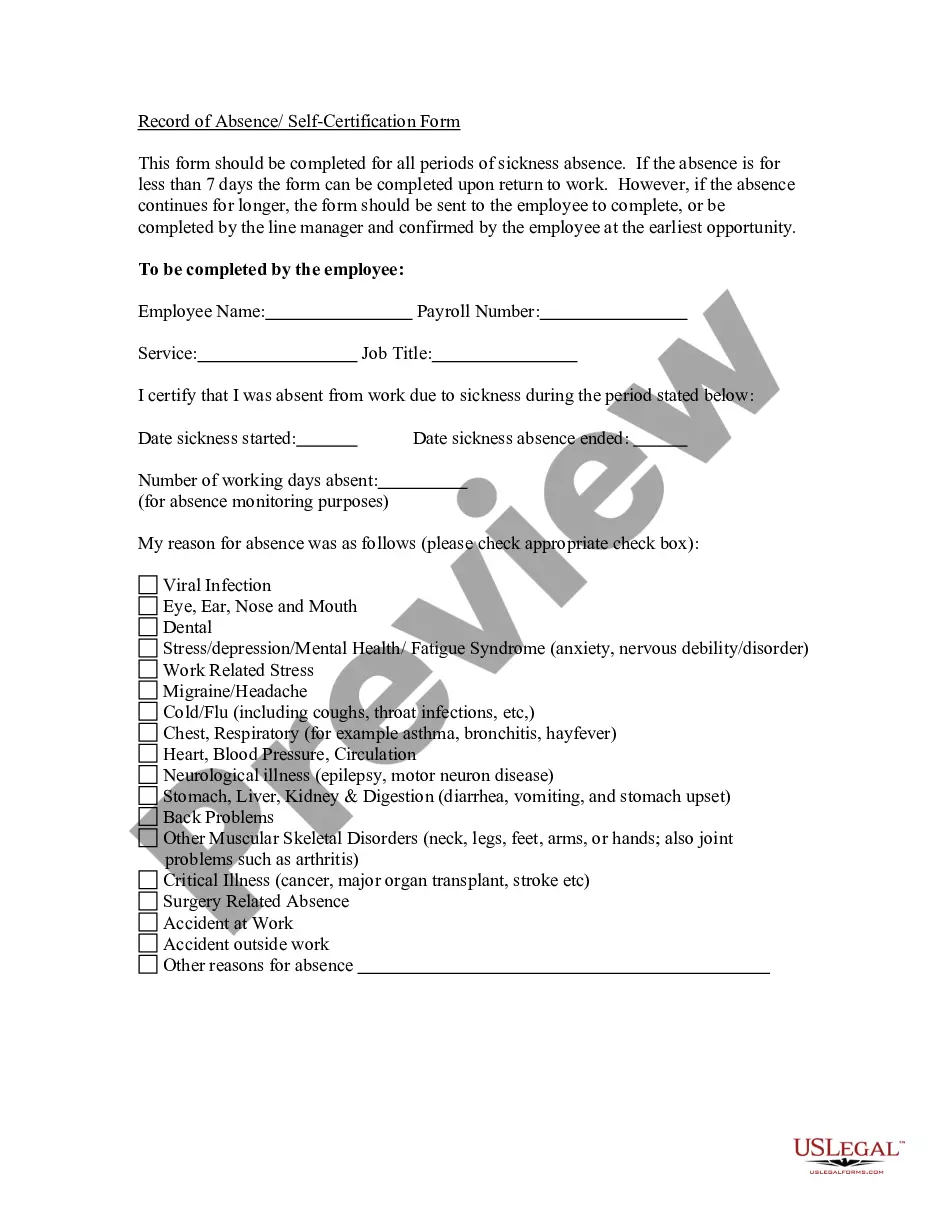
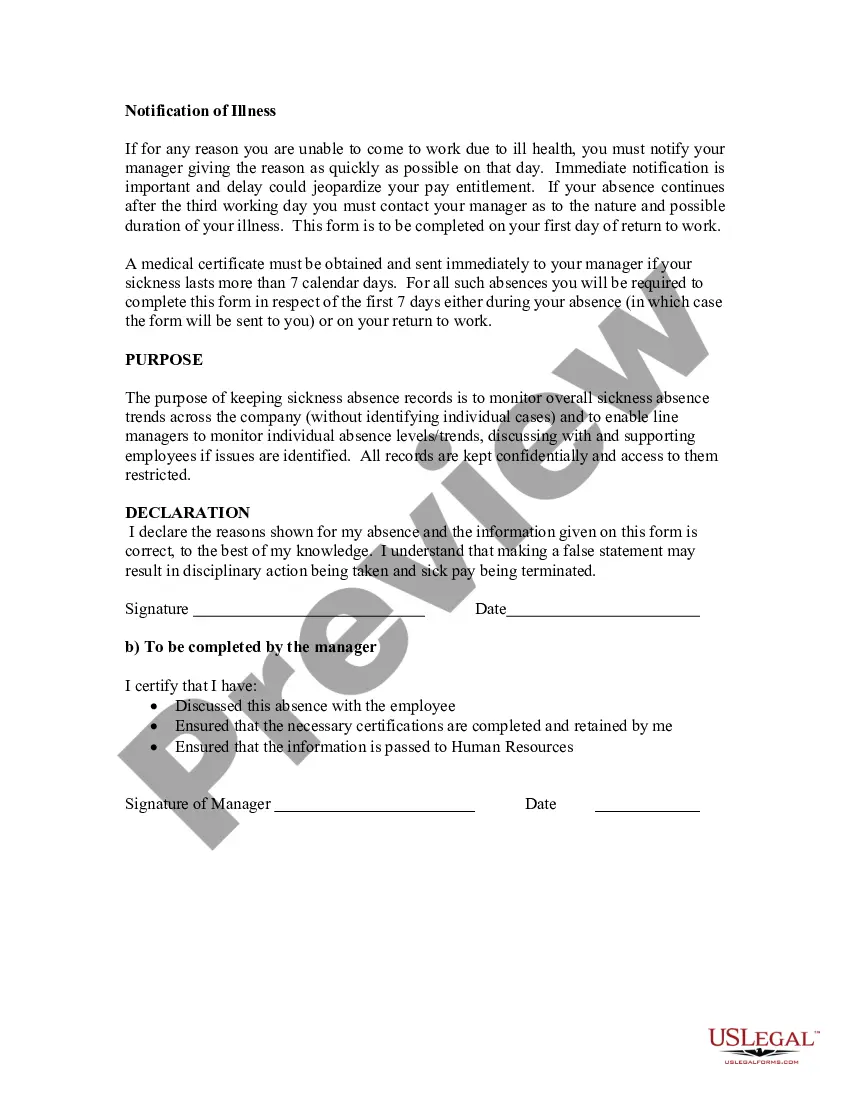
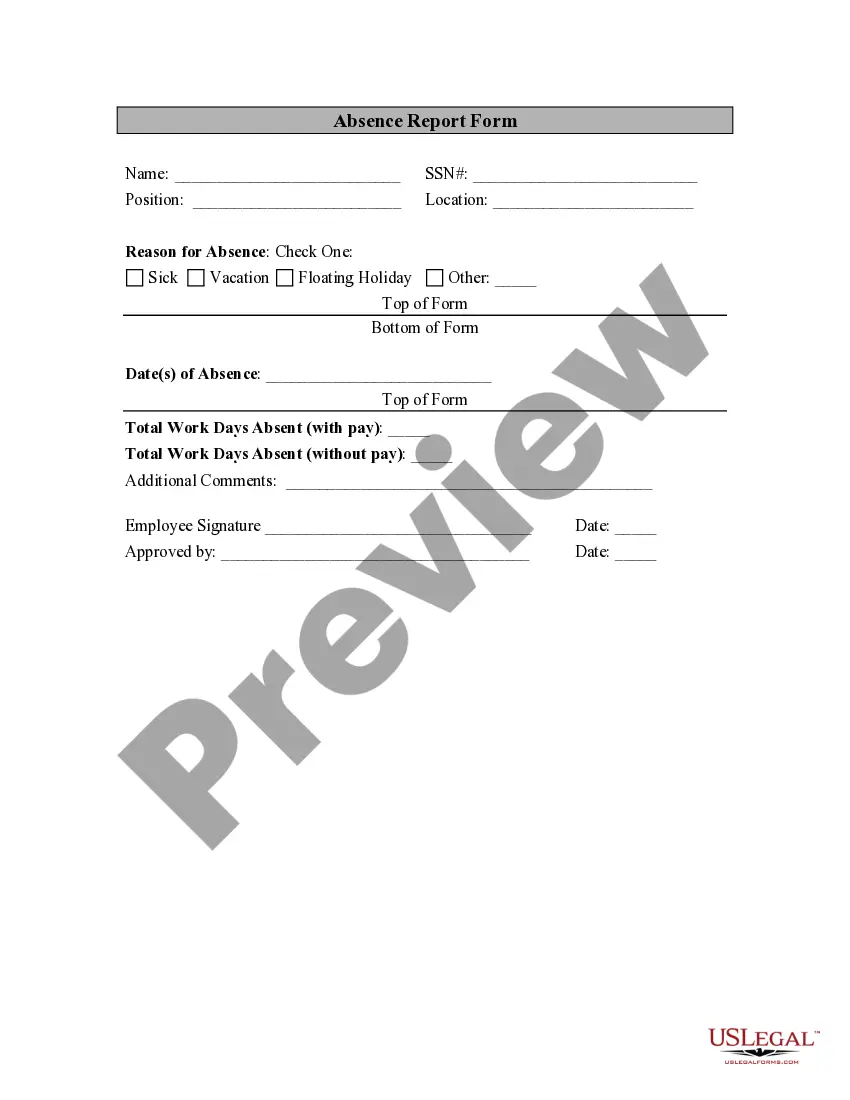
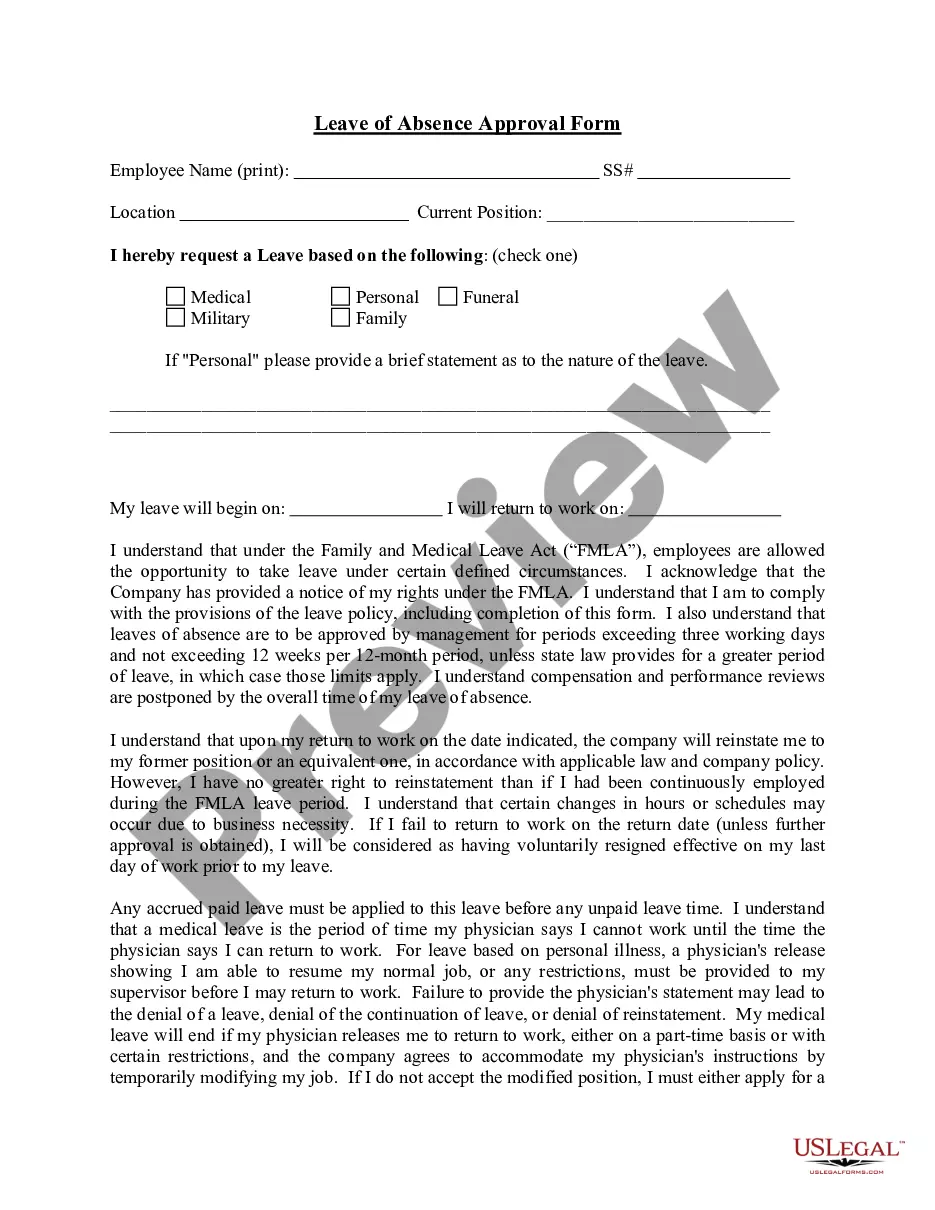
How to fill out Record Of Absence - Self-Certification Form?
- If you're a returning user, log into your account and ensure your subscription is active before downloading your required form template.
- For new users, preview the available forms and their descriptions to find one that meets your specific needs and complies with local laws.
- If you encounter any conflicting information, utilize the Search tab to locate the correct template that suits your requirements.
- Once you've identified the appropriate document, click the Buy Now button and select a subscription plan that fits your needs. You'll need to create an account to access the library.
- Complete your purchase by providing your payment details through credit card or PayPal.
- After payment, download your form and save it on your device. You can also access it anytime in the My Forms section of your profile.
With US Legal Forms, you can swiftly access a vast collection of over 85,000 legal documents, ensuring you can find exactly what you need. The platform also provides premium expert assistance for form completion, making the process seamless.
Don't let legal paperwork add to your stress—visit US Legal Forms today and streamline your document needs! Start your journey now.
Form popularity
FAQ
Dealing with an employee who is always sick requires a careful approach. First, document their absences and initiate a private conversation. It's important to understand their circumstances and explore options for flexibility or support. If the issue of being work sick ill for long persists, consider evaluating workplace wellness programs or exploring alternative arrangements to assist them.
If an employee is long-term sick, you need to stay in touch and stay supportive. Regular check-ins can help maintain a positive relationship and assist their reintegration once they are ready to return. Review policies regarding long-term sick leave, and encourage the employee to consult healthcare providers. If needed, platforms like uslegalforms can help clarify the legal aspects surrounding long-term illness at work.
When an employee is constantly sick, it is crucial to approach the situation with understanding. Initiate a conversation to understand underlying issues and offer support. Document their absences and note any patterns. If the pattern of being work sick ill for long continues, you may need to discuss options for medical leave or adjustments in their workload.
Determining how long is too long to be sick from work can vary by company and role. Generally, if someone is out work sick ill for long, it may be time to assess their situation more closely. Keep open communication and consider what role is available during their absence. If it extends beyond a few weeks, consider discussing options like leave of absence or accommodations.
Managing a long-term sick employee requires compassion and clear communication. First, review your company's policies on long-term illness to ensure compliance. You should also schedule a meeting with the employee to discuss their situation. Support them through their recovery, but maintain expectations for work participation, especially if the employee is out work sick ill for long.
To extend your sick leave, begin by expressing your current health situation clearly and directly to your manager. State your need for additional time off and provide any relevant medical advice or documentation to support your request. This approach helps foster understanding and demonstrates your proactive stance in managing your health.
If you must work while sick, prioritize your most important tasks to maintain your productivity. Use any available breaks to rest and recharge your energy. Moreover, ensure you stay hydrated and consider using resources such as flexible work arrangements to help you manage both your work responsibilities and your health effectively.
Requesting an extension for your sick leave involves communicating directly with your employer. Provide an update about your health status and explain why you need additional time off. It can be helpful to offer any medical documentation to enhance clarity and enable a smoother process.
When asking for long sick leave, it's best to schedule a meeting with your manager or HR. Express your situation honestly, and support your request with medical advice, if possible. Be specific about how long you anticipate being away from work while reassuring your employer of your commitment to return once you recover.
To transition to long-term sick leave, begin by consulting with your healthcare provider. They can help you understand your medical condition and the necessity of an extended absence. After you have their support, communicate with your employer about the need for long-term sick leave, ensuring you provide any necessary documentation.