How Do You Put Employees On Payroll
Description
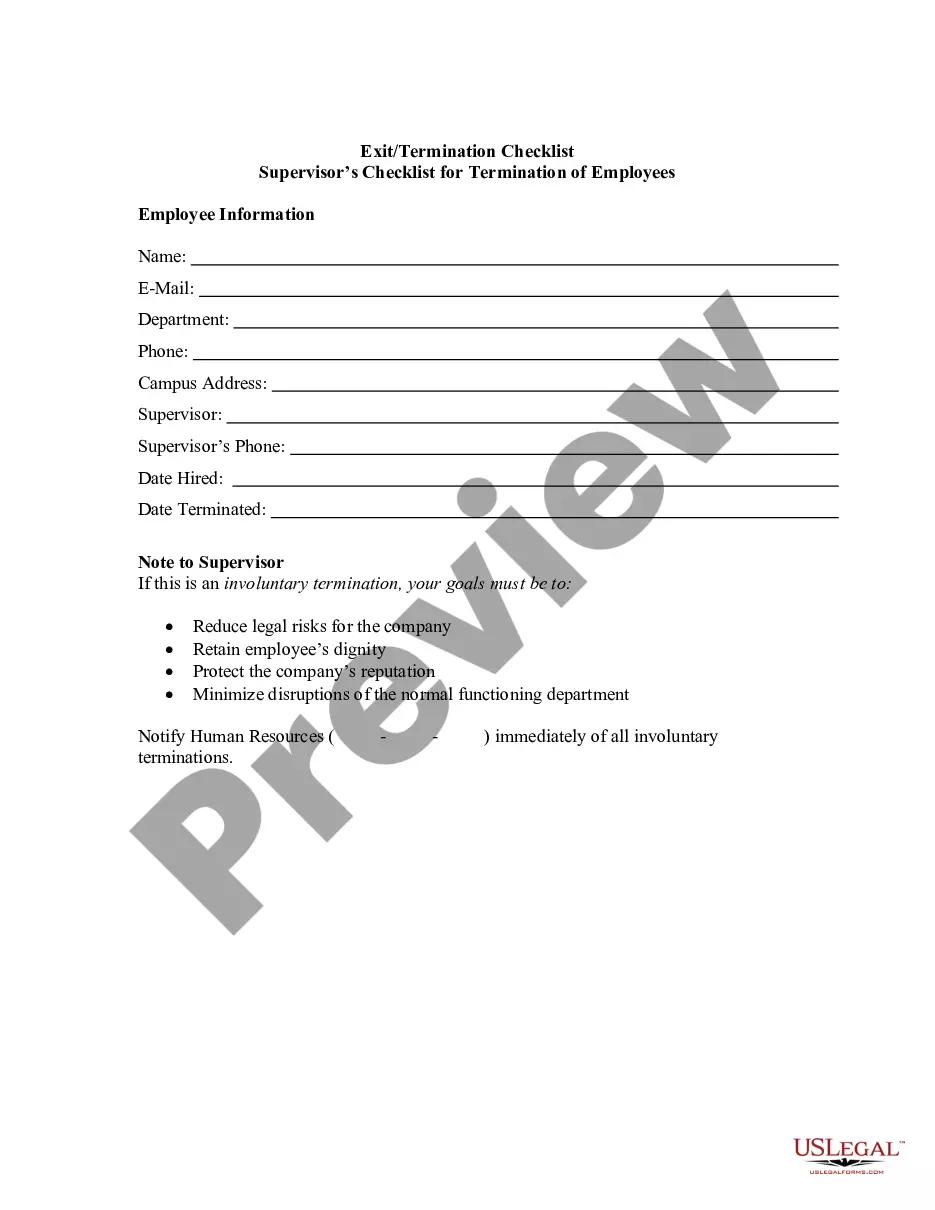
Get your form ready online
Our built-in tools help you complete, sign, share, and store your documents in one place.
Make edits, fill in missing information, and update formatting in US Legal Forms—just like you would in MS Word.
Download a copy, print it, send it by email, or mail it via USPS—whatever works best for your next step.
Sign and collect signatures with our SignNow integration. Send to multiple recipients, set reminders, and more. Go Premium to unlock E-Sign.
If this form requires notarization, complete it online through a secure video call—no need to meet a notary in person or wait for an appointment.
We protect your documents and personal data by following strict security and privacy standards.

Make edits, fill in missing information, and update formatting in US Legal Forms—just like you would in MS Word.

Download a copy, print it, send it by email, or mail it via USPS—whatever works best for your next step.

Sign and collect signatures with our SignNow integration. Send to multiple recipients, set reminders, and more. Go Premium to unlock E-Sign.

If this form requires notarization, complete it online through a secure video call—no need to meet a notary in person or wait for an appointment.

We protect your documents and personal data by following strict security and privacy standards.
Looking for another form?










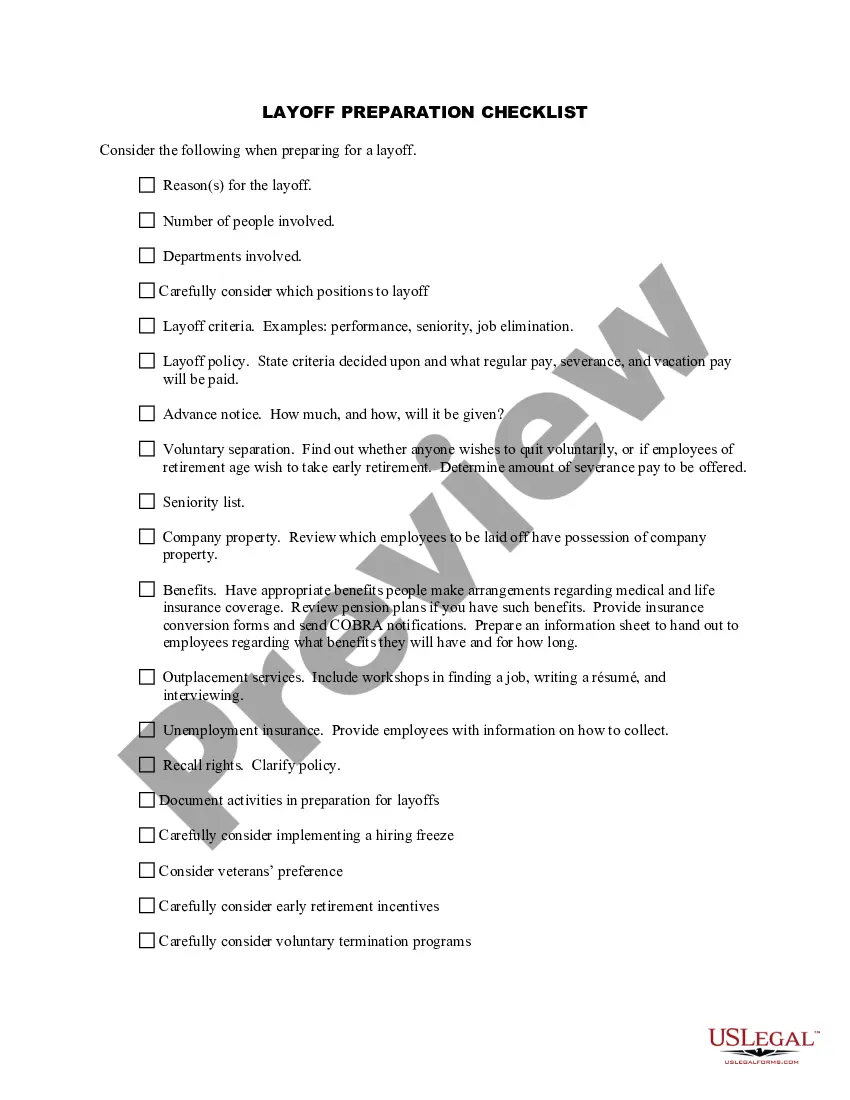
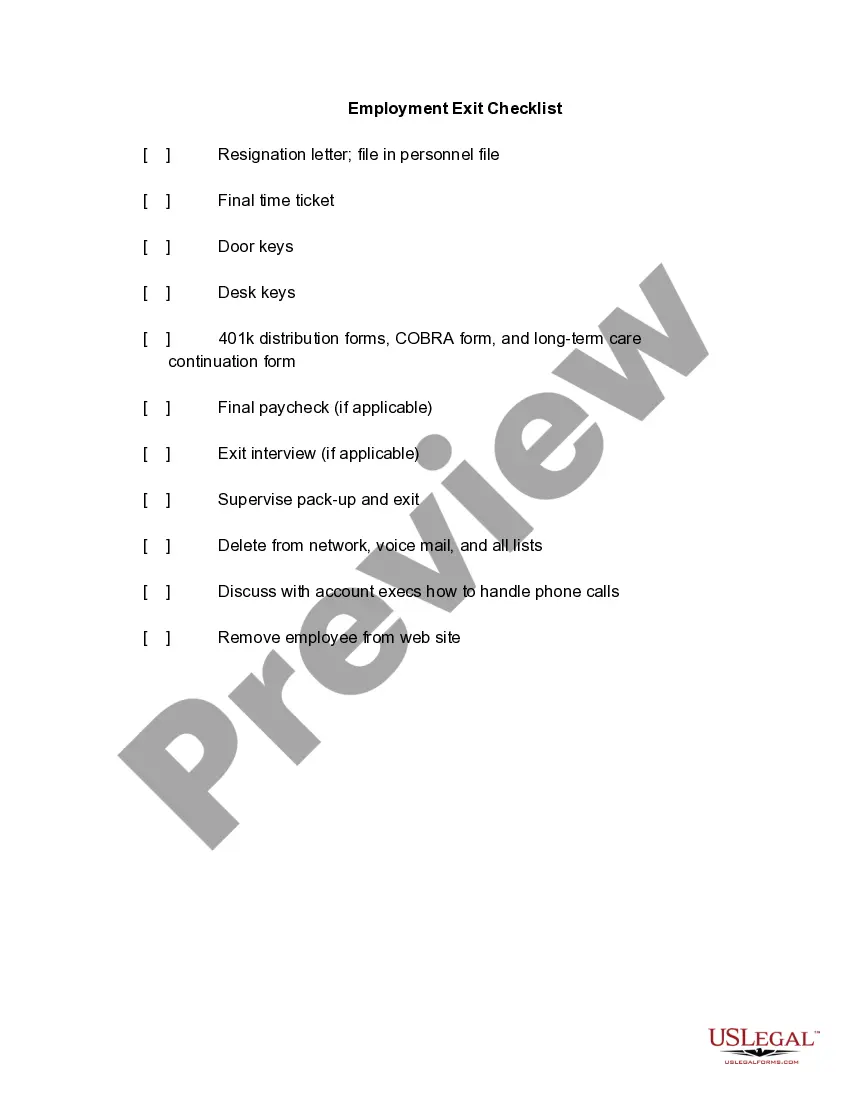
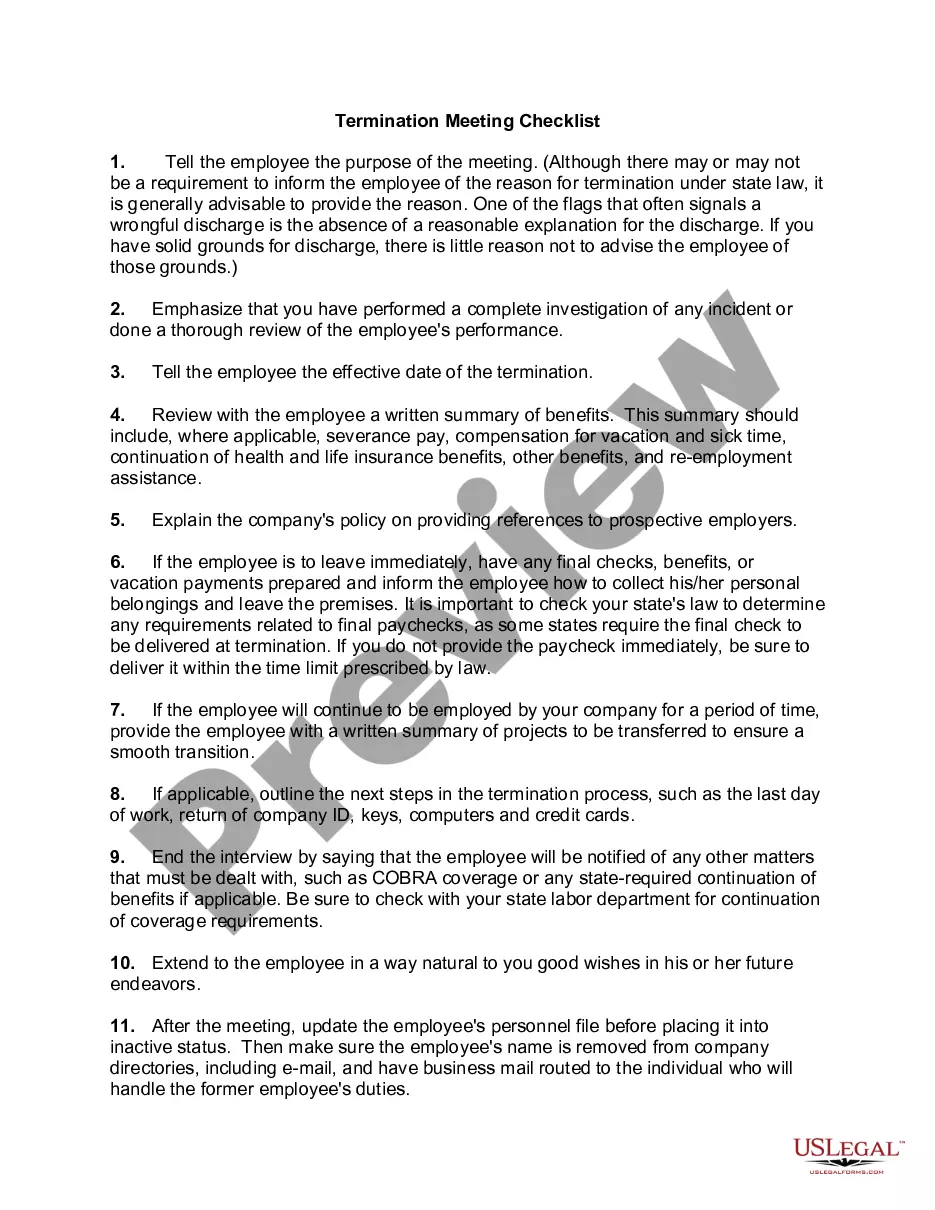
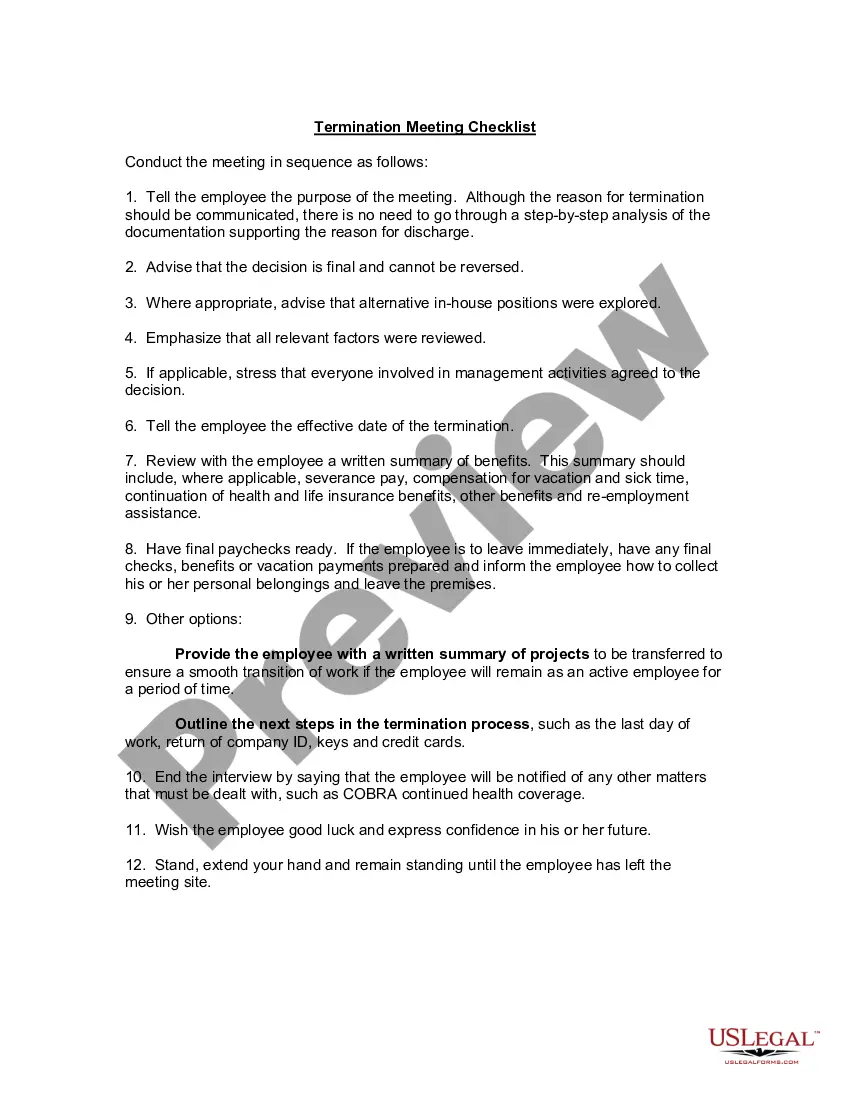
How to fill out Layoff Preparation Checklist?
- Log in to your US Legal Forms account if you're an existing user. Make sure your subscription remains active; renew if necessary.
- For new users, begin by examining the preview and description of the relevant payroll document template to confirm it meets your needs and local regulations.
- If adjustments or different templates are needed, use the search functionality to find the appropriate form.
- Proceed to purchase the document by clicking the 'Buy Now' button and selecting your preferred subscription plan. Create an account if you're a first-time user.
- Finalize your purchase by entering your payment information, either through credit card or PayPal.
- Download and save the document onto your device for easy access. You can view it anytime from the 'My Forms' section in your profile.
In conclusion, using US Legal Forms significantly simplifies the process of putting employees on payroll. With a vast library of over 85,000 editable legal documents and expert support, you can ensure compliance and efficiency in managing your payroll tasks.
Start your journey today and empower your business with the right legal forms!
Form popularity
FAQ
Yes, you can put your adult child on payroll, provided they are genuinely working for your business. You must follow appropriate payroll procedures, just as you would for any other employee. When you put employees on payroll, ensure compliance with tax regulations and provide proper documentation to support their employment status. This way, you can navigate this process smoothly.
Yes, it is illegal to keep someone on payroll who does not perform any work. This can lead to serious legal consequences, including fines and tax penalties. To avoid these issues, ensure that all employees on payroll are actively working and fulfilling their job responsibilities. Understanding how you put employees on payroll correctly is crucial to maintaining compliance.
Getting someone on payroll involves several steps. First, you need to collect the necessary information from the employee, such as their name, address, Social Security number, and tax information. Next, choose a payroll service or software to streamline the process. Finally, input the employee's details into your payroll system and begin processing their paychecks to effectively put employees on payroll.
Setting up payroll for your employees requires a systematic approach. Start by collecting necessary documentation, including W-4 forms and any state-specific tax requirements. Then, leverage platforms like USLegalForms to assist you in navigating the legal aspects of payroll setup, ensuring you meet all compliance standards as you put employees on payroll.
Putting employees on payroll involves several key steps. First, you need to gather essential information, such as tax forms and bank account details. Next, consider using an intuitive platform, like USLegalForms, which simplifies the payroll setup process, allowing you to manage employee payments efficiently and accurately.
To record employee payroll effectively, you should maintain clear and accurate records of hours worked, overtime, and any deductions. Utilize accounting software or payroll systems that automate calculations, ensuring you track each employee’s earnings and deductions thoroughly. This method not only helps with accuracy but also simplifies how you put employees on payroll and manage it over time.
To put an employee on payroll, you first need to gather essential information, such as the employee's Social Security number and tax forms. Next, set up the employee's profile in your payroll system, ensuring that you include their salary or hourly wage, tax withholding preferences, and any benefits. Afterward, run your payroll according to your schedule, ensuring that you meet all legal requirements. If you want a streamlined process, consider using US Legal Forms for easy access to payroll templates and compliance resources.