Final Pay For California Employees
Description
Get your form ready online
Our built-in tools help you complete, sign, share, and store your documents in one place.
Make edits, fill in missing information, and update formatting in US Legal Forms—just like you would in MS Word.
Download a copy, print it, send it by email, or mail it via USPS—whatever works best for your next step.
Sign and collect signatures with our SignNow integration. Send to multiple recipients, set reminders, and more. Go Premium to unlock E-Sign.
If this form requires notarization, complete it online through a secure video call—no need to meet a notary in person or wait for an appointment.
We protect your documents and personal data by following strict security and privacy standards.

Make edits, fill in missing information, and update formatting in US Legal Forms—just like you would in MS Word.

Download a copy, print it, send it by email, or mail it via USPS—whatever works best for your next step.

Sign and collect signatures with our SignNow integration. Send to multiple recipients, set reminders, and more. Go Premium to unlock E-Sign.

If this form requires notarization, complete it online through a secure video call—no need to meet a notary in person or wait for an appointment.

We protect your documents and personal data by following strict security and privacy standards.
Looking for another form?







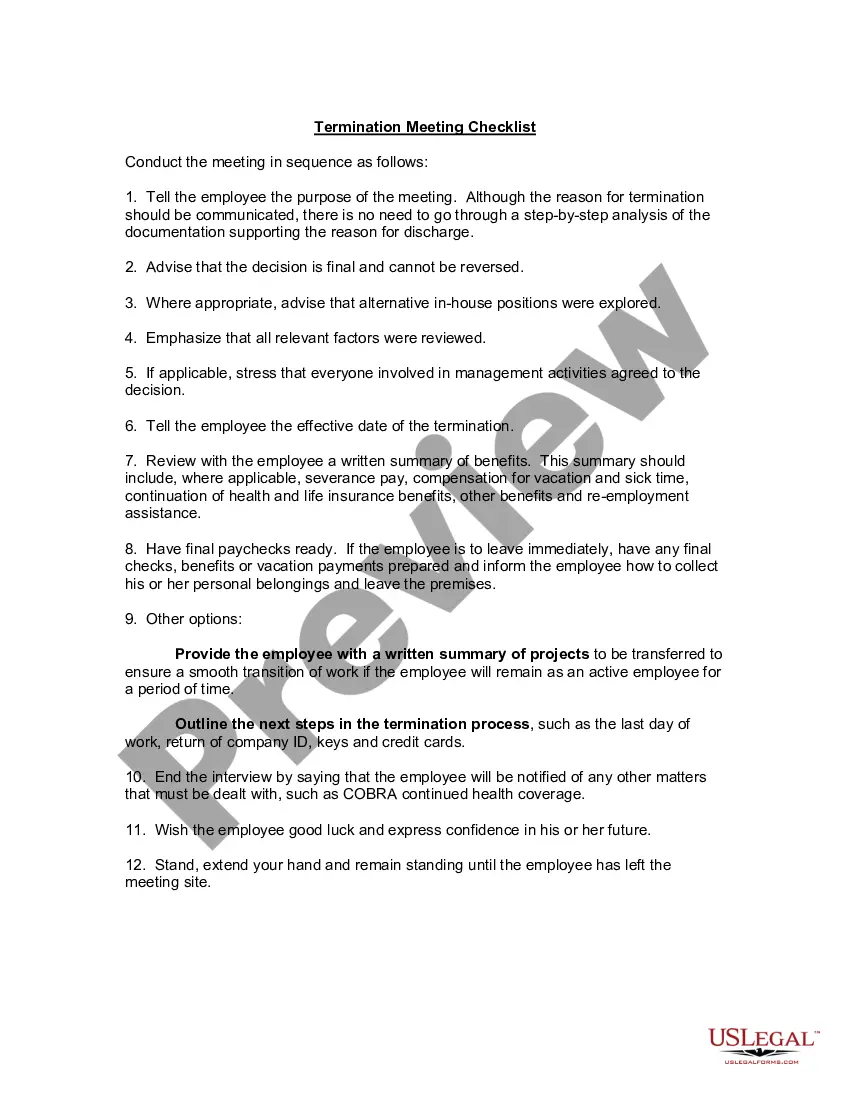
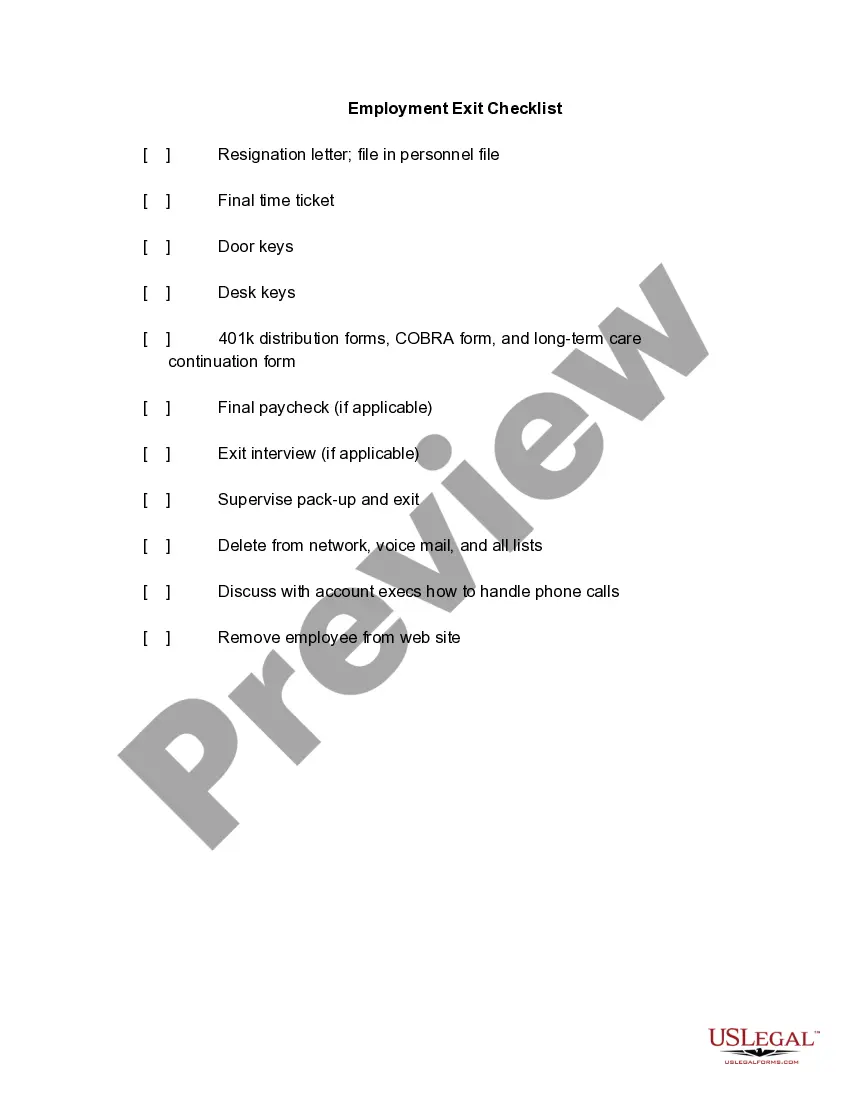
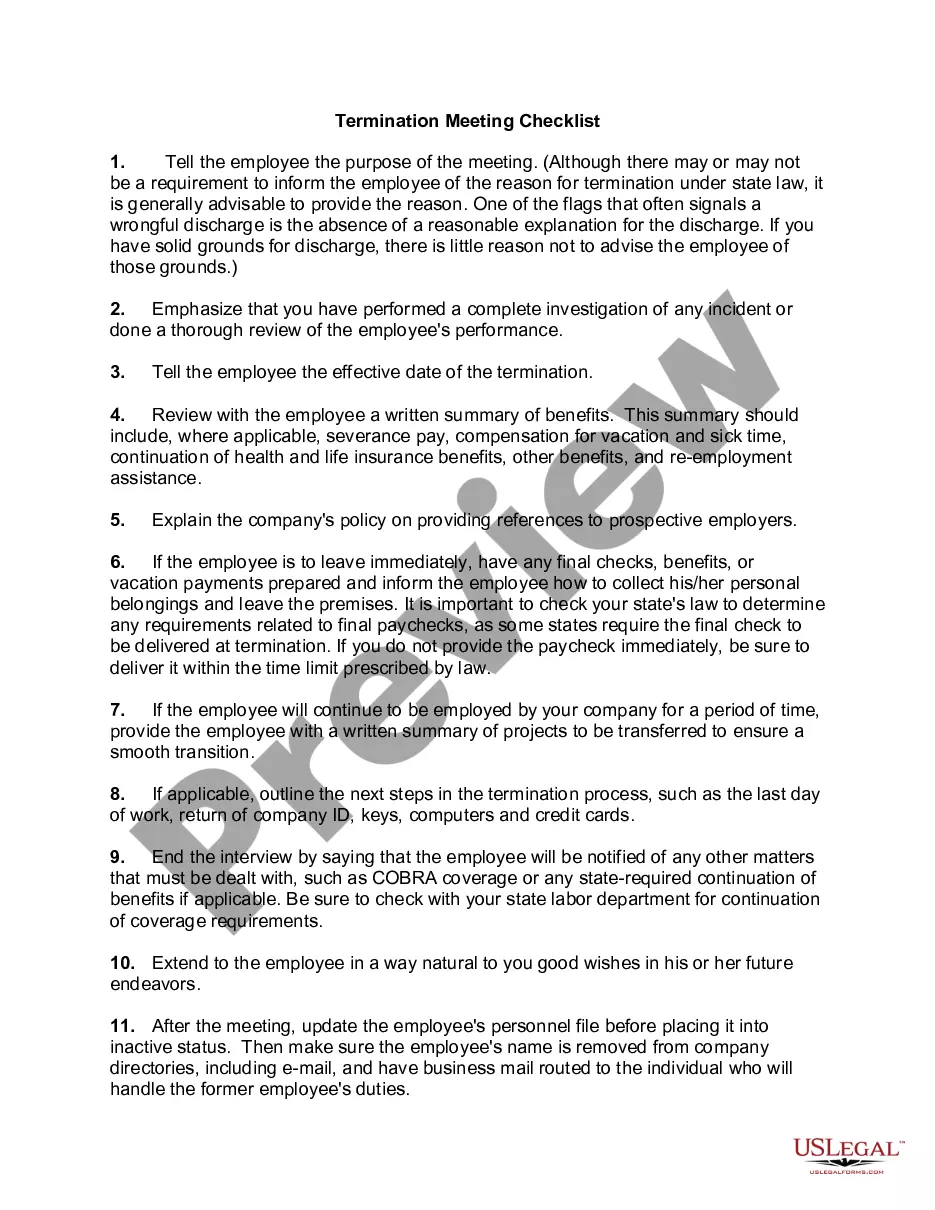
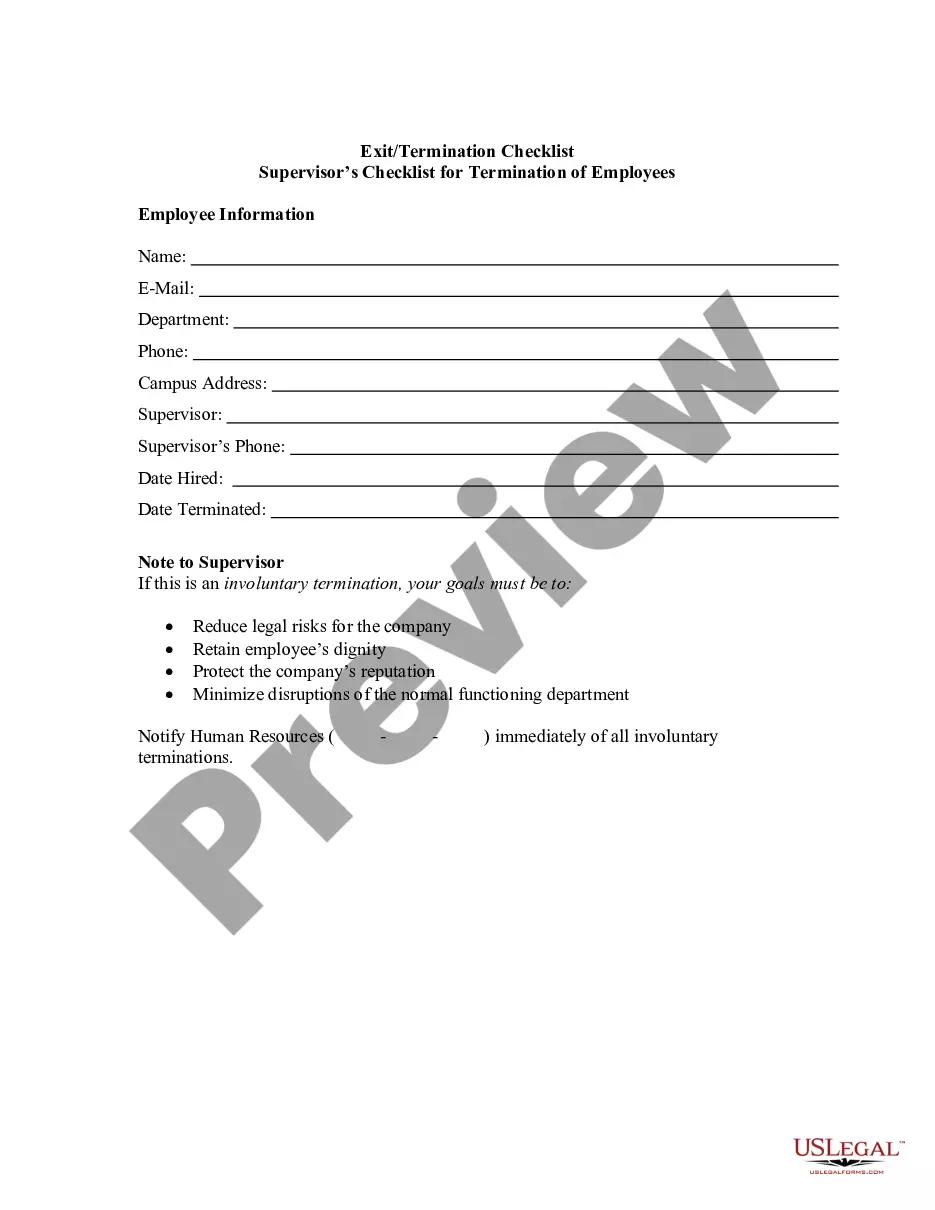
How to fill out Termination Meeting Checklist?
The Final Compensation For California Workers displayed on this site is a versatile official template crafted by experienced attorneys in accordance with national and local laws.
For over 25 years, US Legal Forms has supplied individuals, companies, and lawyers with more than 85,000 certified, state-specific documents for any professional and personal circumstance. It’s the quickest, easiest, and most dependable method to acquire the paperwork you require, as the service ensures top-tier data protection and anti-virus safeguards.
Review and sign the document. Print the template to fill it in manually. Alternatively, employ an online multi-functional PDF editor to quickly and accurately complete and sign your form with a valid signature.
- Search for the document you require and review it.
- Browse the file you searched and preview it or assess the form summary to verify it meets your requirements. If it doesn't, utilize the search bar to find the appropriate one. Click Purchase Now once you've identified the template you need.
- Register and Log In.
- Choose the pricing option that fits you and set up an account. Use PayPal or a credit card for a swift transaction. If you already possess an account, Log In and check your subscription to proceed.
- Acquire the fillable template.
- Choose the format you desire for your Final Compensation For California Workers (PDF, Word, RTF) and download the example to your device.
Form popularity
FAQ
In California, employers can only deduct specific amounts from a final paycheck, such as taxes and any authorized deductions as per law. Employers cannot withhold pay for unreturned uniforms, equipment, or other company property without written agreement. It’s important for employees to be aware of their rights regarding final pay for California employees to ensure they receive what they are owed. If there are disputes about deductions, using a reliable platform like USLegalForms can help clarify and address these issues.
In California, employers must provide final pay for California employees immediately upon termination or resignation. If an employee resigns without notice, the employer must pay the final paycheck within 72 hours. This final paycheck should include all wages, accrued vacation, and any other owed compensation. Understanding this law is essential for both employers and employees to ensure compliance and avoid disputes.
In California, final pay for California employees must include all earned wages up until the last day of work. This amount typically covers regular pay, any overtime, and accrued vacation time. Employers must provide this payment on the employee's last working day or within a specified timeframe if the employee resigns. For those navigating these requirements, US Legal Forms offers resources to ensure compliance with final paycheck laws.
When you leave a job, your final pay for California employees typically includes all earned wages up to your last day of work. This payment often consists of your regular pay, any unused vacation time, and any other owed compensation. It's important to note that California law mandates employers to provide this final paycheck on the last day of employment, ensuring you receive what you rightfully earned. If you're unsure about your rights, consider visiting USLegalForms for resources that can help clarify your situation.
Filing a wage claim in California is a straightforward process if you have not received your final paycheck. First, gather your pay stubs, records of hours worked, and any correspondence with your employer. Next, you can file a claim with the California Division of Labor Standards Enforcement (DLSE), either online or in person. For additional assistance, consider using the UsLegalForms platform to ensure your claim is filed correctly and promptly.
Yes, if you quit your job in California, you are entitled to receive your final paycheck. Your employer must issue your final wages within 72 hours of your resignation. This paycheck should cover all your earned income, including any unused vacation time. Understanding your rights to final pay for California employees reinforces your position when leaving a job.
In California, the law mandates that employers must provide a final paycheck to employees who separate from their job, whether voluntarily or involuntarily. This paycheck must include all earned wages, including unused vacation time, and it should be issued on the last working day for immediate termination. For employees who quit, the final pay is due within 72 hours after they leave. Understanding the law on final pay for California employees is crucial for receiving the wages you deserve.
The 7 minute rule in California refers to how small increments of time can be recorded when billing or tracking employee hours. Specifically, if an employee works for seven minutes or less, employers may round that time up to the nearest quarter hour. This means that for final pay for California employees, accurate time tracking can prevent disputes over owed wages. It's essential for employers to apply these rules fairly to ensure compliance and employee satisfaction.
The 7 day rule in California refers to the requirement that an employer must pay terminated employees their final paycheck within seven calendar days of termination. This law ensures that employees receive their final pay for California employees without unnecessary delays. This rule may vary slightly for employees who resign with or without notice, so understanding your rights is critical. Utilizing resources like US Legal Forms can clarify these regulations and provide needed support.
For California employees, the timeframe for receiving your final paycheck varies depending on your situation. If you quit your job with a proper notice, you should expect to receive your final pay on your last working day. However, if you are terminated or resign without notice, your employer must provide your final paycheck within 72 hours. Being informed about these rules can prevent misunderstandings and ensure you receive your final pay promptly.