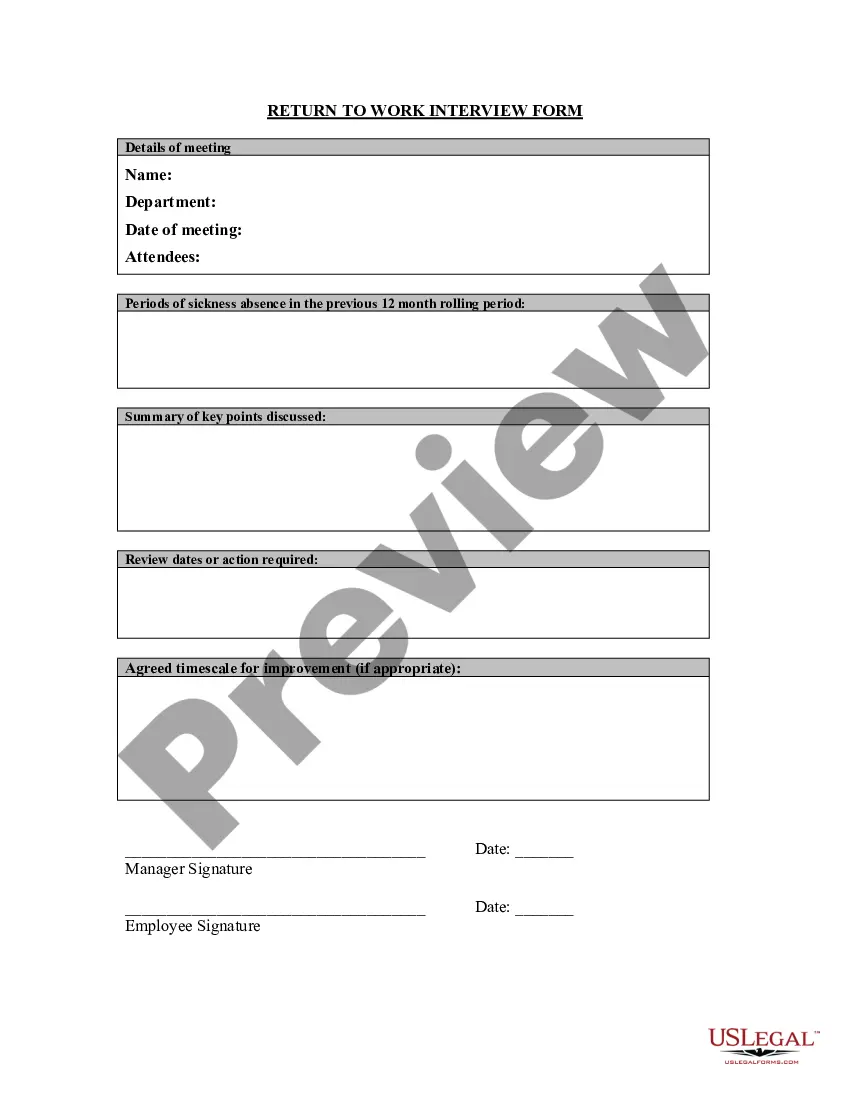
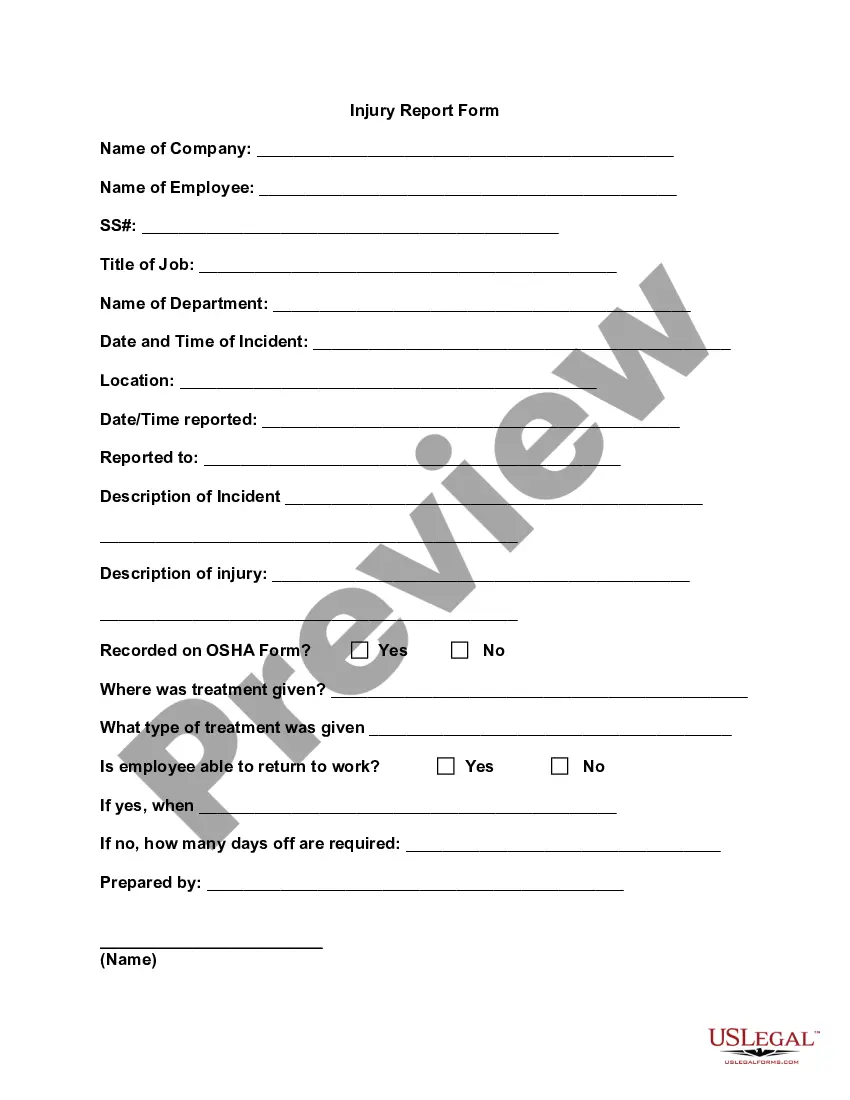
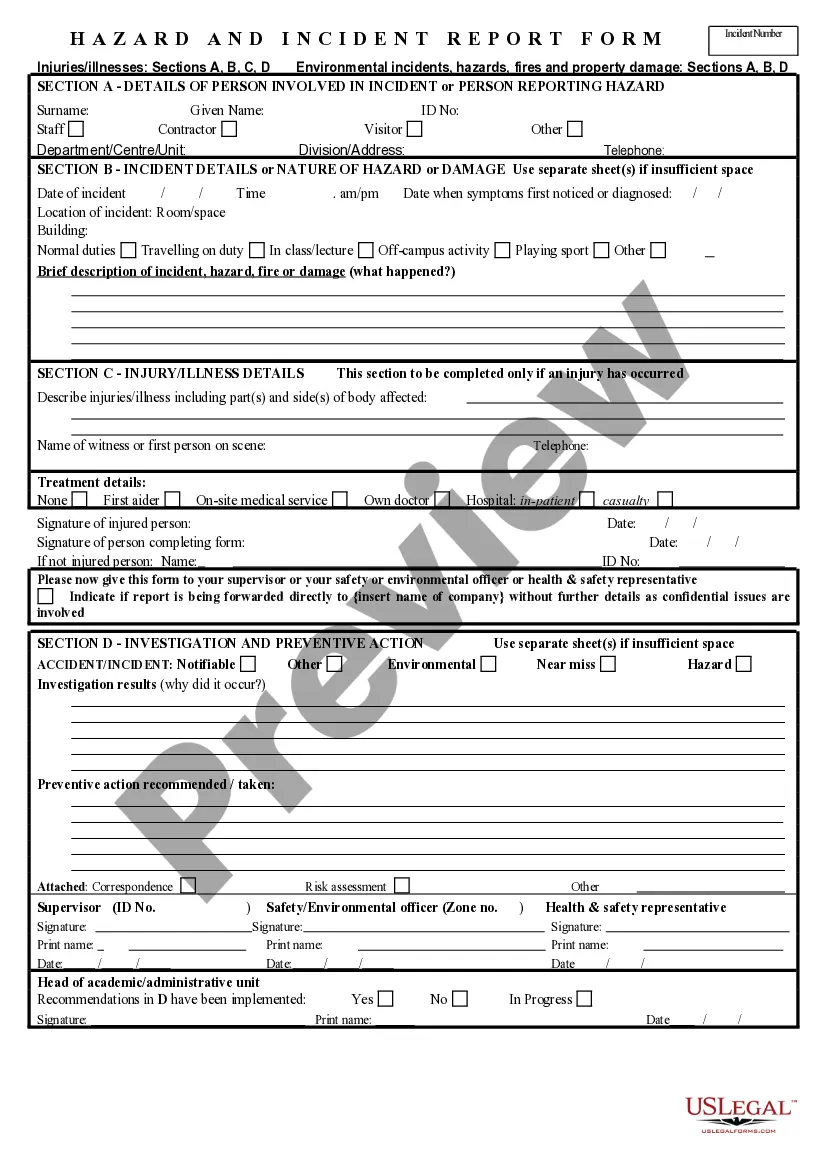
Return To Work Interview Form Formal
Description

Get your form ready online
Our built-in tools help you complete, sign, share, and store your documents in one place.
Make edits, fill in missing information, and update formatting in US Legal Forms—just like you would in MS Word.
Download a copy, print it, send it by email, or mail it via USPS—whatever works best for your next step.
Sign and collect signatures with our SignNow integration. Send to multiple recipients, set reminders, and more. Go Premium to unlock E-Sign.
If this form requires notarization, complete it online through a secure video call—no need to meet a notary in person or wait for an appointment.
We protect your documents and personal data by following strict security and privacy standards.
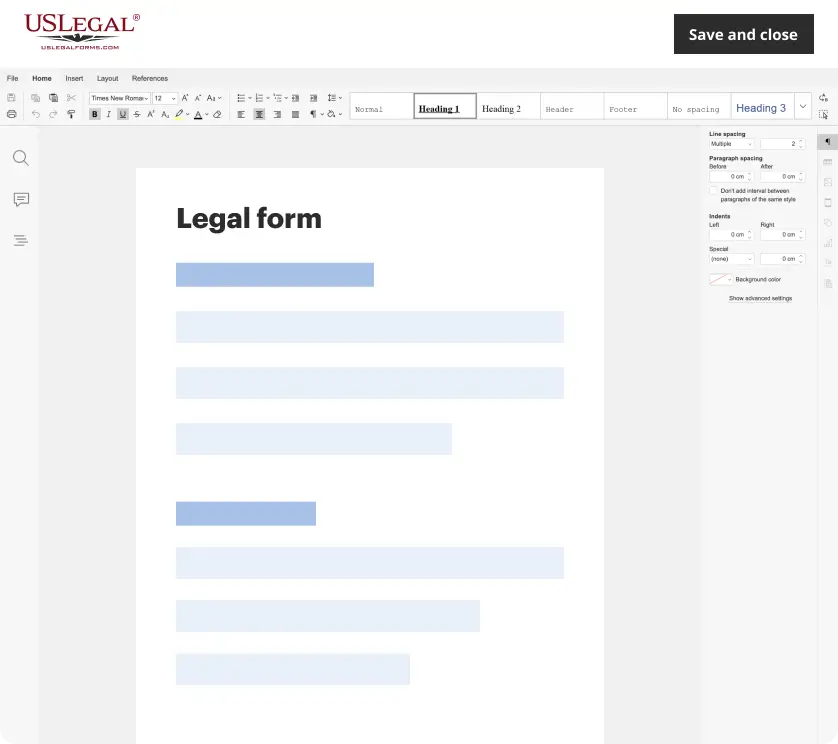
Make edits, fill in missing information, and update formatting in US Legal Forms—just like you would in MS Word.
Download a copy, print it, send it by email, or mail it via USPS—whatever works best for your next step.
Sign and collect signatures with our SignNow integration. Send to multiple recipients, set reminders, and more. Go Premium to unlock E-Sign.
If this form requires notarization, complete it online through a secure video call—no need to meet a notary in person or wait for an appointment.
We protect your documents and personal data by following strict security and privacy standards.
Looking for another form?





How to fill out Return To Work Interview Form?
Handling legal documents and procedures can be a laborious addition to your routine.
Return to Work Interview Form Formal and similar documents typically necessitate that you search for them and find the most effective method to properly complete them.
Therefore, if you are managing financial, legal, or personal affairs, having a comprehensive and useful online directory of forms at your disposal will be highly beneficial.
US Legal Forms is the leading online service for legal templates, providing over 85,000 state-specific documents and various resources that will assist you in easily finalizing your paperwork.
Simply Log In to your account, find Return to Work Interview Form Formal, and obtain it immediately from the My documents section. You can also access forms you have previously downloaded.
- Browse the collection of relevant documents with just a single click.
- US Legal Forms supplies you with state and county-specific forms accessible for download at any time.
- Safeguard your document management processes utilizing high-quality services that enable you to create any form in minutes without extra or concealed fees.
Form popularity
FAQ
Talk about any work updates that happened while they were off. see if they need any support. agree on a plan for returning to work, if appropriate, for example a phased return to work. talk about what they would like other employees to know about their absence and what they would like to keep confidential.
Filling out a fit to return to work form The duration of absence. The process used to record absence. The reason for absence. GP recommendations (if any). Request for reasonable adjustments (if any).
Within the return to work form, managers and employees will need to typically provide details relating to their absence, such as: the duration of absence; the method used by employees to notify of their absence; the reason for absence; details about previous absences over the past calendar year (if applicable);
What is a return to work interview? As the name suggests, a return to work interview is a meeting held with an employee after a period of absence. The primary purpose of a return to work interview is to welcome the employee back, discuss the reasons for their absence and confirm that they are fit to attend work.
How to Write an Effective Return to Work Letter Address the Employee. As with any letter, start by addressing the recipient appropriately. ... Lay out the Reasons for Sending the Letter. ... Explain the Specifics of Their Return. ... Inform Employees of Any Changes to Their Role. ... Outline Policy or Office Changes that Affect Them.