Maintenance Plan To Shrink Log File
Description
Get your form ready online
Our built-in tools help you complete, sign, share, and store your documents in one place.
Make edits, fill in missing information, and update formatting in US Legal Forms—just like you would in MS Word.
Download a copy, print it, send it by email, or mail it via USPS—whatever works best for your next step.
Sign and collect signatures with our SignNow integration. Send to multiple recipients, set reminders, and more. Go Premium to unlock E-Sign.
If this form requires notarization, complete it online through a secure video call—no need to meet a notary in person or wait for an appointment.
We protect your documents and personal data by following strict security and privacy standards.

Make edits, fill in missing information, and update formatting in US Legal Forms—just like you would in MS Word.

Download a copy, print it, send it by email, or mail it via USPS—whatever works best for your next step.

Sign and collect signatures with our SignNow integration. Send to multiple recipients, set reminders, and more. Go Premium to unlock E-Sign.

If this form requires notarization, complete it online through a secure video call—no need to meet a notary in person or wait for an appointment.

We protect your documents and personal data by following strict security and privacy standards.
Looking for another form?
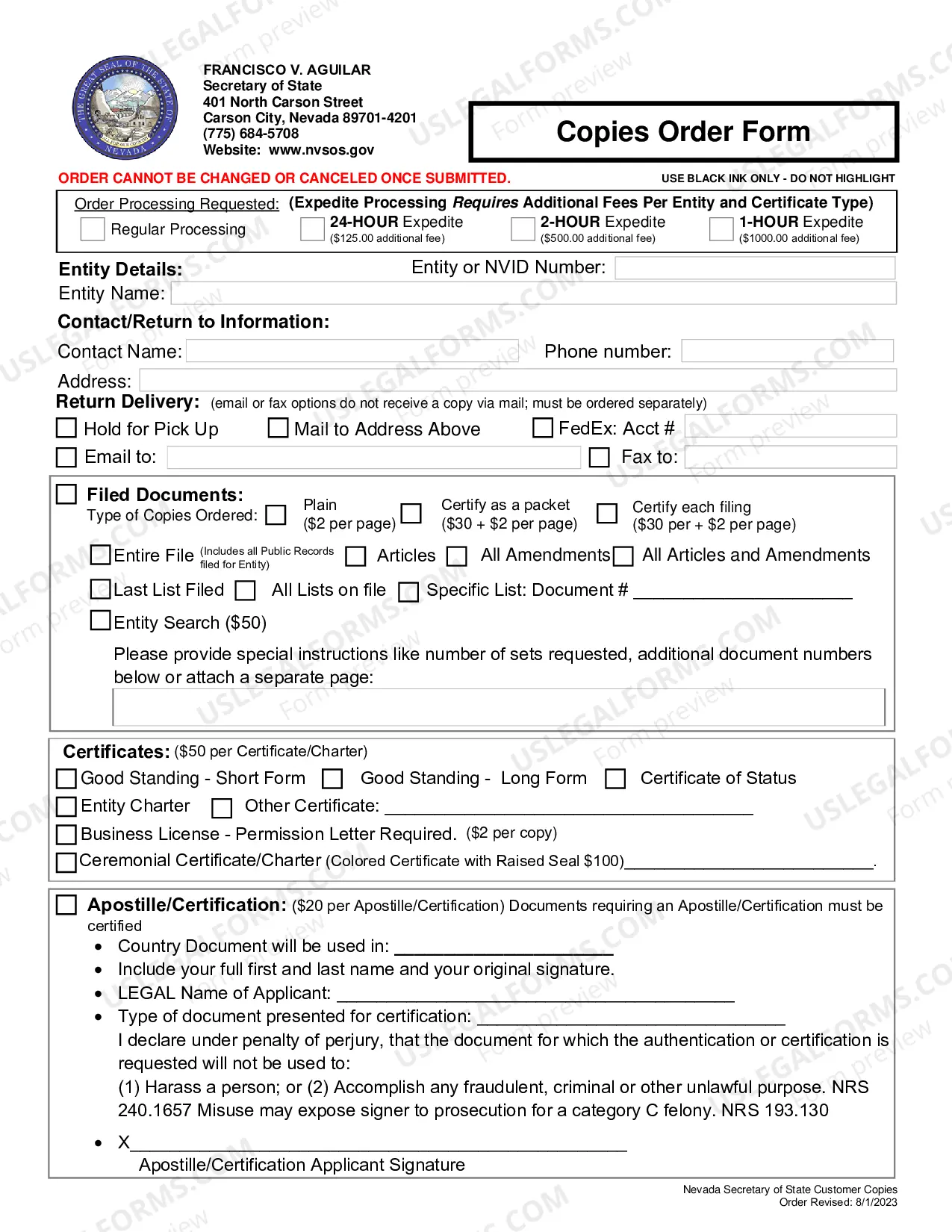


How to fill out Maintenance Request Log?
Legal oversight can be perplexing, even for the most knowledgeable professionals.
When you're on the hunt for a Maintenance Plan To Reduce Log File and lack the time to search for the correct and recent version, the process can be daunting.
Access legal and business forms tailored to your state or county.
US Legal Forms meets any needs you might have, from personal to business documentation, all conveniently located in one platform.
For first-time users of US Legal Forms, create an account to gain unlimited access to the platform's features. Here are the steps to follow after downloading the desired form.
- Employ cutting-edge tools to complete and oversee your Maintenance Plan To Reduce Log File.
- Tap into a wealth of articles, guides, and instructional materials pertinent to your situation and needs.
- Streamline your efforts and save time sourcing the necessary paperwork by using US Legal Forms' advanced search and Preview feature to find Maintenance Plan To Reduce Log File and obtain it.
- If you hold a subscription, Log In to your US Legal Forms account, search the form, and obtain it.
- Check out the My documents section to access your previously saved documents and organize your folders as you see fit.
- A solid online form repository could be transformative for those looking to navigate these challenges efficiently.
- US Legal Forms stands out as a leading provider in digital legal documentation, boasting over 85,000 state-specific legal forms available at your convenience.
- With US Legal Forms, you can.
Form popularity
FAQ
Set the recovery model to Simple and exit the menu. Right-click the database again and select Tasks -> Shrink -> Files. Change the type to Log . Under Shrink action, select Reorganize pages before releasing unused space and click OK.
Create a maintenance plan using the Maintenance Plan Wizard Right-click the Maintenance Plans folder and select Maintenance Plan Wizard. Follow the steps of the wizard to create a maintenance plan. For more information, see Use the Maintenance Plan Wizard.
After you set the recovery model to 'Simple' for a database, you can shrink the current transaction log file to regain space: Start Microsoft SQL Server Management Studio. Expand 'Databases'. Right-click the database that has the transaction log you wish to shrink and select 'Tasks' > 'Shrink' > 'Files'.
So we have a couple of different ways to shrink the log file. We can go into SQL Server Management Studio. go to the properties of the database and do the shrink operation there and we're going to demonstrate that first off. Then we also have the operation of doing the TSQL ShrinkFile command.
To shrink a data or log file using SSMS In Object Explorer, connect to an instance of the SQL Server Database Engine and then expand that instance. Expand Databases and then right-click the database that you want to shrink. Point to Tasks, point to Shrink, and then select Files. ... Select the file type and file name.