Example Of Civil Complaint Without Consent
Description
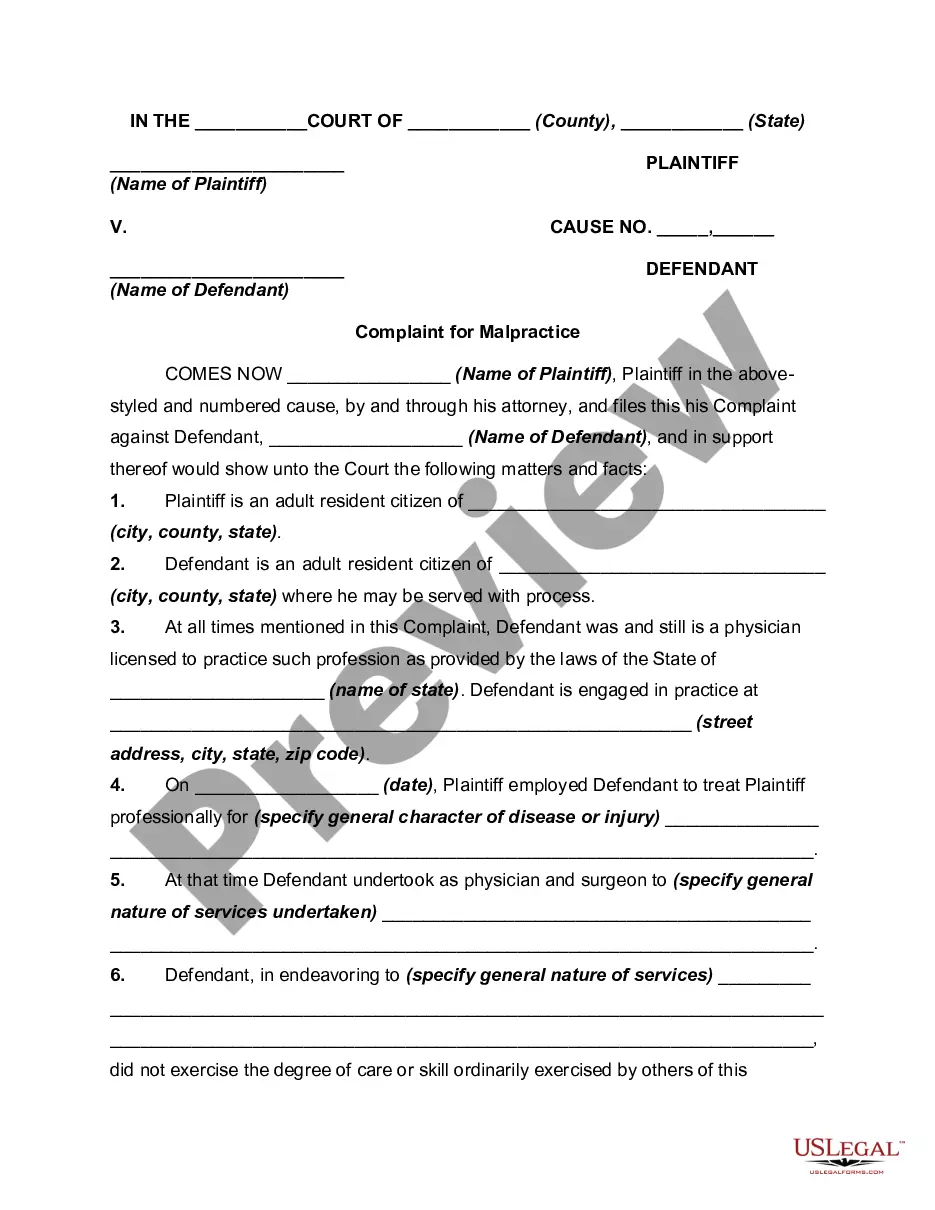
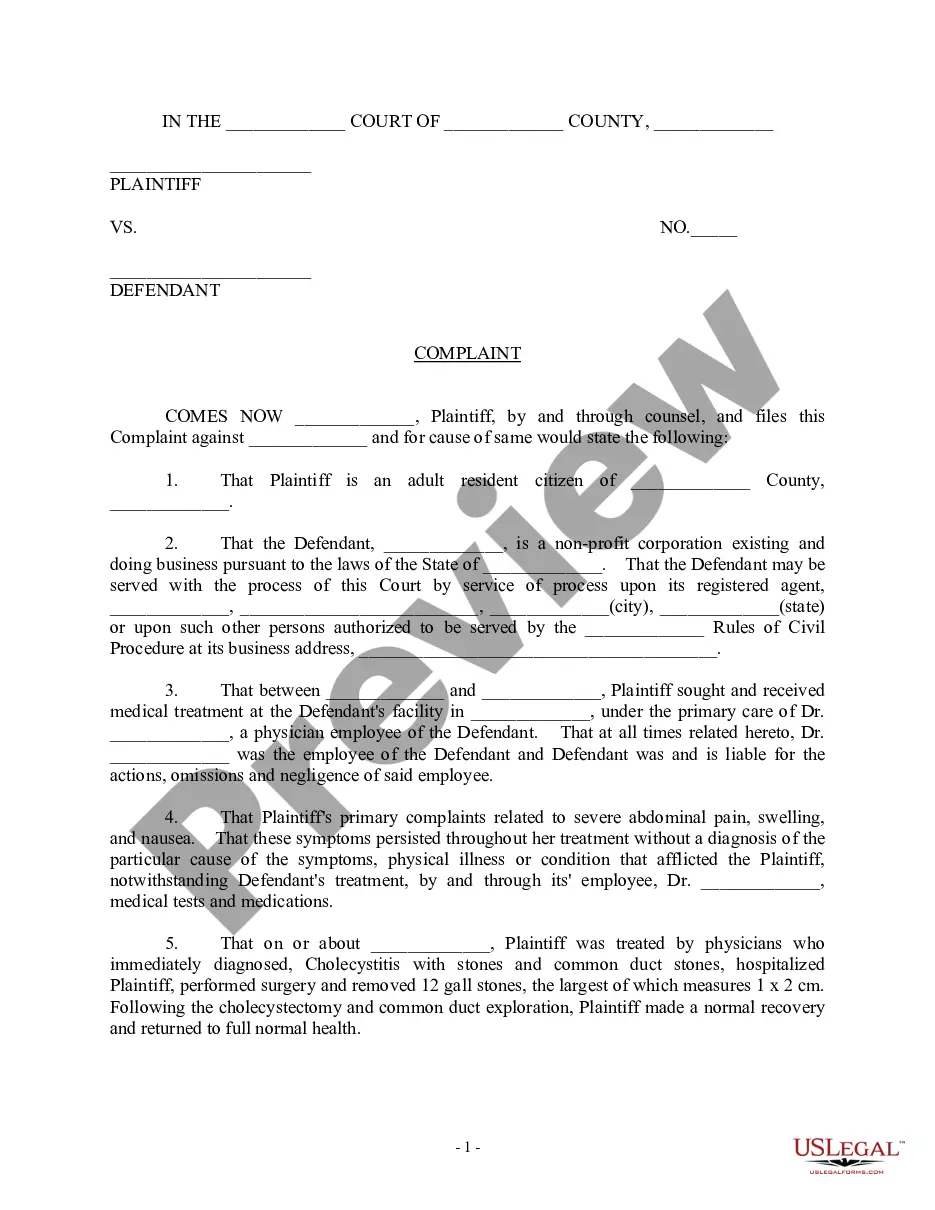
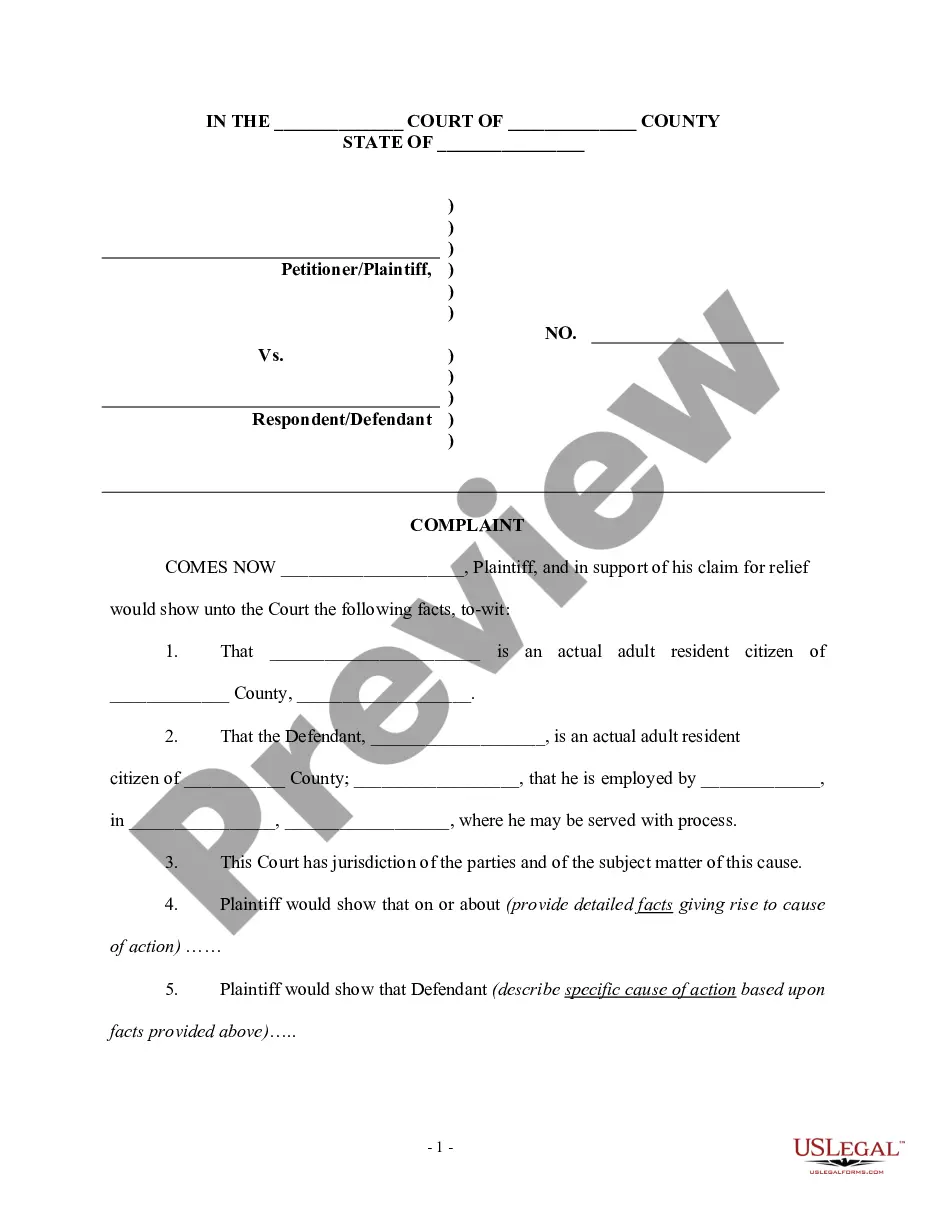
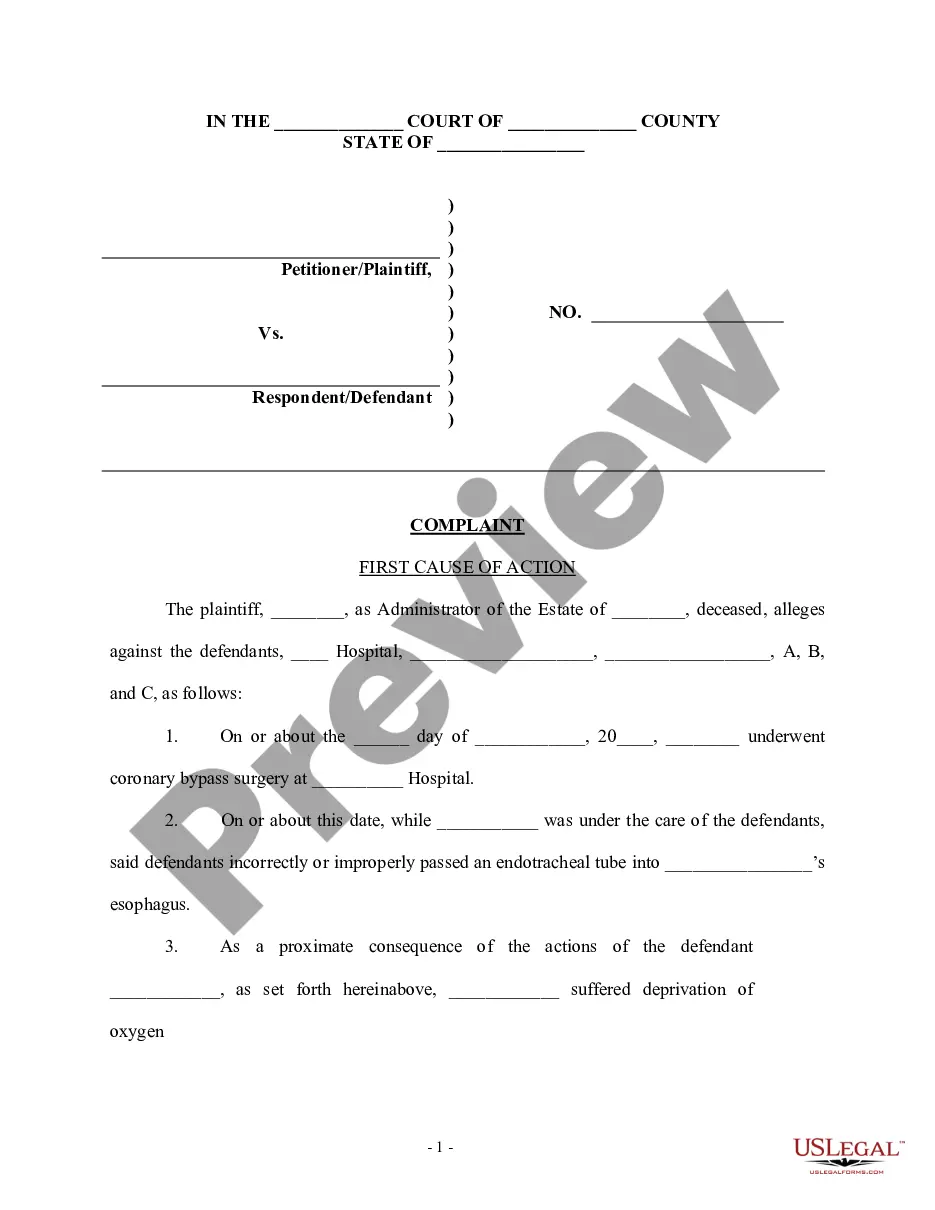
Get your form ready online
Our built-in tools help you complete, sign, share, and store your documents in one place.
Make edits, fill in missing information, and update formatting in US Legal Forms—just like you would in MS Word.
Download a copy, print it, send it by email, or mail it via USPS—whatever works best for your next step.
Sign and collect signatures with our SignNow integration. Send to multiple recipients, set reminders, and more. Go Premium to unlock E-Sign.
If this form requires notarization, complete it online through a secure video call—no need to meet a notary in person or wait for an appointment.
We protect your documents and personal data by following strict security and privacy standards.

Make edits, fill in missing information, and update formatting in US Legal Forms—just like you would in MS Word.

Download a copy, print it, send it by email, or mail it via USPS—whatever works best for your next step.

Sign and collect signatures with our SignNow integration. Send to multiple recipients, set reminders, and more. Go Premium to unlock E-Sign.

If this form requires notarization, complete it online through a secure video call—no need to meet a notary in person or wait for an appointment.

We protect your documents and personal data by following strict security and privacy standards.
Looking for another form?
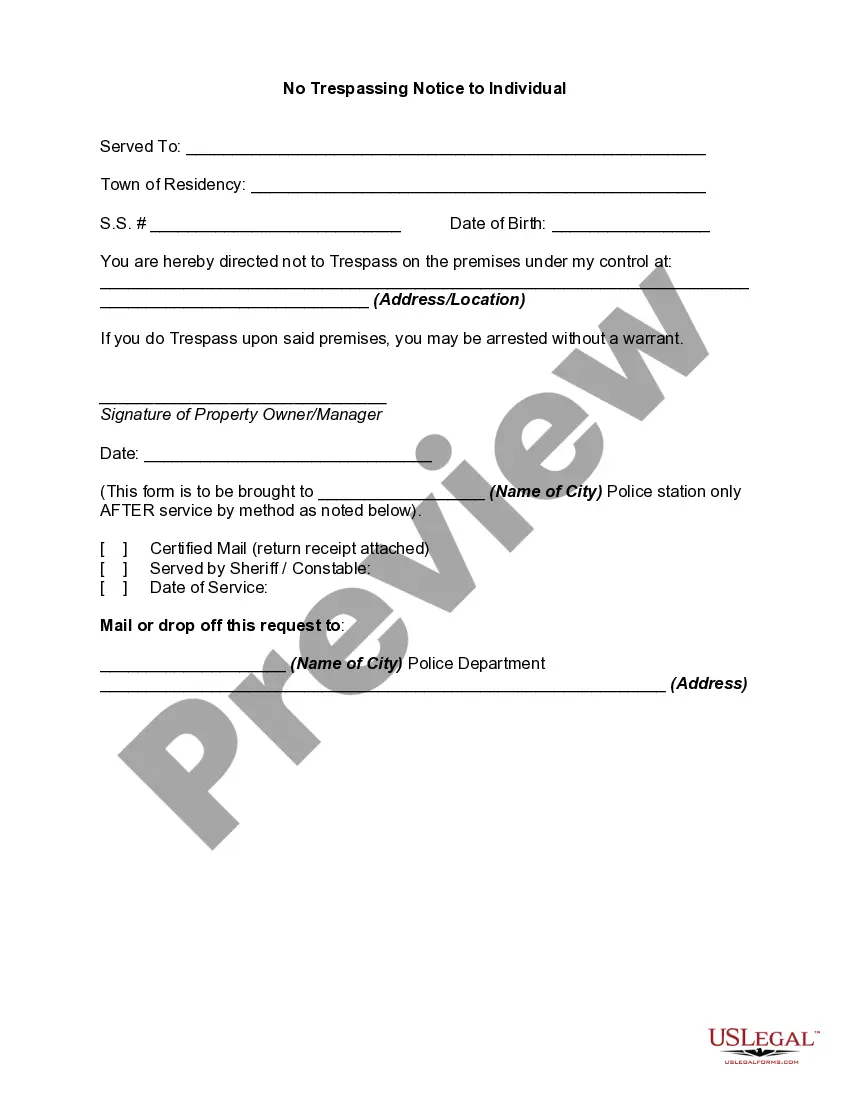
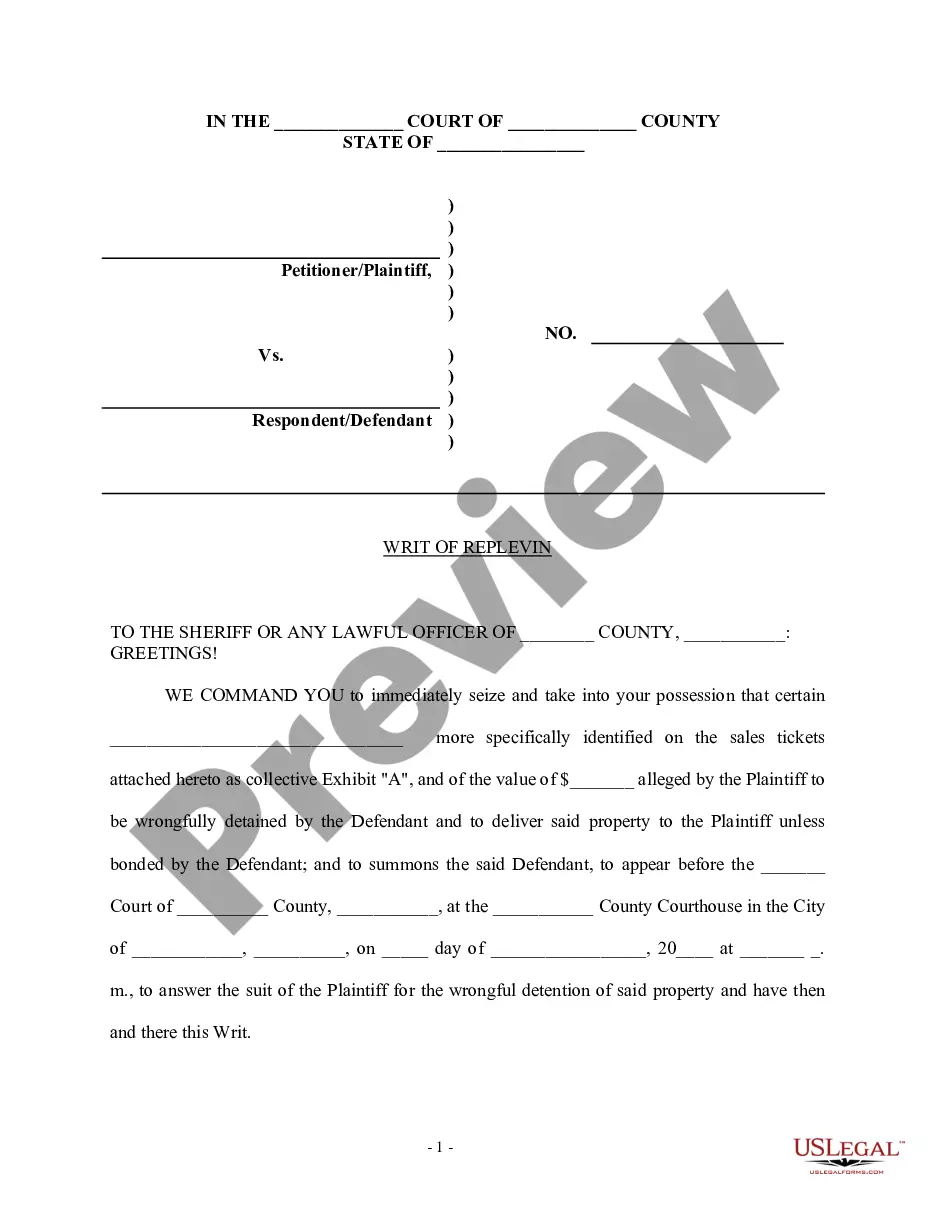
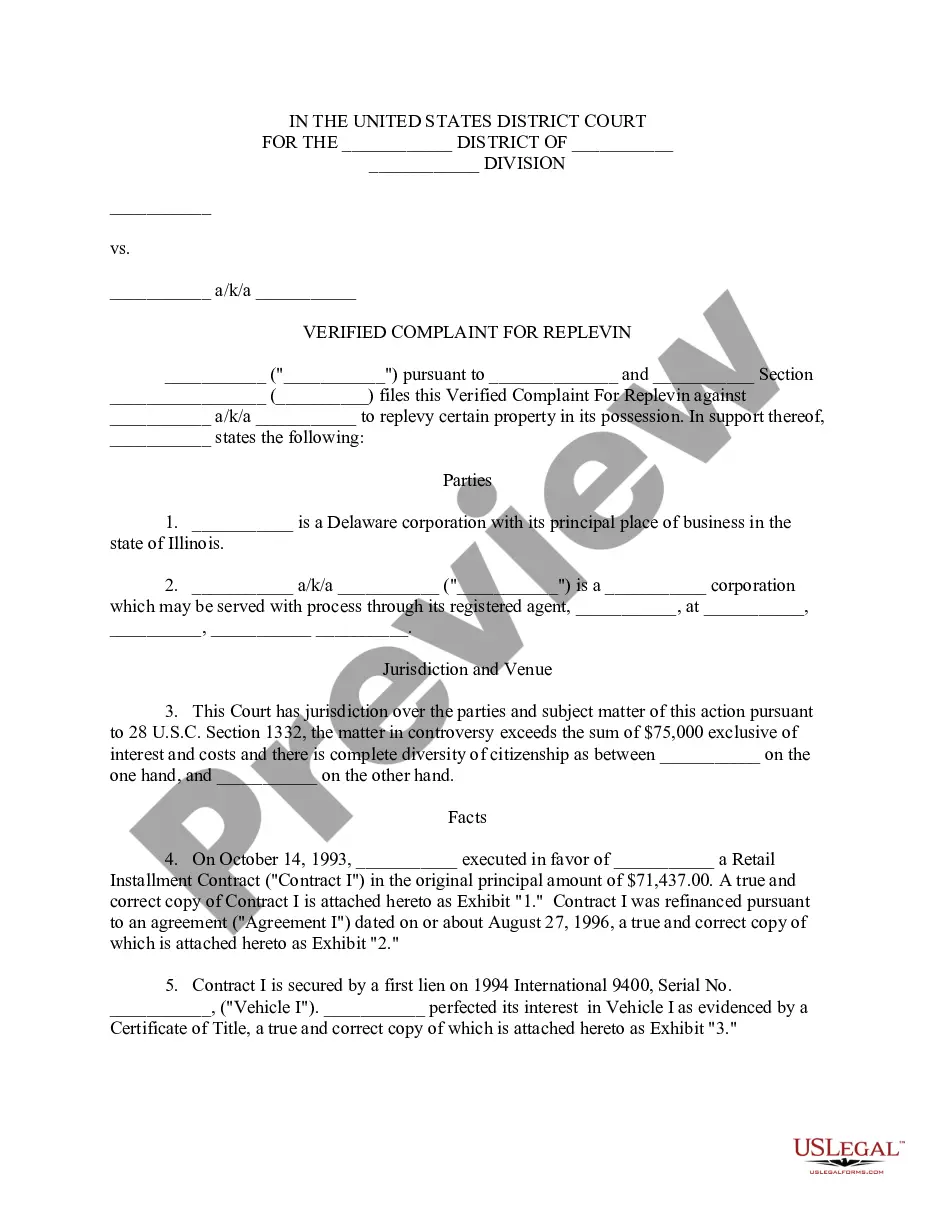
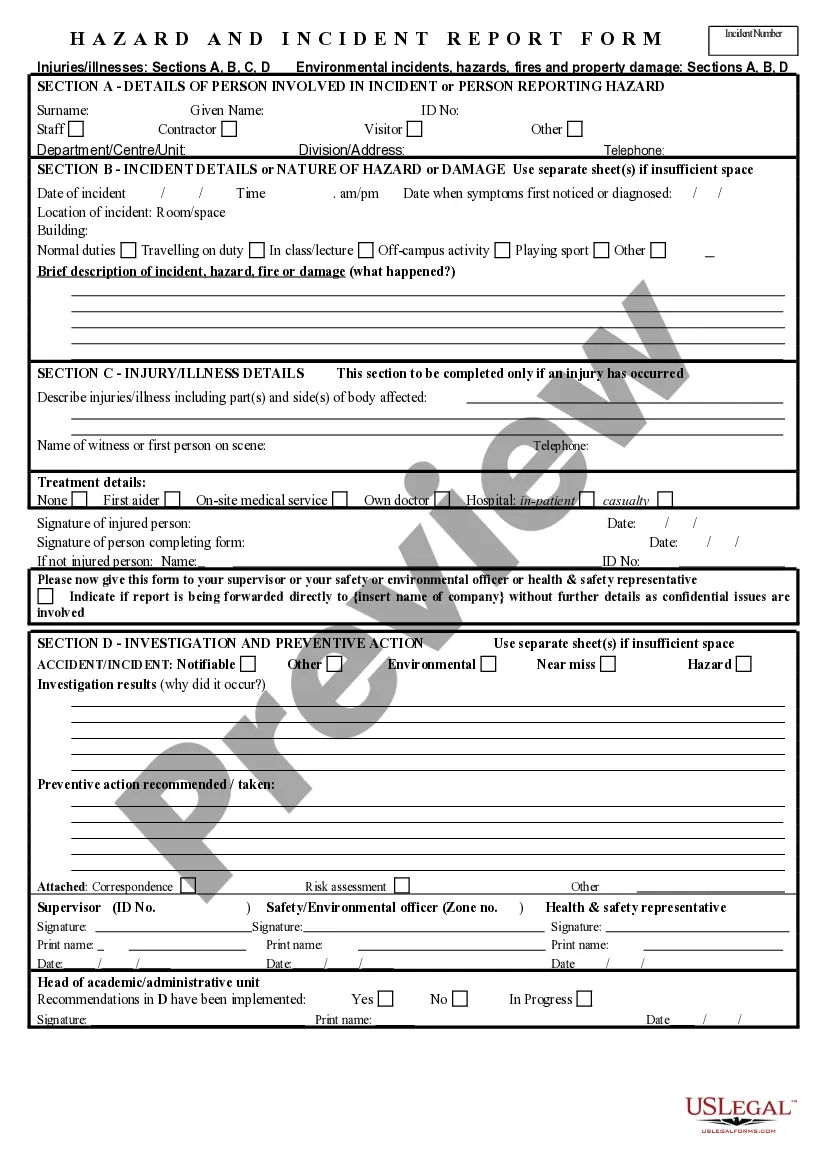
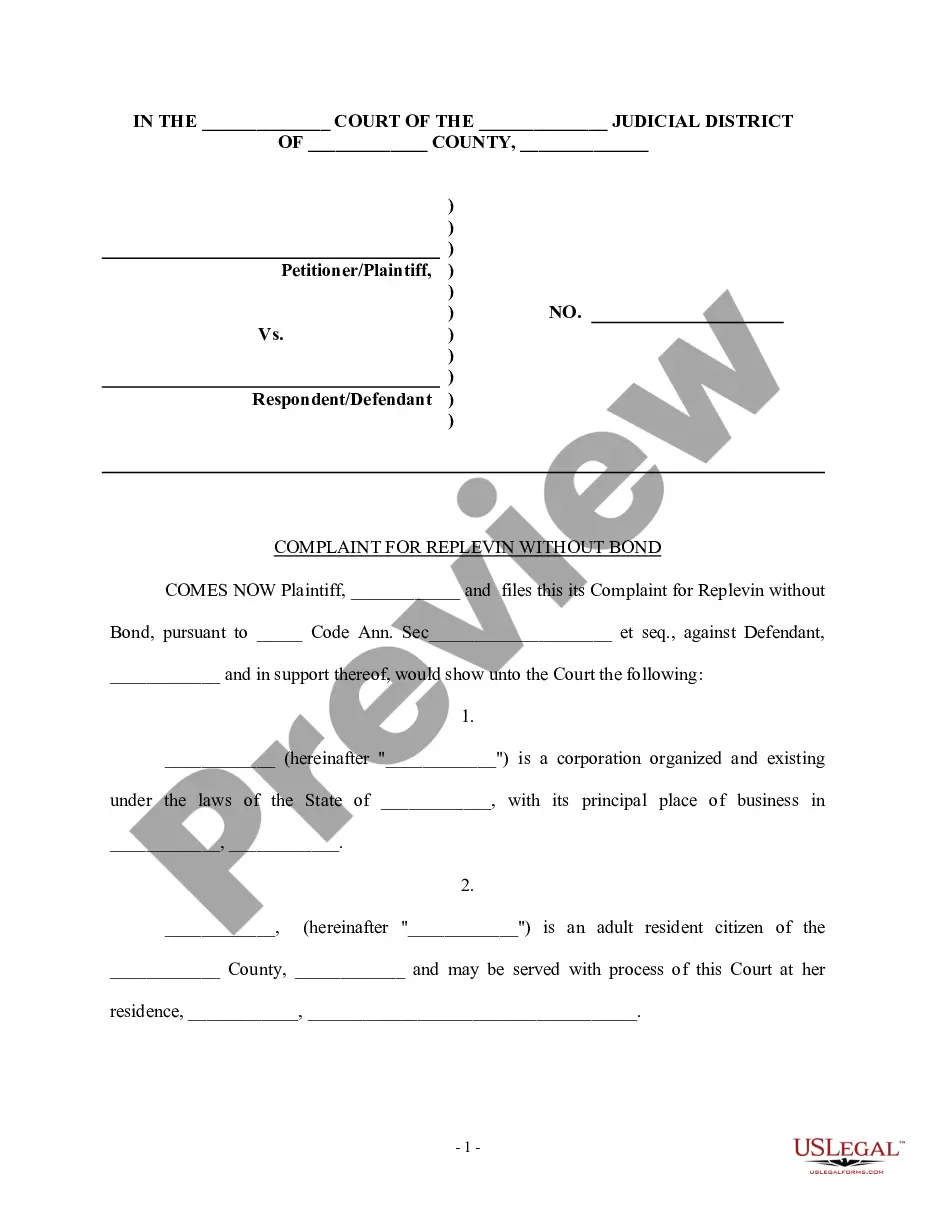
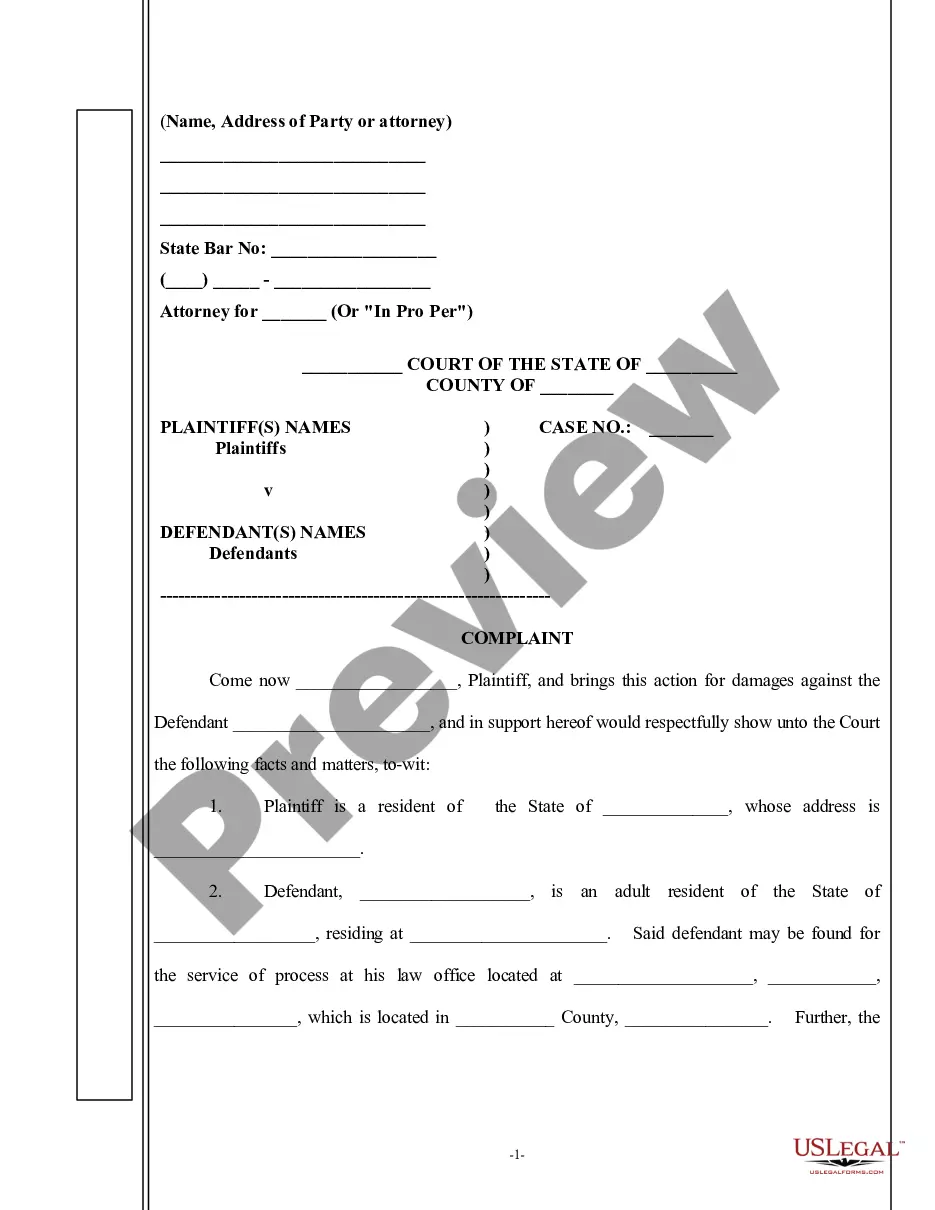
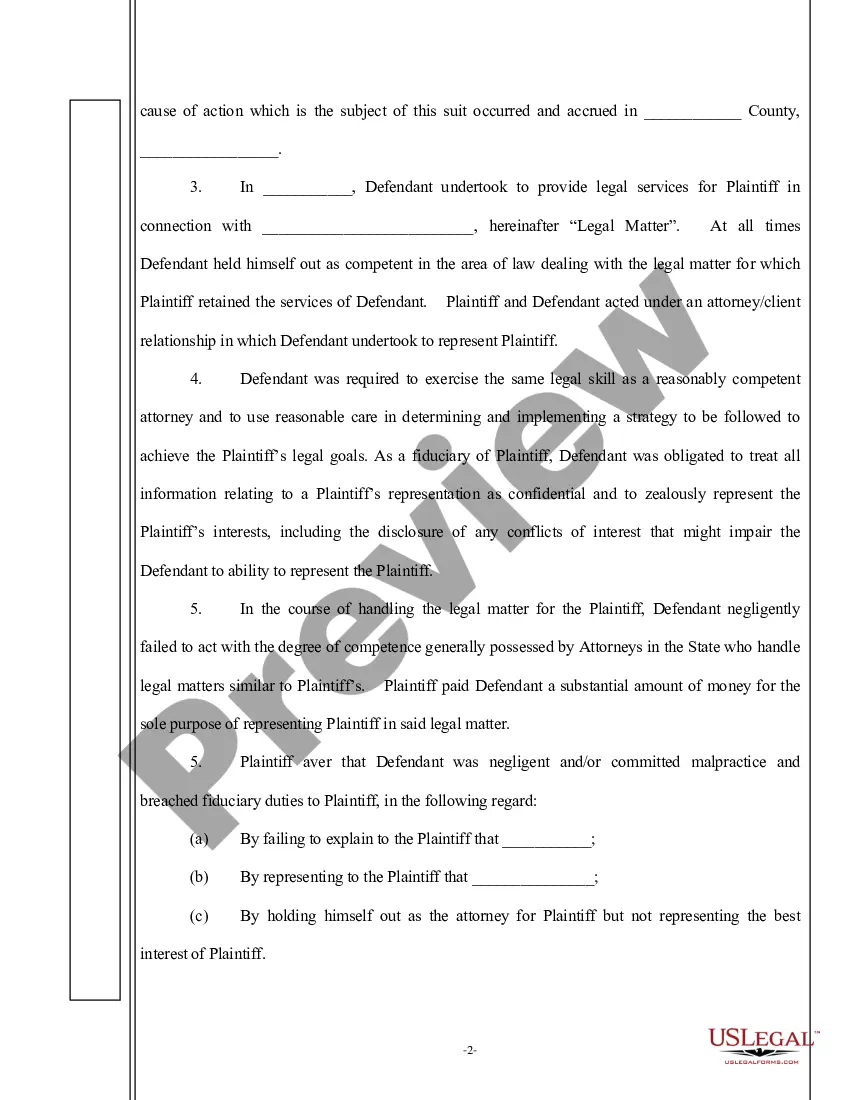
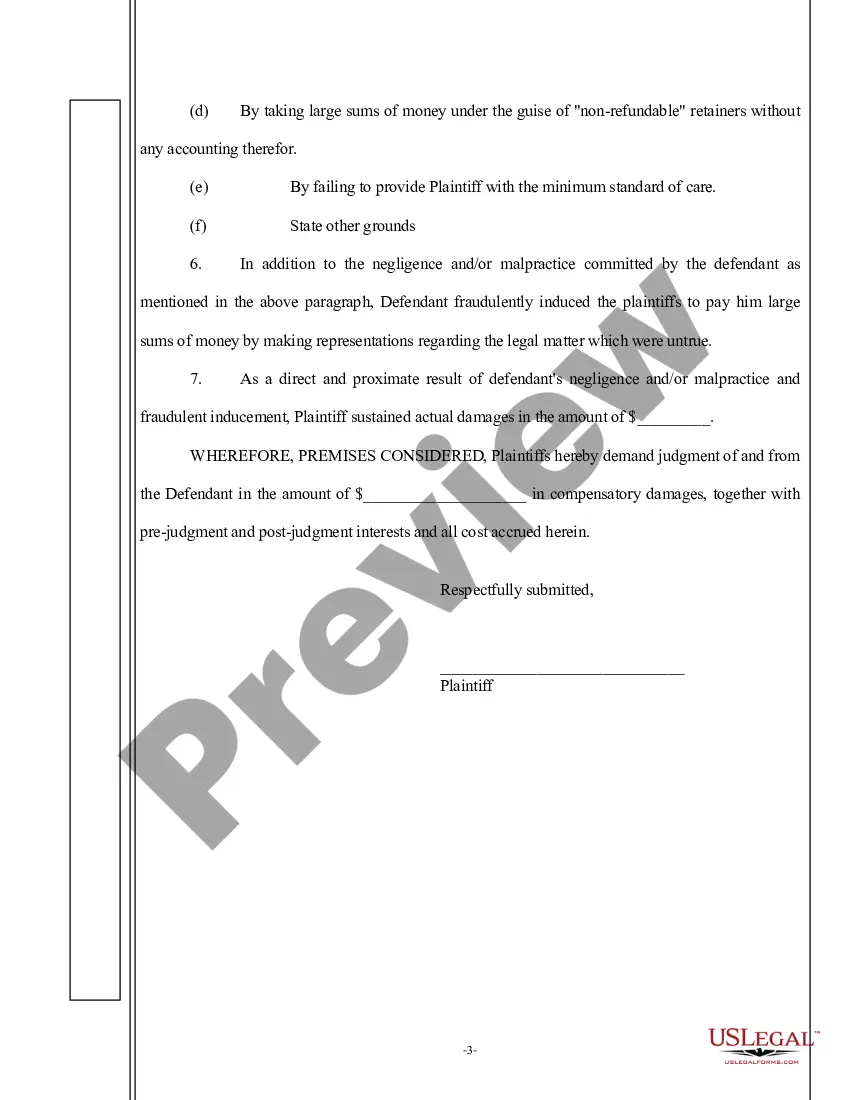
How to fill out Complaint For Legal Malpractice - General Form?
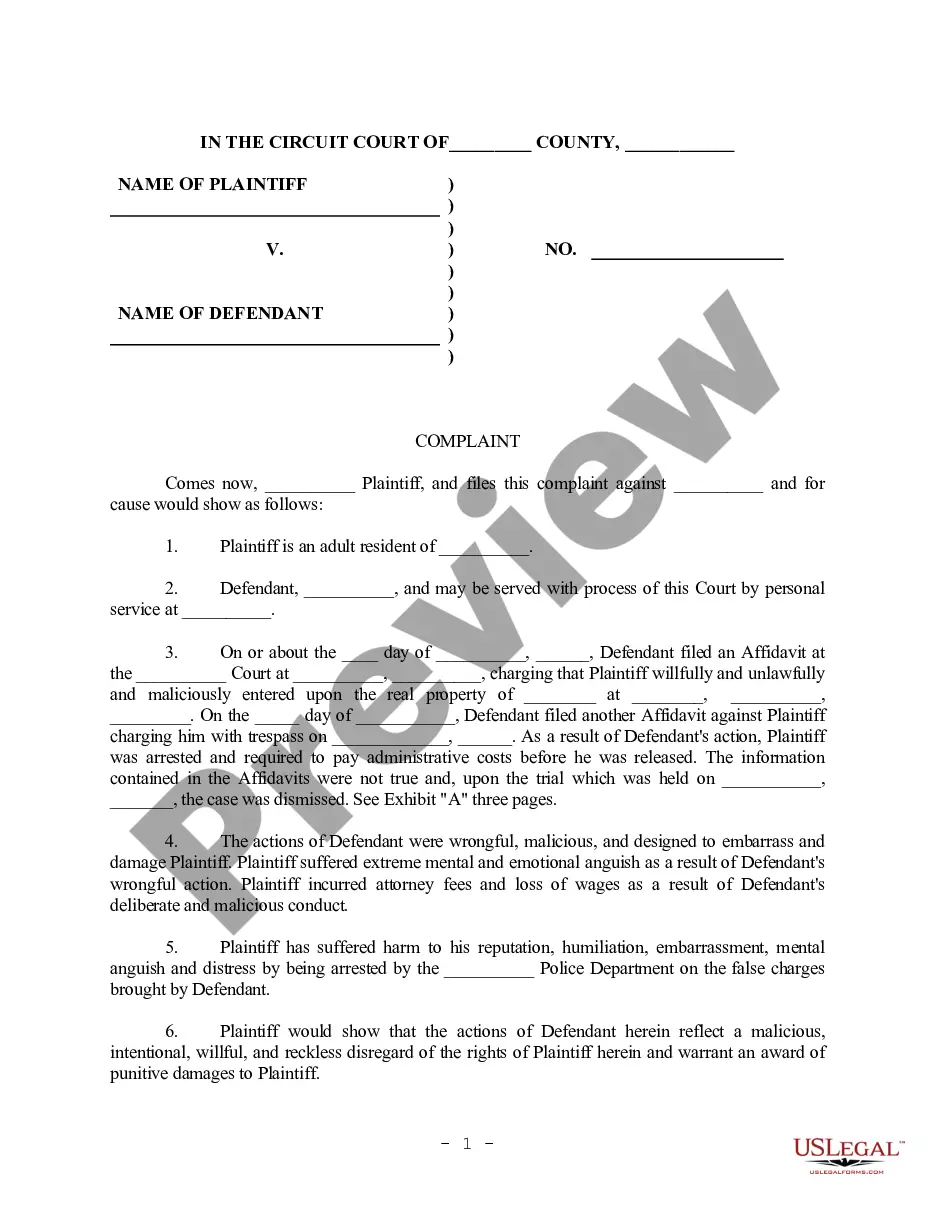
The Sample Of Civil Lawsuit Without Approval you observe on this webpage is a reusable formal blueprint composed by experienced attorneys in accordance with national and local regulations.
For over 25 years, US Legal Forms has supplied individuals, companies, and lawyers with over 85,000 authenticated, state-specific documents for any business and personal event. It’s the quickest, easiest, and most reliable means to access the paperwork you require, as the service ensures bank-grade data protection and anti-malware security.
Register for US Legal Forms to have authorized legal templates for all of life’s situations readily available.
- Look for the document you require and review it.
- Sign up and Log In.
- Acquire the editable template.
- Complete and sign the paperwork.
- Re-download your documents.
Form popularity
FAQ
Timeline of How to File a Lawsuit Step 1: File a Complaint. Plaintiff files a complaint and summons with the local county court. ... Step 2: Answer Complaint. ... Step 3: Discovery. ... Step 4: Failing to Respond to Discovery. ... Step 5: Conclusion of Lawsuit.
Answer. An Answer is the most common way to respond to a lawsuit. ... General Denial. A General Denial is a simple response to a lawsuit. ... Demurrer. ... Motion to Quash Service of Summons. ... Motion to Strike. ... Motion to Change Venue or Transfer. ... Cross-Complaints. ... For More Information.
Elements (of a case) The existence of a legal duty that the defendant owed to the plaintiff. The defendant's breach of that duty. The plaintiff's sufferance of an injury. Proof that defendant's breach caused the injury (typically defined through proximate cause)
File an answer Filing an answer is probably the most common way of responding to a lawsuit. An answer is your opportunity to respond to the complaint's factual allegations and legal claims. It also allows you to assert "affirmative defenses," facts or legal arguments you raise to defeat plaintiff's claim.
In order to properly write a cause of action, several things must be included. The names of the Plaintiff and Defendant. The legal means by which the Plaintiff is bringing the lawsuit. Be sure to only include the facts, not opinions. ... Offer expert opinions and lay out the evidence. ... Request of relief.