Examples Of Medical Malpractice
Description
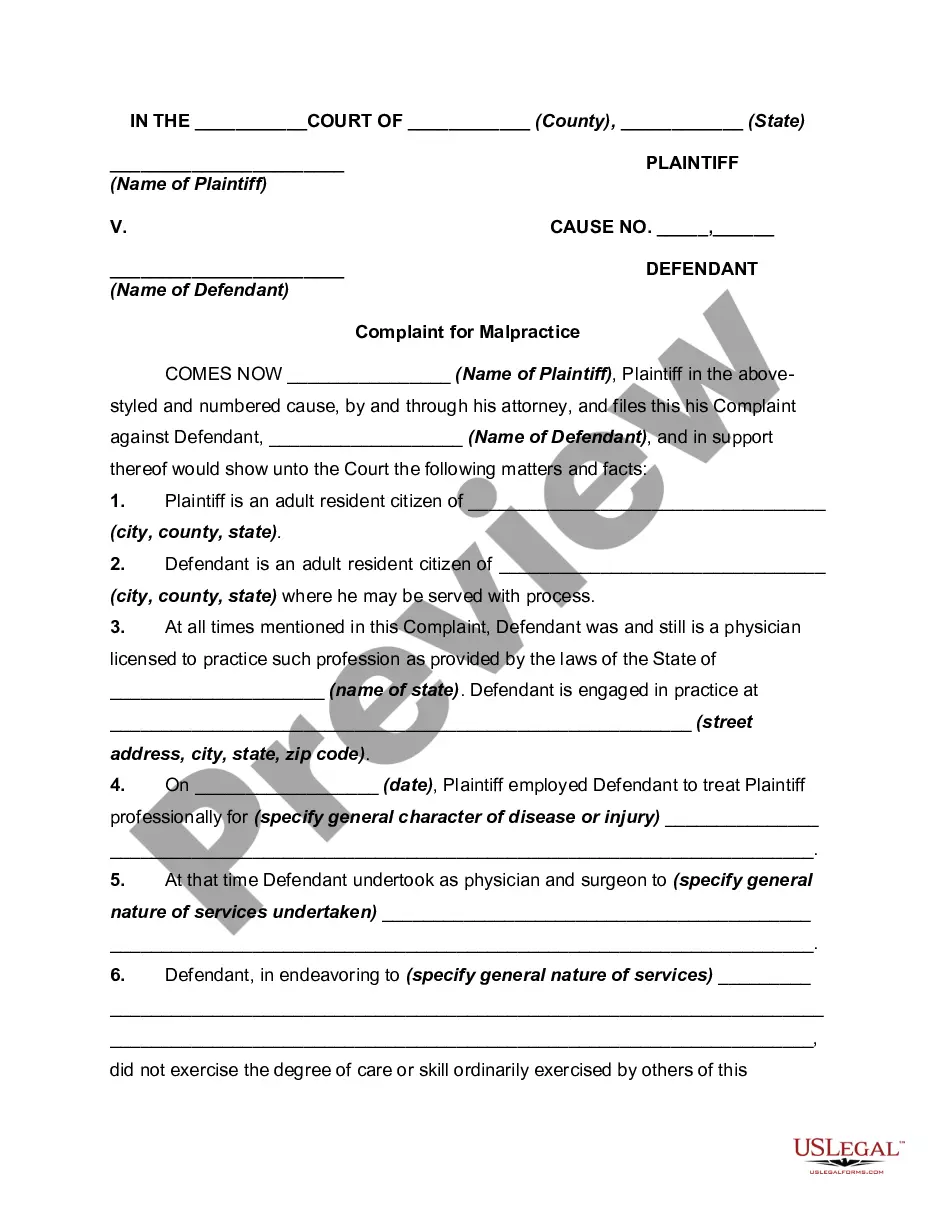
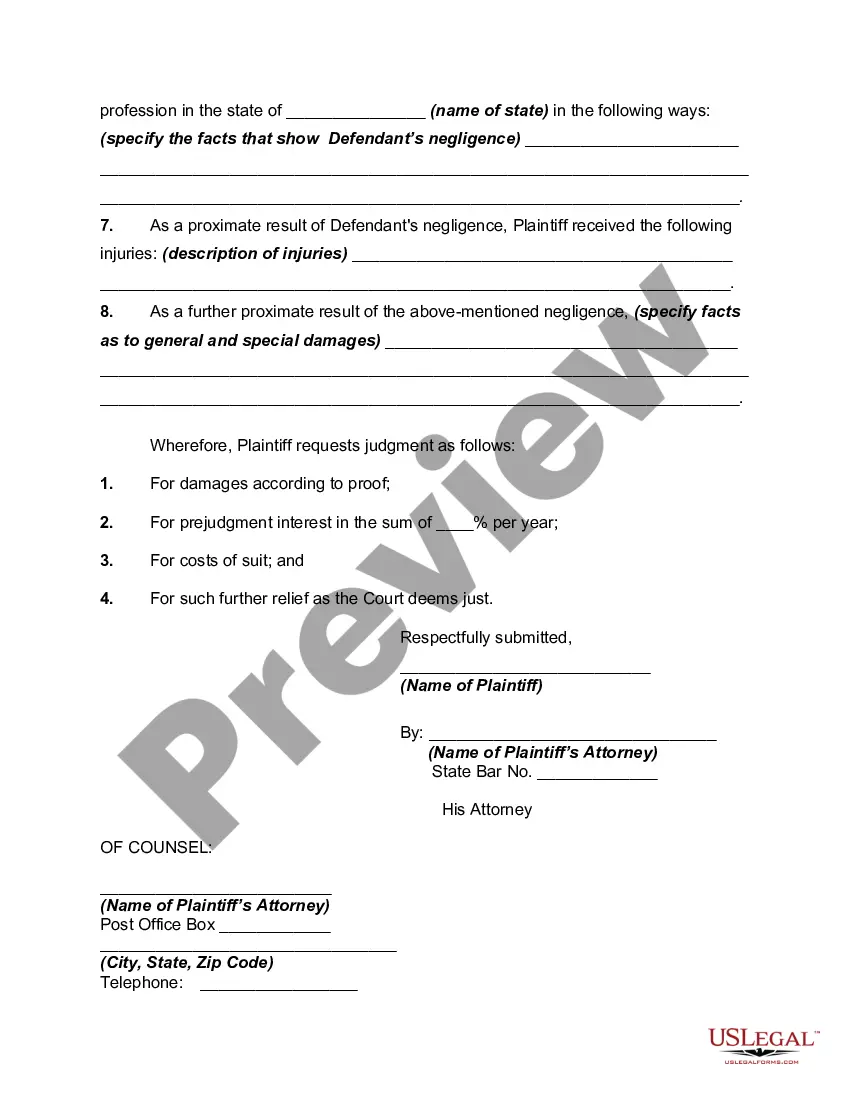
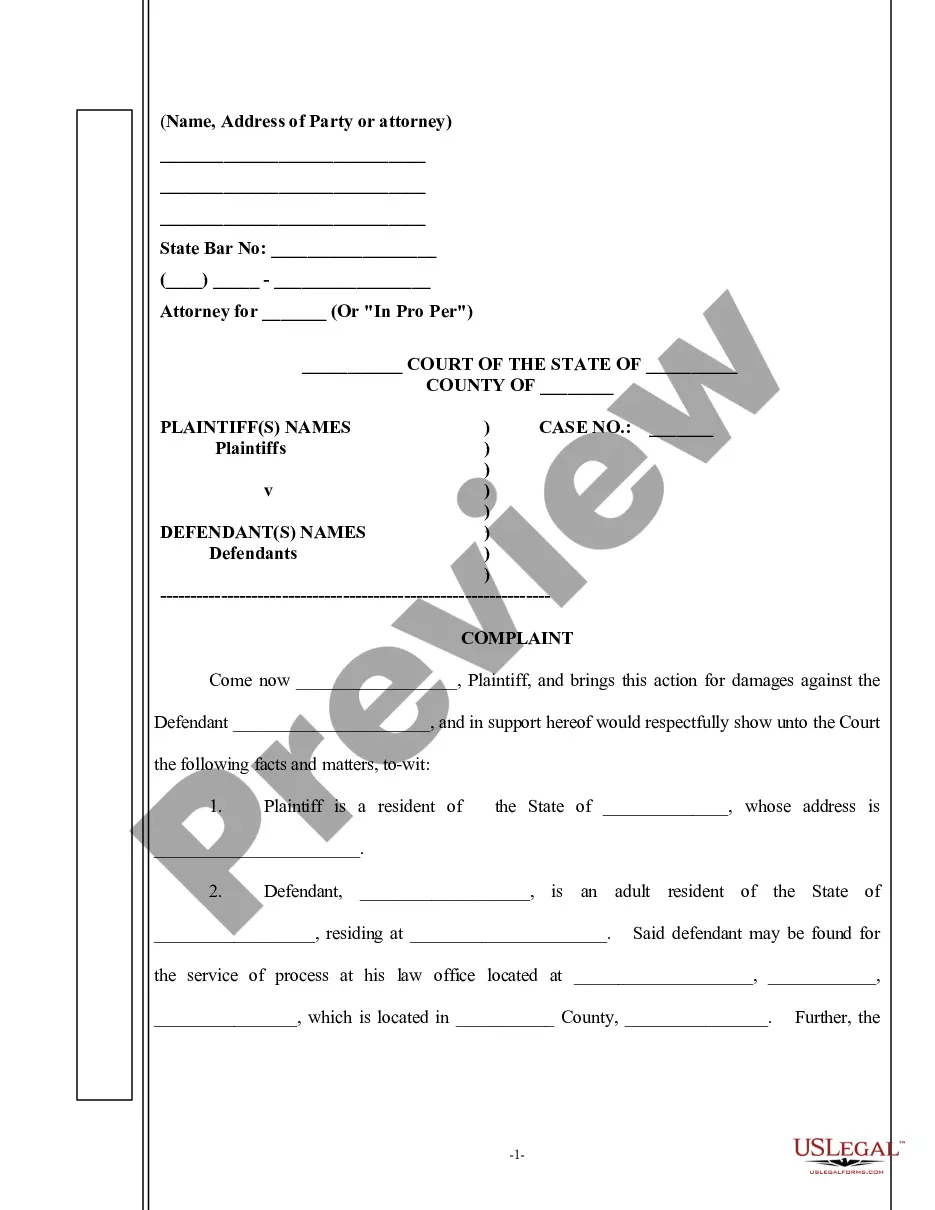
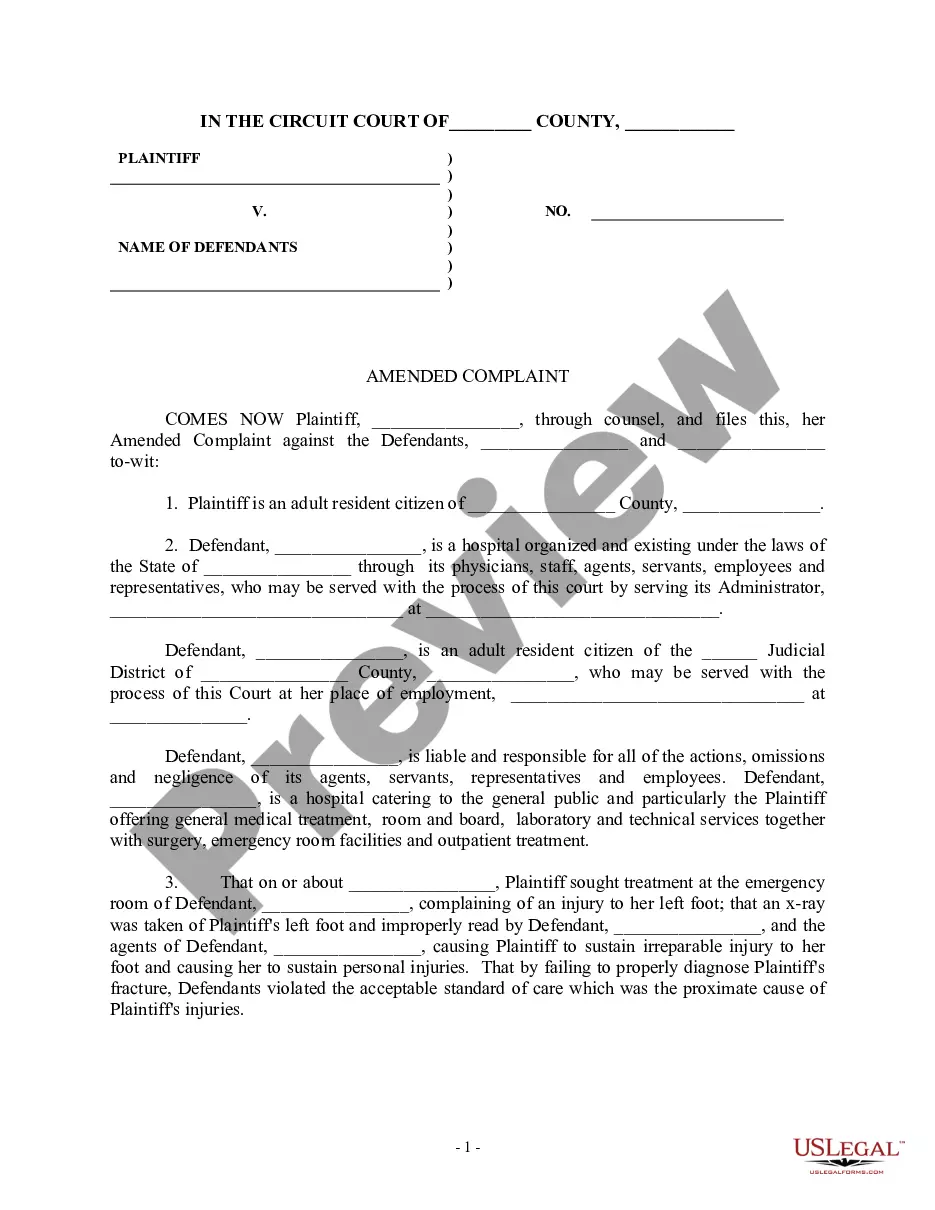
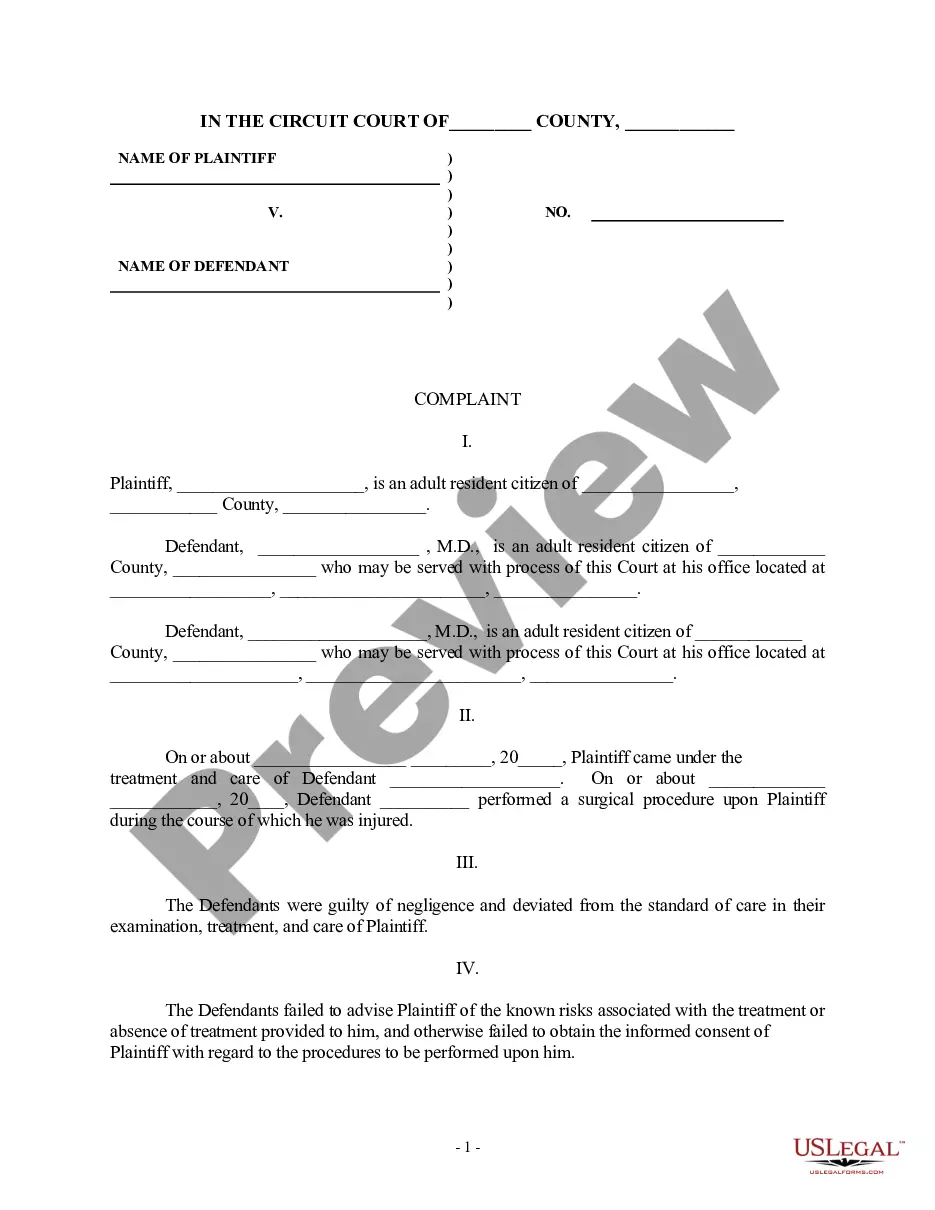
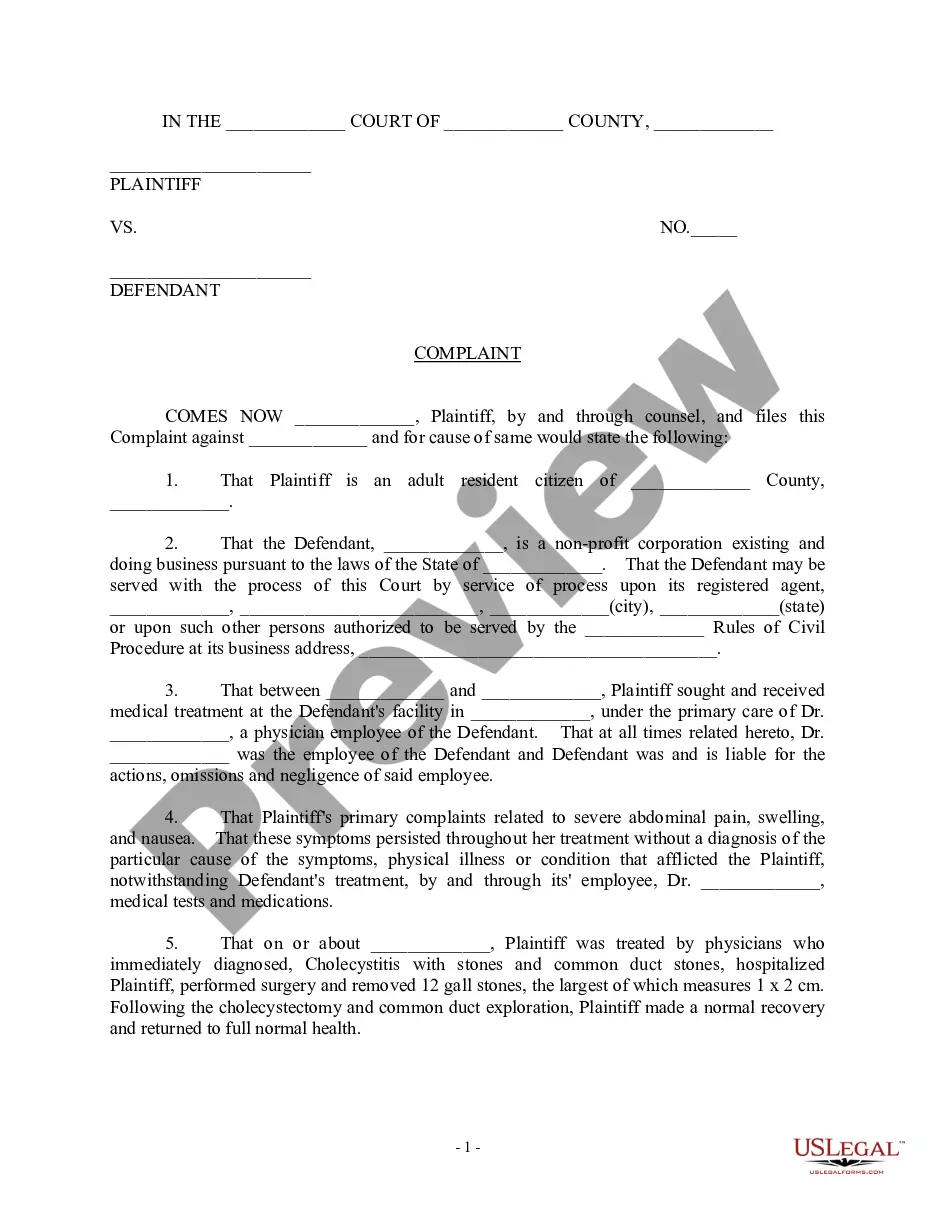
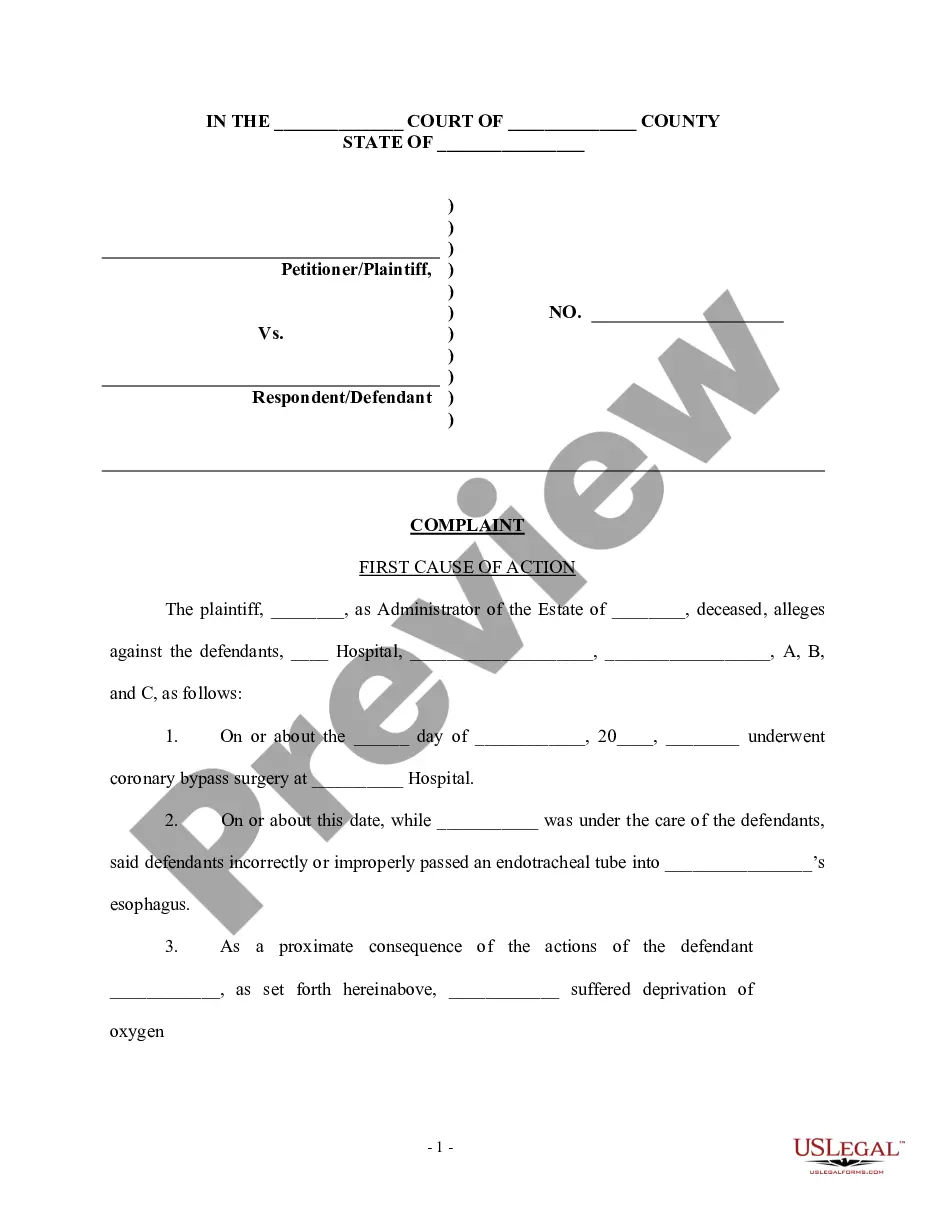
Get your form ready online
Our built-in tools help you complete, sign, share, and store your documents in one place.
Make edits, fill in missing information, and update formatting in US Legal Forms—just like you would in MS Word.
Download a copy, print it, send it by email, or mail it via USPS—whatever works best for your next step.
Sign and collect signatures with our SignNow integration. Send to multiple recipients, set reminders, and more. Go Premium to unlock E-Sign.
If this form requires notarization, complete it online through a secure video call—no need to meet a notary in person or wait for an appointment.
We protect your documents and personal data by following strict security and privacy standards.

Make edits, fill in missing information, and update formatting in US Legal Forms—just like you would in MS Word.

Download a copy, print it, send it by email, or mail it via USPS—whatever works best for your next step.

Sign and collect signatures with our SignNow integration. Send to multiple recipients, set reminders, and more. Go Premium to unlock E-Sign.

If this form requires notarization, complete it online through a secure video call—no need to meet a notary in person or wait for an appointment.

We protect your documents and personal data by following strict security and privacy standards.
Looking for another form?




How to fill out Complaint For Malpractice?
Legal document managing can be mind-boggling, even for the most skilled specialists. When you are interested in a Examples Of Medical Malpractice and don’t have the time to commit in search of the correct and updated version, the procedures can be stress filled. A strong online form catalogue might be a gamechanger for everyone who wants to manage these situations effectively. US Legal Forms is a industry leader in web legal forms, with more than 85,000 state-specific legal forms available to you whenever you want.
With US Legal Forms, you can:
- Access state- or county-specific legal and business forms. US Legal Forms covers any requirements you may have, from personal to business paperwork, all in one location.
- Employ innovative tools to accomplish and handle your Examples Of Medical Malpractice
- Access a resource base of articles, instructions and handbooks and materials relevant to your situation and needs
Save time and effort in search of the paperwork you will need, and employ US Legal Forms’ advanced search and Review feature to locate Examples Of Medical Malpractice and acquire it. If you have a membership, log in to the US Legal Forms profile, search for the form, and acquire it. Take a look at My Forms tab to find out the paperwork you previously saved as well as handle your folders as you can see fit.
Should it be your first time with US Legal Forms, make an account and have unlimited access to all benefits of the library. Here are the steps to take after accessing the form you need:
- Confirm this is the right form by previewing it and reading through its description.
- Be sure that the sample is approved in your state or county.
- Select Buy Now once you are all set.
- Choose a monthly subscription plan.
- Find the formatting you need, and Download, complete, sign, print and send out your document.
Take advantage of the US Legal Forms online catalogue, supported with 25 years of experience and reliability. Transform your day-to-day document management in a easy and easy-to-use process right now.
Form popularity
FAQ
Which Element of a Medical Malpractice Case is Hardest to Prove? The hardest element of a medical malpractice case to prove is the breach of the duty of care, the second element. This is because proving that the medical provider acted in a way that was not reasonable can be difficult.
For example, if a doctor or nurse fails to properly monitor a child and mother or use assistive devices improperly, they may be held responsible for resulting injuries. If a care provider's negligence caused your child's birth injury, you could have legal recourse and file a malpractice lawsuit.
Medical malpractice occurs when a hospital, doctor or other health care professional, through a negligent act or omission, causes an injury to a patient. The negligence might be the result of errors in diagnosis, treatment, aftercare or health management.
Doing so means you and your lawyer must prove the five elements of negligence: duty, breach of duty, cause, in fact, proximate cause, and harm.
To do so, four legal elements must be proven: (1) a professional duty owed to the patient; (2) breach of such duty; (3) injury caused by the breach; and (4) resulting damages. Money damages, if awarded, typically take into account both actual economic loss and noneconomic loss, such as pain and suffering.