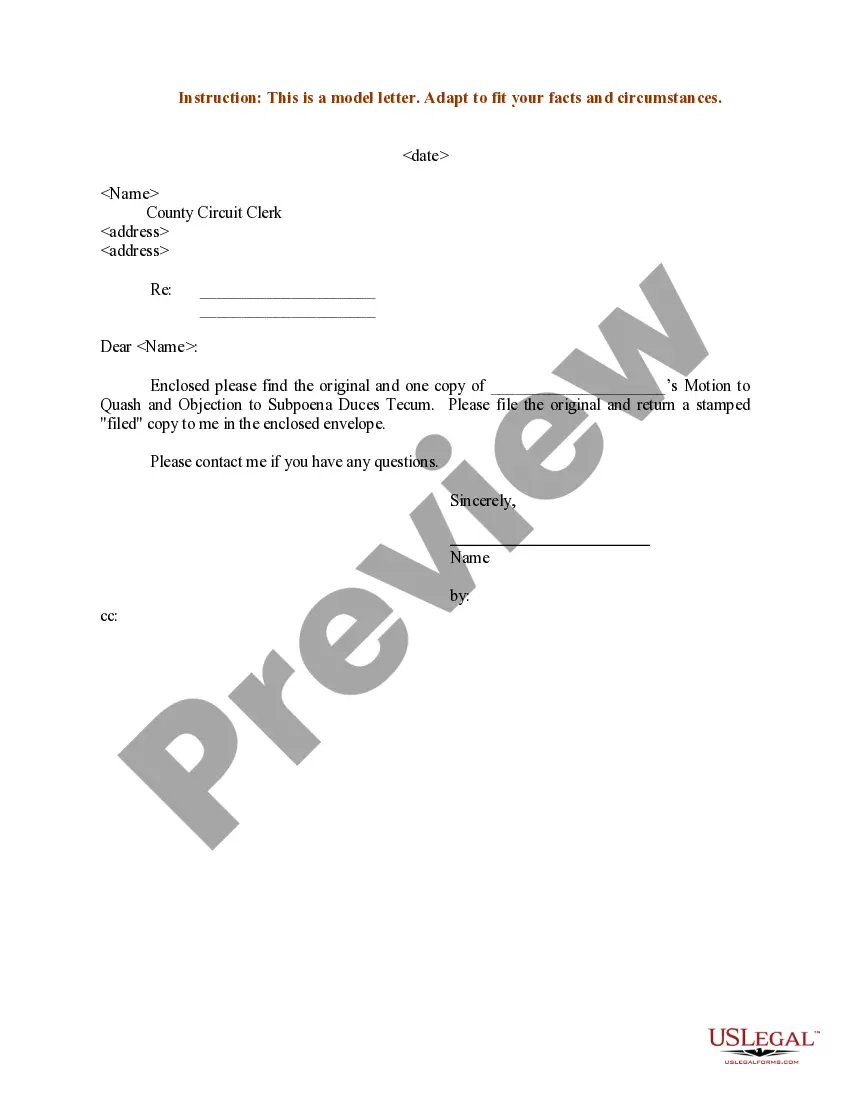
Sample Motion To Quash Warrant
Description

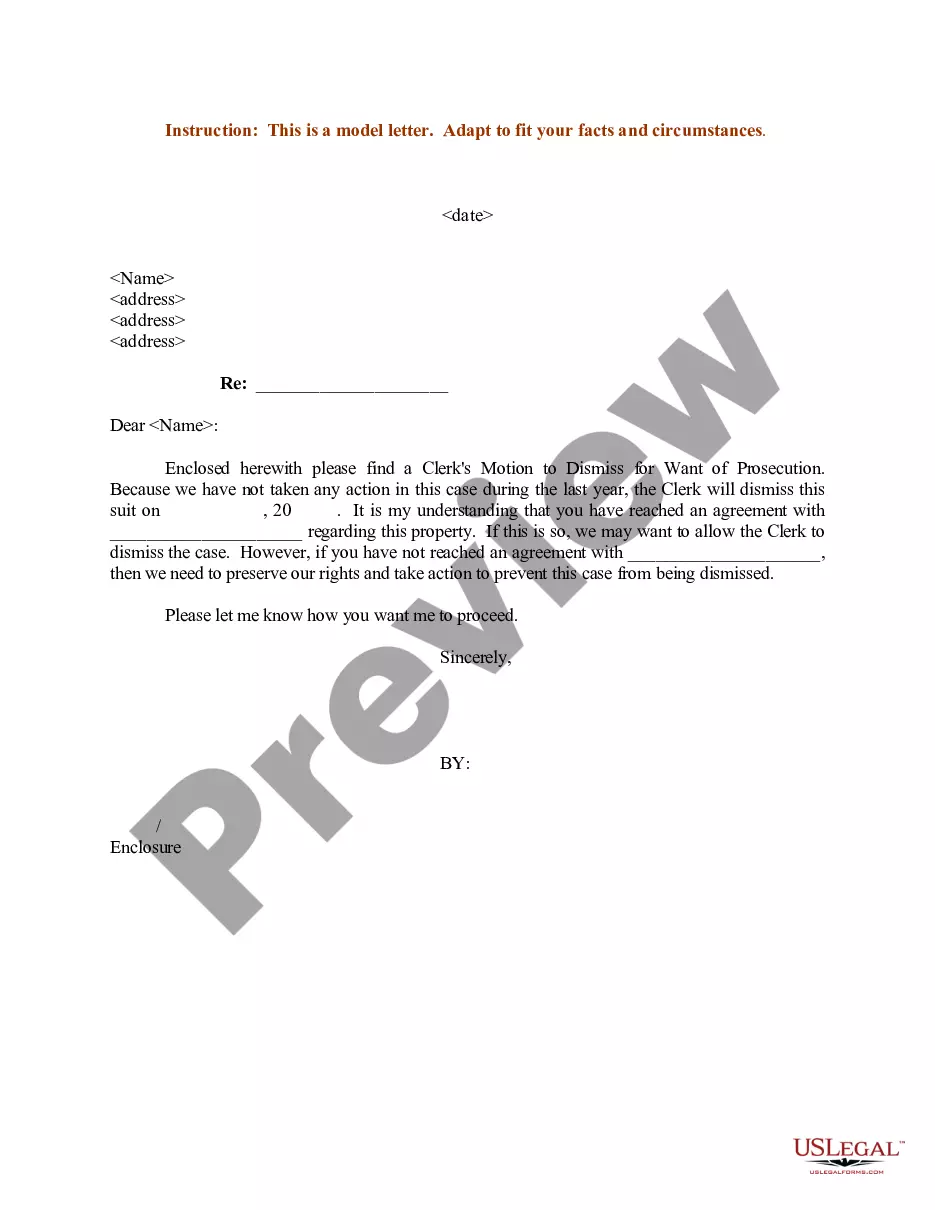
Get your form ready online
Our built-in tools help you complete, sign, share, and store your documents in one place.
Make edits, fill in missing information, and update formatting in US Legal Forms—just like you would in MS Word.
Download a copy, print it, send it by email, or mail it via USPS—whatever works best for your next step.
Sign and collect signatures with our SignNow integration. Send to multiple recipients, set reminders, and more. Go Premium to unlock E-Sign.
If this form requires notarization, complete it online through a secure video call—no need to meet a notary in person or wait for an appointment.
We protect your documents and personal data by following strict security and privacy standards.

Make edits, fill in missing information, and update formatting in US Legal Forms—just like you would in MS Word.

Download a copy, print it, send it by email, or mail it via USPS—whatever works best for your next step.

Sign and collect signatures with our SignNow integration. Send to multiple recipients, set reminders, and more. Go Premium to unlock E-Sign.

If this form requires notarization, complete it online through a secure video call—no need to meet a notary in person or wait for an appointment.

We protect your documents and personal data by following strict security and privacy standards.
Looking for another form?
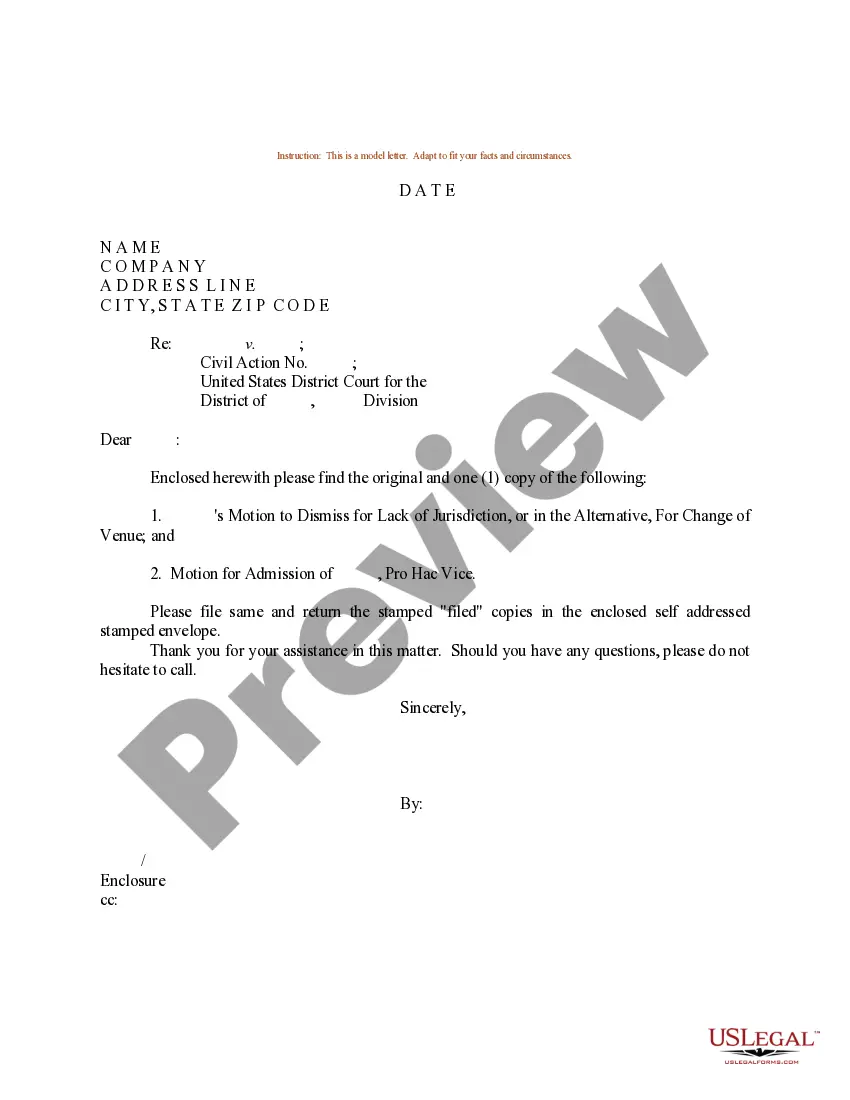
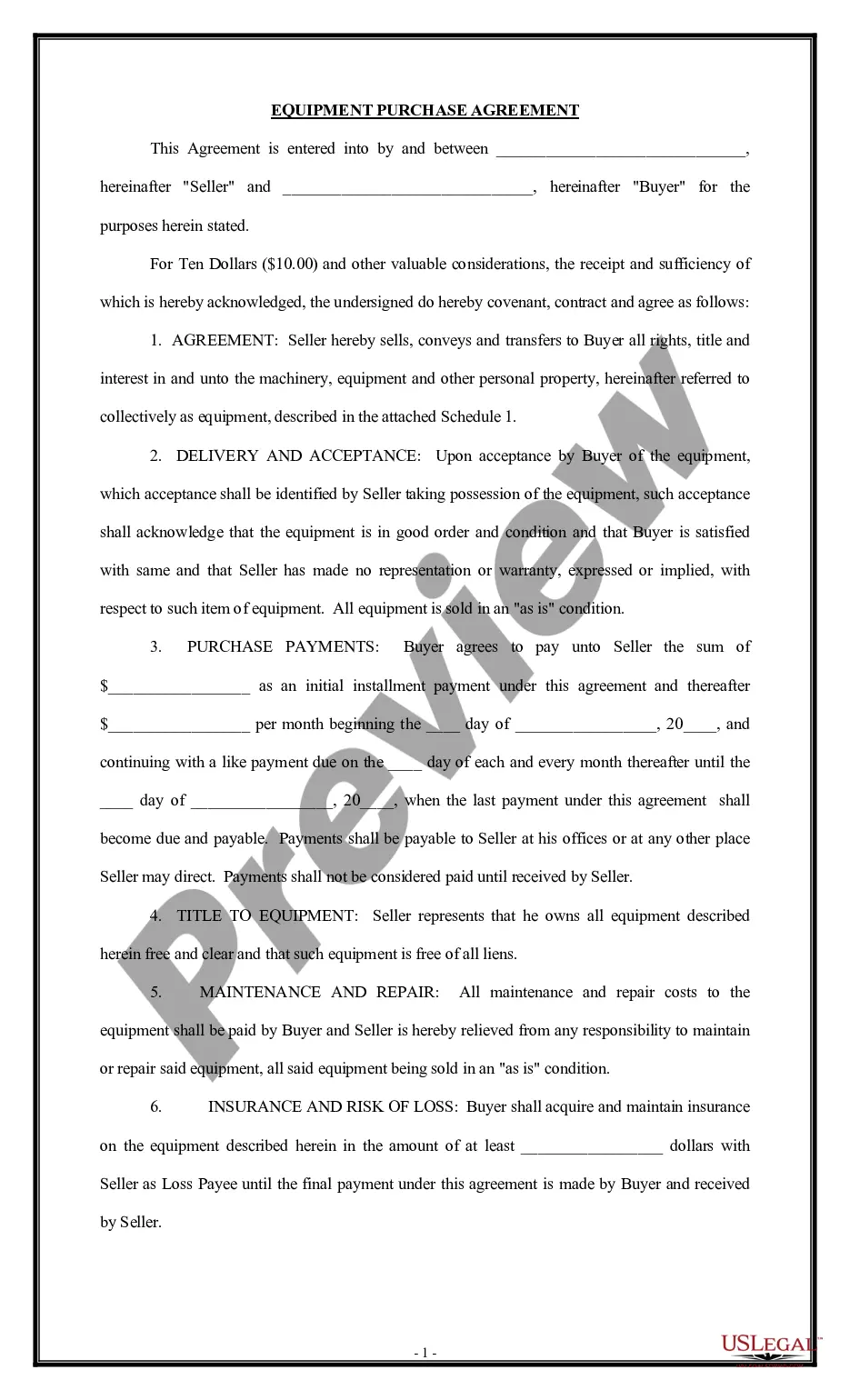
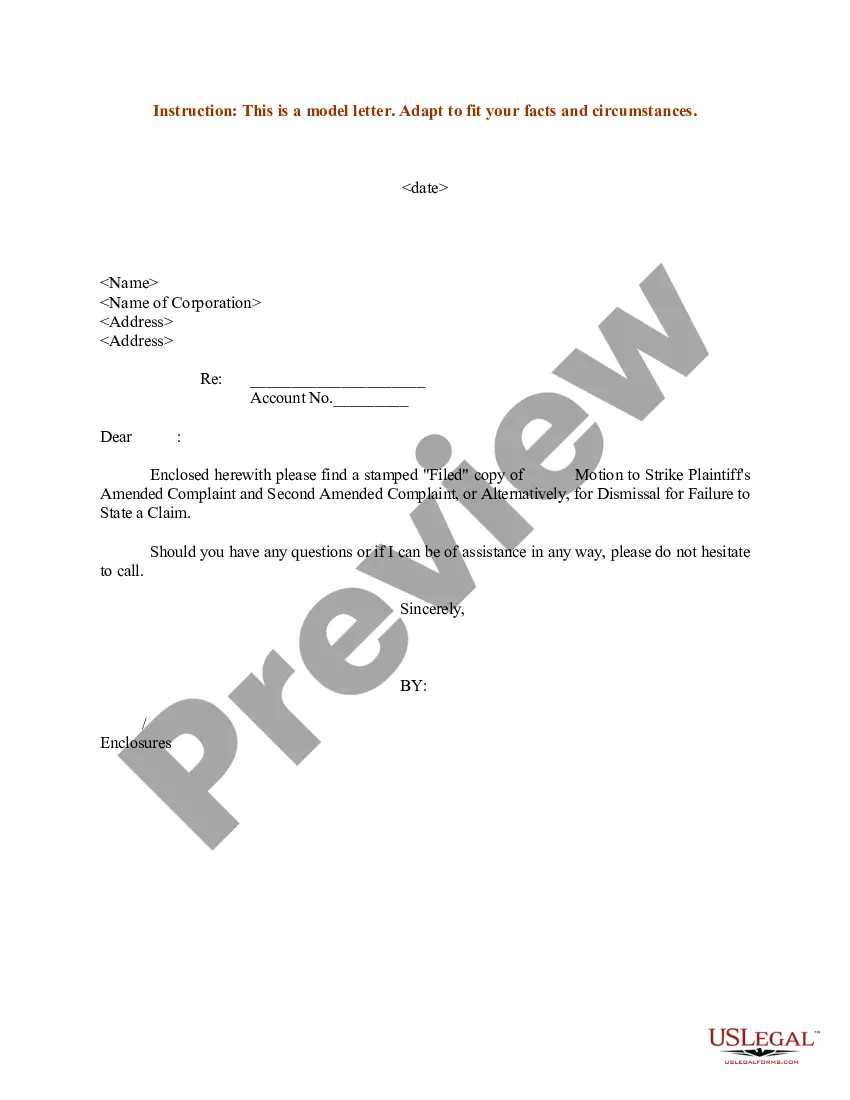
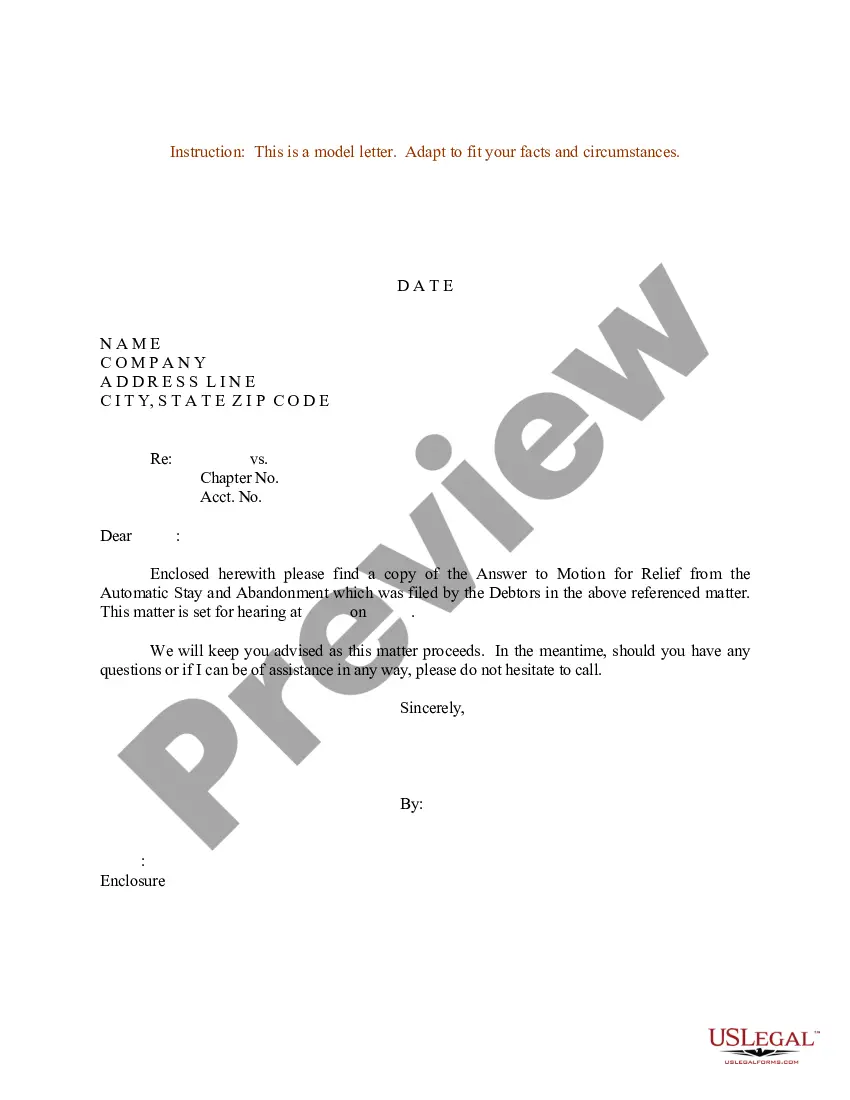
How to fill out Sample Letter For Motion To Quash?
Whether for professional objectives or for personal matters, everyone must address legal issues eventually in their life.
Filling out legal forms requires meticulous focus, starting from selecting the appropriate form sample.
With a comprehensive US Legal Forms catalog available, you won’t need to waste time searching for the appropriate sample online. Utilize the library’s straightforward navigation to find the right template for any scenario.
- Locate the sample you require by using the search bar or browsing the catalog.
- Review the form’s description to ensure it corresponds with your circumstances, state, and county.
- Click on the form’s preview to inspect it.
- If it is the incorrect form, return to the search feature to find the Sample Motion To Quash Warrant sample you need.
- Obtain the file when it fulfills your criteria.
- If you have a US Legal Forms account, just click Log in to access previously saved documents in My documents.
- If you do not yet have an account, you can download the form by clicking Buy now.
- Pick the suitable pricing option.
- Fill out the profile registration form.
- Select your payment method: use a credit card or PayPal account.
- Choose the document format you desire and download the Sample Motion To Quash Warrant.
- Once saved, you can complete the form using editing software or print it out and finish it by hand.
Form popularity
FAQ
The point of a quash is to invalidate a legal request, such as a warrant, that may not meet the necessary legal standards. When you file a sample motion to quash warrant, you are formally requesting the court to nullify the warrant due to various reasons, such as lack of probable cause or improper issuance. This can halt legal proceedings and protect you from undue legal consequences. By using uslegalforms, you can streamline the process of crafting an effective motion that addresses your specific needs.
To file a motion to quash a warrant, you should start by drafting your sample motion to quash warrant, outlining the reasons for your request. Next, file the motion with the appropriate court by submitting it to the clerk and paying any associated fees. Be prepared to attend a hearing where you can present your case and answer any questions from the judge or opposing counsel.
Yes, you can file a motion to quash without a lawyer, but it requires careful attention to detail. When you create your sample motion to quash warrant, ensure you understand the legal requirements and format expected by the court. Resources like US Legal Forms can help you access templates and guidance for filing independently, making the process smoother for you.
To serve a motion to quash, you must first prepare the document clearly detailing your request. Once your sample motion to quash warrant is complete, you will need to file it with the court, typically at the clerk's office. After filing, you should ensure that all relevant parties receive a copy, either by hand delivery or through certified mail, as mandated by your local rules.
A motion to quash focuses on invalidating a specific legal action, like a warrant, while a motion to dismiss addresses the dismissal of an entire case for legal reasons. Essentially, quashing seeks to challenge the legality of an action, while dismissing seeks to end the case outright. Understanding these differences becomes clearer when reviewing a 'sample motion to quash warrant' versus other legal documents.
The purpose of quashing is to prevent the enforcement of something that is deemed invalid or unlawful, such as a warrant. By filing a sample motion to quash warrant, an individual can seek to protect their rights, often by demonstrating that a legal procedure was not followed. Thus, quashing can play a crucial role in ensuring fair legal processes.
The simple meaning of quash is to reject or suppress something legally. When someone talks about quashing a warrant, they refer to an action that nullifies its effect. Therefore, a well-drafted 'sample motion to quash warrant' can serve as a powerful tool to challenge a warrant legally and assert your rights.
A good sentence for quash could be, ‘The judge decided to quash the warrant due to a lack of evidence.’ In this context, quash means to invalidate or cancel something legally. Using the phrase 'sample motion to quash warrant' can provide insight into how legal professionals structure this type of request.
Someone would file a motion to quash to protect their rights against an unjust or improperly issued warrant. The goal is to seek a court's intervention to void the warrant and prevent any punitive actions such as arrest. By understanding the process and using resources like USLegalForms for guidance, individuals can navigate this legal challenge more effectively.
An example of quashing is when a judge nullifies a subpoena due to lack of jurisdiction or improper service. In legal terms, to quash means to annul or invalidate, and this could also apply to a warrant issued without sufficient evidence. Reviewing a sample motion to quash warrant can offer a practical scenario for better understanding this concept.