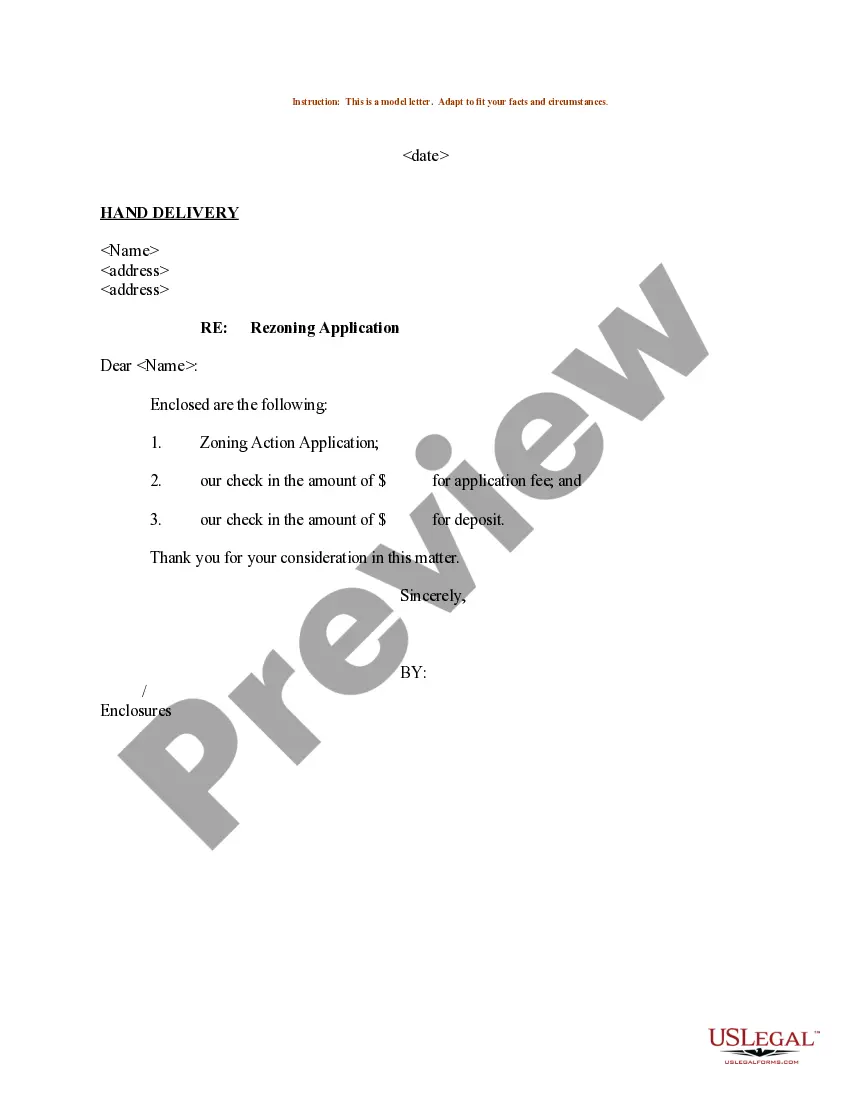
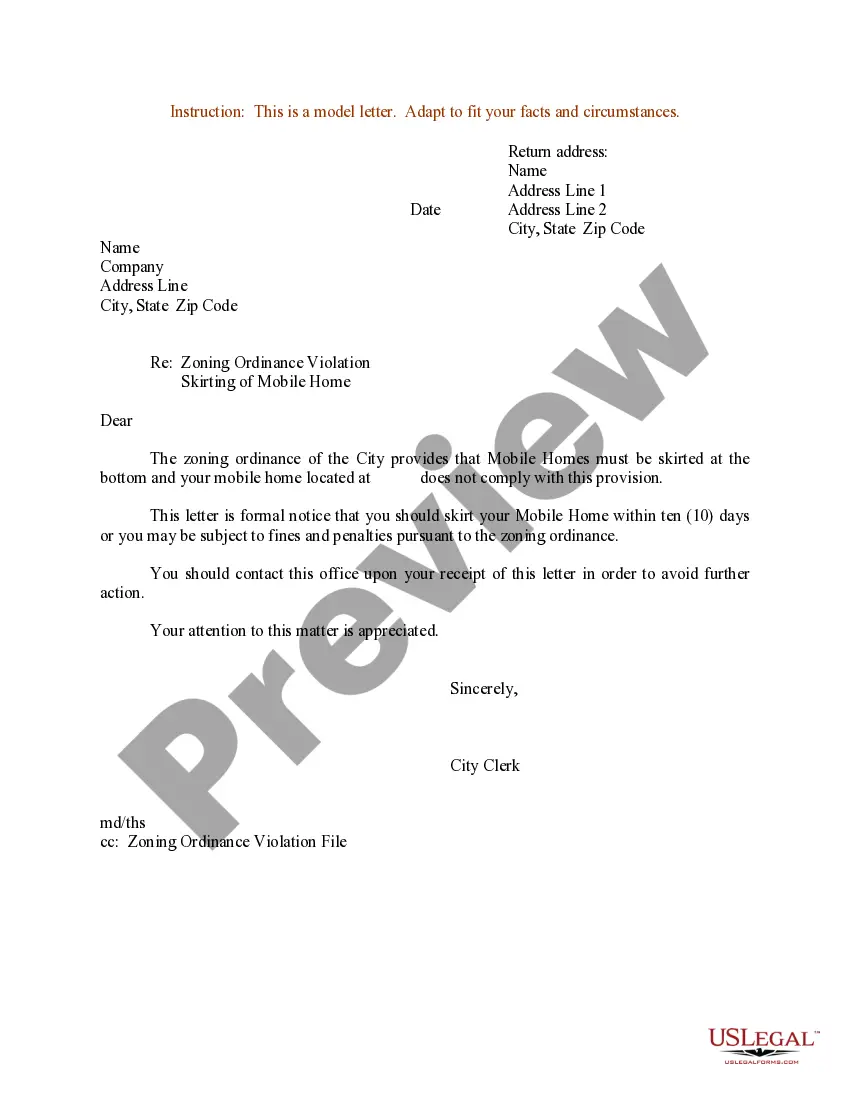
Sample Letter Opposing Zoning Change With Zoning
Description
Get your form ready online
Our built-in tools help you complete, sign, share, and store your documents in one place.
Make edits, fill in missing information, and update formatting in US Legal Forms—just like you would in MS Word.
Download a copy, print it, send it by email, or mail it via USPS—whatever works best for your next step.
Sign and collect signatures with our SignNow integration. Send to multiple recipients, set reminders, and more. Go Premium to unlock E-Sign.
If this form requires notarization, complete it online through a secure video call—no need to meet a notary in person or wait for an appointment.
We protect your documents and personal data by following strict security and privacy standards.

Make edits, fill in missing information, and update formatting in US Legal Forms—just like you would in MS Word.

Download a copy, print it, send it by email, or mail it via USPS—whatever works best for your next step.

Sign and collect signatures with our SignNow integration. Send to multiple recipients, set reminders, and more. Go Premium to unlock E-Sign.

If this form requires notarization, complete it online through a secure video call—no need to meet a notary in person or wait for an appointment.

We protect your documents and personal data by following strict security and privacy standards.
Looking for another form?
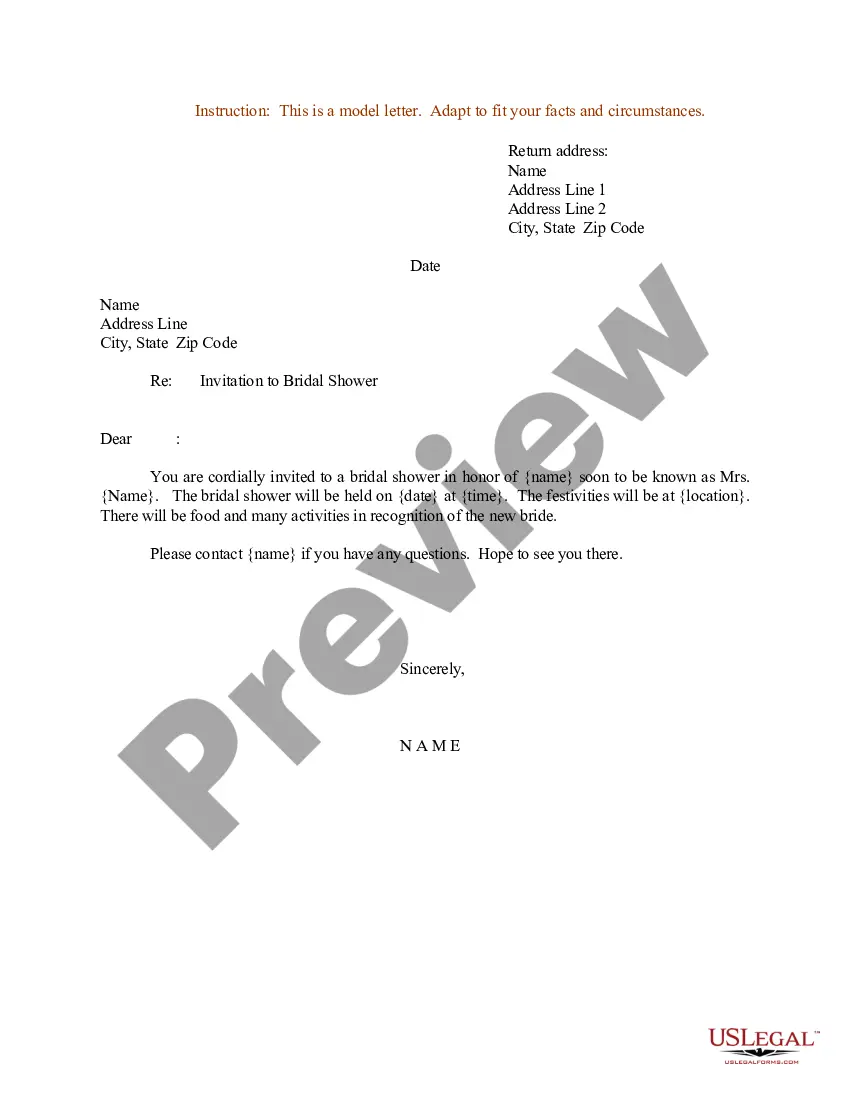
How to fill out Sample Letter Regarding Rezoning Application?
Regardless of whether it’s for corporate reasons or personal issues, individuals inevitably confront legal circumstances at some point in their lives.
Completing legal documents requires meticulous focus, starting with selecting the appropriate form template.
With a comprehensive US Legal Forms database available, you won't have to waste time searching for the appropriate template across the web. Take advantage of the library’s user-friendly navigation to find the right form for any situation.
- Obtain the template you require through the search bar or catalog browsing.
- Review the form’s details to ensure it aligns with your situation, state, and locality.
- Click on the form’s preview to inspect it.
- If it is the incorrect document, go back to the search feature to find the specific Sample Letter Opposing Zoning Change With Zoning template you need.
- Download the template once it fulfills your criteria.
- If you have a US Legal Forms account, simply click Log in to access previously saved templates in My documents.
- Should you not have an account yet, you can obtain the form by clicking Buy now.
- Select the correct pricing option.
- Complete the profile registration form.
- Choose your payment method: either a credit card or PayPal account.
- Select the file format you prefer and download the Sample Letter Opposing Zoning Change With Zoning.
- After it’s downloaded, you can fill out the form using editing software or print it and complete it manually.
Form popularity
FAQ
When you open a new case, you will enter data about the filing party and attorney, e-file case initiating documents, and pay the filing fee or apply for in forma pauper status. During this process, you are to include a Civil Cover Sheet and may also submit a completed summons(es) for issuance by the Clerk's Office.
Under Oregon law, the majority of civil actions must be filed within two years, including claims related to personal injury, defamation, fraud, and medical malpractice. There is a six-year statute of limitations for injury to personal property, trespassing, contracts, and debt collection.
Some unique requirements that Oregon imposes upon citizens seeking to sue the government, include: Written advance notice to the governmental body. Limited number of days within which you can make your claim. Cap limits on recoveries for injuries caused by the government. Private entities acting in a governmental manner.
Civil law includes statutes and case law that define or interpret individual's and organization's private rights, in their relationships and disputes that involve property, contracts, personal injury, family relationships, tax, or government rules and regulations.
Civil cases involve a conflict between people or institutions, generally over money. A civil suit begins when a legal person claims that he has been harmed by the actions of another person or business and asks the court for relief by filing a ?complaint?.