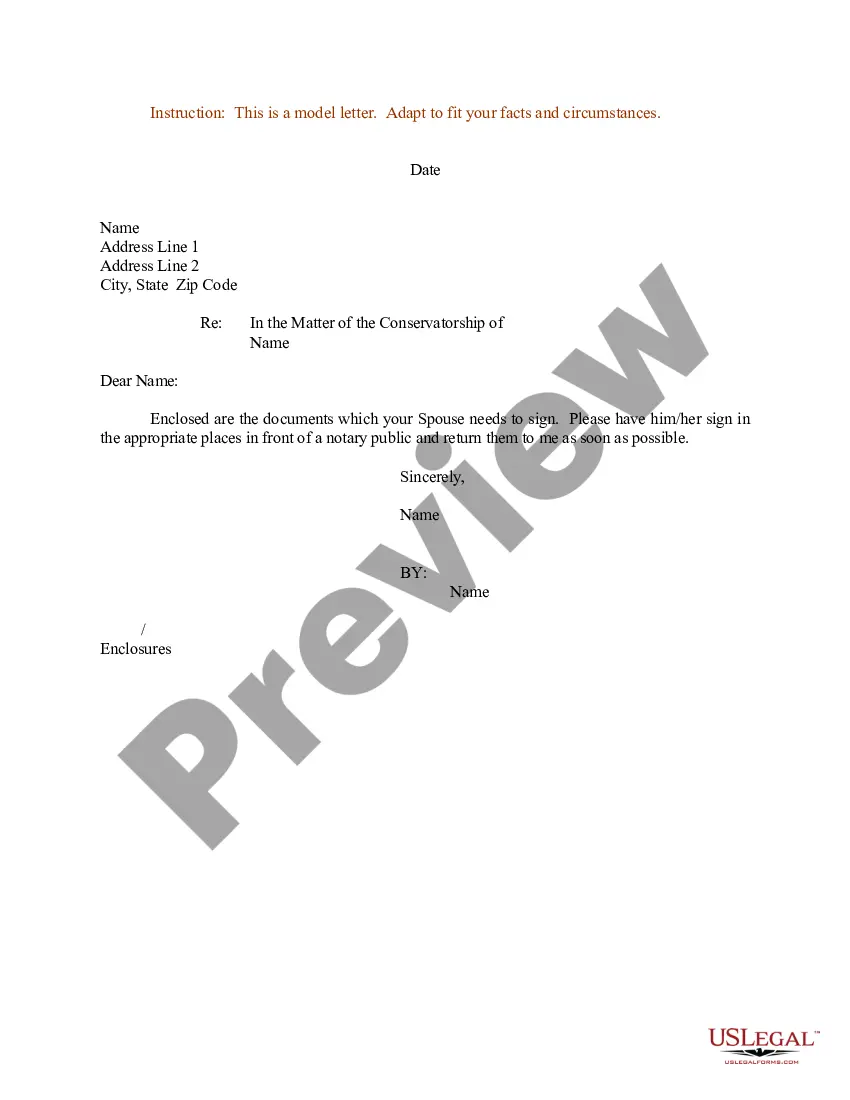
Spouse Buddy Letter Example
Description
Get your form ready online
Our built-in tools help you complete, sign, share, and store your documents in one place.
Make edits, fill in missing information, and update formatting in US Legal Forms—just like you would in MS Word.
Download a copy, print it, send it by email, or mail it via USPS—whatever works best for your next step.
Sign and collect signatures with our SignNow integration. Send to multiple recipients, set reminders, and more. Go Premium to unlock E-Sign.
If this form requires notarization, complete it online through a secure video call—no need to meet a notary in person or wait for an appointment.
We protect your documents and personal data by following strict security and privacy standards.

Make edits, fill in missing information, and update formatting in US Legal Forms—just like you would in MS Word.

Download a copy, print it, send it by email, or mail it via USPS—whatever works best for your next step.

Sign and collect signatures with our SignNow integration. Send to multiple recipients, set reminders, and more. Go Premium to unlock E-Sign.

If this form requires notarization, complete it online through a secure video call—no need to meet a notary in person or wait for an appointment.

We protect your documents and personal data by following strict security and privacy standards.
Looking for another form?
How to fill out Sample Letter For Spouse Signature?
It’s well-known that you cannot instantly become a legal authority, nor can you rapidly learn how to effectively create Spouse Buddy Letter Example without possessing a distinct skill set.
Assembling legal documents is a labor-intensive task that demands specific education and expertise. So why not entrust the development of the Spouse Buddy Letter Example to the professionals.
With US Legal Forms, one of the most extensive legal template repositories, you can discover everything from court documents to templates for in-office correspondence.
Select Buy now. Once the payment is finalized, you can download the Spouse Buddy Letter Example, complete it, print it, and send it to the appropriate individuals or organizations.
You can regain access to your documents from the My documents tab at any time. If you’re a returning customer, you can simply Log In, and find and download the template from the same tab.
- Here’s how to get started on our website and acquire the document you need in just a few minutes.
- Identify the document you require using the search bar at the top of the page.
- Preview it (if this option is available) and review the accompanying description to decide if the Spouse Buddy Letter Example is what you’re looking for.
- If you need any other form, start your search again.
- Create a free account and choose a subscription plan to purchase the template.
Form popularity
FAQ
To write an effective buddy statement, start by outlining your relationship with the veteran, highlighting shared experiences. Use a spouse buddy letter example as a guide to ensure that you include relevant details like specific events or challenges. Focus on clarity and honesty, as your statement should aim to provide a comprehensive perspective that supports the veteran's situation. Remember, your narrative holds significant weight in their claim process.
A VA buddy statement is a personal account from someone who knows the veteran well, providing context about their experiences. For instance, a spouse buddy letter example can describe how the veteran's service impacted family life, showcasing specific incidents or emotions. This letter should offer firsthand insights, which support the veteran's claim with authentic testimony. It’s critical to convey genuine support and clarity in your statement.
A VA buddy statement should be signed by someone who can provide firsthand knowledge about the veteran’s experiences. Typically, this includes friends, family members, or fellow service members. In many cases, a spouse can write and sign a spouse buddy letter example, adding valuable personal context. Ensure that the signer knows the details that best reflect the veteran's story.
Yes, buddy letters can be beneficial for VA claims. They provide personal insights and testimonies regarding your service and its impact. A well-crafted spouse buddy letter example can support your case by offering additional evidence. These letters may help clarify your situation in ways that medical records cannot.
Generally, a VA buddy statement does not require notarization. The focus is on the content rather than the signature, which makes a spouse buddy letter example effective without notarization. Still, having a notary can sometimes bolster the document’s authenticity. If you have concerns about your statement's impact, consider discussing it with a legal advisor.
A buddy statement does not typically need to be notarized. However, some veterans may choose to have their spouse buddy letter example notarized to add credibility. Notarization ensures that the person signing the statement is who they claim to be. This can be helpful in establishing trust with the reviewing authorities.
A buddy statement for a wife is similar to a spouse buddy letter example, where the husband provides insights into his wife's experiences and struggles. This statement can cover any observations related to her service and how it affects daily living. Such illustrative evidence can make a strong case for her claims and highlight the need for support.
Yes, a spouse can and should write a VA buddy letter to support their partner's claims. This letter acts as a personal account and can provide essential context about the veteran's condition. A well-crafted spouse buddy letter example can significantly strengthen the case for benefits and demonstrate the impact on family life.
A buddy statement from your wife serves as a powerful testimonial that illustrates her perspective on your service-related conditions. In this spouse buddy letter example, she can share personal anecdotes, observations about your behavior, and emotional effects on your relationship. This firsthand insight can be vital in supporting your claims for VA benefits.
Generally, a buddy statement does not need to be notarized to be effective. However, having it notarized may add an extra layer of credibility. This is especially true for important documents submitted for veteran benefits and claims, where validation can enhance the overall strength of your spouse buddy letter example.