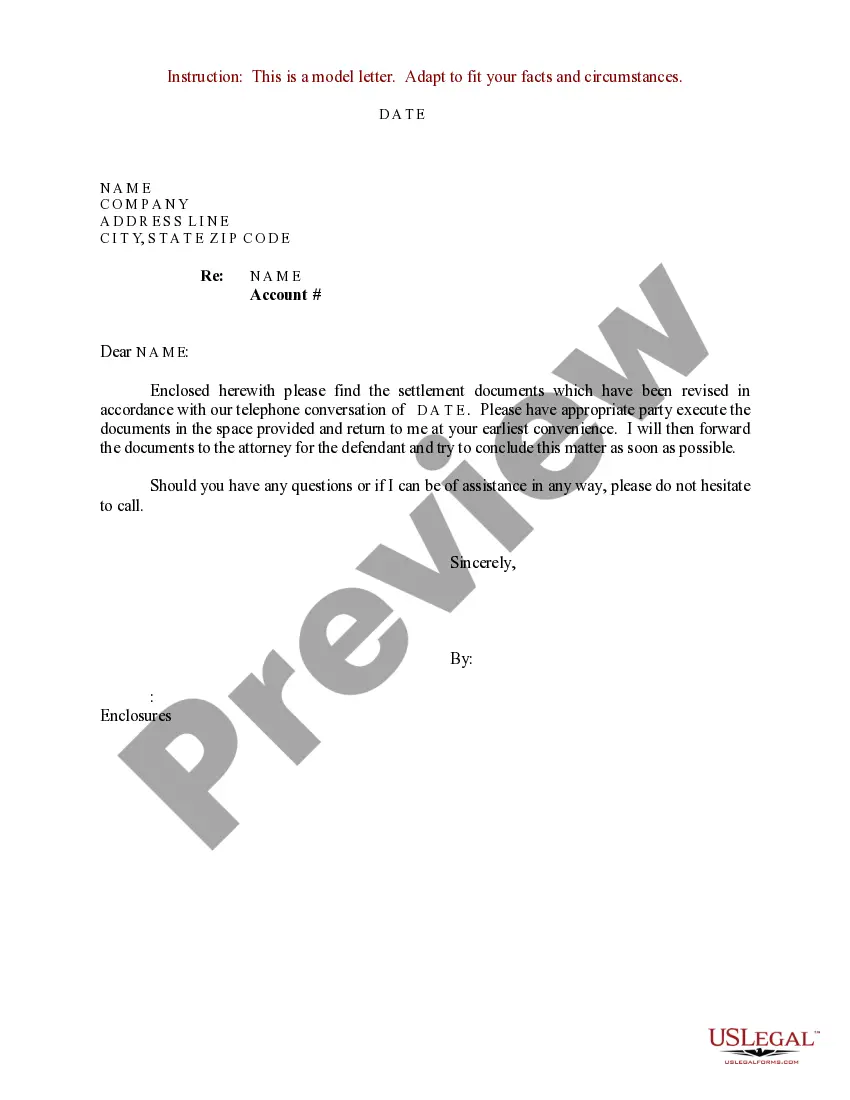
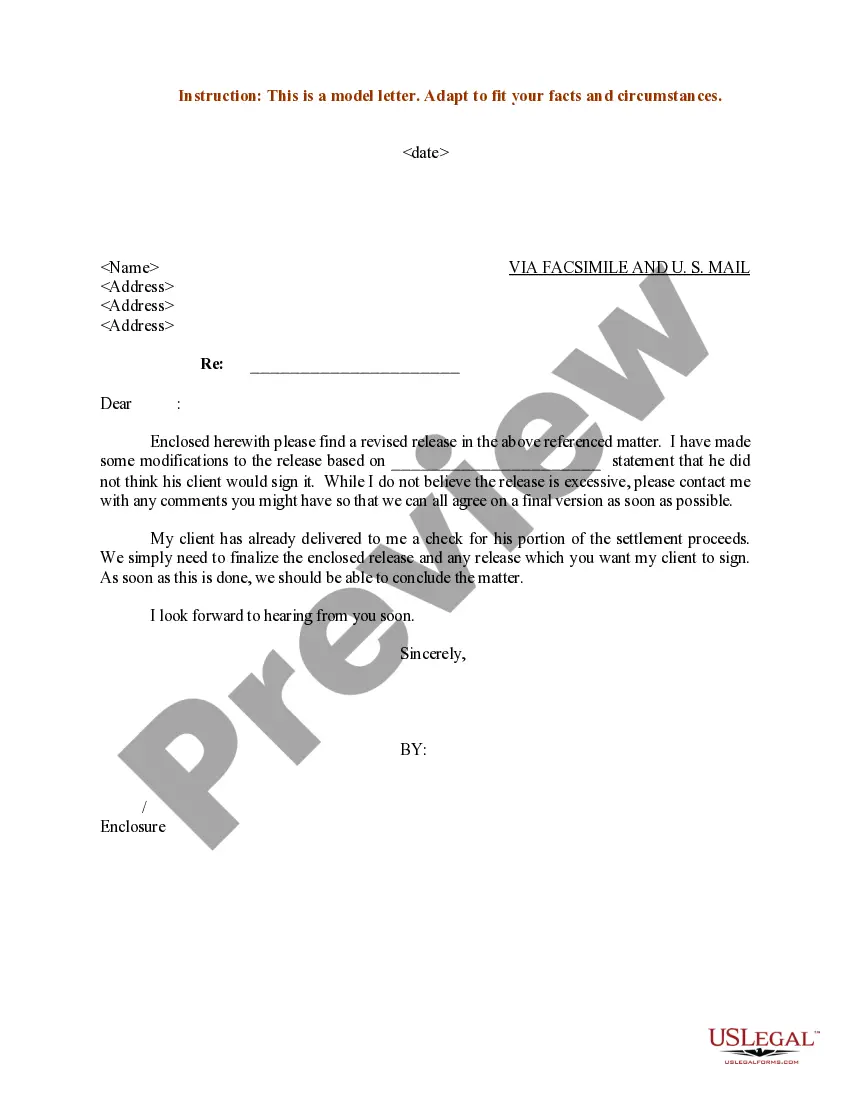
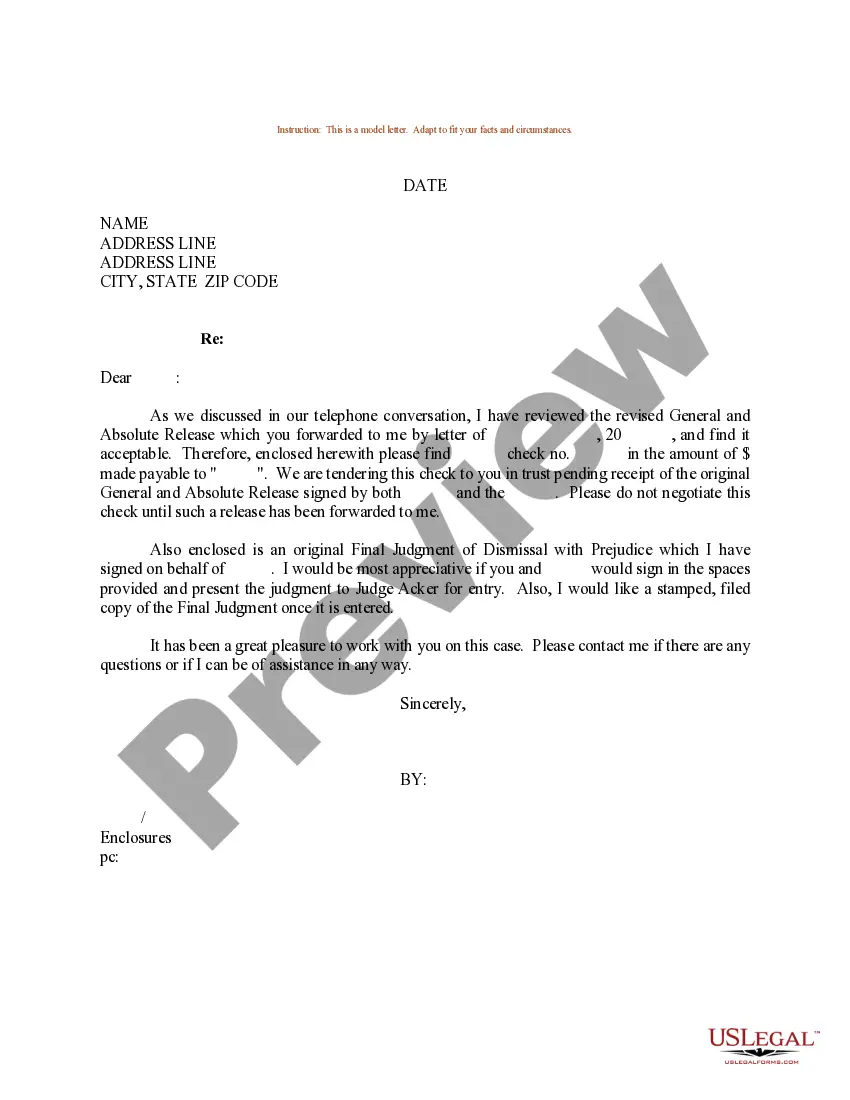
Settlement Agreement For Payment
Description
Get your form ready online
Our built-in tools help you complete, sign, share, and store your documents in one place.
Make edits, fill in missing information, and update formatting in US Legal Forms—just like you would in MS Word.
Download a copy, print it, send it by email, or mail it via USPS—whatever works best for your next step.
Sign and collect signatures with our SignNow integration. Send to multiple recipients, set reminders, and more. Go Premium to unlock E-Sign.
If this form requires notarization, complete it online through a secure video call—no need to meet a notary in person or wait for an appointment.
We protect your documents and personal data by following strict security and privacy standards.

Make edits, fill in missing information, and update formatting in US Legal Forms—just like you would in MS Word.

Download a copy, print it, send it by email, or mail it via USPS—whatever works best for your next step.

Sign and collect signatures with our SignNow integration. Send to multiple recipients, set reminders, and more. Go Premium to unlock E-Sign.

If this form requires notarization, complete it online through a secure video call—no need to meet a notary in person or wait for an appointment.

We protect your documents and personal data by following strict security and privacy standards.
Looking for another form?


How to fill out Sample Letter For Revised Settlement Documents?
The Settlement Agreement For Payment displayed on this page is a reusable legal template crafted by expert attorneys in accordance with federal and local laws. For over 25 years, US Legal Forms has supplied individuals, businesses, and legal practitioners with more than 85,000 validated, state-specific documents for various business and personal circumstances. It’s the fastest, simplest, and most dependable method to acquire the documents you require, as the service ensures bank-level data safety and anti-malware safeguards.
Obtaining this Settlement Agreement For Payment will only require a few straightforward steps.
Subscribe to US Legal Forms to have verified legal templates for all of life’s situations readily available.
- Search for the document you need and review it. Browse through the file you searched and preview it or examine the form description to confirm it meets your requirements. If it doesn't, utilize the search bar to find the appropriate one. Click Buy Now once you have identified the template you require.
- Sign up and Log In. Choose the pricing plan that best fits you and create an account. Utilize PayPal or a credit card to make a swift payment. If you already possess an account, Log In and check your subscription to continue.
- Obtain the fillable template. Select the format you desire for your Settlement Agreement For Payment (PDF, DOCX, RTF) and download the sample onto your device.
- Complete and sign the paperwork. Print out the template to fill it in by hand. Alternatively, use an online multifunctional PDF editor to quickly and accurately complete and sign your form with a valid signature.
- Download your paperwork one more time. Use the same document again whenever necessary. Open the My documents tab in your profile to redownload any previously acquired forms.
Form popularity
FAQ
To write a letter to settle a payment, begin by addressing the recipient and stating your intention to settle. Clearly outline the amount you owe, the proposed payment terms, and any relevant context. Keep the tone professional and ensure to express your willingness to resolve the matter amicably. For guidance and templates, consider using US Legal Forms, which can assist in drafting your settlement agreement for payment.
When structuring a settlement agreement, begin with a title that reflects the purpose of the document. Follow this with an introduction that identifies the parties involved and the context of the agreement. Next, outline the terms clearly, including payment amounts, timelines, and any additional obligations. Lastly, include a section for signatures to confirm that both parties accept the terms, ensuring that your settlement agreement for payment is valid and enforceable.
To complete a settlement agreement, start by ensuring that all parties have reviewed and agree on the terms. Clearly document the payment amount, deadlines, and any other relevant conditions. It is also vital to include a clause that addresses dispute resolution. Once all details are in place, sign and date the agreement, making sure each party retains a copy for their records, especially when it concerns a settlement agreement for payment.
A settlement agreement does not always need to be notarized, but doing so can add an extra layer of protection. Notarization verifies the identities of the parties and confirms that they signed the agreement willingly. While a notarized agreement is often more enforceable in court, it's essential to understand your local laws regarding a settlement agreement for payment. If you're unsure, consulting with a legal expert can provide clarity.
To write a simple agreement between two parties, first, clearly identify each party involved. Next, outline the terms of the agreement, including the obligations and responsibilities of each party. Make sure to include the purpose of the agreement and any payment terms, as this is crucial for a settlement agreement for payment. Finally, both parties should sign and date the document to make it legally binding.
Include a paragraph explaining your circumstances and details of your financial situation that you want the creditor to take into account. Enter the amount which you can afford to pay. and I want to offer this as full and final settlement of the account.
The general rule is that lawsuit settlements are taxable, except in cases that involve an actual, physical injury (?observable bodily harm?) or illness that you suffered. In other words: personal injury settlements usually aren't taxable, while other types of settlements usually are.
8 Questions to Ask if You've Been Offered a Settlement Agreement Is the price right? ... How much will I pay for legal advice? ... Have I been offered a reference? ... How much time would legal action take? ... Are there any restrictive covenants in your agreement? ... Do I have to pay tax on my agreement?
As such, when settling a debt, there are certain things you should ask for in a settlement agreement, including: the stipulation that payment constitutes full settlement of the account, a requirement that the creditor reports the account settlement to the credit reporting bureaus, and the creditor's release of all ...
What Should Be Included in a Settlement Agreement? Identifying information for all involved parties. A description of the issue you're seeking to settle. An offer of resolutions that both parties agree to. Proof of valid consideration from both parties without coercion or duress. Legal purpose.