Writ Possession Application Withdrawn Meaning
Description
Get your form ready online
Our built-in tools help you complete, sign, share, and store your documents in one place.
Make edits, fill in missing information, and update formatting in US Legal Forms—just like you would in MS Word.
Download a copy, print it, send it by email, or mail it via USPS—whatever works best for your next step.
Sign and collect signatures with our SignNow integration. Send to multiple recipients, set reminders, and more. Go Premium to unlock E-Sign.
If this form requires notarization, complete it online through a secure video call—no need to meet a notary in person or wait for an appointment.
We protect your documents and personal data by following strict security and privacy standards.

Make edits, fill in missing information, and update formatting in US Legal Forms—just like you would in MS Word.

Download a copy, print it, send it by email, or mail it via USPS—whatever works best for your next step.

Sign and collect signatures with our SignNow integration. Send to multiple recipients, set reminders, and more. Go Premium to unlock E-Sign.

If this form requires notarization, complete it online through a secure video call—no need to meet a notary in person or wait for an appointment.

We protect your documents and personal data by following strict security and privacy standards.
Looking for another form?
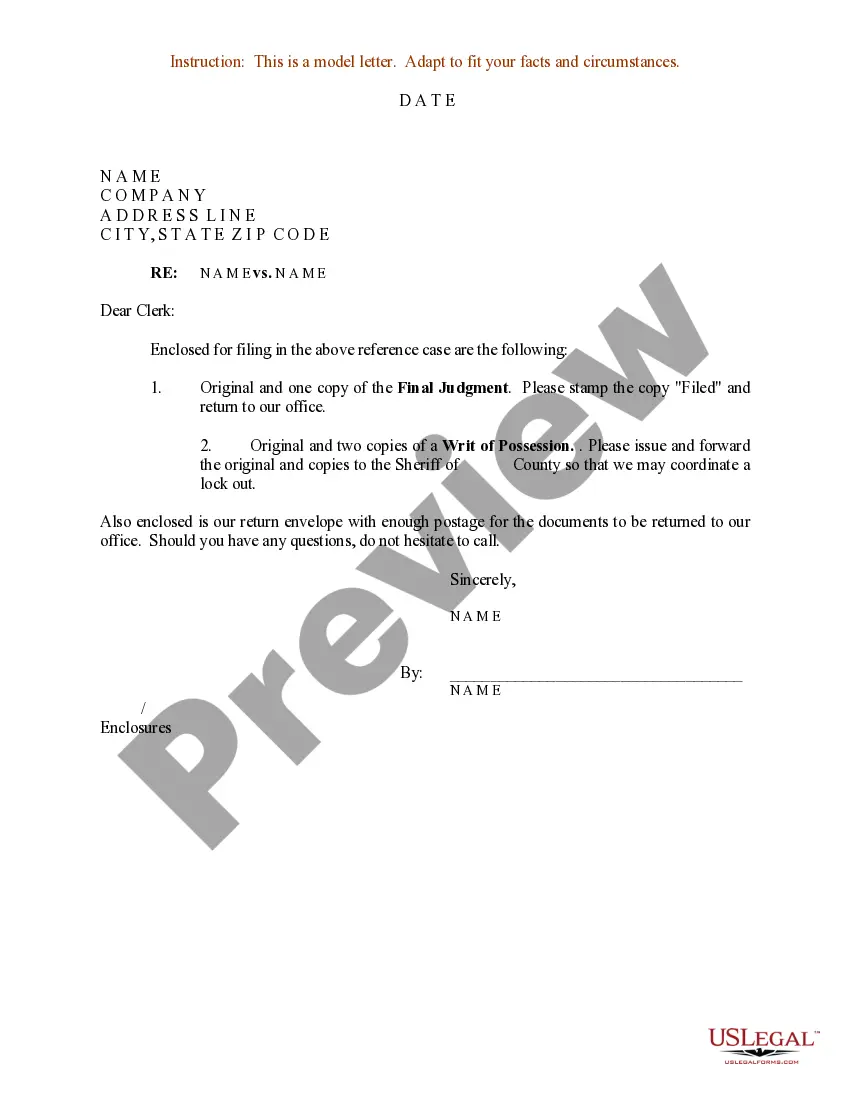
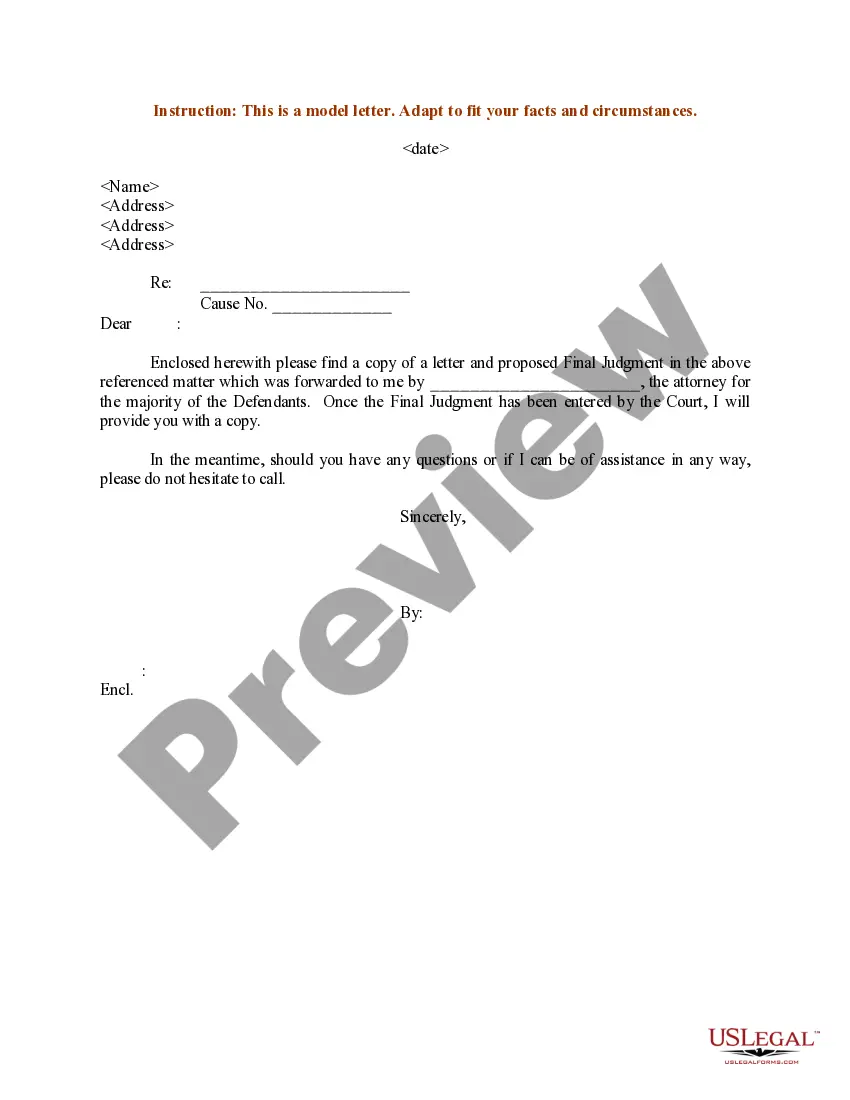
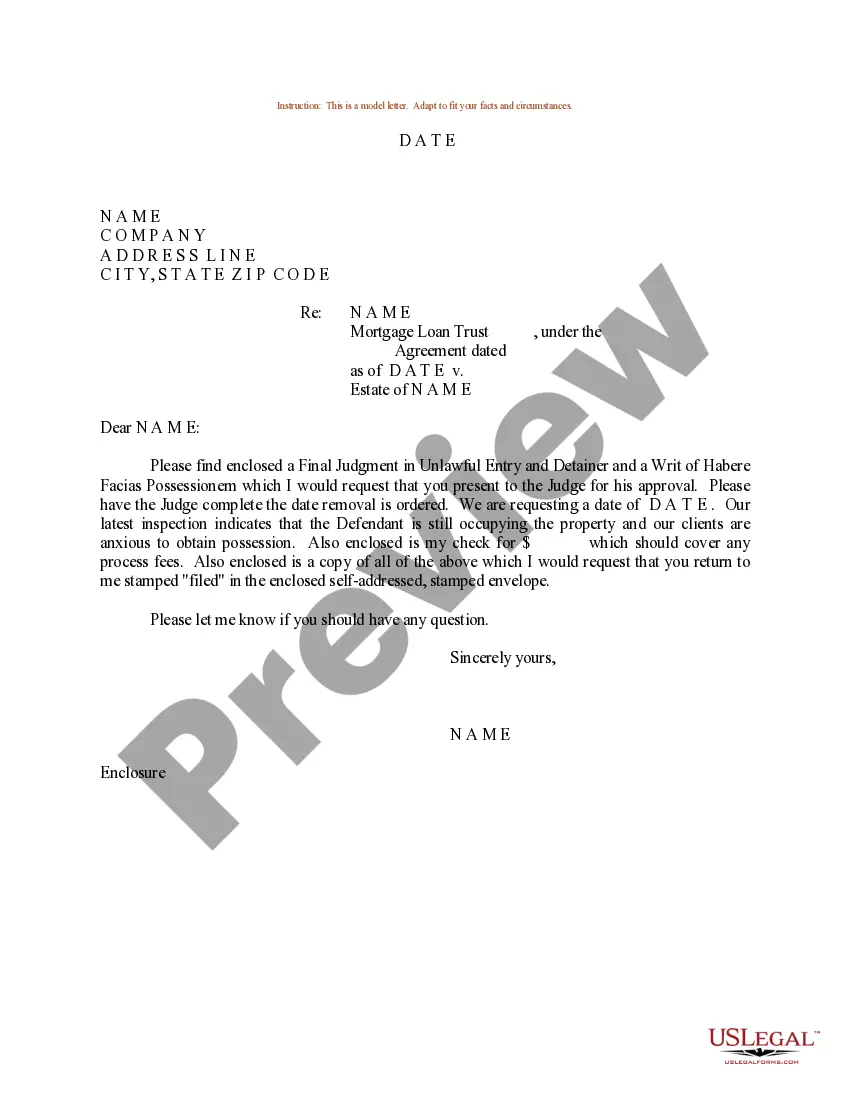
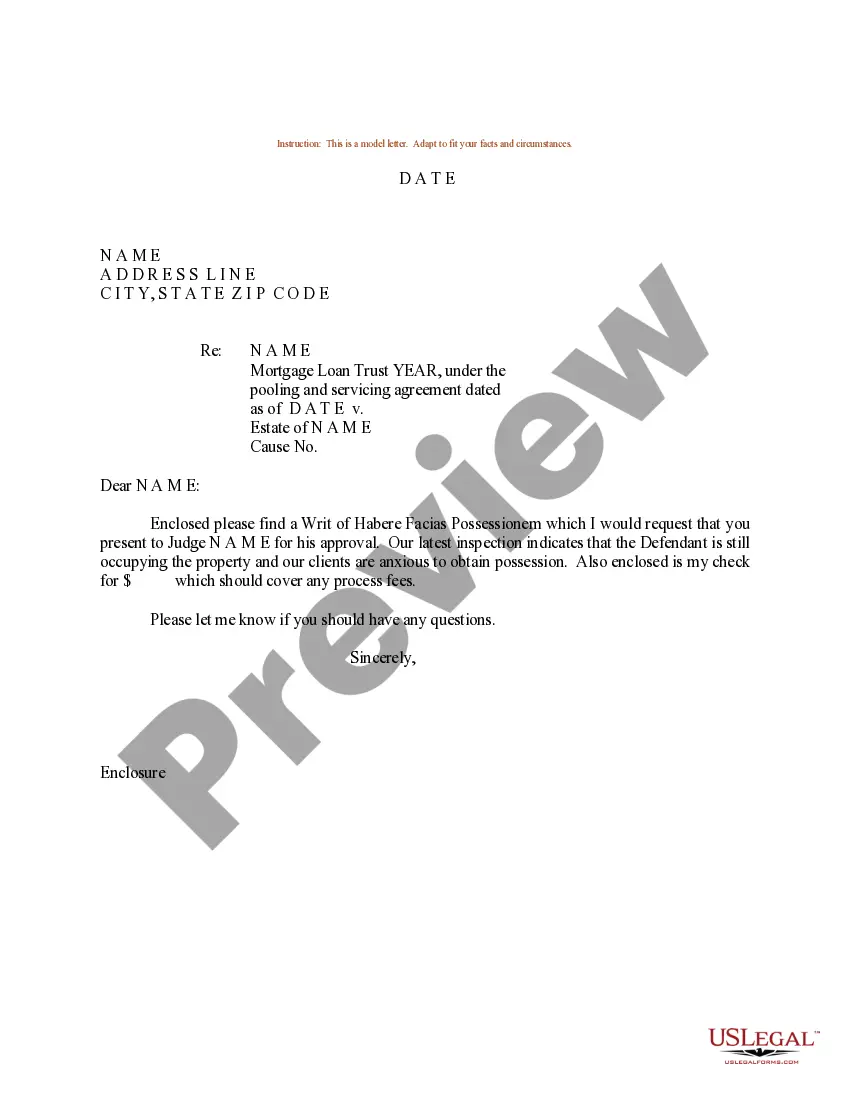
How to fill out Sample Letter For Final Judgment - Writ Of Possession?
Legal document administration can be overwhelming, even for experienced professionals.
When you are searching for a Writ Possession Application Withdrawn Definition and don’t have the opportunity to dedicate time to find the correct and updated version, the process can be challenging.
US Legal Forms addresses any requirements you might have, from personal to business documents, all in one location.
Utilize advanced tools to complete and manage your Writ Possession Application Withdrawn Definition.
Here are the steps to follow after downloading the form you require: Verify it is the correct form by previewing it and reviewing its description. Ensure that the template is accepted in your state or county. Click Buy Now when you are prepared. Choose a subscription plan. Select the file format you need, and Download, complete, sign, print, and submit your documents. Enjoy the US Legal Forms online library, supported by 25 years of expertise and dependability. Transform your everyday document management into a simple and user-friendly process today.
- Access a repository of articles, guides, and handbooks relevant to your situation and requirements.
- Save time and energy searching for the documents you need, and utilize US Legal Forms’ advanced search and Review tool to find Writ Possession Application Withdrawn Definition and download it.
- If you have a monthly subscription, Log In to the US Legal Forms account, search for the form, and download it.
- Check the My documents tab to view the documents you have previously saved and manage your folders as needed.
- If this is your first experience with US Legal Forms, create an account and gain unlimited access to all the benefits of the library.
- A comprehensive online form library can be a game changer for anyone looking to handle these situations effectively.
- US Legal Forms is a leading provider in online legal forms, with over 85,000 state-specific legal forms available to you at any time.
- With US Legal Forms, you can access state- or county-specific legal and business documents.
Form popularity
FAQ
A: If the writ of possession has already issued, the only way to delay it is to appeal the judgment of the magistrate court. If the writ of possession has not issued, show up to your eviction hearing and request additional time from the landlord.
Even if a judge enters a judgment saying you must move, your landlord cannot simply change the locks or remove your possessions from your home. A judgment will usually give you time to move. Usually you get 10 days, but you can ask for more time.
If the tenant does not move after three (3) business days from the time the warrant for possession was served on the tenant, the landlord may arrange for the Court Officer to have the tenant evicted or locked out. Following the eviction, the landlord must let the tenant remove personal belongings from the premises.
When a court issues a writ of possession, the tenant will have a certain number of days (usually determined by the court) to leave the rental property. If the tenant does not leave after those days are up, then they can be forcibly removed.
Once the writ is obtained, the Sheriff will provide notice of the date the property must be vacated. A tenant with a valid lease has protection from removal by the new owner under the New Jersey Anti-Eviction Act, NJSA 2A:18-61.1 et seq.