Possession Forged Instrument 2nd
Description

Get your form ready online
Our built-in tools help you complete, sign, share, and store your documents in one place.
Make edits, fill in missing information, and update formatting in US Legal Forms—just like you would in MS Word.
Download a copy, print it, send it by email, or mail it via USPS—whatever works best for your next step.
Sign and collect signatures with our SignNow integration. Send to multiple recipients, set reminders, and more. Go Premium to unlock E-Sign.
If this form requires notarization, complete it online through a secure video call—no need to meet a notary in person or wait for an appointment.
We protect your documents and personal data by following strict security and privacy standards.

Make edits, fill in missing information, and update formatting in US Legal Forms—just like you would in MS Word.

Download a copy, print it, send it by email, or mail it via USPS—whatever works best for your next step.

Sign and collect signatures with our SignNow integration. Send to multiple recipients, set reminders, and more. Go Premium to unlock E-Sign.

If this form requires notarization, complete it online through a secure video call—no need to meet a notary in person or wait for an appointment.

We protect your documents and personal data by following strict security and privacy standards.
Looking for another form?


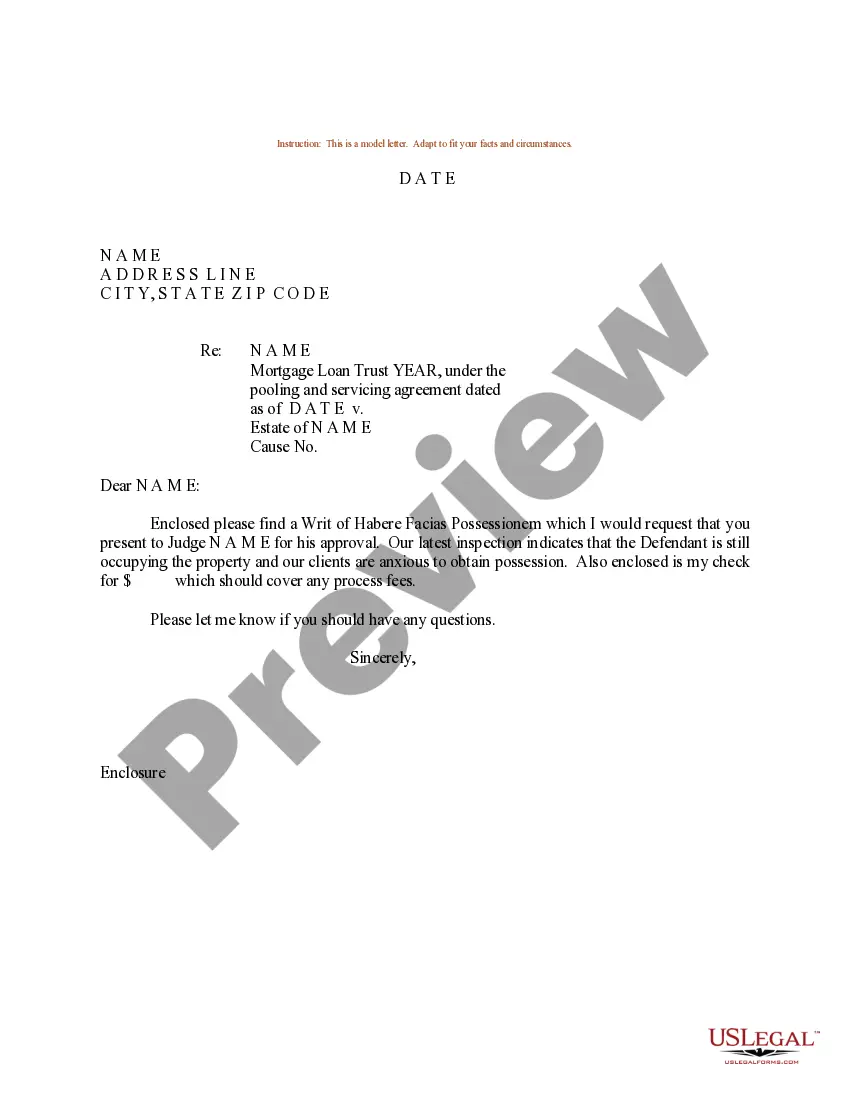
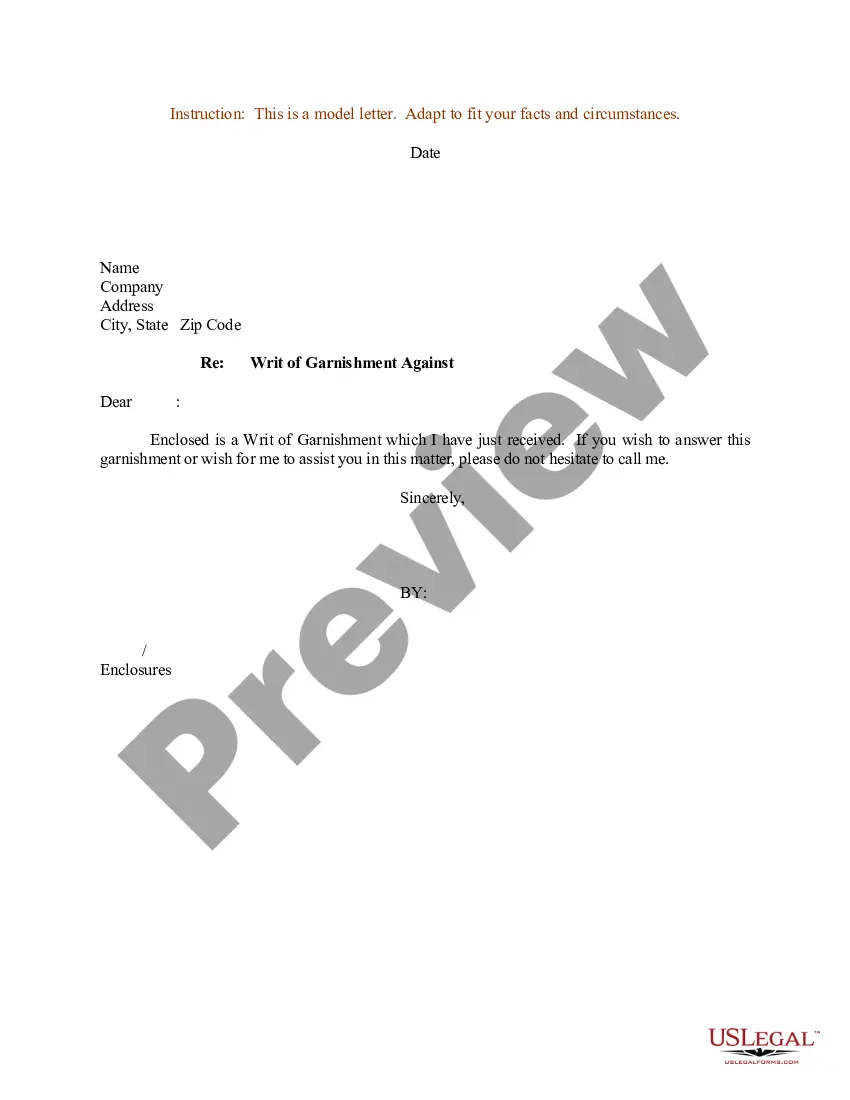
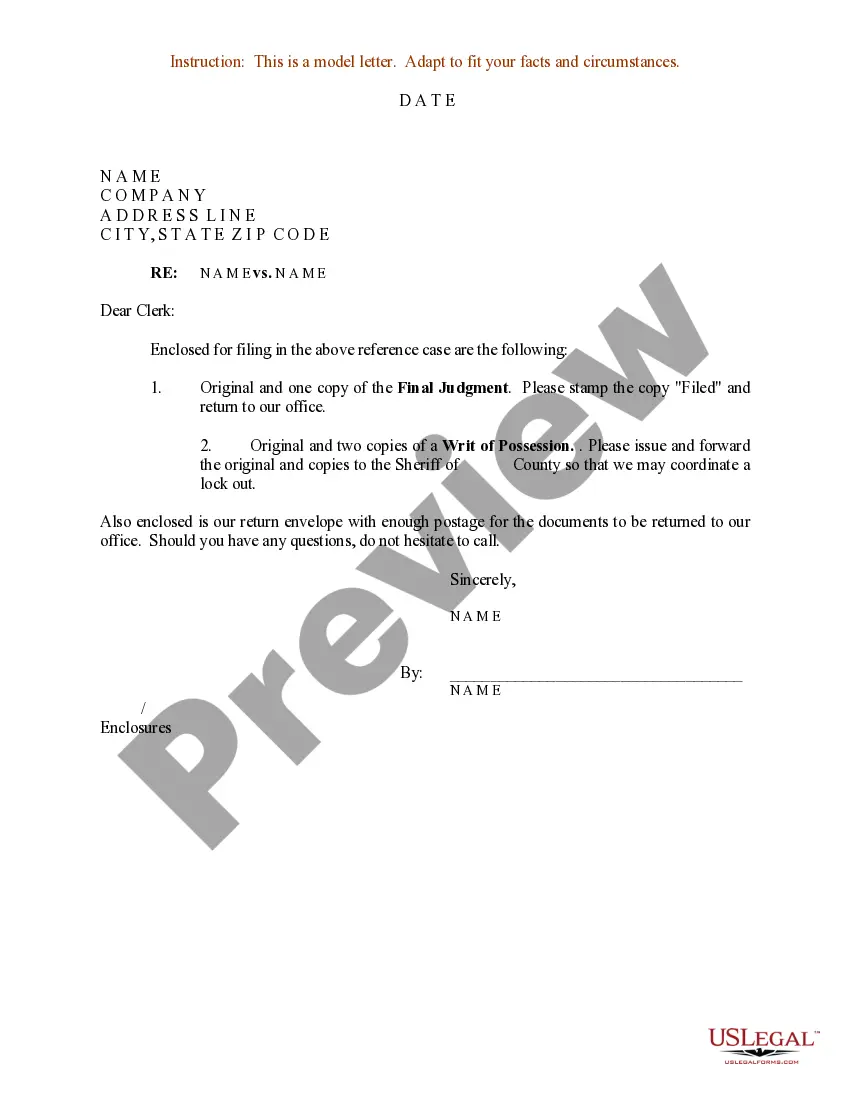
How to fill out Sample Letter For Writ Of Habere Facias Possessionem?
Managing legal paperwork and processes may be a lengthy addition to your schedule.
Possession Forged Instrument 2nd and similar documents generally require you to search for them and comprehend how to fill them out correctly.
Thus, whether addressing financial, legal, or personal issues, having a comprehensive and accessible online directory of forms when required will be tremendously helpful.
US Legal Forms is the premier online platform for legal templates, featuring over 85,000 state-specific documents along with various tools to assist you in completing your paperwork swiftly.
Are you using US Legal Forms for the first time? Sign up and create a free account in just a few minutes, and you’ll unlock access to the form directory including Possession Forged Instrument 2nd.
- Explore the collection of relevant documents available to you with just one click.
- US Legal Forms offers you state- and county-specific forms that you can download at any time.
- Protect your document management processes with a high-quality service that allows you to assemble any form in minutes without any additional or hidden fees.
- Simply Log In to your account, find Possession Forged Instrument 2nd, and download it instantly in the My documents section.
- You can also retrieve previously downloaded forms.
Form popularity
FAQ
Criminal possession of a forged instrument in NY, particularly possession forged instrument 2nd, refers to the act of knowingly having a forged document that is intended to deceive others. This type of crime is classified as a serious offense, and it can lead to significant legal consequences, including fines and imprisonment. If you find yourself facing charges related to this crime, it is crucial to seek legal advice to protect your rights. US Legal Forms can provide resources and documents that may assist you in understanding and navigating the legal process effectively.
In New York, Criminal Possession of a forged instrument in the second degree involves the possession of a document intended to be used unlawfully. This crime can have serious legal consequences, including fines and imprisonment. It is essential to take proactive steps to understand your rights and options. Consider exploring resources offered by USLegalForms to navigate legal challenges effectively.
Possession forged instrument 2nd refers to the unlawful possession of a false document intending to deceive others. This crime typically involves the use of a forged check, deed, or other financial instrument. It is important to understand the legal implications, as this offense can lead to serious penalties. Knowing the specifics of your rights and options is essential.
Possession of a forged instrument in the second degree refers to knowingly owning a forged document intending to use it for unlawful purposes. This offense indicates a clear intent to deceive others, often leading to significant legal consequences. It is classified as a felony in many jurisdictions, reflecting the gravity of the crime. For those dealing with these issues, utilizing resources like USLegalForms can offer valuable guidance.
Second degree forgery means creating, altering, or using a false document to mislead others. This type of forgery suggests intent to commit fraud or deception, which can have severe legal repercussions. The concept often intersects with charges of possession forged instrument 2nd, emphasizing the legal system's focus on intent. Awareness of these definitions can better prepare individuals for potential legal challenges.
In Alabama, possession of a forged instrument in the second degree is classified as a Class C felony. This involves knowingly possessing a forged document with the intent to use it unlawfully. The penalties can include imprisonment and fines, reflecting the serious nature of such offenses. If you face charges, seeking legal guidance can help clarify your position regarding possession forged instrument 2nd.
The three primary types of forgery include ancient forgery, modern forgery, and signature forgery. Ancient forgery typically involves historical documents that are altered or recreated. Modern forgery usually pertains to today's business documents, while signature forgery involves replicating someone else's signature without permission. Each type carries serious consequences under the law, often falling under possession forged instrument 2nd.
Second degree forgery involves using a forged document with the intention to deceive others. This could include falsifying official documents, like checks or contracts. The term 'possession forged instrument 2nd' often refers to the possession of such falsified materials with intent to commit fraud. Understanding this definition is vital for those navigating legal trouble related to forgery.