Policy Explanation and Denial of Request
About this form
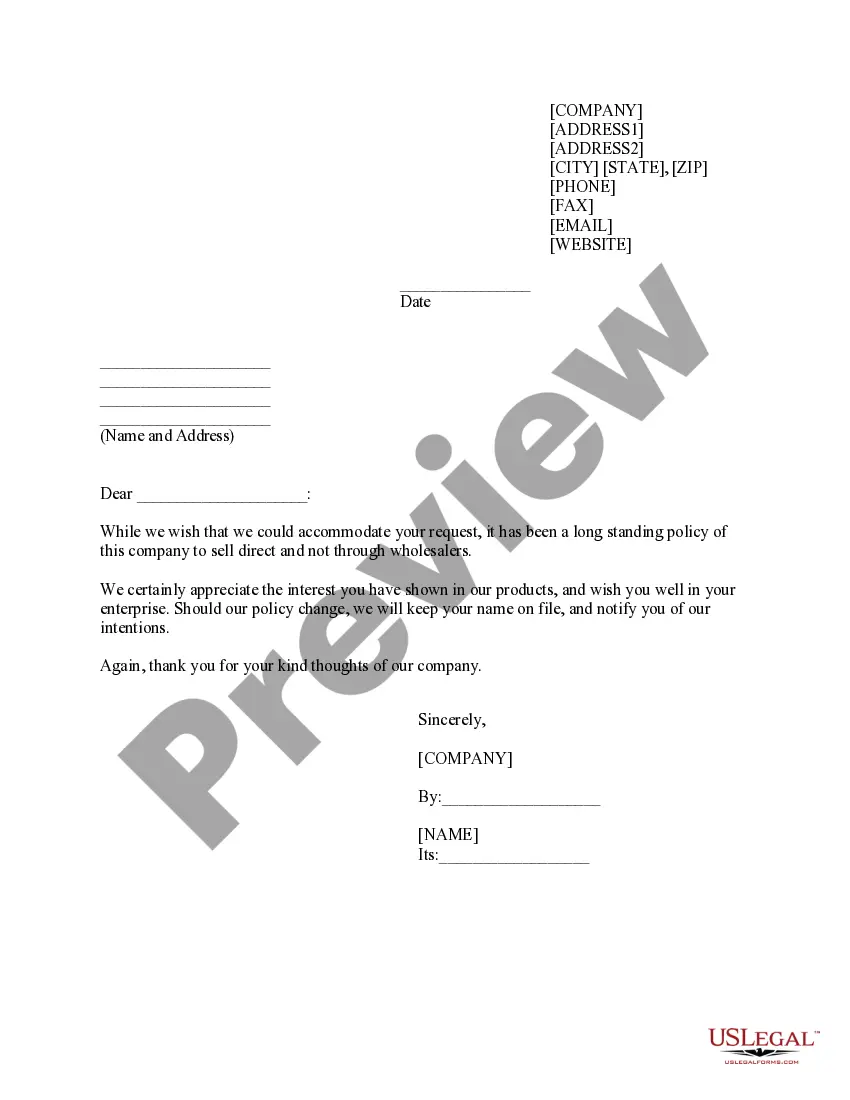
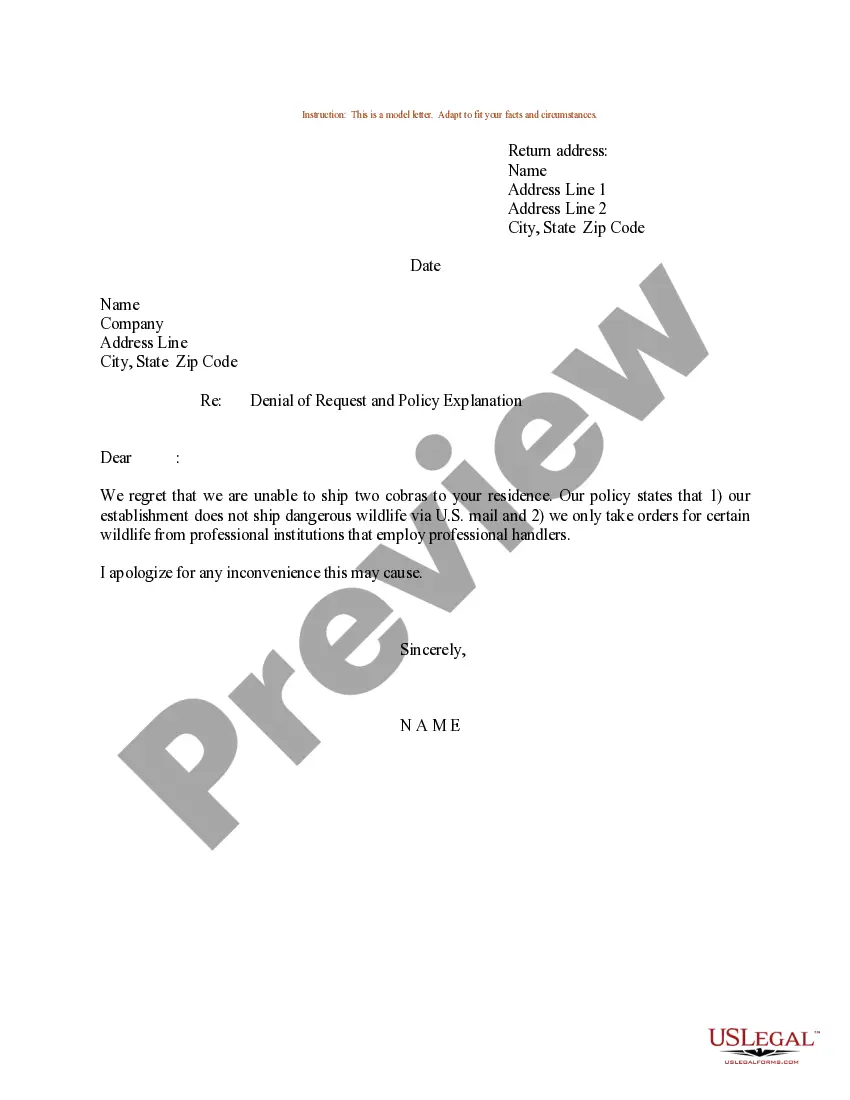
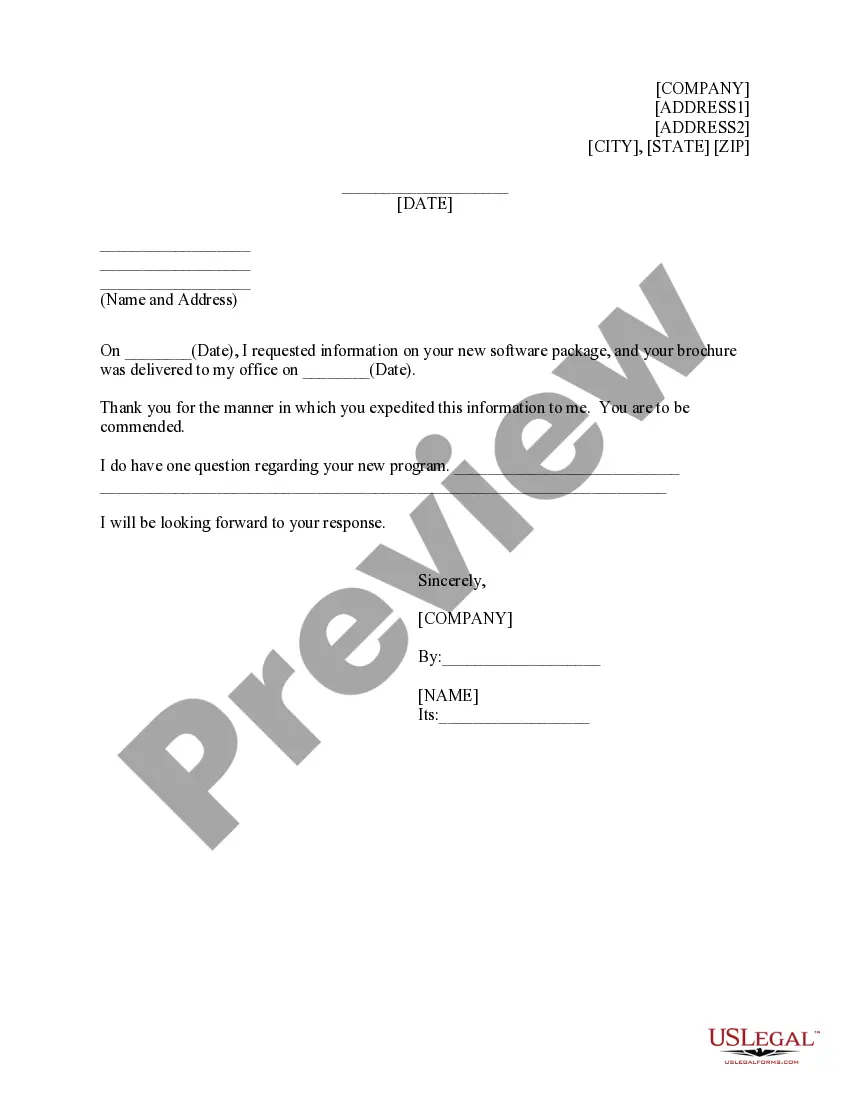
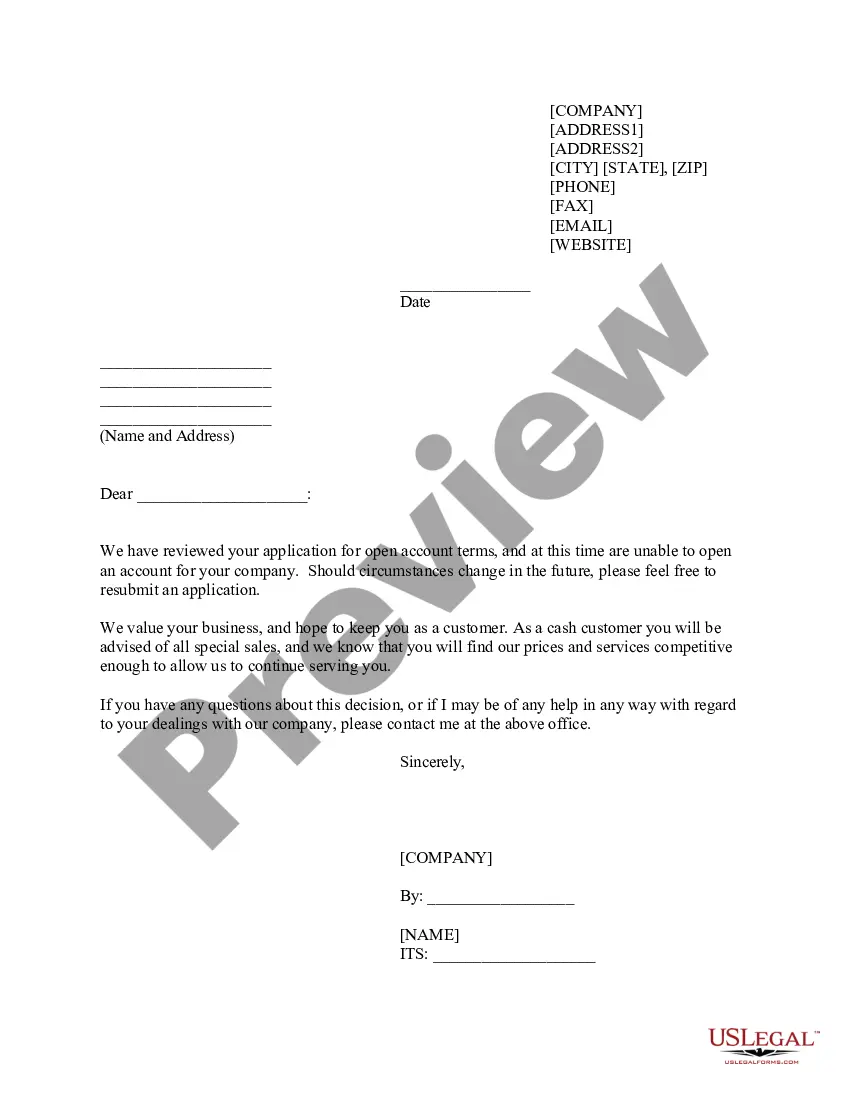
The Policy Explanation and Denial of Request form is a template designed for businesses to communicate a refusal of a request while explaining the policy behind that decision. This form serves to clarify company policy regarding customer inquiries or requests, making it distinct from other rejection forms by including an explanation that supports understanding and transparency. It allows companies to maintain a professional relationship while declining requests.
Key components of this form
- Company address and contact information
- Date of the letter
- Name and address of the recipient
- Formal opening greeting
- Body paragraph explaining the policy and denial
- Closing remarks expressing appreciation
- Signature line for the company representative
When to use this form
This form is useful when a business receives a request from a potential customer, partner, or wholesaler that cannot be accommodated due to established company policies. It can be used in scenarios such as denying a wholesale application, rejecting a request for discounts, or any situation where clear communication of policies is necessary. This form helps maintain professionalism while effectively conveying the denial.
Who needs this form
- Business owners needing to respond to customer inquiries or requests
- Administrative staff managing correspondence with partners or suppliers
- Legal representatives ensuring compliance with company policies
Completing this form step by step
- Input your company's address, phone number, and other contact details at the top.
- Enter the date of the correspondence.
- Fill in the recipient's name and address accurately.
- Craft a respectful greeting to the recipient.
- Clearly state the denial and explain the relevant policy.
- Sign the letter and include the name and title of the company representative.
Notarization requirements for this form
This form does not typically require notarization to be legally valid. However, some jurisdictions or document types may still require it. US Legal Forms provides secure online notarization powered by Notarize, available 24/7 for added convenience.
Get your form ready online
Our built-in tools help you complete, sign, share, and store your documents in one place.
Make edits, fill in missing information, and update formatting in US Legal Forms—just like you would in MS Word.
Download a copy, print it, send it by email, or mail it via USPS—whatever works best for your next step.
Sign and collect signatures with our SignNow integration. Send to multiple recipients, set reminders, and more. Go Premium to unlock E-Sign.
If this form requires notarization, complete it online through a secure video call—no need to meet a notary in person or wait for an appointment.
We protect your documents and personal data by following strict security and privacy standards.

Make edits, fill in missing information, and update formatting in US Legal Forms—just like you would in MS Word.

Download a copy, print it, send it by email, or mail it via USPS—whatever works best for your next step.

Sign and collect signatures with our SignNow integration. Send to multiple recipients, set reminders, and more. Go Premium to unlock E-Sign.

If this form requires notarization, complete it online through a secure video call—no need to meet a notary in person or wait for an appointment.

We protect your documents and personal data by following strict security and privacy standards.
Avoid these common issues
- Failing to personalize the letter by omitting the recipient's name.
- Not providing a clear explanation of the company policy.
- Using a tone that may come off as rude or dismissive.
Advantages of online completion
- Easy to download and customize for your specific needs.
- Access to a professionally drafted template saves time.
- Ability to edit and review the form before sending.
Looking for another form?
Form popularity
FAQ
Types of Lending Discrimination The courts have recognized three methods of proof of lending discrimination under the ECOA and the FHAct: Overt evidence of disparate treatment; ? Comparative evidence of disparate treatment; and ? Evidence of disparate impact.
A creditor must notify an applicant of action taken on the applicant's request for credit, whether favorable or adverse, within 30 days after receiving a completed application.
The notice must either disclose the applicant's right to a statement of specific reasons within 30 days, or give the primary reasons each creditor relied upon in taking the adverse action - clearly indicating which reasons relate to which creditor.
ECOA makes it illegal for lenders to discriminate based on race, color, religion, national origin, sex, marital status, age, the receipt of public assistance, and the applicant's exercise of specific consumer protection laws.
Prohibits creditors from discriminating against credit applicants on the basis of race, color, religion, national origin, sex, marital status, age, because an applicant receives income from a public assistance program, or because an applicant has in good faith exercised any right under the Consumer Credit Protection
Imposing unfair terms or conditions on a loan (such as lower loan amount or higher interest rates) based on personal characteristics protected under the ECOA. Asking detailed personal information regarding marital status, such as whether you are widowed or divorced.
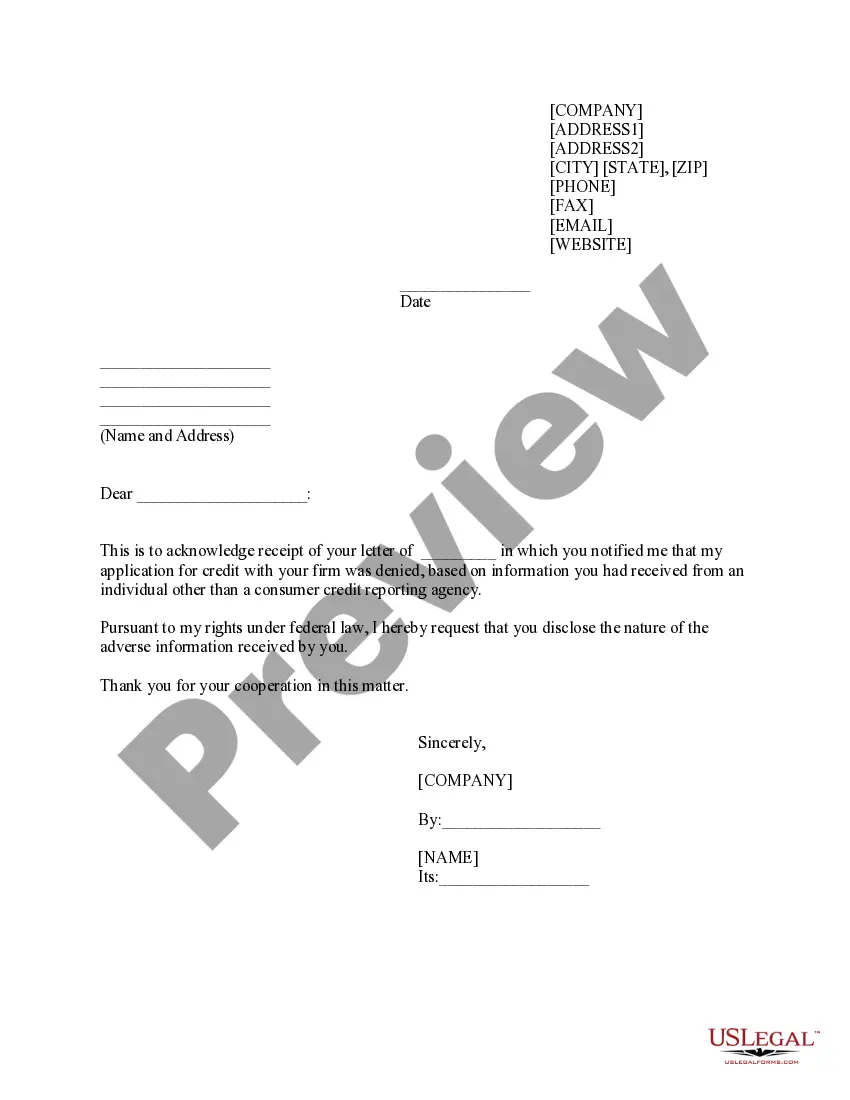
A statement of action taken by the creditor. Either a statement of the specific reasons for the action taken or a disclosure of the applicant's right to a statement of specific reasons and the name, address, and telephone number of the person or office from which this information can be obtained.
The Equal Credit Opportunity Act (ECOA) prohibits discrimination in any aspect of a credit transaction. It applies to any extension of credit, including extensions of credit to small businesses, corporations, partnerships, and trusts.