Stop Payment Letter (with Reasons)
Description

Get your form ready online
Our built-in tools help you complete, sign, share, and store your documents in one place.
Make edits, fill in missing information, and update formatting in US Legal Forms—just like you would in MS Word.
Download a copy, print it, send it by email, or mail it via USPS—whatever works best for your next step.
Sign and collect signatures with our SignNow integration. Send to multiple recipients, set reminders, and more. Go Premium to unlock E-Sign.
If this form requires notarization, complete it online through a secure video call—no need to meet a notary in person or wait for an appointment.
We protect your documents and personal data by following strict security and privacy standards.

Make edits, fill in missing information, and update formatting in US Legal Forms—just like you would in MS Word.

Download a copy, print it, send it by email, or mail it via USPS—whatever works best for your next step.

Sign and collect signatures with our SignNow integration. Send to multiple recipients, set reminders, and more. Go Premium to unlock E-Sign.

If this form requires notarization, complete it online through a secure video call—no need to meet a notary in person or wait for an appointment.

We protect your documents and personal data by following strict security and privacy standards.
Looking for another form?
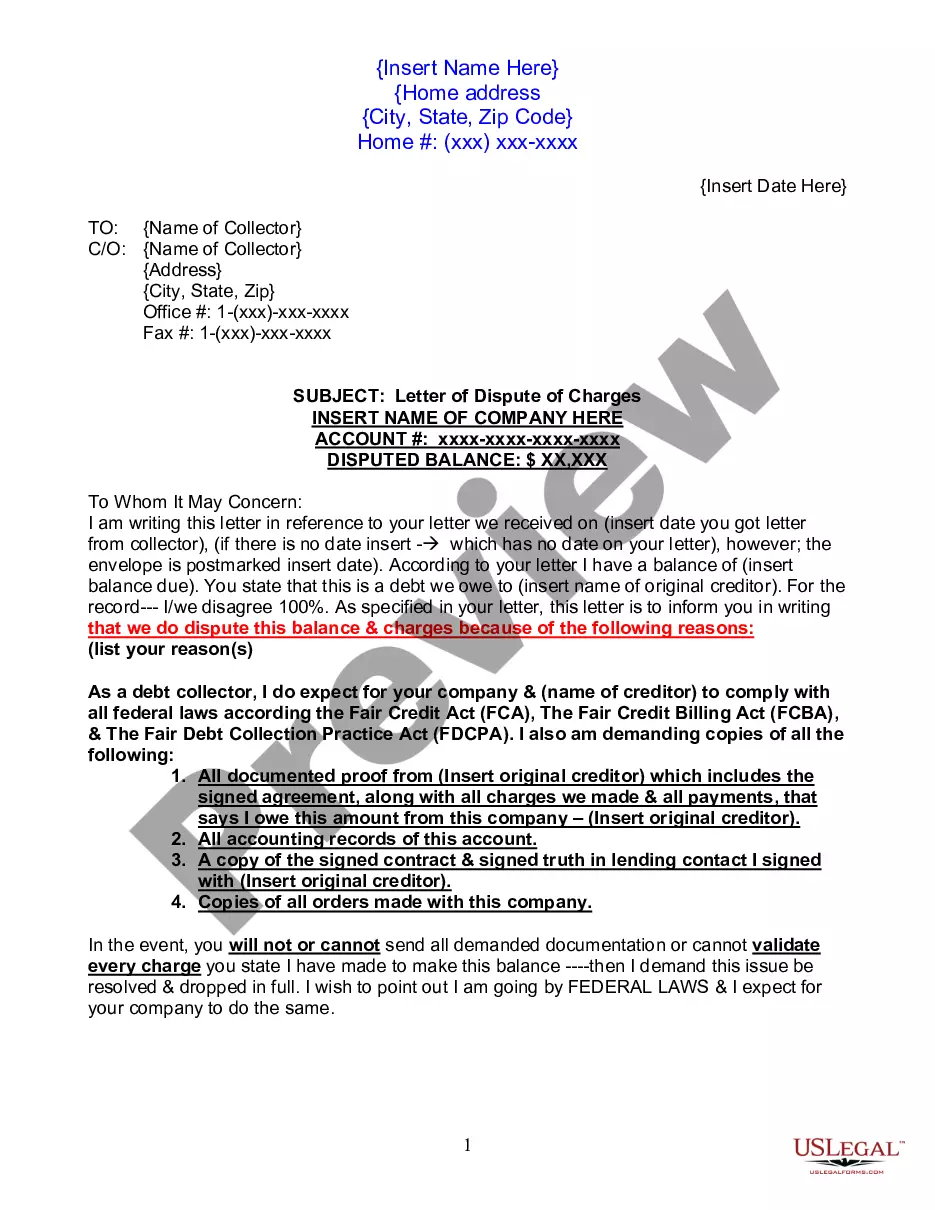
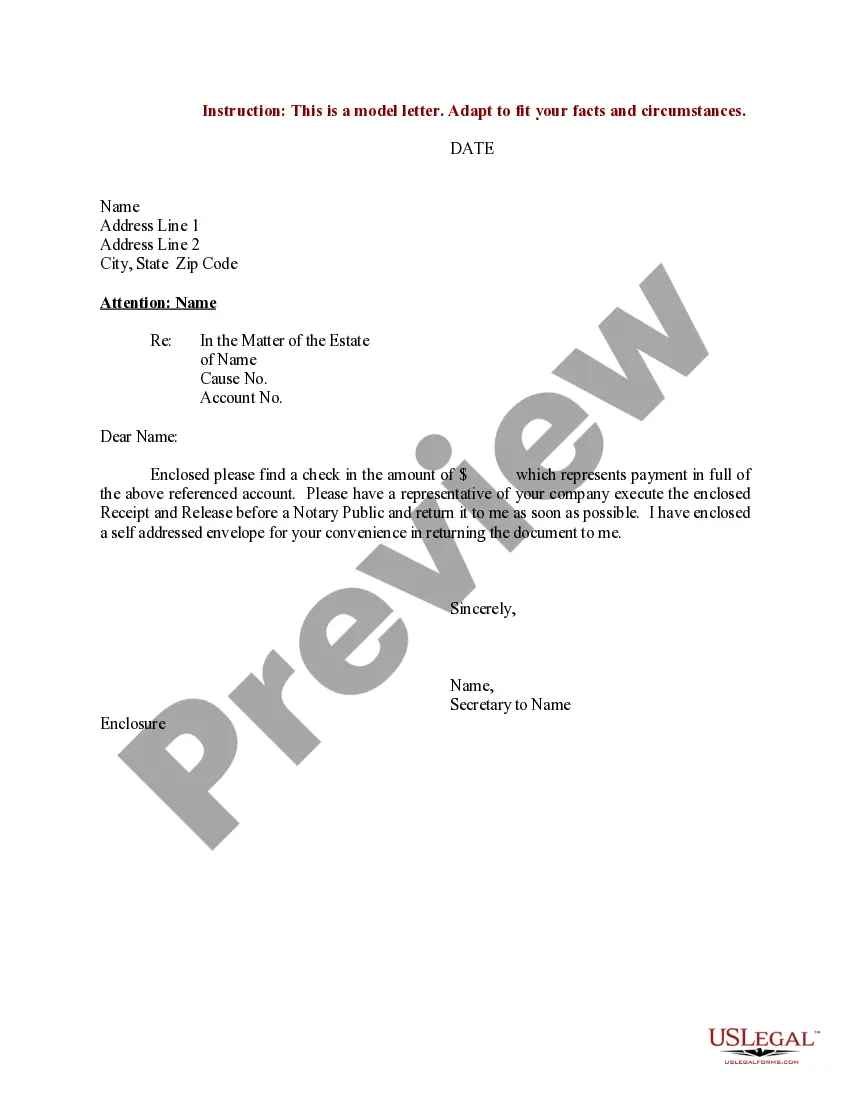
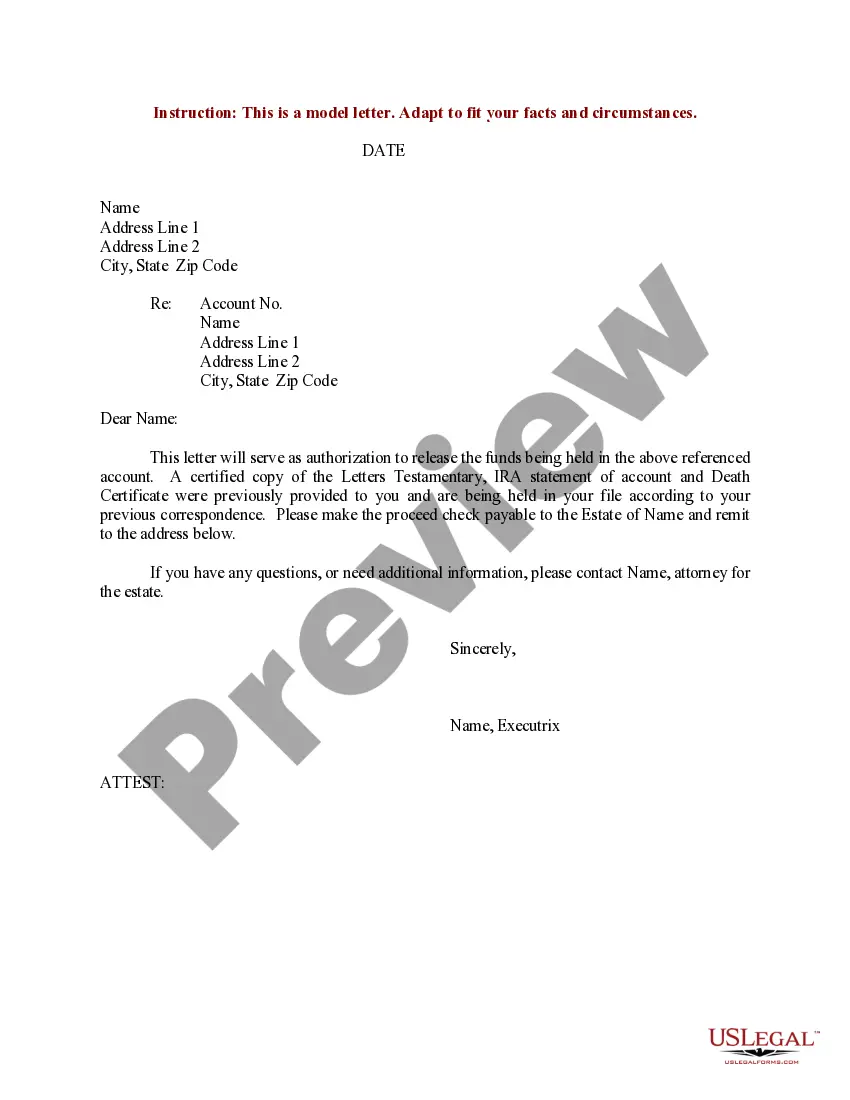
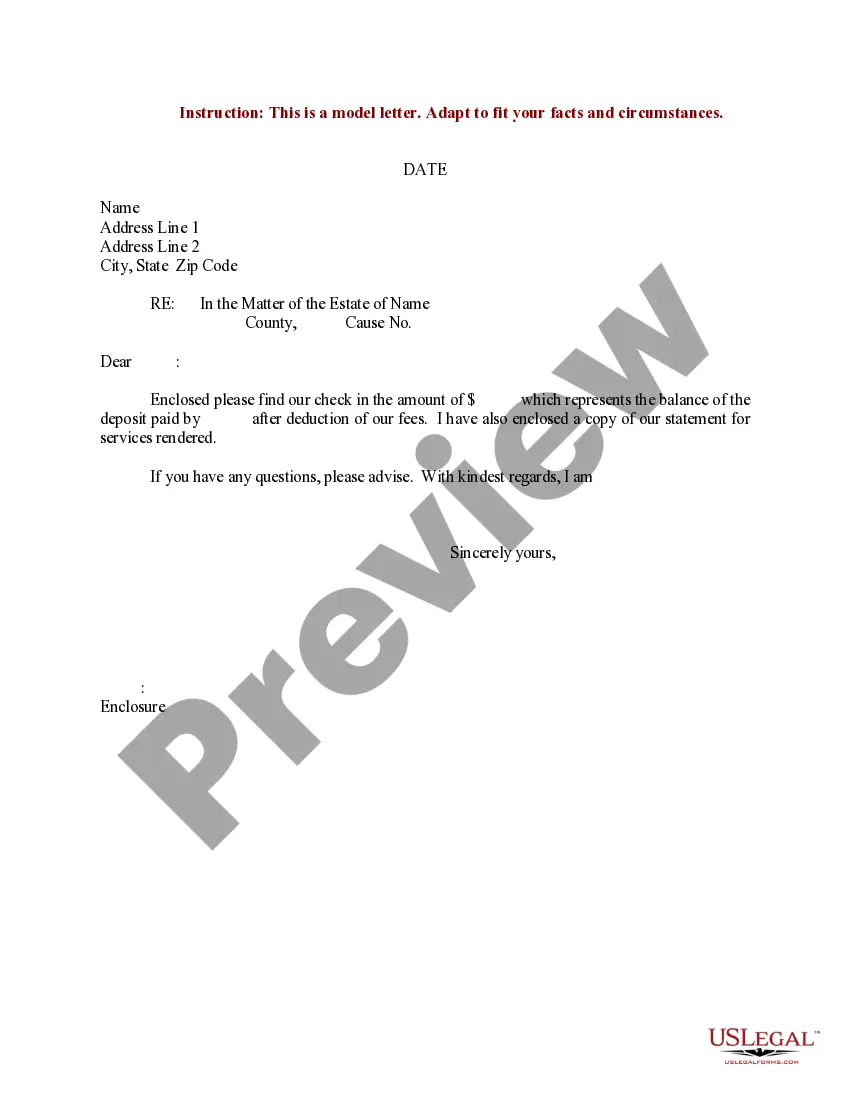
How to fill out Sample Letter For Payment - Request To Execute Receipt And Release?
Handling legal documents and tasks can be a lengthy addition to your day.
Stop Payment Letter (with Justifications) and similar forms frequently require you to locate them and comprehend how to complete them correctly.
Consequently, if you are managing financial, legal, or personal issues, possessing a thorough and functional online library of documents at your disposal will significantly help.
US Legal Forms is the leading online platform for legal templates, providing over 85,000 state-specific documents and various resources to help you complete your paperwork effortlessly.
Simply Log In to your account, locate Stop Payment Letter (with Justifications), and obtain it instantly from the My documents section. You can also access previously downloaded forms.
- Explore the collection of relevant documents available to you with just one click.
- US Legal Forms provides you with state- and county-specific forms accessible for download at any time.
- Protect your document management processes with a premium service that allows you to create any form in mere minutes without any extra or concealed charges.
Form popularity
FAQ
You can request a stop payment release letter by contacting your bank or financial institution directly and providing them with necessary details. Ensure you specify the check number, date of the transaction, and any other relevant information. A well-crafted stop payment letter (with reasons) can support your request and clarify your intentions, making it easier for the bank to process your release effectively.
To write a letter of request for payment release, start by addressing the recipient clearly. Include the details of the original stop payment, such as check number and amount, along with an explanation of your reasons for the release. Close the letter politely and sign it to add authenticity. Using a stop payment letter (with reasons) template from USLegalForms can help streamline this process, ensuring you cover all necessary points.
A release of stop payment notice is a document that cancels a previous request to stop payment on a specific check or transaction. This release occurs when the check has been found, or the account holder decides to proceed with the payment. By issuing a stop payment letter (with reasons), you formally document your intent to lift the stop payment request, ensuring clarity for all parties involved.
Writing a stop payment letter requires clarity and precision. Start by including your name, address, and the date, followed by the recipient's details. Clearly state that you are requesting a stop payment and provide the check number, amount, and any related details. Utilizing a platform like USLegalForms can simplify this process, offering templates to help you draft a professional stop payment letter with reasons.
There are several reasons you might want to issue a stop payment letter. One common reason is if you suspect fraud associated with a check. Additionally, if you have made an error in the payment amount or recipient, a stop payment letter can prevent a financial loss. Lastly, if you enter a dispute regarding goods or services, initiating a stop payment letter can be a necessary step to protect your funds.
To write a letter to stop payment, begin with your name and address, followed by the date. Clearly outline your request for a stop payment, including essential details such as the check number and amount. Be sure to provide your account information and request a confirmation of the stop payment. A well-crafted stop payment letter (with reasons) can highlight the need to cease transactions smoothly.
The primary reason for a stop payment on a check is to prevent potential financial loss. This could stem from circumstances such as the check being written for incorrect amounts, being lost or stolen, or any disputes between the parties involved. By clearly articulating these reasons in a stop payment letter (with reasons), individuals can protect their finances effectively.
Reasons to submit a stop payment on a check include concerns over fraud, disputes regarding the goods or services received, or the check being lost or misplaced. Sometimes, a simple mistake in writing the check amount or recipient can also prompt this action. In such cases, a clear stop payment letter (with reasons) helps to facilitate communication with your bank.
The rules for processing a stop payment vary by bank, but generally, you need to request this service within a specific timeframe after issuing the check. Banks often require the account number, check number, and amount to process the request. Additionally, a stop payment request typically remains valid for six months, so it's essential to monitor and renew if necessary.
Situations warranting a stop payment typically include lost or stolen checks, disputes with a payee, or when a check is written in error. Other common scenarios involve stopping payment due to fraud or insufficient funds that lead to changes in your financial decisions. By detailing these reasons in a stop payment letter (with reasons), individuals can effectively communicate their intentions to their bank.