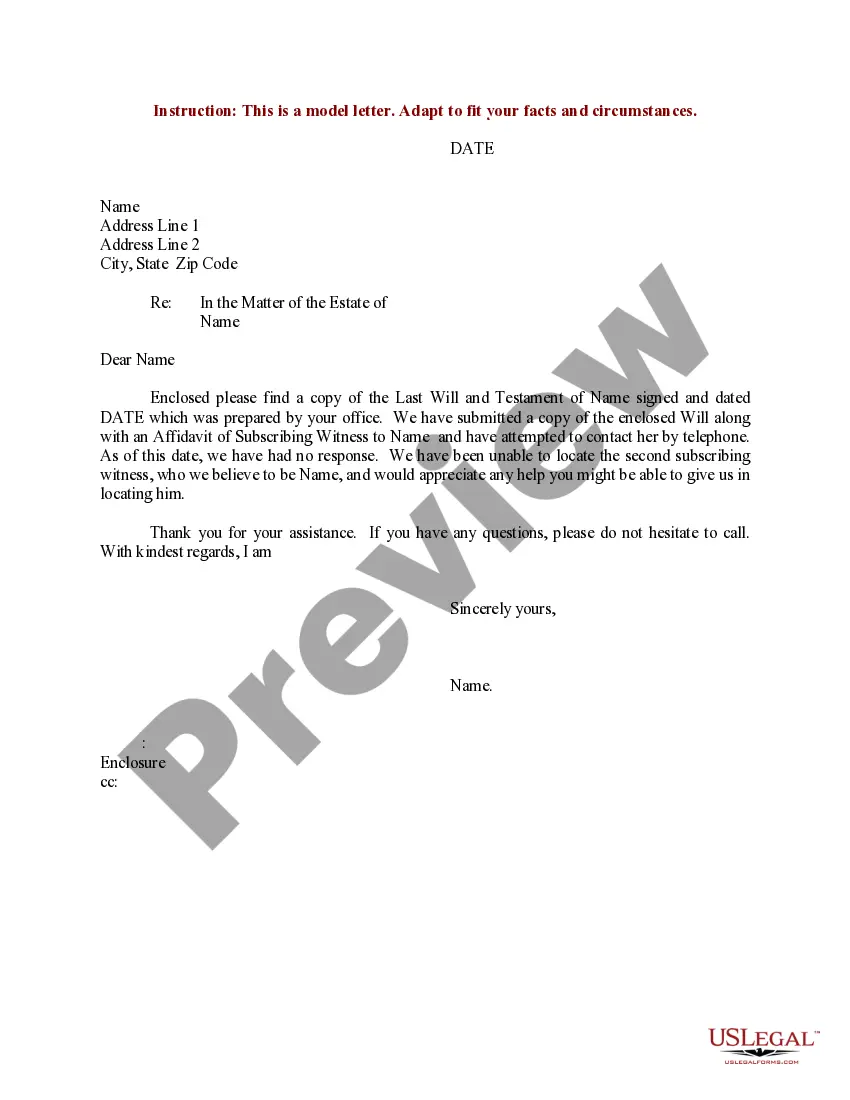
Subscribing Witness Without A Will
Description
Get your form ready online
Our built-in tools help you complete, sign, share, and store your documents in one place.
Make edits, fill in missing information, and update formatting in US Legal Forms—just like you would in MS Word.
Download a copy, print it, send it by email, or mail it via USPS—whatever works best for your next step.
Sign and collect signatures with our SignNow integration. Send to multiple recipients, set reminders, and more. Go Premium to unlock E-Sign.
If this form requires notarization, complete it online through a secure video call—no need to meet a notary in person or wait for an appointment.
We protect your documents and personal data by following strict security and privacy standards.

Make edits, fill in missing information, and update formatting in US Legal Forms—just like you would in MS Word.

Download a copy, print it, send it by email, or mail it via USPS—whatever works best for your next step.

Sign and collect signatures with our SignNow integration. Send to multiple recipients, set reminders, and more. Go Premium to unlock E-Sign.

If this form requires notarization, complete it online through a secure video call—no need to meet a notary in person or wait for an appointment.

We protect your documents and personal data by following strict security and privacy standards.
Looking for another form?





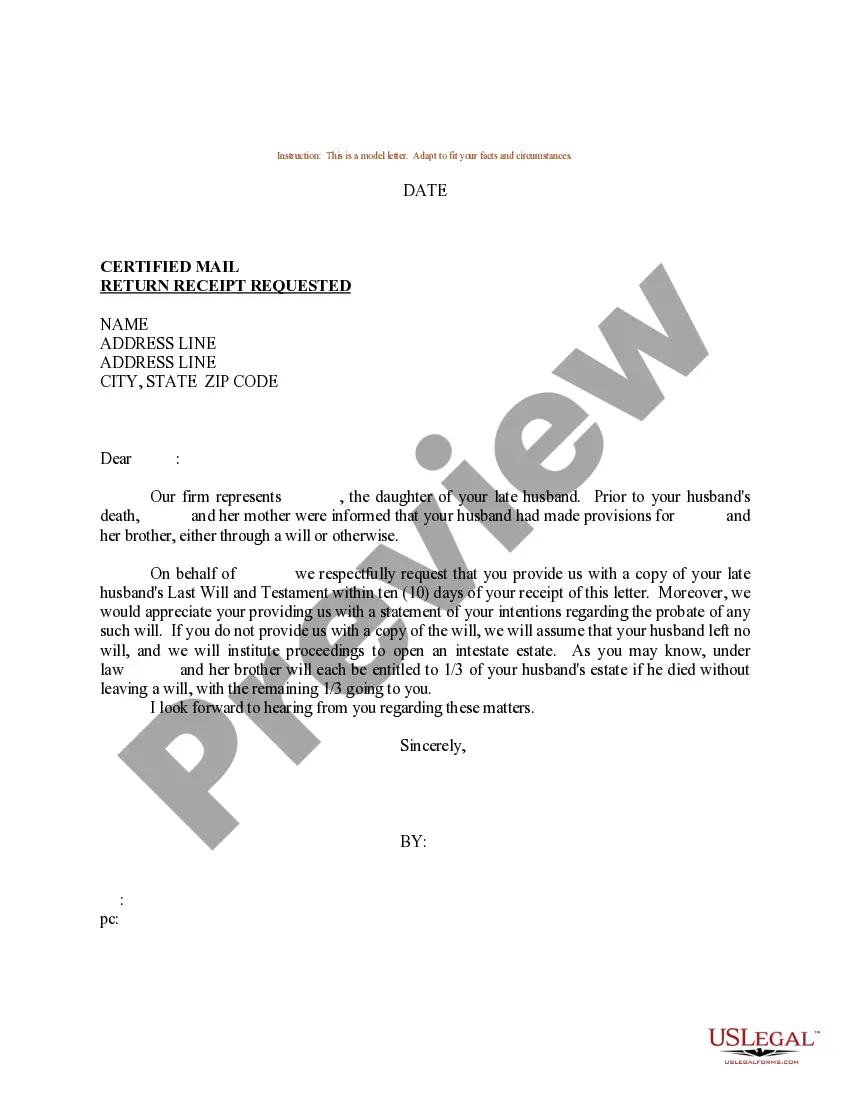
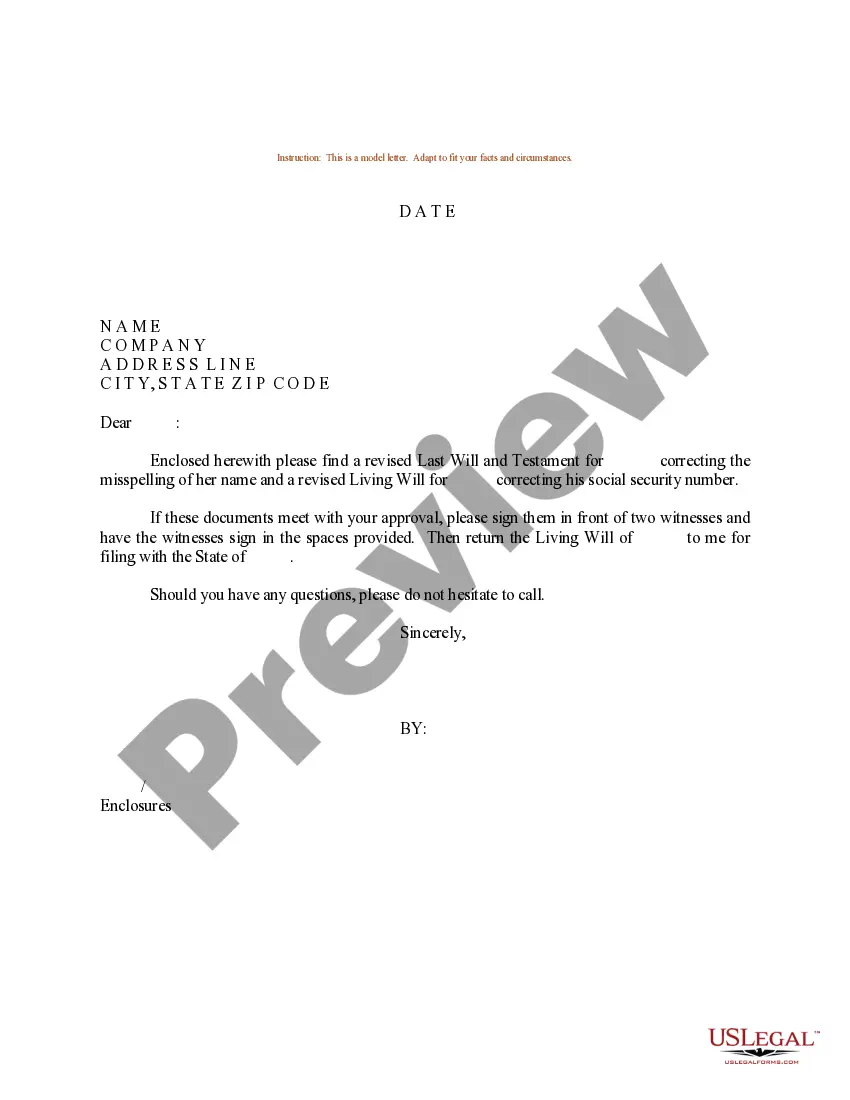
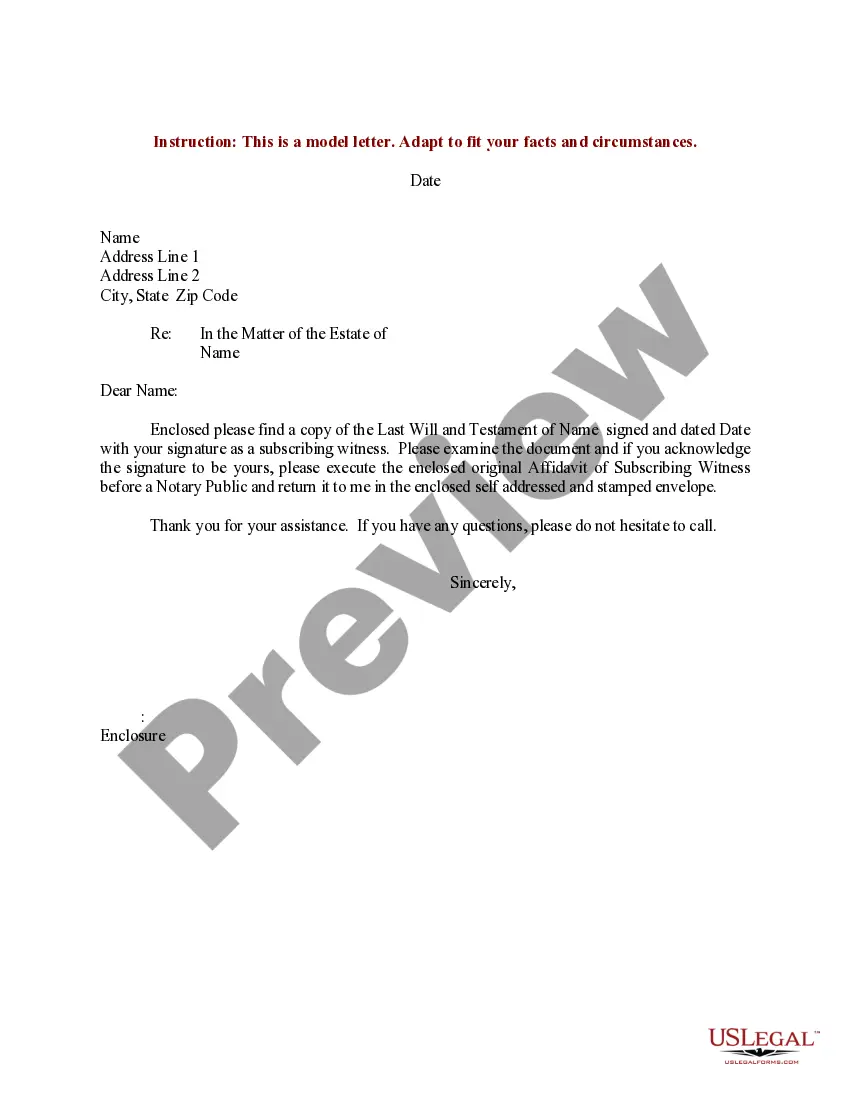
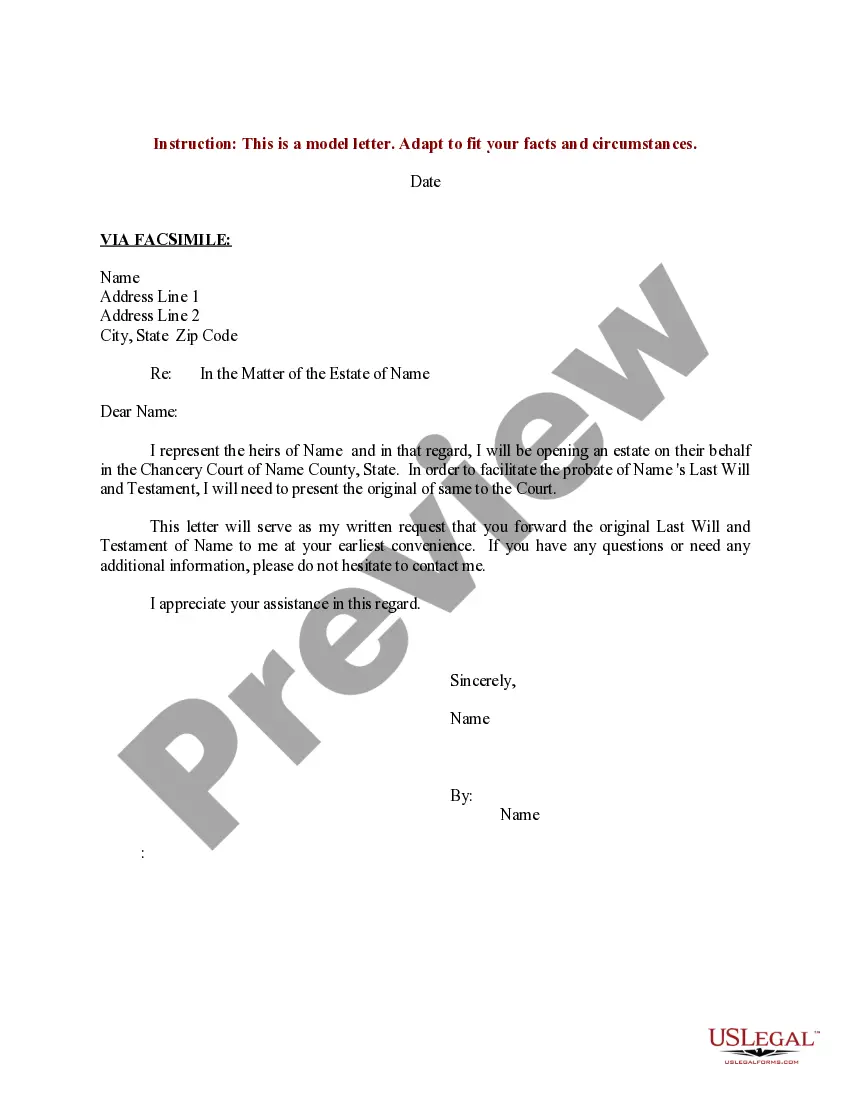
How to fill out Sample Letter Regarding Last Will And Testament With Affidavit Of Subscribing Witness?
Whether for commercial intentions or personal issues, everyone must confront legal circumstances at some point in their existence.
Completing legal documents demands meticulous focus, starting with selecting the appropriate form template.
With a comprehensive US Legal Forms library available, you don't have to waste time searching for the suitable template across the internet. Utilize the library’s straightforward navigation to find the fitting form for any circumstance.
- Locate the template you need using the search bar or catalog navigation.
- Review the form’s details to ensure it aligns with your situation, state, and county.
- Click on the form’s preview to check it.
- If it’s the incorrect document, return to the search feature to find the Subscribing Witness Without A Will sample you require.
- Download the file if it satisfies your requirements.
- If you possess a US Legal Forms account, just click Log in to access previously saved templates in My documents.
- In case you don’t have an account yet, you can download the form by clicking Buy now.
- Choose the correct pricing option.
- Complete the profile registration form.
- Select your payment method: you can utilize a credit card or PayPal account.
- Choose the document format you prefer and download the Subscribing Witness Without A Will.
- Once saved, you can either complete the form using editing software or print it out and finish it by hand.
Form popularity
FAQ
To notarize a credible witness, you need to have them present during the notarization process. The witness should provide valid identification and must be ready to testify to the signer's identity. It is important to clearly understand the role of a subscribing witness without a will, as this ensures the document holds its legal weight. Platforms like US Legal Forms can simplify this process by offering step-by-step resources and forms.
A credible witness is someone who is impartial and can confirm a signer's identity to the notary. This person must not be a party to the document being signed and should possess adequate knowledge of the signer. In the context of subscribing witness without a will, choosing a reliable individual is crucial to ensuring the legitimacy of the notarization process. Consider using US Legal Forms for more information on finding a credible witness.
One common mistake made by a notary is failing to properly identify the signer. This can lead to issues, especially when dealing with a subscribing witness without a will. It's essential to request proper identification and ensure that all parties understand the document they are signing. Using resources like US Legal Forms can help to avoid these pitfalls by providing guidelines and best practices for notarization.
To notarize with a credible witness, first, ensure that the witness understands the purpose of their role. The witness must be present during the signing of the document and should be able to confirm the identity of the signer. It is important to clearly communicate the importance of the credible witness in the context of subscribing witness without a will. For added convenience, consider using services like US Legal Forms to guide you through the notarization process.
To properly witness a signature, a witness must be present at the signing and must sign the document themselves afterward. It is essential for the subscribing witness without a will to be aware of the responsibility they hold in validating legal documents. Knowing the requirements beforehand can facilitate a smoother process.
Witnessing a signature requires certain rules to be followed to ensure legality. Typically, witnesses must observe the signer pen the document and then sign themselves in acknowledgment. If you decide to have a subscribing witness without a will, understanding these rules will keep your legal documents valid.
In Colorado, a valid will must be in writing, signed by the testator, and witnessed by two people in the testator's presence. If you are considering having a subscribing witness without a will, ensure that they understand the role they play in the legal process. Properly following these guidelines can prevent future disputes.
Witnessing officials generally include notaries public and some other designated individuals, depending on the state laws. In many instances, a subscribing witness without a will can also serve as a witnessing official, provided they meet the legal criteria. This flexibility can be beneficial when creating your legal documents.
Not just anyone can witness a signature; certain criteria must be met. Typically, witnesses must be adults of sound mind and not related to the signer, especially in legal matters like a will. When in doubt, ensuring your witnesses meet all requirements can help solidify the validity of your documents.
Yes, a witness can be someone who is not a beneficiary. In many cases, having a subscribing witness without a will who is also a beneficiary can invalidate the will or create disputes. It is wise to select impartial witnesses to ensure the validity of your will.