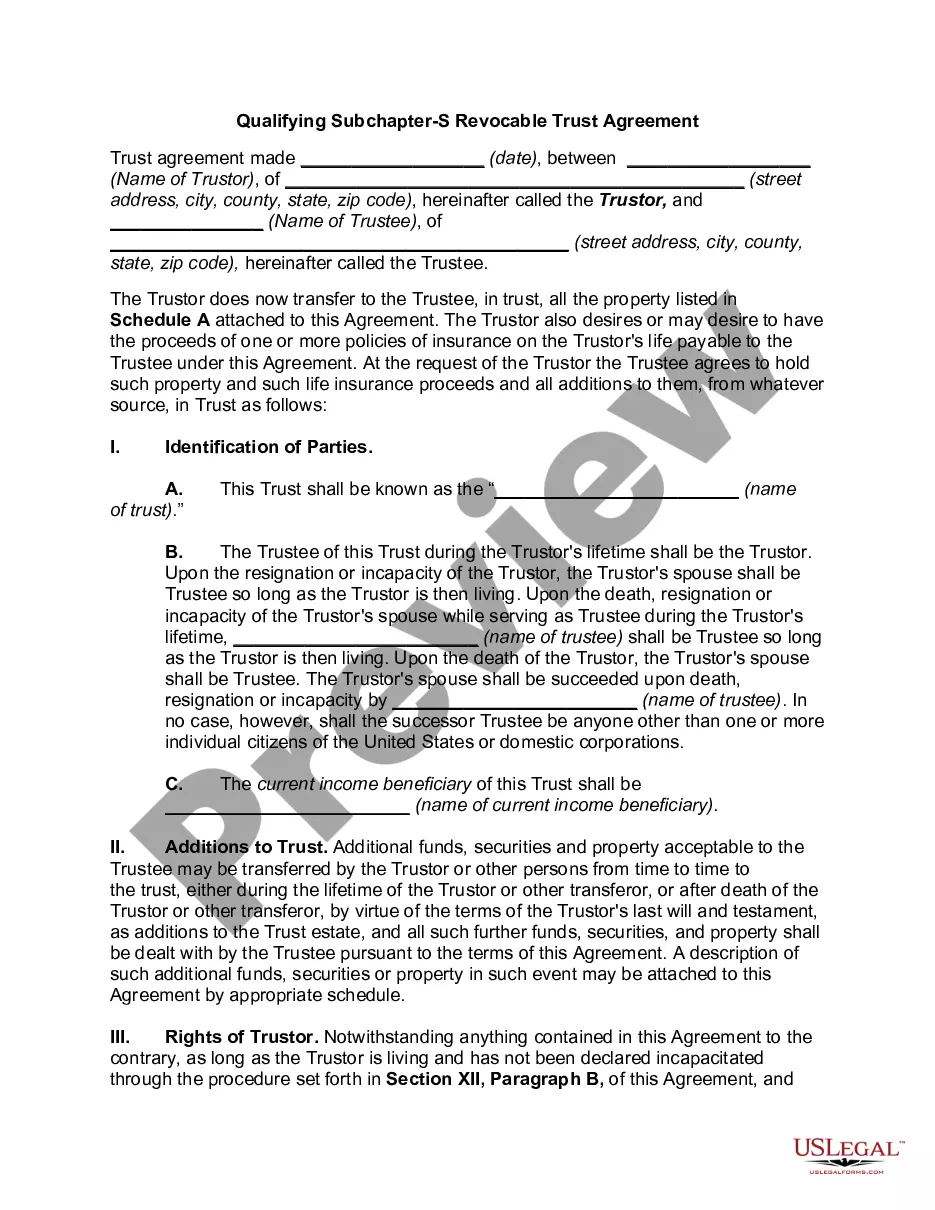
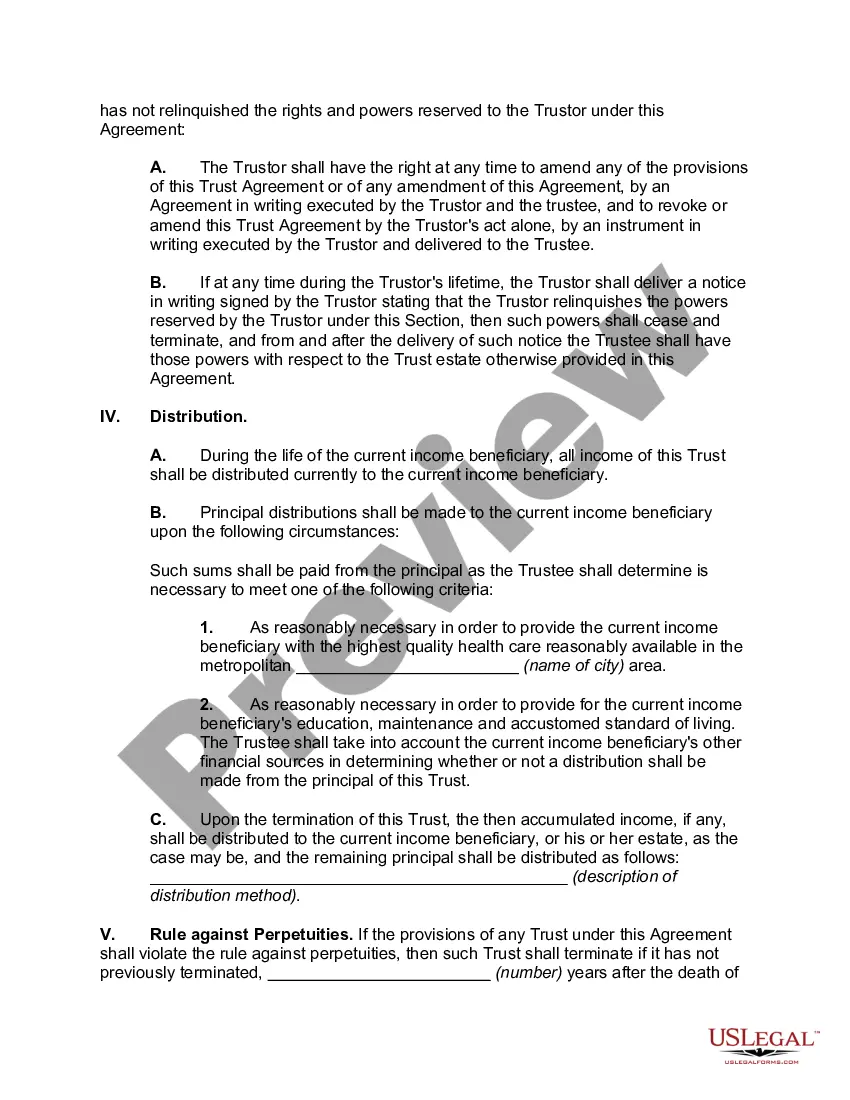
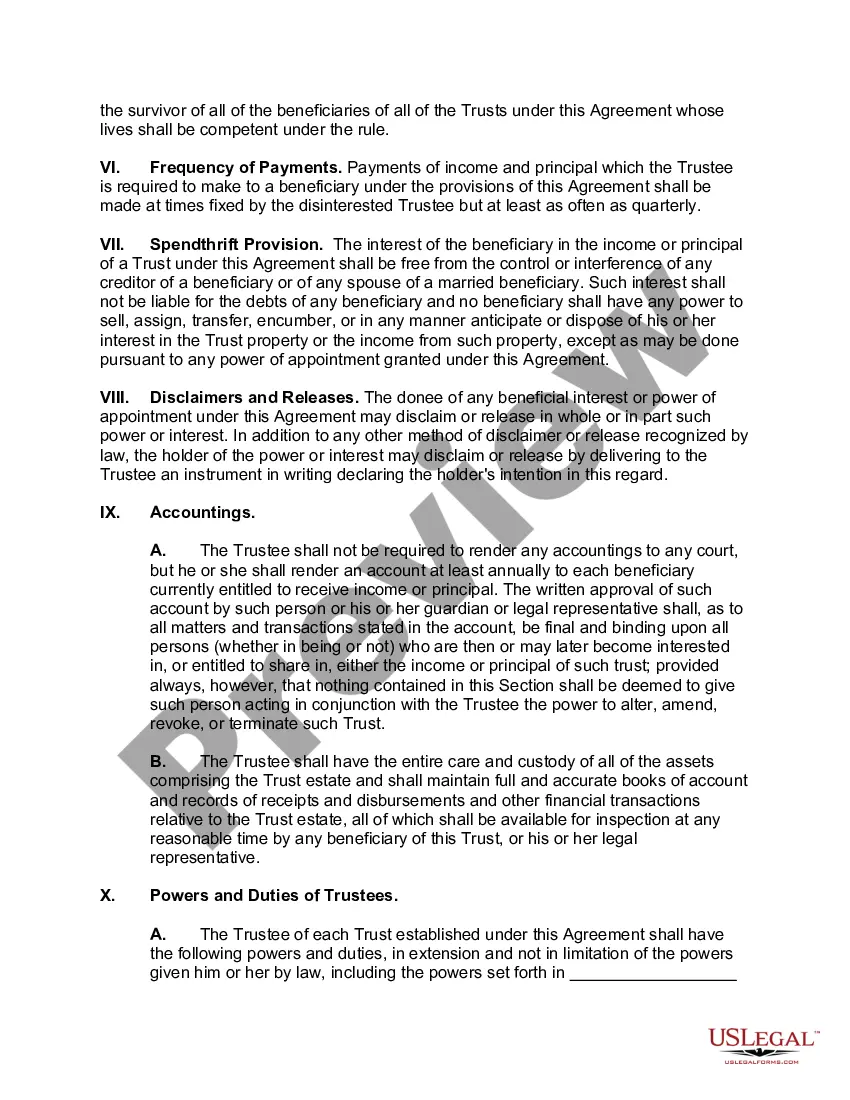
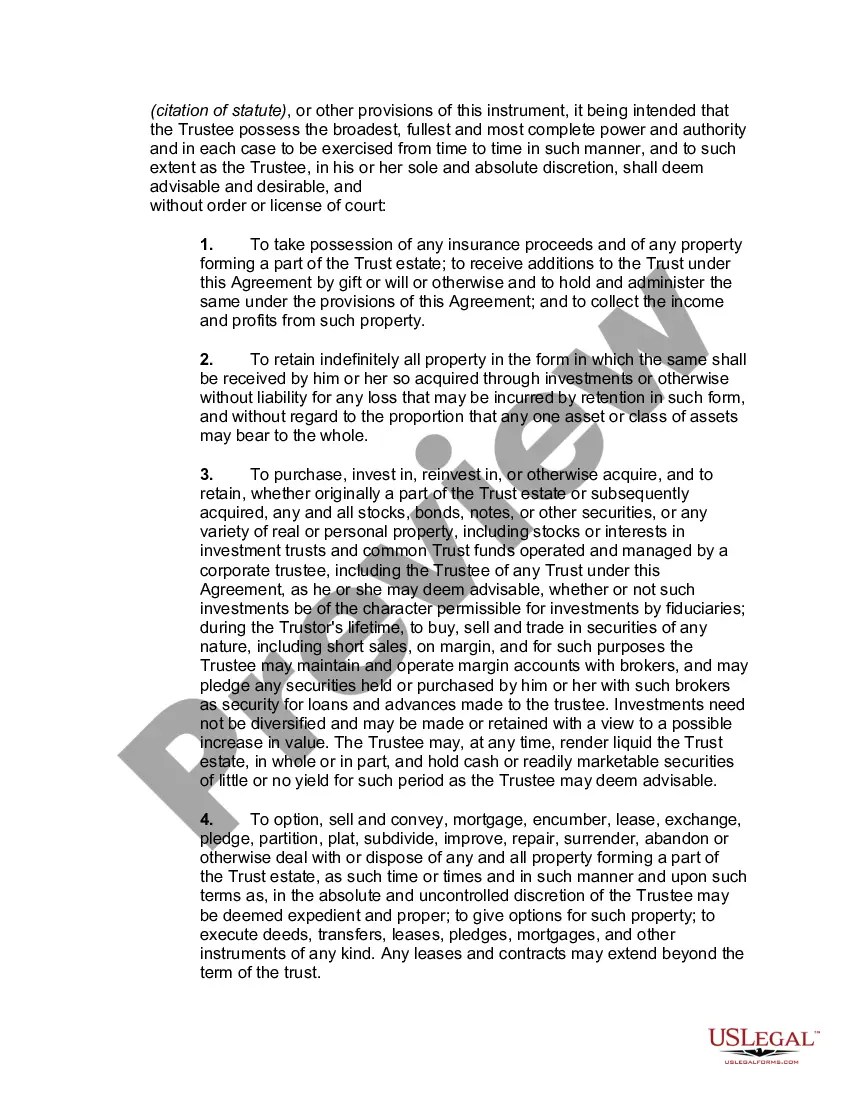
Qualified Subchapter S Trust Sample
Description
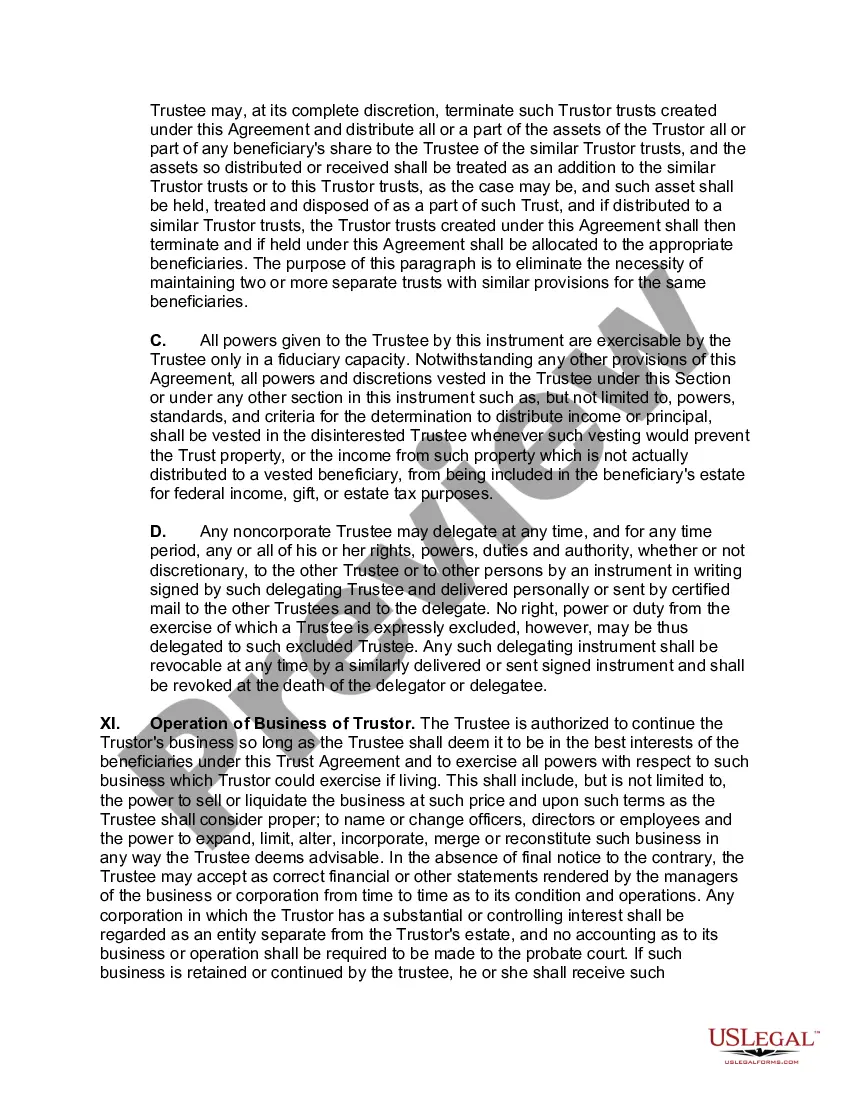
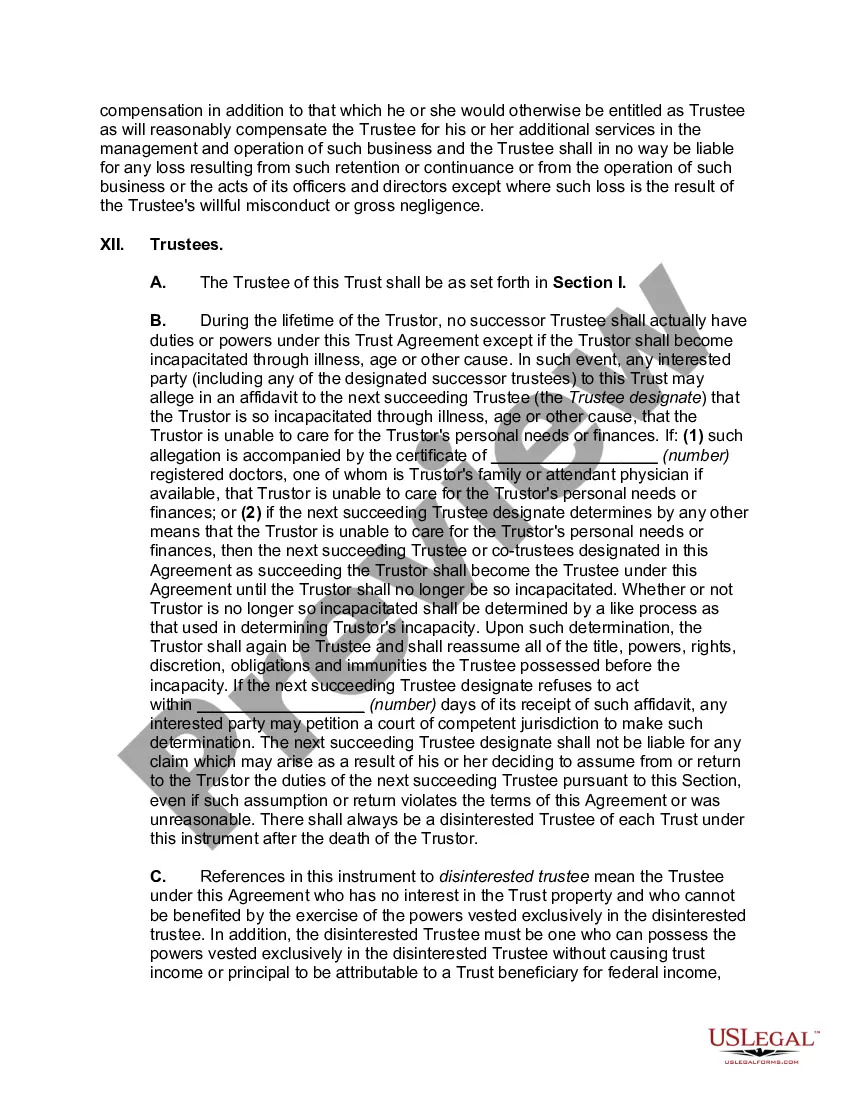

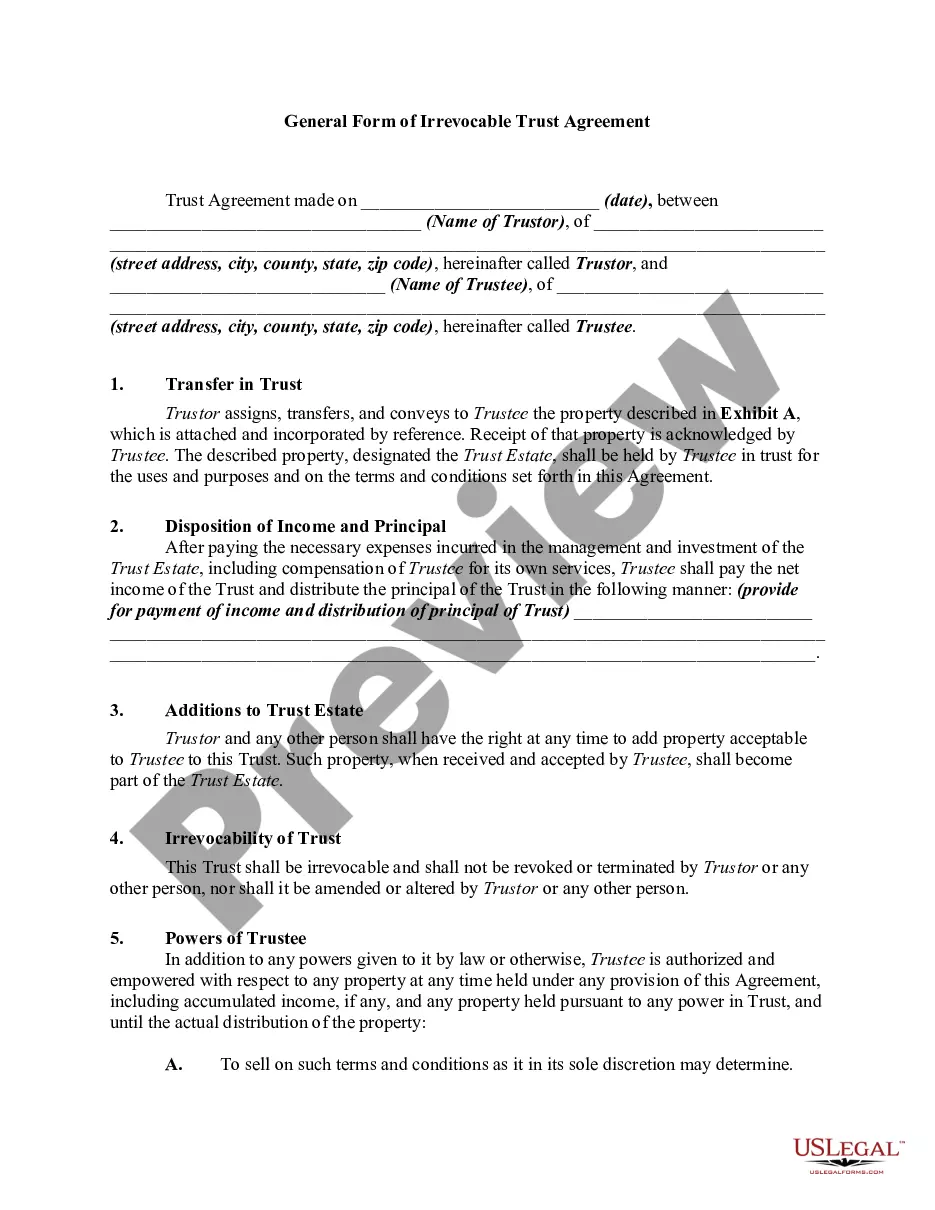
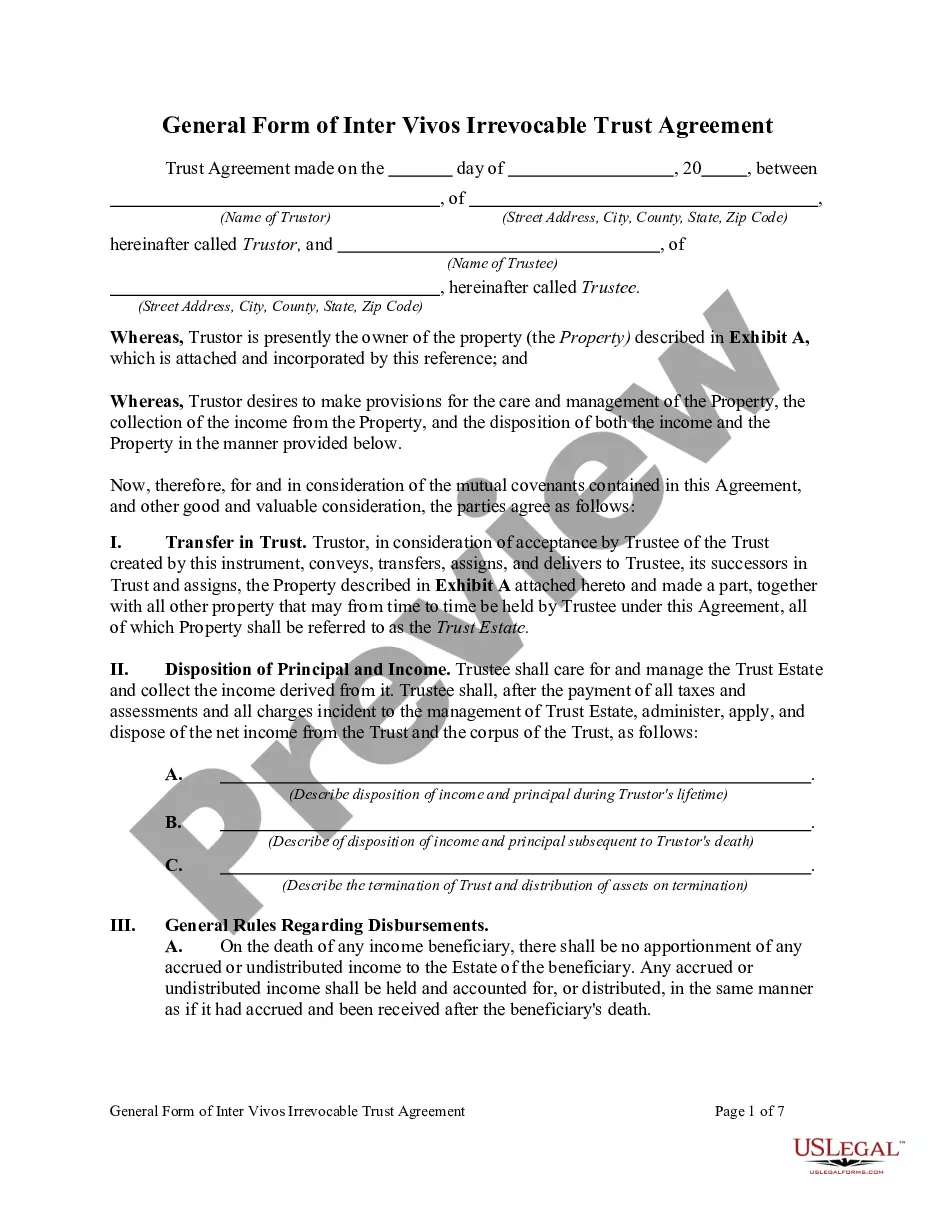
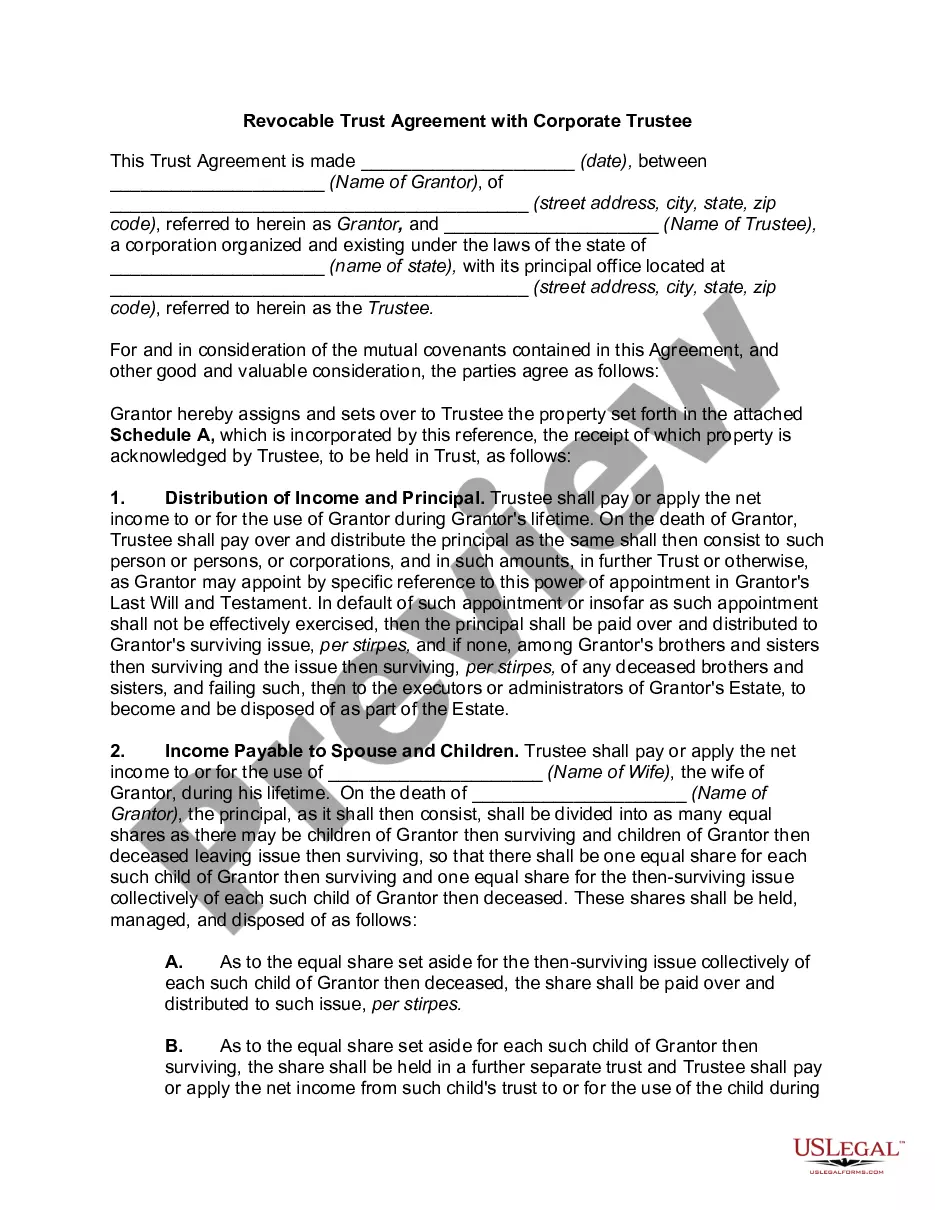
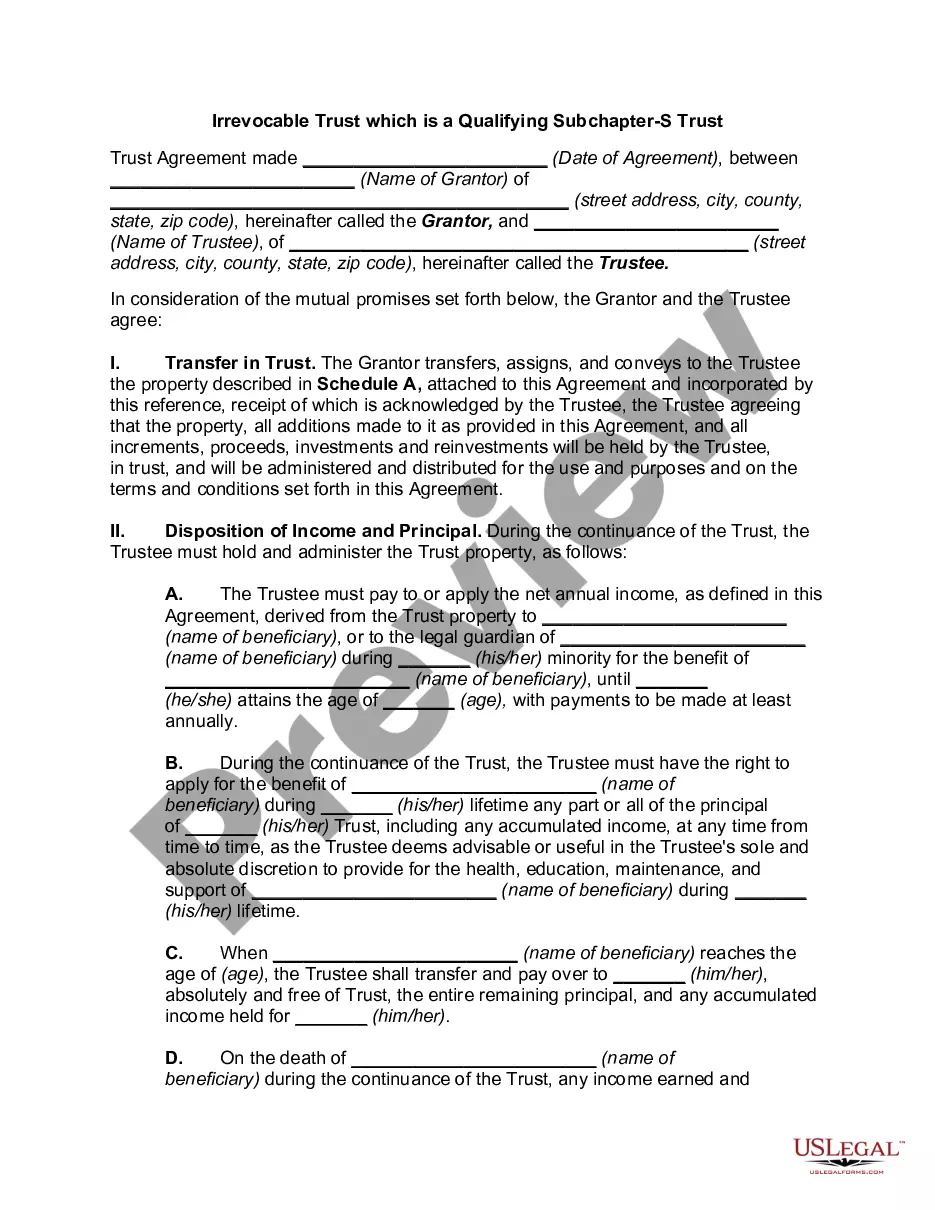
Get your form ready online
Our built-in tools help you complete, sign, share, and store your documents in one place.
Make edits, fill in missing information, and update formatting in US Legal Forms—just like you would in MS Word.
Download a copy, print it, send it by email, or mail it via USPS—whatever works best for your next step.
Sign and collect signatures with our SignNow integration. Send to multiple recipients, set reminders, and more. Go Premium to unlock E-Sign.
If this form requires notarization, complete it online through a secure video call—no need to meet a notary in person or wait for an appointment.
We protect your documents and personal data by following strict security and privacy standards.

Make edits, fill in missing information, and update formatting in US Legal Forms—just like you would in MS Word.

Download a copy, print it, send it by email, or mail it via USPS—whatever works best for your next step.

Sign and collect signatures with our SignNow integration. Send to multiple recipients, set reminders, and more. Go Premium to unlock E-Sign.

If this form requires notarization, complete it online through a secure video call—no need to meet a notary in person or wait for an appointment.

We protect your documents and personal data by following strict security and privacy standards.
Looking for another form?


How to fill out Qualifying Subchapter-S Revocable Trust Agreement?
- Log in to your US Legal Forms account if you're a returning user. Ensure your subscription is active before you proceed.
- If you are new to the service, start by exploring the preview mode and description of the form. Verify that it meets your needs and complies with local jurisdiction regulations.
- In case you can’t find a suitable template, utilize the search feature to browse for alternatives until you find the right one.
- Once you’ve selected the document, click the Buy Now button and choose your subscription plan. You will need to create an account to access further resources.
- Complete your purchase by entering your payment details or using PayPal for a secure transaction.
- Finally, download the Qualified Subchapter S Trust sample to your device. You can always access it later from the My Forms section of your profile.
In conclusion, US Legal Forms simplifies the process of acquiring legal documents through its robust collection of over 85,000 forms. Whether you’re an individual or an attorney, it ensures you can create precise, legally sound documents with confidence.
Start maximizing your legal efficiency today by accessing your Qualified Subchapter S Trust sample through US Legal Forms!
Form popularity
FAQ
To put an S corporation into a trust, start by establishing a qualified subchapter S trust. Then, complete the necessary paperwork to transfer shares from yourself to the trust. A qualified subchapter S trust sample can serve as a helpful reference during this process. For personalized assistance, consider using US Legal Forms, which can guide you through the required steps.
Yes, a QSST must distribute all its income to the beneficiary annually. This requirement is crucial for maintaining the S corporation status and the associated tax benefits. By examining a qualified subchapter S trust sample, you can see how income distribution works in practice. This structured distribution helps simplify tax reporting for beneficiaries.
Transferring a corporation to a trust involves executing a formal transfer of shares. You must work through the appropriate legal documentation to change ownership from individual to trust. A qualified subchapter S trust sample can guide you through the process. It’s advisable to consult with a legal expert to ensure compliance with all relevant laws.
To qualify as a Qualified Subchapter S Trust, certain criteria must be met. The trust can have only one beneficiary who is an individual, and all income must be distributed to that beneficiary. Understanding these requirements is essential, and you can refer to a qualified subchapter S trust sample for clarity. Ensuring compliance helps maintain the tax advantages associated with S corporations.
Yes, you can put an S corporation in a trust, specifically a Qualified Subchapter S Trust (QSST). This arrangement allows you to transfer ownership while maintaining S corporation tax benefits. A qualified subchapter S trust sample can help you understand how the structure functions. It’s crucial to follow the guidelines to ensure you meet IRS requirements.
A QSST trust is generally taxed as a pass-through entity, meaning the income is taxed at the beneficiary's tax rate, rather than the trust itself. This allows the income to be reported directly on the beneficiary's tax return. When looking at a qualified subchapter S trust sample, you will see how this taxation structure can impact distributions. If you need additional clarity, USLegalForms offers resources and documentation that can guide you through the specifics of QSST tax obligations.
Yes, a Qualified Subchapter S Trust (QSST) is required to file Form 1041, which is the U.S. Income Tax Return for Estates and Trusts. This form reports income, deductions, and taxable events for the trust. As you consider your options, reviewing a qualified subchapter S trust sample can help you understand the filing process more clearly. Many users find that utilizing USLegalForms simplifies the preparation of these forms and offers additional guidance.
To determine if a trust is qualified or nonqualified, evaluate its compliance with IRS rules regarding eligibility, distribution, and beneficiary requirements. A qualified trust will generally meet the IRS definitions for tax benefits, whereas a nonqualified trust typically does not. Reviewing a qualified subchapter S trust sample can provide insight into what qualifies a trust. If you have questions, USLegalForms offers resources and templates to help clarify your trust's classification.
A qualified sub-S trust, often called a qualified subchapter S trust, is designed to hold stock in an S corporation while adhering to IRS regulations. This trust type allows these shares to pass through to beneficiaries who are eligible, thus maintaining the corporation's S status. For a practical illustration, consider reviewing a qualified subchapter S trust sample to see how it functions in real-life scenarios. Platforms like USLegalForms help simplify the creation and management of such trusts.
A trust is considered a qualified trust when it meets specific IRS criteria, allowing it to take advantage of certain tax benefits. This typically includes having eligible beneficiaries and compliant distribution requirements. If you are looking for a detailed example, a qualified subchapter S trust sample could serve as a valuable reference. Additionally, using a platform like USLegalForms can guide you through the necessary documentation and compliance.