Joint Tenant
Description

Get your form ready online
Our built-in tools help you complete, sign, share, and store your documents in one place.
Make edits, fill in missing information, and update formatting in US Legal Forms—just like you would in MS Word.
Download a copy, print it, send it by email, or mail it via USPS—whatever works best for your next step.
Sign and collect signatures with our SignNow integration. Send to multiple recipients, set reminders, and more. Go Premium to unlock E-Sign.
If this form requires notarization, complete it online through a secure video call—no need to meet a notary in person or wait for an appointment.
We protect your documents and personal data by following strict security and privacy standards.

Make edits, fill in missing information, and update formatting in US Legal Forms—just like you would in MS Word.

Download a copy, print it, send it by email, or mail it via USPS—whatever works best for your next step.

Sign and collect signatures with our SignNow integration. Send to multiple recipients, set reminders, and more. Go Premium to unlock E-Sign.

If this form requires notarization, complete it online through a secure video call—no need to meet a notary in person or wait for an appointment.

We protect your documents and personal data by following strict security and privacy standards.
Looking for another form?




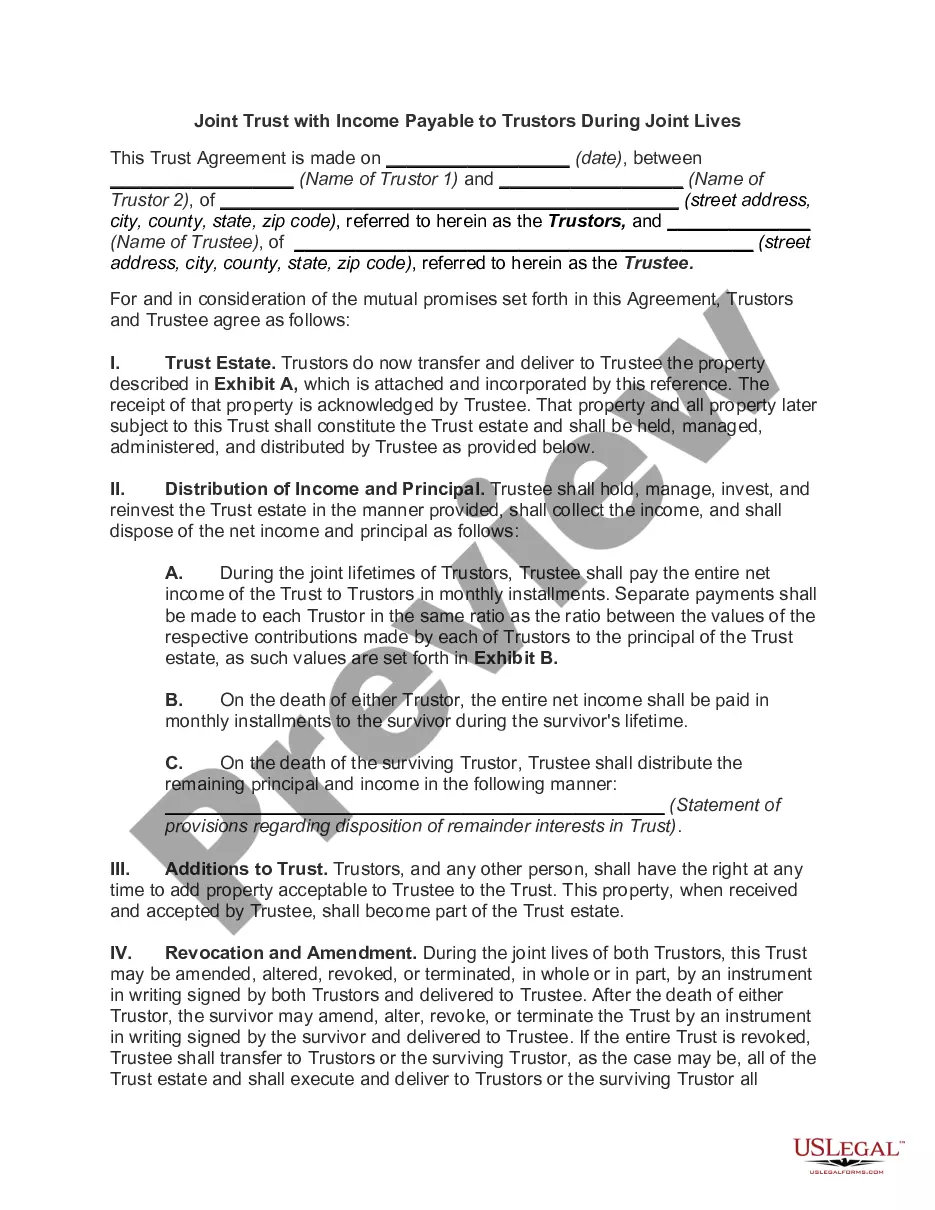
How to fill out Joint Trust With Income Payable To Trustors During Joint Lives?
- Log into your US Legal Forms account if you're an existing user and ensure your subscription is active. Click on the Download button to retrieve your required form.
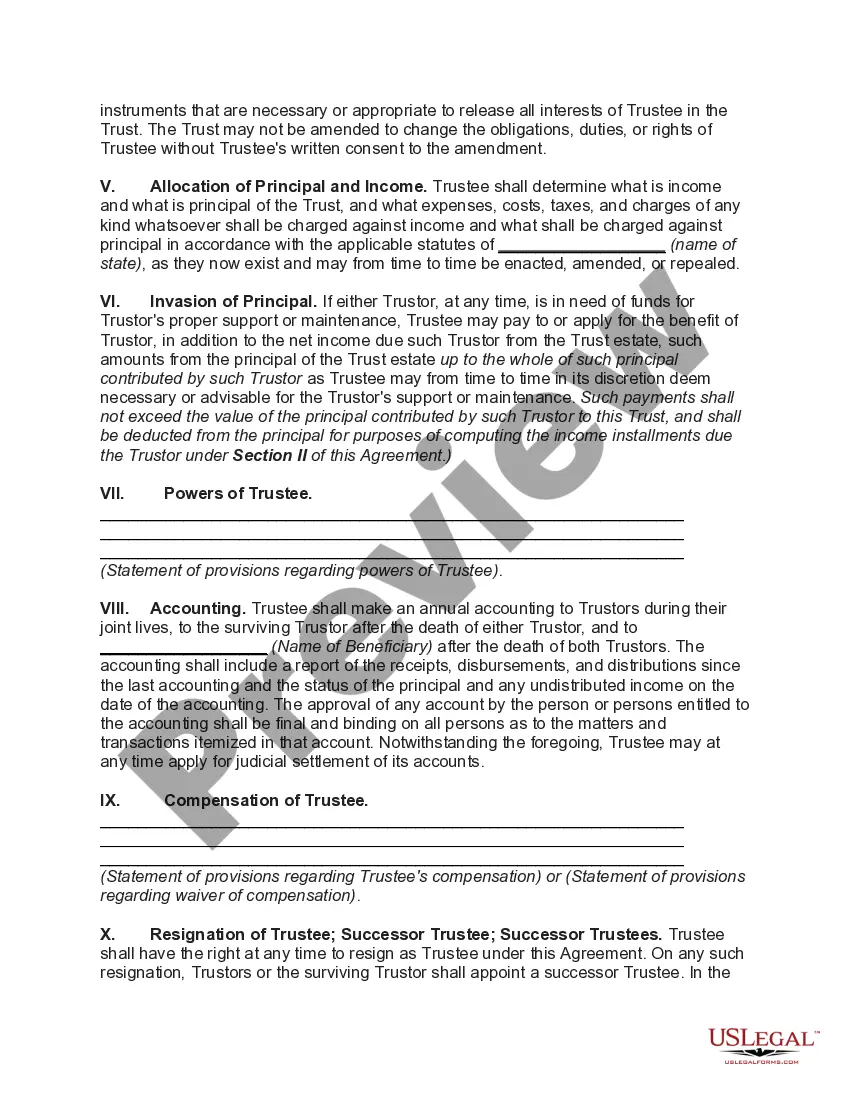
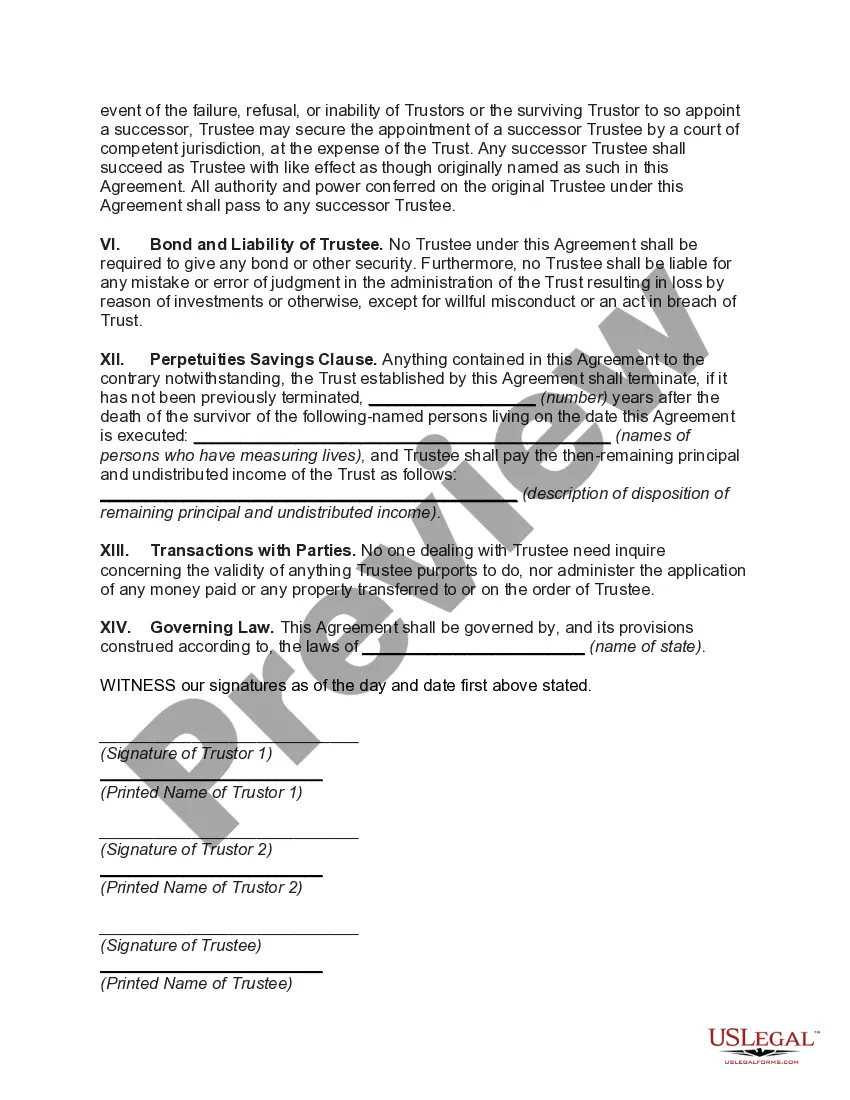
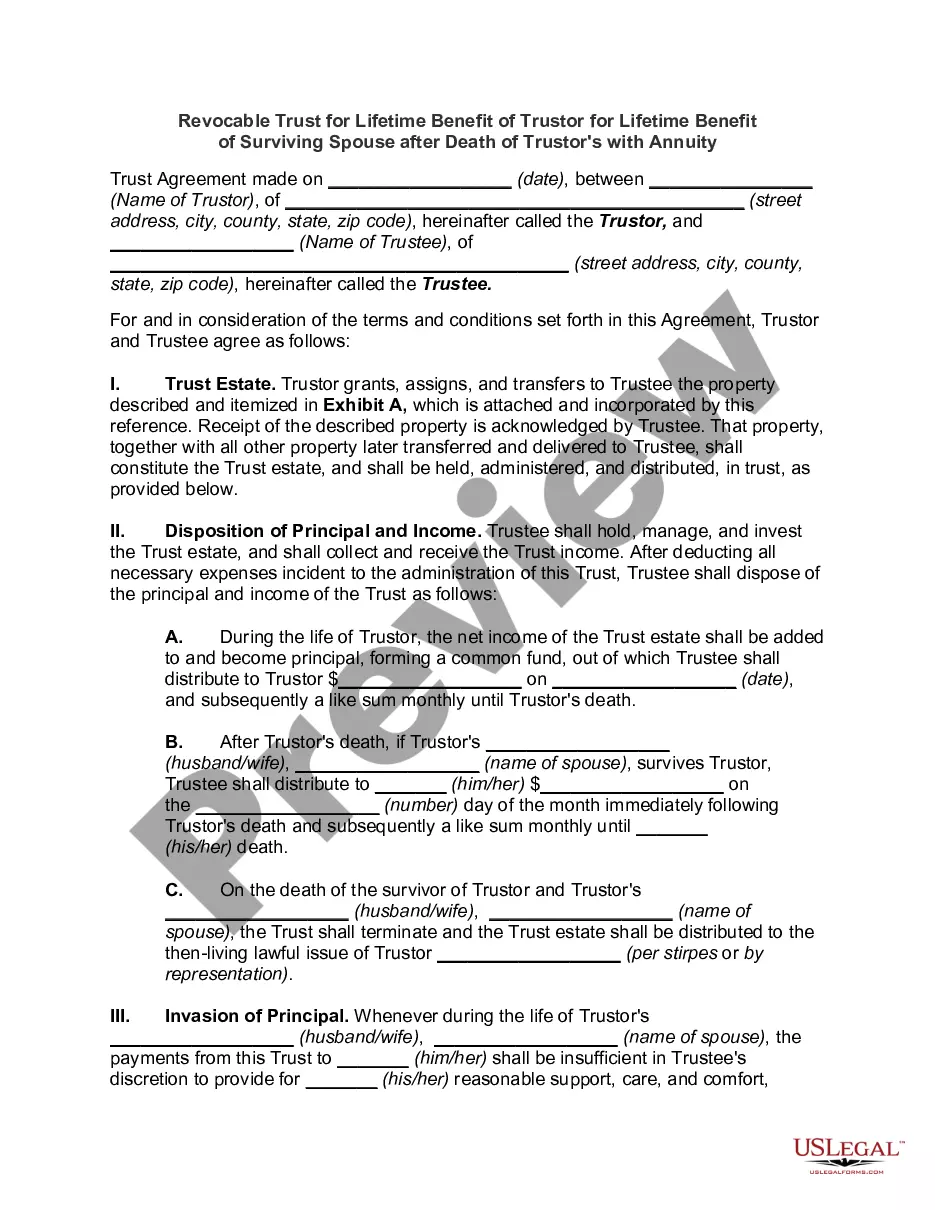
- For new users, start by reviewing the Preview mode and descriptions of available joint tenant forms to confirm their relevance to your local jurisdiction.
- If you encounter any discrepancies or need additional templates, utilize the Search tab to find the correct documents that cater to your needs.
- Select the desired form by clicking the Buy Now button, then opt for your preferred subscription plan while creating an account for full library access.
- Complete your purchase by entering your payment details, either using a credit card or PayPal.
- Finally, download your joint tenant form to your device and access it anytime from the My Forms section in your profile.
By following these straightforward steps, you can effectively acquire the necessary joint tenant forms while ensuring compliance with your legal obligations.
Start your journey today with US Legal Forms and experience the ease of obtaining reliable legal documents!
Form popularity
FAQ
Creating a joint tenancy involves a few key steps that are relatively straightforward. First, all parties must agree to the ownership structure and clearly express their intent to own property jointly. Then, you’ll need a legal document that outlines each person’s share, which should ideally follow state laws on property ownership. Platforms like US Legal Forms offer templates and guidance for establishing a joint tenancy that protects each joint tenant’s rights.
Yes, one person can leave a joint tenancy, but it involves specific legal steps. When a joint tenant decides to exit, they typically need to execute a formal document, such as a deed, to transfer their interest. This change can alter the ownership structure and may convert the joint tenancy to a tenancy in common. It is important to consult legal resources, like US Legal Forms, to ensure the process is handled correctly.
Typically, both joint tenants share the responsibility for any taxes on income generated from the joint account. When one joint tenant receives a step-up in basis, it may influence potential tax liabilities upon sale of assets. The specific tax outcomes can depend on how the joint account is structured and the income produced. Seeking insights from US Legal Forms can clarify your tax obligations effectively.
The step-up basis for a joint tenancy right of survivorship occurs when the value of the joint asset is adjusted at the death of one tenant. Only the deceased tenant's share of the property typically receives this basis adjustment. For instance, if two joint tenants each own 50%, the surviving tenant receives a step-up on the deceased's 50%. Consult platforms like US Legal Forms for personalized assistance regarding your specific situation.
A joint account typically receives a step-up in basis at the time of the death of the first joint tenant. This means the surviving joint tenant can benefit from a new tax basis equal to the market value of the asset at the time of death. This change can significantly reduce capital gains taxes if the asset is later sold. For accurate handling, consider seeking guidance from resources like US Legal Forms.
Yes, Virginia recognizes joint tenancy as a valid form of property ownership. In this state, individuals can hold property as joint tenants, complete with rights of survivorship. This means that when one joint tenant passes away, their share automatically transfers to the surviving joint tenant(s). To ensure your interests are protected, consider using US Legal Forms to navigate the legal requirements properly.
One significant disadvantage of joint tenancy ownership is that all joint tenants have equal rights to the property. This means that any decision, such as selling or altering the property, requires agreement from all holders. If one tenant faces legal issues or debts, creditors might target the property as an asset. Thus, you should weigh these risks before choosing joint tenancy.
Setting up a joint tenancy requires drafting a legal deed that clearly outlines the names of all joint tenants. You must also include the language that indicates your shared ownership intent, typically using terms like 'joint tenants with right of survivorship.' After preparing the deed, sign it in front of a notary and file it accordingly with your local government office. By following these steps, you can establish joint tenancy effectively.
To add joint tenancy, you must prepare a deed that specifies joint tenants. This deed should list all property owners and indicate their intent to hold the property jointly. Once the deed is completed, you must sign it and file it with your local county clerk or recorder's office. This process ensures that you and your co-owners share ownership rights as joint tenants.
The key difference between tenants in common and joint tenants lies in the ownership structure and rights. Tenants in common can own unequal shares and lack the right of survivorship, meaning that upon death, their share can be passed to heirs. Conversely, joint tenants have equal shares and the right of survivorship, ensuring a smoother transition of ownership. Understanding these differences can help you choose the arrangement that best suits your needs.