Joint Living Trust For Married Couples
Description

Get your form ready online
Our built-in tools help you complete, sign, share, and store your documents in one place.
Make edits, fill in missing information, and update formatting in US Legal Forms—just like you would in MS Word.
Download a copy, print it, send it by email, or mail it via USPS—whatever works best for your next step.
Sign and collect signatures with our SignNow integration. Send to multiple recipients, set reminders, and more. Go Premium to unlock E-Sign.
If this form requires notarization, complete it online through a secure video call—no need to meet a notary in person or wait for an appointment.
We protect your documents and personal data by following strict security and privacy standards.

Make edits, fill in missing information, and update formatting in US Legal Forms—just like you would in MS Word.

Download a copy, print it, send it by email, or mail it via USPS—whatever works best for your next step.

Sign and collect signatures with our SignNow integration. Send to multiple recipients, set reminders, and more. Go Premium to unlock E-Sign.

If this form requires notarization, complete it online through a secure video call—no need to meet a notary in person or wait for an appointment.

We protect your documents and personal data by following strict security and privacy standards.
Looking for another form?









Form popularity
FAQ
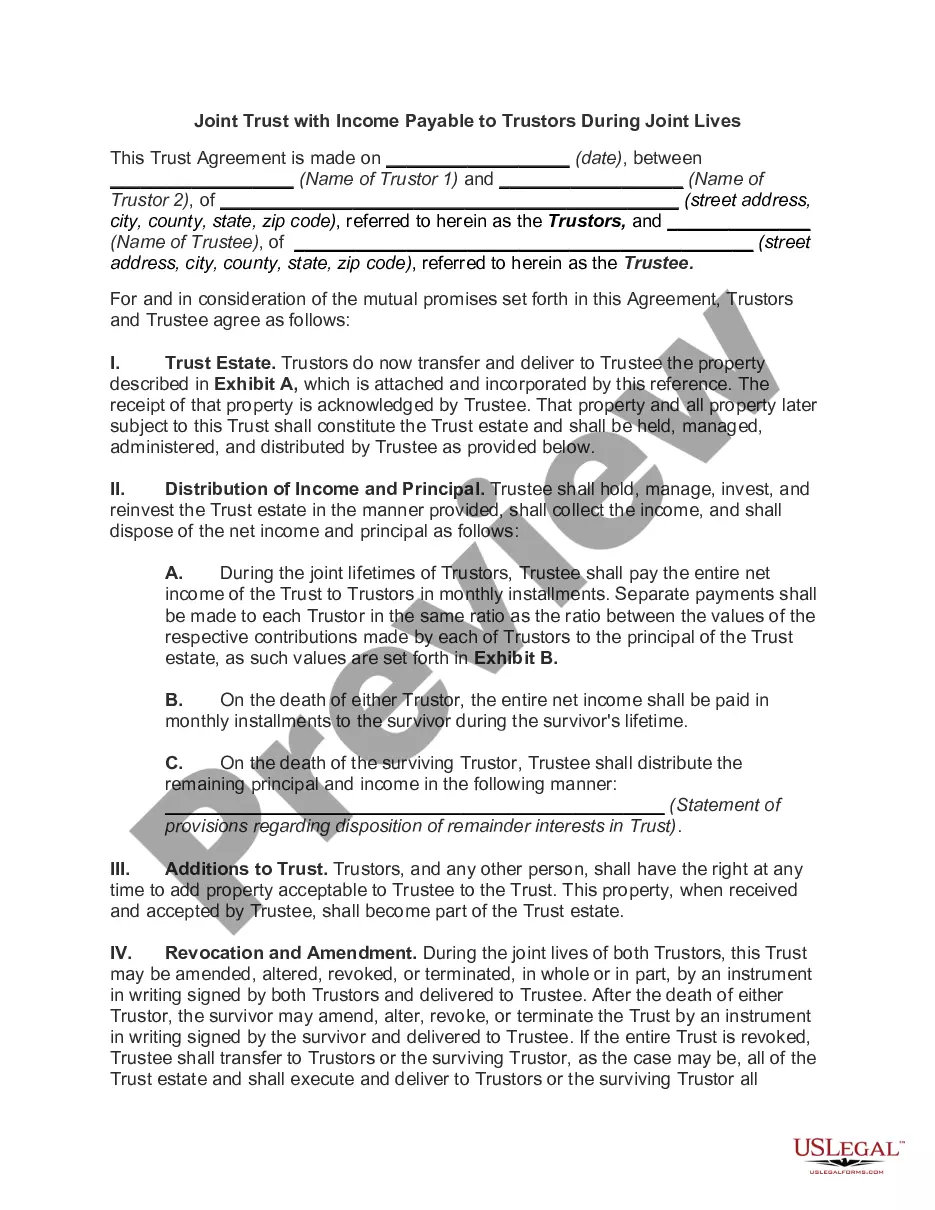
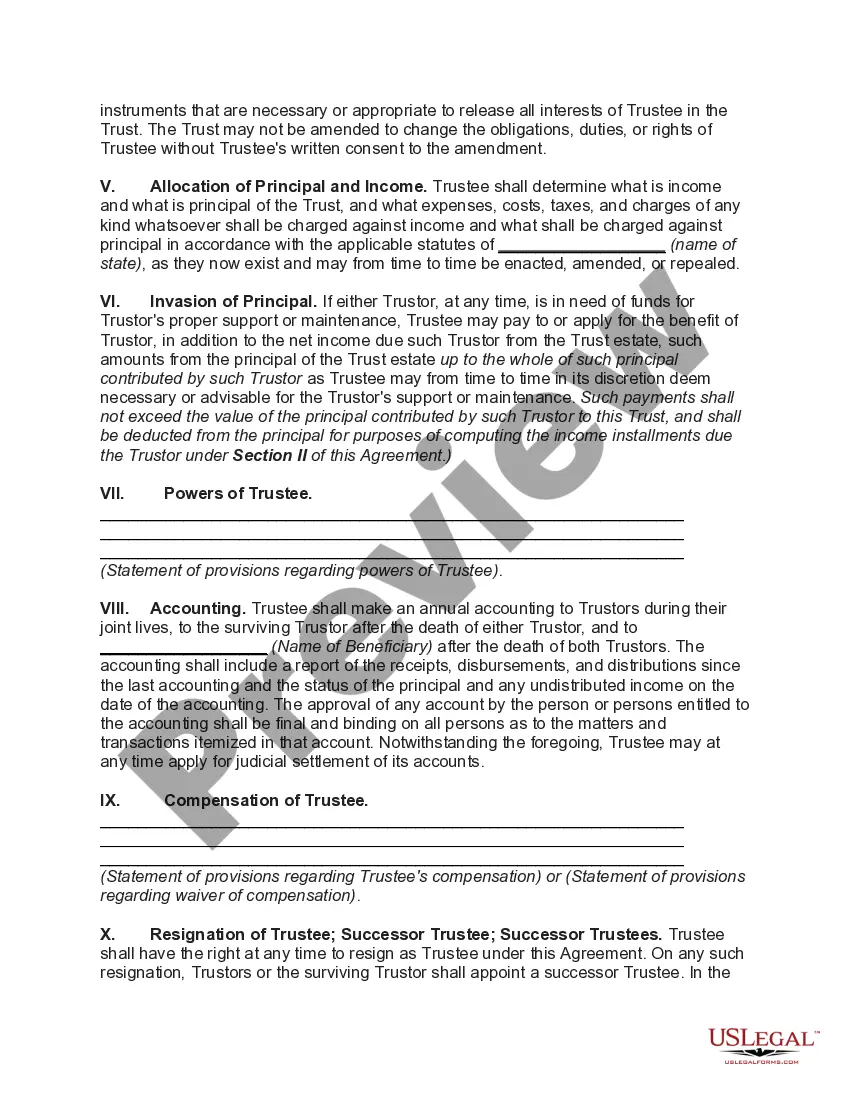
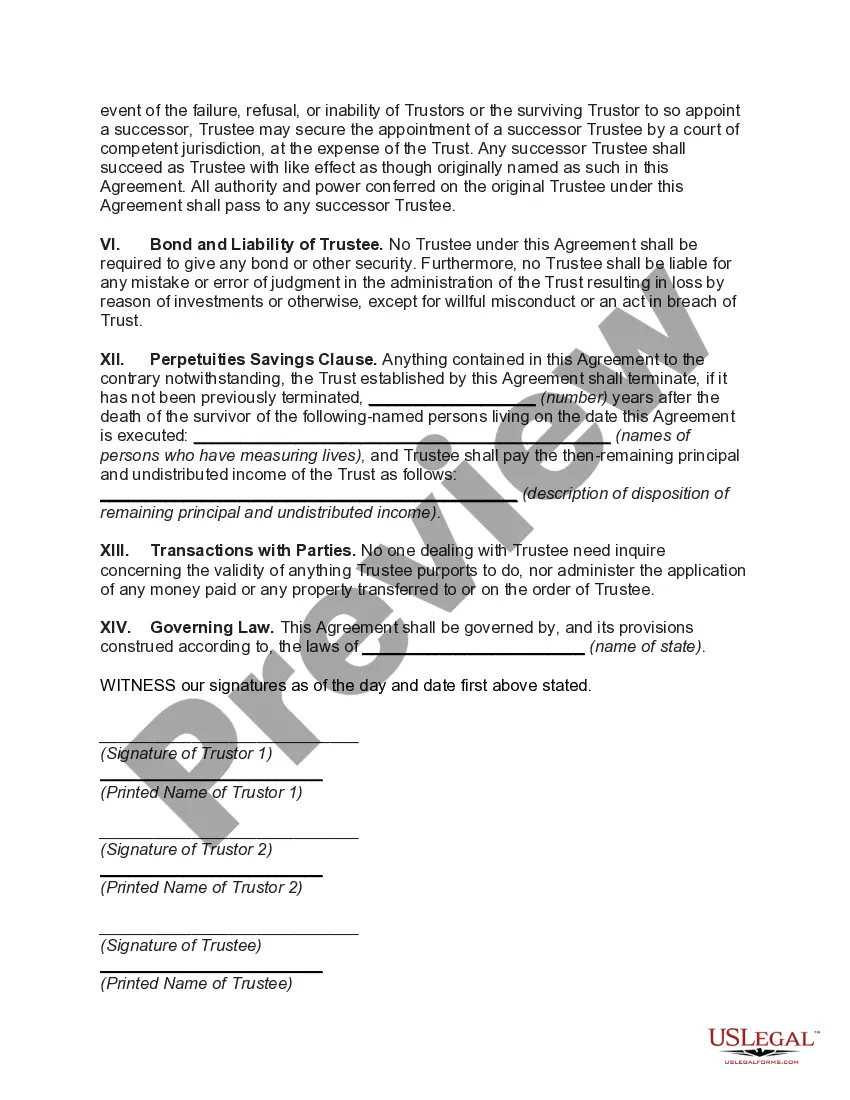
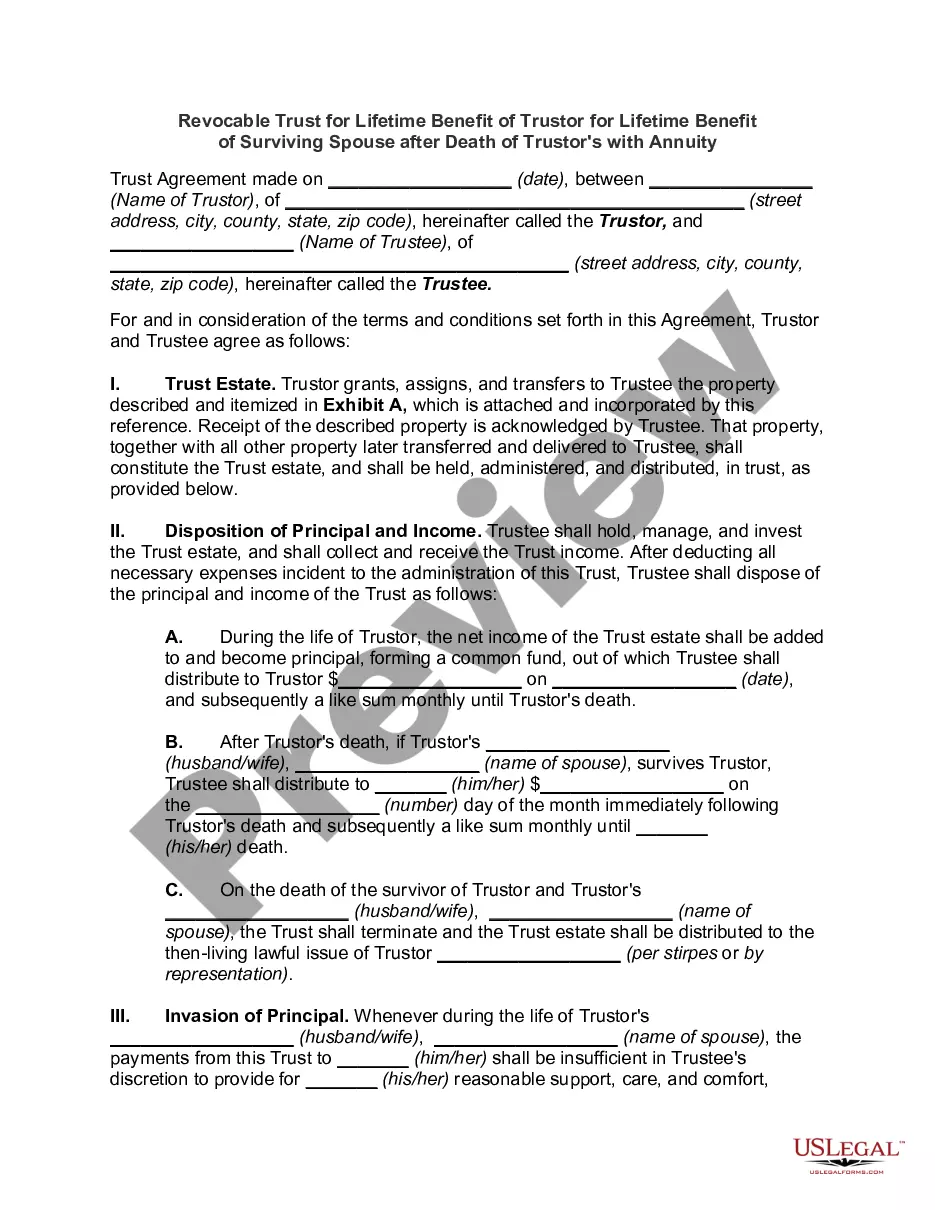
For married couples, a joint living trust for married couples is often the most appropriate choice. This type of trust allows both partners to contribute their assets, providing unified management and flexibility. It can simplify the distribution of assets after one spouse passes away, reducing potential conflicts. If you're ready to set up your joint trust, look at the user-friendly options available on US Legal Forms.
While a joint living trust for married couples offers numerous advantages, it also has potential downsides. These trusts may require ongoing management and adjustments as life circumstances change, which some might find burdensome. Additionally, establishing a trust can entail costs, such as legal fees. It’s essential to weigh these factors, and consulting resources from US Legal Forms can help you understand these considerations better.
Married couples may choose to have separate living trusts, but a joint living trust for married couples often proves more beneficial. A joint trust simplifies the management of assets and provides a streamlined process for estate planning. This approach can reduce confusion and ensure that both partners’ wishes are respected. If you are considering a joint living trust, platforms like US Legal Forms can guide you through the process.
When one spouse passes away, a joint living trust for married couples remains intact but may require adjustments. Typically, the surviving spouse continues to manage the trust without interruption, but the deceased spouse’s share of the assets may automatically transfer to the survivor. This transfer simplifies the process, avoiding probate, but it’s wise to review the trust and update it to align with current wishes and circumstances. Engaging with platforms like US Legal Forms can help navigate these adjustments seamlessly.
The best living trust for a married couple typically is a joint living trust designed to combine and manage both partners' assets efficiently. This type of trust allows for flexibility in asset distribution, minimizing tax implications, and avoiding probate. When selecting a trust, couples should identify their specific needs and consult with a professional, like US Legal Forms, to create a tailored solution that fits their situation perfectly.
While a joint living trust for married couples offers many benefits, it also has potential drawbacks. One significant issue is that both spouses must agree on any changes, which can lead to complications if their relationship dynamics shift. Furthermore, if one spouse passes away, the trust needs to be updated to reflect the change, potentially complicating the estate planning process. It's crucial to consider these factors when deciding on a joint trust.
Suze Orman emphasizes the significance of a joint living trust for married couples. She highlights that having a joint trust simplifies estate planning, helps avoid probate, and allows couples to manage their assets collaboratively. By establishing a joint living trust, couples can ensure their wishes are honored and their loved ones are protected. It's a powerful tool for creating financial peace of mind.
While a joint living trust for married couples offers numerous benefits, it does come with some downsides. For instance, both partners must agree on critical decisions, which can lead to potential conflicts. Additionally, these trusts might not address individual needs effectively, particularly in cases of divorce or if one partner has significantly different financial obligations.
The joint living trust for married couples often stands out as a favorable option. This type of trust enables both partners to have equal control over their shared assets. It provides flexibility in management and offers peace of mind regarding asset distribution upon one partner’s death.
A married couple can benefit from either having one joint trust or two separate trusts, depending on their specific financial situations. A joint living trust for married couples offers ease of management and unified asset control. However, separate trusts might be more advantageous for addressing unique individual circumstances, such as differing asset ownership or personalized estate planning needs.
