Irrevocable Beneficiary Canada
Description










Get your form ready online
Our built-in tools help you complete, sign, share, and store your documents in one place.
Make edits, fill in missing information, and update formatting in US Legal Forms—just like you would in MS Word.
Download a copy, print it, send it by email, or mail it via USPS—whatever works best for your next step.
Sign and collect signatures with our SignNow integration. Send to multiple recipients, set reminders, and more. Go Premium to unlock E-Sign.
If this form requires notarization, complete it online through a secure video call—no need to meet a notary in person or wait for an appointment.
We protect your documents and personal data by following strict security and privacy standards.

Make edits, fill in missing information, and update formatting in US Legal Forms—just like you would in MS Word.

Download a copy, print it, send it by email, or mail it via USPS—whatever works best for your next step.

Sign and collect signatures with our SignNow integration. Send to multiple recipients, set reminders, and more. Go Premium to unlock E-Sign.

If this form requires notarization, complete it online through a secure video call—no need to meet a notary in person or wait for an appointment.

We protect your documents and personal data by following strict security and privacy standards.
Looking for another form?




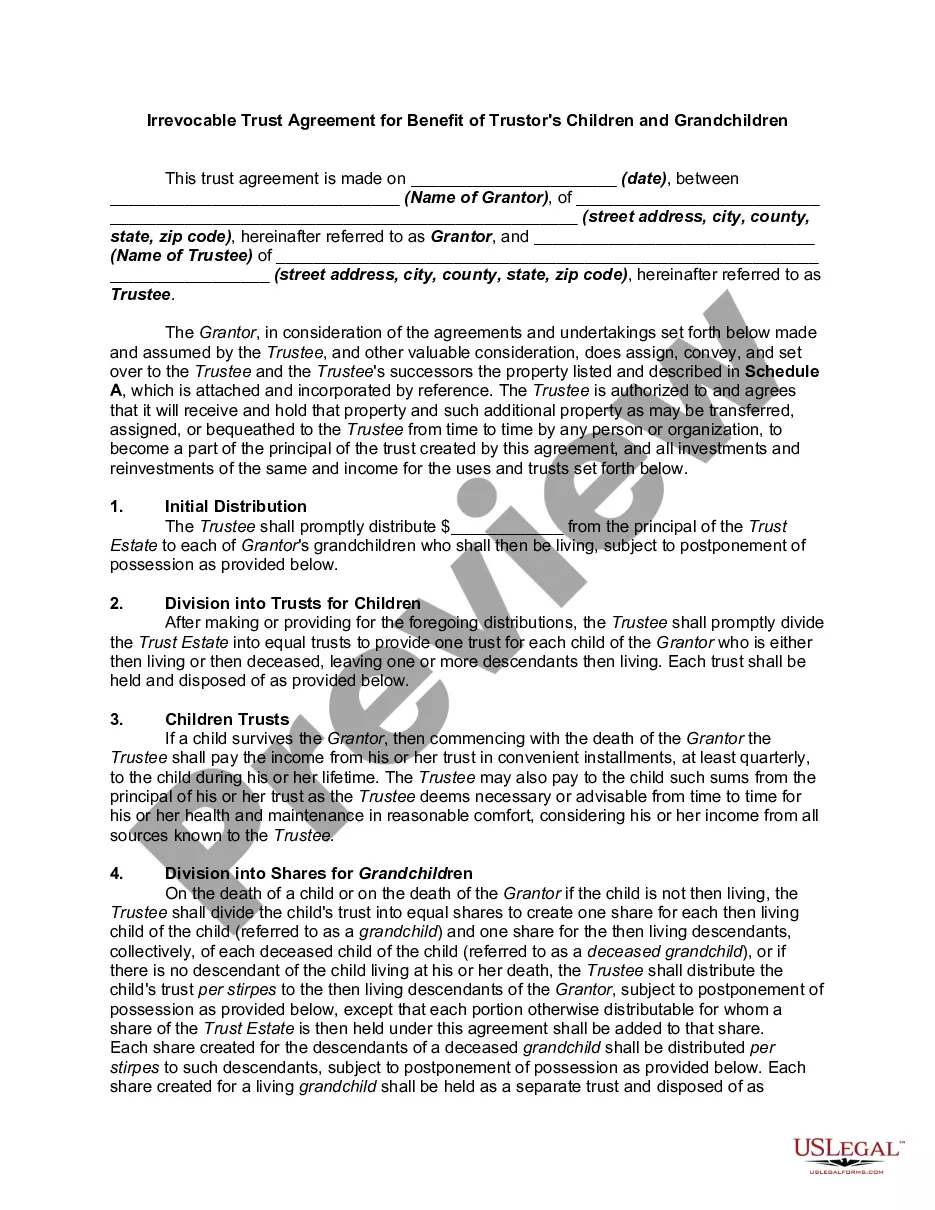




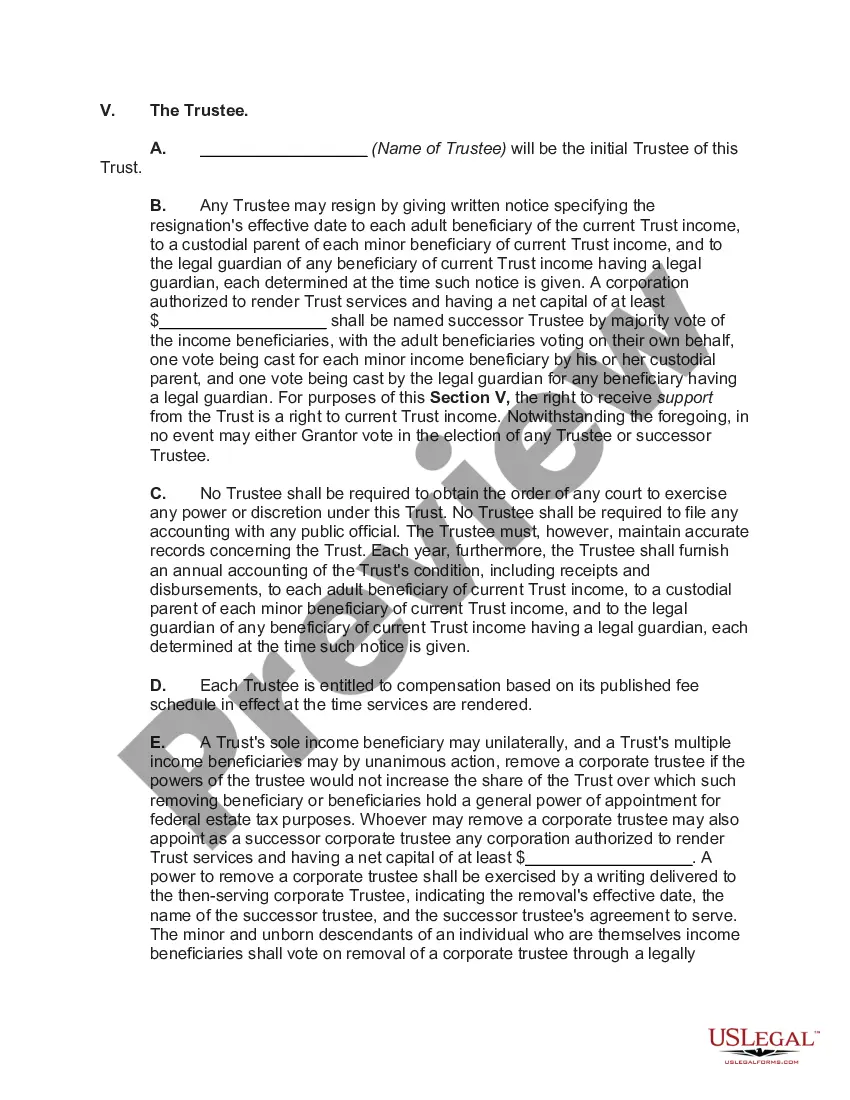
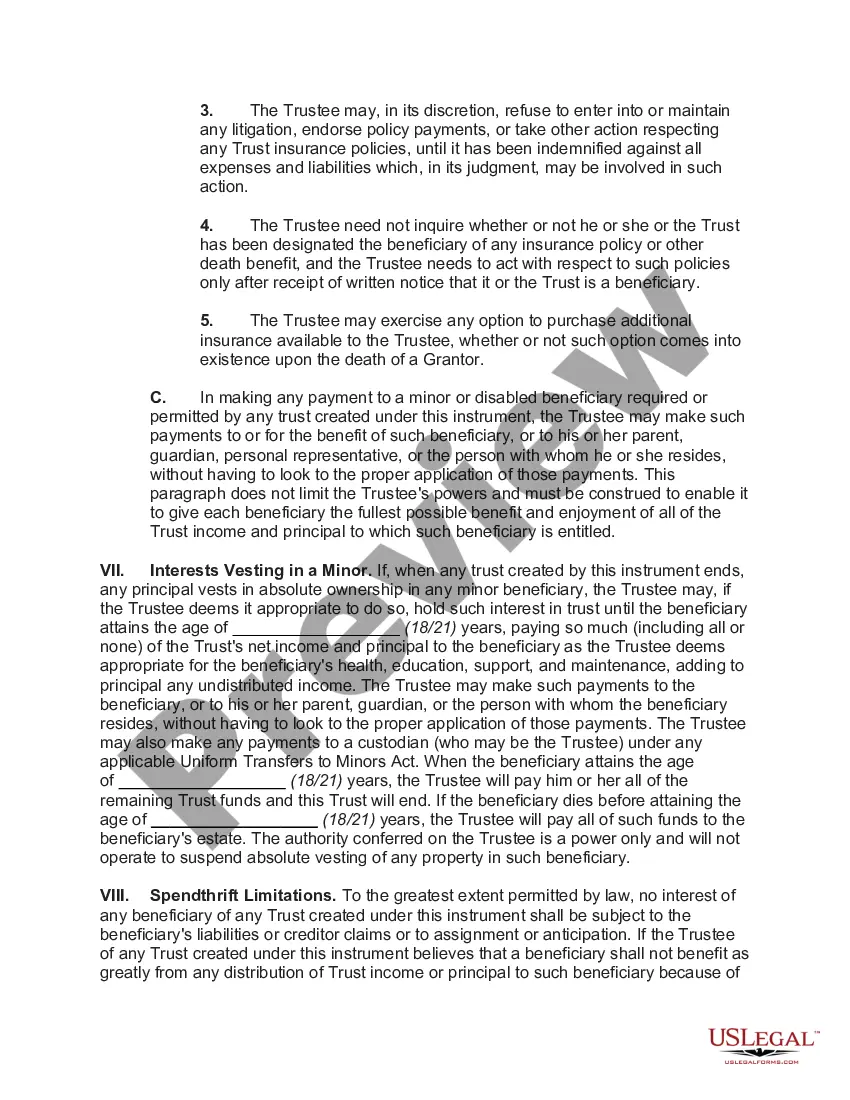
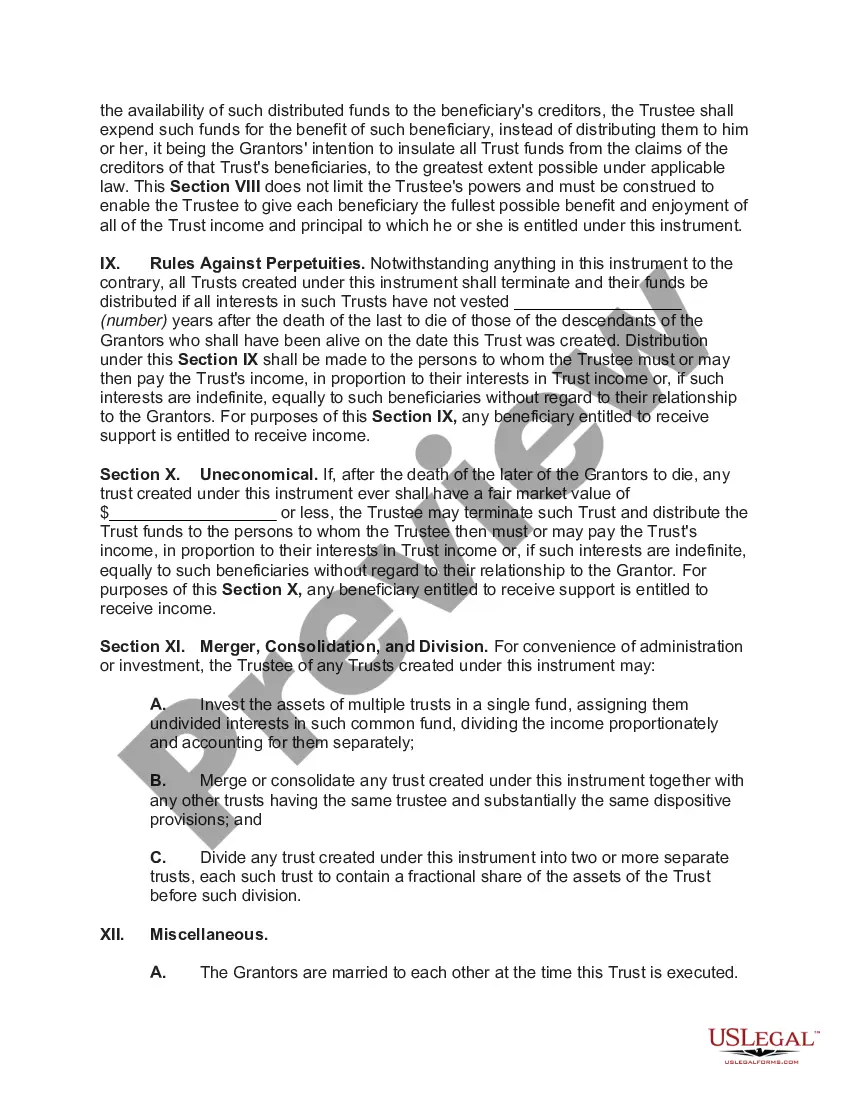
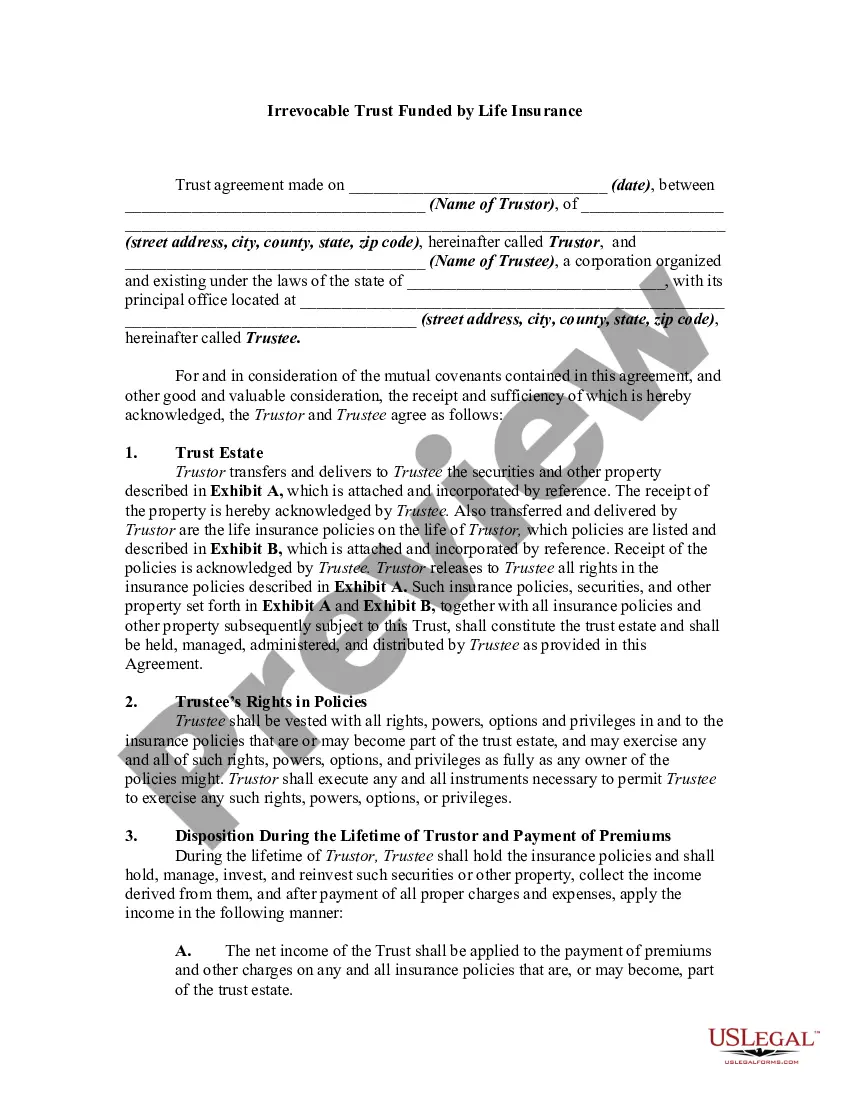
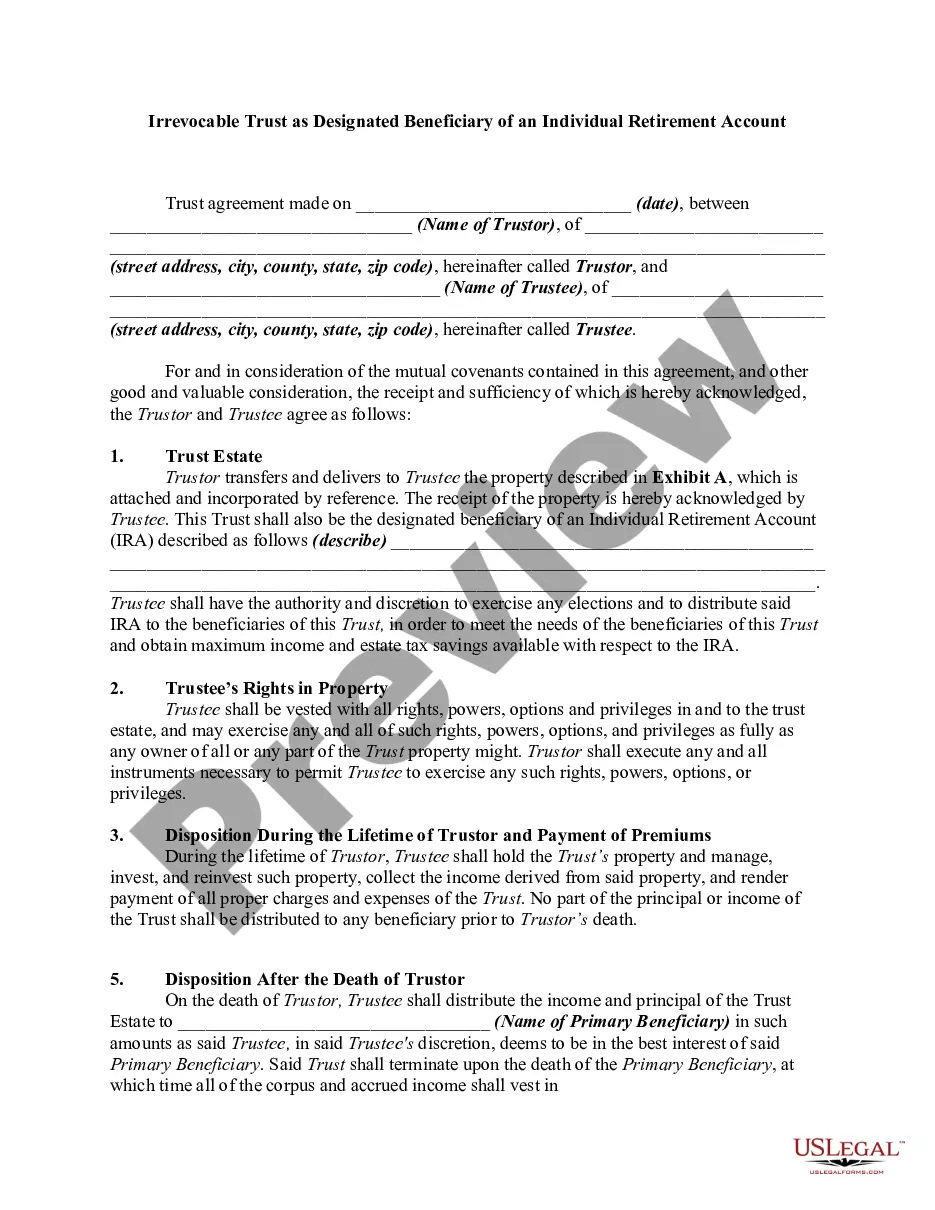
How to fill out Irrevocable Funded Life Insurance Trust Where Beneficiaries Have Crummey Right Of Withdrawal With First To Die Policy With Survivorship Rider?
- Log in to your US Legal Forms account if you're a returning user, ensuring your subscription is active; renew if necessary.
- For new users, start by reviewing the available forms in the Preview mode, confirming it matches your requirements and local jurisdiction.
- If the form doesn't meet your needs, utilize the Search tab to find an alternative. Choose the most suitable template.
- Select the desired form and click on the Buy Now button. Choose from the available subscription plans to gain access.
- Complete your purchase by entering your credit card information or logging into your PayPal account for payment.
- Download the completed form to your device. You can then access it anytime from the My Forms section of your profile.
US Legal Forms stands out with a robust collection of legal documents, offering over 85,000 fillable and editable forms at competitive prices. This ensures that users not only find what they need but also receive guidance from premium experts for proper form completion.
Take advantage of the resources at US Legal Forms today and simplify your legal documentation process. Start now and secure your irrevocable beneficiary forms!
Form popularity
FAQ
The key difference between a beneficiary and an irrevocable beneficiary lies in the flexibility of the designation. A standard beneficiary can be changed or revoked by the policyholder at any time, while an irrevocable beneficiary cannot be removed or altered until their consent is obtained. This distinction makes irrevocable beneficiaries more secure in their claims, ensuring their stake in the policy is protected. If you're considering these designations, platforms like US Legal Forms can help you create the necessary documents and understand your options.
An irrevocable beneficiary in Canada has specific rights that protect their interest in a policy or trust. These rights typically include the entitlement to policy proceeds upon the policyholder's death or at the end of a defined period. Additionally, the policyholder cannot make changes to the policy without the irrevocable beneficiary's consent, providing that individual with significant control. To navigate these rights effectively, referring to a resource like US Legal Forms can provide clarity and guidance.
To become an irrevocable beneficiary in Canada, a policyholder must explicitly designate an individual or entity as such in their insurance or financial documents. This designation requires a clear statement that the beneficiary's rights cannot be revoked without their consent. It's important to understand that this decision is often permanent, meaning the policyholder cannot change it easily later on. For assistance in creating these documents or understanding the implications, you may consider using platforms like US Legal Forms.
In general, a will does not supersede a beneficiary designation on a bank account in Canada. When you name a beneficiary, that designation takes precedence, ensuring that the funds go directly to the beneficiary. This aspect of estate planning highlights the importance of choosing the right beneficiaries and understanding the implications of irrevocable beneficiary choices.
Yes, a beneficiary designated on a bank account does typically override a will in Canada. This means that if you have designated a beneficiary, those funds will go directly to them upon your death, regardless of what your will states. It's advisable to keep this in mind when creating your estate plan, particularly when discussing the features of an irrevocable beneficiary.
When someone dies with a will in Canada, the assets, including bank accounts, are usually frozen until the will is probated. The estate's executor can later distribute the funds according to the deceased's wishes in the will. However, if there is a named beneficiary on the bank account, that person may receive the funds directly without going through probate.
If an irrevocable beneficiary passes away, the policy or account typically reverts to the estate of the deceased. This means that the benefits or assets may be distributed according to the probate process rather than to another designated individual. It's crucial to have a backup plan in place, and you may want to consult with legal experts to ensure your wishes are met when this happens.
An irrevocable beneficiary is one who cannot be removed or changed without their consent. This means that if you designate someone as an irrevocable beneficiary, you must seek their permission to alter this designation in the future. Knowing this feature can be vital when planning your estate in Canada, as it offers security for the beneficiary.
In Canada, a beneficiary can indeed supersede a will, especially when it comes to designated accounts or policies. If you name a beneficiary on your insurance policy or retirement account, that designation takes precedence over your will. Therefore, it is important to understand how an irrevocable beneficiary works in Canada to ensure your intentions are honored.
A common example of an irrevocable beneficiary is a spouse designated to receive life insurance proceeds. This designation ensures that the spouse will receive the funds directly, regardless of future policyholder changes. Such agreements are prominent in Canada, reflecting the importance of commitment in beneficiary designations.