Special Needs Trust Supplemental For Elderly
Description

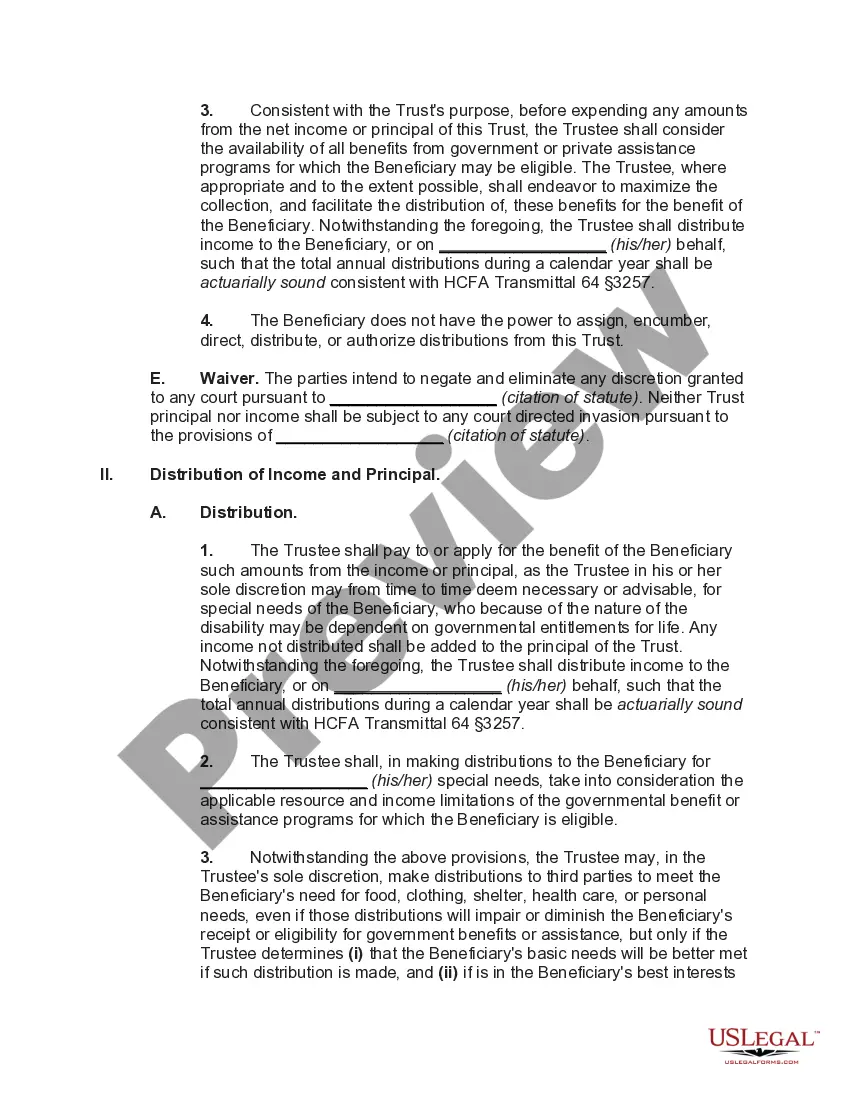
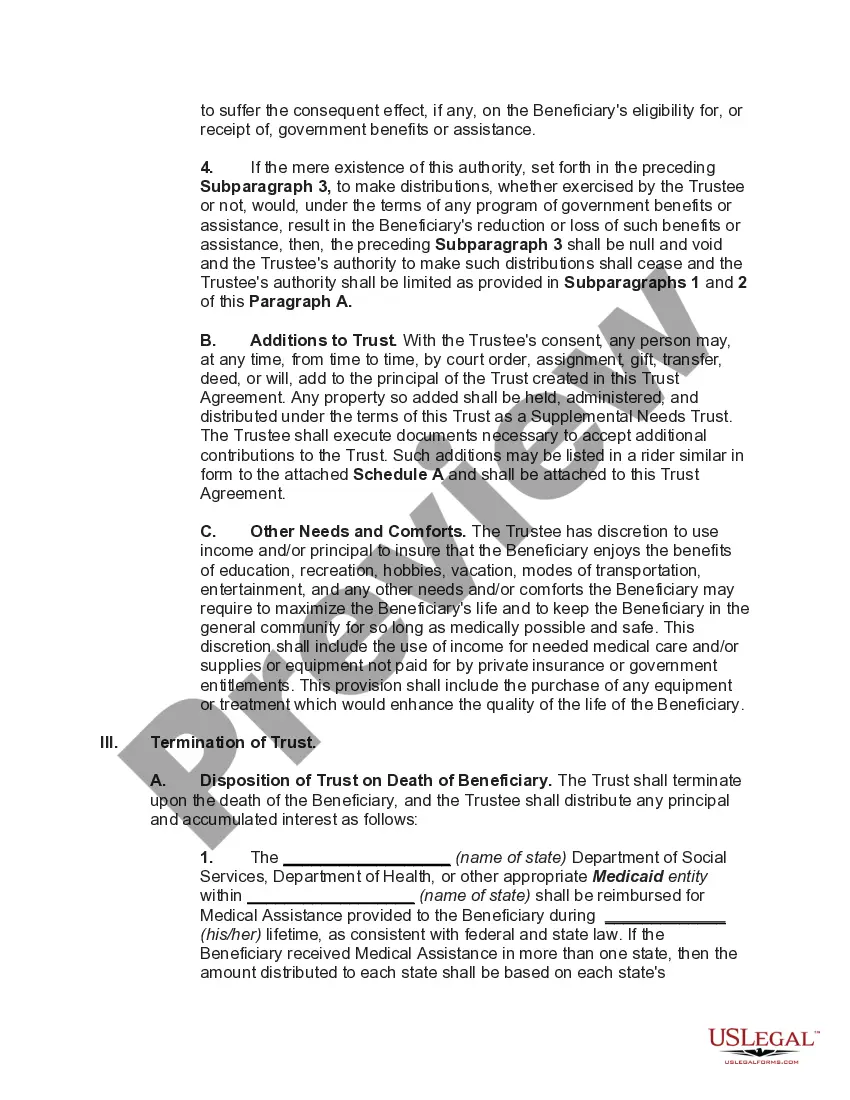
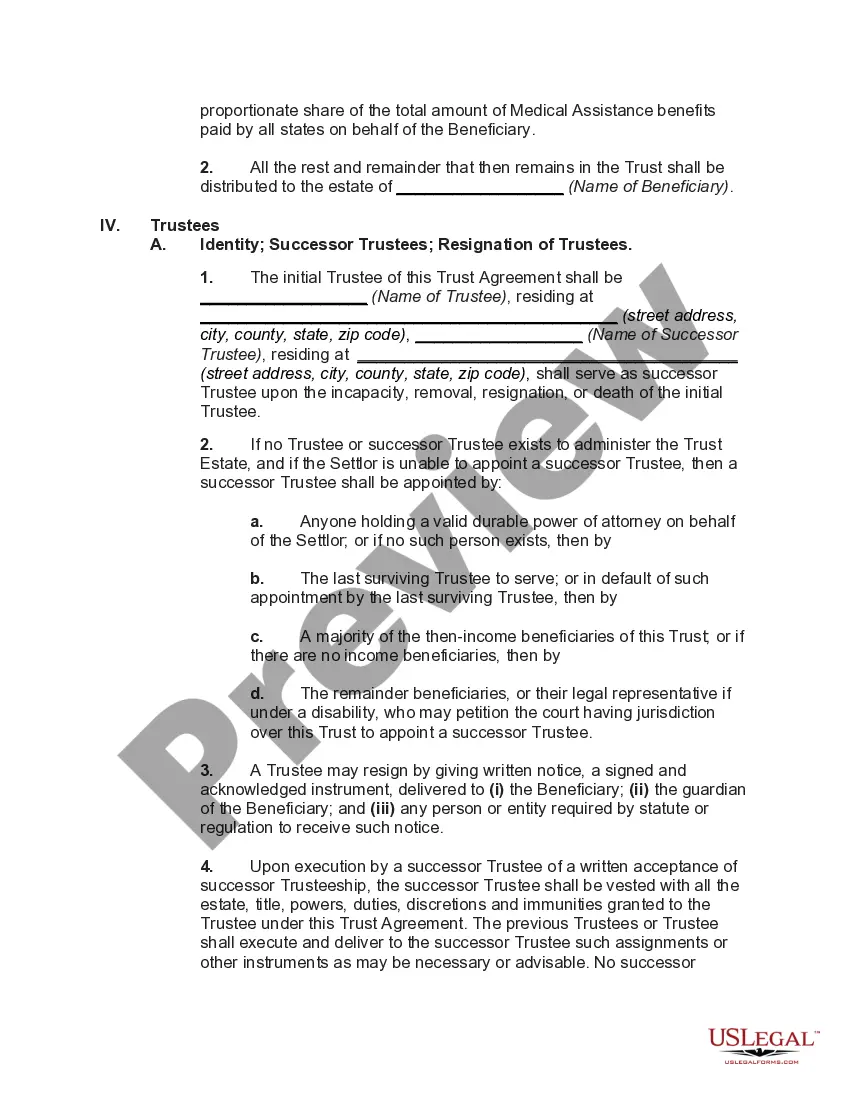
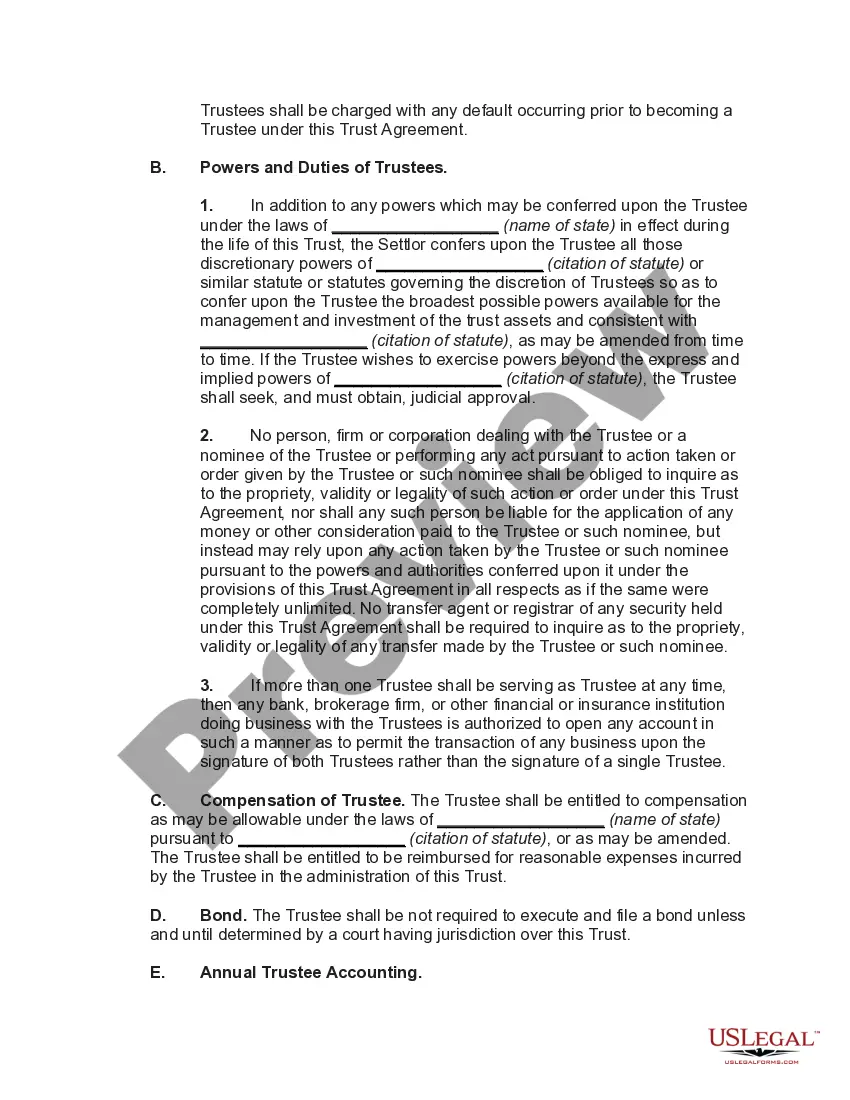
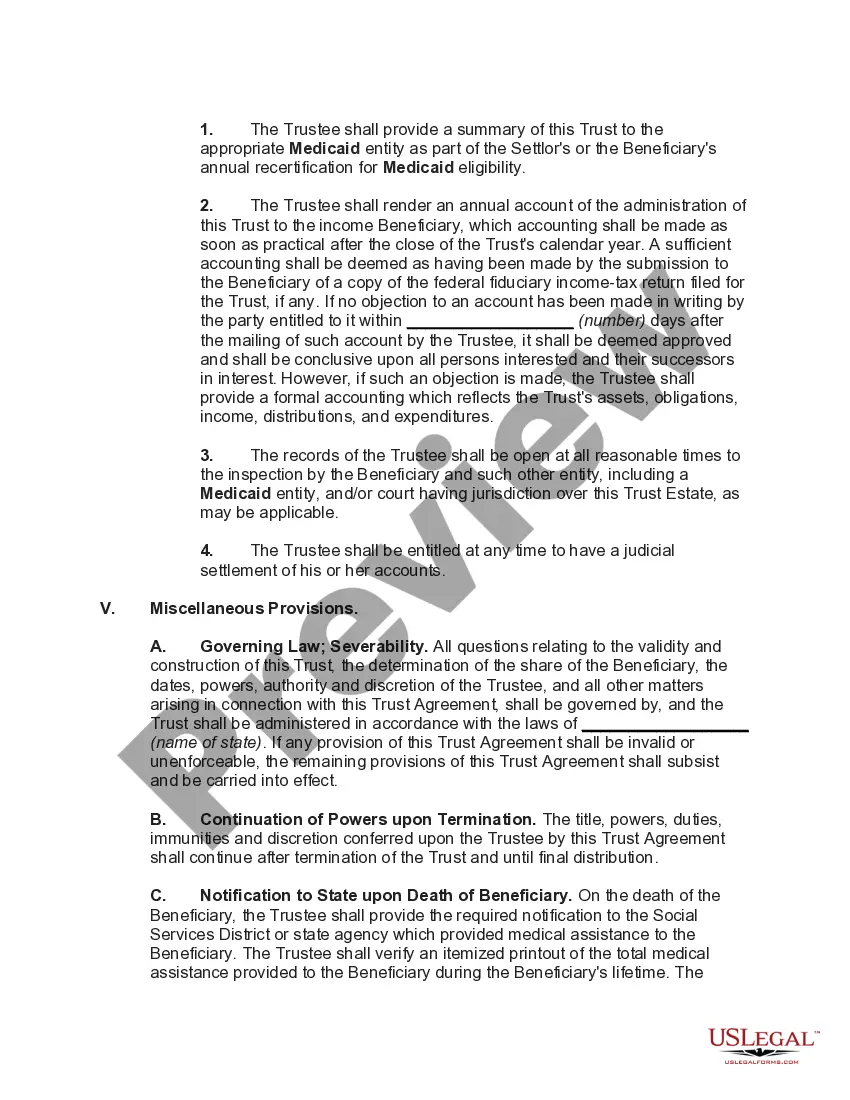
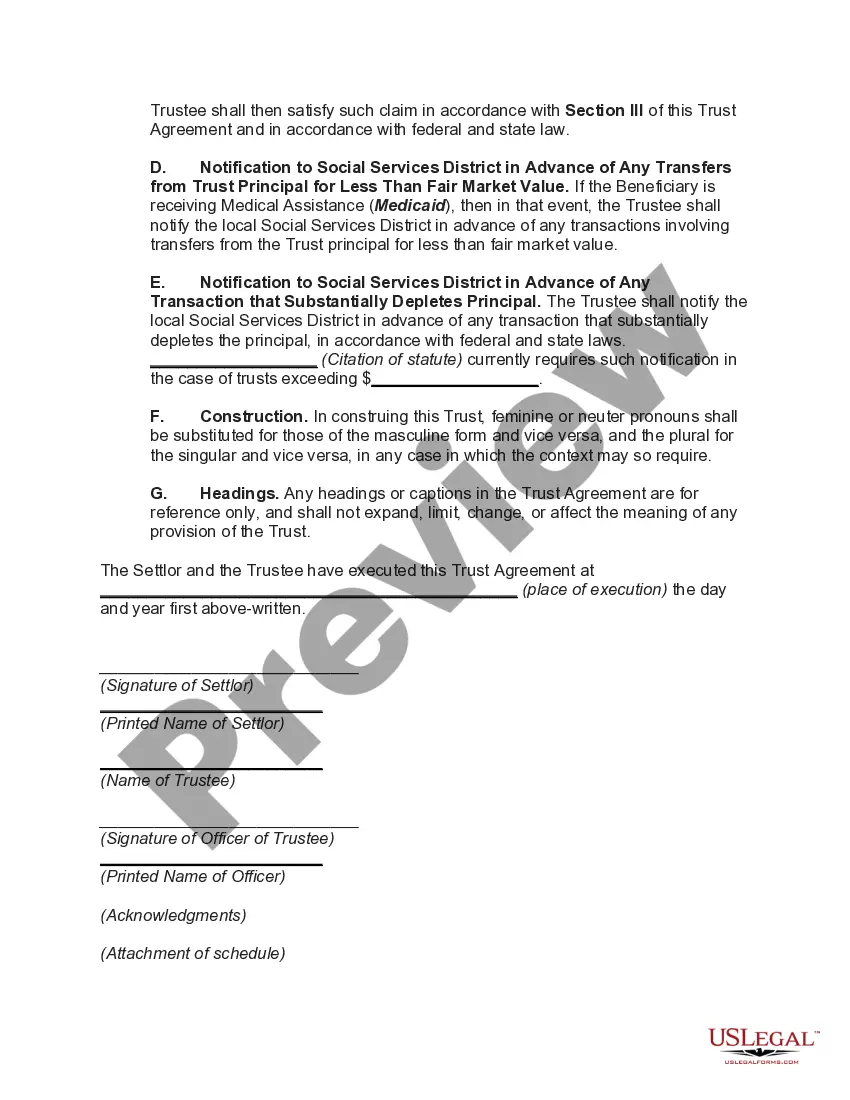



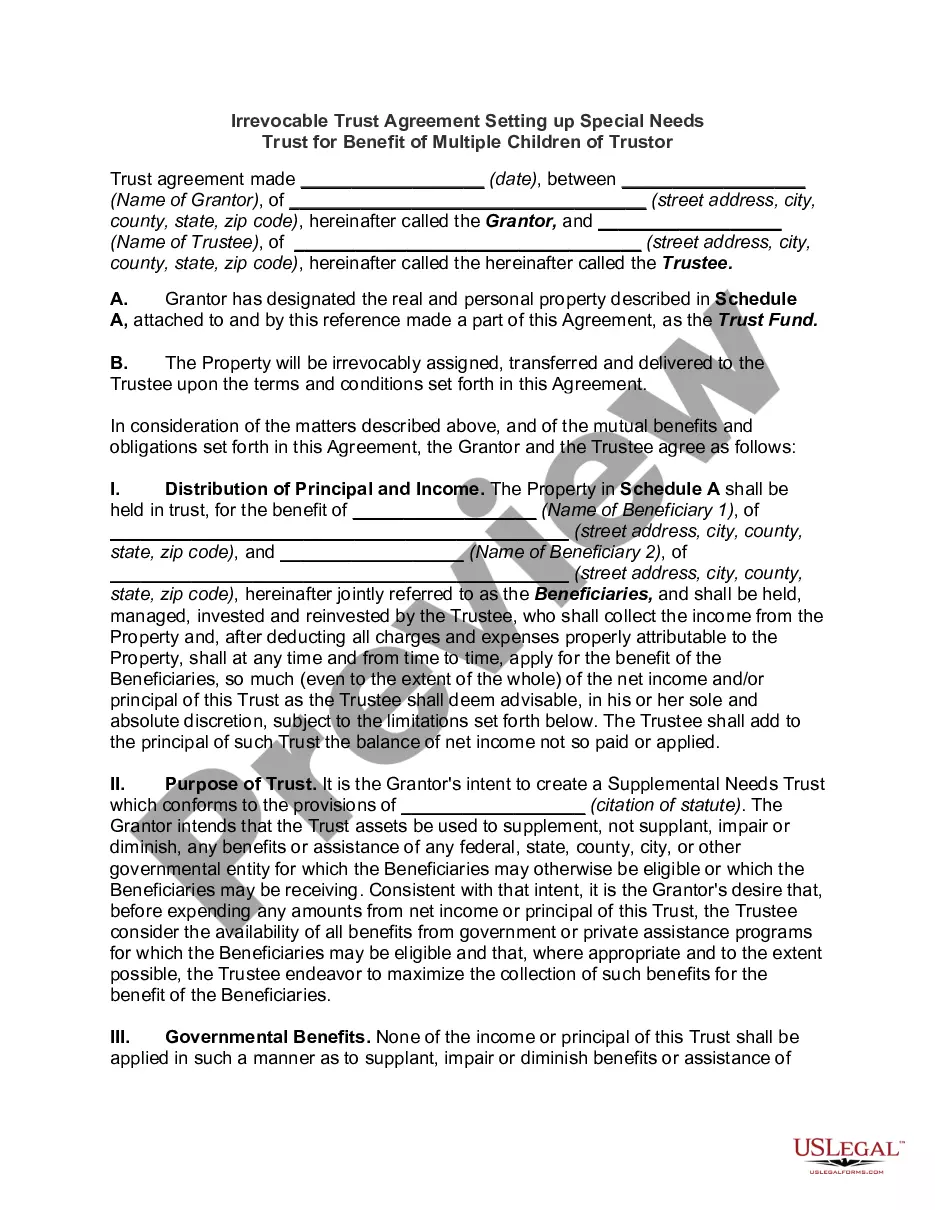
Get your form ready online
Our built-in tools help you complete, sign, share, and store your documents in one place.
Make edits, fill in missing information, and update formatting in US Legal Forms—just like you would in MS Word.
Download a copy, print it, send it by email, or mail it via USPS—whatever works best for your next step.
Sign and collect signatures with our SignNow integration. Send to multiple recipients, set reminders, and more. Go Premium to unlock E-Sign.
If this form requires notarization, complete it online through a secure video call—no need to meet a notary in person or wait for an appointment.
We protect your documents and personal data by following strict security and privacy standards.

Make edits, fill in missing information, and update formatting in US Legal Forms—just like you would in MS Word.

Download a copy, print it, send it by email, or mail it via USPS—whatever works best for your next step.

Sign and collect signatures with our SignNow integration. Send to multiple recipients, set reminders, and more. Go Premium to unlock E-Sign.

If this form requires notarization, complete it online through a secure video call—no need to meet a notary in person or wait for an appointment.

We protect your documents and personal data by following strict security and privacy standards.
Looking for another form?
How to fill out Special Needs Irrevocable Trust Agreement For Benefit Of Disabled Child Of Trustor?
Managing legal documents can be overwhelming, even for the most experienced experts.
When you are searching for a Special Needs Trust Supplemental For Elderly and cannot dedicate time to find the correct and current version, the process may be challenging.
Access legal and business forms specific to your state or county. US Legal Forms meets all your needs, from personal to business documentation, in one place.
Utilize advanced tools to complete and manage your Special Needs Trust Supplemental For Elderly.
Here are the steps to follow after acquiring the form you need: Confirm it is the correct form by previewing it and reviewing its description. Ensure that the sample is valid in your state or county. Click Buy Now once you are prepared. Select a monthly subscription plan. Choose your desired format, and Download, complete, eSign, print, and submit your document. Benefit from the US Legal Forms web library, backed by 25 years of experience and reliability. Transform your routine document management into a seamless and user-friendly process today.
- Access a knowledge base of articles, tutorials, and guides pertinent to your situation and needs.
- Save time and effort searching for the documents you require, and use US Legal Forms’ sophisticated search and Preview tool to find Special Needs Trust Supplemental For Elderly and obtain it.
- If you have a monthly subscription, Log In to your US Legal Forms account, search for the form, and obtain it.
- Check your My documents tab to view the documents you have saved previously and manage your folders as desired.
- If this is your first experience with US Legal Forms, create a free account for unlimited access to all platform benefits.
- An extensive online form library could be transformative for anyone aiming to handle these matters efficiently.
- US Legal Forms is a leading provider of online legal documents, offering over 85,000 state-specific legal forms accessible at any time.
- With US Legal Forms, you can.
Form popularity
FAQ
Cons of Special Needs Trusts The trust must be maintained, and yearly management costs can be high. Depending on who manages the fund, there may be a minimum amount required to set up the trust. It may be financially difficult for the settlor to actually establish the trust, depending upon their circumstances.
It cannot be paid to a trust. If you are receiving Social Security by direct deposit, you should leave the account that receives the payments outside of your trust.
SSDI does not depend upon having limited assets, and it is not affected by distributions from a Disability Trust.
Executor's or trustee's fees are taxable compensation to you. Several states do not permit you to pay your own compensation without a court order, so ask your attorney before you write yourself a check.
What are the main benefits of an SDT? The asset value limit of $781,250 (indexed annually on 1 July) and income from the trust may be disregarded for the purposes of the principal beneficiary's income support payment. Assets above that limit are added to the assessable assets of the principal beneficiary.