Special Needs Trust Law For Adults
Description

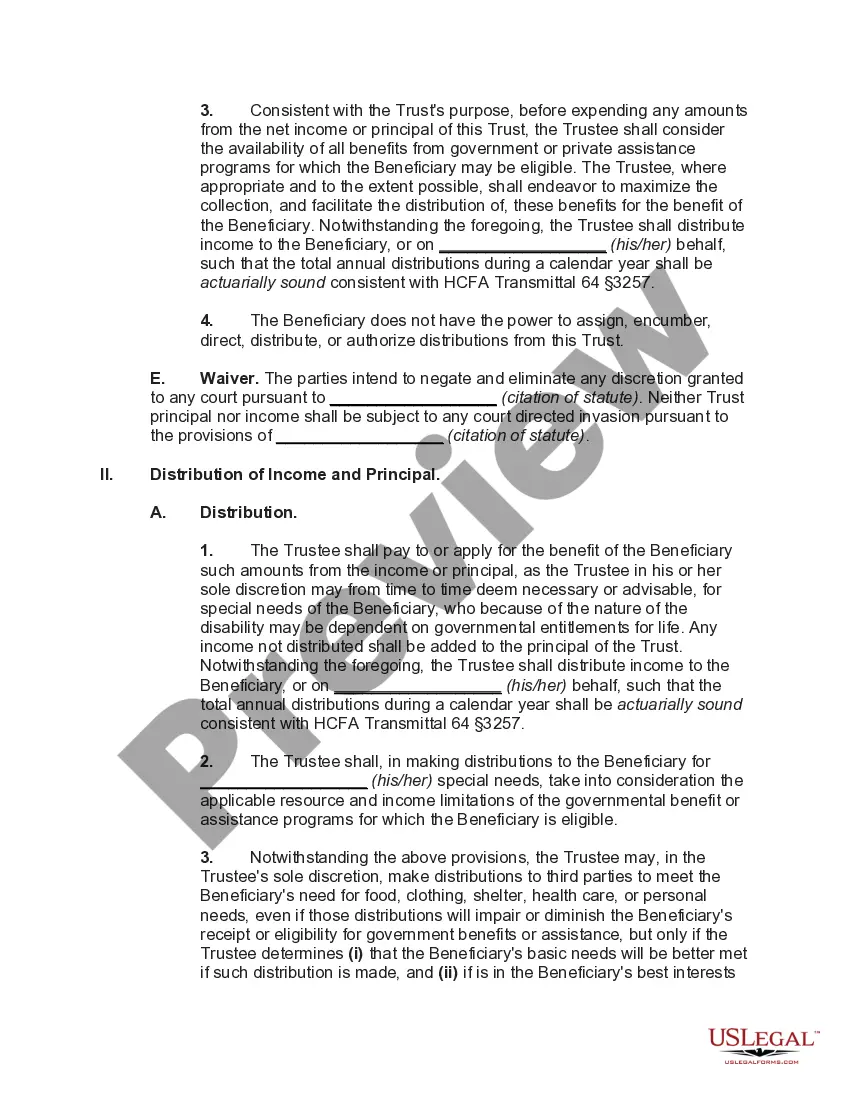
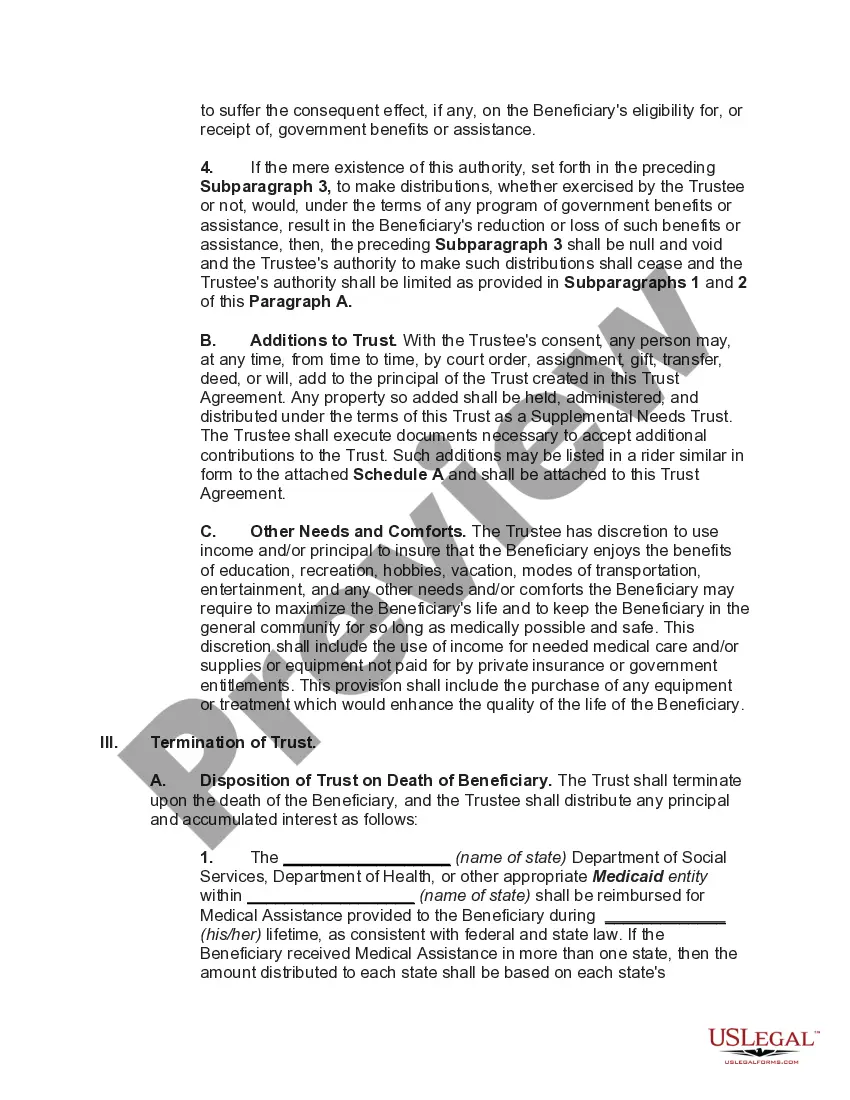
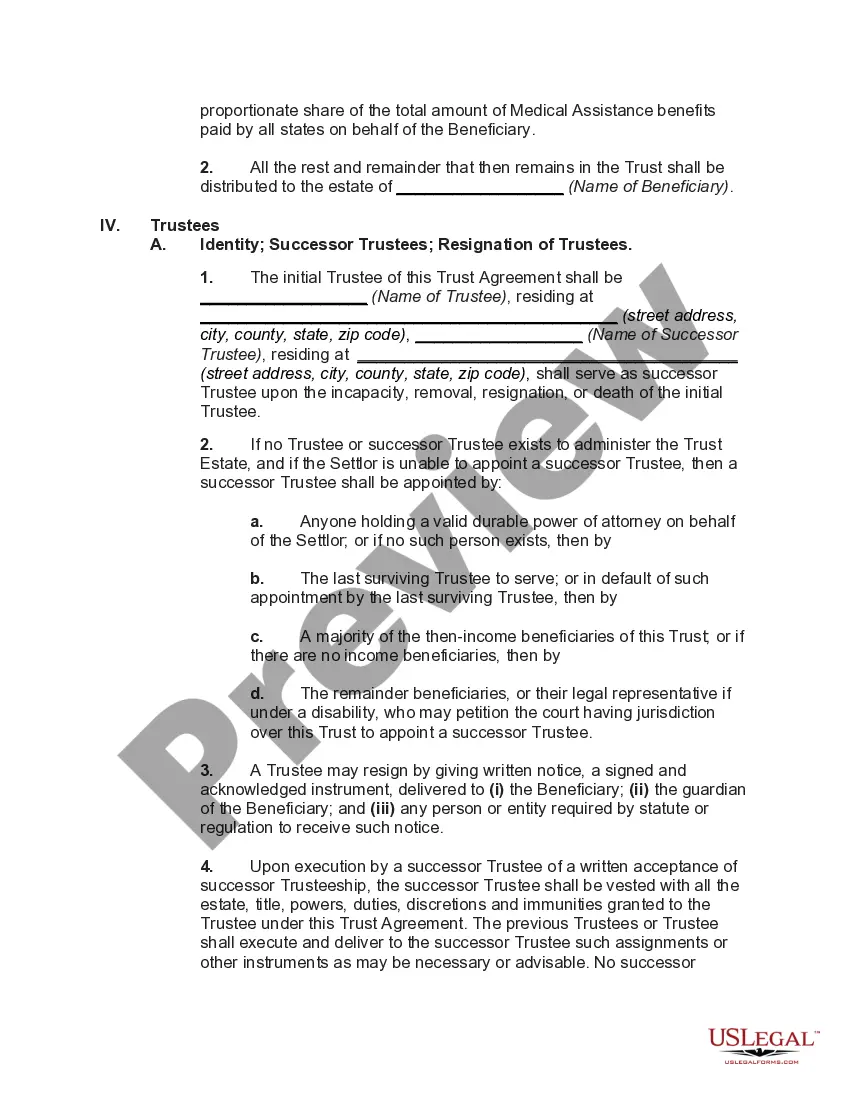
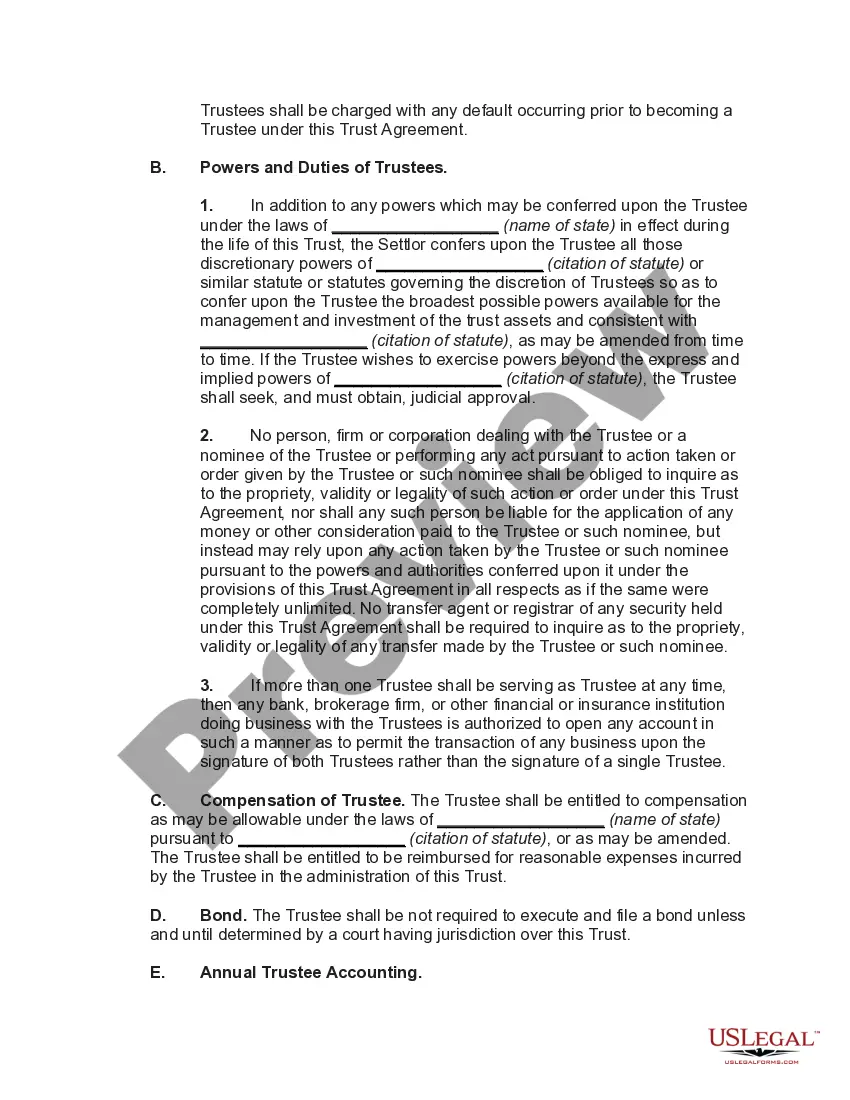
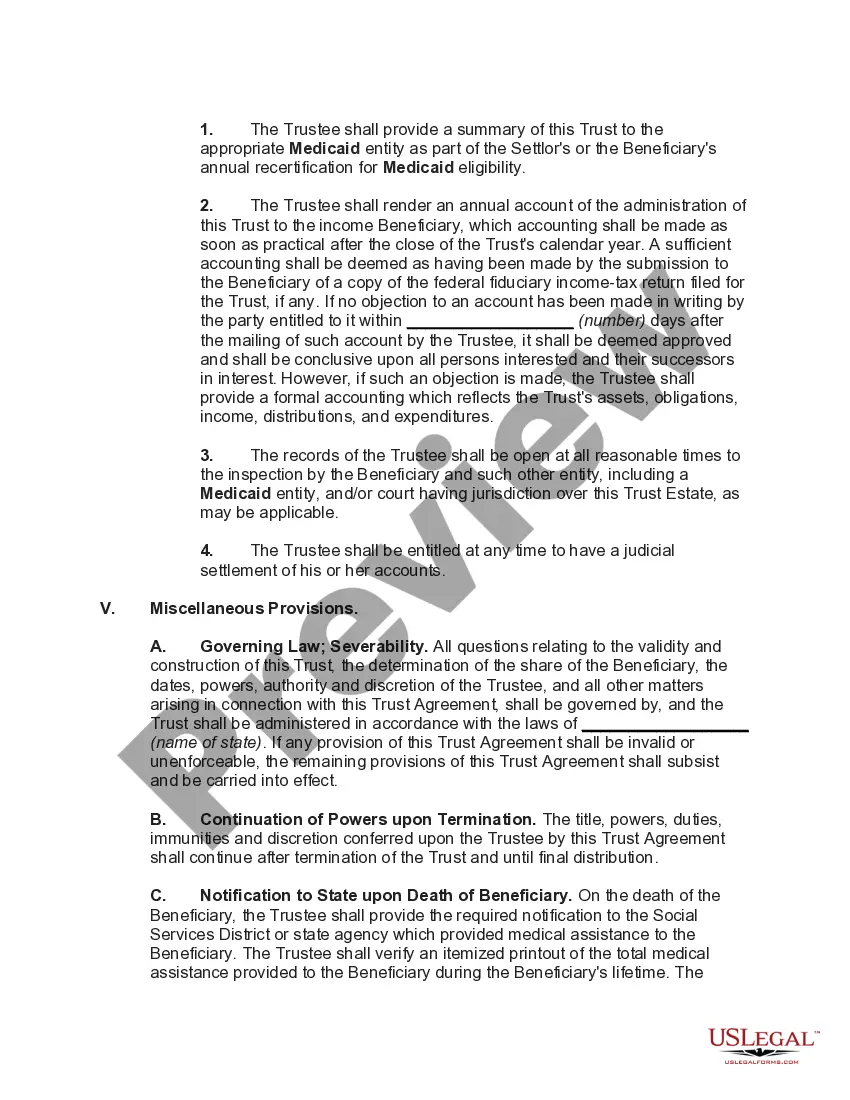
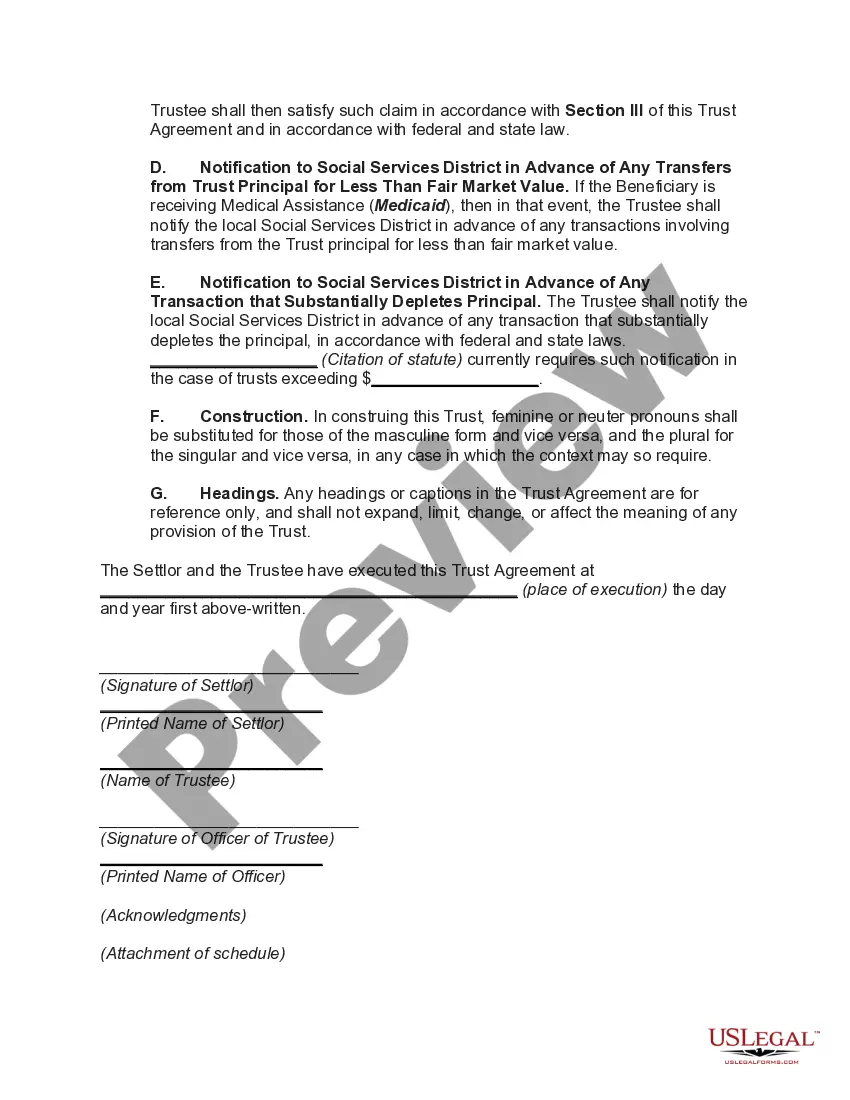
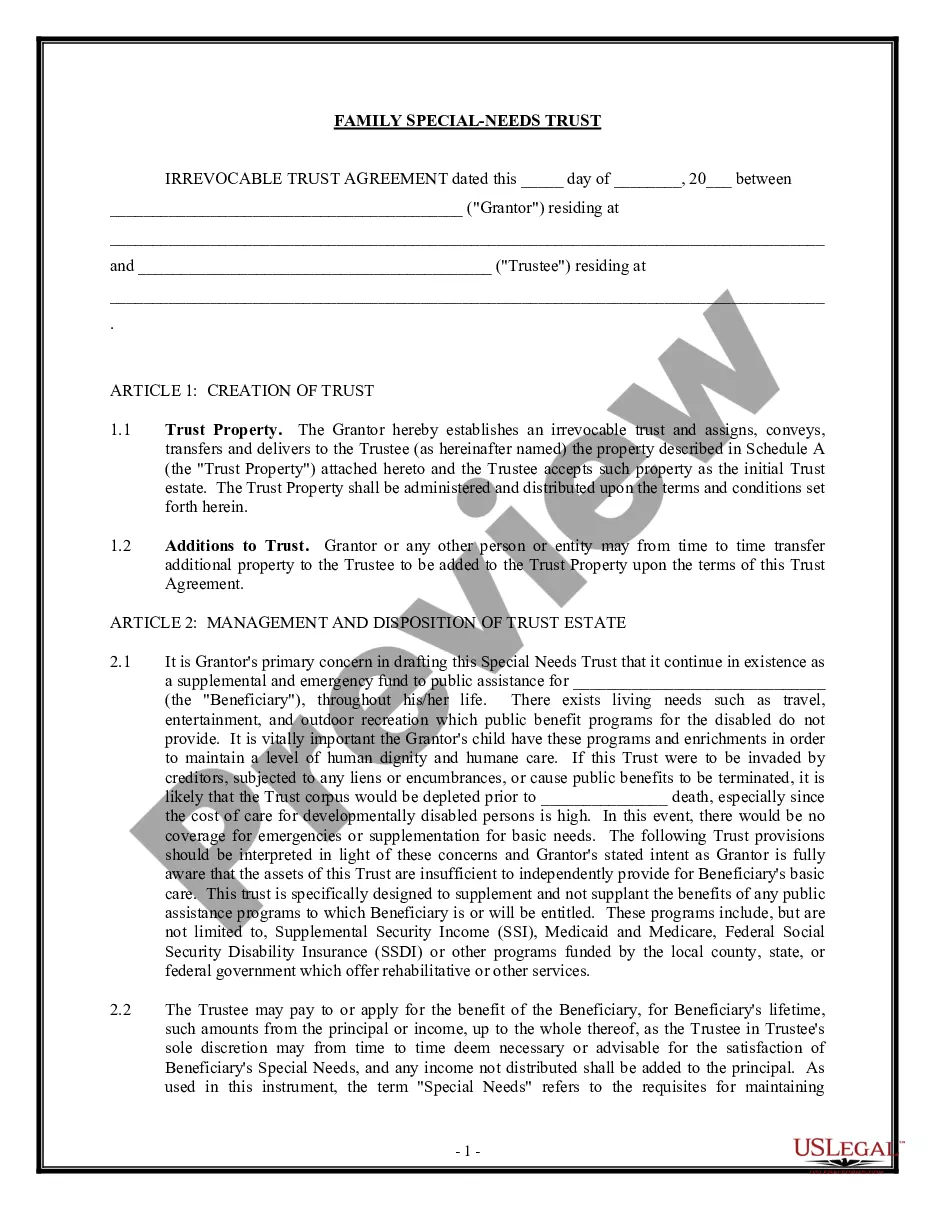



Get your form ready online
Our built-in tools help you complete, sign, share, and store your documents in one place.
Make edits, fill in missing information, and update formatting in US Legal Forms—just like you would in MS Word.
Download a copy, print it, send it by email, or mail it via USPS—whatever works best for your next step.
Sign and collect signatures with our SignNow integration. Send to multiple recipients, set reminders, and more. Go Premium to unlock E-Sign.
If this form requires notarization, complete it online through a secure video call—no need to meet a notary in person or wait for an appointment.
We protect your documents and personal data by following strict security and privacy standards.

Make edits, fill in missing information, and update formatting in US Legal Forms—just like you would in MS Word.

Download a copy, print it, send it by email, or mail it via USPS—whatever works best for your next step.

Sign and collect signatures with our SignNow integration. Send to multiple recipients, set reminders, and more. Go Premium to unlock E-Sign.

If this form requires notarization, complete it online through a secure video call—no need to meet a notary in person or wait for an appointment.

We protect your documents and personal data by following strict security and privacy standards.
Looking for another form?










How to fill out Special Needs Irrevocable Trust Agreement For Benefit Of Disabled Child Of Trustor?
Whether for business purposes or for individual matters, everyone has to deal with legal situations at some point in their life. Filling out legal paperwork needs careful attention, starting with choosing the appropriate form sample. For example, when you choose a wrong version of a Special Needs Trust Law For Adults, it will be turned down once you submit it. It is therefore essential to get a reliable source of legal files like US Legal Forms.
If you need to obtain a Special Needs Trust Law For Adults sample, stick to these easy steps:
- Get the template you need by utilizing the search field or catalog navigation.
- Look through the form’s information to ensure it matches your situation, state, and county.
- Click on the form’s preview to view it.
- If it is the incorrect document, go back to the search function to locate the Special Needs Trust Law For Adults sample you need.
- Download the file if it matches your needs.
- If you have a US Legal Forms account, click Log in to access previously saved files in My Forms.
- In the event you do not have an account yet, you can obtain the form by clicking Buy now.
- Pick the correct pricing option.
- Finish the account registration form.
- Select your payment method: you can use a credit card or PayPal account.
- Pick the document format you want and download the Special Needs Trust Law For Adults.
- Once it is downloaded, you are able to fill out the form by using editing software or print it and complete it manually.
With a substantial US Legal Forms catalog at hand, you don’t need to spend time looking for the appropriate template across the web. Use the library’s straightforward navigation to find the proper form for any situation.
Form popularity
FAQ
What are the main benefits of an SDT? The asset value limit of $781,250 (indexed annually on 1 July) and income from the trust may be disregarded for the purposes of the principal beneficiary's income support payment. Assets above that limit are added to the assessable assets of the principal beneficiary.
Cons of Special Needs Trusts The trust must be maintained, and yearly management costs can be high. Depending on who manages the fund, there may be a minimum amount required to set up the trust. It may be financially difficult for the settlor to actually establish the trust, depending upon their circumstances.
SSDI does not depend upon having limited assets, and it is not affected by distributions from a Disability Trust.
The trustee works in very close contact with the beneficiary and/or their caregiver to manage the trust and its financial distributions to pay for these things. The main takeaway regarding distribution of SNT funds is this: The beneficiary never sees the money directly, but the money is used to pay for their needs.
Funds held in a properly drafted special needs trust (SNT) will not affect a Supplemental Security Income (SSI) or Medicaid recipient's benefits. However, funds disbursed in a manner that violates SSI or Medicaid rules can impact these benefits.