Special Needs Trust Contract For Schools
Description
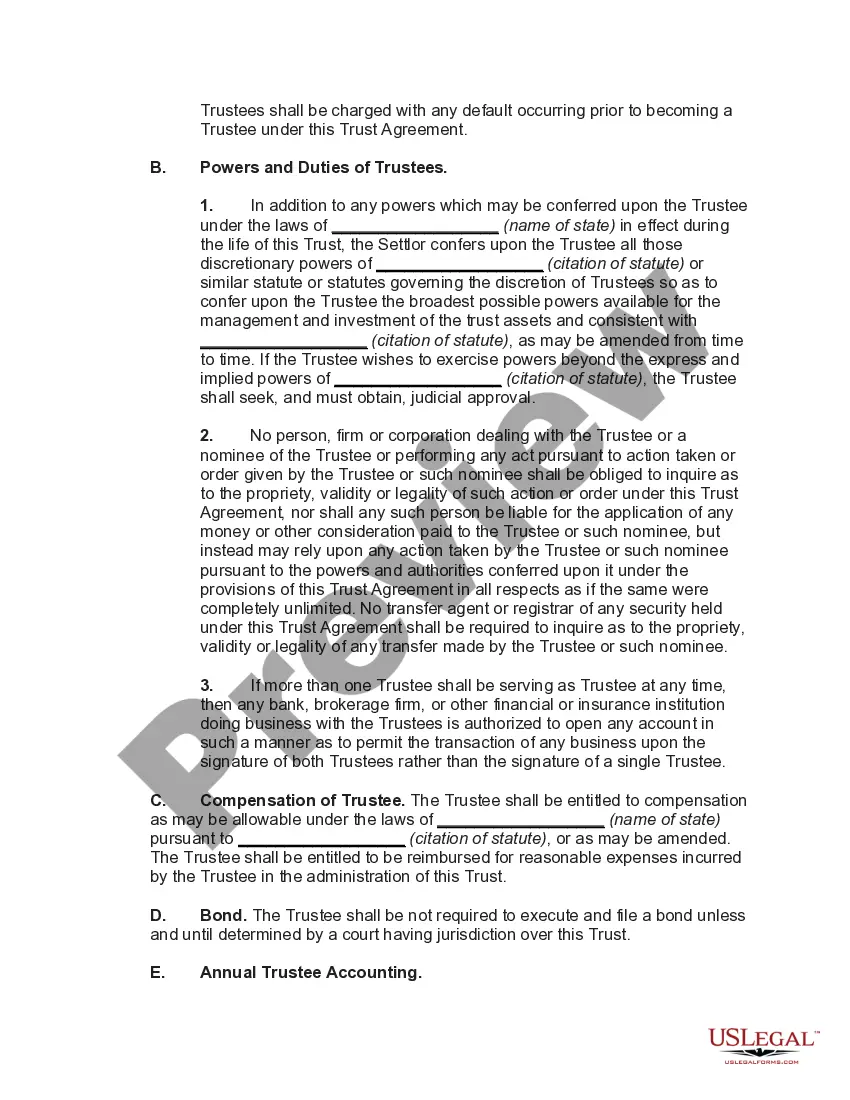
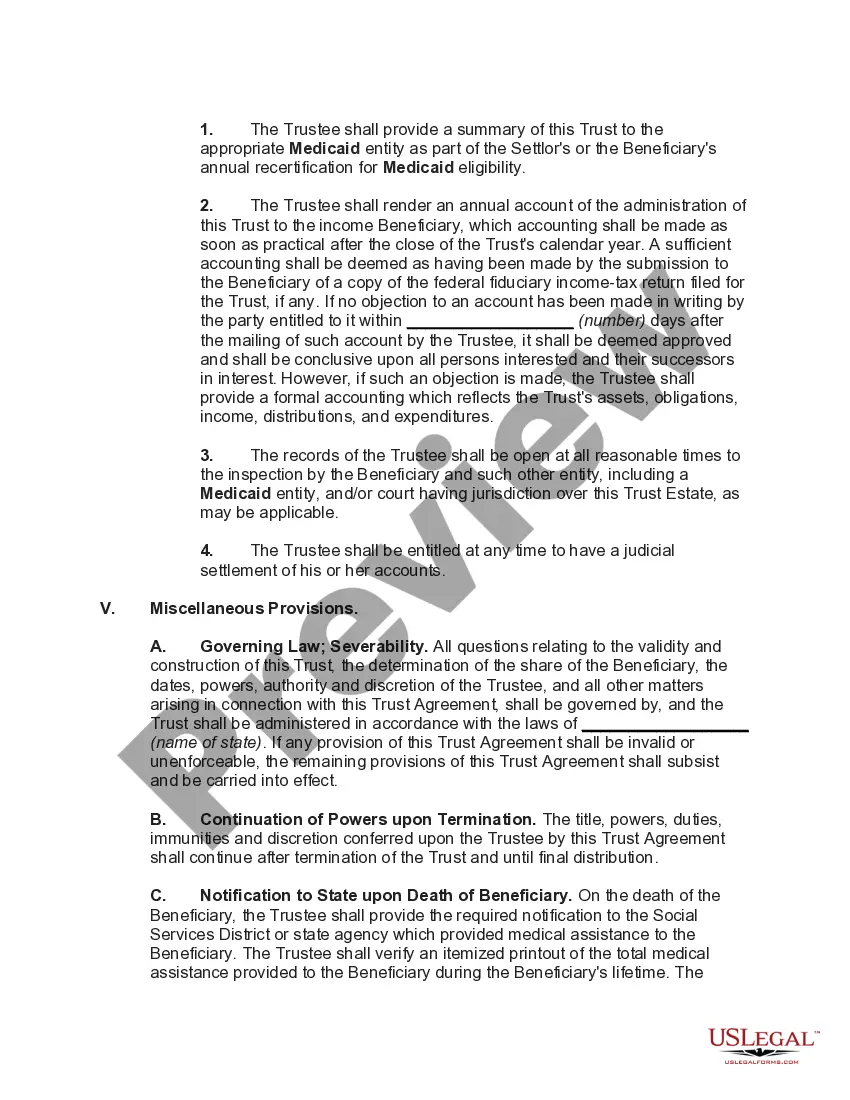
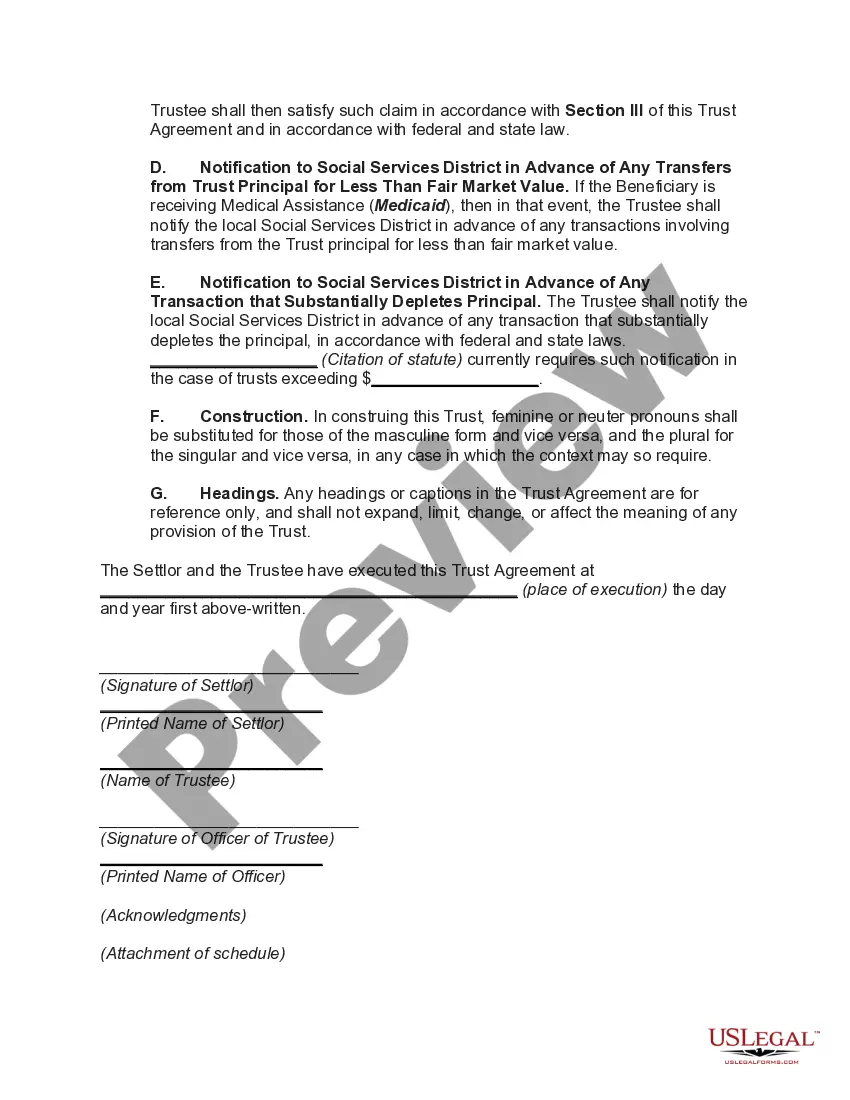
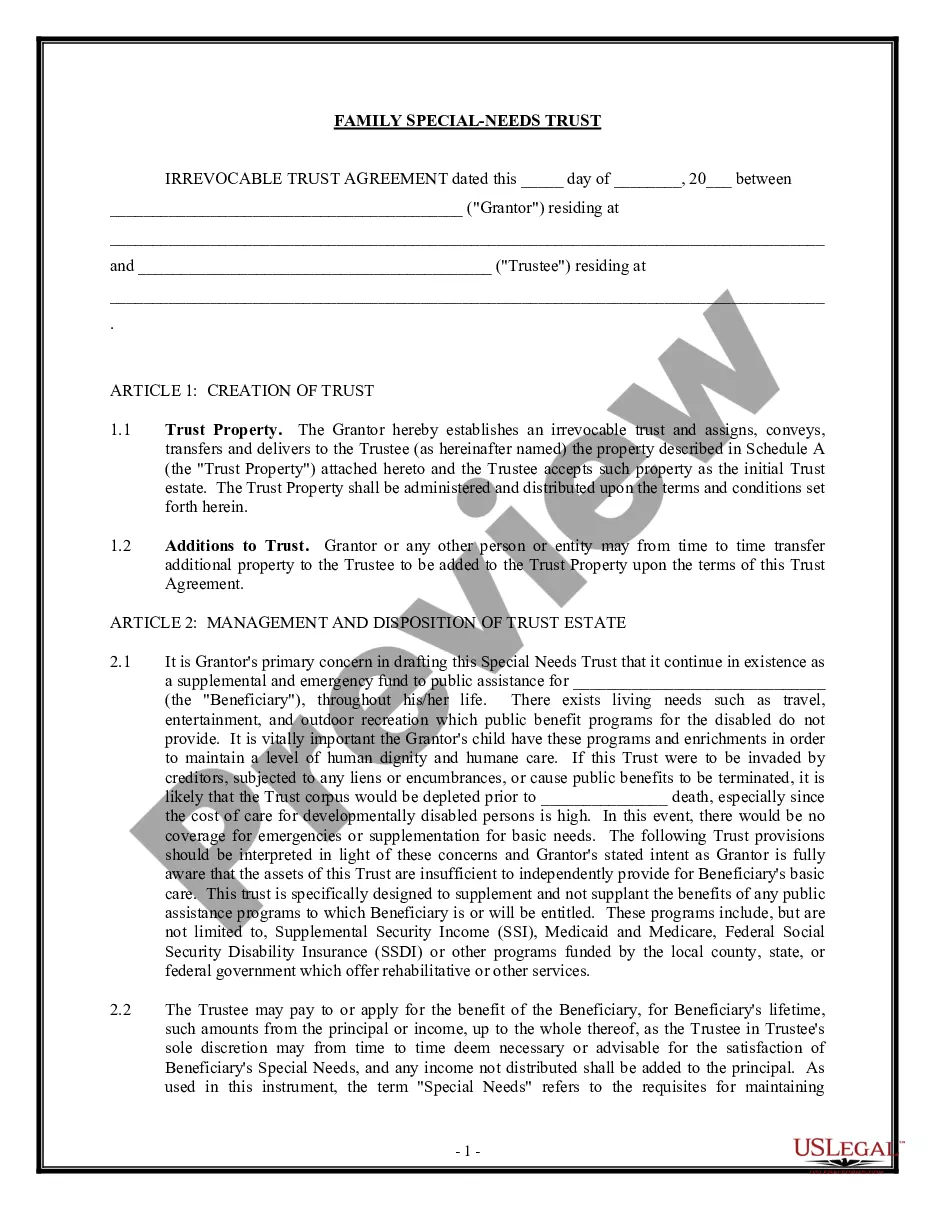



Get your form ready online
Our built-in tools help you complete, sign, share, and store your documents in one place.
Make edits, fill in missing information, and update formatting in US Legal Forms—just like you would in MS Word.
Download a copy, print it, send it by email, or mail it via USPS—whatever works best for your next step.
Sign and collect signatures with our SignNow integration. Send to multiple recipients, set reminders, and more. Go Premium to unlock E-Sign.
If this form requires notarization, complete it online through a secure video call—no need to meet a notary in person or wait for an appointment.
We protect your documents and personal data by following strict security and privacy standards.

Make edits, fill in missing information, and update formatting in US Legal Forms—just like you would in MS Word.

Download a copy, print it, send it by email, or mail it via USPS—whatever works best for your next step.

Sign and collect signatures with our SignNow integration. Send to multiple recipients, set reminders, and more. Go Premium to unlock E-Sign.

If this form requires notarization, complete it online through a secure video call—no need to meet a notary in person or wait for an appointment.

We protect your documents and personal data by following strict security and privacy standards.
Looking for another form?


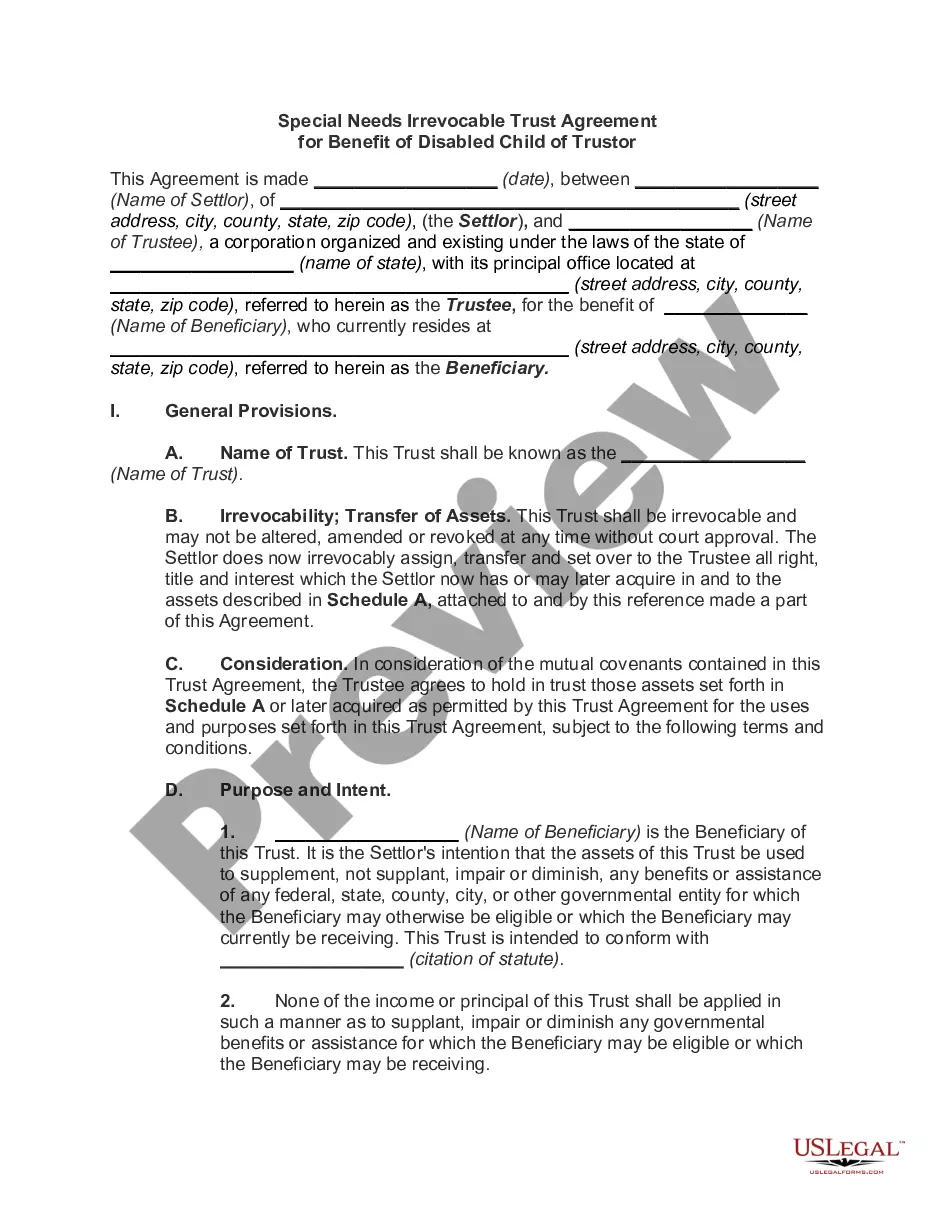
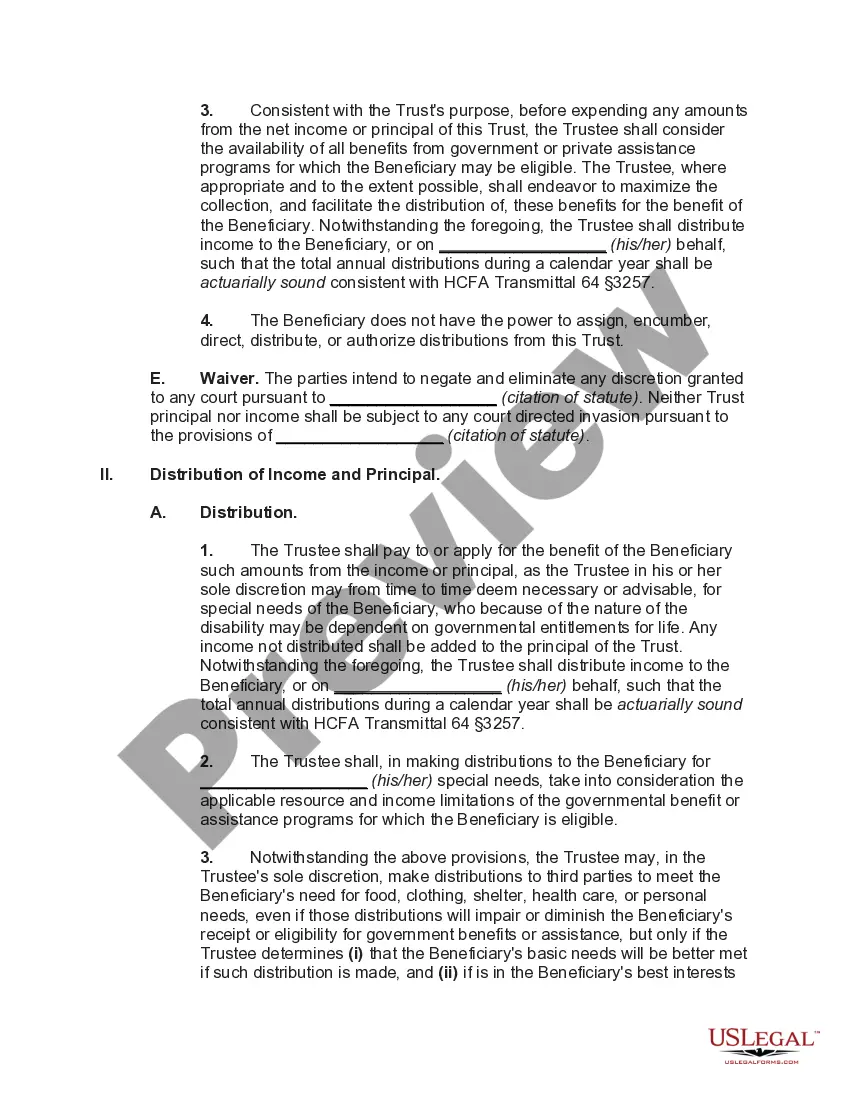
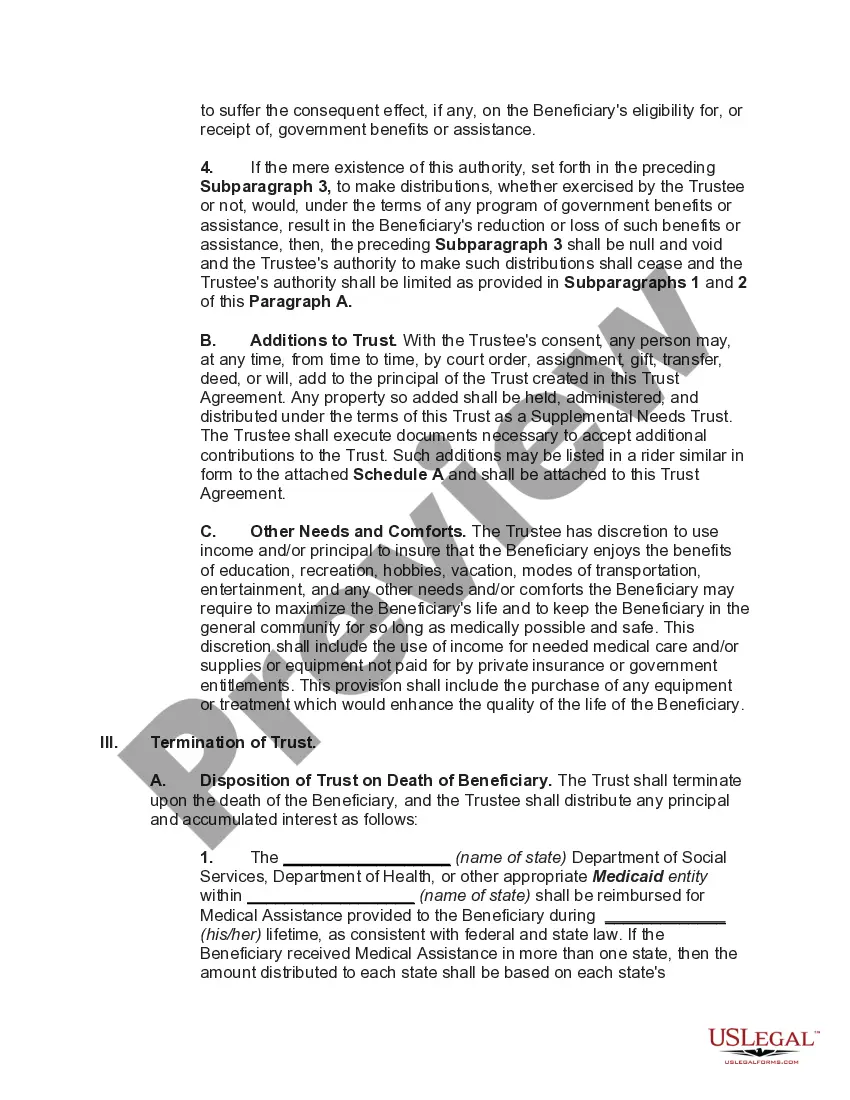
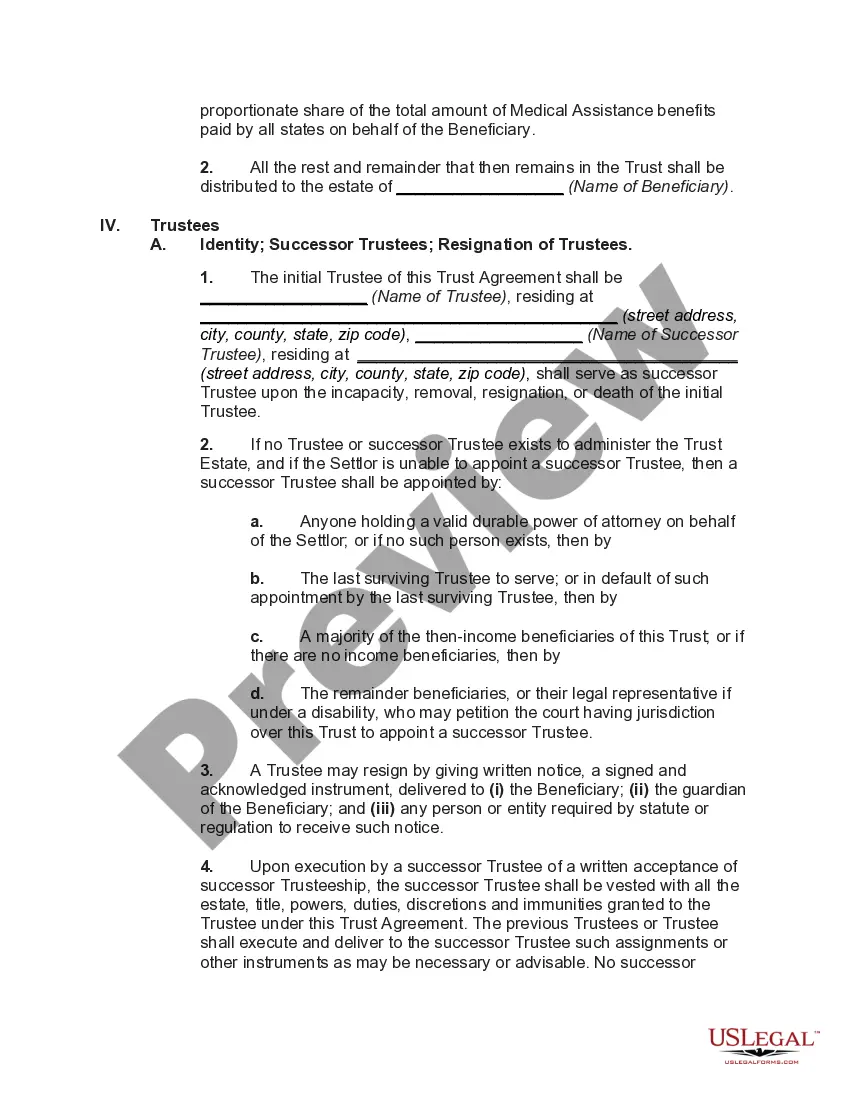
How to fill out Special Needs Irrevocable Trust Agreement For Benefit Of Disabled Child Of Trustor?
- Log in to your US Legal Forms account if you are a returning user. Ensure your subscription is active before proceeding.
- If you're new to the service, begin by reviewing your options. Check the Preview mode and form descriptions to find the relevant special needs trust contract that aligns with your local jurisdiction.
- Should you need a different template, utilize the Search function at the top of the page to find exactly what you require.
- Once you've selected the right document, click on the Buy Now button and choose a subscription plan that fits your needs. Registration is necessary for access.
- Complete your purchase by entering your payment details or using your PayPal account for convenience.
- Download your finalized form and save it for immediate use. You can also access it anytime via the My Forms section of your account.
In conclusion, US Legal Forms simplifies obtaining essential legal documents like a special needs trust contract for schools. With an extensive library and access to expert assistance, you can ensure accuracy and efficiency in your document preparation.
Start your journey with US Legal Forms today and take the first step toward efficiently managing your legal needs.
Form popularity
FAQ
Creating a special needs trust contract for schools independently is possible, but it can be complex. There are specific legal requirements and nuances that you need to understand to ensure compliance and effectiveness. However, platforms like US Legal Forms provide guidance and resources to simplify the process. Utilizing these tools can help you navigate the intricacies involved, ensuring that your trust meets all legal standards and serves its intended purpose.
While a special needs trust contract for schools offers numerous benefits, it does come with some disadvantages. For instance, the setup and management costs can be significant, which may be a burden for some families. Additionally, strict regulations govern how funds can be used, limiting flexibility in spending. It’s crucial to weigh these factors against the potential benefits when considering this option for your child.
A special trustee plays a vital role in managing a special needs trust contract for schools. Their main purpose is to handle the trust's assets and ensure that funds are used according to the beneficiary's needs without jeopardizing their eligibility for government benefits. This role requires knowledge of both legal requirements and the specific needs of the individual, ensuring that the trust operates smoothly and effectively meets its goals.
Setting up a special needs trust requires careful planning and legal guidance. First, identify the beneficiary's needs and goals for the trust. Then, consult with an attorney who specializes in special needs planning to draft a comprehensive trust document. Utilizing a detailed special needs trust contract for schools can provide clarity and direction for future management, ensuring the trust meets your specific requirements.
The best person to appoint as trustee is someone who demonstrates reliability and understanding of the beneficiary’s needs. Often, family members serve well in this role, but it may also be beneficial to consider professionals or corporate trustees who specialize in special needs. By choosing wisely, you can ensure that the special needs trust contract for schools serves its purpose effectively and compassionately.
The beneficial owner of a special needs trust is typically the individual with special needs, who is the primary beneficiary. This person enjoys the benefits of the trust without directly possessing the assets, which helps maintain their eligibility for public assistance programs. Understanding this can help you navigate the intricacies of a special needs trust contract for schools, ensuring that the beneficiary’s needs are prioritized.
Choosing a trustee for a special needs trust requires careful consideration of several factors. Look for someone trustworthy, financially savvy, and capable of making decisions in the best interest of the beneficiary. You might also consider a trustee who has experience with the special needs community. Using a well-structured special needs trust contract for schools can help clarify the roles and responsibilities, ensuring the right choice.
The best trustee for a special needs trust is someone who understands the unique needs of the beneficiary. Ideally, this person should have experience managing finances and be familiar with the applicable laws governing special needs trusts. A corporate trustee can also be a solid choice, as they bring expertise and stability. Remember, selecting the right trustee can greatly influence the effectiveness of your special needs trust contract for schools.
One significant mistake parents often make is failing to clearly define the purpose and terms of the trust. In the context of a special needs trust contract for schools, vague language can lead to confusion about benefits and distributions. Properly outlining the trust's goals and involving qualified professionals can help avoid pitfalls and ensure the child receives the support they need.
The downside of placing assets in a trust can include loss of direct control over those assets. When families establish a special needs trust contract for schools, they may have to relinquish certain decisions to appointed trustees. Additionally, there may be tax implications or restrictions on how trust funds can be utilized, which can limit financial flexibility.