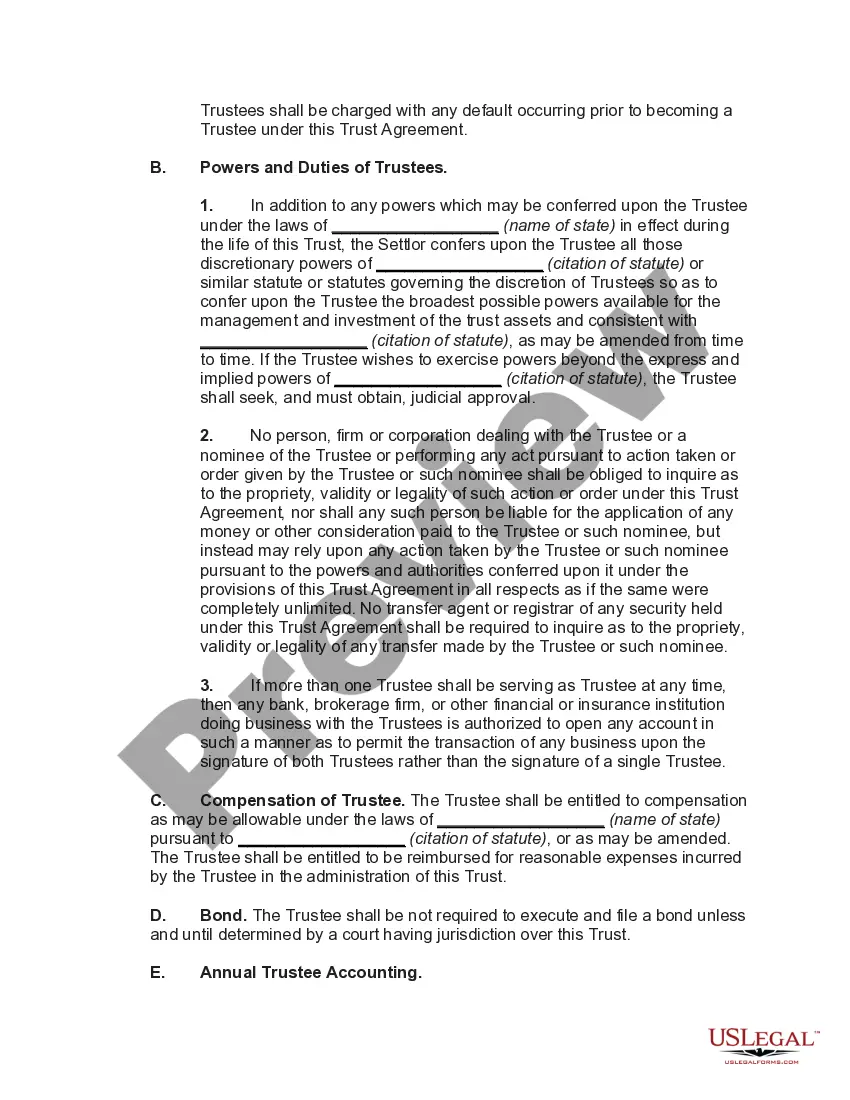
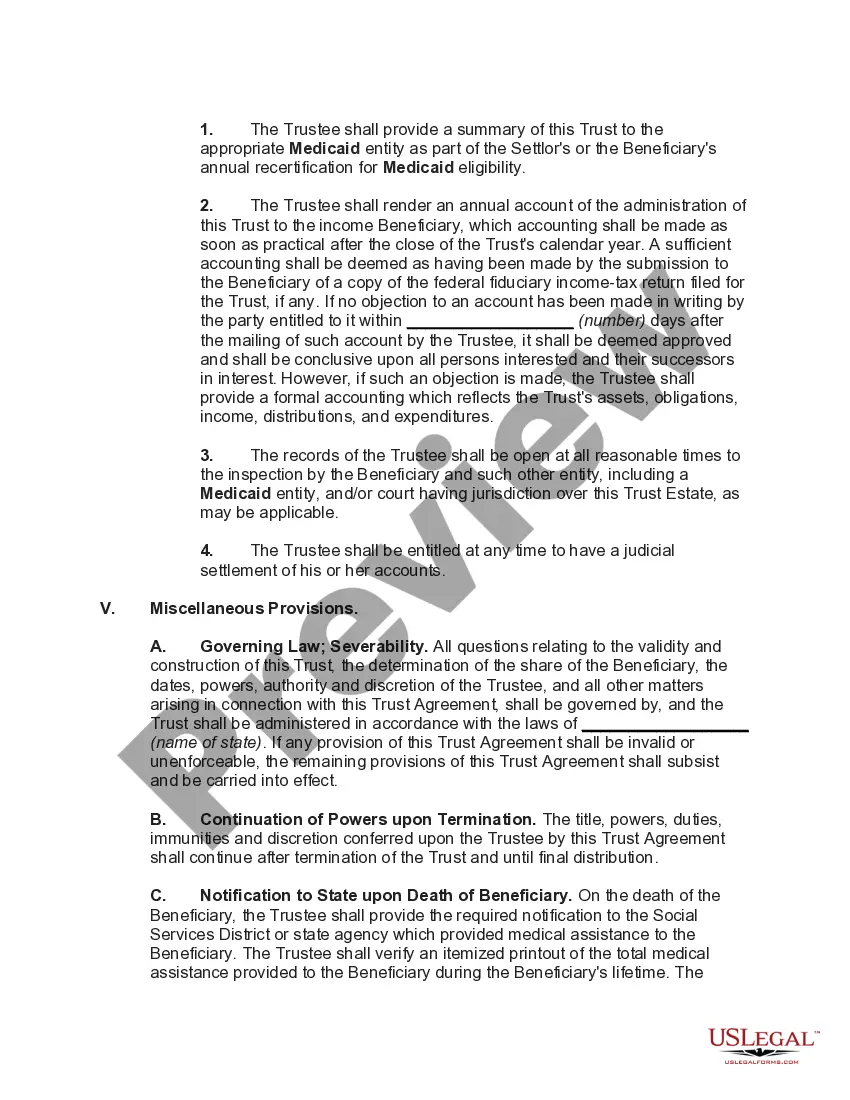
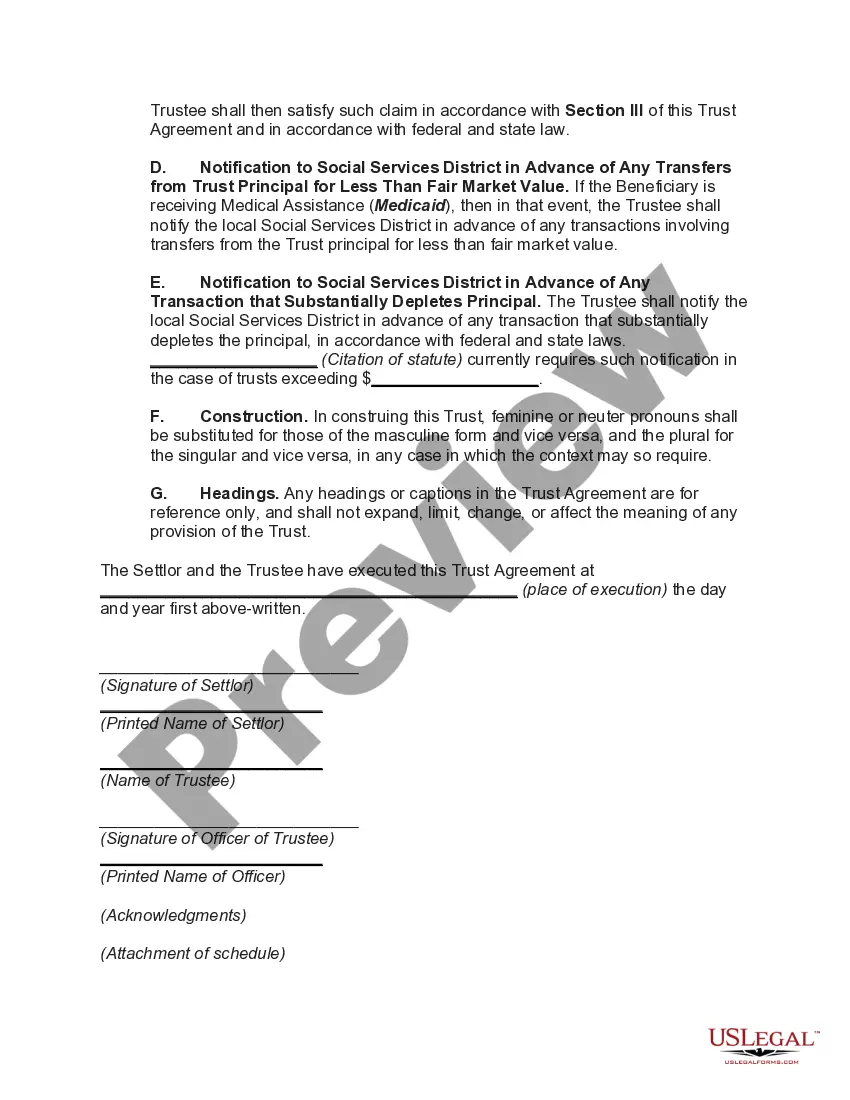
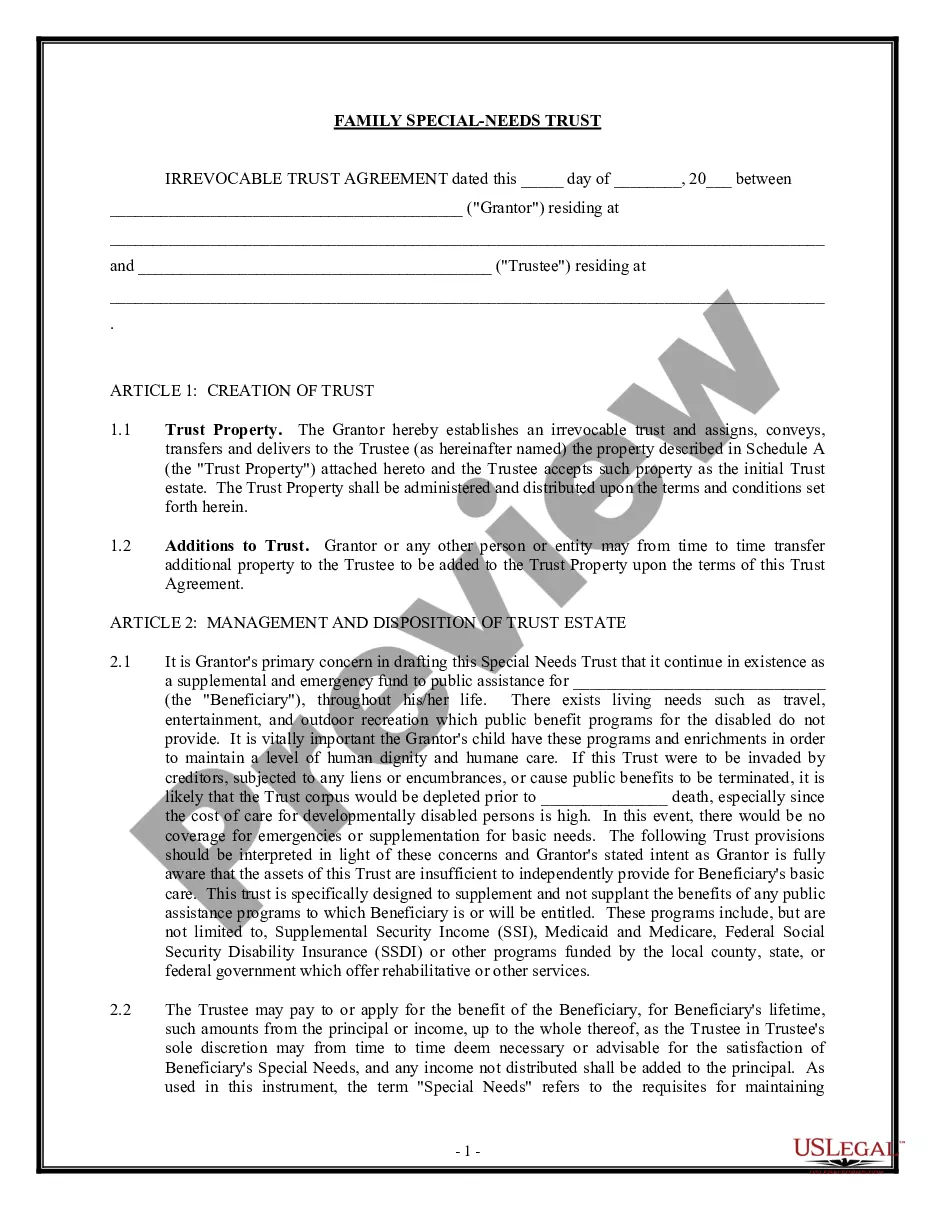
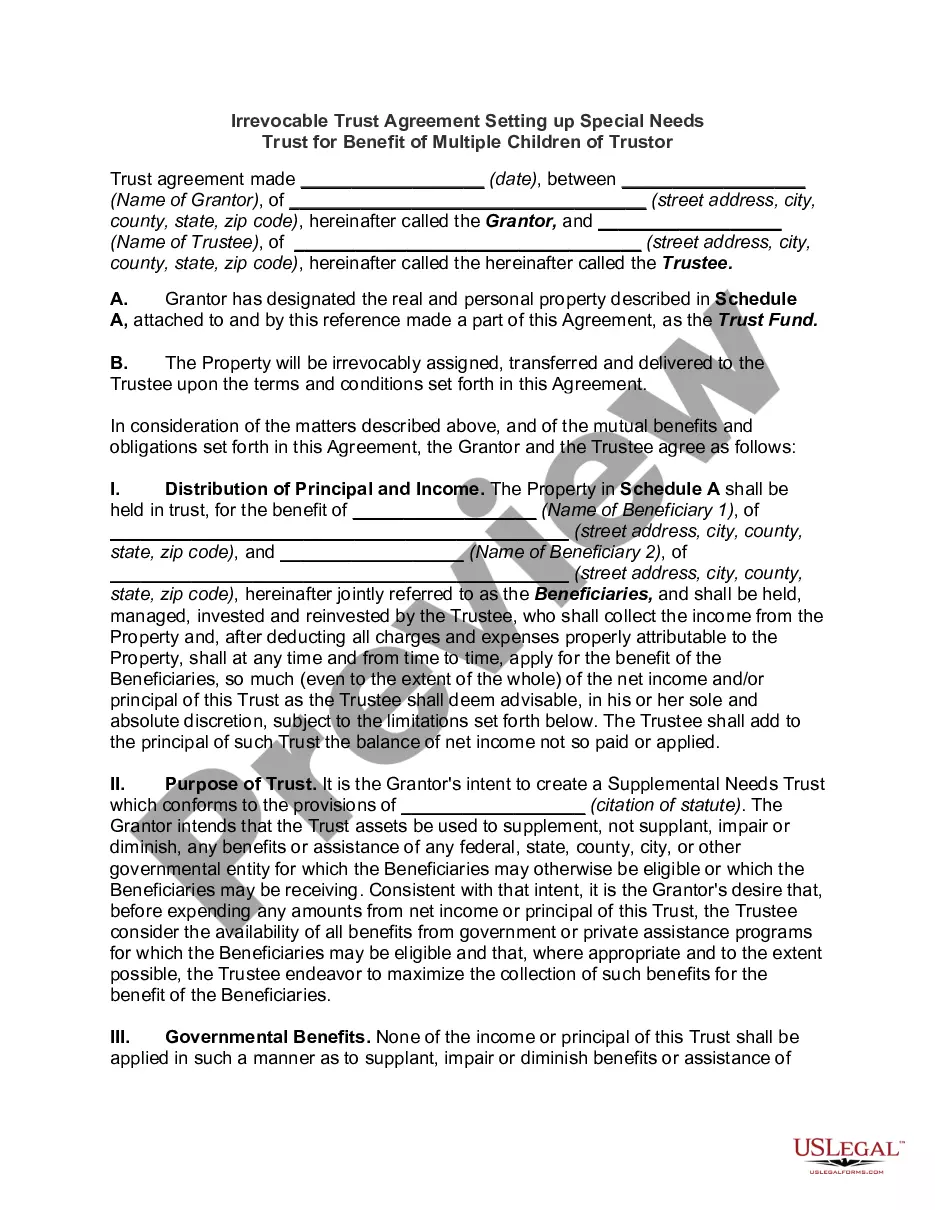
Special Needs Irrevocable Trust For Child
Description


Get your form ready online
Our built-in tools help you complete, sign, share, and store your documents in one place.
Make edits, fill in missing information, and update formatting in US Legal Forms—just like you would in MS Word.
Download a copy, print it, send it by email, or mail it via USPS—whatever works best for your next step.
Sign and collect signatures with our SignNow integration. Send to multiple recipients, set reminders, and more. Go Premium to unlock E-Sign.
If this form requires notarization, complete it online through a secure video call—no need to meet a notary in person or wait for an appointment.
We protect your documents and personal data by following strict security and privacy standards.

Make edits, fill in missing information, and update formatting in US Legal Forms—just like you would in MS Word.

Download a copy, print it, send it by email, or mail it via USPS—whatever works best for your next step.

Sign and collect signatures with our SignNow integration. Send to multiple recipients, set reminders, and more. Go Premium to unlock E-Sign.

If this form requires notarization, complete it online through a secure video call—no need to meet a notary in person or wait for an appointment.

We protect your documents and personal data by following strict security and privacy standards.
Looking for another form?
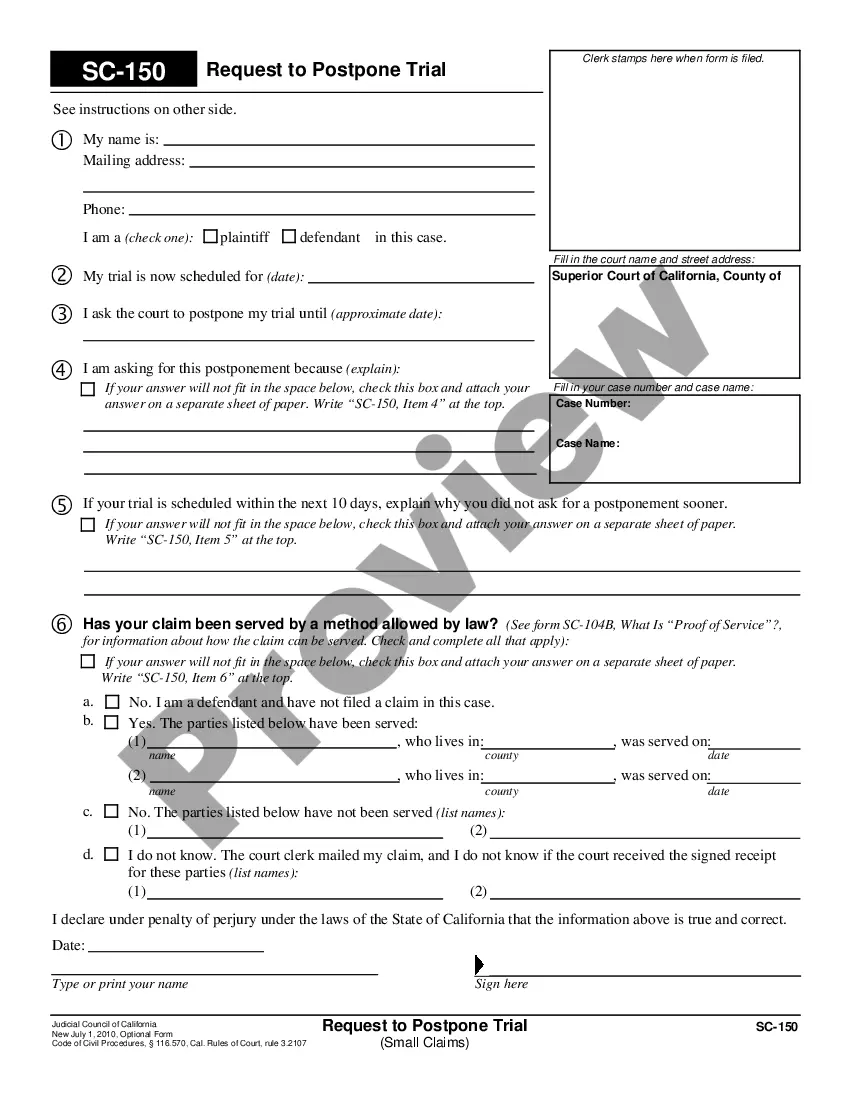


How to fill out Special Needs Irrevocable Trust Agreement For Benefit Of Disabled Child Of Trustor?
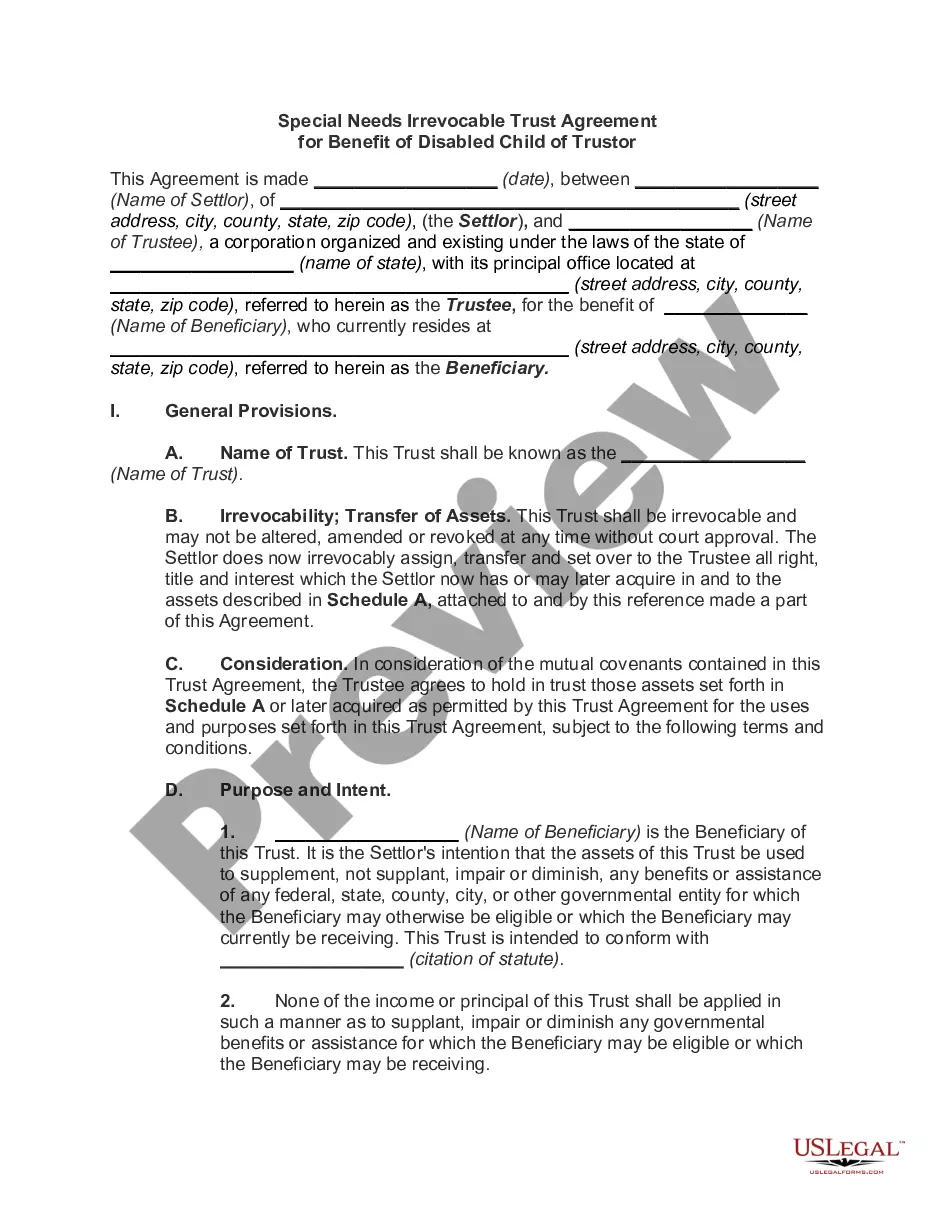
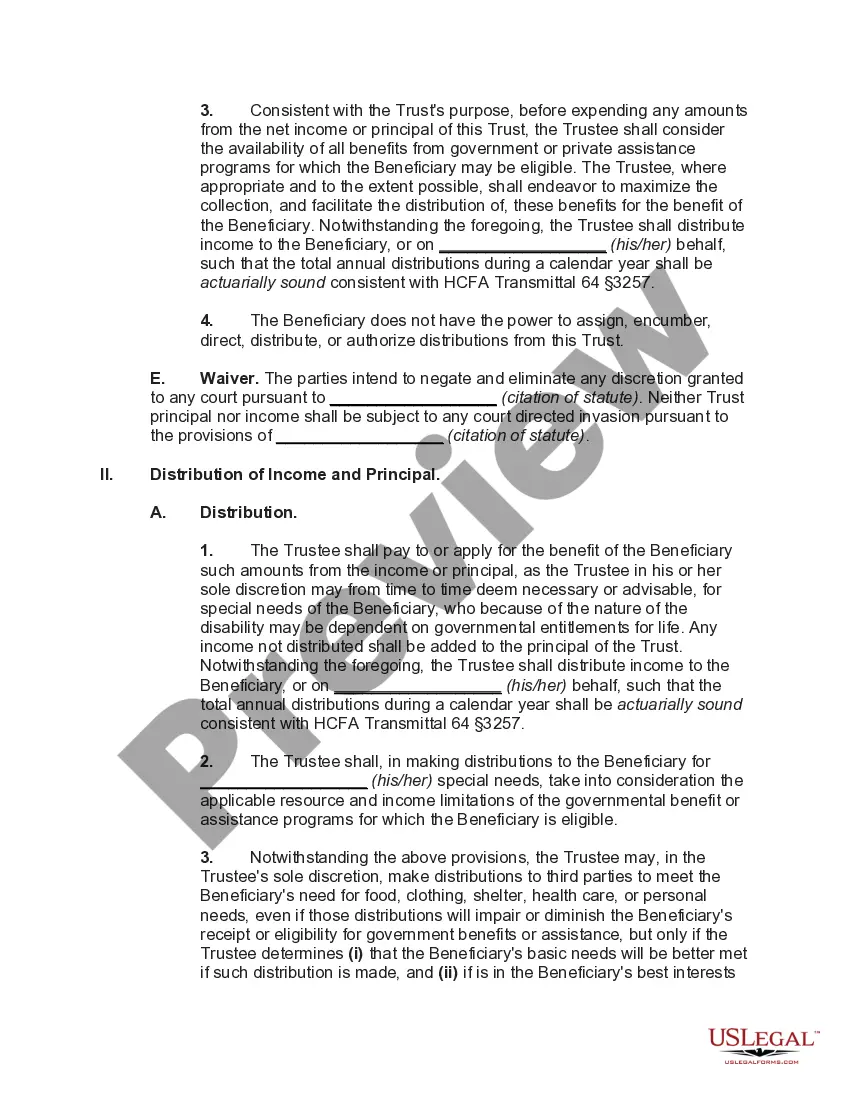
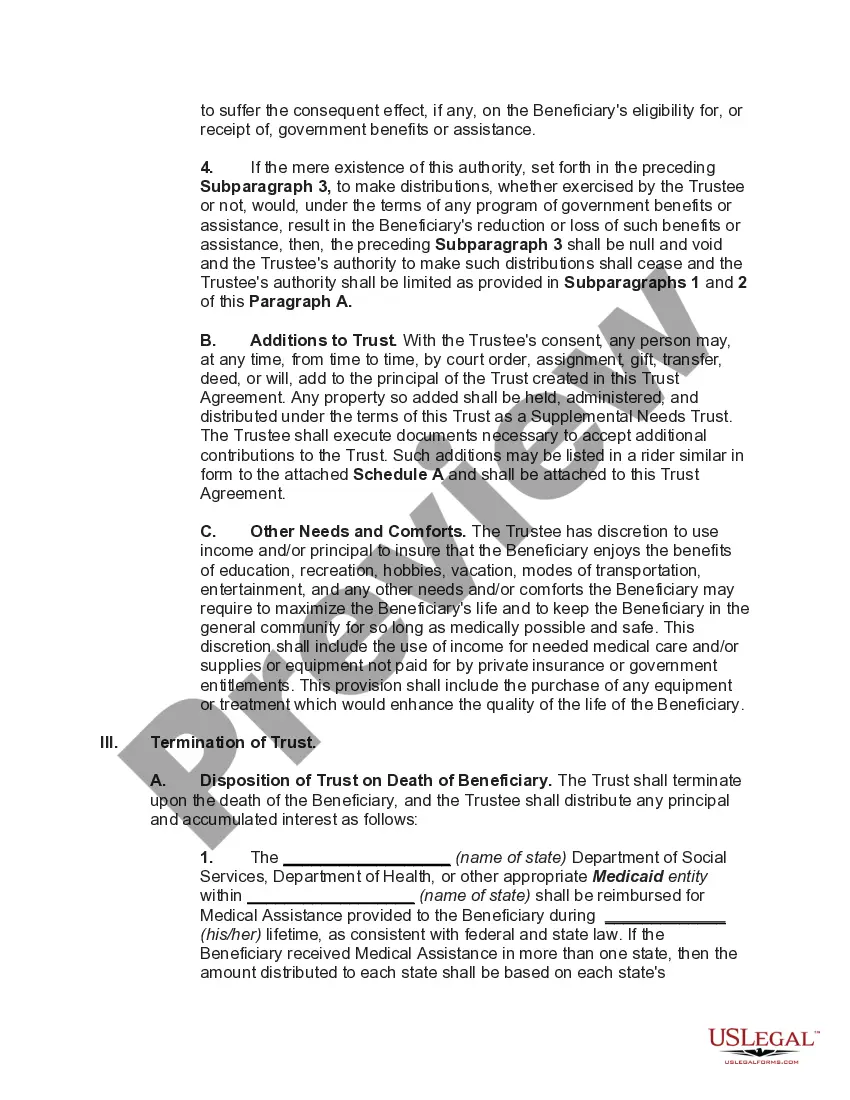
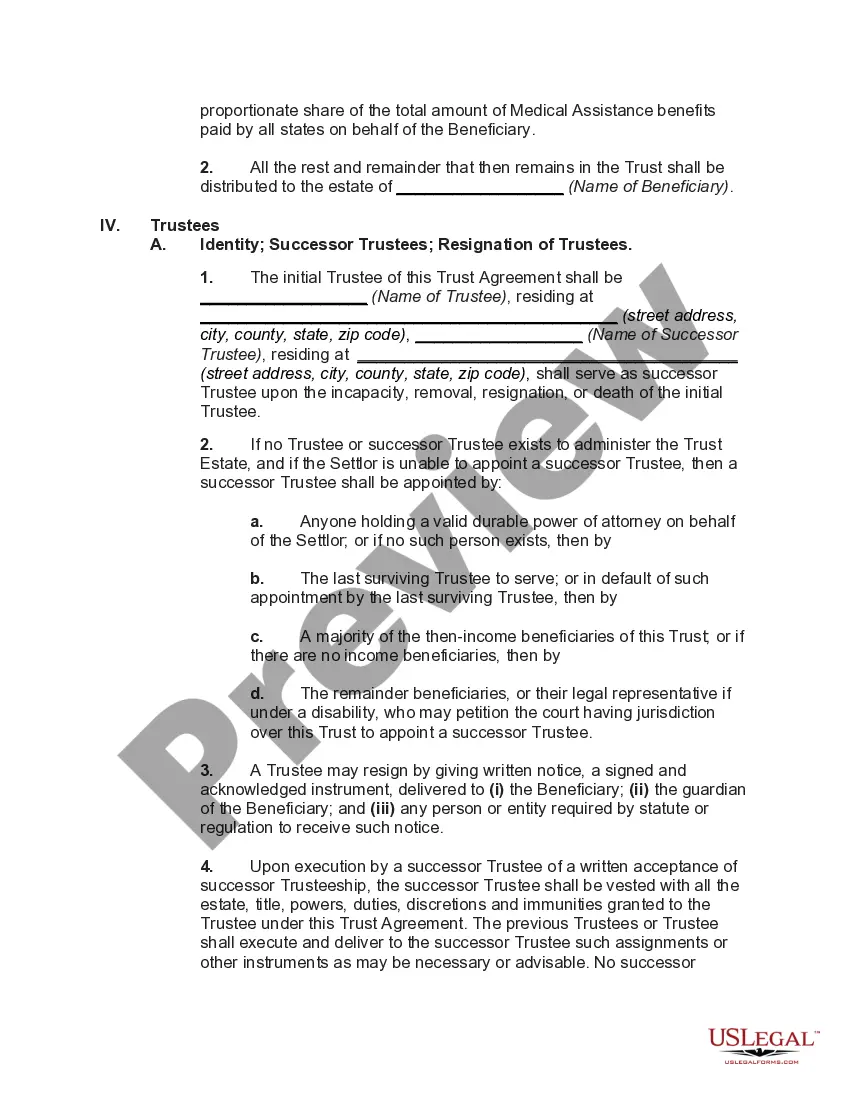
The Special Needs Irrevocable Trust For Child displayed on this site is a versatile official template created by expert attorneys in line with national and local regulations.
For over 25 years, US Legal Forms has supplied individuals, organizations, and lawyers with more than 85,000 authenticated, state-specific documents for any professional and personal circumstance. It’s the fastest, simplest, and most trustworthy method to secure the paperwork you require, as the service ensures the utmost level of data protection and anti-malware measures.
Subscribe to US Legal Forms to access verified legal templates for every life situation as needed.
- Search for the document you require and review it.
- Sign up and Log In.
- Acquire the editable template.
- Complete and sign the document.
- Download your forms again.
Form popularity
FAQ
Special Needs Trust (SNT): What It Is And How It Works. Cassidy HortonContributor. Cassidy Horton is a finance writer who specializes in insurance and banking.
A special needs trust (SNT) is a trust that will preserve the beneficiary's eligibility for needs-based government benefits such as Medicaid and Supplemental Security Income (SSI). Because the beneficiary does not own the assets in the trust, he or she can remain eligible for benefit programs that have an asset limit.
A typical trust used in special needs planning is the Special Needs (or the Supplemental Needs) Trust. This is a trust you, as parents, establish that will allow your child with special needs to receive his/her share of your estate. Key actions: Be sure the trust is properly drafted.
The income beneficiary is the surviving spouse who wants you to make significant distributions to him or her and invest trust assets in his or her business. The remainder beneficiaries want less income to go the surviving spouse and do not want a risky investment to be made in the business of the income beneficiary.
You can set up a Henson Trust while you are still alive with an inter vivos trust agreement, or you can put a Henson Trust in your will, to be set up after you die. The current law says ODSP cannot count the money in a Henson Trust when they do the asset test to decide if your relative is eligible for ODSP.