Irrevocable Trust Trustor Withholding
Description

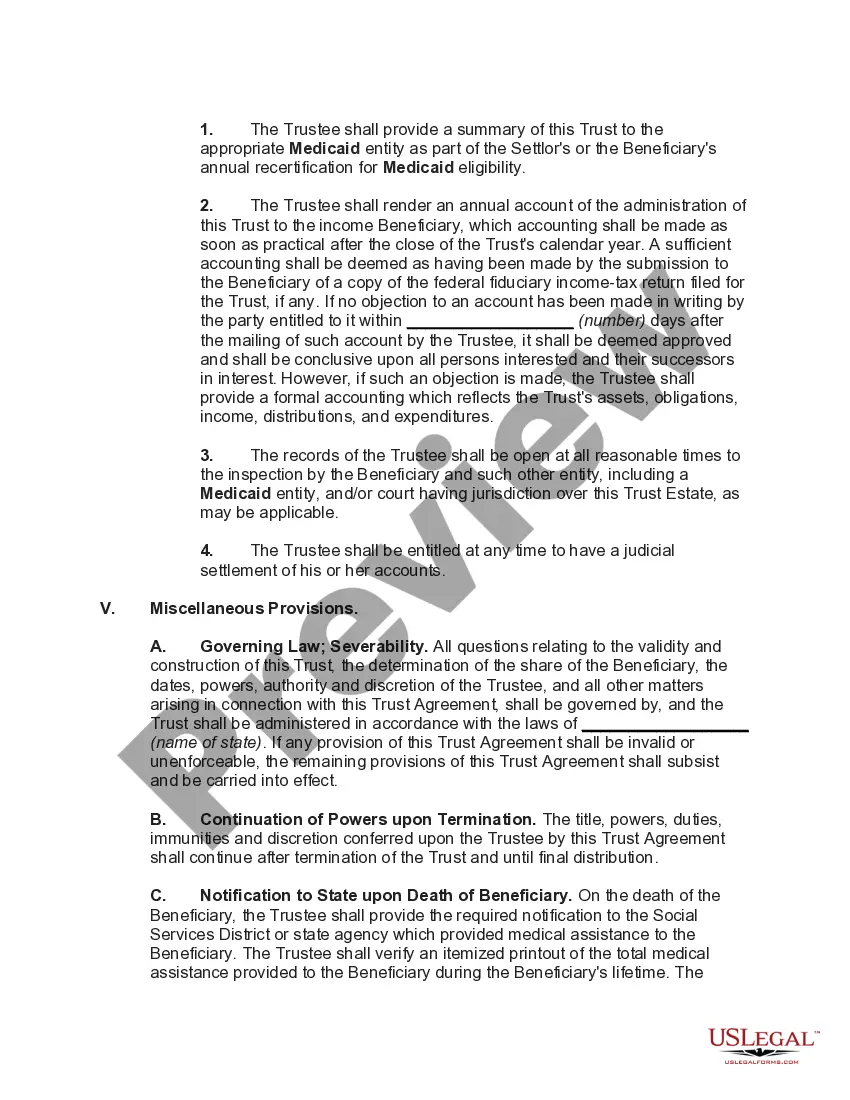
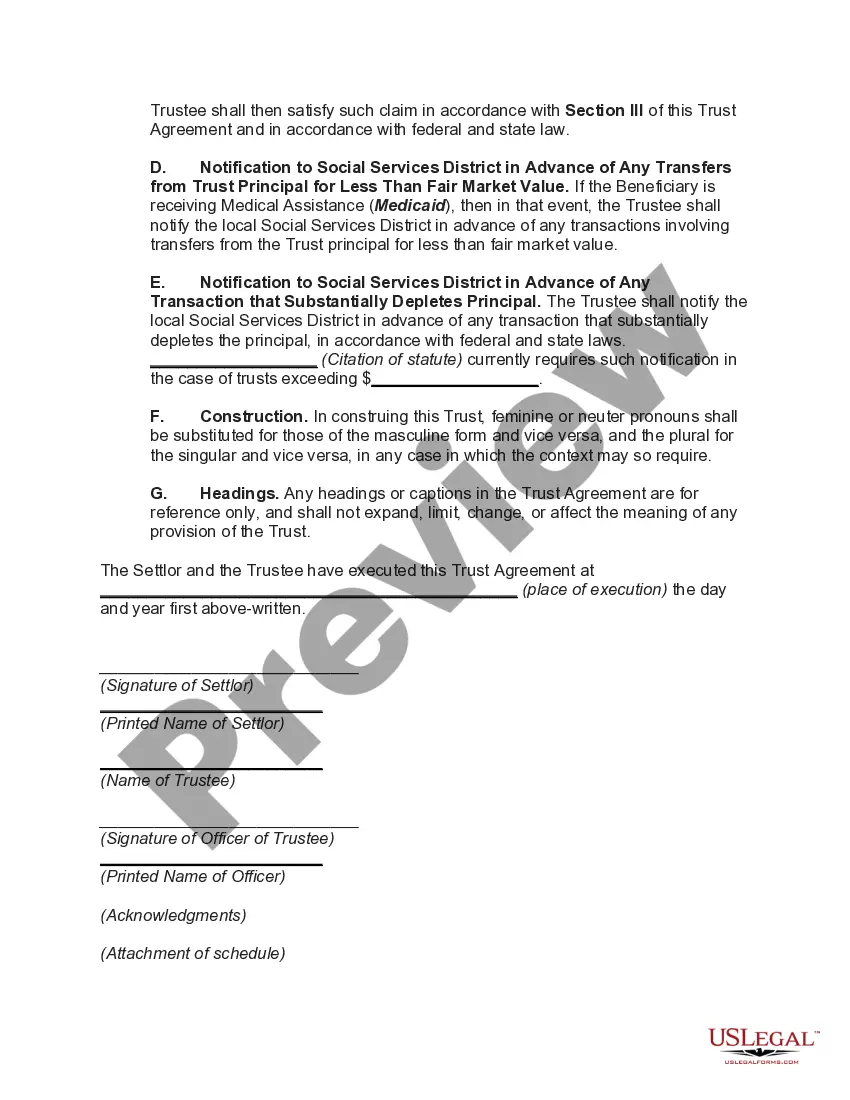

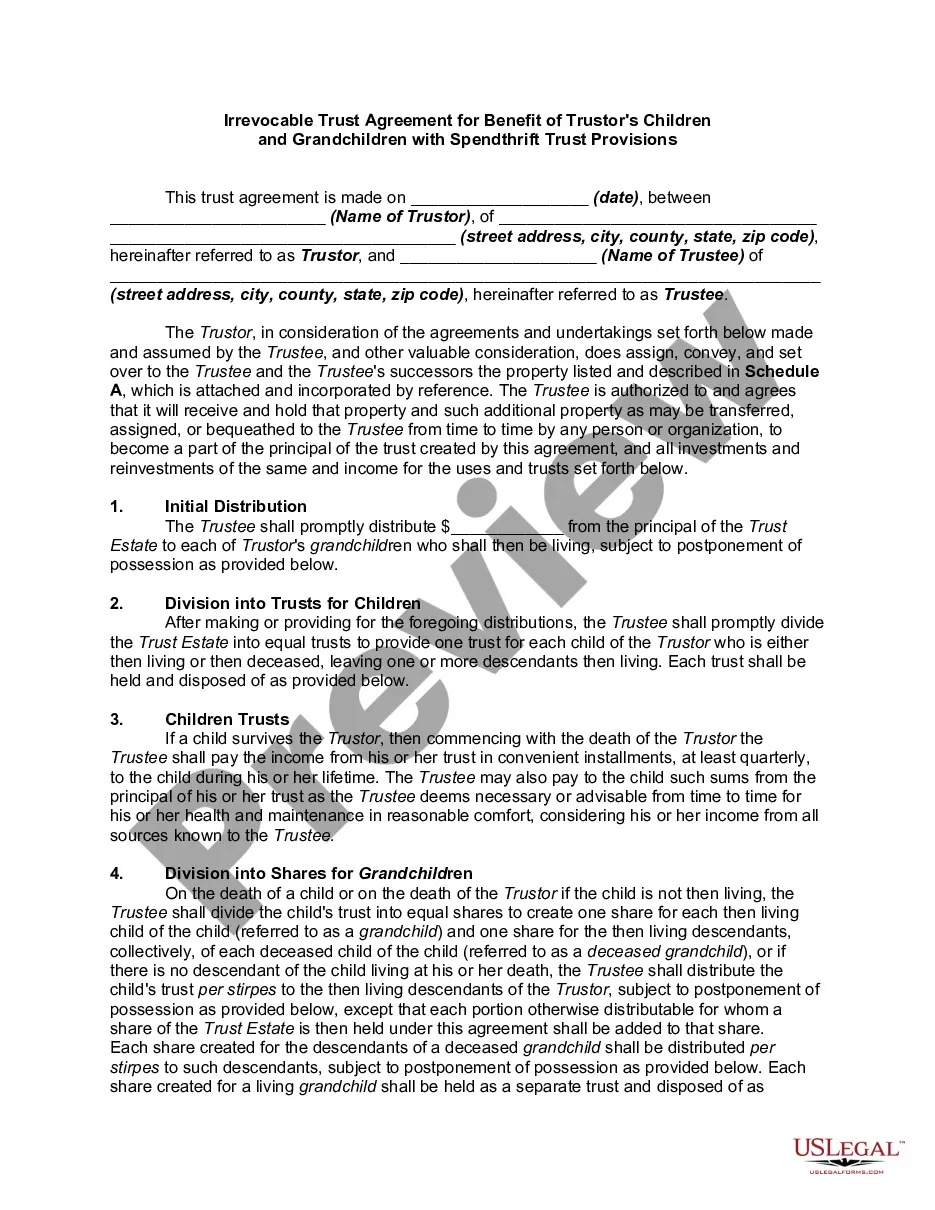
Get your form ready online
Our built-in tools help you complete, sign, share, and store your documents in one place.
Make edits, fill in missing information, and update formatting in US Legal Forms—just like you would in MS Word.
Download a copy, print it, send it by email, or mail it via USPS—whatever works best for your next step.
Sign and collect signatures with our SignNow integration. Send to multiple recipients, set reminders, and more. Go Premium to unlock E-Sign.
If this form requires notarization, complete it online through a secure video call—no need to meet a notary in person or wait for an appointment.
We protect your documents and personal data by following strict security and privacy standards.

Make edits, fill in missing information, and update formatting in US Legal Forms—just like you would in MS Word.

Download a copy, print it, send it by email, or mail it via USPS—whatever works best for your next step.

Sign and collect signatures with our SignNow integration. Send to multiple recipients, set reminders, and more. Go Premium to unlock E-Sign.

If this form requires notarization, complete it online through a secure video call—no need to meet a notary in person or wait for an appointment.

We protect your documents and personal data by following strict security and privacy standards.
Looking for another form?






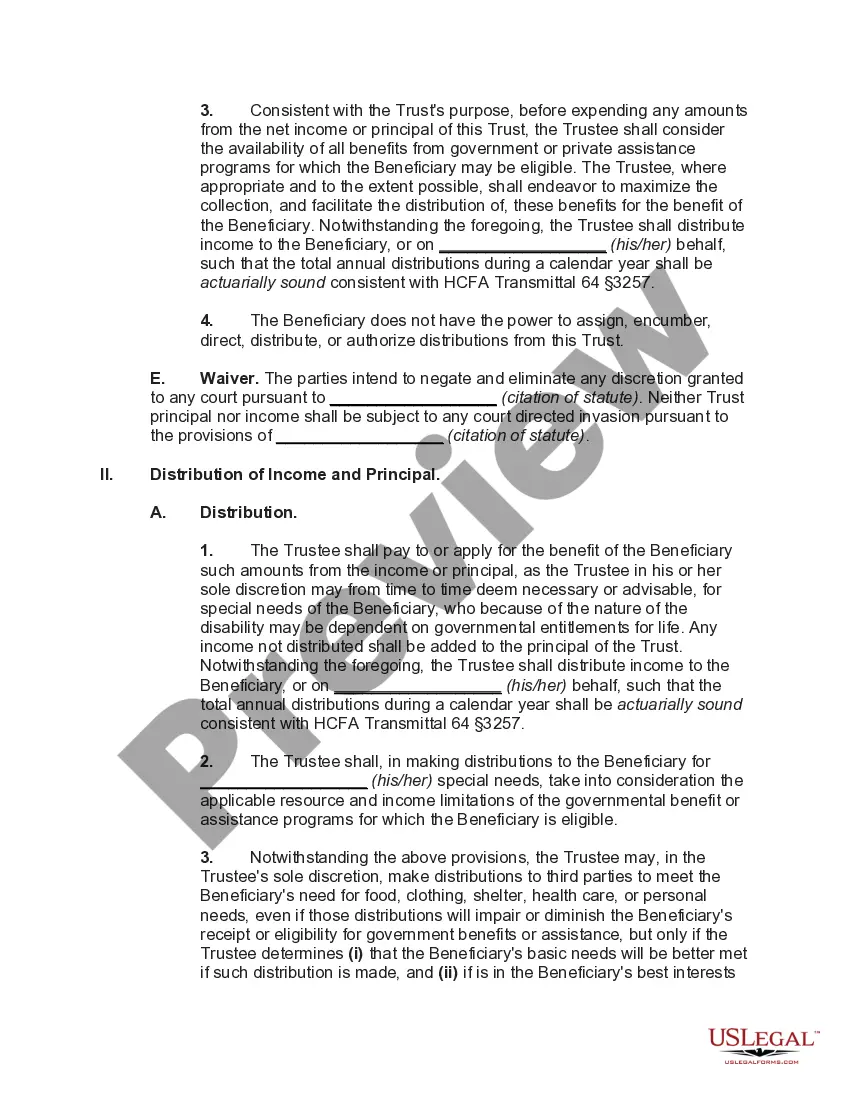
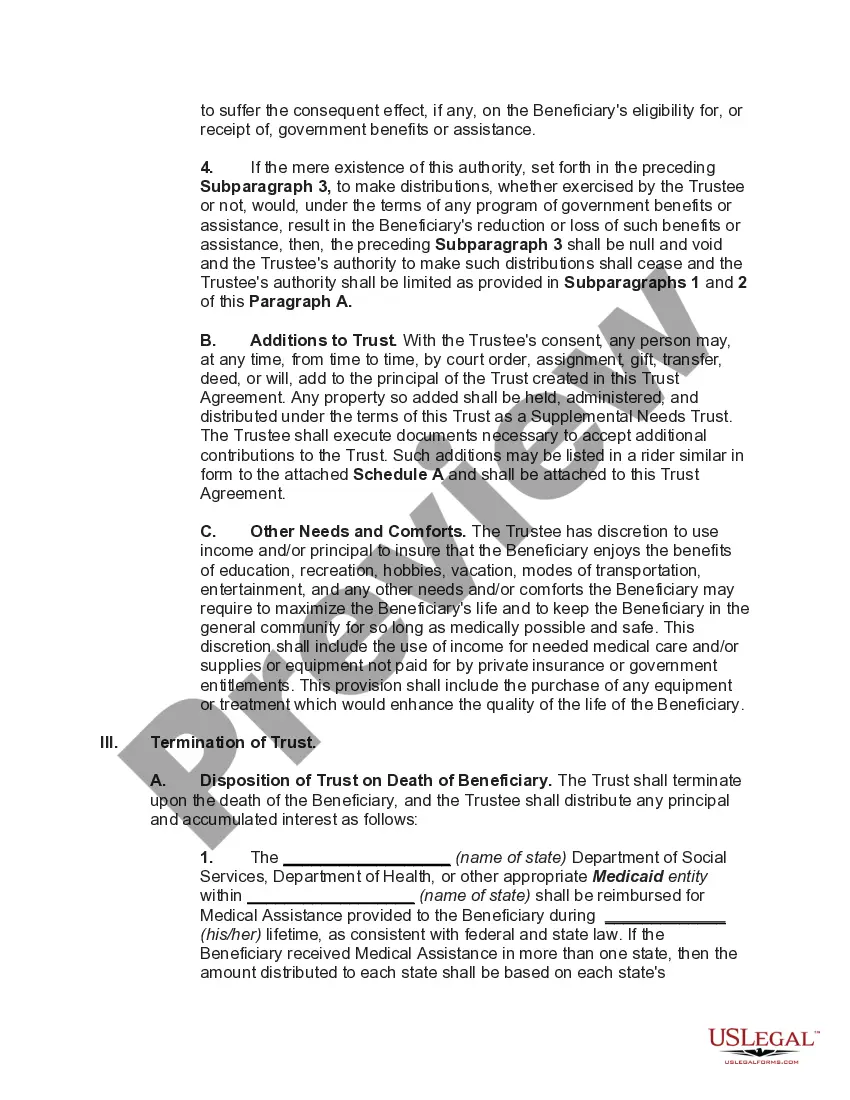
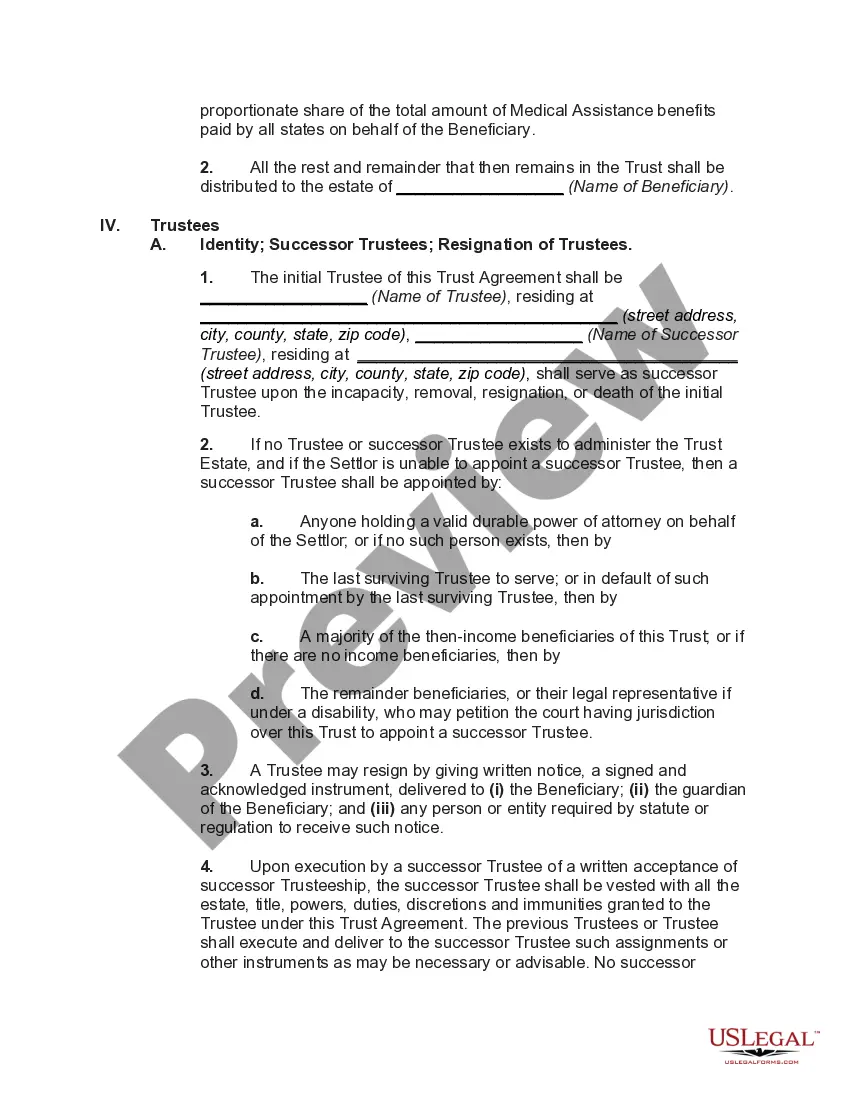
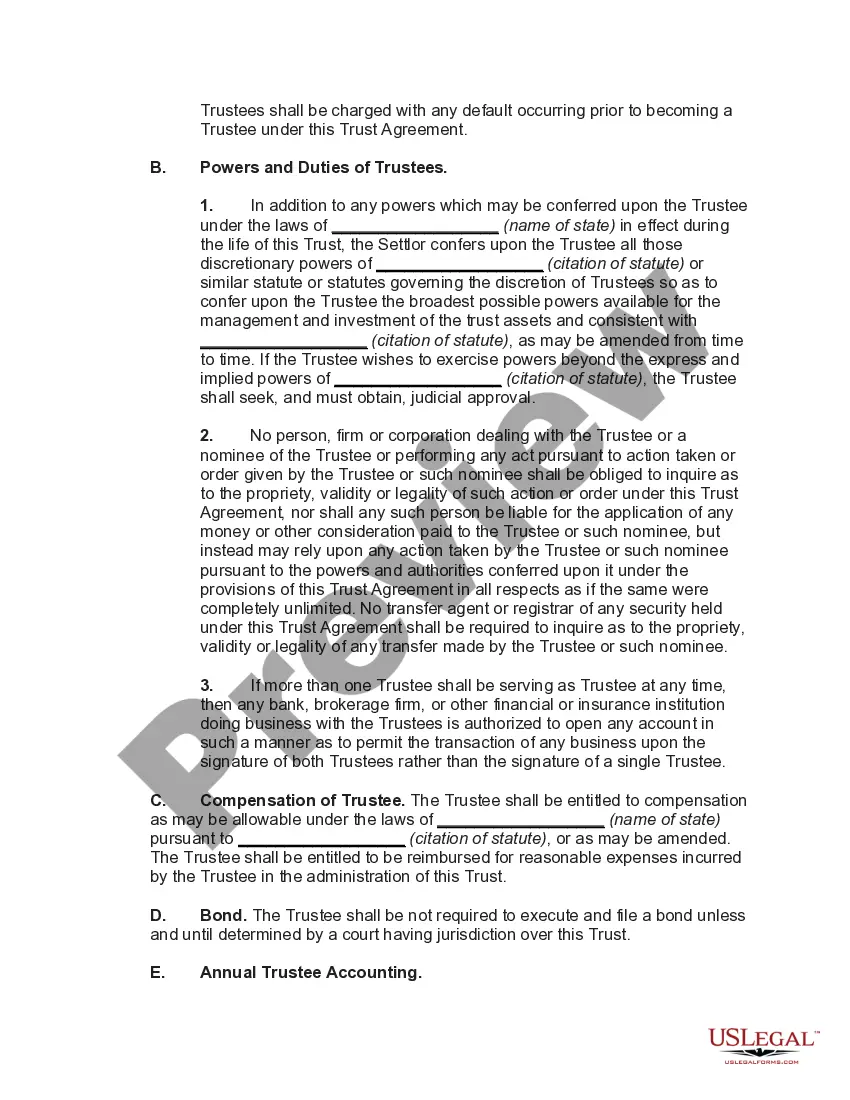
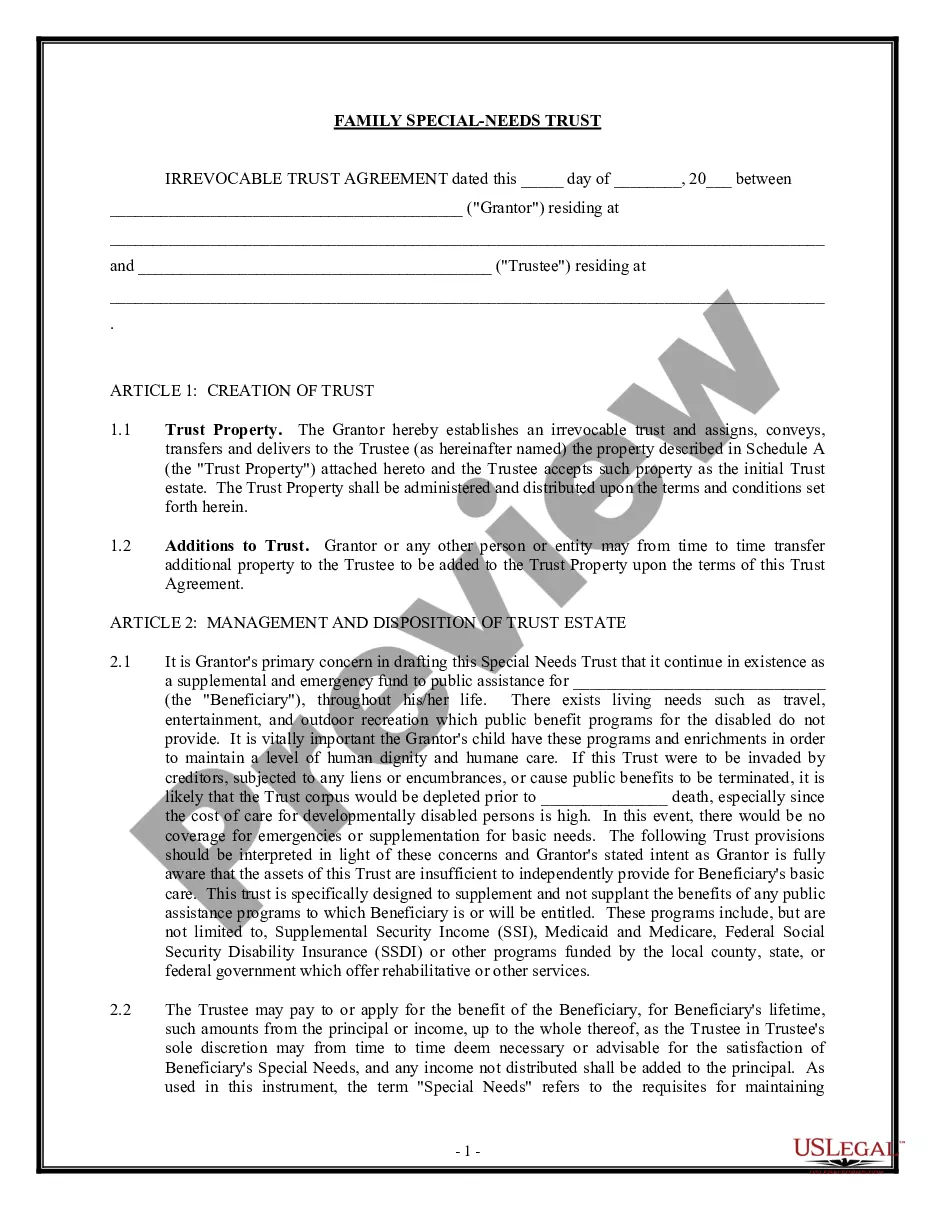
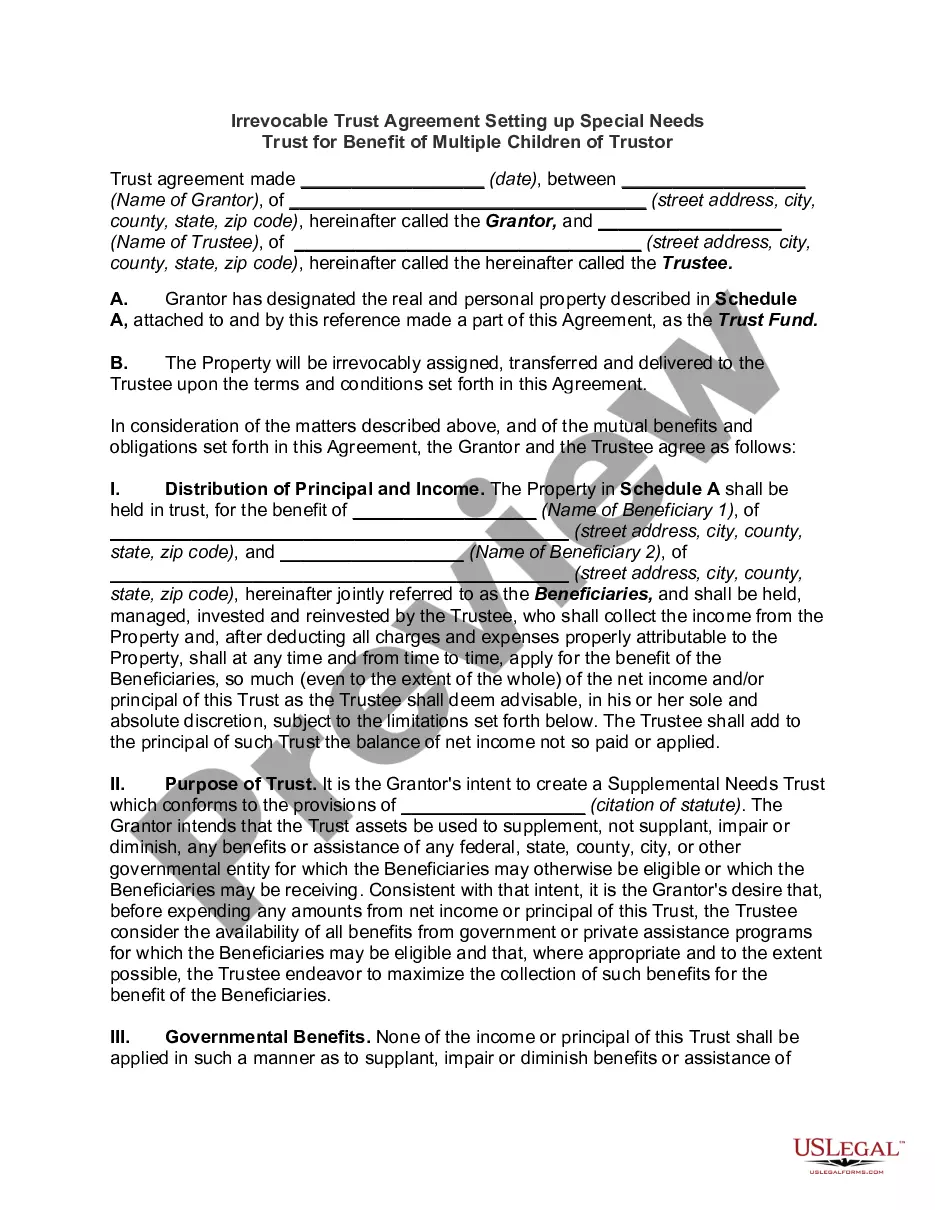
How to fill out Special Needs Irrevocable Trust Agreement For Benefit Of Disabled Child Of Trustor?
- Access your US Legal Forms account or create a new one if you're a first-time user.
- Review the Preview mode and form description carefully to ensure it meets your local jurisdiction requirements.
- Utilize the Search tab to find another form if the current one does not meet your needs.
- Select the preferred subscription plan by clicking the Buy Now button.
- Enter payment information via credit card or PayPal to complete your purchase.
- Download the completed form and save it on your device for easy access anytime through the My Documents section.
By relying on US Legal Forms, you benefit from an extensive collection of over 85,000 legal forms, making it easy to find precisely what you need. Our service not only provides robust forms but also access to premium experts for guidance, ensuring your documents are legally compliant.
Take control of your legal needs today! Visit US Legal Forms to start your journey toward effortlessly managing your irrevocable trust.
Form popularity
FAQ
For an irrevocable trust, the trust itself is generally responsible for filing its own tax returns and paying taxes on any income it generates. The trust may need to obtain a separate tax identification number and file IRS Form 1041 annually. However, distributions made to beneficiaries may also affect tax obligations. Therefore, understanding irrevocable trust trustor withholding is essential in planning for tax liabilities.
An irrevocable trust can potentially shield assets from being counted for Medicaid eligibility when seeking nursing home care. Since the trust assets are no longer owned by the trustor, they may not be considered available resources. However, the details can vary by state and individual circumstances, so it is vital to consult with professionals. Using platforms like uslegalforms can help you create a compliant and effective irrevocable trust.
When the trustor of an irrevocable trust passes away, the trust typically continues to exist and is administered according to its terms. The assets held within the trust are transferred to the beneficiaries named in the trust document, bypassing the probate process. This can provide a smooth transition of assets while ensuring that the irrevocable trust trustor withholding issues are managed effectively. Always consult with a legal expert to understand the implications fully.
The 5 year rule for an irrevocable trust is crucial for understanding how your assets are treated regarding Medicaid eligibility. If you transfer assets into an irrevocable trust, they are usually considered unavailable for five years. This rule helps prevent individuals from quickly transferring assets to qualify for benefits. Therefore, it's essential to plan ahead and structure your trust wisely, especially with the implications for irrevocable trust trustor withholding.
In an irrevocable trust, the trust itself typically pays taxes on its income. The trustor often faces irrevocable trust trustor withholding, which can mean reduced personal tax liabilities. However, if the income is distributed to beneficiaries, they bear the tax responsibility for that income. It is wise to consult a tax professional to navigate these complexities.
One downside of an irrevocable trust is that, once established, you cannot easily change or terminate it. This means the trustor loses control over the assets placed in the trust. Additionally, the irrevocable trust trustor withholding often affects access to the assets and may complicate financial situations later. It's important to weigh these factors carefully before setting up an irrevocable trust.
Yes, an irrevocable trust typically requires a new Employer Identification Number (EIN). This requirement arises because the trust is treated as a separate entity for tax purposes. Understanding the implications of irrevocable trust trustor withholding is crucial to ensure compliance and proper management of the trust.
Filling out a W-9 for a trust requires you to enter the trust's legal name and its taxpayer identification number. The trustor must sign the form, ensuring that all details align with the irrevocable trust's structure. Familiarizing yourself with the irrevocable trust trustor withholding regulations will help make the process smoother.
To fill out an irrevocable trust, you must provide the names of the trustor and the beneficiaries, along with the specific terms of the trust. It's vital to include the management structure and distribution rules clearly. Consider using the USLegalForms platform to access easy-to-follow templates designed for your irrevocable trust needs.
Filing taxes for an irrevocable trust involves completing Form 1041, as the trust is considered a separate tax entity. You will also need to report any income generated by the trust. Understanding irrevocable trust trustor withholding is essential, as the trust may have different filing requirements compared to individual taxpayers.