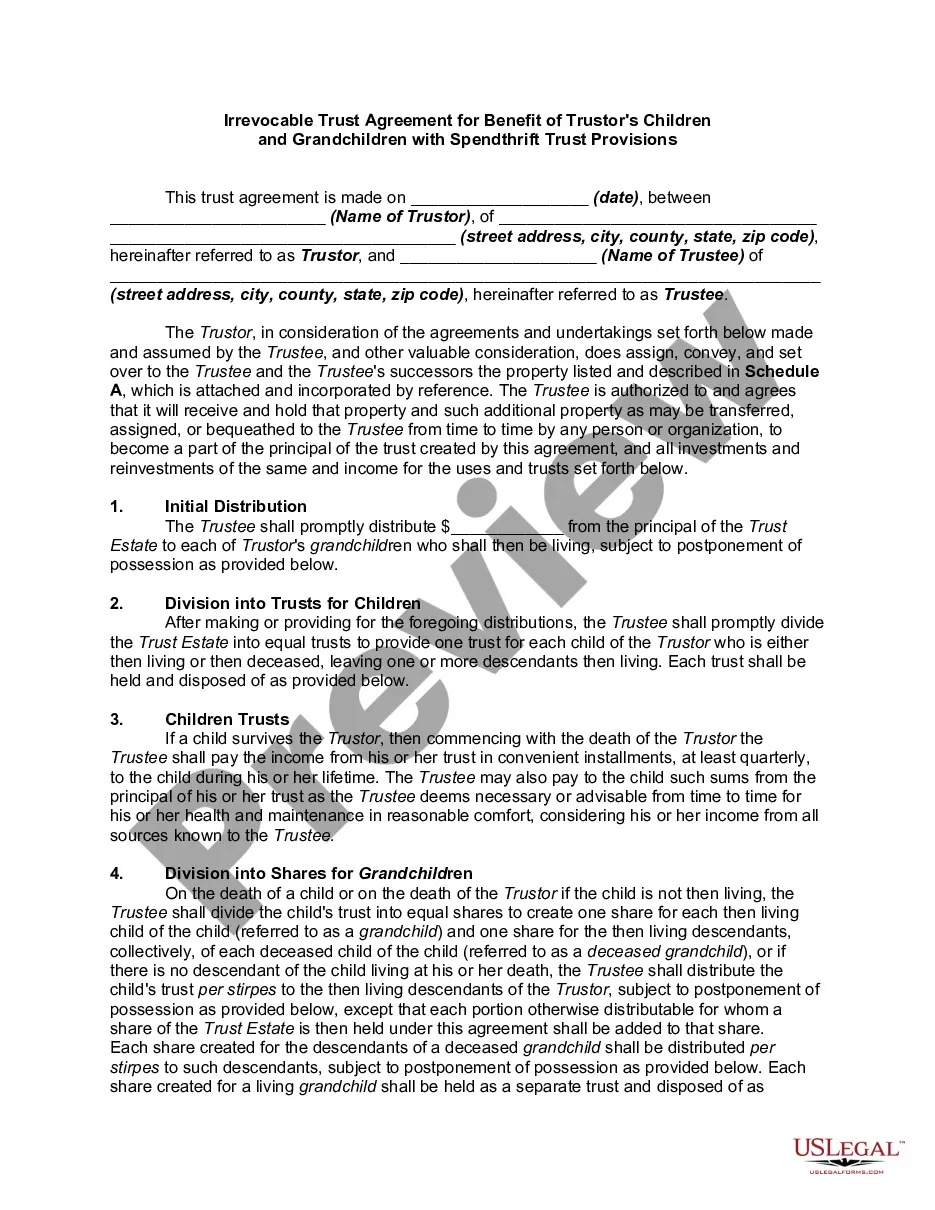
Irrevocable Trust Trustor With Beneficiary
Description
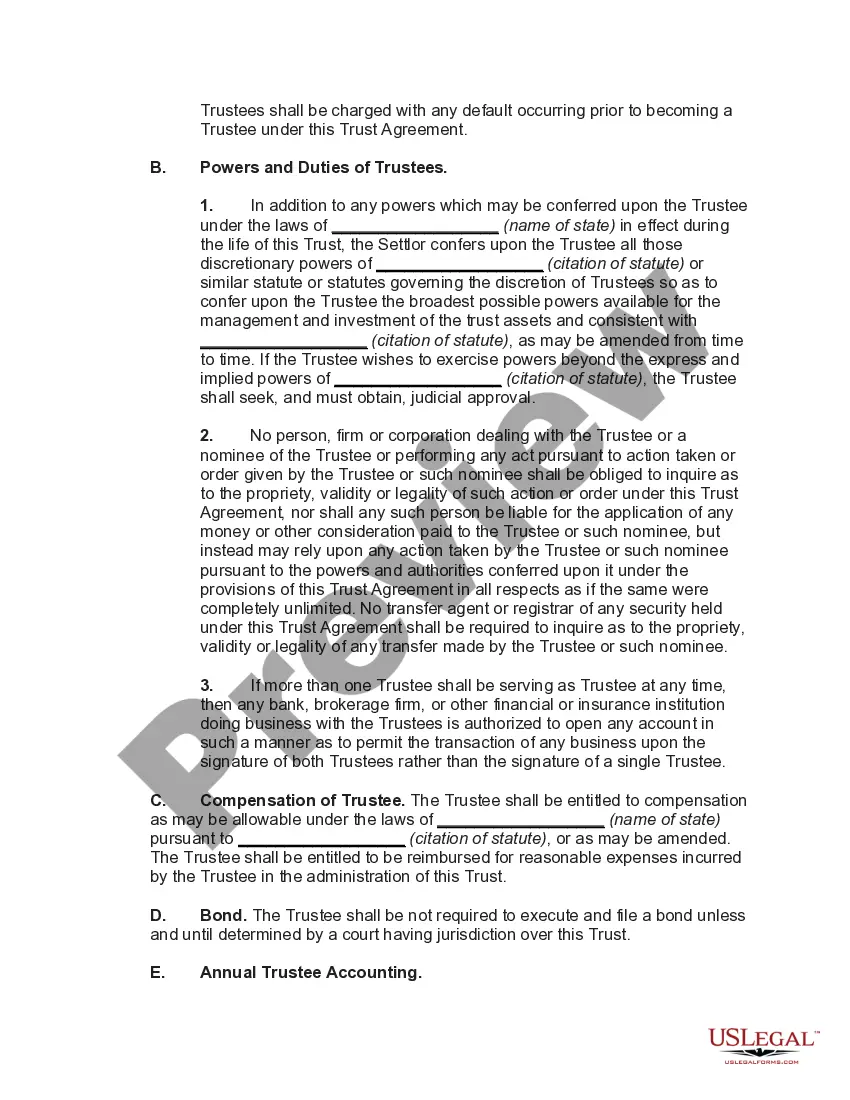
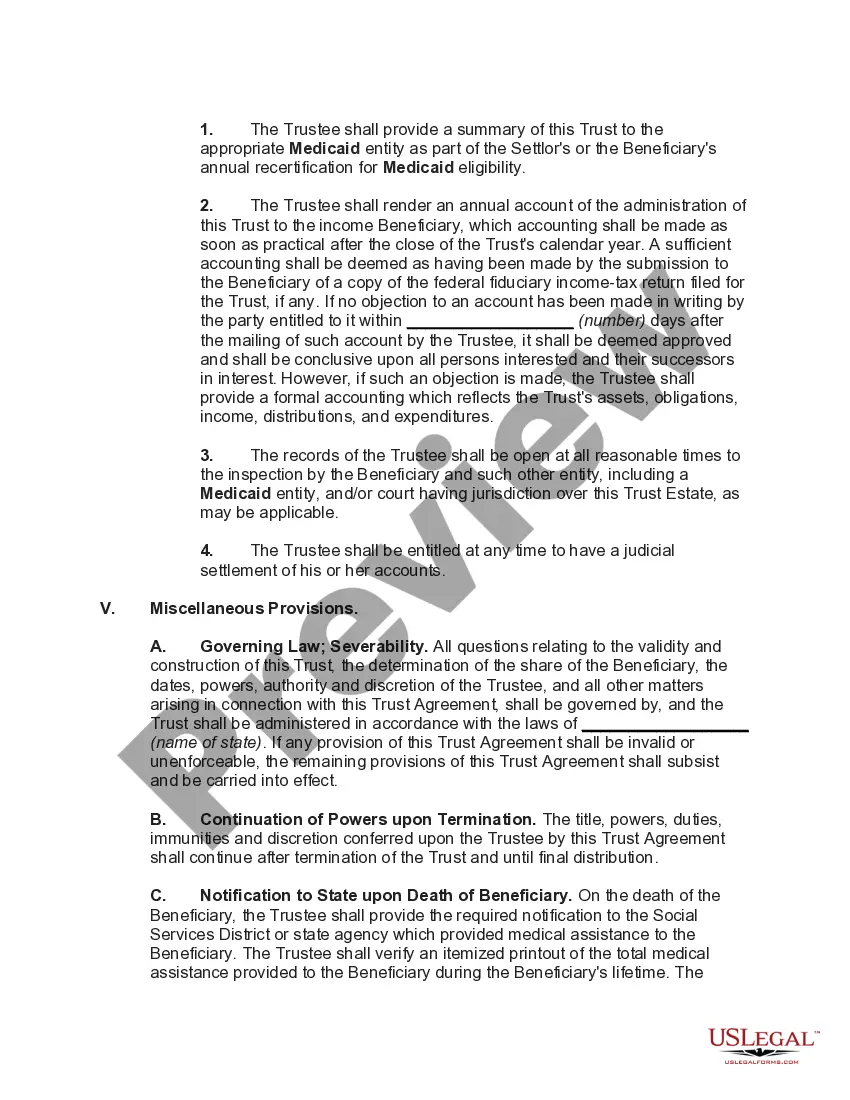
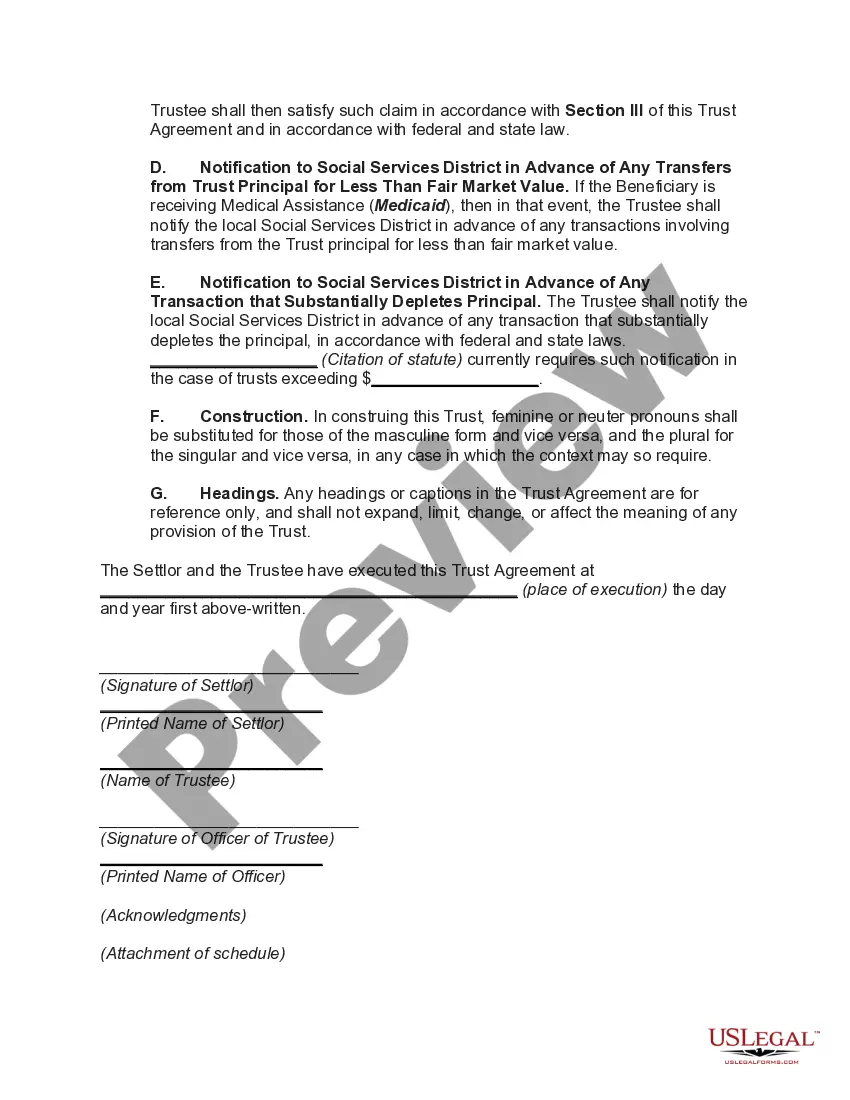
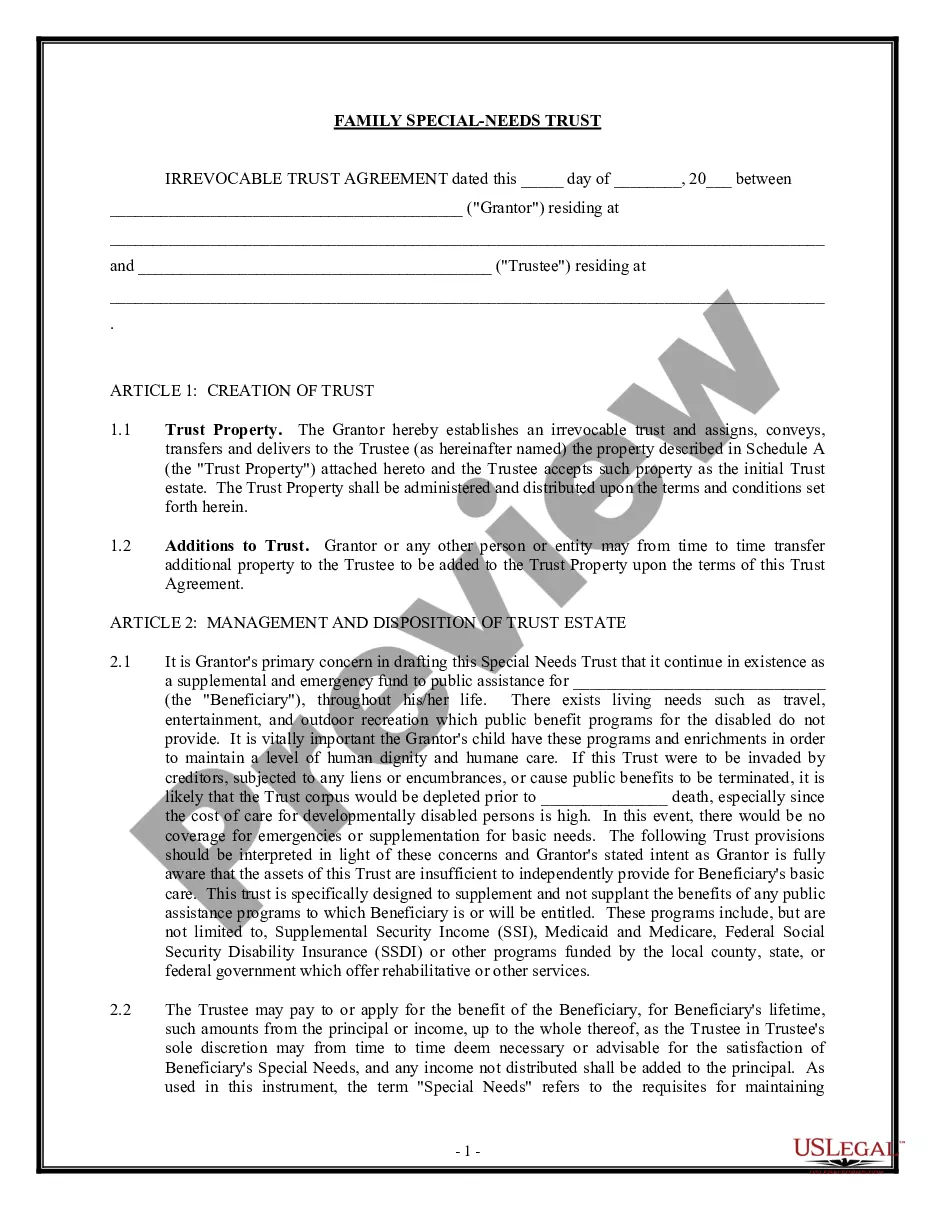


Get your form ready online
Our built-in tools help you complete, sign, share, and store your documents in one place.
Make edits, fill in missing information, and update formatting in US Legal Forms—just like you would in MS Word.
Download a copy, print it, send it by email, or mail it via USPS—whatever works best for your next step.
Sign and collect signatures with our SignNow integration. Send to multiple recipients, set reminders, and more. Go Premium to unlock E-Sign.
If this form requires notarization, complete it online through a secure video call—no need to meet a notary in person or wait for an appointment.
We protect your documents and personal data by following strict security and privacy standards.

Make edits, fill in missing information, and update formatting in US Legal Forms—just like you would in MS Word.

Download a copy, print it, send it by email, or mail it via USPS—whatever works best for your next step.

Sign and collect signatures with our SignNow integration. Send to multiple recipients, set reminders, and more. Go Premium to unlock E-Sign.

If this form requires notarization, complete it online through a secure video call—no need to meet a notary in person or wait for an appointment.

We protect your documents and personal data by following strict security and privacy standards.
Looking for another form?


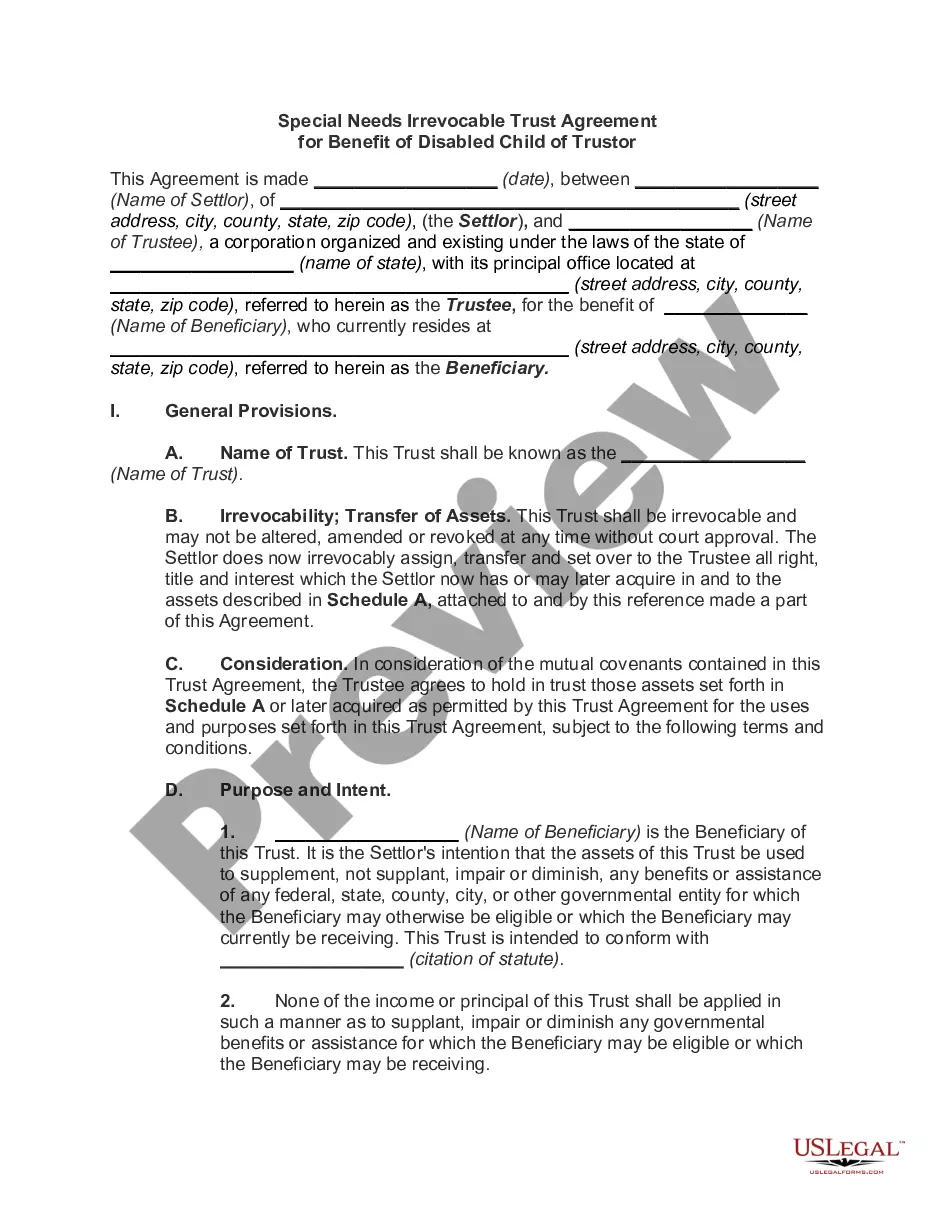
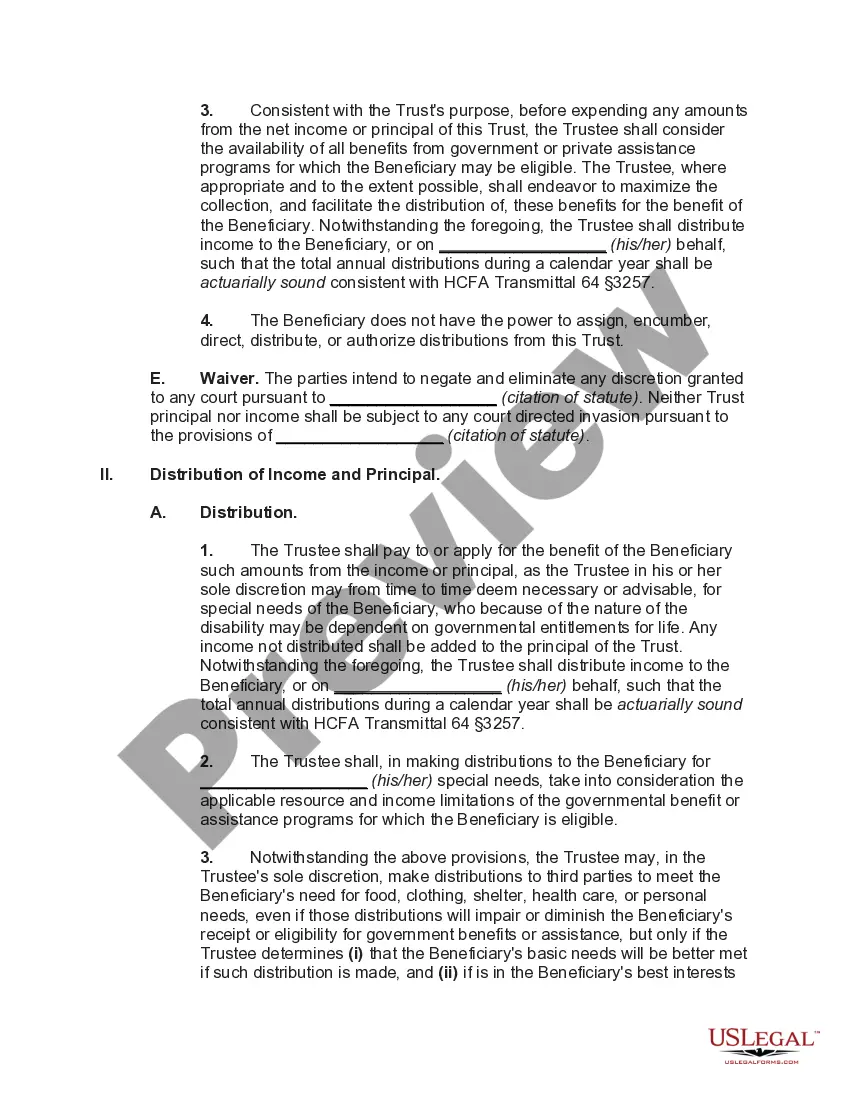
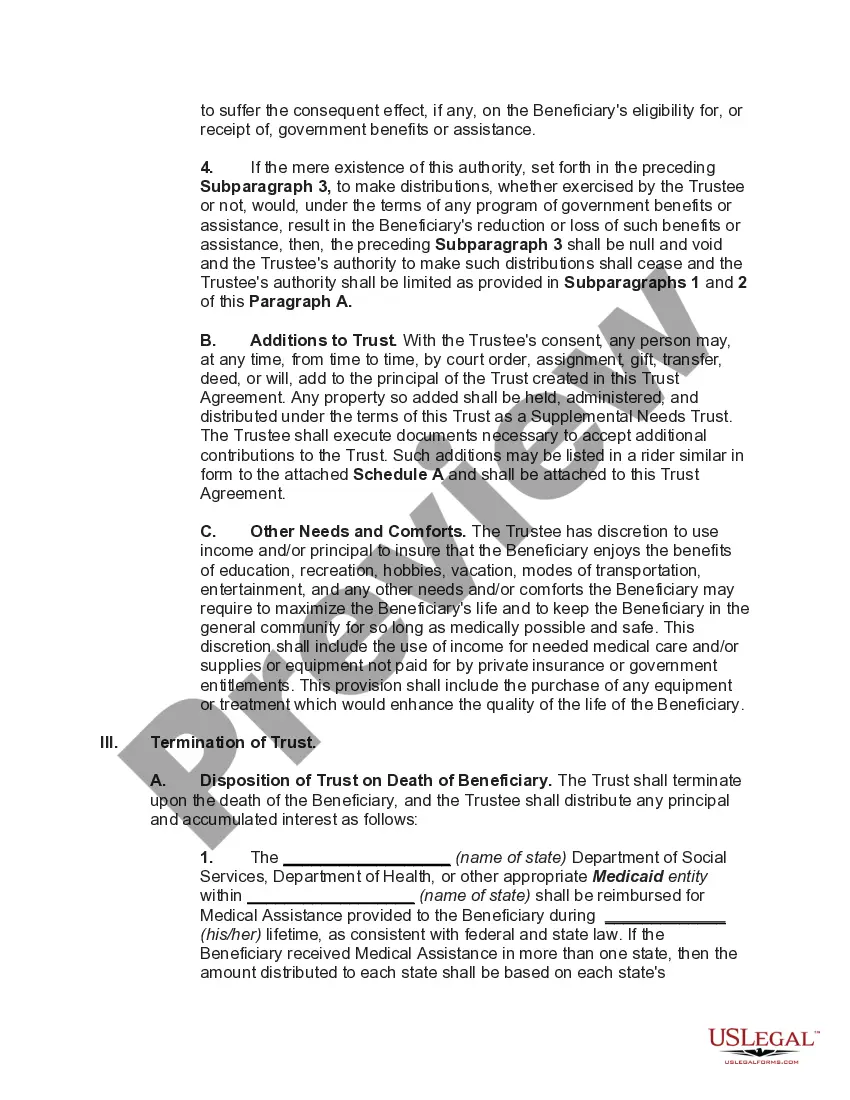
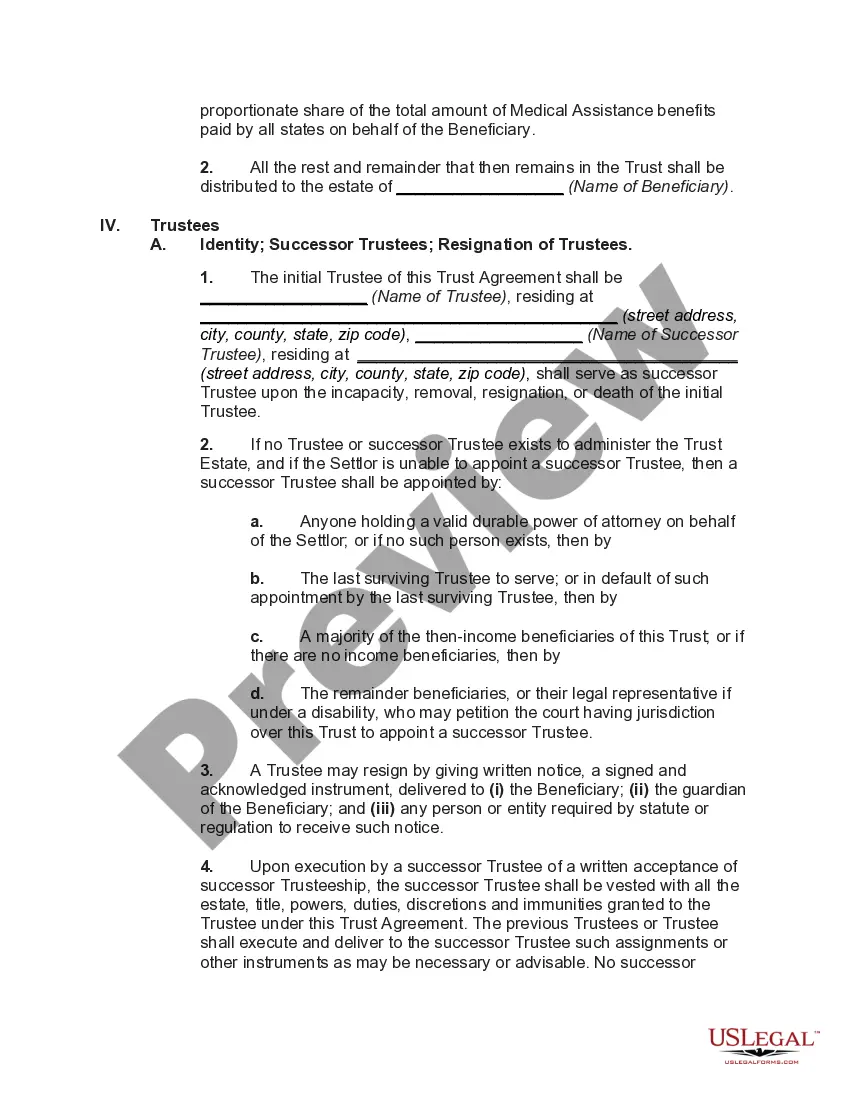
How to fill out Special Needs Irrevocable Trust Agreement For Benefit Of Disabled Child Of Trustor?
- Access your account: If you are a returning user, log in to your account on the US Legal Forms website. Ensure your subscription is active; if not, renew it before proceeding.
- Preview the form: Check the form's preview mode to confirm it meets your specific needs for an irrevocable trust.
- Search for alternatives: If the selected form doesn’t align with your requirements, utilize the search feature to find the right document.
- Purchase the form: Click on the Buy Now button for your preferred subscription plan and create an account to unlock the full library.
- Complete the payment: Enter your credit card or PayPal details to finalize your purchase.
- Download your form: Save your irrevocable trust template on your device for easy access and editing later through the My Forms section.
By following these steps, you can effortlessly create your irrevocable trust document. The benefits of using US Legal Forms include access to a large library of over 85,000 legal documents and expert assistance to ensure accuracy.
Ready to streamline your legal process? Visit US Legal Forms today and gain access to the comprehensive resources you need!
Form popularity
FAQ
In general, a beneficiary cannot withdraw funds from an irrevocable trust without the trustor’s consent. Once the trust is established, the trustor gives up control over the assets, which means the terms set in the trust document dictate how and when distributions can be made. The irrevocable trust trustor with beneficiary can outline specific conditions for withdrawals, making it crucial to review the trust terms to understand your rights as a beneficiary. If you have questions regarding your rights, using platforms like US Legal Forms can provide clarity on your specific situation.
When a beneficiary of an irrevocable trust dies, the trust continues to operate unless the trust document specifies otherwise. Typically, the deceased beneficiary's share is redistributed according to the trust's terms, possibly to contingent beneficiaries. Understanding this process helps ensure that trust assets are managed in line with the trustor's wishes, showcasing the importance of clear trust documents.
Yes, a trustor can also be a beneficiary of their irrevocable trust, although this may depend on the specific terms of the trust agreement. In most cases, the trustor's ability to receive benefits is limited compared to other beneficiaries. This setup allows for flexibility in the management and distribution of assets, ensuring the trust serves its intended purpose.
In an irrevocable trust, the trustor is considered the original owner of the assets placed in the trust; however, the trustor relinquishes control once the trust is established. The trust itself becomes a separate legal entity, and the trustee manages the trust assets for the beneficiaries. This arrangement is beneficial as it protects assets from creditors and ensures proper management.
An officer typically refers to an individual holding a specific position within an organization, while a responsible party in the context of an irrevocable trust refers to the trustee managing the trust. The trustee has a fiduciary duty to act in the best interest of the trustor with beneficiaries. Understanding these roles helps clarify responsibilities when dealing with trusts.
After the death of the trustor, the responsible party of the irrevocable trust remains the trustee. The trustee must now administer the trust for the benefit of the beneficiaries according to the trust document. It is crucial that the trustee understands their duties to uphold the trust's integrity and fulfill the wishes of the trustor.
The responsible party in an irrevocable trust is typically the trustee, who oversees the management of the trust's assets. The trustor can designate an individual or institution to take on this role, ensuring that the trust operates according to the established terms. This setup provides clarity and empowers the trustee to make decisions for the benefit of the beneficiaries.
When the trustor of an irrevocable trust dies, the trust remains in effect and continues to operate according to its terms. The trust assets are managed by the trustee for the benefit of the trust's beneficiaries. This arrangement protects the assets from the deceased's estate, ensuring that they are distributed according to the trust's guidelines rather than probate laws.
One of the biggest mistakes parents often make when setting up a trust fund is failing to clearly define the beneficiaries and their respective shares. Confusion over who benefits and how much can lead to disputes later on. Additionally, many overlook the importance of updating the trust to reflect life changes. Utilizing services like uslegalforms can help prevent these common pitfalls.
Technically, a trustor, trustee, and beneficiary can be the same individual in an irrevocable trust, but this can lead to complications. Managing all roles may cloud decision-making and create issues regarding asset handling. It's typically more beneficial to distinguish these roles to foster transparency and objective management.