Personal Property Trust For Business
Description
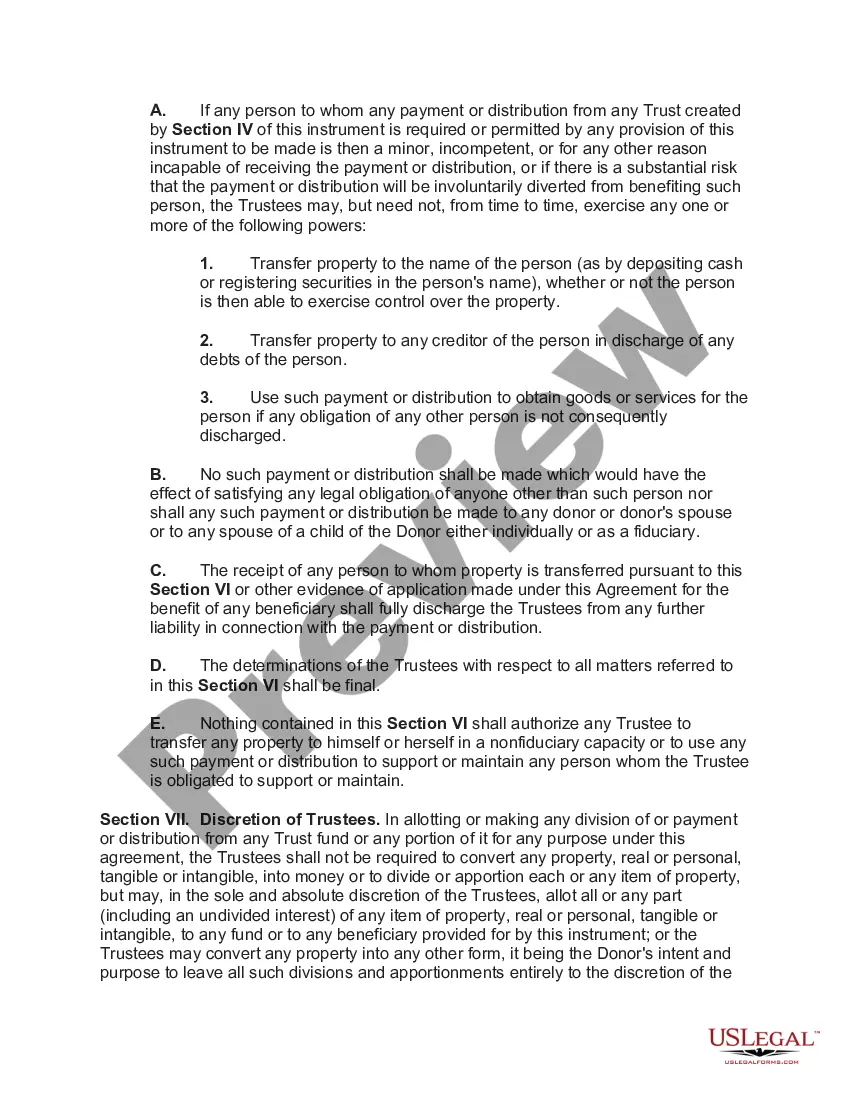
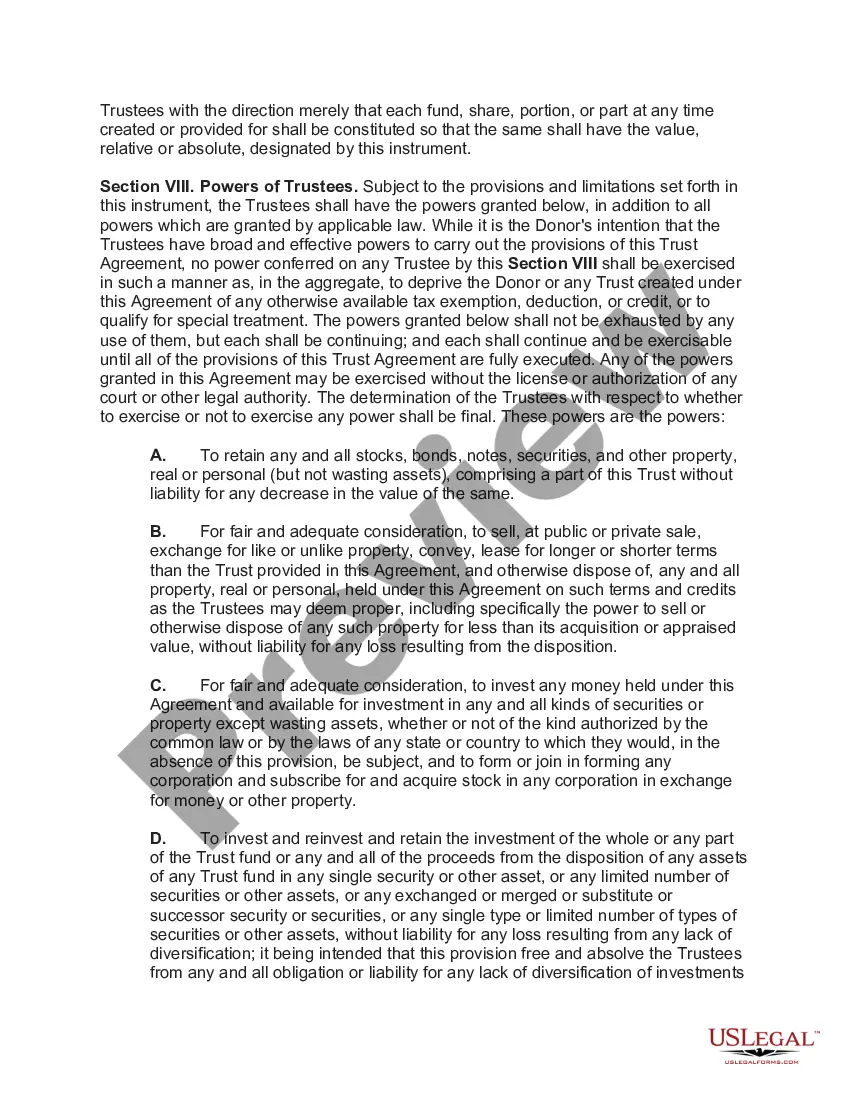

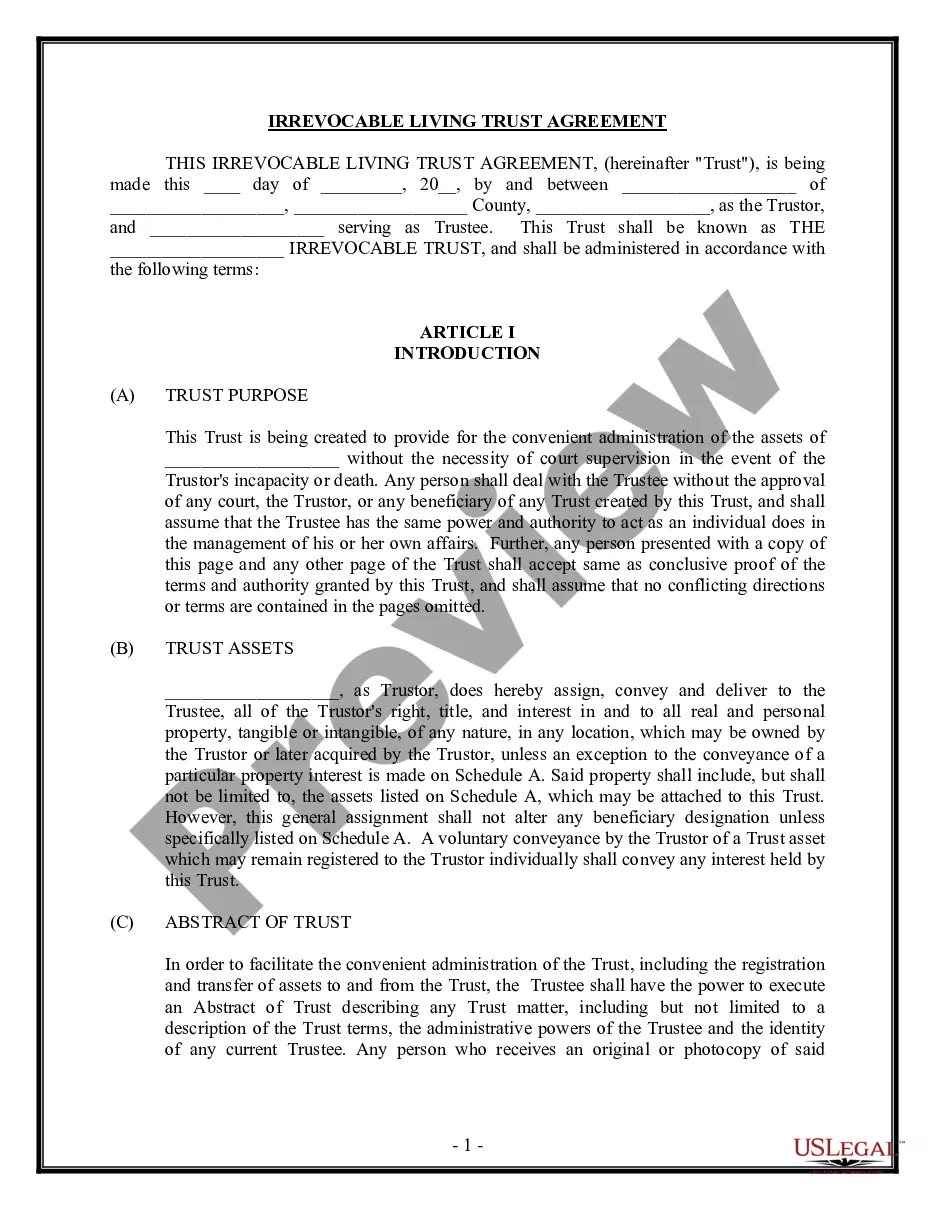
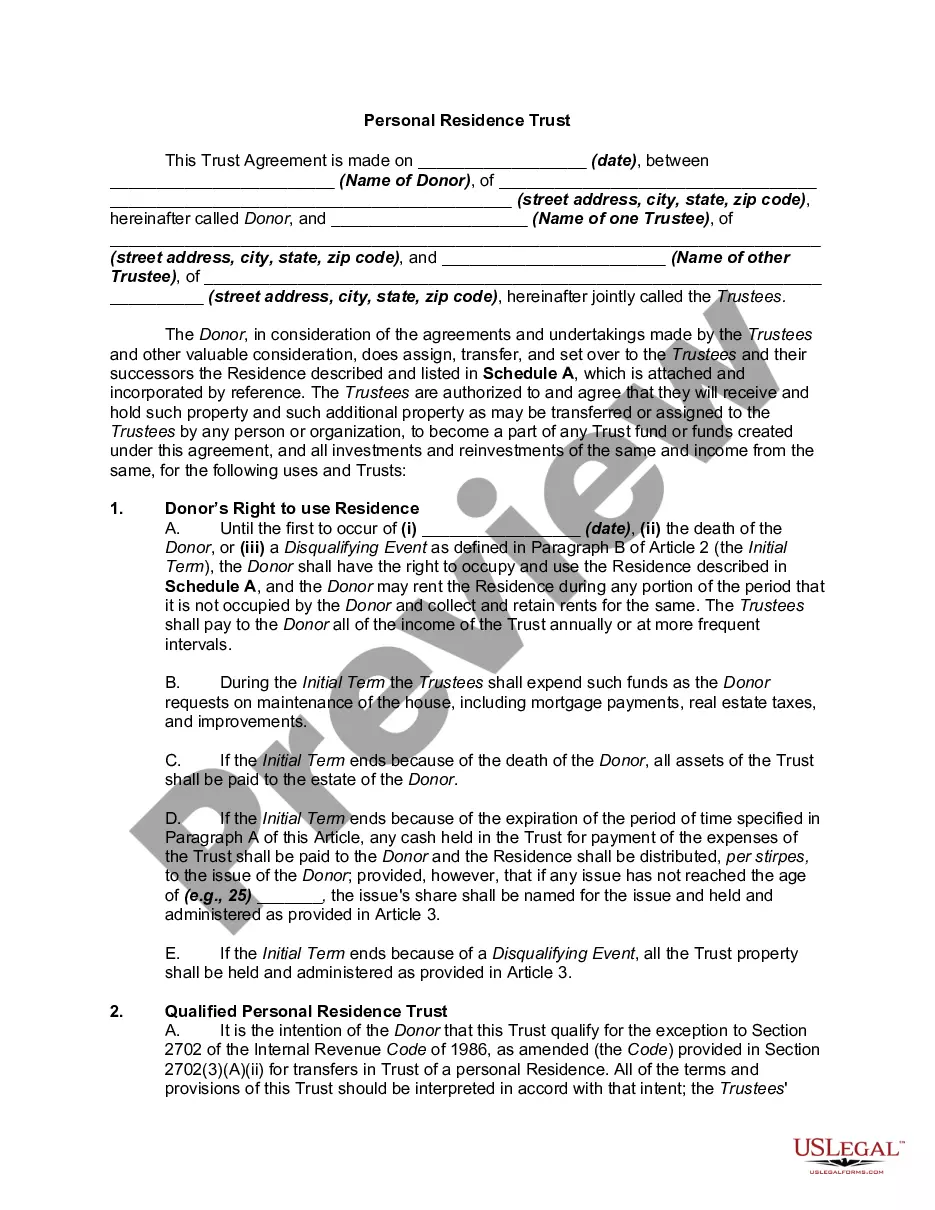
Get your form ready online
Our built-in tools help you complete, sign, share, and store your documents in one place.
Make edits, fill in missing information, and update formatting in US Legal Forms—just like you would in MS Word.
Download a copy, print it, send it by email, or mail it via USPS—whatever works best for your next step.
Sign and collect signatures with our SignNow integration. Send to multiple recipients, set reminders, and more. Go Premium to unlock E-Sign.
If this form requires notarization, complete it online through a secure video call—no need to meet a notary in person or wait for an appointment.
We protect your documents and personal data by following strict security and privacy standards.

Make edits, fill in missing information, and update formatting in US Legal Forms—just like you would in MS Word.

Download a copy, print it, send it by email, or mail it via USPS—whatever works best for your next step.

Sign and collect signatures with our SignNow integration. Send to multiple recipients, set reminders, and more. Go Premium to unlock E-Sign.

If this form requires notarization, complete it online through a secure video call—no need to meet a notary in person or wait for an appointment.

We protect your documents and personal data by following strict security and privacy standards.
Looking for another form?









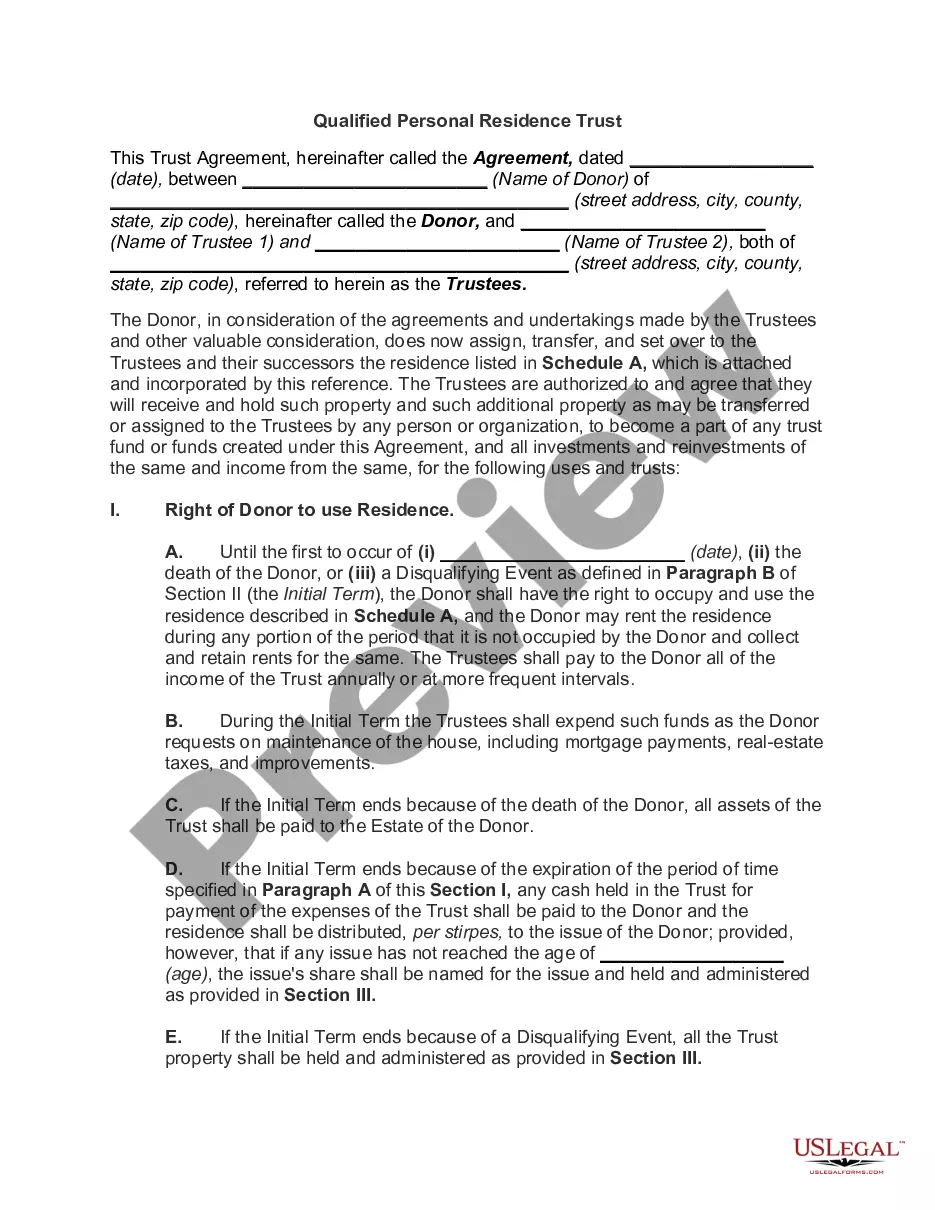
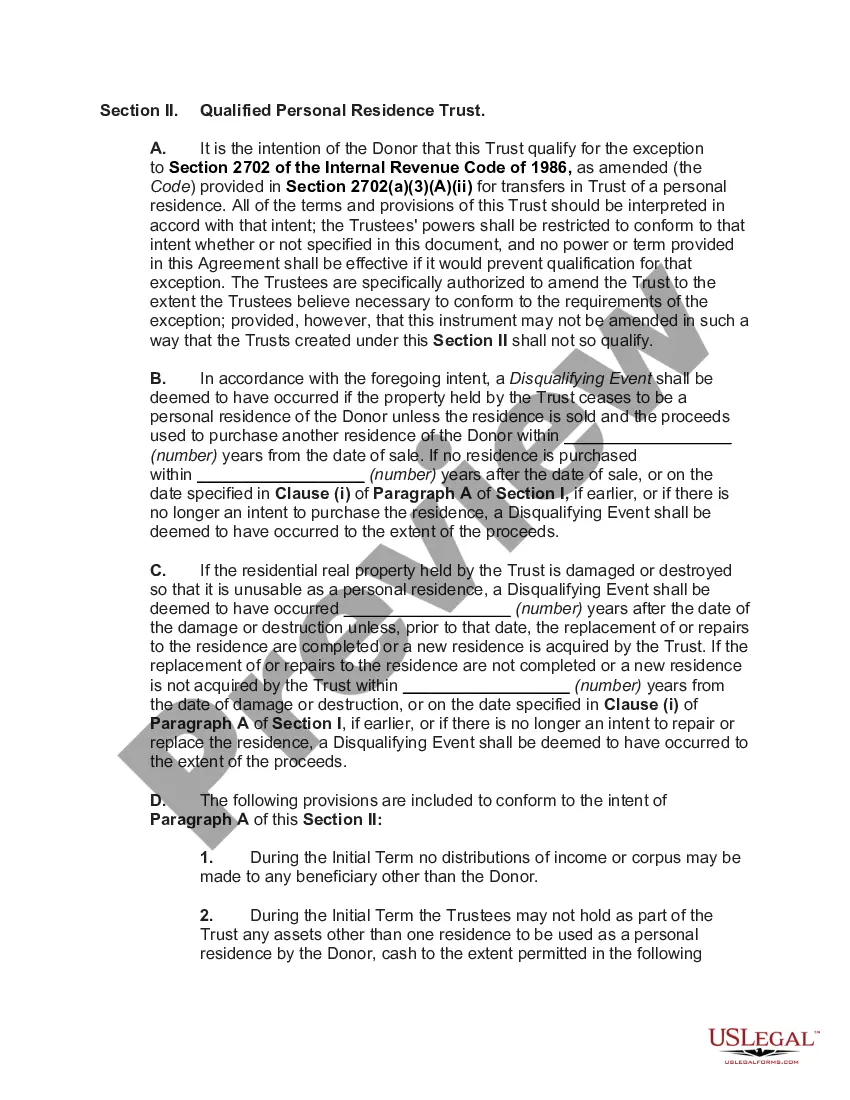
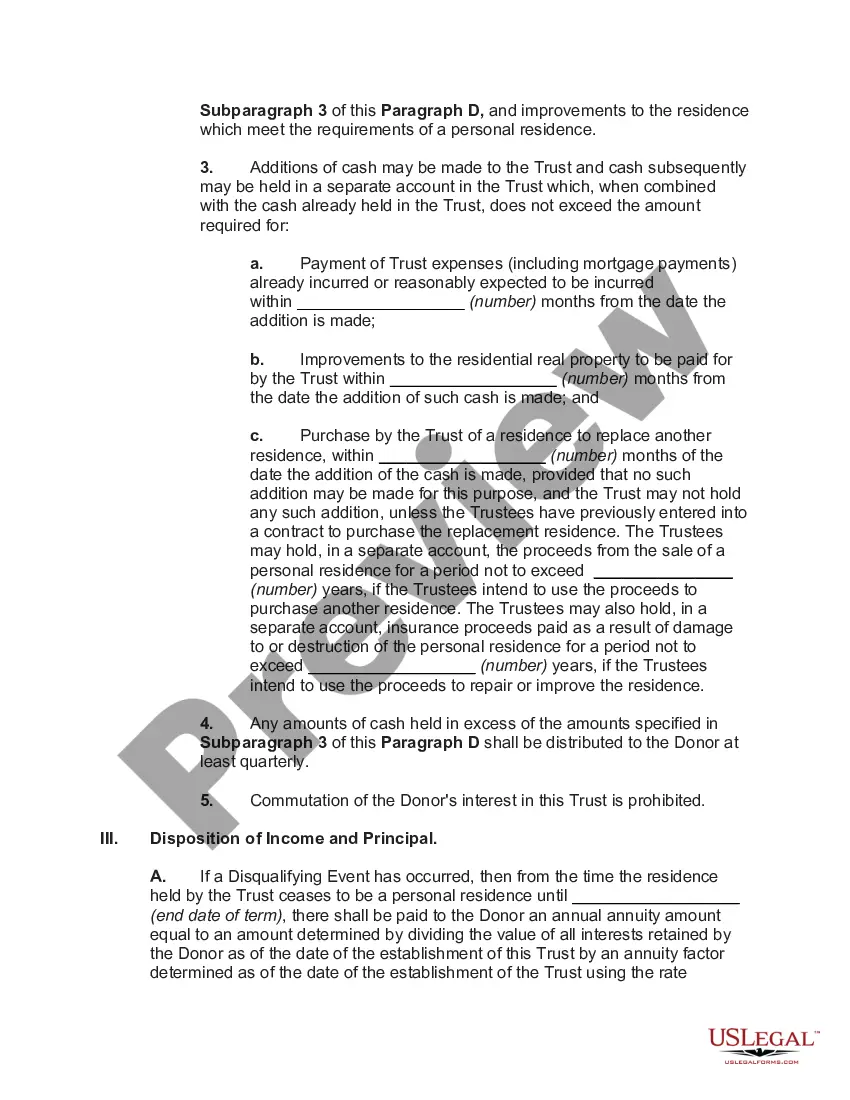
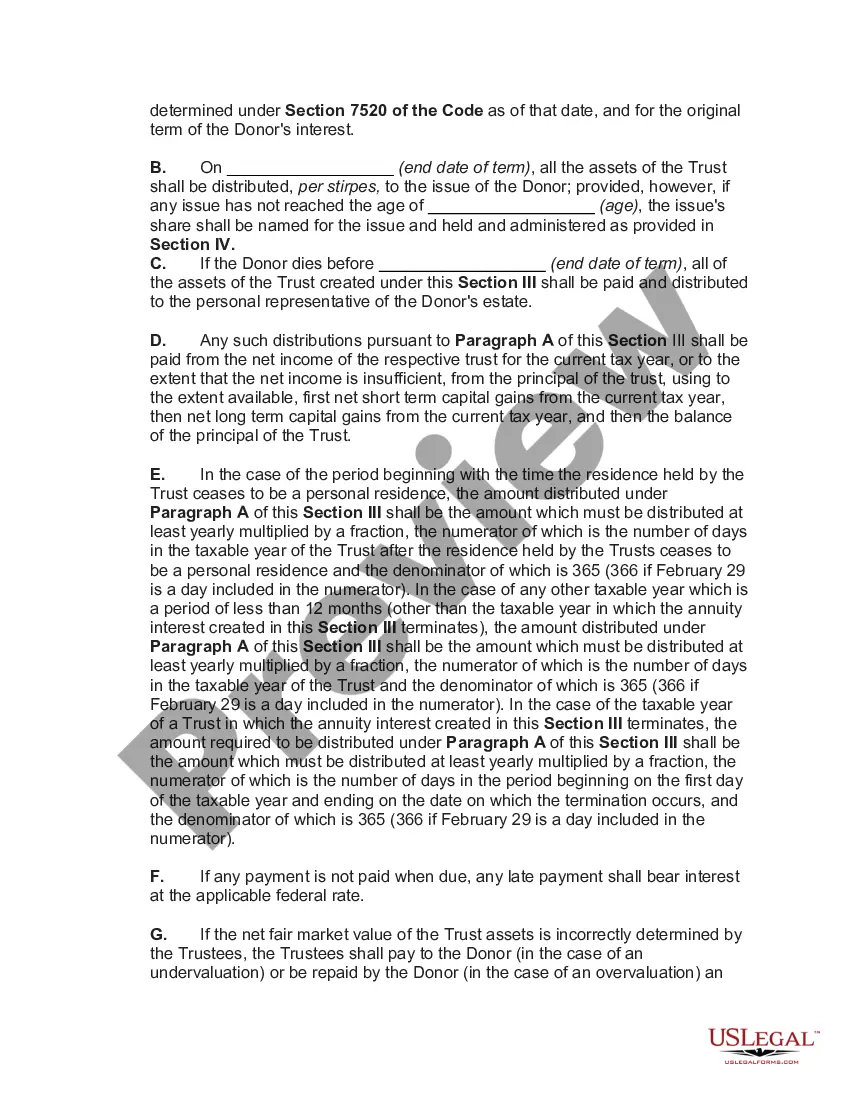
How to fill out Qualified Personal Residence Trust?
- If you’ve previously used US Legal Forms, log in to access your account and download the necessary form template by selecting the Download button. Be sure your subscription is current; renew it if necessary.
- For first-time users, start by checking the Preview mode and form description. Confirm that the selected document fits your specific requirements and adheres to local jurisdiction laws.
- If you need a different document, use the Search tab to locate another appropriate template. Once you find a suitable one, proceed to the next step.
- Purchase the document by clicking on the Buy Now button and selecting your preferred subscription plan. You'll need to create an account to unlock additional resources.
- Complete your transaction by entering credit card information or utilizing your PayPal account for payment.
- Download your completed form to your device, allowing you to fill it out and access it later in your My Forms menu.
US Legal Forms empowers users with an extensive library boasting over 85,000 fillable legal templates, making it easier for both individuals and attorneys to access crucial legal documents efficiently.
By following these steps, you can ensure that your personal property trust is correctly established. Don’t hesitate; visit US Legal Forms today to streamline your legal documentation process!
Form popularity
FAQ
Establishing a personal property trust for business involves several essential steps. First, you need to define the trust's purpose and identify the assets you want to place in the trust. Next, you will draft the trust agreement, which outlines the terms and conditions. Finally, you can register your trust and transfer the designated assets, and USLegalForms offers effective solutions and templates to help streamline this process.
Yes, you can set up a personal property trust for business purposes. This type of trust can help protect your business assets from creditors, lawsuits, and estate taxes. Additionally, a personal property trust for business allows for easier management and distribution of your business assets among beneficiaries. You might consider using a service like USLegalForms to simplify the process and ensure you meet all legal requirements.
The three main types of trust are revocable trusts, irrevocable trusts, and testamentary trusts. A revocable trust allows you to maintain control over the assets during your lifetime, while an irrevocable trust typically cannot be altered once established, providing asset protection. Testamentary trusts come into effect upon your death and are often used to manage inheritances. Understanding these options can help you determine the best approach for your personal property trust for business.
A common mistake parents make when setting up a trust fund is not clearly defining the trust's purpose and rules. Without specific guidelines, the trust may not achieve its intended goals. This oversight can lead to misunderstandings among beneficiaries and mismanagement of assets. It’s crucial to work with a legal expert to draft detailed instructions, especially when considering a personal property trust for business.
To transfer your LLC into a personal property trust for business, first, review your operating agreement to ensure this action is permitted. Then, execute an assignment of the LLC's ownership interest to the trust. You may need to update internal records and notify relevant authorities about the change in ownership. This process effectively aligns your business assets with your estate planning goals.
A personal property trust for business allows you to hold and manage business assets separately from your personal assets. It operates under the terms set forth in the trust agreement, which you control. The trustee manages the assets according to your wishes, providing a clear framework for how those assets are handled, distributed, or used. This structure can protect your assets from creditors and offer tax advantages.
To establish a personal property trust for your business, begin by identifying the assets you want to include in the trust. Next, select a trustworthy individual to act as the trustee. You will then need to draft a formal trust agreement that outlines how the trust will operate. Finally, transfer the ownership of your assets into the trust to ensure they are managed according to your specified terms.
An example of a personal property trust would be a business owner establishing a trust that holds their equipment and inventory. This allows the owner to manage these assets in a way that protects them from creditors and facilitates smoother transitions upon their passing. Platforms like uslegalforms can assist you in setting up a personal property trust for business, ensuring you cover all legal requirements.
While a trust can provide benefits, there are disadvantages to consider. Establishing a personal property trust for business may involve upfront costs, ongoing management fees, and potential complexities in transferring assets. Additionally, you may face limitations on how you can sell or leverage the property within the trust.
Personal property includes movable items that are not permanently attached to land. This can encompass furniture, electronics, vehicles, and business inventory. When establishing a personal property trust for business, it is essential to understand what assets qualify, as they can greatly influence your trust's structure and management.