Llc Owned By A Trust
Description
Get your form ready online
Our built-in tools help you complete, sign, share, and store your documents in one place.
Make edits, fill in missing information, and update formatting in US Legal Forms—just like you would in MS Word.
Download a copy, print it, send it by email, or mail it via USPS—whatever works best for your next step.
Sign and collect signatures with our SignNow integration. Send to multiple recipients, set reminders, and more. Go Premium to unlock E-Sign.
If this form requires notarization, complete it online through a secure video call—no need to meet a notary in person or wait for an appointment.
We protect your documents and personal data by following strict security and privacy standards.

Make edits, fill in missing information, and update formatting in US Legal Forms—just like you would in MS Word.

Download a copy, print it, send it by email, or mail it via USPS—whatever works best for your next step.

Sign and collect signatures with our SignNow integration. Send to multiple recipients, set reminders, and more. Go Premium to unlock E-Sign.

If this form requires notarization, complete it online through a secure video call—no need to meet a notary in person or wait for an appointment.

We protect your documents and personal data by following strict security and privacy standards.
Looking for another form?







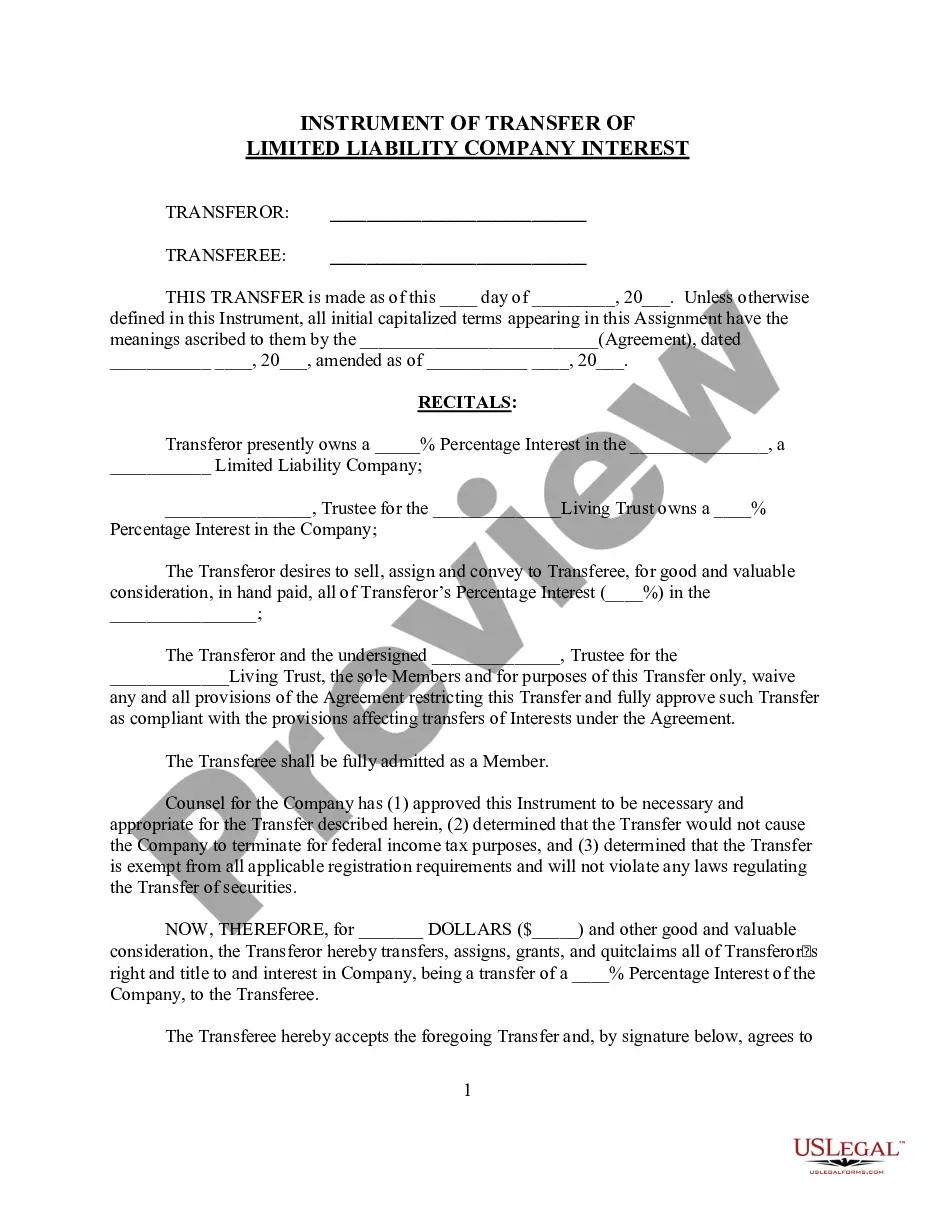
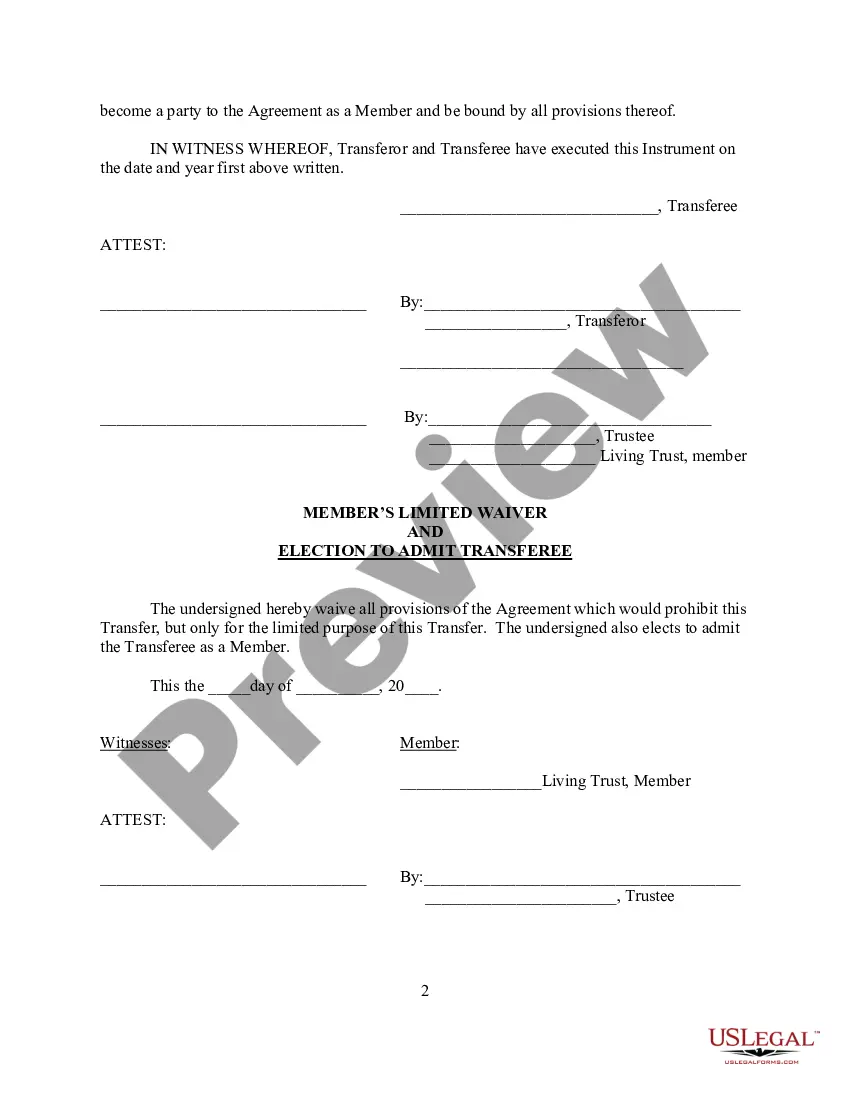
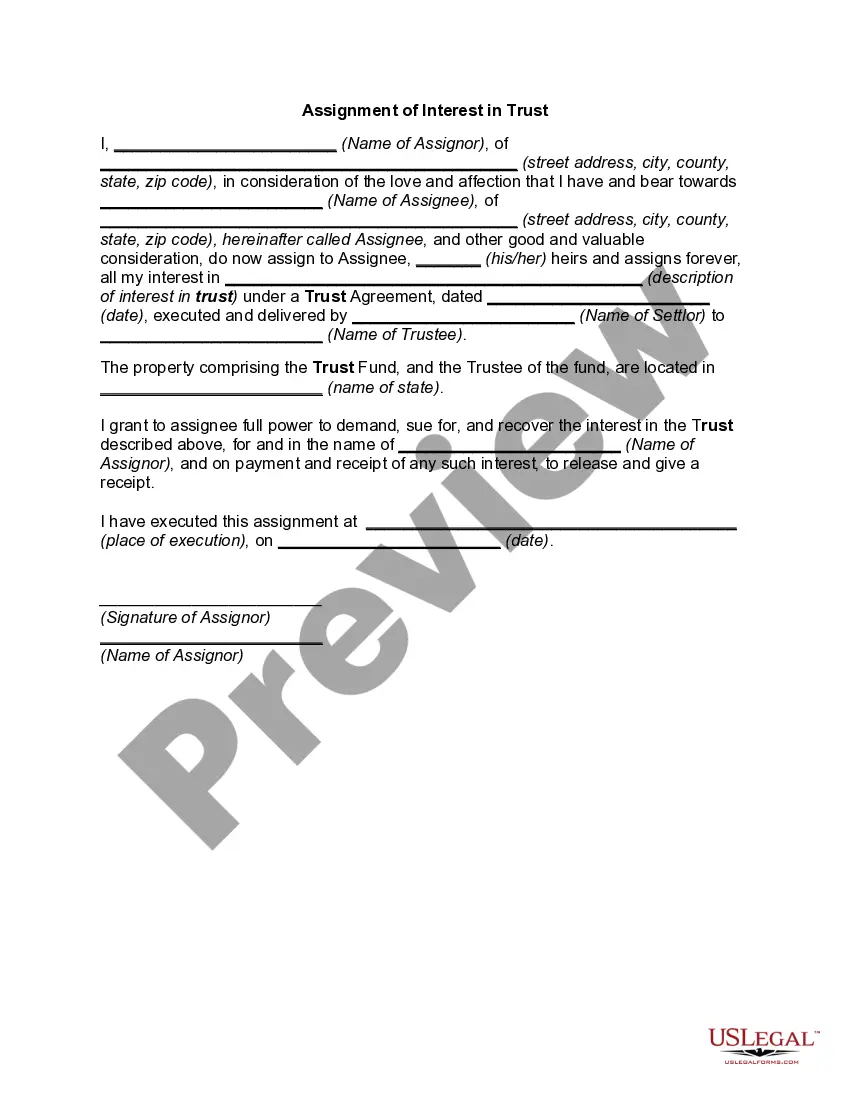
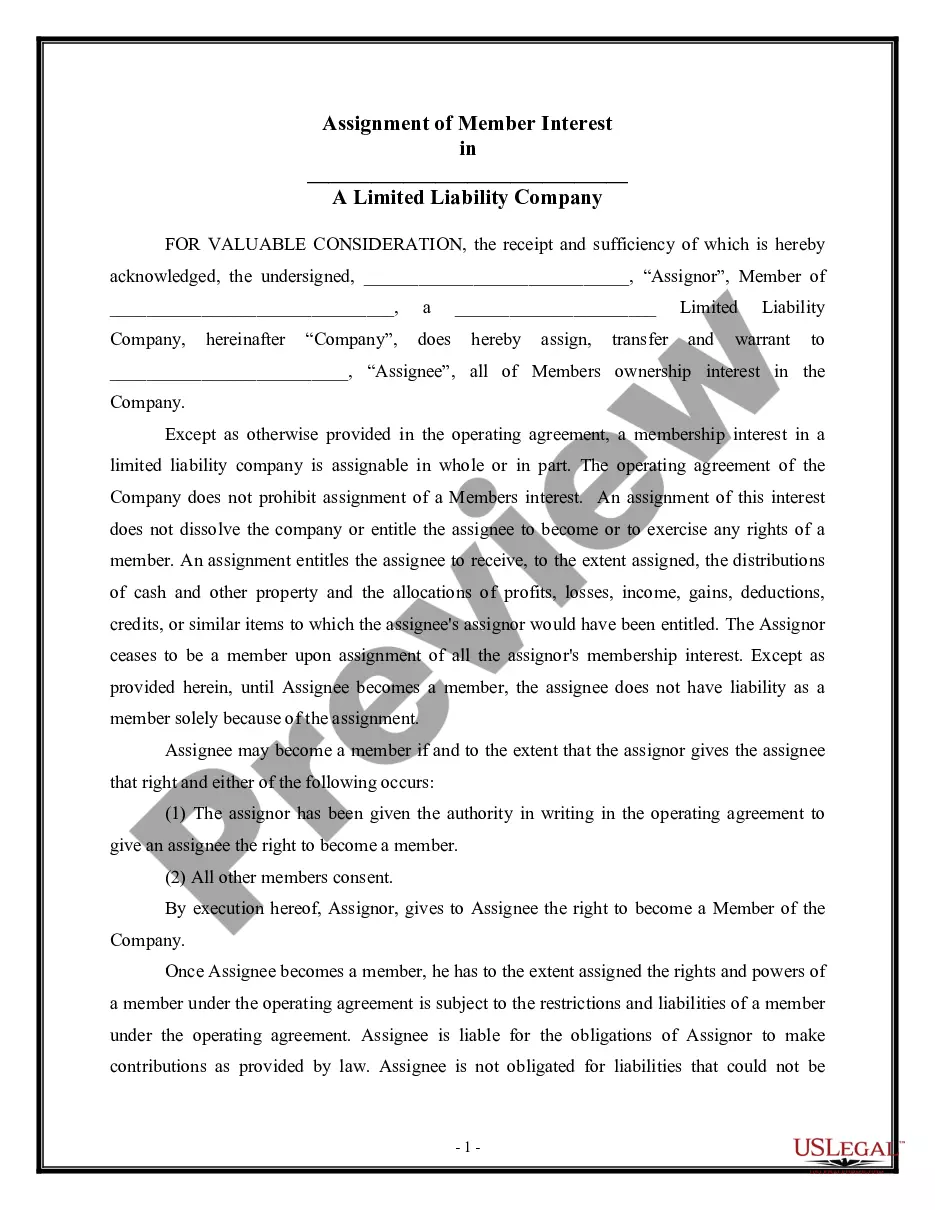
How to fill out Assignment Of LLC Company Interest To Living Trust?
- If you are a returning user, log in to your account and access your documents directly by selecting the Download button. Ensure your subscription is up to date; renew if necessary.
- For first-time users, browse the extensive form library on US Legal Forms. Review the preview mode and descriptions to choose a template that aligns with your requirements and jurisdiction.
- Conduct a search if the initial template doesn’t meet your needs. Use the Search tab to find a different form that is suitable.
- Proceed to purchase the document by clicking the Buy Now button. You will need to select a subscription plan and register for an account to gain access to the extensive library.
- Complete the payment process by providing your credit card information or utilizing your PayPal account to finalize the subscription.
- Download the form to your device. You can revisit this document anytime from the My documents section of your profile.
By using US Legal Forms, you access a robust collection of over 85,000 legal forms, ensuring that your documents are comprehensive and accurate. The service also connects you with premium experts to assist in completing forms, enhancing the legal validity of your documentation.
In conclusion, forming an LLC owned by a trust has been made easier with US Legal Forms. Take advantage of their resources to ensure a smooth process. Start today and equip yourself with the legal tools you need!
Form popularity
FAQ
The key benefit of placing an LLC in a trust lies in enhanced asset protection and streamlined ownership transfer. It can prevent the exposure of personal assets to business liabilities and secure the interests of beneficiaries. By ensuring your LLC is owned by a trust, you establish a more organized and safeguarded approach to managing your business.
People often place their businesses in a trust to benefit from inheritance planning and minimizing estate taxes. It provides a structured pathway for passing on business assets to heirs without going through probate, which can be time-consuming. Thus, utilizing an LLC owned by a trust is a strategic decision aimed at preserving business continuity.
Putting an LLC in a trust provides several advantages, such as enhancing asset protection and simplifying the transfer of ownership. It allows for smoother succession planning and helps safeguard your assets against potential liabilities. Overall, the arrangement of an LLC owned by a trust caters to long-term stability and security.
You cannot directly convert an LLC into a trust, but you can transfer ownership. This process involves placing the LLC's assets into a trust, creating a structure where the trust becomes the owner of the LLC. This approach is common among those looking to utilize the benefits of having an LLC owned by a trust.
Yes, an LLC can indeed be managed by a trust. When you establish a trust as the owner of your LLC, the trust manages the business on behalf of its beneficiaries. This arrangement aligns with the concept of an LLC owned by a trust, providing benefits like ease of transfer and potential tax advantages.
Deciding whether to put your LLC in a trust depends on your specific situation and goals. If asset protection, privacy, and smooth transfer of ownership are priorities for you, an LLC owned by a trust might be a wise choice. It's advisable to consult with an expert to evaluate your options. Online resources like uslegalforms can help guide you through the process, ensuring you make the best decision for your business.
While there are many advantages, some disadvantages exist in placing your business in a trust. An LLC owned by a trust may result in increased administrative tasks and costs associated with setting up and maintaining the trust. Additionally, certain tax implications could arise, depending on the structure of the trust. It's essential to weigh these factors carefully before making this decision.
There are multiple benefits when considering a business trust, such as enhanced privacy and protection for the owner. An LLC owned by a trust can limit personal liability while also allowing for flexible management structures. Moreover, trusts can streamline the transfer of ownership, eliminating the need for probate court processes. This setup provides an organized method for handling assets, making it appealing for business owners.
A business may be owned by a trust for several reasons, including asset protection and estate planning. By placing an LLC owned by a trust, the owner can safeguard the business interests from personal liabilities. Additionally, it can facilitate a smoother transition of ownership upon the owner's passing. This setup often helps in managing and distributing the assets efficiently per the owner's wishes.
An LLC becomes a disregarded entity when it has one owner and is not classified as a corporation for tax purposes. This means that the net income or losses from the LLC flow directly to the owner's tax return. Therefore, for an LLC owned by a trust, determining its status as a disregarded entity can simplify reporting and taxation, making the trust an effective tool for managing business finances.