Drug And Alcohol Policy For Work
Description
Get your form ready online
Our built-in tools help you complete, sign, share, and store your documents in one place.
Make edits, fill in missing information, and update formatting in US Legal Forms—just like you would in MS Word.
Download a copy, print it, send it by email, or mail it via USPS—whatever works best for your next step.
Sign and collect signatures with our SignNow integration. Send to multiple recipients, set reminders, and more. Go Premium to unlock E-Sign.
If this form requires notarization, complete it online through a secure video call—no need to meet a notary in person or wait for an appointment.
We protect your documents and personal data by following strict security and privacy standards.

Make edits, fill in missing information, and update formatting in US Legal Forms—just like you would in MS Word.

Download a copy, print it, send it by email, or mail it via USPS—whatever works best for your next step.

Sign and collect signatures with our SignNow integration. Send to multiple recipients, set reminders, and more. Go Premium to unlock E-Sign.

If this form requires notarization, complete it online through a secure video call—no need to meet a notary in person or wait for an appointment.

We protect your documents and personal data by following strict security and privacy standards.
Looking for another form?


How to fill out Alcohol And Drug Free Workplace Policy?
- Log in to your US Legal Forms account if you're a returning user to download the required form template. Ensure your subscription is active; renew it if necessary.
- For new users, start by previewing the drug and alcohol policy form. Confirm it meets your needs and aligns with local regulations.
- If the form isn't suitable, use the search function to find the correct template that matches your requirements.
- Select the document you want by clicking 'Buy Now' and choose a subscription plan that fits your needs, creating an account for access.
- Complete the purchase using your credit card or PayPal to successfully buy the subscription.
- Finally, download your policy form directly to your device and access it anytime from the 'My Forms' section in your profile.
In conclusion, utilizing US Legal Forms allows users to efficiently create legal documents with access to a vast library. With expert assistance available, you can ensure that your drug and alcohol policy for work is not only tailored to your organization but also compliant and effective.
Start enhancing your workplace safety today with a customized drug and alcohol policy! Visit US Legal Forms now.
Form popularity
FAQ
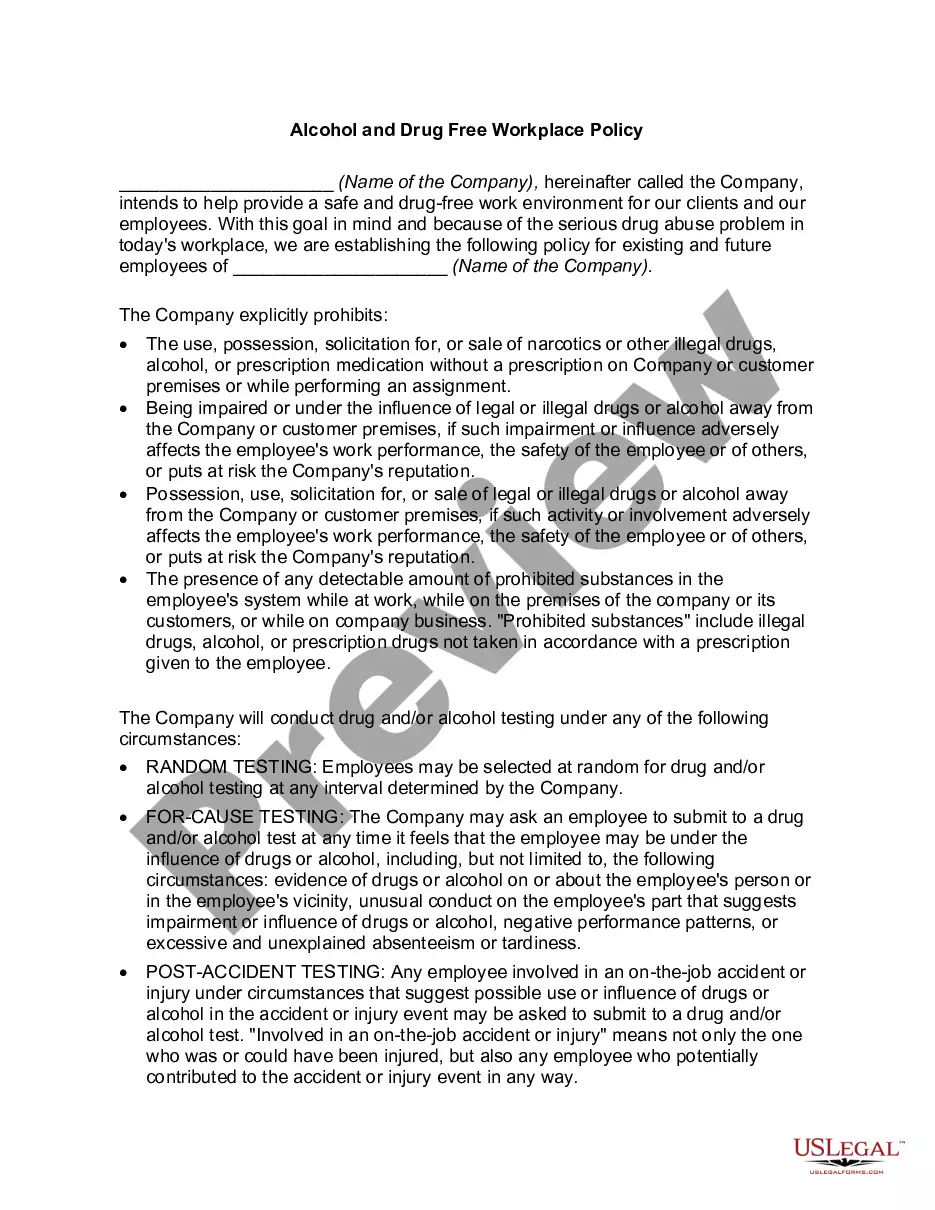
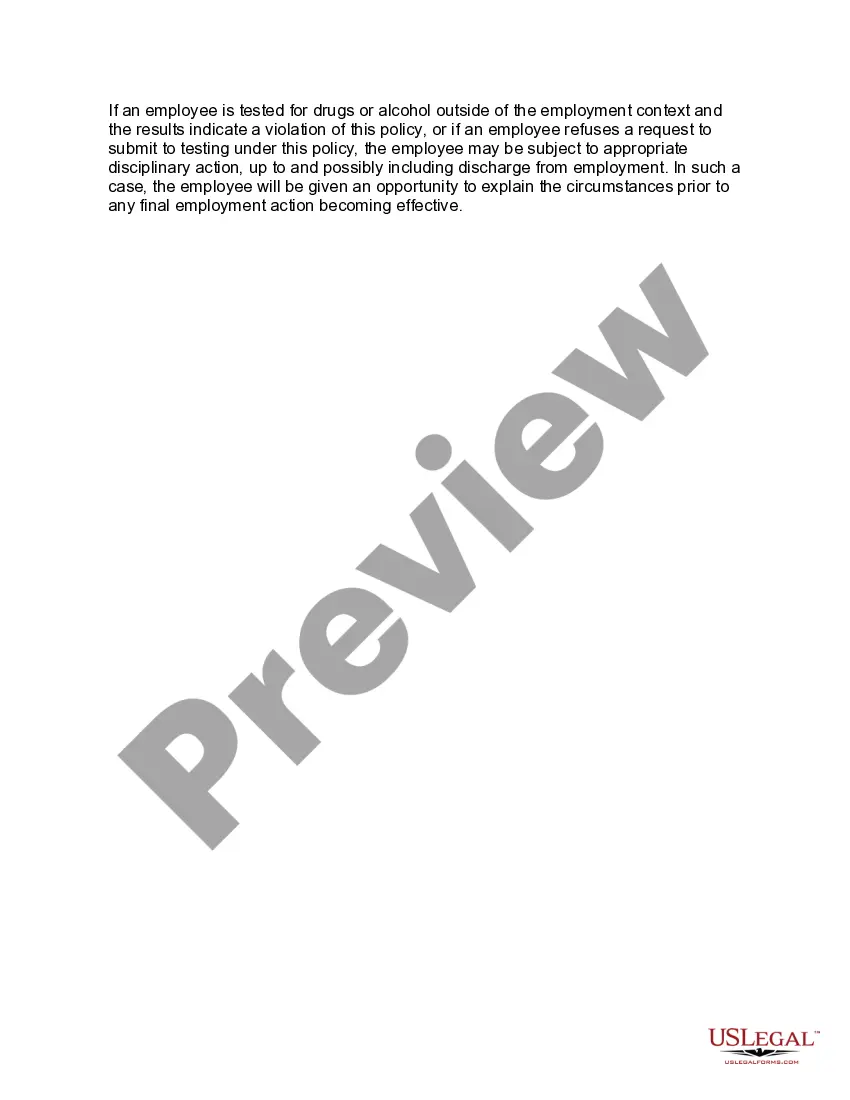
Yes, an employer can terminate an employee for substance abuse, especially if it violates the company's drug and alcohol policy for work. Employers have a responsibility to provide a safe work environment, and substance abuse can compromise that safety. However, it is important to understand the specific terms outlined in the company's policy, as many organizations offer support and rehabilitation options before resorting to termination.
A drug policy refers to the framework that outlines how an organization handles drug-related issues within the workplace. This policy typically includes statements on prohibited substances, testing protocols, and support systems for employees struggling with substance abuse. A well-defined drug policy enhances safety and establishes a standard for accountability, making it an essential component of a drug and alcohol policy for work.
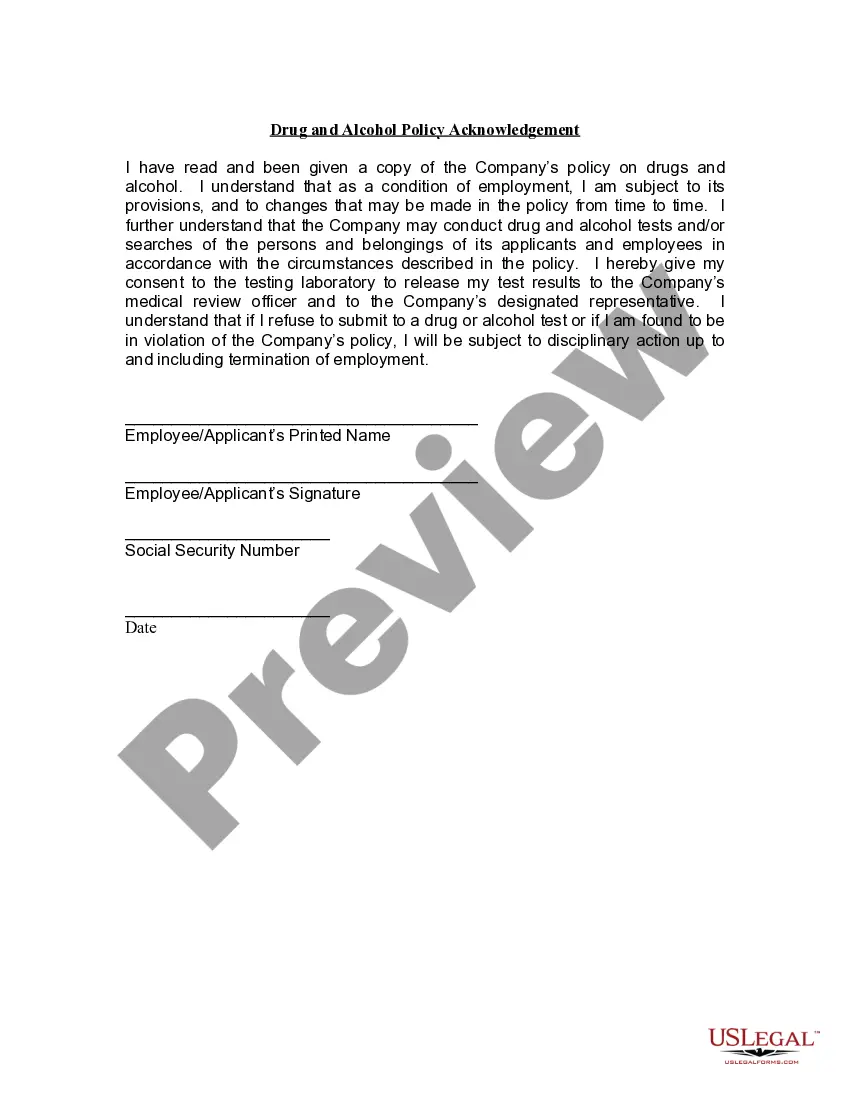
A drug and alcohol policy is a formal document that establishes an organization’s stance on drug and alcohol use among employees. It sets clear guidelines on acceptable behaviors, and procedures for testing, and defines the consequences of policy violations. Implementing a comprehensive drug and alcohol policy for work protects both employees and the organization while contributing to a healthier work culture.
A solid example of an alcohol and drug policy would include a statement that prohibits the use of illegal drugs and limits alcohol consumption during work hours. It may specify testing procedures for employees, outline support for those seeking help, and detail disciplinary actions for violations. Such a policy not only promotes workplace safety but also demonstrates your commitment to employee well-being through a balanced drug and alcohol policy for work.
An alcohol policy outlines the rules and guidelines related to alcohol consumption in the workplace. It aims to ensure a safe and productive environment by defining acceptable behavior concerning alcohol use. By clearly stating the expectations and potential consequences, this policy helps to maintain professionalism and reduce risks associated with alcohol misuse in a work setting.
An effective substance abuse policy might state that employees must not report to work under the influence of drugs or alcohol and detail the process for mandatory testing in specific circumstances. It should also promote awareness and provide access to counseling and treatment programs. By outlining expectations and support resources, this policy helps maintain workplace integrity and employee health. This gives employees a clear framework for understanding their responsibilities.
Yes, employees can be fired for substance abuse if it violates company policies, jeopardizes safety, or negatively impacts job performance. Organizations must have a clear drug and alcohol policy for work that outlines acceptable behavior and the consequences of violations. It’s crucial for employees to understand these policies to avoid potential termination. Support and education can help prevent substance abuse issues from escalating.
The Americans with Disabilities Act (ADA) requires employers to provide reasonable accommodations to employees with an alcohol abuse disorder, as long as the individual can perform essential job functions. This may include offering leave for treatment or adjusting work schedules to participate in rehabilitation programs. However, employees must still adhere to the workplace's drug and alcohol policy for work. Understanding these requirements is essential for maintaining compliance while supporting employees.
Substance abuse in the workplace can lead to various negative outcomes, including decreased productivity, increased safety risks, and higher absenteeism rates. Employees may face disciplinary action, such as suspension or termination, depending on the severity of the issue and company policies. Additionally, ineffective management of substance abuse can harm workplace culture and employee morale. Therefore, implementing a robust drug and alcohol policy for work helps mitigate these risks.
To create a drug policy, begin with research to understand the legal requirements and best practices specific to your industry. Involve stakeholders, such as human resources and legal advisors, to gather diverse perspectives. Develop the policy document, ensuring it clearly communicates expectations and procedures. Finally, regularly review and update the policy to maintain its relevance and effectiveness in managing substance issues.