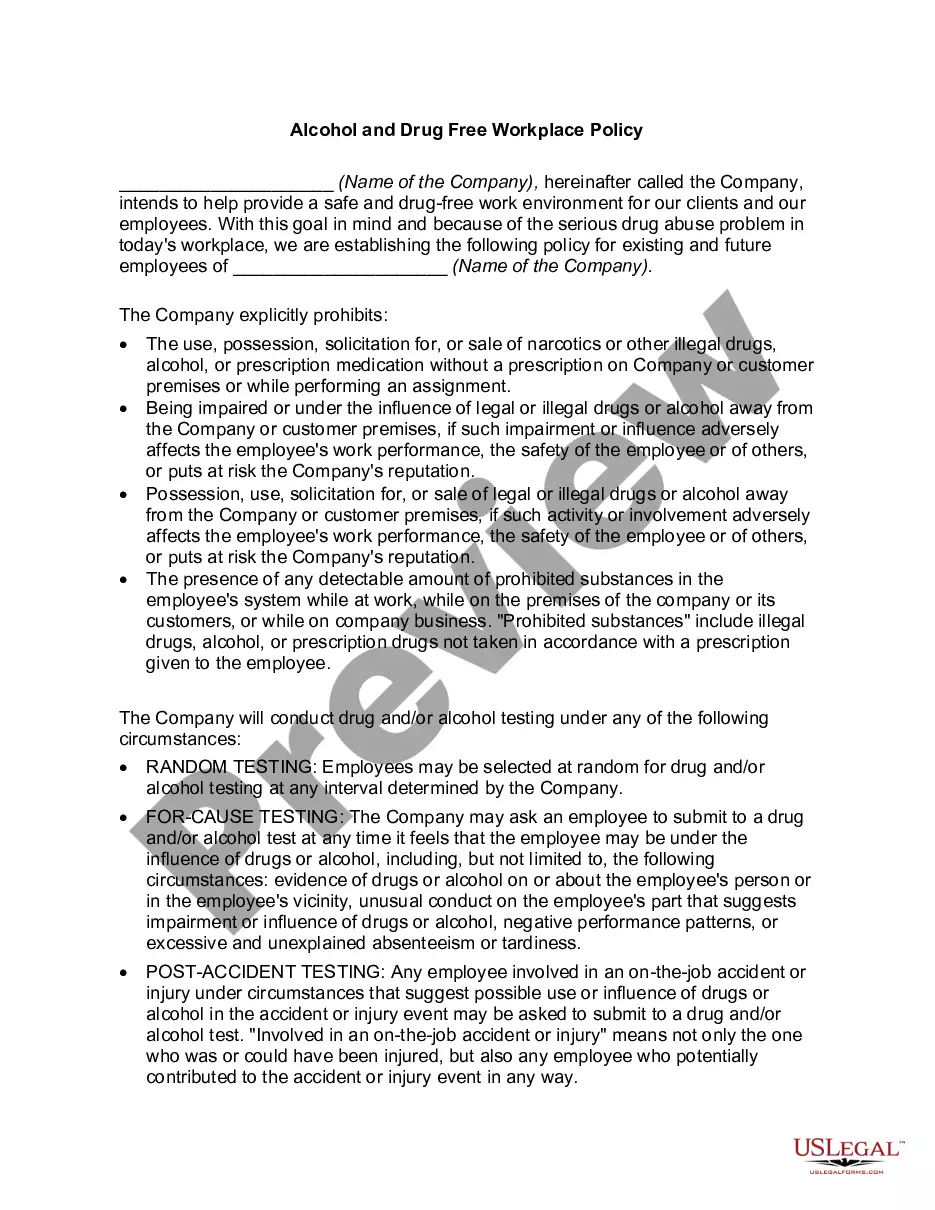
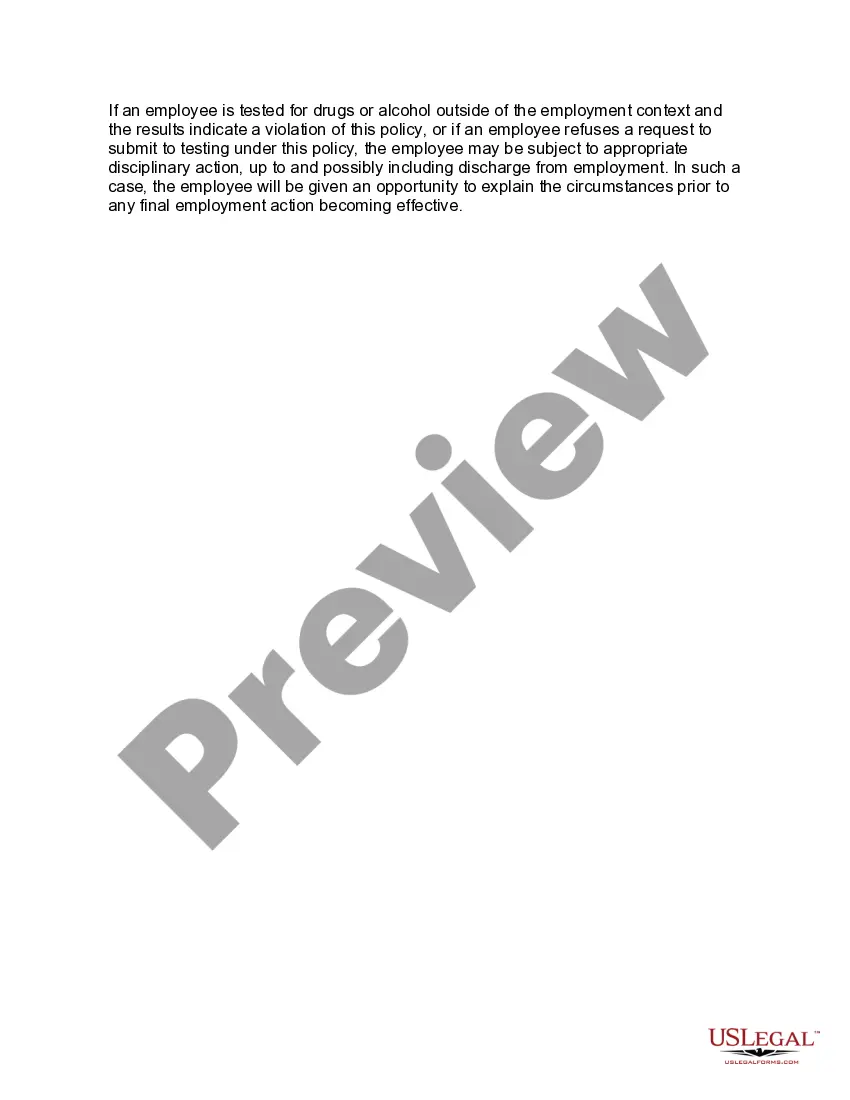
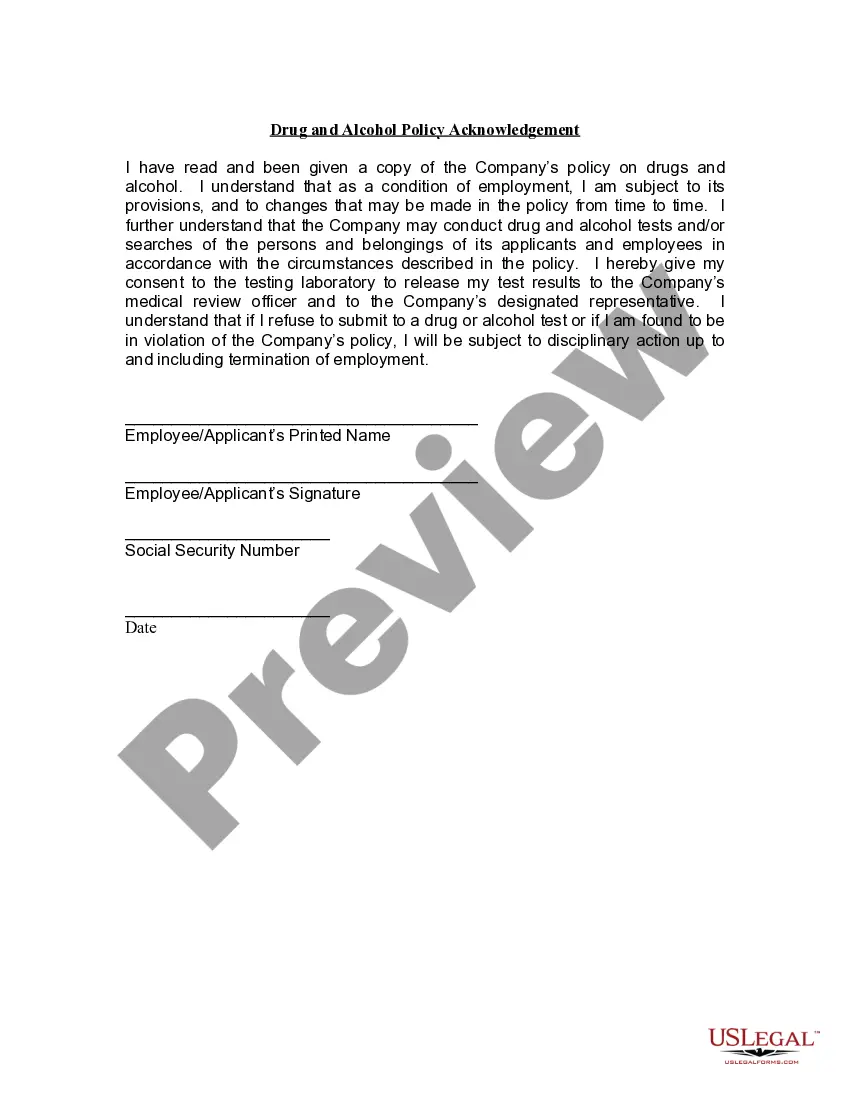
Alcohol Workplace Policy Sample With No Experience
Description
Get your form ready online
Our built-in tools help you complete, sign, share, and store your documents in one place.
Make edits, fill in missing information, and update formatting in US Legal Forms—just like you would in MS Word.
Download a copy, print it, send it by email, or mail it via USPS—whatever works best for your next step.
Sign and collect signatures with our SignNow integration. Send to multiple recipients, set reminders, and more. Go Premium to unlock E-Sign.
If this form requires notarization, complete it online through a secure video call—no need to meet a notary in person or wait for an appointment.
We protect your documents and personal data by following strict security and privacy standards.

Make edits, fill in missing information, and update formatting in US Legal Forms—just like you would in MS Word.

Download a copy, print it, send it by email, or mail it via USPS—whatever works best for your next step.

Sign and collect signatures with our SignNow integration. Send to multiple recipients, set reminders, and more. Go Premium to unlock E-Sign.

If this form requires notarization, complete it online through a secure video call—no need to meet a notary in person or wait for an appointment.

We protect your documents and personal data by following strict security and privacy standards.
Looking for another form?



How to fill out Alcohol And Drug Free Workplace Policy?
The Alcohol Workplace Policy Template Without Experience you observe on this site is a reusable official framework created by qualified attorneys in accordance with federal and state regulations.
For over 25 years, US Legal Forms has supplied individuals, companies, and lawyers with more than 85,000 validated, state-specific documents for any professional and personal needs. It’s the fastest, most direct, and most dependable method to acquire the paperwork you require, as the service assures the utmost level of data protection and anti-malware security.
Select the format you desire for your Alcohol Workplace Policy Template Without Experience (PDF, Word, RTF) and save the template on your device.
- Search for the document you require and examine it.
- Browse the sample you queried and preview it or check the form description to verify it fulfills your needs. If it does not, utilize the search feature to find the suitable one. Click Buy Now when you have located the template you seek.
- Register and Log In.
- Select the pricing plan that fits you and create an account. Use PayPal or a credit card for quick payment. If you already have an account, Log In and verify your subscription to proceed.
- Retrieve the editable template.
Form popularity
FAQ
Response: Although OSHA supports workplace drug and alcohol programs, at this time OSHA does not have a standard. In some situations, however, OSHA's General Duty Clause, Section 5(a)(1) of the OSH Act, may be applicable where a particular hazard is not addressed by any OSHA standard.
Whatever your formal policy ends up being, it must address three things: whether/when alcohol use is permitted, the importance of being ?fit for work,? and a disclaimer that protects the use of legally prescribed medication. Your approach should be appropriate to your company's industry and workforce.
As a general starting point, California is an at-will employment state. This means you can terminate an employee at any time and for any reason (or without a reason) during the employment period.
Alcohol control policies are laws, rules, and regulations aimed at preventing and reducing alcohol-related damages. Alcohol policies can be a global, regional, international or national level. Effective alcohol control strategies include a multi-component approach such as access, price, marketing, and drink-driving.
The appearance of being inebriated or under the influence of alcohol might include: The smell of alcohol. Staggering, or an unsteady gait. Bloodshot eyes. Smell of alcohol on the breath. Mood and behavior changes such as excessive laughter and inappropriate loud talk. Excessive use of mouthwash or breath mints.