Discovery Letter Sample For Authorization
Description

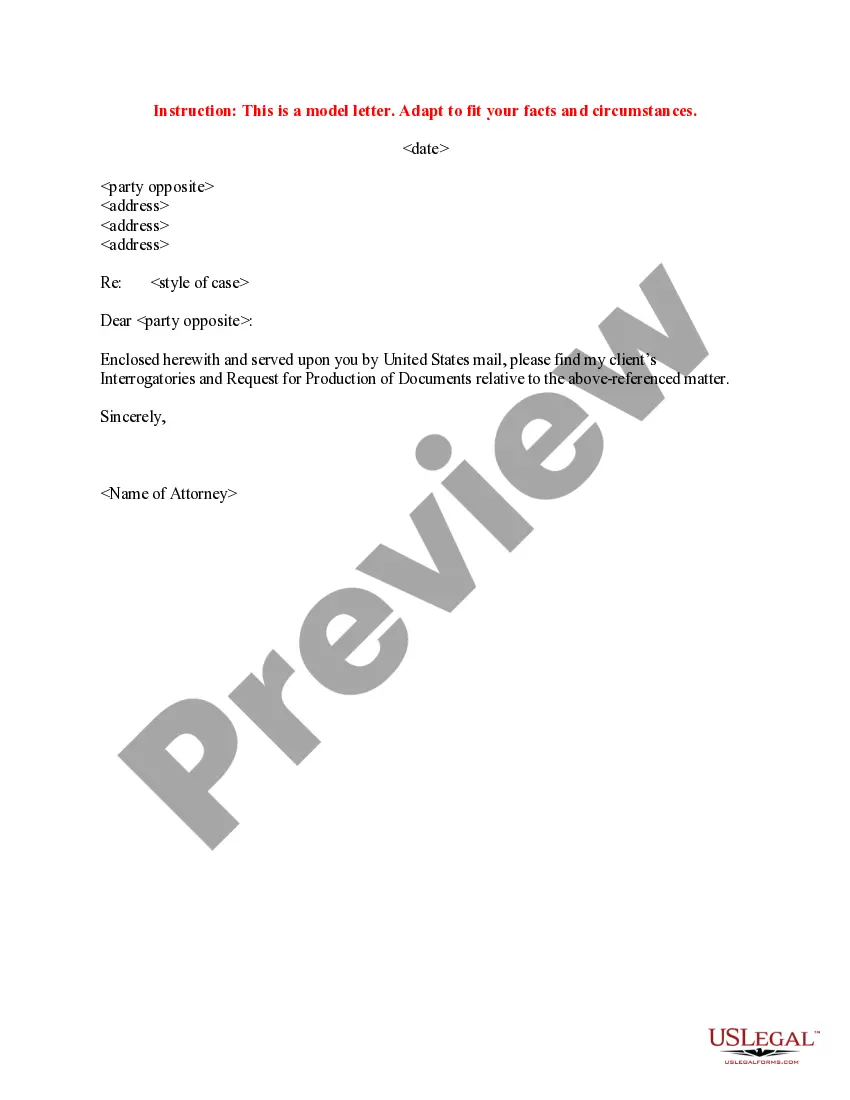
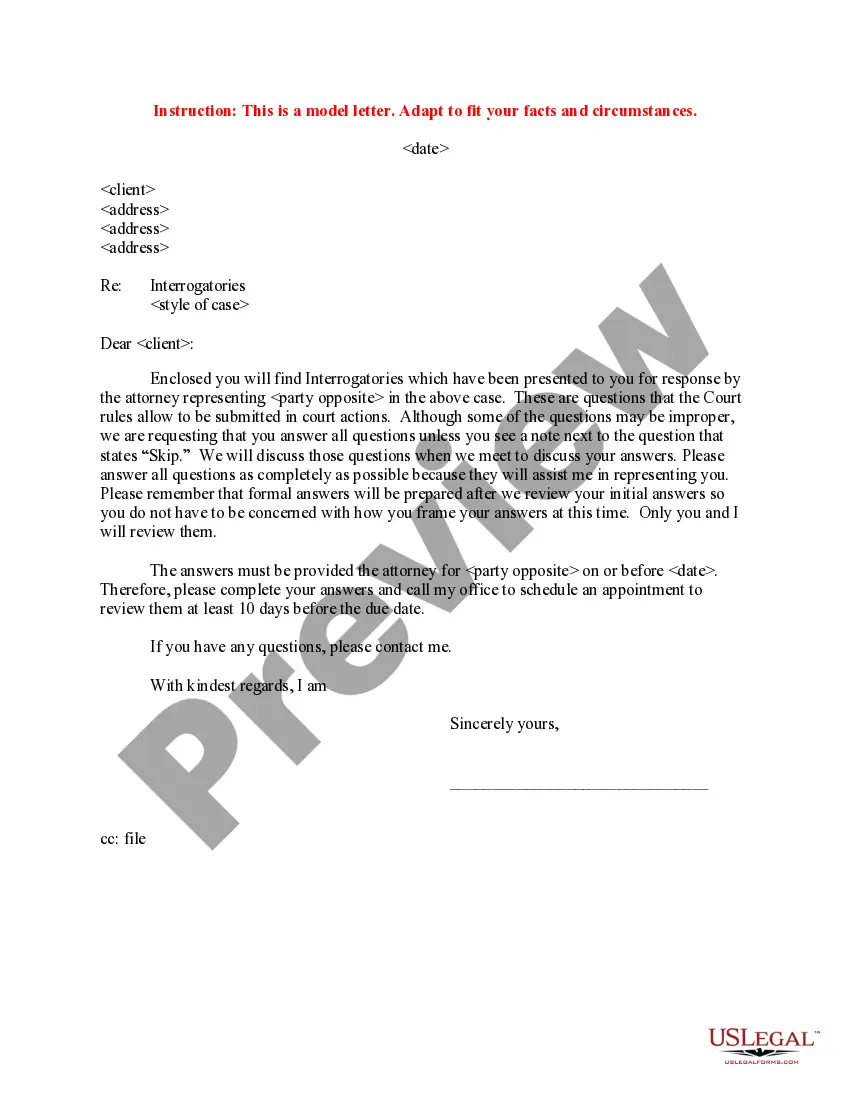
Get your form ready online
Our built-in tools help you complete, sign, share, and store your documents in one place.
Make edits, fill in missing information, and update formatting in US Legal Forms—just like you would in MS Word.
Download a copy, print it, send it by email, or mail it via USPS—whatever works best for your next step.
Sign and collect signatures with our SignNow integration. Send to multiple recipients, set reminders, and more. Go Premium to unlock E-Sign.
If this form requires notarization, complete it online through a secure video call—no need to meet a notary in person or wait for an appointment.
We protect your documents and personal data by following strict security and privacy standards.

Make edits, fill in missing information, and update formatting in US Legal Forms—just like you would in MS Word.

Download a copy, print it, send it by email, or mail it via USPS—whatever works best for your next step.

Sign and collect signatures with our SignNow integration. Send to multiple recipients, set reminders, and more. Go Premium to unlock E-Sign.

If this form requires notarization, complete it online through a secure video call—no need to meet a notary in person or wait for an appointment.

We protect your documents and personal data by following strict security and privacy standards.
Looking for another form?
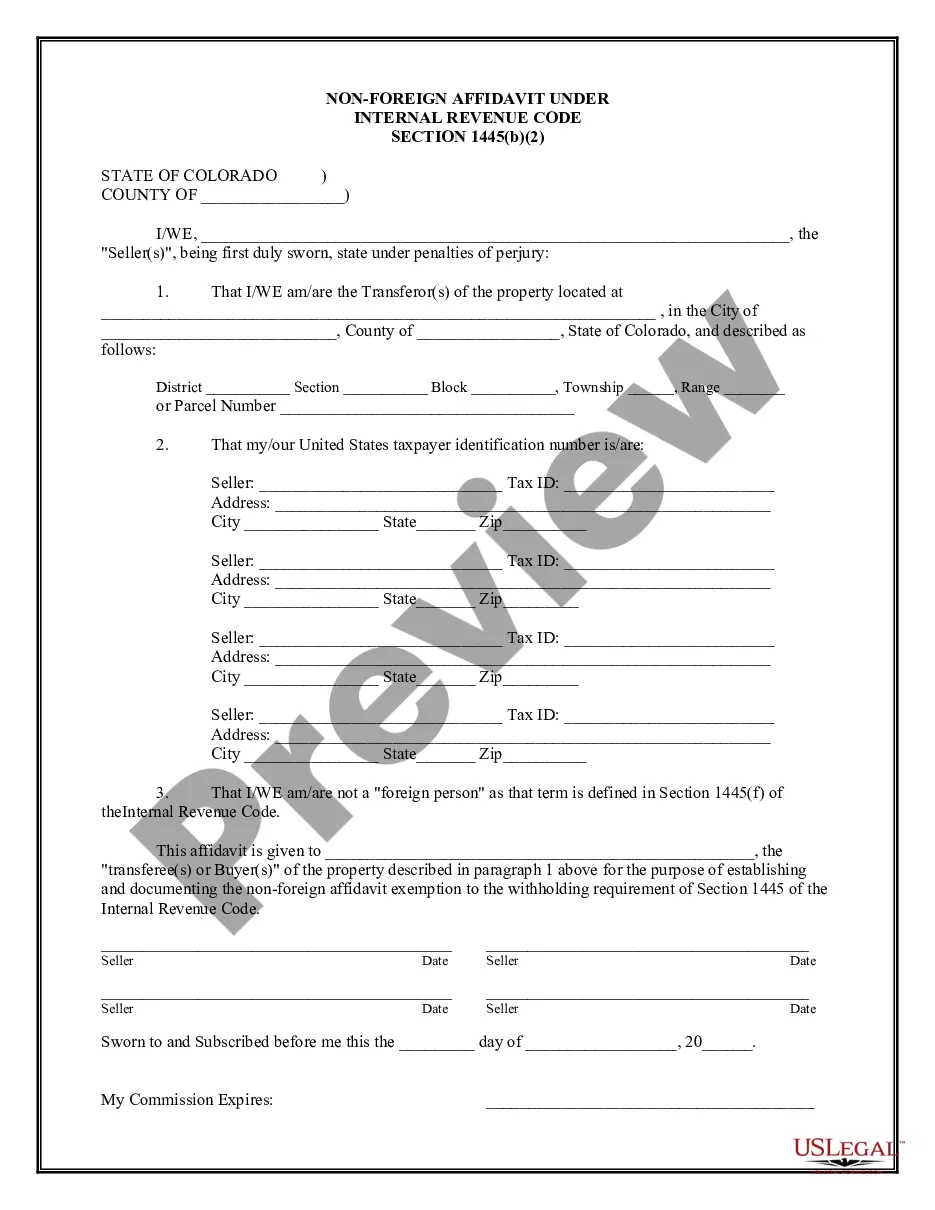



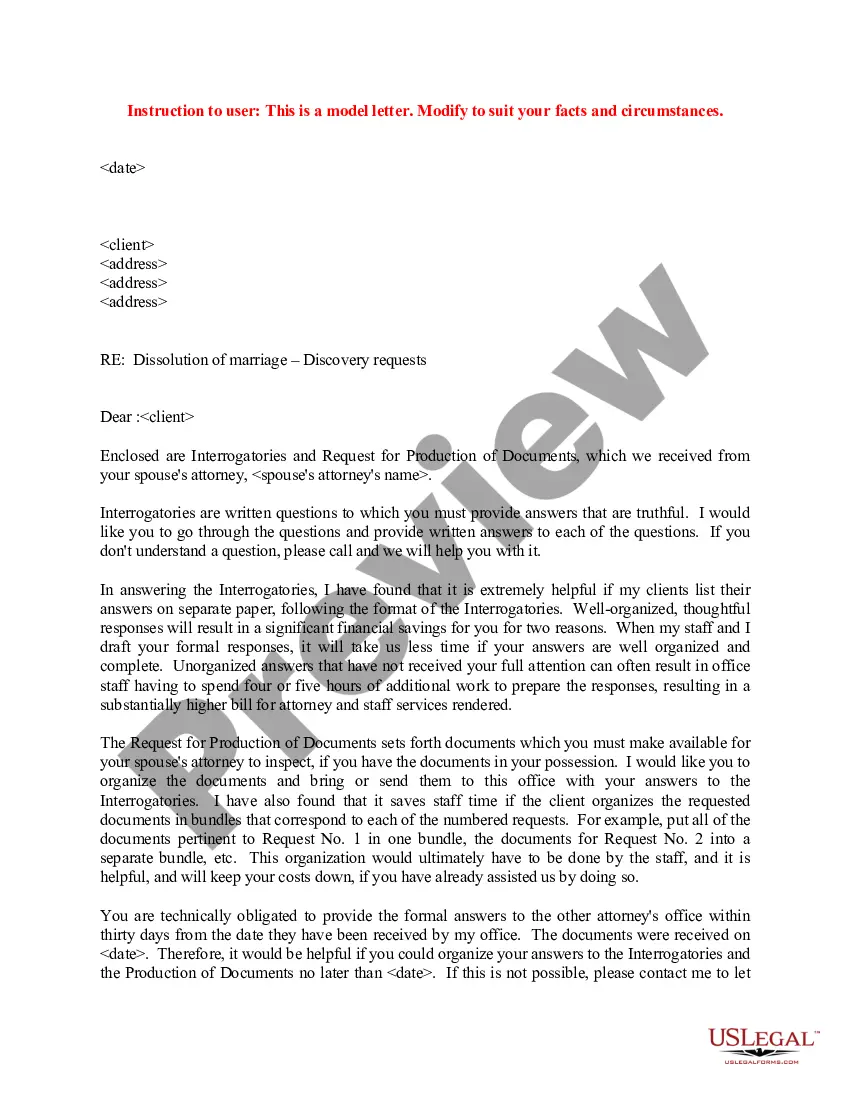
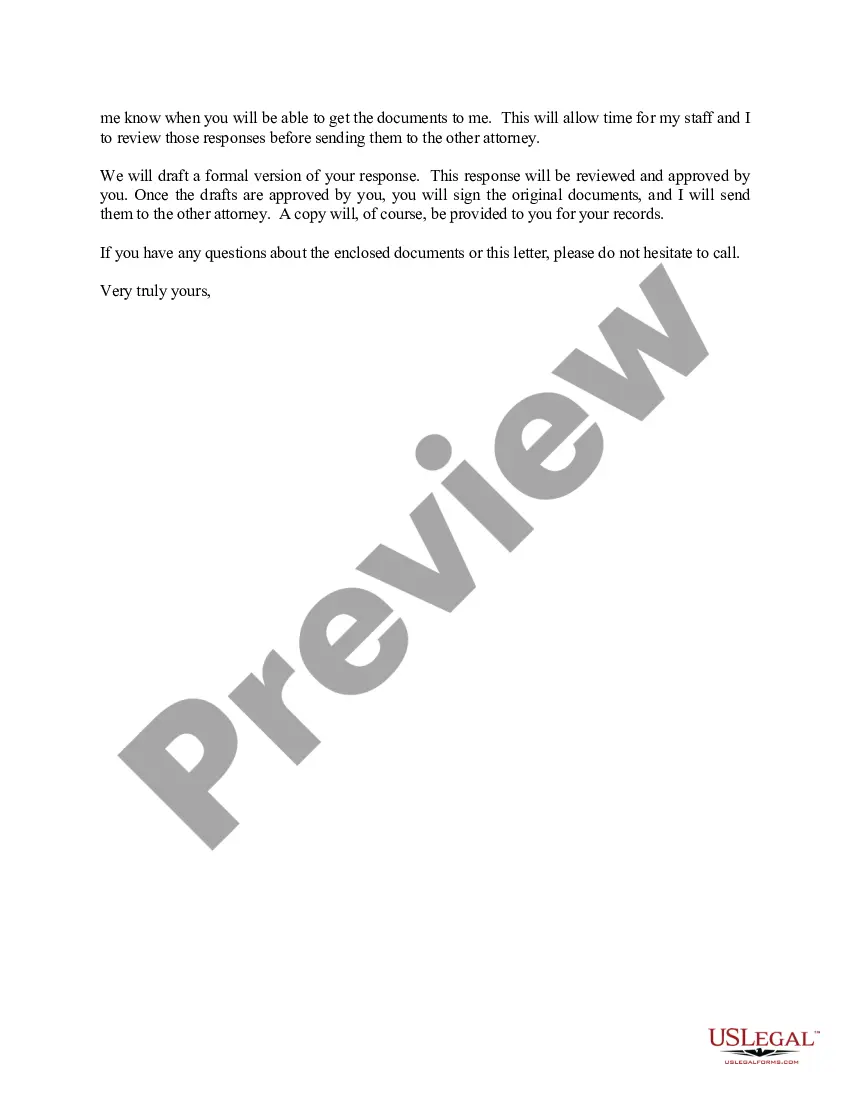
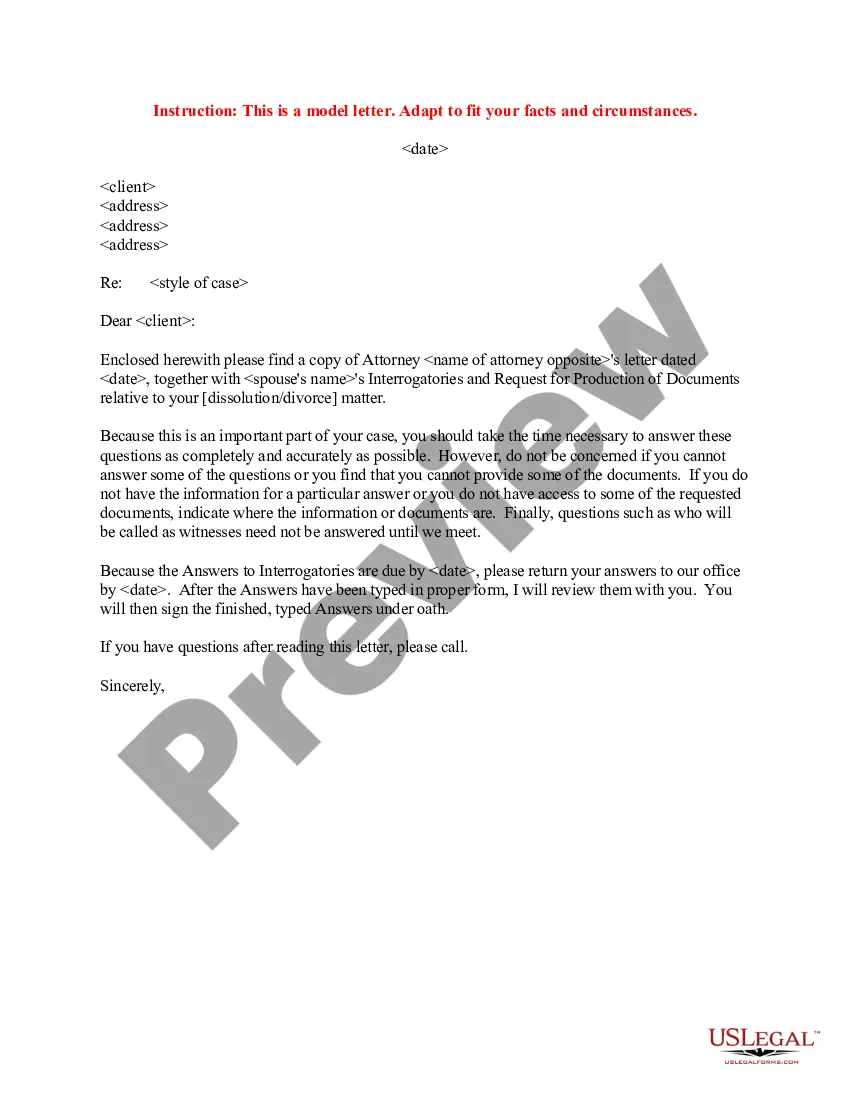
How to fill out Sample Letter To Client Instructing On Answering Discovery?
It's widely known that you cannot transition into a legal expert instantly, nor can you rapidly master the preparation of a Discovery Letter Sample For Authorization without having a specific educational background.
Drafting legal documents is a lengthy undertaking that necessitates specialized training and expertise. So why not entrust the development of the Discovery Letter Sample For Authorization to the professionals.
With US Legal Forms, featuring one of the largest collections of legal templates, you can find everything from court documents to formats for internal business communication. We recognize the importance of compliance with federal and state laws and standards.
Press Buy now. After the payment is completed, you can retrieve the Discovery Letter Sample For Authorization, fill it out, print it, and deliver it to the appropriate individuals or entities.
You can regain access to your documents via the My documents section at any time. If you're a returning customer, you can easily Log In and locate and download the template from that same area.
- Start your journey with our site and obtain the document you need in just a few minutes.
- Identify the form you require using the search feature located at the top of the website.
- Review the document (if this option is available) and read the accompanying description to determine if the Discovery Letter Sample For Authorization meets your needs.
- If you require additional forms, initiate your search again.
- Create a complimentary account and choose a subscription plan to acquire the template.
Form popularity
FAQ
Discovery requests typically follow a common format that you can mirror. First, list instructions detailing the request for production. Be sure to mention Rule 34 and Rule 26(b), which outline the scope of the discovery request. It's also necessary to include a section with definitions.
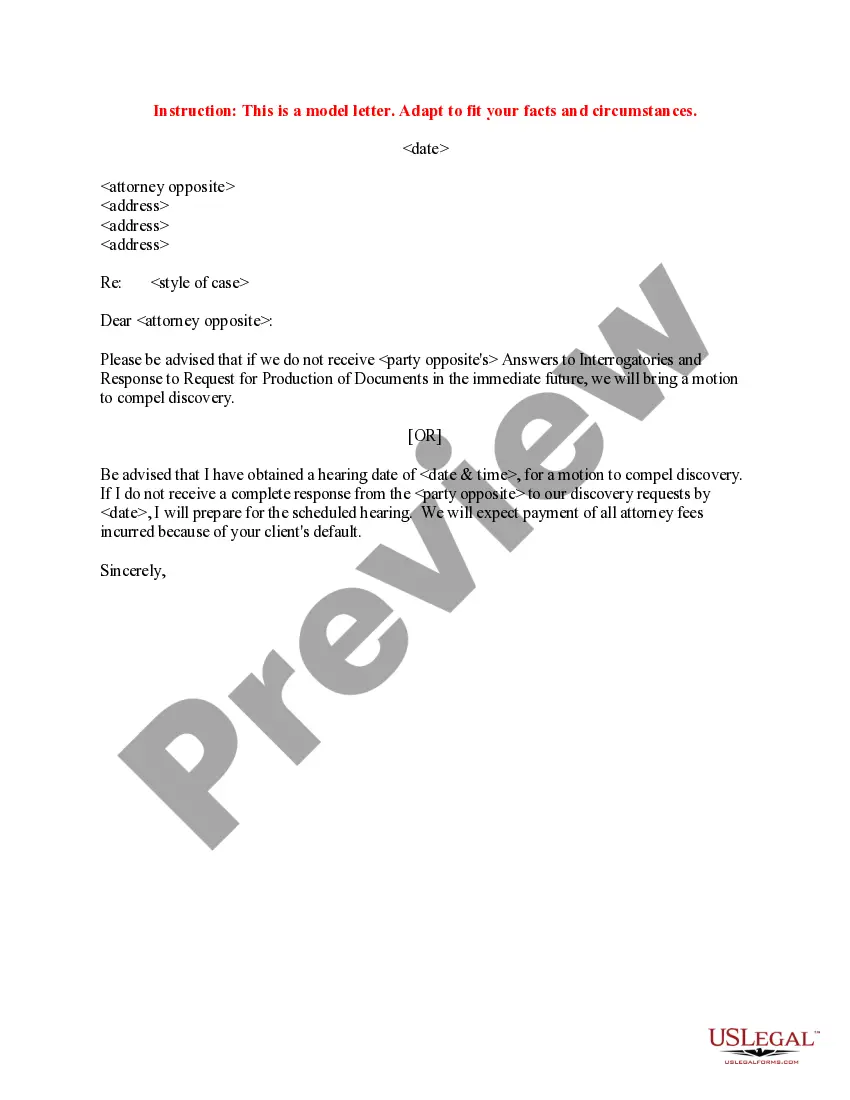
This letter is often called a good faith letter. And it is needed under many courts' rules before you can file a motion to compel discovery if the other party ignores your requests or provides evasive responses or move for sanctions if your opponent refuses to comply with the court's discovery order.
A discovery is recognizing something that already exists for the first time, that nobody has found before, e.g. how Christopher Columbus discovered the Americas.
Write out each fact you wish the other party to admit is true. When writing these facts, be as clear and concise as possible. Each request must be for a single fact; do not include multiple facts, compound questions, or subparts.
Many types of discovery exist, including: Interrogatories. Requests for Admission. Production of Documents. Property Inspection. Physical and Mental Exams. Depositions.