Sample Complaint For Legal Malpractice
Description
Get your form ready online
Our built-in tools help you complete, sign, share, and store your documents in one place.
Make edits, fill in missing information, and update formatting in US Legal Forms—just like you would in MS Word.
Download a copy, print it, send it by email, or mail it via USPS—whatever works best for your next step.
Sign and collect signatures with our SignNow integration. Send to multiple recipients, set reminders, and more. Go Premium to unlock E-Sign.
If this form requires notarization, complete it online through a secure video call—no need to meet a notary in person or wait for an appointment.
We protect your documents and personal data by following strict security and privacy standards.

Make edits, fill in missing information, and update formatting in US Legal Forms—just like you would in MS Word.

Download a copy, print it, send it by email, or mail it via USPS—whatever works best for your next step.

Sign and collect signatures with our SignNow integration. Send to multiple recipients, set reminders, and more. Go Premium to unlock E-Sign.

If this form requires notarization, complete it online through a secure video call—no need to meet a notary in person or wait for an appointment.

We protect your documents and personal data by following strict security and privacy standards.
Looking for another form?
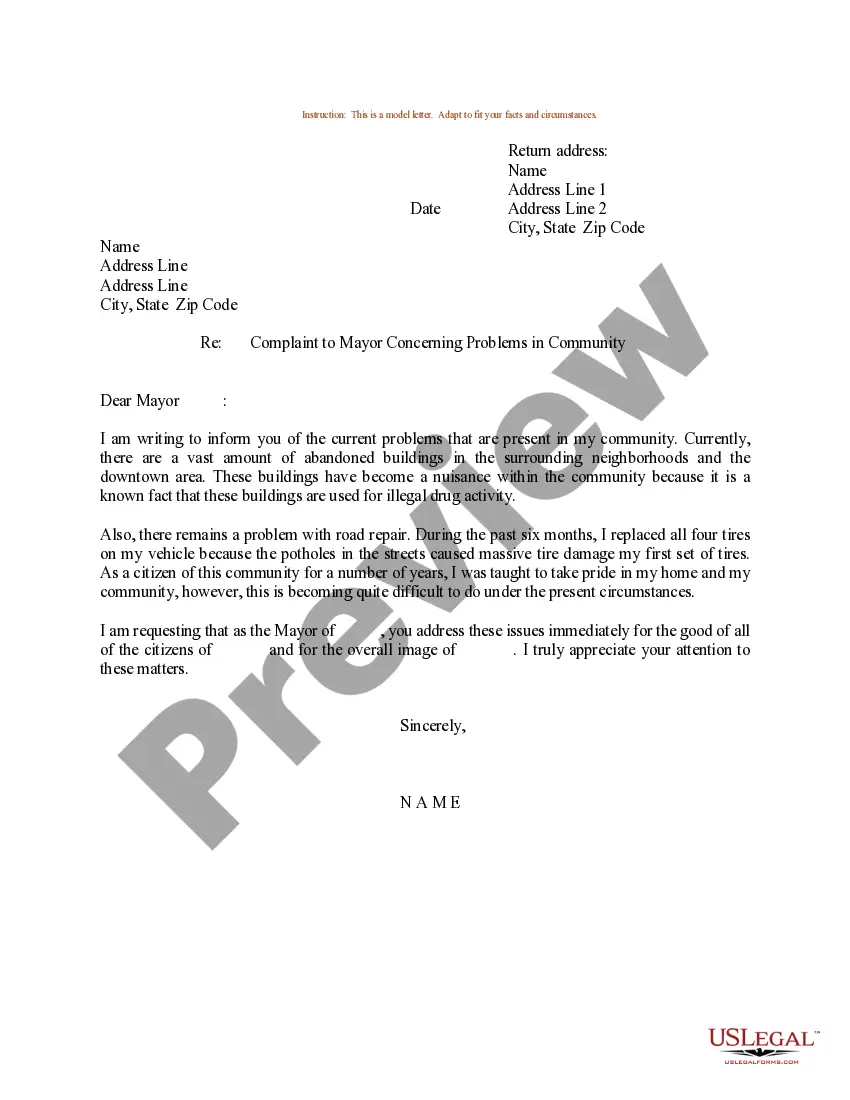
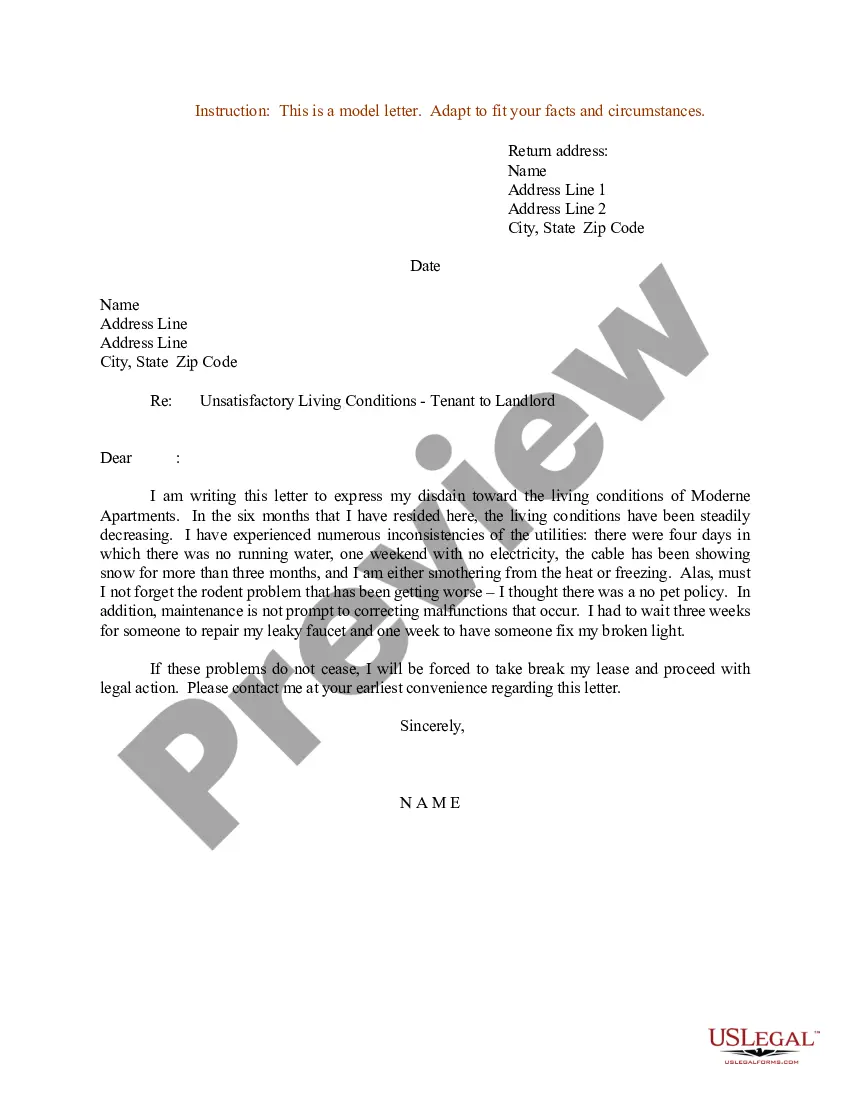
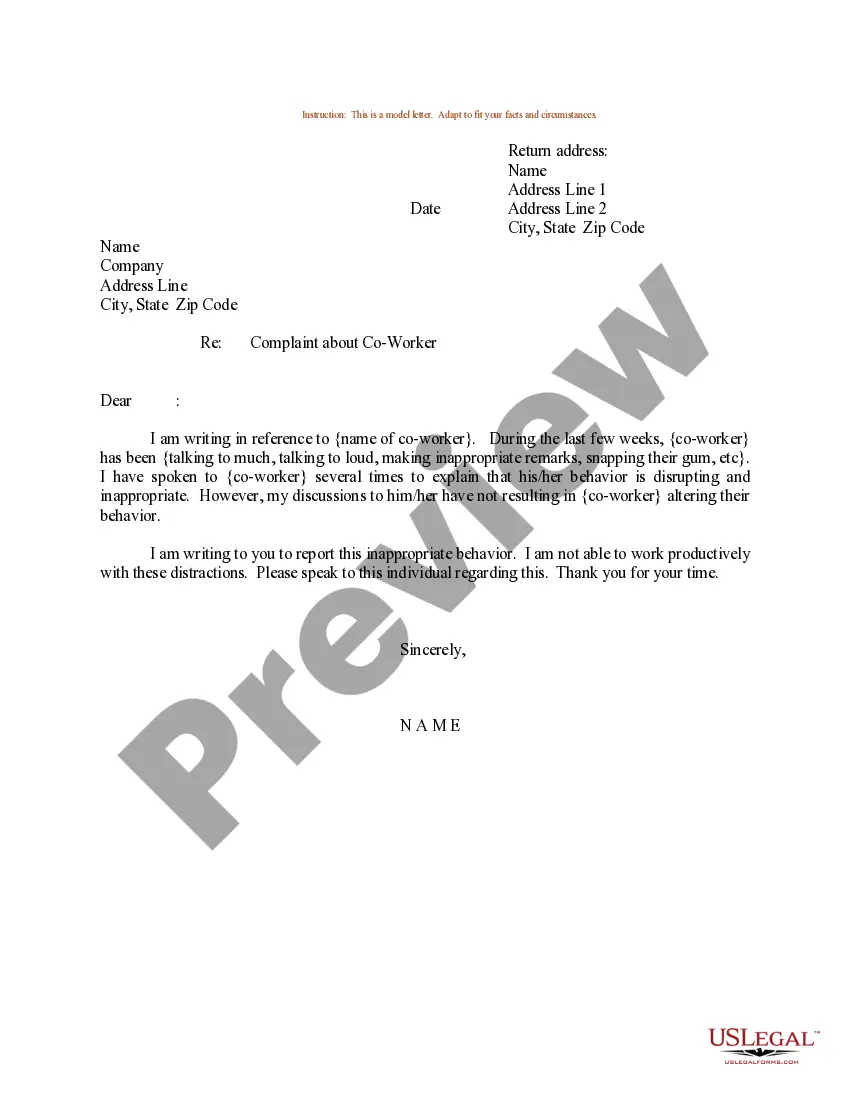
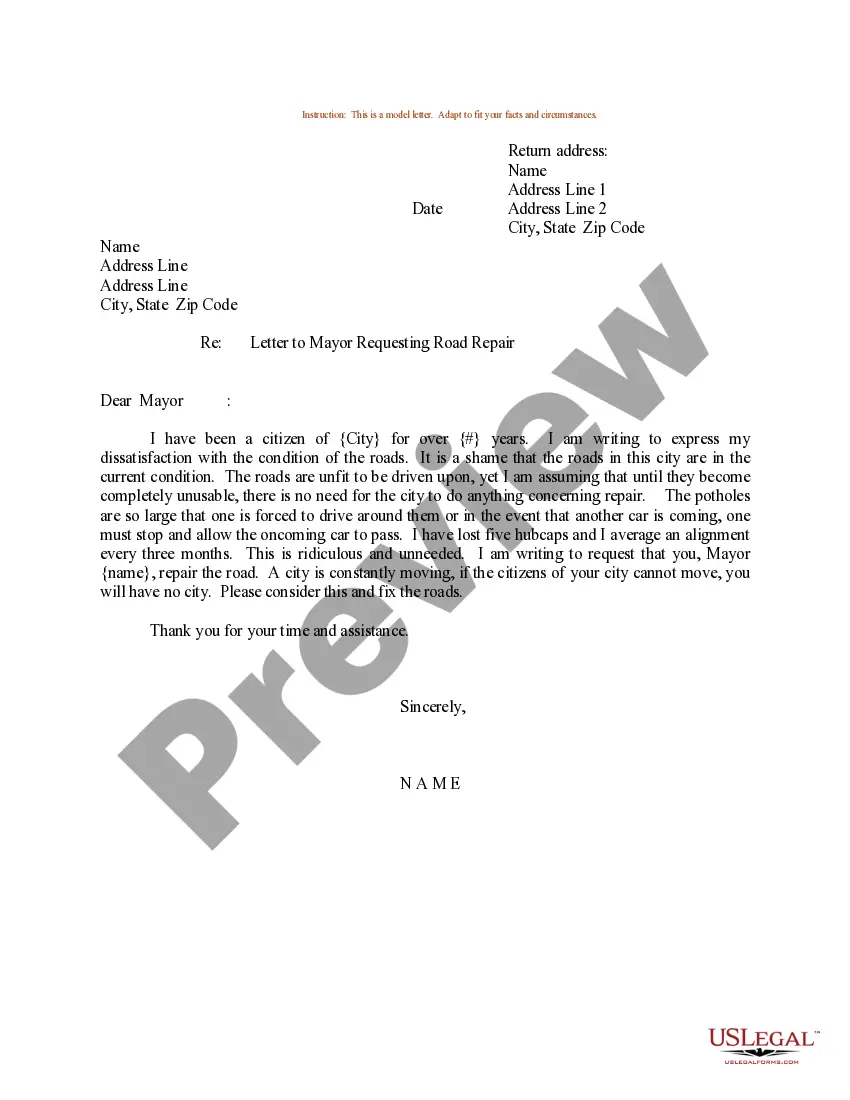
How to fill out Sample Letter For Complaint To Mayor Concerning Problems In Community?
- Log in to your US Legal Forms account if you're a returning user to download your document. Ensure your subscription is active, or renew it accordingly.
- For first-time users, begin by browsing the extensive library. Check the preview and description of the sample complaint for legal malpractice to ensure it meets your specific needs and jurisdiction.
- If the document doesn’t match your requirements, utilize the Search tool to find the correct template.
- Once you identify the right form, click on the Buy Now button. Choose the subscription plan that best fits your needs and create an account to access the library.
- Complete your purchase by entering your payment details or using PayPal for a seamless transaction.
- After purchasing, download the document to your device. You can access it anytime through the My Forms section of your profile.
US Legal Forms provides an unparalleled collection of over 85,000 fillable and editable legal documents, making it easy for both individuals and attorneys to find the forms they need. With expert assistance available, you can ensure your legal documents are accurate and compliant.
Start simplifying your legal documentation today by visiting US Legal Forms. Empower yourself with the tools you need for legal success!
Form popularity
FAQ
When writing a complaint letter to court, begin by naming the court and including the case details, such as the title, number, and parties involved. Clearly outline the legal basis for your complaint and detail the facts supporting your claims. Finally, request specific relief from the court. If you're uncertain about the format, consider finding a sample complaint for legal malpractice to guide your writing.
Yes, you can file a legal malpractice lawsuit without an attorney, but it is typically not advisable. Navigating the legal system requires understanding complex laws and procedures that can be challenging for a layperson. However, if you choose to proceed yourself, using a sample complaint for legal malpractice can provide a solid starting point for drafting your case.
The most common complaint against a lawyer often revolves around lack of communication. Clients may feel their lawyer did not keep them informed about their case status or failed to respond promptly to inquiries. Such issues can lead to claims of negligence or legal malpractice. Understanding these common pitfalls can help you frame your own legal concerns when reviewing a sample complaint for legal malpractice.
To write a powerful complaint letter, start with a brief introduction of yourself and your relationship to the lawyer in question. Clearly detail the issues you've encountered, supported by specific examples. Lastly, state your desired outcome. This approach allows you to express your concerns effectively, and examining a sample complaint for legal malpractice can help guide your letter's structure.
A legal complaint is a document that outlines the plaintiff's allegations against the defendant. It serves as the formal beginning of a lawsuit and must include details such as jurisdiction, factual background, claims under the law, and the relief sought. A well-crafted legal complaint plays a crucial role in legal malpractice cases. Referencing a sample complaint for legal malpractice can clarify the format and content needed.
To write a legal complaint, start by clearly stating the facts of your case. Include the relevant laws that support your claim, and specify the damages you're seeking. It's important to structure your complaint logically, making it easy for the reader to understand the legal malpractice issues involved. If you're unsure how to proceed, consider using a sample complaint for legal malpractice available on platforms like uslegalforms.
In a medical malpractice case, plaintiffs must prove four crucial elements to succeed. First, they must establish that the healthcare provider owed a duty of care to the patient. Second, they need to demonstrate that the provider breached this duty, failing to meet accepted standards. The third element involves showing causation, linking the breach directly to the injury sustained by the patient. Lastly, evidence of actual damages must be presented to illustrate the harm suffered. A well-crafted sample complaint for legal malpractice effectively outlines these requirements.
To write a medical malpractice complaint, start with a clear introduction of the parties involved and the nature of the claim. Outline the relevant facts surrounding the case, emphasizing the duty of care owed by the healthcare provider. Then, describe how this duty was breached and the resulting injuries or damages. Ensure to cite applicable laws and precedents to support your claims. You might refer to a sample complaint for legal malpractice to guide your structure and details.
The 4 D's of medical malpractice include duty, dereliction, direct cause, and damages. Duty encompasses the obligation healthcare providers have to their patients to deliver care competently. Dereliction refers to failing to meet that duty, which can lead to direct cause, linking the provider's negligence directly to the patient's injury. Finally, damages must be established to indicate the harm suffered by the patient. Discussing these D's in a sample complaint for legal malpractice strengthens the argument.
A plaintiff alleging legal malpractice must prove several vital components. They must establish that the attorney had a duty to act competently on their behalf. Next, the plaintiff needs to demonstrate that the attorney breached that duty, which directly led to some form of harm or loss. Lastly, they must show tangible damages that resulted from the attorney's actions. Understanding these requirements is essential when crafting a sample complaint for legal malpractice.