Small Business Inventory Formula
Description
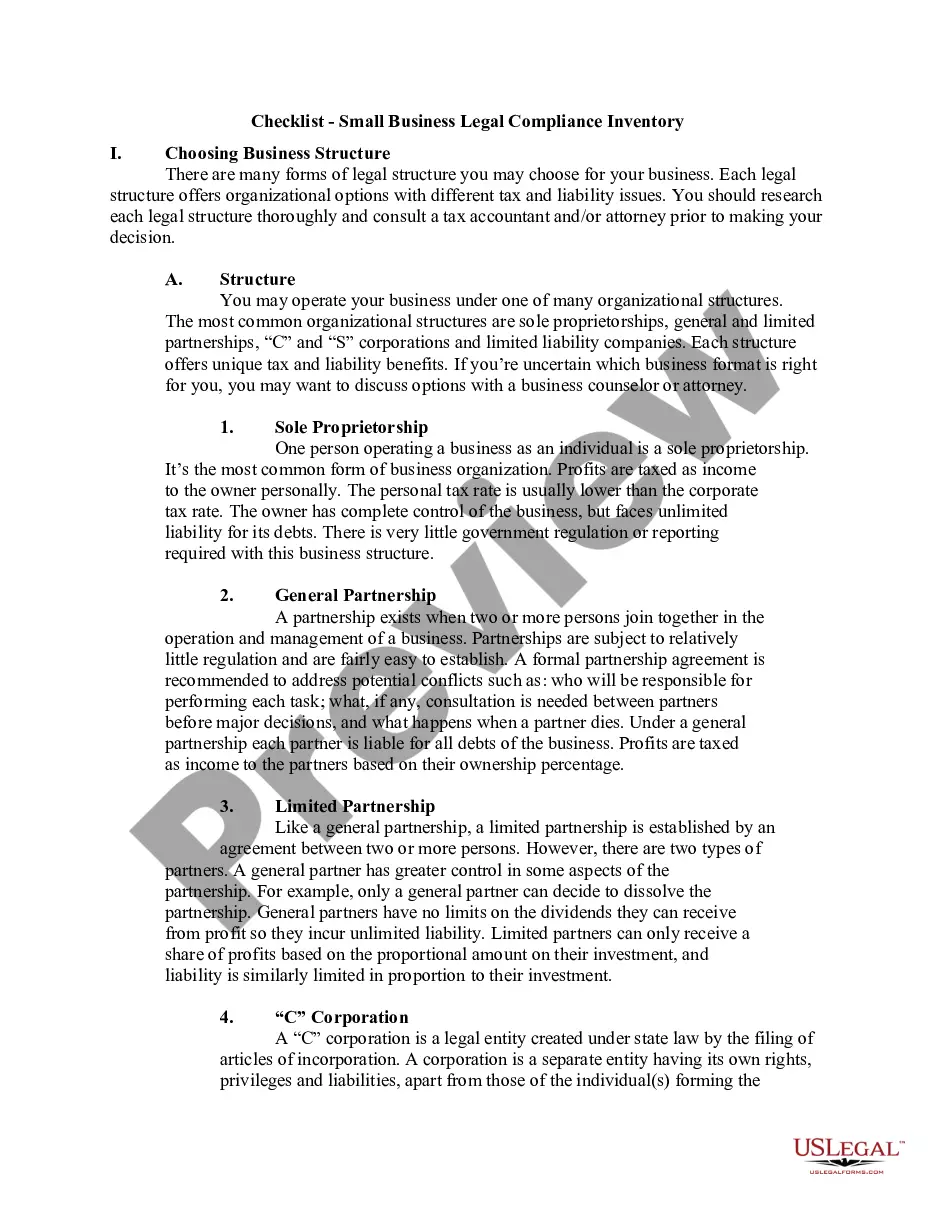
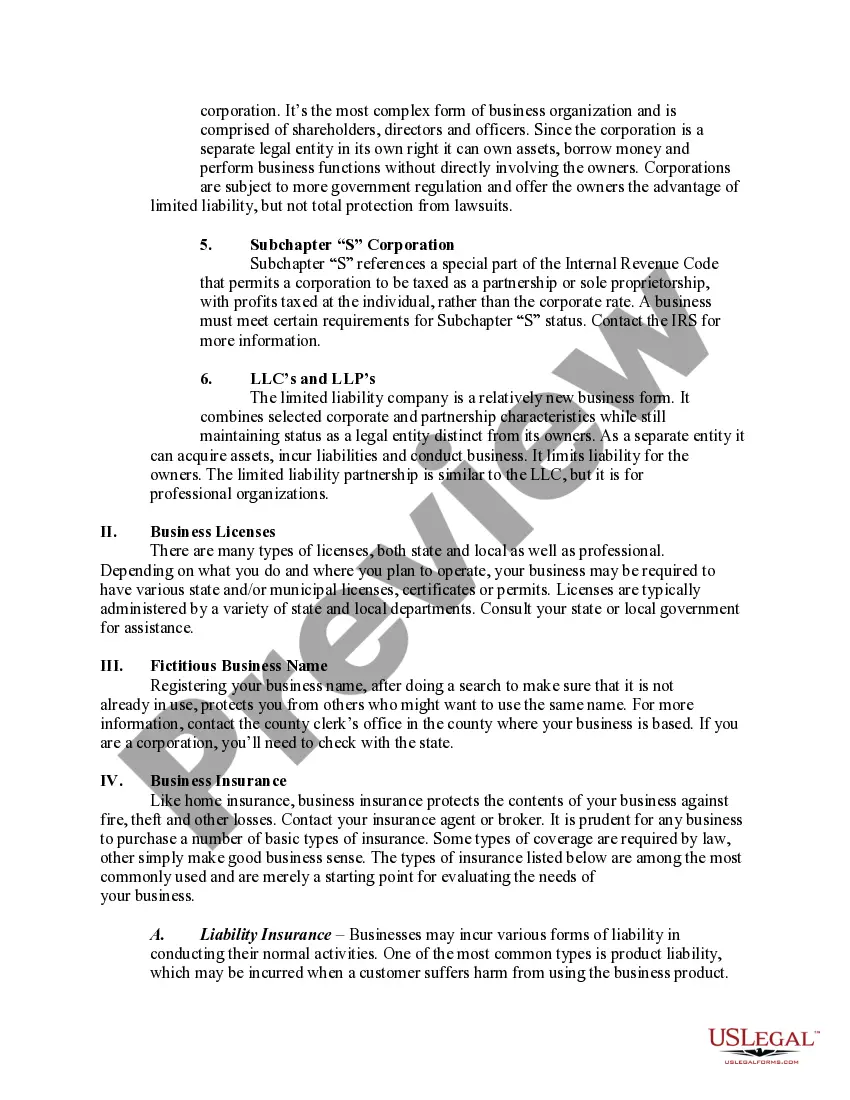
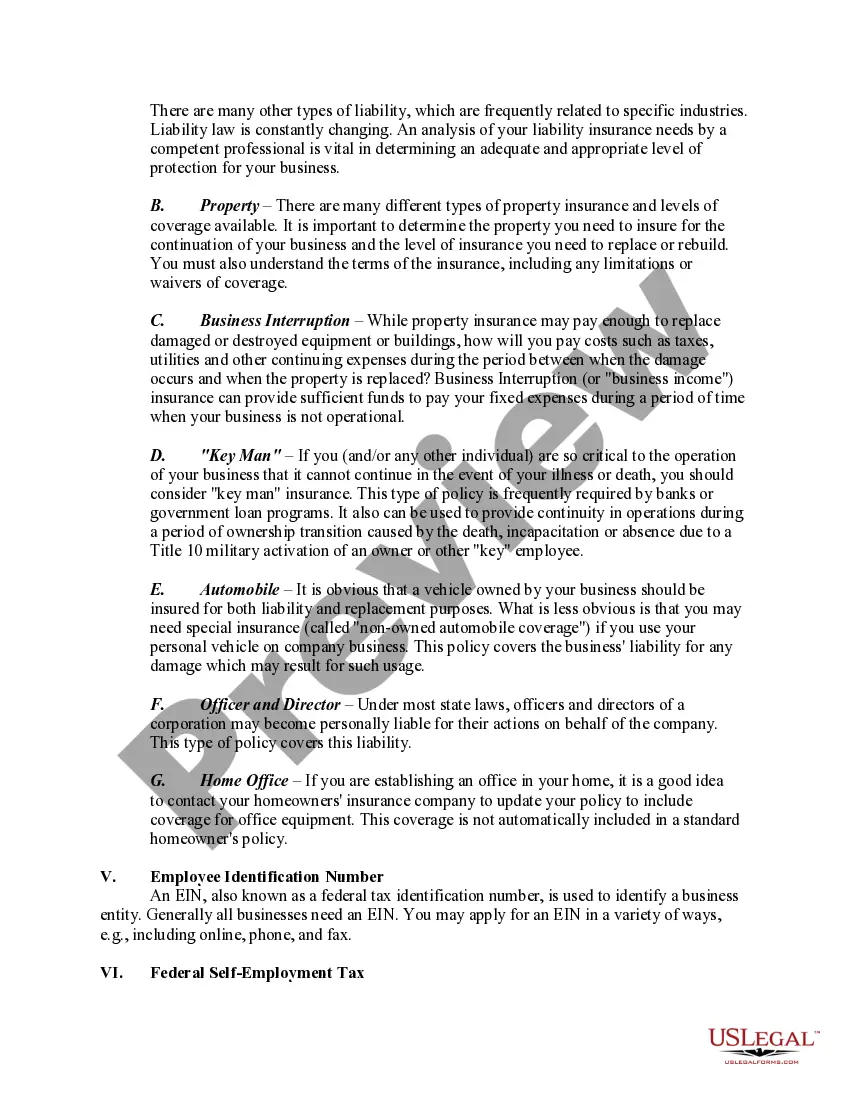
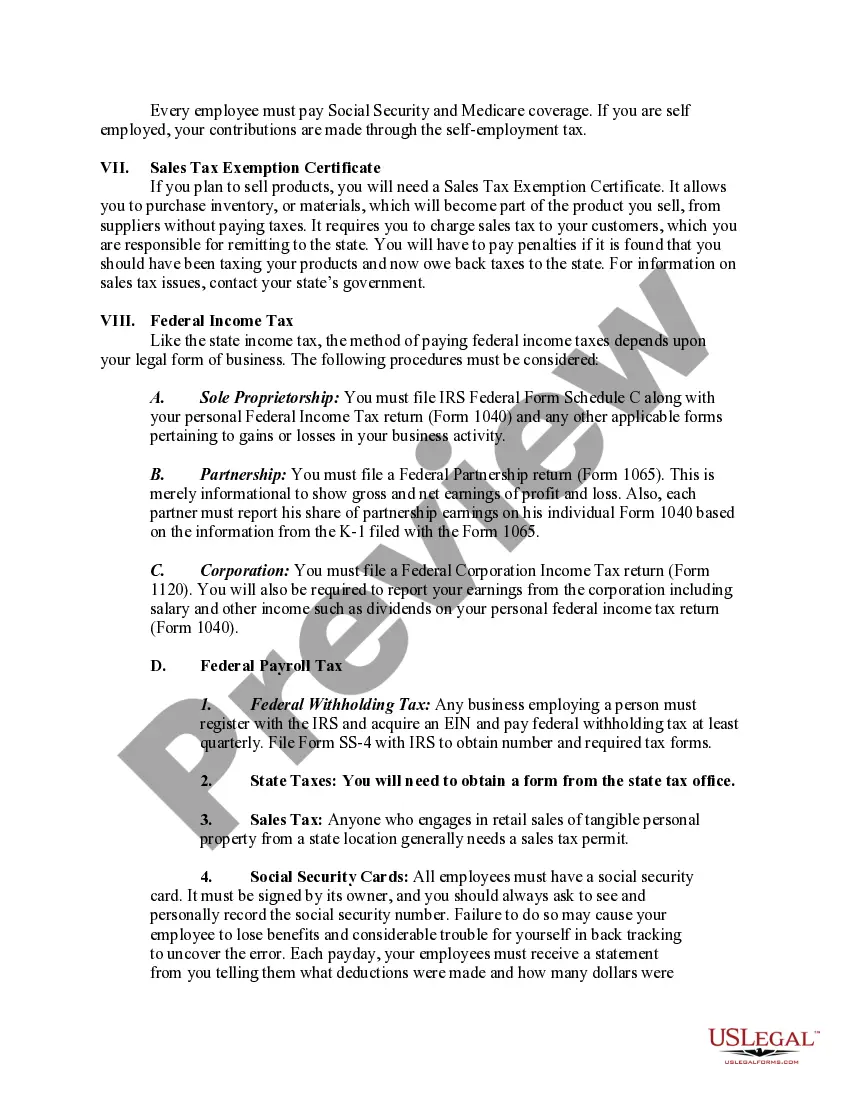
Get your form ready online
Our built-in tools help you complete, sign, share, and store your documents in one place.
Make edits, fill in missing information, and update formatting in US Legal Forms—just like you would in MS Word.
Download a copy, print it, send it by email, or mail it via USPS—whatever works best for your next step.
Sign and collect signatures with our SignNow integration. Send to multiple recipients, set reminders, and more. Go Premium to unlock E-Sign.
If this form requires notarization, complete it online through a secure video call—no need to meet a notary in person or wait for an appointment.
We protect your documents and personal data by following strict security and privacy standards.

Make edits, fill in missing information, and update formatting in US Legal Forms—just like you would in MS Word.

Download a copy, print it, send it by email, or mail it via USPS—whatever works best for your next step.

Sign and collect signatures with our SignNow integration. Send to multiple recipients, set reminders, and more. Go Premium to unlock E-Sign.

If this form requires notarization, complete it online through a secure video call—no need to meet a notary in person or wait for an appointment.

We protect your documents and personal data by following strict security and privacy standards.
Looking for another form?
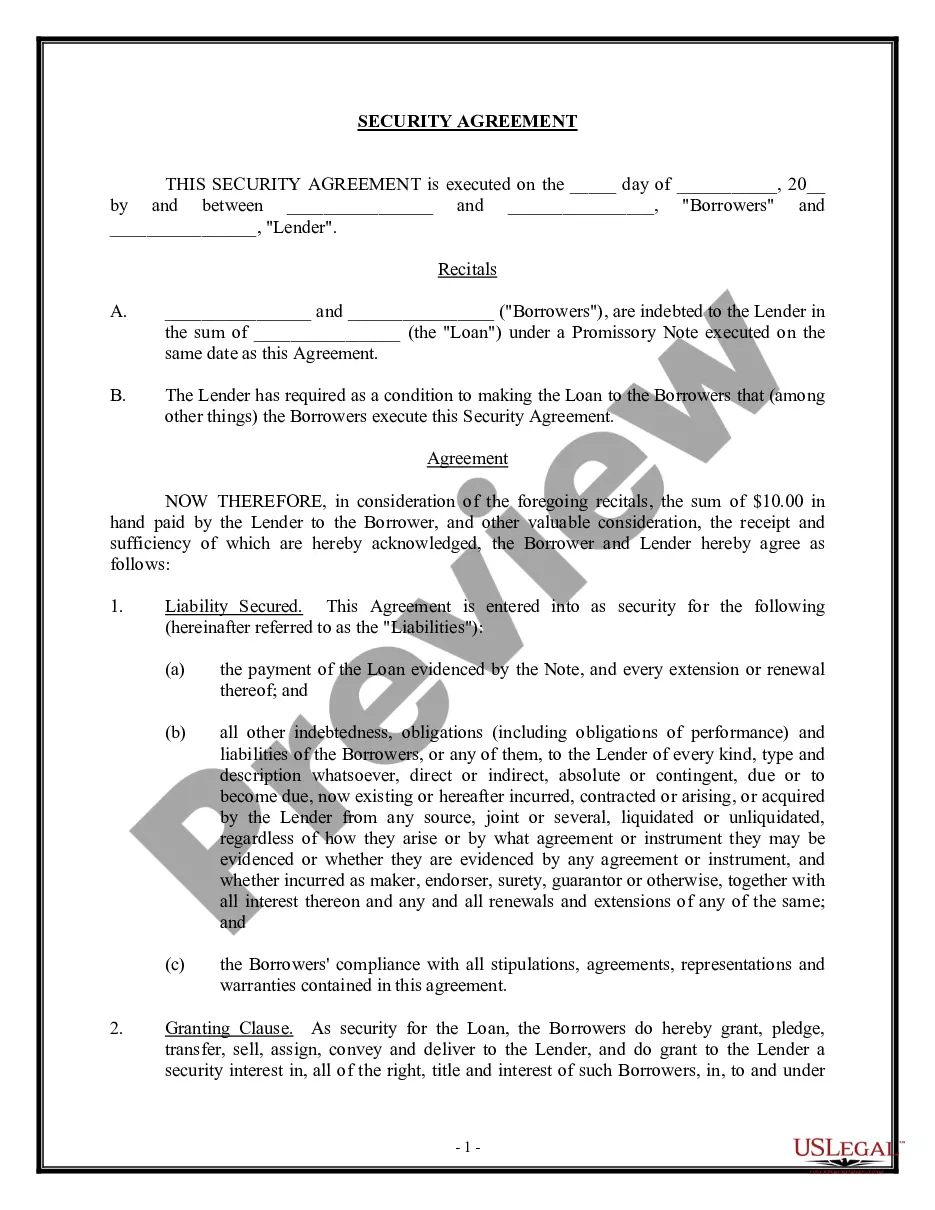



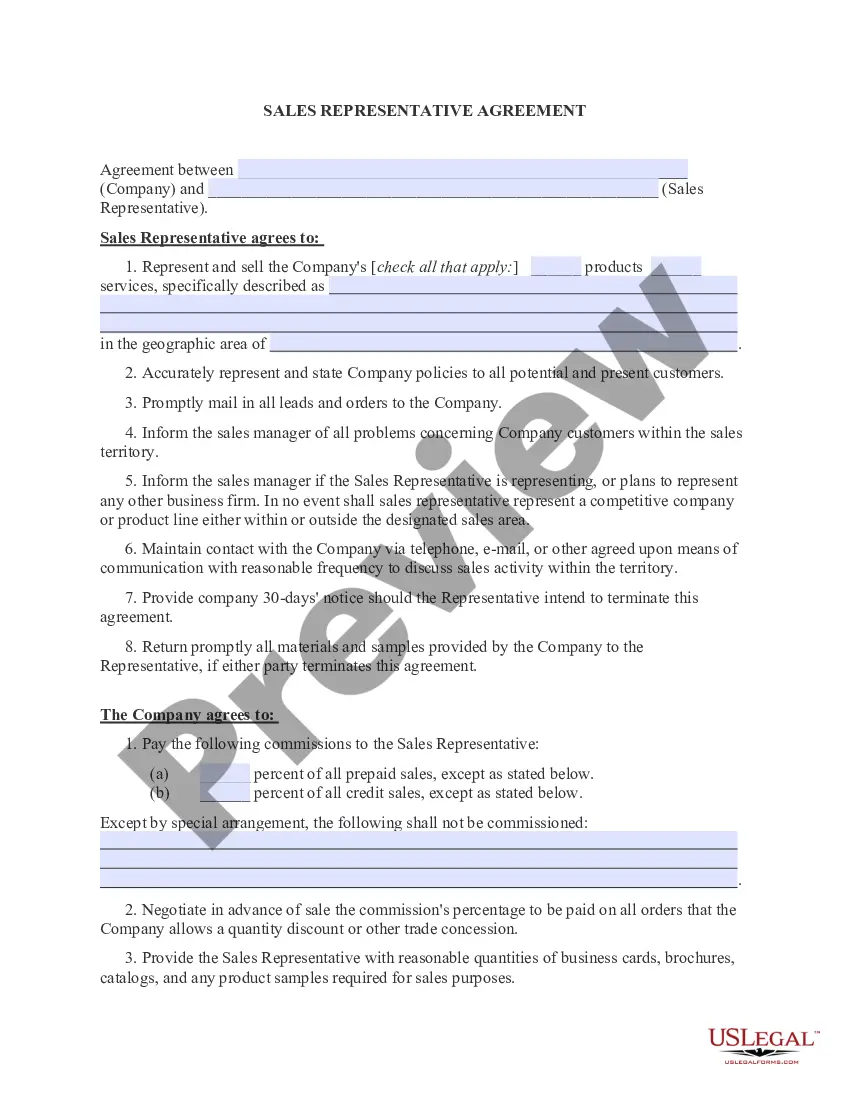

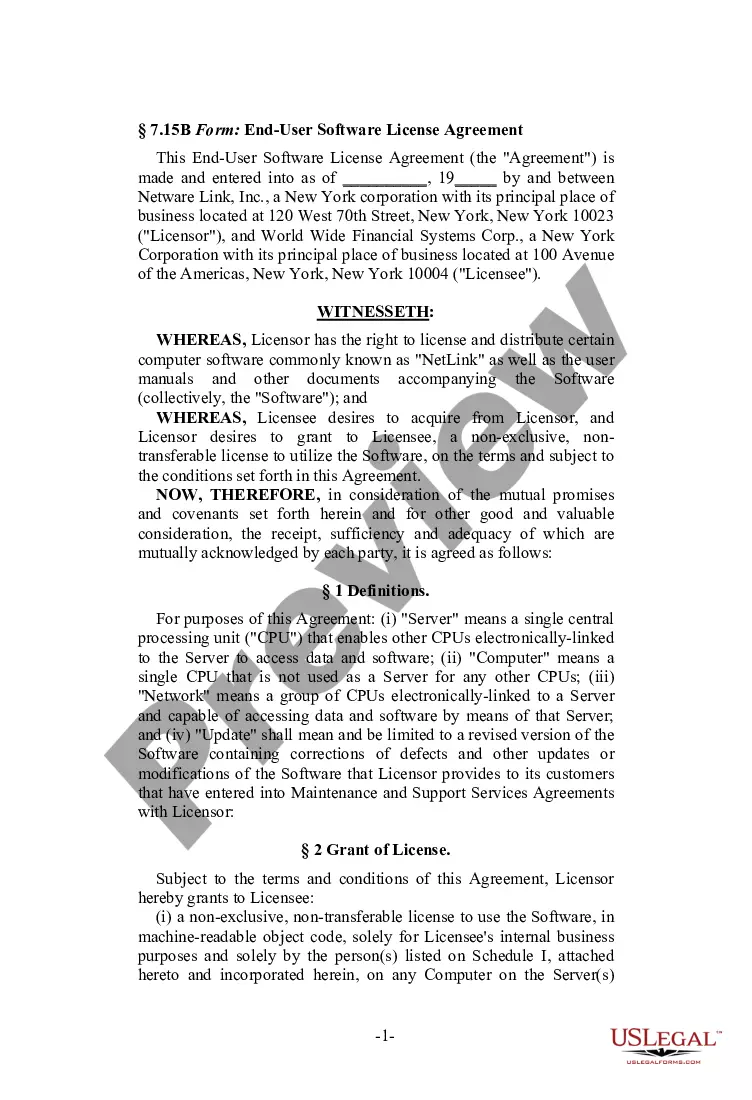


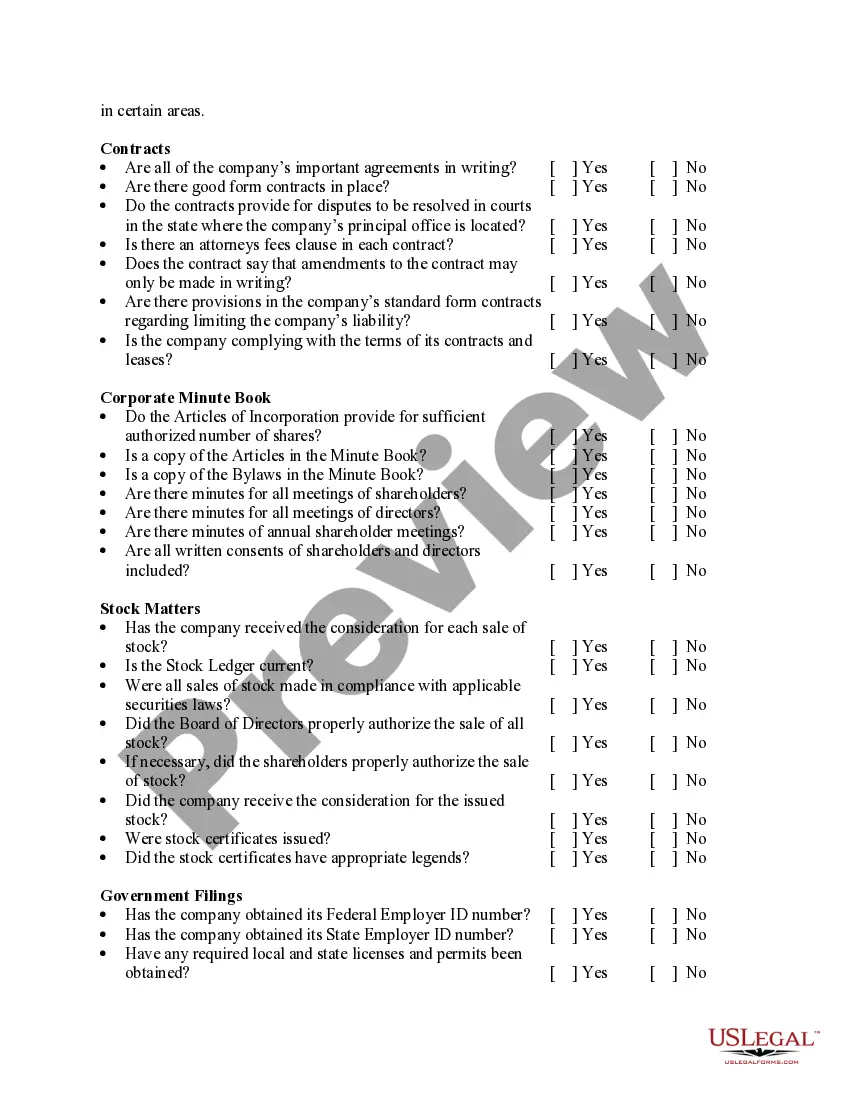
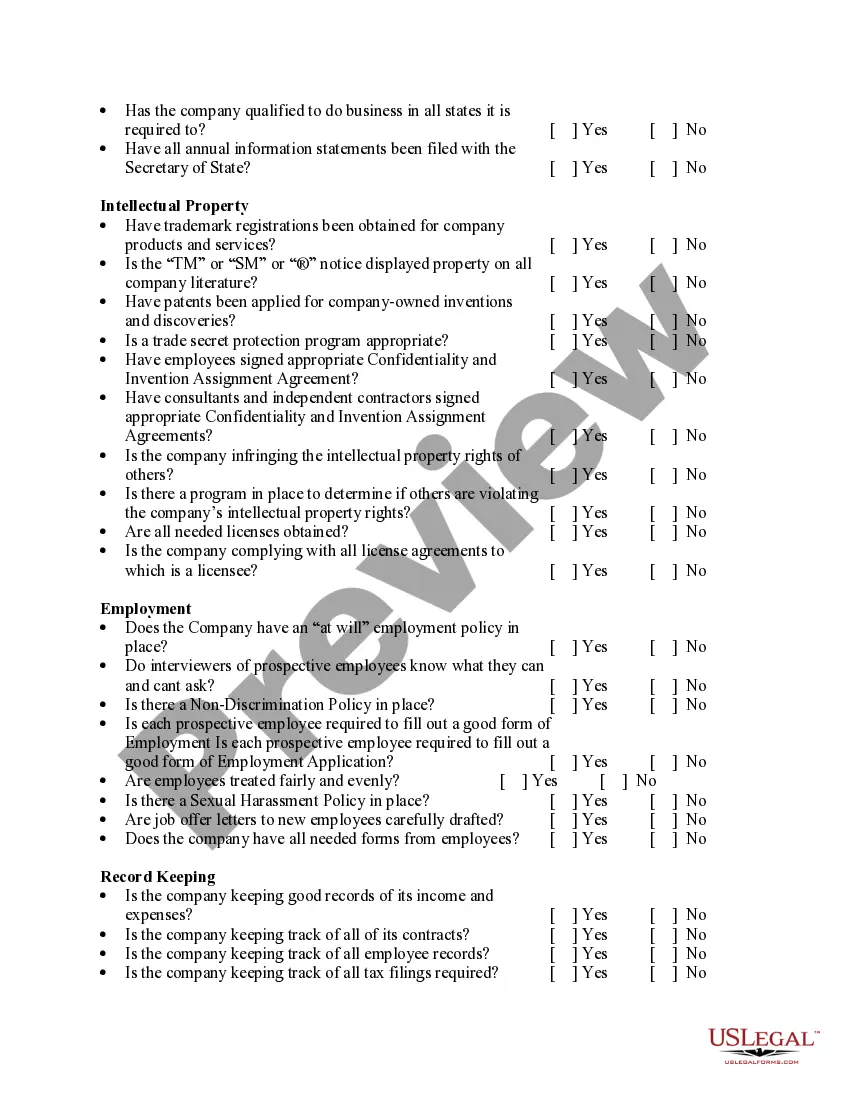
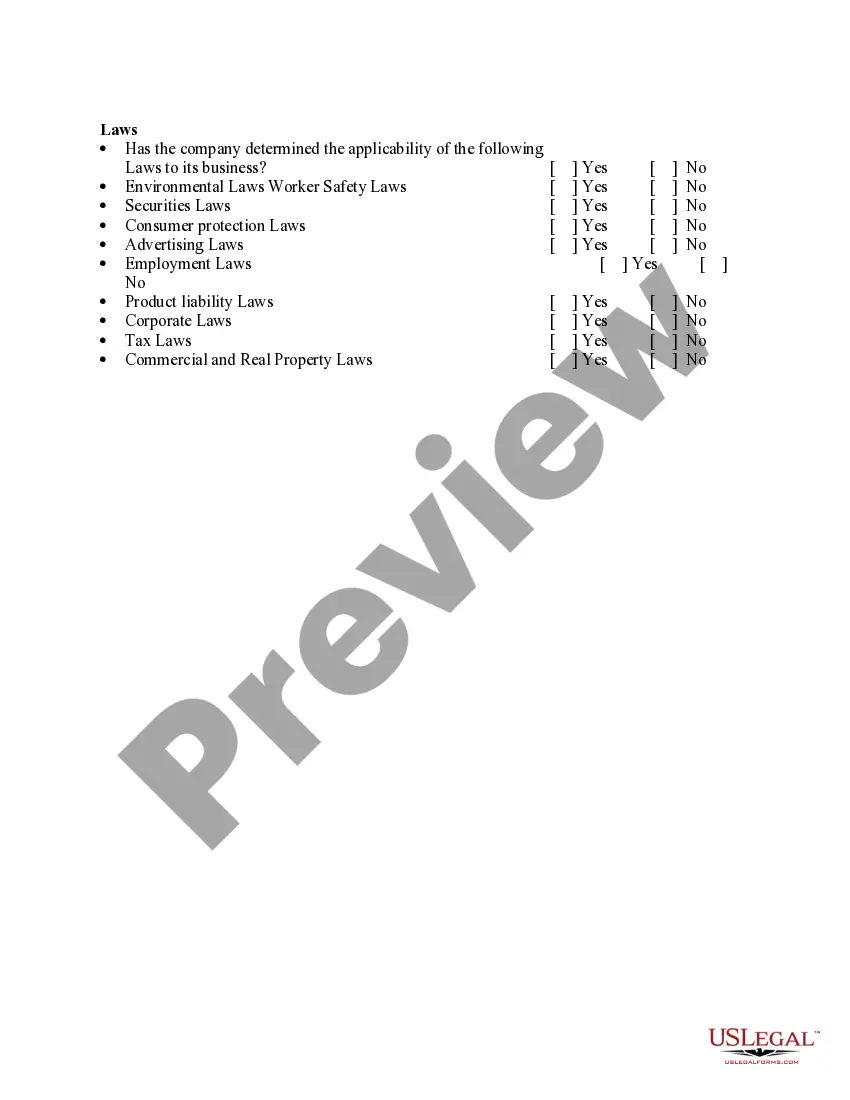
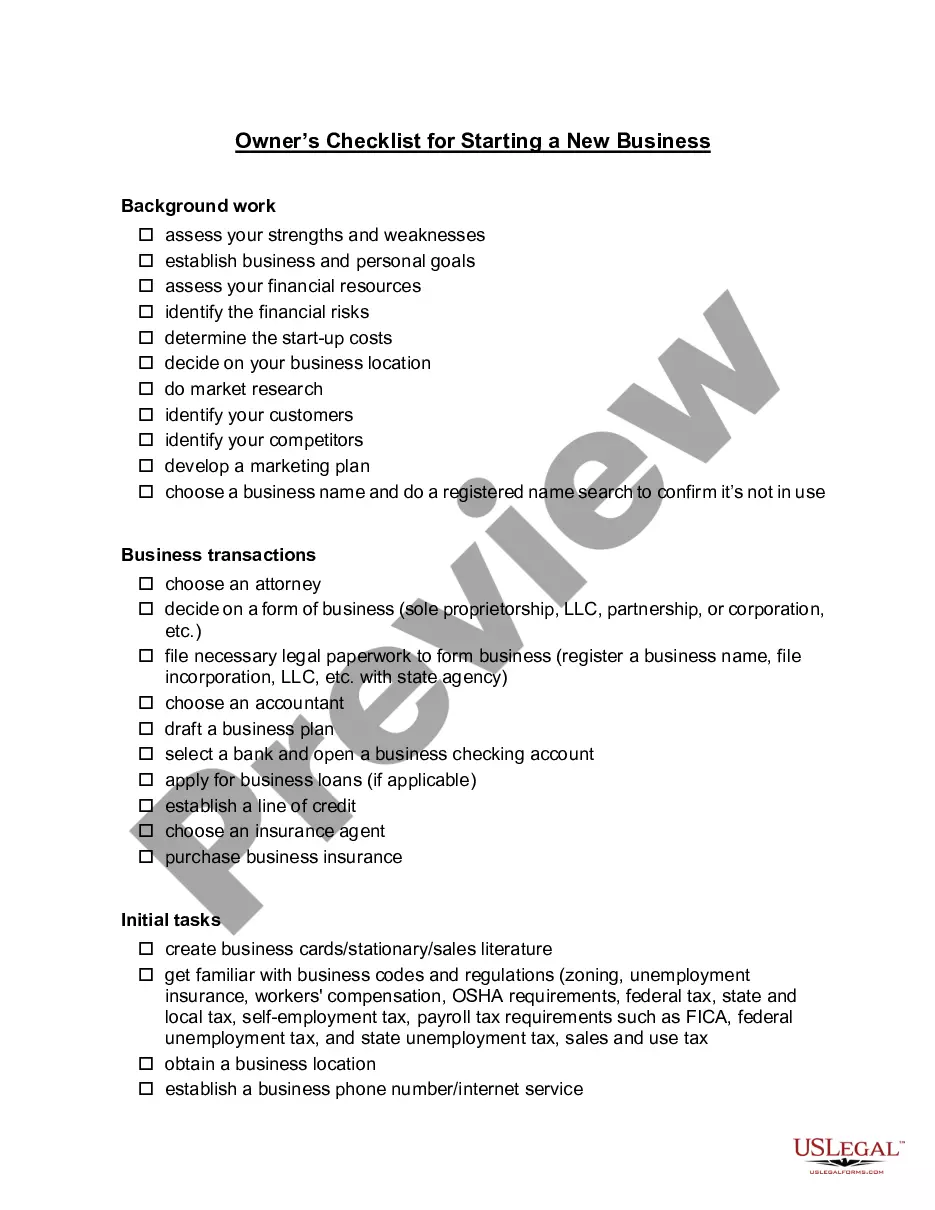
How to fill out Checklist - Small Business Legal Compliance Inventory?
Creating legal documents from the ground up can sometimes feel a bit daunting.
Certain situations may require extensive research and significant financial investment.
If you're looking for a more straightforward and budget-friendly method for preparing the Small Business Inventory Formula or any other documentation without unnecessary complications, US Legal Forms is always accessible.
Our online repository of over 85,000 current legal forms encompasses nearly every facet of your financial, legal, and personal concerns.
Examine the document preview and descriptions to ensure you are looking at the correct document. Confirm that the form you choose complies with your state and county’s regulations. Select the most suitable subscription option to purchase the Small Business Inventory Formula. Download the file, and then fill it out, certify it, and print it. US Legal Forms has a stellar reputation and over 25 years of experience. Join us now and make document execution an effortless and efficient process!
- With just a few clicks, you can promptly obtain state- and county-compliant forms meticulously prepared for you by our legal experts.
- Utilize our platform whenever you need a dependable and trustworthy service through which you can effortlessly find and download the Small Business Inventory Formula.
- If you're already familiar with our services and have previously registered with us, simply Log In to your account, pick the template, and download it right away or re-download it at any moment in the My documents section.
- Not registered yet? No issue. It requires minimal time to sign up and navigate the library.
- However, before you proceed to download the Small Business Inventory Formula, consider these suggestions.
Form popularity
FAQ
Beginning inventory is the value of your company's inventory at the beginning of an accounting period. To calculate beginning inventory, you can use the following formula: (COGS + ending inventory) - inventory purchases.
The formula can be expressed as: Beginning Inventory = Sales (COGS) + Ending Inventory - Purchases (inventory added to stock). For example, if a company had $450,000 in sales/COGS, $600,000 in ending inventory, and $300,000 in purchases, then its beginning inventory would be $750,000 (450,000 + 600,000 - 300,000).
You begin by calculating the cost-to-retail ratio, which is the cost of goods available for sale divided by their retail value. Multiply this ratio by the difference between the retail value of goods available for sale and total sales for the period. The result is an estimate of the cost of ending inventory.
The formula to calculate the ending inventory balance is as follows. Ending Inventory = Beginning Inventory Balance ? COGS + Raw Material Purchases. Days Inventory Outstanding (DIO) = (Inventory ÷ COGS)× 365 Days. Inventory Turnover Ratio = COGS ÷ Average Inventory Balance.
What is included in ending inventory? The basic formula for calculating ending inventory is: Beginning inventory + net purchases ? COGS = ending inventory. Your beginning inventory is the last period's ending inventory. The net purchases are the items you've bought and added to your inventory count.