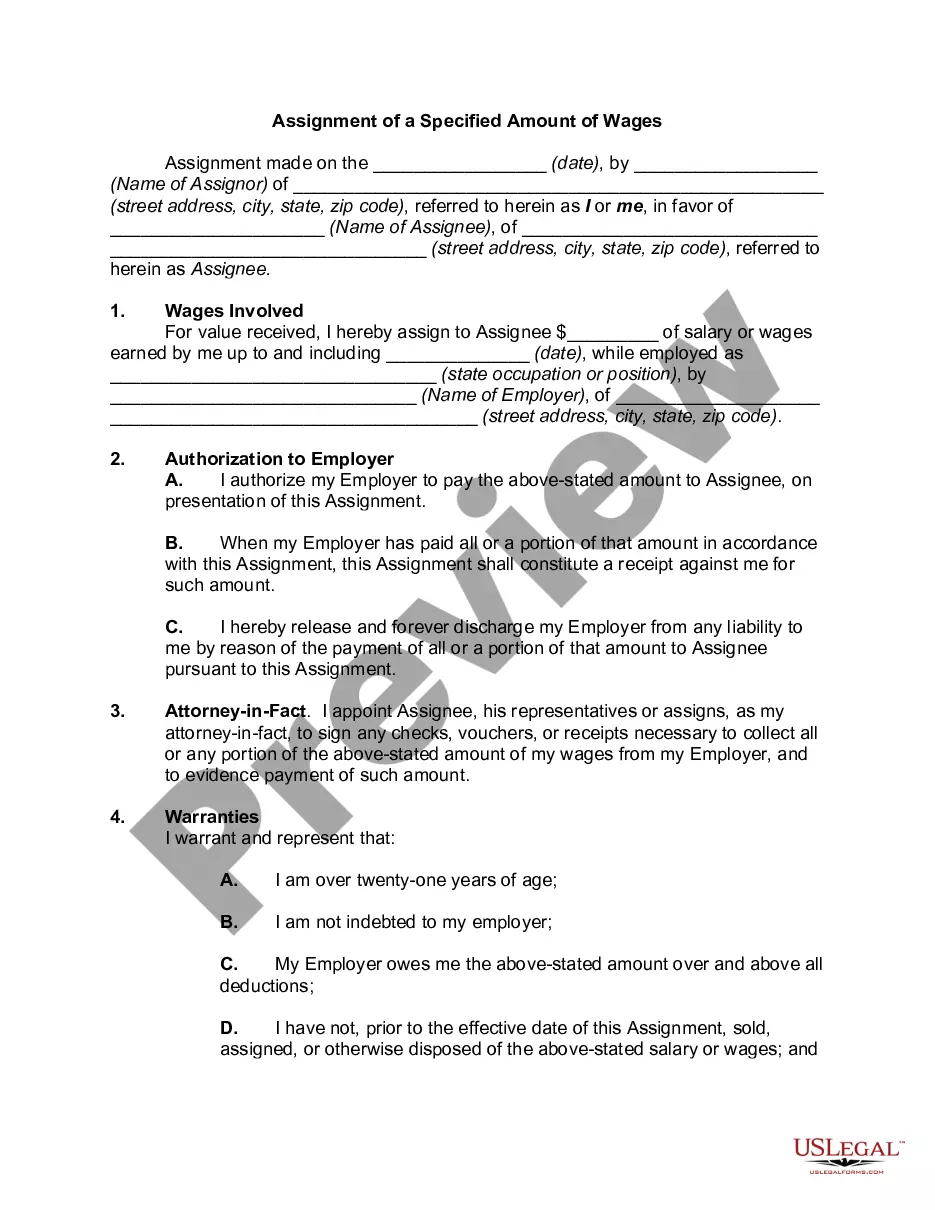
Wage Assignment Example For Employees
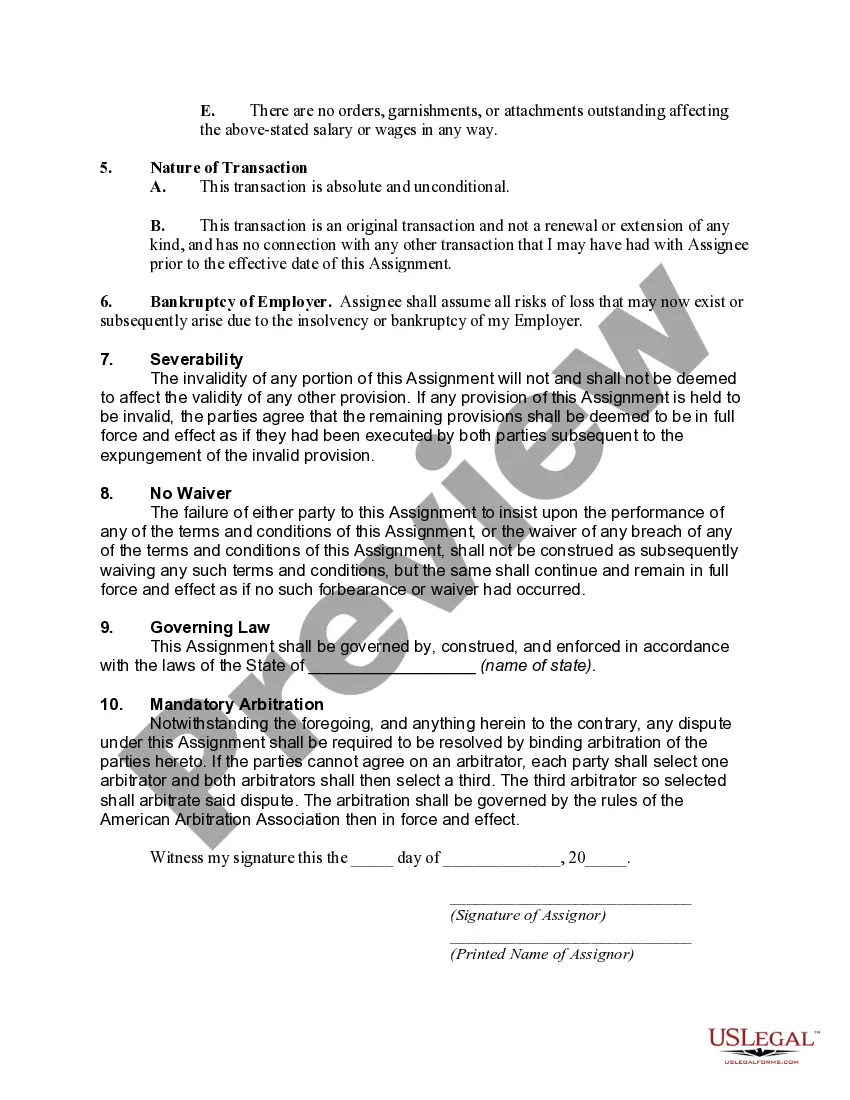
Description
Get your form ready online
Our built-in tools help you complete, sign, share, and store your documents in one place.
Make edits, fill in missing information, and update formatting in US Legal Forms—just like you would in MS Word.
Download a copy, print it, send it by email, or mail it via USPS—whatever works best for your next step.
Sign and collect signatures with our SignNow integration. Send to multiple recipients, set reminders, and more. Go Premium to unlock E-Sign.
If this form requires notarization, complete it online through a secure video call—no need to meet a notary in person or wait for an appointment.
We protect your documents and personal data by following strict security and privacy standards.

Make edits, fill in missing information, and update formatting in US Legal Forms—just like you would in MS Word.

Download a copy, print it, send it by email, or mail it via USPS—whatever works best for your next step.

Sign and collect signatures with our SignNow integration. Send to multiple recipients, set reminders, and more. Go Premium to unlock E-Sign.

If this form requires notarization, complete it online through a secure video call—no need to meet a notary in person or wait for an appointment.

We protect your documents and personal data by following strict security and privacy standards.
Looking for another form?
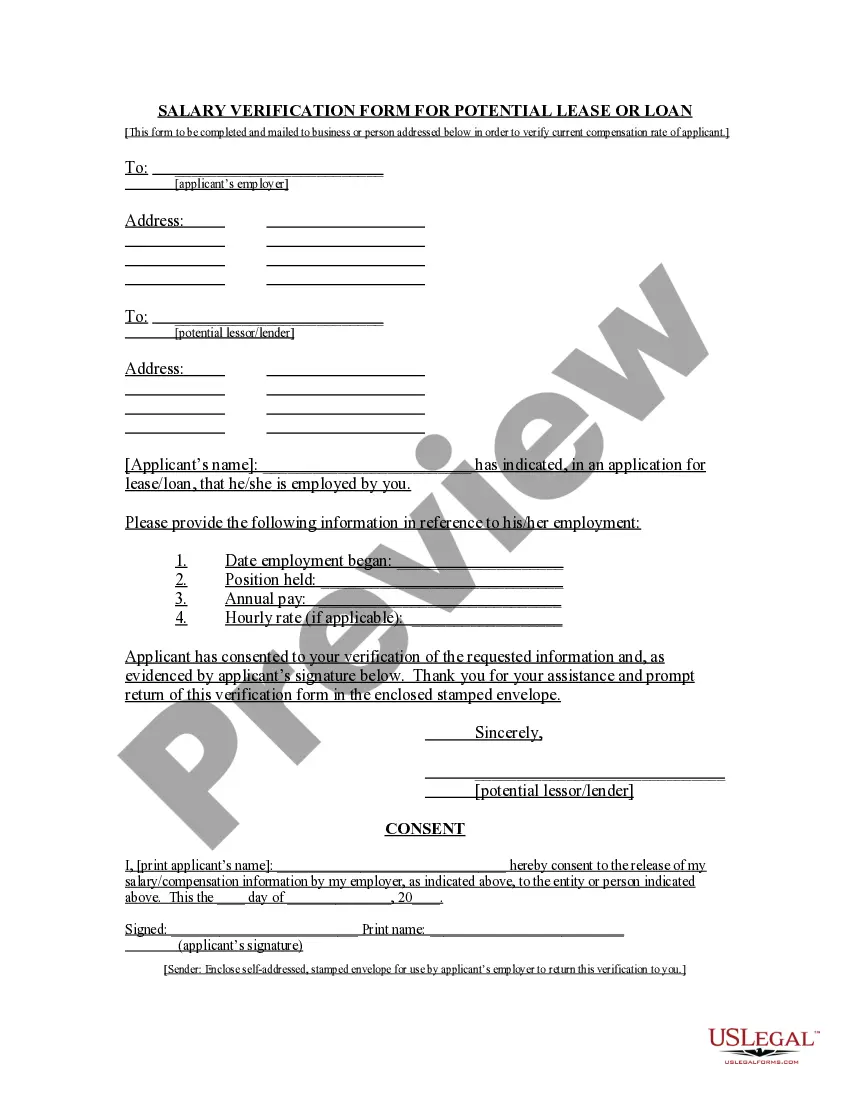
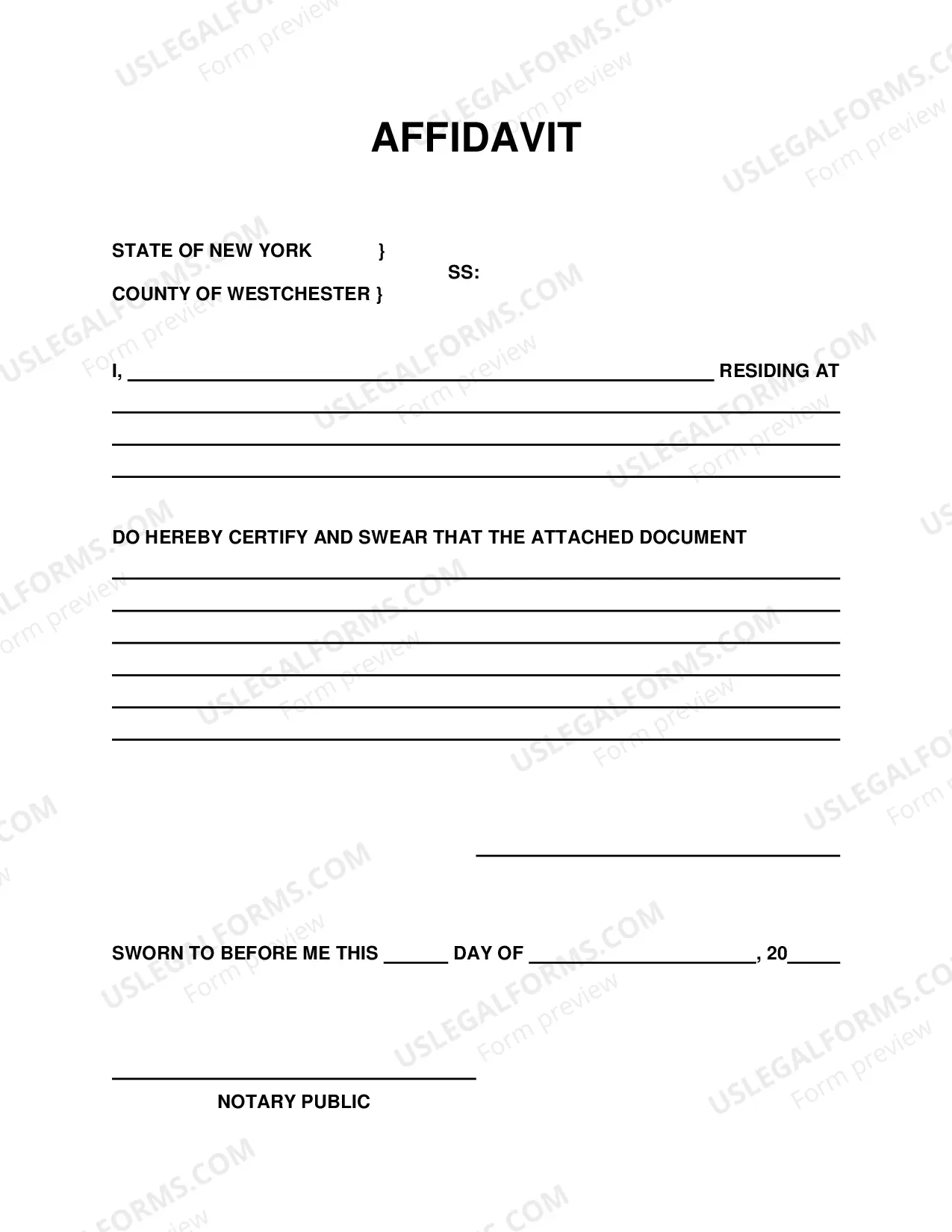
How to fill out Assignment Of A Specified Amount Of Wages?
Creating legal documents from the ground up can at times be daunting.
Certain situations may require extensive research and significant financial investment.
If you're looking for a simpler and more affordable method of preparing Wage Assignment Example For Employees or any other documentation without the hassle, US Legal Forms is always available to assist you.
Our online repository of over 85,000 current legal forms covers nearly every facet of your financial, legal, and personal affairs. With just a few clicks, you can swiftly acquire state- and county-specific forms meticulously assembled for you by our legal experts.
Ensure the template you choose adheres to the regulations and laws of your state and county. Select the most suitable subscription plan to purchase the Wage Assignment Example For Employees. Download the form, then complete, sign, and print it. US Legal Forms boasts an impeccable reputation and over 25 years of experience. Join us now and simplify your document completion process!
- Utilize our website whenever you seek a dependable and trustworthy service to effortlessly find and obtain the Wage Assignment Example For Employees.
- If you're familiar with our site and have previously registered an account, simply Log In to your account, locate the form and download it or re-download it anytime later in the My documents section.
- Not registered yet? No worries. It only takes a few minutes to set up and browse the catalog.
- Before you proceed directly to downloading Wage Assignment Example For Employees, consider these suggestions.
- Examine the form preview and descriptions to confirm you've found the right form.
Form popularity
FAQ
Yes, employers are required to notify employees about wage garnishments after they have been initiated. This notification typically includes details about the amount being withheld and the reason for the garnishment. Keeping employees informed fosters transparency and trust within the workplace. For further guidance, consider exploring a wage assignment example for employees to understand how to communicate these changes effectively.
In Minnesota, wage garnishment rules dictate that an employer can withhold a maximum of 25% of an employee's disposable earnings. Additionally, creditors must provide proper documentation to initiate garnishment. Employees should be informed about the process and their rights. A wage assignment example for employees can serve as a useful reference to navigate these rules effectively.
A wage and income statement typically includes the employee's total earnings, deductions, and net income for a specific period. It often features sections for gross wages, tax withholdings, and other deductions in a clear format. Understanding this format is crucial, especially when dealing with wage assignments. Our platform provides visual examples and customizable templates to help you create a professional statement.
To inform your employee of wage garnishment, start by providing a clear written notice detailing the garnishment. Include the amount being deducted and the reason for the garnishment. It's essential to be transparent and supportive, as this can be a sensitive topic. You might also consider using our platform to generate the necessary documentation, ensuring compliance and clarity.
A wage assignment for child support is a legal mechanism where a portion of an employee's wages is automatically deducted to fulfill child support obligations. This process ensures that support payments are made consistently and on time, benefiting the child involved. If you need assistance with setting up such arrangements, uslegalforms offers resources and templates that can simplify the process, making it easier for you to manage your responsibilities.
A wage refers to the payment an employee receives for their work, typically calculated on an hourly, daily, or piecework basis. For instance, if an employee earns $20 per hour and works 40 hours in a week, their weekly wage would amount to $800 before taxes and deductions. Understanding this basic concept can help you see the relevance of a wage assignment example for employees in managing your finances effectively.
The primary difference lies in consent; a wage assignment is voluntary, while a wage garnishment is initiated by a court order. With a wage assignment, the employee agrees to allocate a portion of their earnings to a creditor, helping them manage debt without legal intervention. In contrast, a wage garnishment enforces payment due to a legal judgment. Understanding wage assignment examples for employees can clarify these distinctions and their implications for personal finances.
A wage typically refers to the compensation an employee receives for their labor, often calculated on an hourly basis or as a salary. For example, if an employee earns $20 per hour and works 40 hours a week, their weekly wage amounts to $800 before deductions. Understanding different aspects of wages, such as those influenced by wage assignment examples for employees, can help clarify financial planning.
A wage assignment is an agreement where an employee voluntarily has a portion of their wages delegated to a creditor. Unlike a court-ordered garnishment, a wage assignment provides a way for employees to manage debts by consenting to the deduction. This method allows employees to avoid legal actions while ensuring creditors receive payments directly from wages. Wage assignment examples for employees demonstrate this proactive approach to debt management.
To calculate wage garnishment, consider the employee's disposable income, which is the amount left after taxes and mandatory deductions. Most states allow a maximum of 25% of disposable income to be garnished, although this can vary. Knowing specific state laws can provide guidance on permissible amounts. Additionally, exploring wage assignment examples for employees can shed light on how these calculations are typically processed.