Settlement
Description
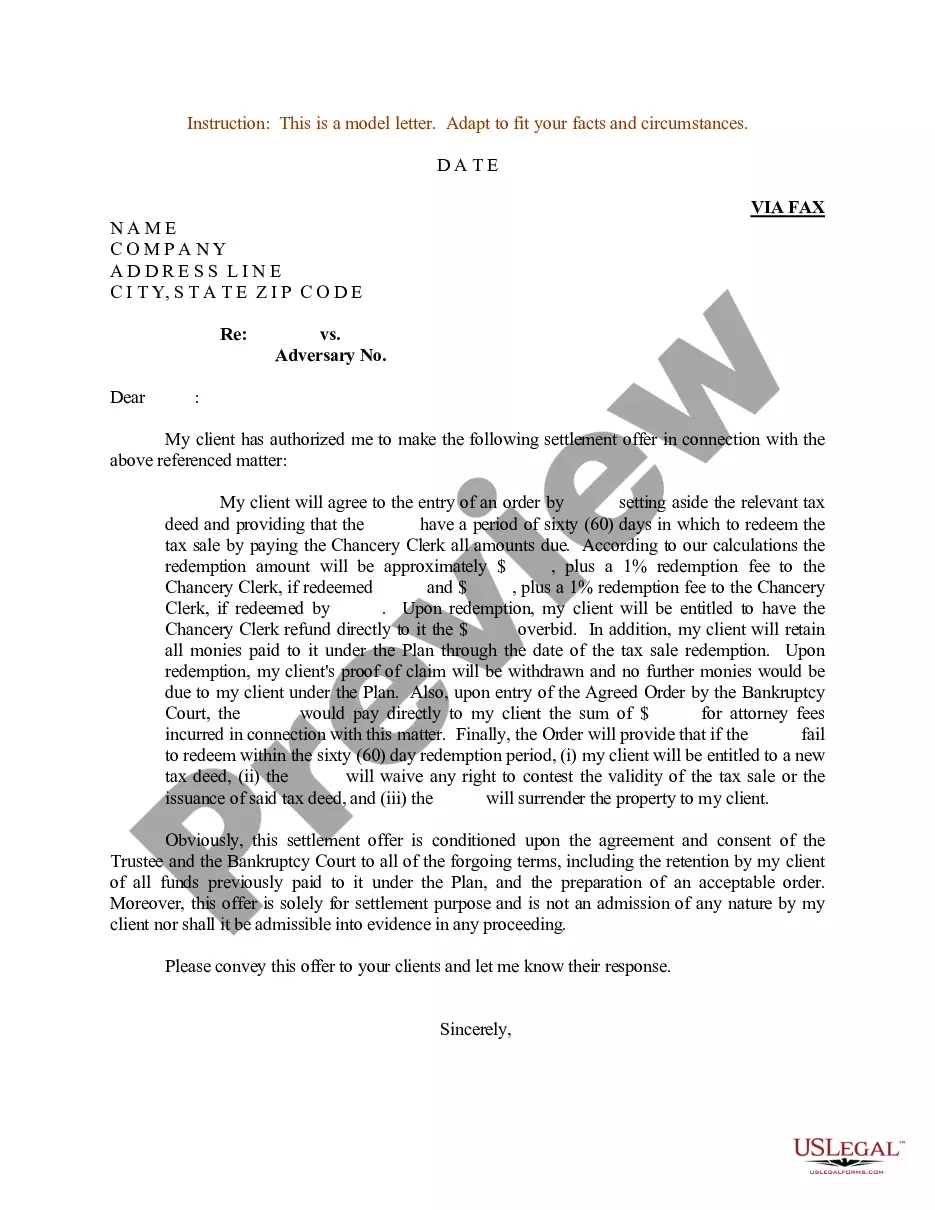

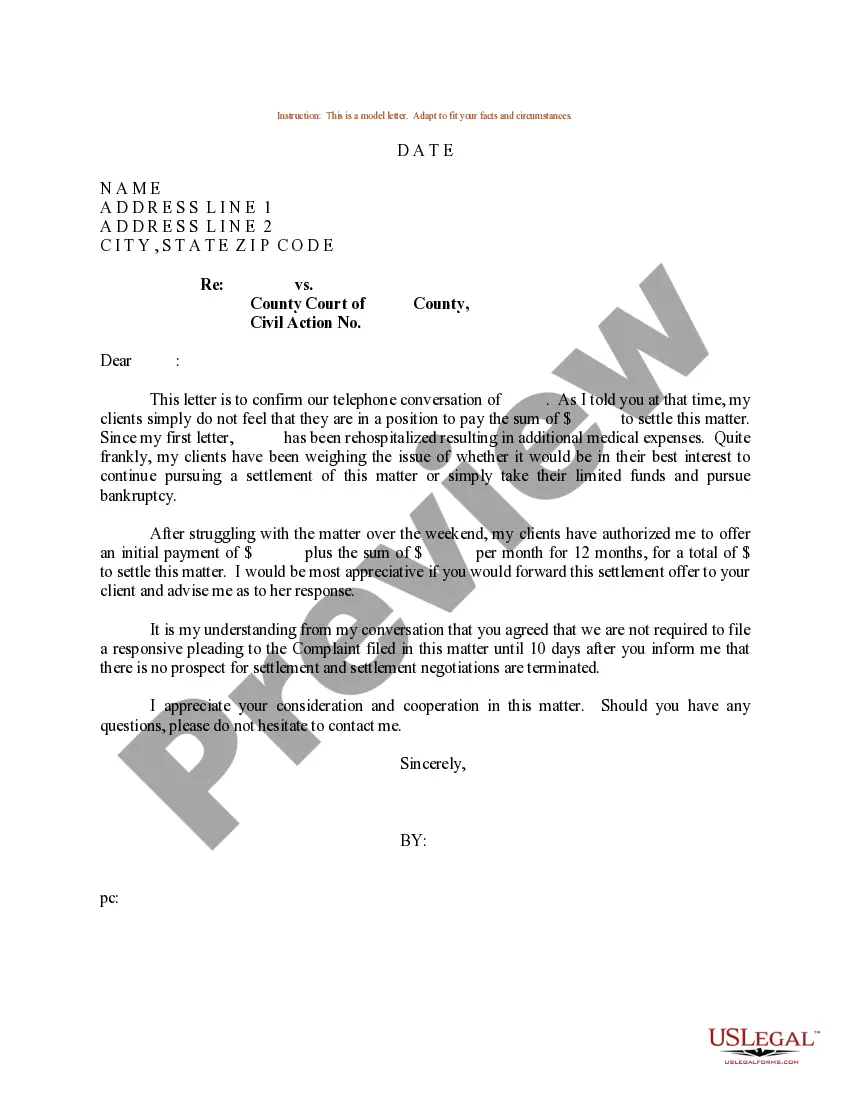




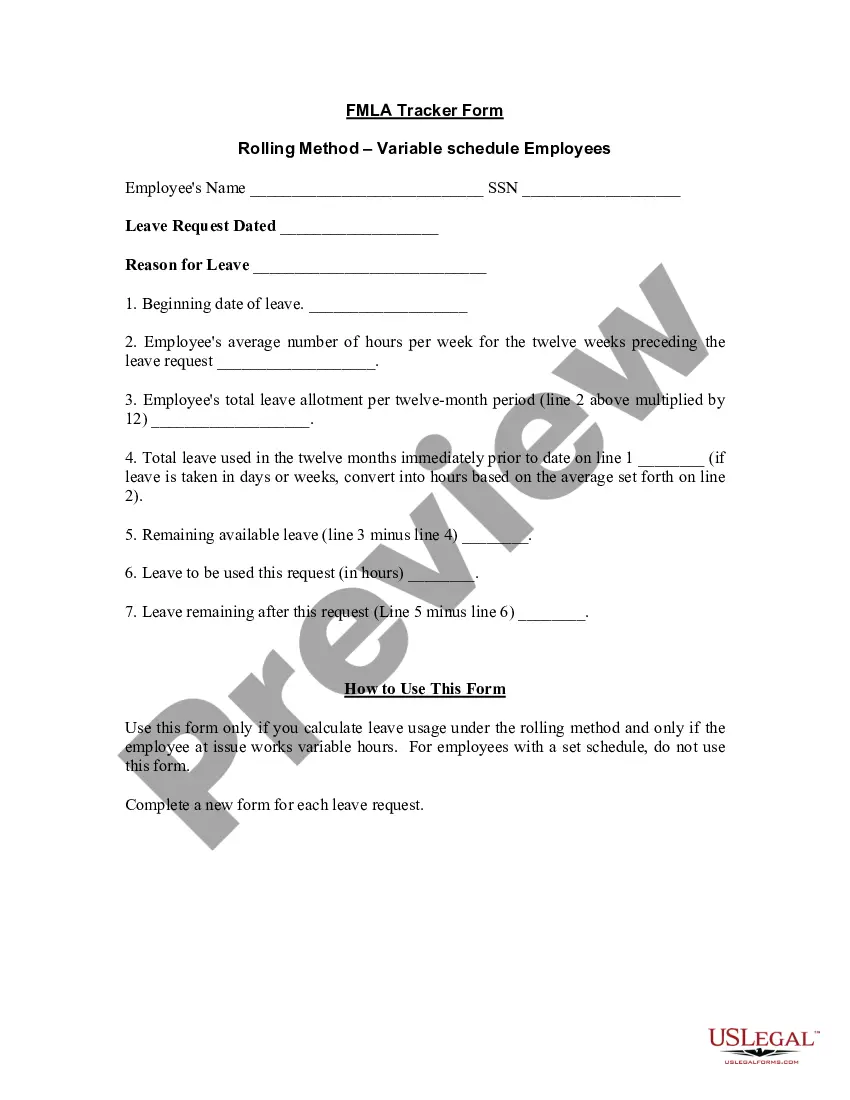
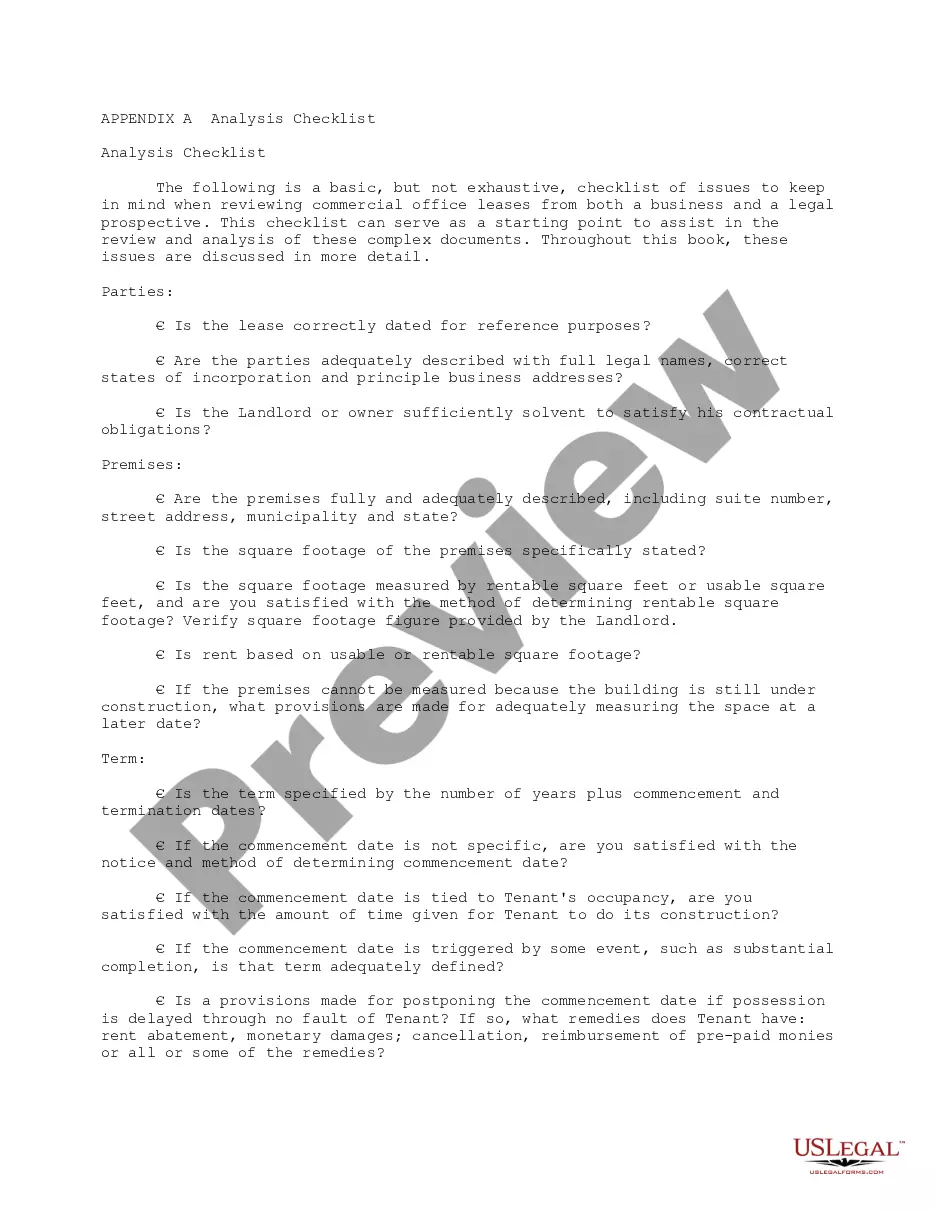
How to fill out Sample Letter For Settlement Offer - Authorization Of Settlement Offer?
- Log in to your account if you're a returning user and ensure your subscription is active. You can access it by clicking here.
- If this is your first encounter with our services, start by reviewing the Preview mode and form descriptions to select the correct template that aligns with your needs and local regulations.
- If your initial choice doesn’t meet your criteria, utilize the Search feature to find an appropriate template that does. Once satisfied, proceed to the next step.
- Purchase the document by clicking on the 'Buy Now' option. Select the subscription plan that fits your preferences, and ensure you create an account for access to the full library.
- Complete your payment using a credit card or PayPal to finalize your subscription.
- Once your payment is processed, download your form directly to your device so you can begin completing it. You can always access it later via the My Forms section in your profile.
With US Legal Forms, you can confidently navigate legal documents, thanks to our robust library and expert assistance. This ensures that your forms are not only filled out correctly but are also legally sound.
Start your journey towards achieving the right settlement today by using US Legal Forms!
Form popularity
FAQ
Yes, settlements generally need to be reported to the IRS, depending on their nature. If your settlement involves taxable income, you must report it on your tax return. On the other hand, nontaxable settlements for personal injuries may not require reporting. To navigate these nuances effectively, consult a tax professional or utilize resources from US Legal Forms to ensure compliance.
Certain types of settlements are not taxable under federal law. For instance, compensation for personal physical injuries or physical sickness often falls into this category. However, settlements that involve emotional distress or punitive damages may be taxable. Therefore, it's crucial to understand the specifics of your settlement to determine its tax implications.
The amount you will take home from a $30,000 settlement largely depends on the fees involved, such as attorney fees and any outstanding medical bills. After deducting these costs, your net amount may range from $18,000 to $24,000, depending on the agreed terms. Consulting with a legal professional will help clarify your specific situation.
Calculating a settlement amount involves assessing both economic and non-economic damages such as medical expenses, lost wages, and pain and suffering. Utilize a methodical approach, considering all relevant factors, to arrive at a fair figure. Tools and resources, including those available on US Legal Forms, can simplify this process and provide needed guidance.
Winning a settlement requires a clear presentation of your case, strong documentation, and effective negotiation skills. Engaging with legal experts who understand settlement strategies can increase your chances of success. Aim to highlight the strengths of your claim while demonstrating a willingness to negotiate fairly.
A typical settlement percentage can range from 50% to 90% of the total claim amount, influenced by multiple factors including the strength of evidence and the willingness of both parties to negotiate. Often, reaching a consensus involves understanding each party's interests. Being prepared with relevant information can enhance your position in settlement discussions.
Pain and suffering amounts vary widely based on individual circumstances; however, a common approach is to multiply actual damages by a factor of one to five. Settlements often reflect the severity of the injury and how it affects daily life. Consult an attorney knowledgeable in settlement negotiations to assess your situation effectively.
To request a settlement amount, start by gathering all relevant documentation related to your case. Present a clear, concise statement outlining your reasons and the evidence for the amount you propose. Engaging a skilled negotiator or attorney can enhance your chances of reaching an optimal settlement.
To give a settlement means to offer an agreement that resolves a legal dispute or claim. When a party gives a settlement, they typically provide compensation or fulfill certain obligations in exchange for the other party's agreement to drop any legal claims. This action can lead to a quicker resolution and can help preserve relationships between the parties.
A settlement means a resolution to a legal dispute reached outside of court. It signifies that both parties involved have agreed to terms that satisfy their interests, thereby avoiding lengthy litigation. Settlements can save time, reduce costs, and foster a more amicable relationship between the parties.