Church Promissory Note With Example
Description
Get your form ready online
Our built-in tools help you complete, sign, share, and store your documents in one place.
Make edits, fill in missing information, and update formatting in US Legal Forms—just like you would in MS Word.
Download a copy, print it, send it by email, or mail it via USPS—whatever works best for your next step.
Sign and collect signatures with our SignNow integration. Send to multiple recipients, set reminders, and more. Go Premium to unlock E-Sign.
If this form requires notarization, complete it online through a secure video call—no need to meet a notary in person or wait for an appointment.
We protect your documents and personal data by following strict security and privacy standards.

Make edits, fill in missing information, and update formatting in US Legal Forms—just like you would in MS Word.

Download a copy, print it, send it by email, or mail it via USPS—whatever works best for your next step.

Sign and collect signatures with our SignNow integration. Send to multiple recipients, set reminders, and more. Go Premium to unlock E-Sign.

If this form requires notarization, complete it online through a secure video call—no need to meet a notary in person or wait for an appointment.

We protect your documents and personal data by following strict security and privacy standards.
Looking for another form?




How to fill out Promissory Note College To Church?
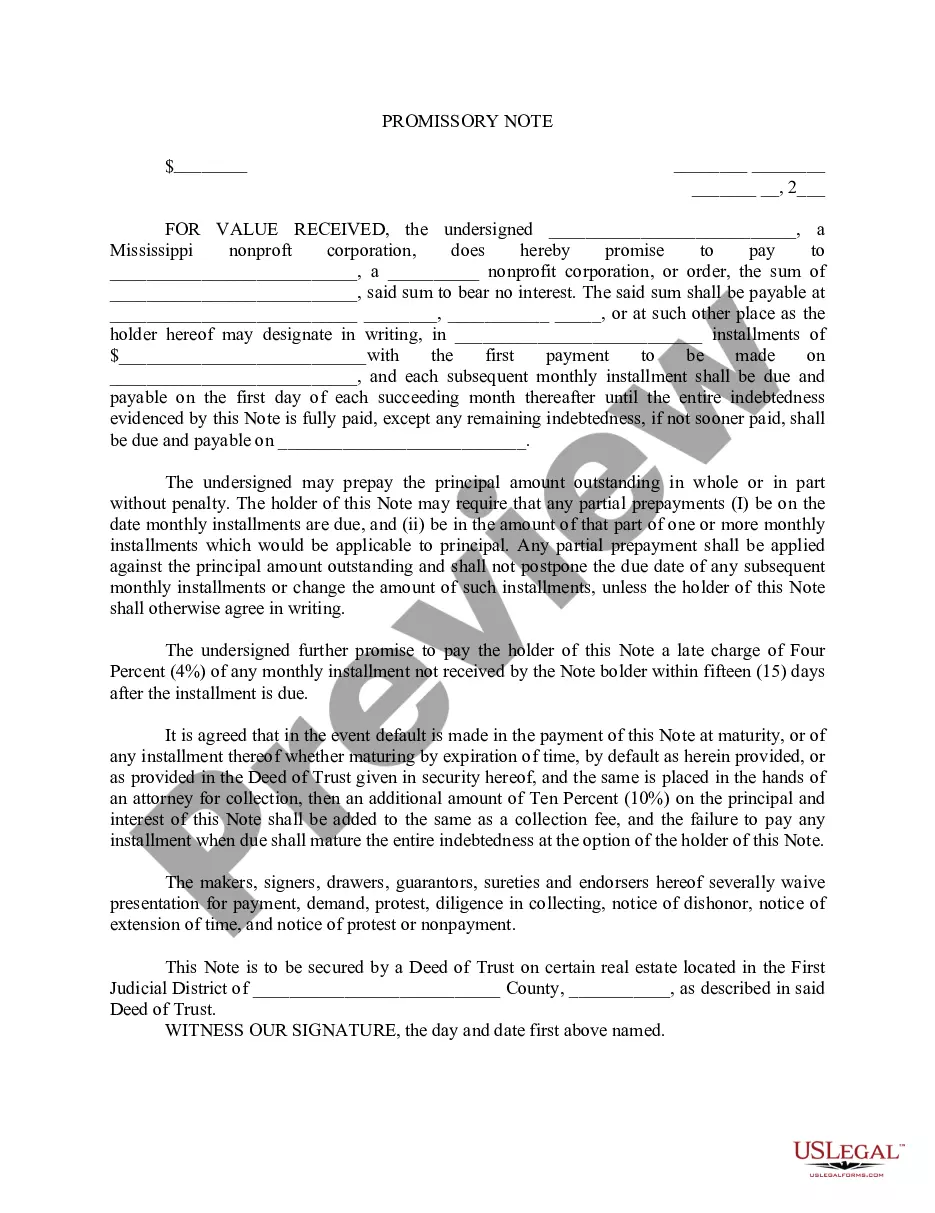
The Church Promissory Note With Example featured on this page is a versatile legal template crafted by experienced attorneys in adherence to federal and state laws and regulations.
For over 25 years, US Legal Forms has offered individuals, companies, and legal practitioners access to more than 85,000 validated, state-specific forms for any business and personal circumstance. It’s the quickest, simplest, and most dependable way to acquire the documentation you require, as the service guarantees bank-level data security and anti-malware safeguards.
Subscribe to US Legal Forms to access verified legal templates for all of life's situations at your fingertips.
- Browse for the document you require and review it.
- Choose the pricing plan that fits your needs and create an account.
- Obtain the editable template.
- Fill out and sign the document.
- Download your paperwork again if necessary.
Form popularity
FAQ
A simple promissory note might be for a lump sum repayment on a certain date. For example, you lend your friend $1,000 and he agrees to repay you by December 1. The full amount is due on that date, and there is no payment schedule involved.
A banknote is frequently referred to as a promissory note, as it is made by a bank and payable to bearer on demand. Mortgage notes are another prominent example. If the promissory note is unconditional and readily saleable, it is called a negotiable instrument.
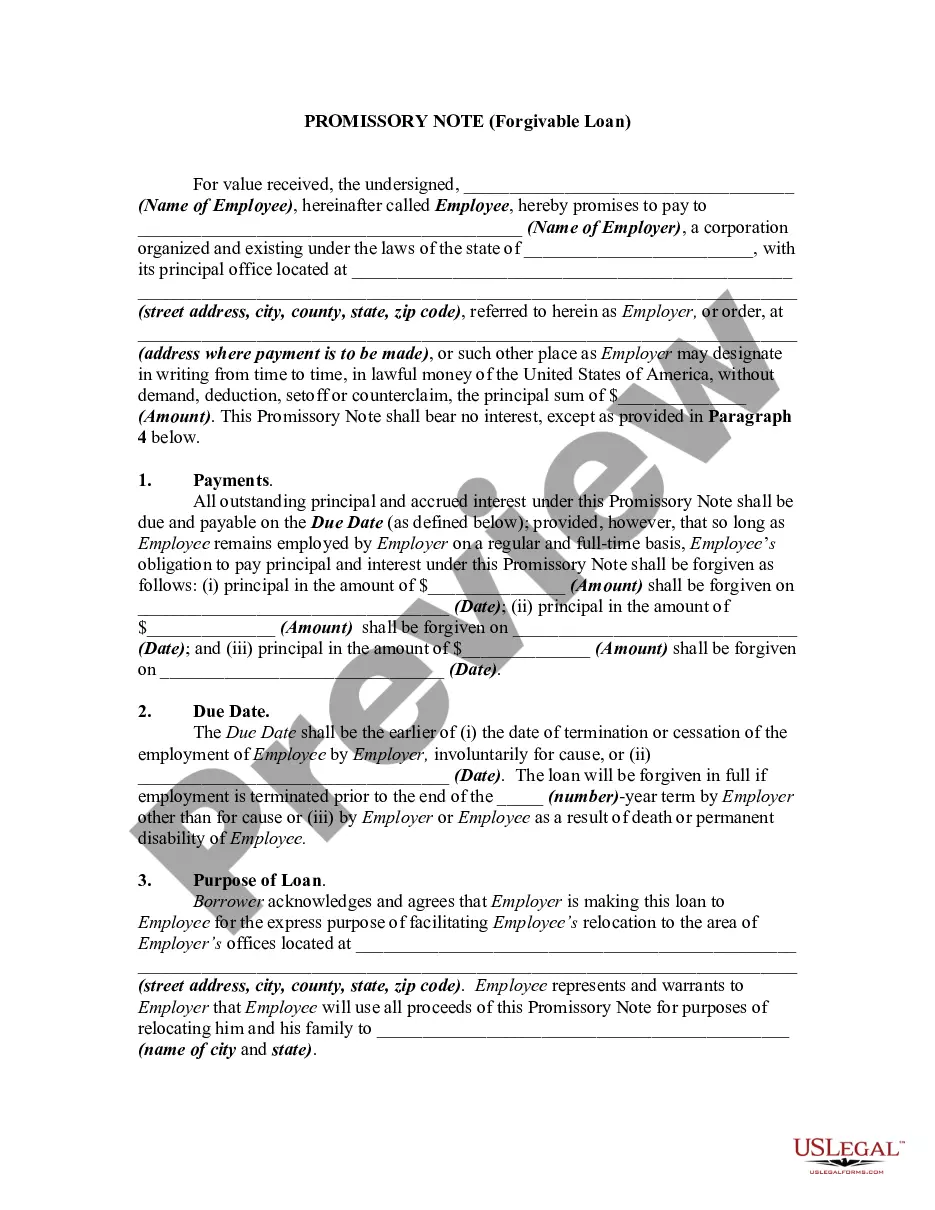
At its most basic, a promissory note should include the following things: Date. Name of the lender and borrower. Loan amount. Whether the loan is secured or unsecured. If it's secured with collateral: What is the collateral? ... Payment amount and frequency. Payment due date. Whether the loan has a cosigner, and if so, who.
There are three types of promissory notes: unsecured, secured and demand. An unsecured promissory note is one that is not backed by any type of collateral. ... A secured promissory note is one that is backed by some type of collateral. ... A demand promissory note does not have a specific due date for repayment.
A promissory note typically contains all the terms pertaining to the indebtedness, such as the principal amount, interest rate, maturity date, date and place of issuance, and issuer's signature.