Hold Harmless Letter In Audit
Description
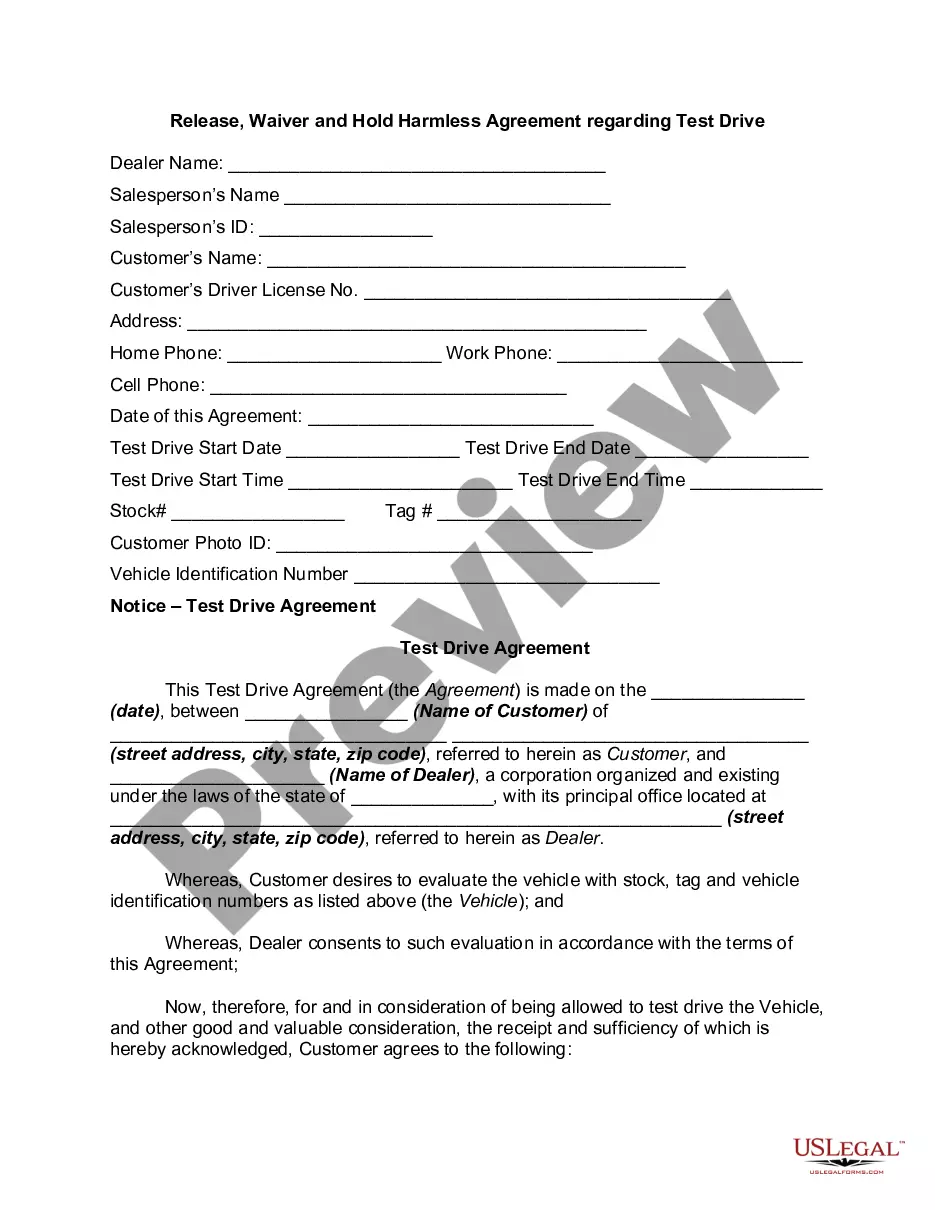
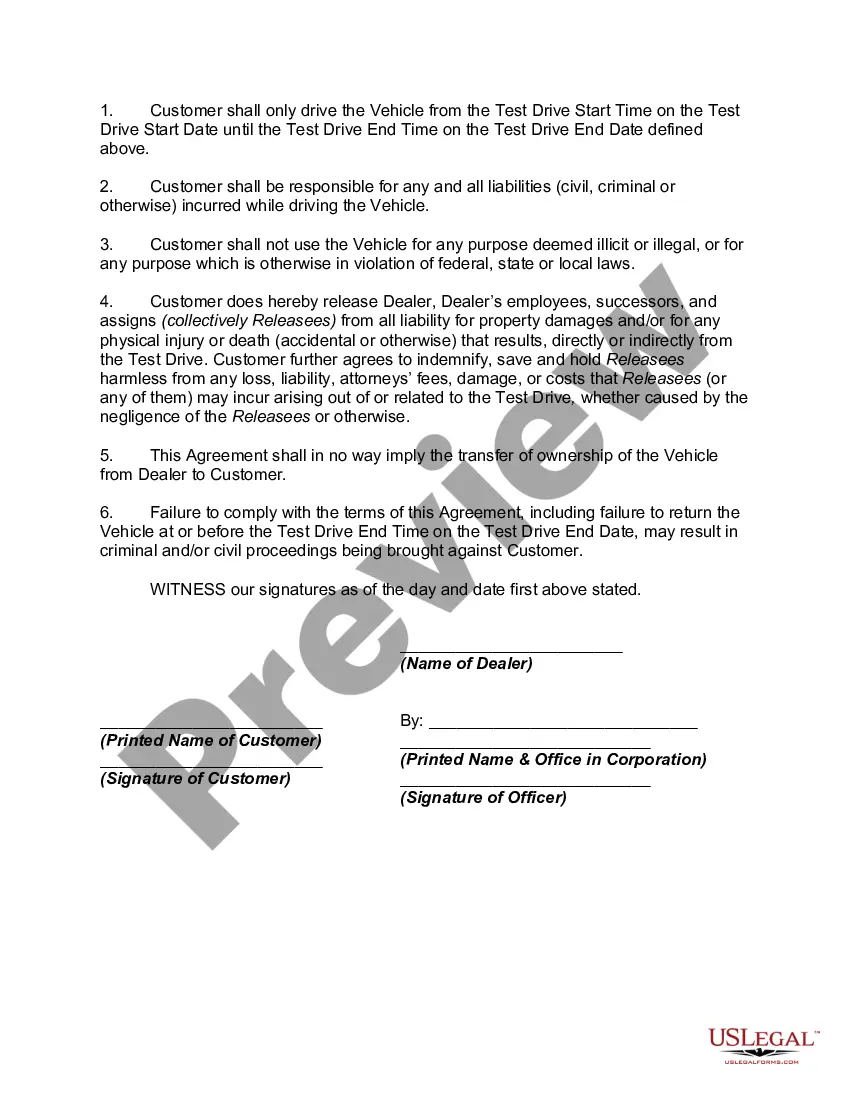
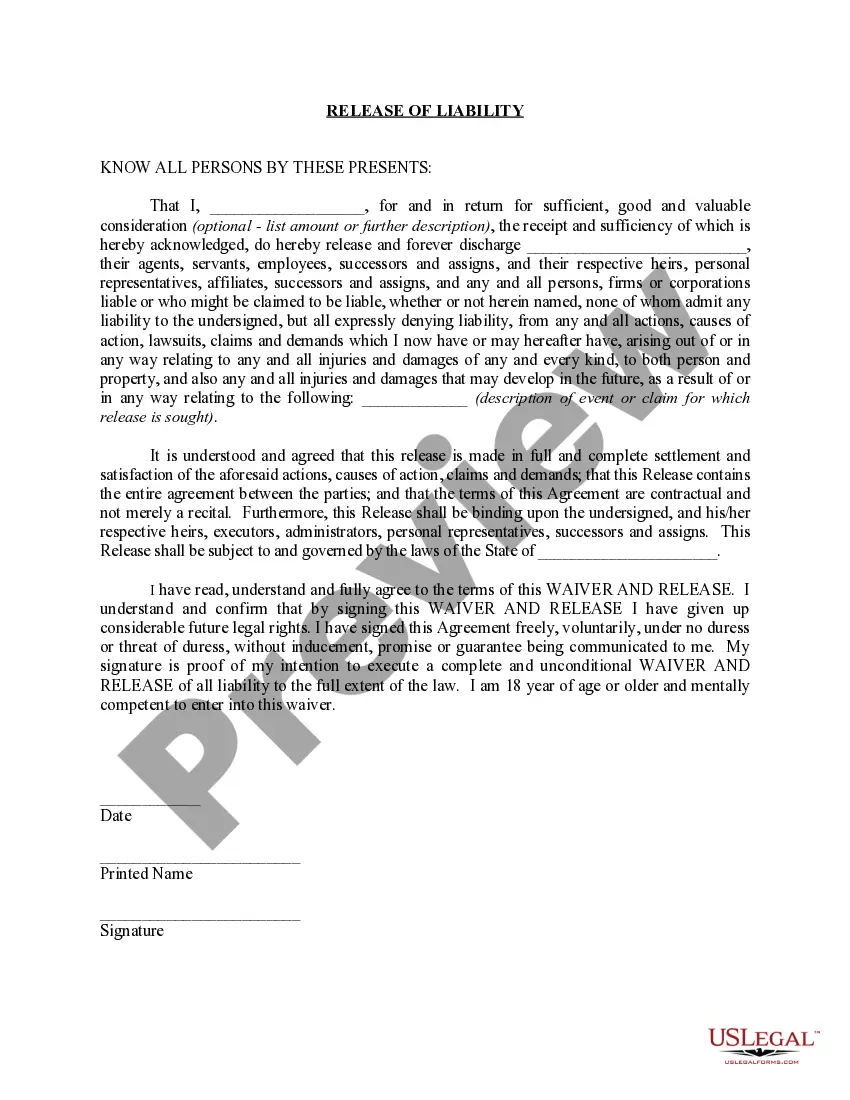
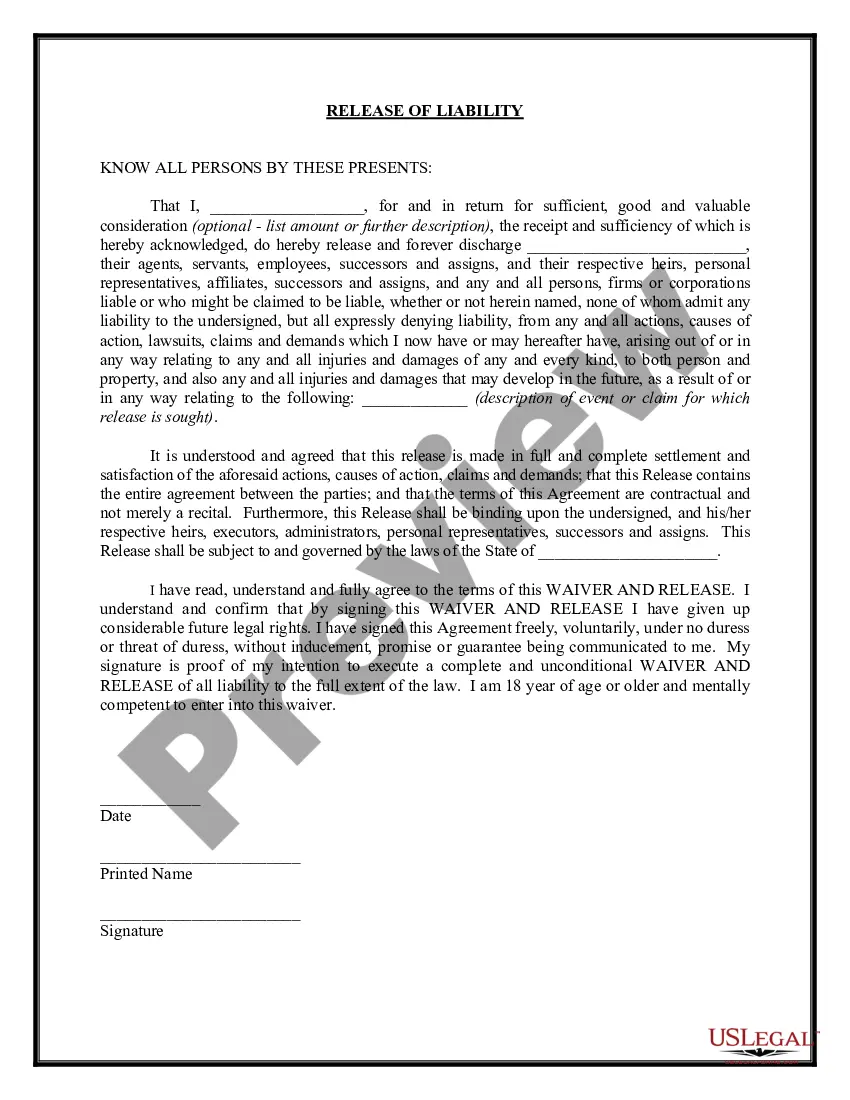





How to fill out Release, Waiver And Hold Harmless Agreement Regarding Test Drive?
Regardless of whether for commercial activities or personal matters, everyone needs to navigate legal issues at some stage in their existence.
Finalizing legal documentation requires meticulous care, beginning with choosing the correct form template.
Once it is downloaded, you can fill out the form using editing software or print it and complete it by hand. With an extensive US Legal Forms catalog available, you never have to waste time searching for the appropriate template online. Utilize the library’s straightforward navigation to discover the correct document for any circumstance.
- Locate the template you require by utilizing the search bar or catalog browsing.
- Review the document’s details to confirm it aligns with your needs, jurisdiction, and region.
- Select the document’s preview to view it.
- If it is the wrong paperwork, return to the search tool to find the Hold Harmless Letter In Audit template you require.
- Obtain the file when it satisfies your criteria.
- If you possess a US Legal Forms account, simply click Log in to access files you have saved in My documents.
- If you haven't created an account yet, you can download the document by clicking Buy now.
- Select the appropriate pricing option.
- Fill out the account registration form.
- Choose your payment method: you may utilize a credit card or PayPal account.
- Pick the file format you prefer and download the Hold Harmless Letter In Audit.
Form popularity
FAQ
Tennessee has as many as 16,000 oil and gas wells, based on the number of permits granted by the Tennessee Department of Environment and Conservation since 1968, but there is limited information on their activity or closure status.
Last summer, the California state legislature passed a bill, S.B. 1137, that bans new or reworked oil and gas wells anywhere in the state within 3,200 feet of homes, schools, nursing homes, hospitals, and prisons.
As of February 2013, there are fracking wells in Anderson, Campbell, Fentress, Morgan, Overton, Pickett, Scott, and Union counties in Tennessee. Atlas Energy has bought up 105,000 acres in eastern Tennessee. The company believes that this property could contain up to 500 potential horizontal drilling locations.
Although only about 15 percent of the state is actively producing oil or gas, geologists believe a much larger percentage of the state has the potential to produce crude oil and/or natural gas.
As stated earlier, if you find oil on land you own, it does not necessarily mean you can legally dig an oil well. After you find oil, you must determine if you are the legal owner of the mineral rights or not. Only then can you know if the oil on the land is yours or not.
Wide bends in the Tennessee River divide the state into three regions: the largely mountainous east, a central basin rimmed by highlands, and the low, rolling plains of western Tennessee. The eastern part of the state produces coal, natural gas, and crude oil, although those fossil energy reserves are modest.
In conventional natural gas deposits, the natural gas generally flows easily up through wells to the surface. In the United States and in a few other countries, natural gas is produced from shale and other types of sedimentary rock formations by forcing water, chemicals, and sand down a well under high pressure.
Persons who drill, deepen or reopen oil and gas wells must obtain a permit from the Tennessee Division of Water Pollution Control (WPC), Oil and Gas Section.