Spouse Elective Shares With The Eu
Description

Get your form ready online
Our built-in tools help you complete, sign, share, and store your documents in one place.
Make edits, fill in missing information, and update formatting in US Legal Forms—just like you would in MS Word.
Download a copy, print it, send it by email, or mail it via USPS—whatever works best for your next step.
Sign and collect signatures with our SignNow integration. Send to multiple recipients, set reminders, and more. Go Premium to unlock E-Sign.
If this form requires notarization, complete it online through a secure video call—no need to meet a notary in person or wait for an appointment.
We protect your documents and personal data by following strict security and privacy standards.

Make edits, fill in missing information, and update formatting in US Legal Forms—just like you would in MS Word.

Download a copy, print it, send it by email, or mail it via USPS—whatever works best for your next step.

Sign and collect signatures with our SignNow integration. Send to multiple recipients, set reminders, and more. Go Premium to unlock E-Sign.

If this form requires notarization, complete it online through a secure video call—no need to meet a notary in person or wait for an appointment.

We protect your documents and personal data by following strict security and privacy standards.
Looking for another form?










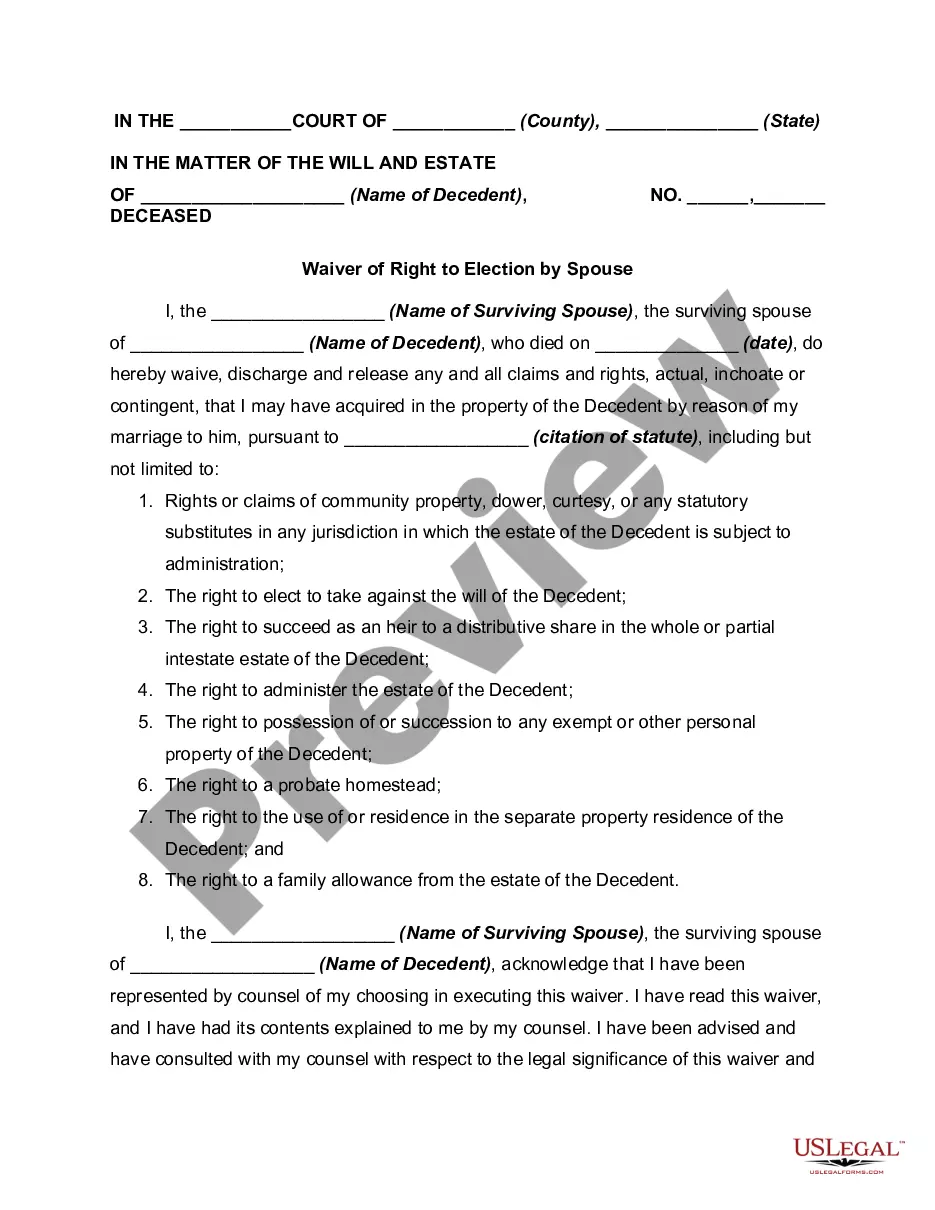
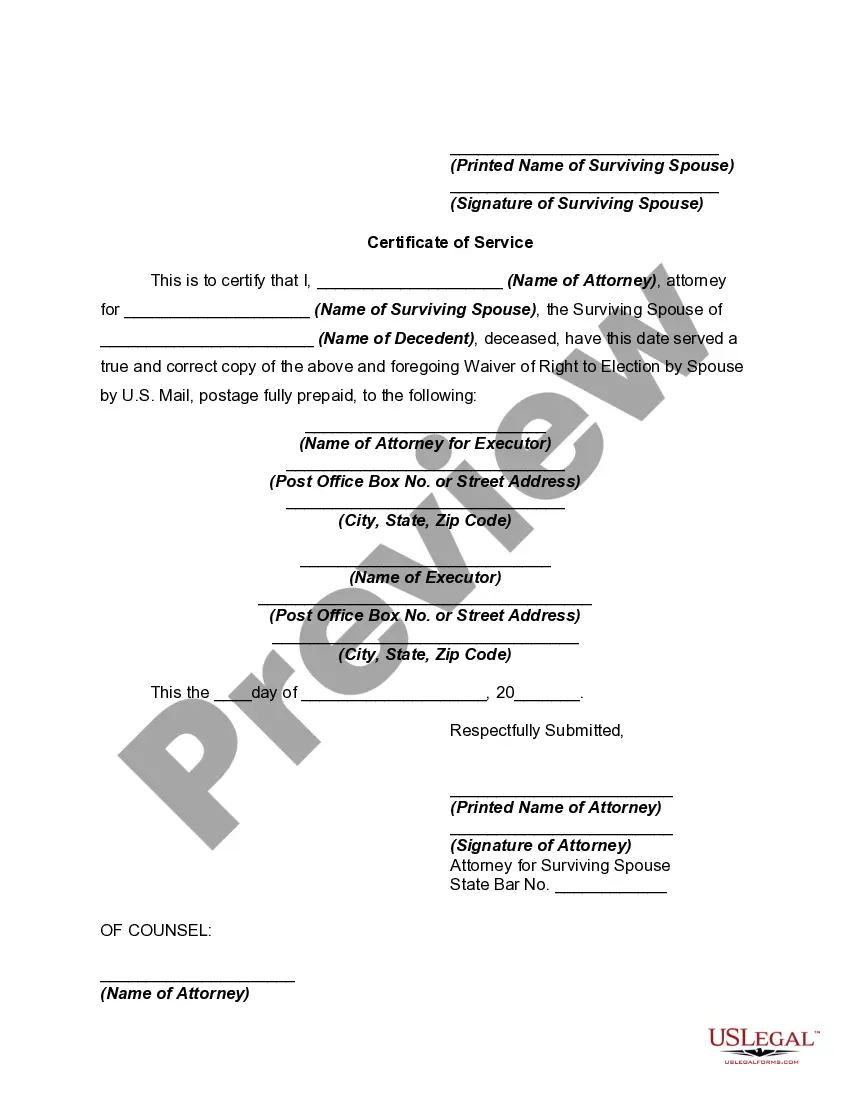
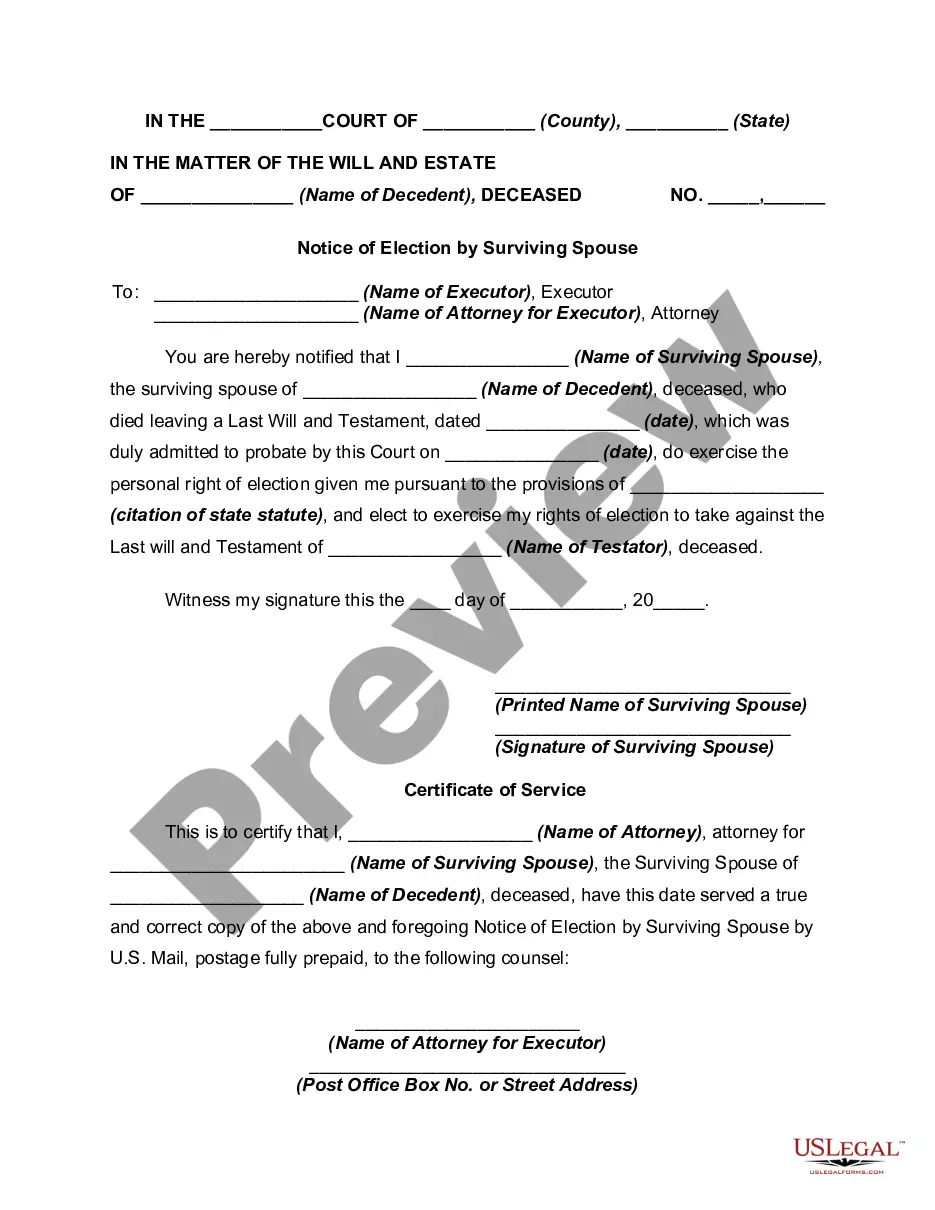
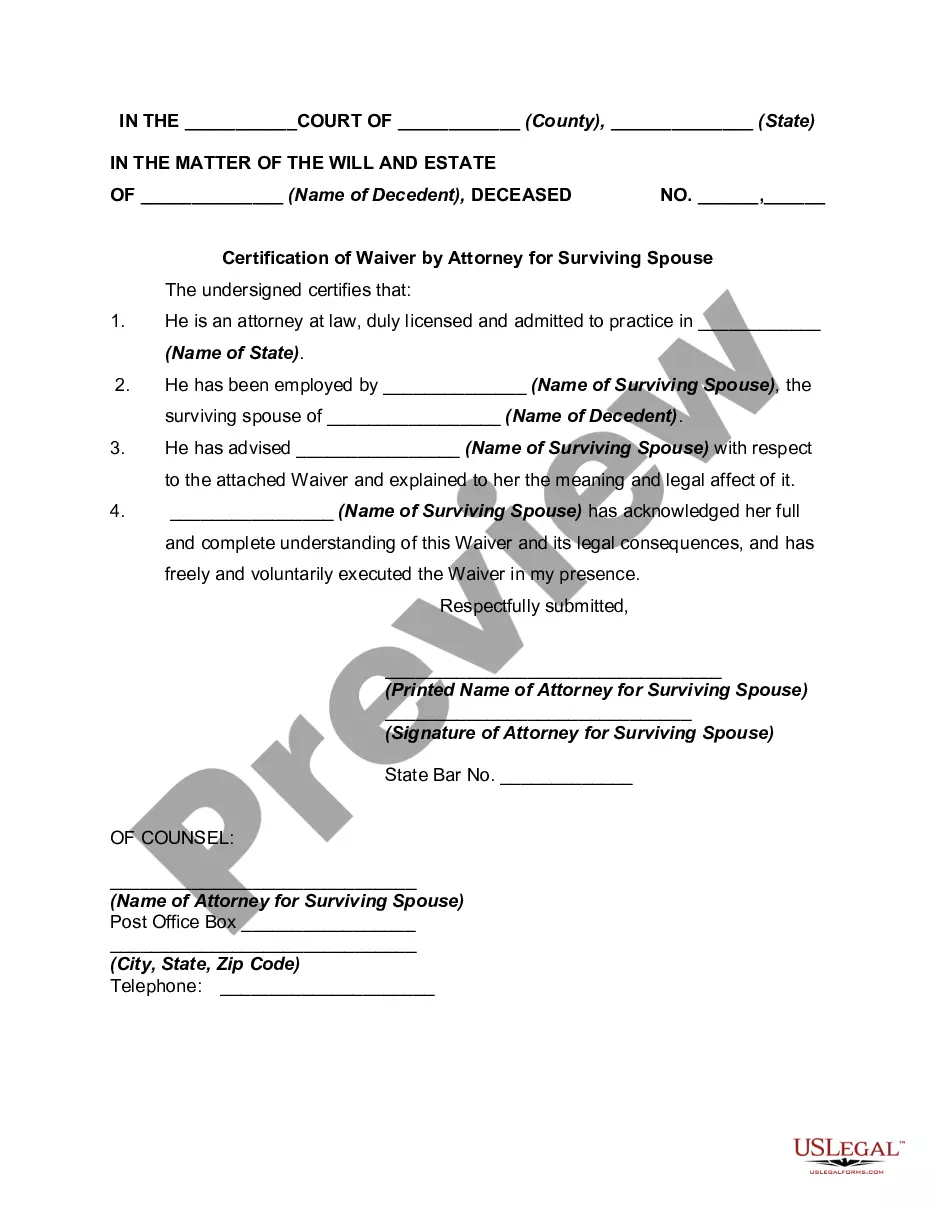
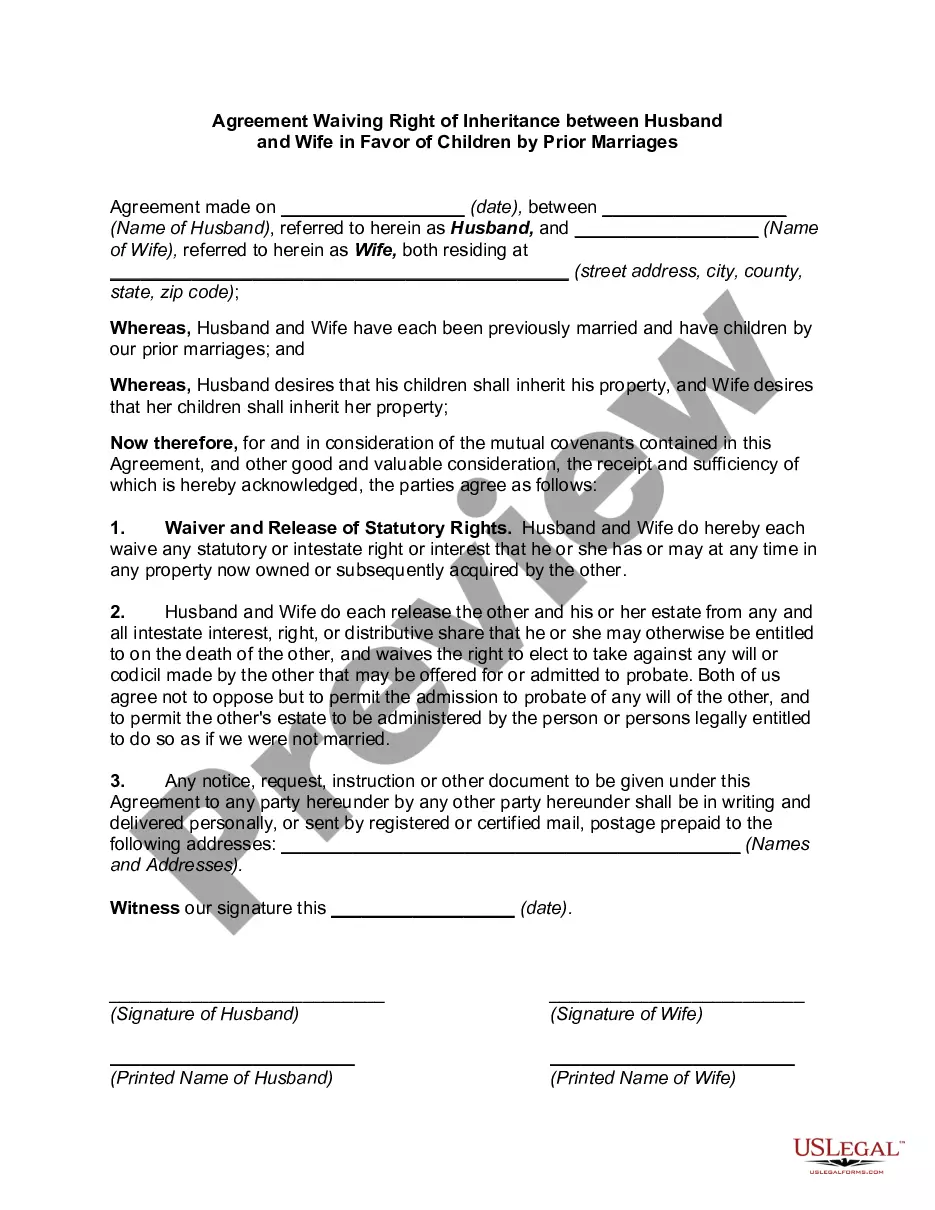
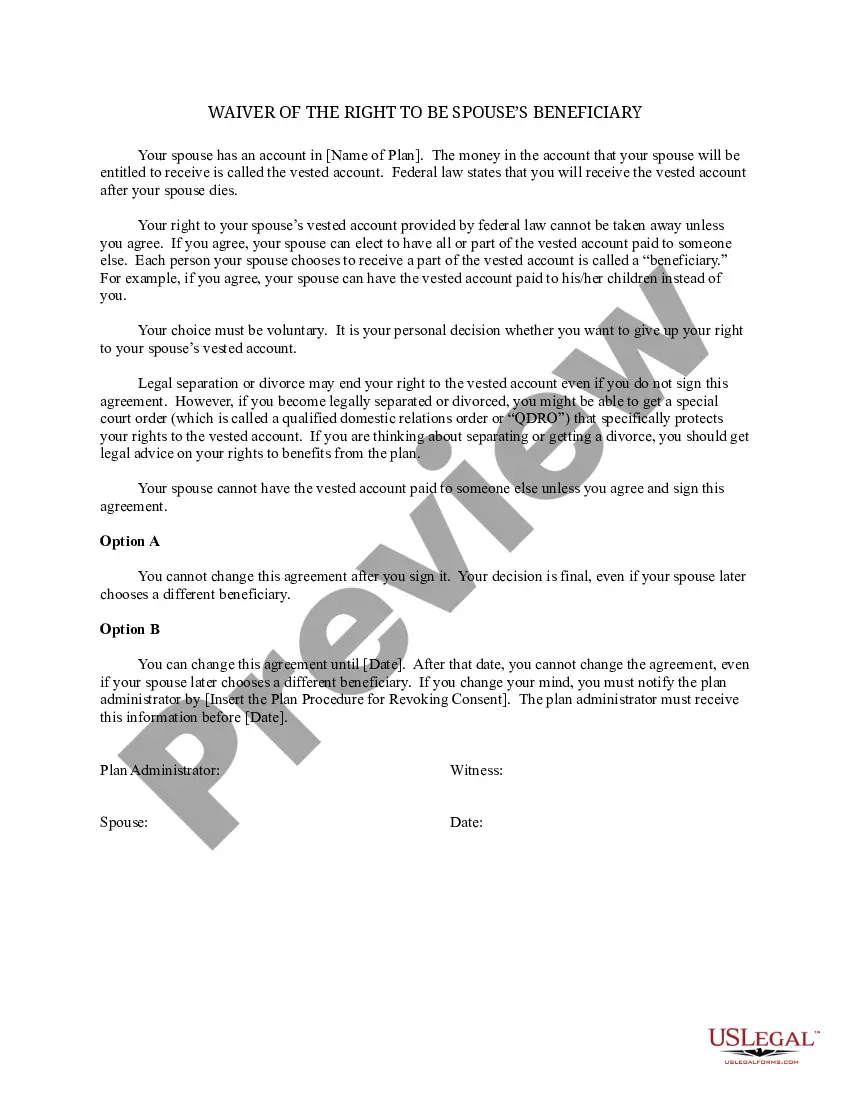
How to fill out Waiver Of Right To Election By Spouse?
- If you're a returning user, simply log in to your account and download the required form template by clicking the Download button. Ensure your subscription is up to date.
- If you're new to our service, start by browsing through the Preview mode and check the form description to find the document that suits your needs and aligns with your local jurisdiction requirements.
- If any discrepancies arise, utilize the Search tab to find the correct template. Ensure it meets your requirements before moving forward.
- Purchase the document by clicking 'Buy Now' and selecting your preferred subscription plan. You will need to create an account to access our extensive library of resources.
- Complete your transaction by providing your credit card information or using your PayPal account to finalize the subscription.
- Download the form to your device for completion. You can always access it later through the My Forms section in your profile.
US Legal Forms empowers users by offering a vast collection of over 85,000 fillable and editable legal forms, more than most competitors at similar prices. This extensive library, combined with access to premium legal experts, allows you to create precise and legally sound documents efficiently.
Don't hesitate to streamline your legal documentation process today. Visit US Legal Forms and experience the advantages for yourself!
Form popularity
FAQ
The ease of obtaining an EU passport through marriage can vary, but countries like Portugal and Spain tend to have streamlined processes for spouses of EU citizens. Generally, you will need to reside in the country for a specific duration and demonstrate good character. Exploring spouse elective shares with the EU may provide insights into your eligibility and the steps necessary to achieve citizenship.
Yes, an EU citizen can bring their non-EU spouse to the UK, but after Brexit, this process has become subject to new immigration rules. Your spouse will need to apply for a visa under the UK's family visa scheme, which requires evidence of your marriage and financial stability. Knowing about spouse elective shares with the EU can aid in understanding the adjustments to this process.
The 90-day rule does indeed apply to non-EU spouses, allowing them to stay in the Schengen Zone for up to 90 days without a visa. However, longer stays usually require a residence permit application. Understanding spouse elective shares with the EU can provide clarity and help you navigate the necessary procedures.
Yes, if your wife is an EU citizen, you can apply for residency in her country. Typically, you will need to prove your marriage and demonstrate your ability to support yourselves. Using resources like uslegalforms can help simplify the legal documentation process involved with spouse elective shares with the EU.
Certainly, an EU citizen can bring their non-EU spouse to Germany by applying for a family reunification visa. This process requires proof of marriage, financial stability, and a valid health insurance plan. Knowing about spouse elective shares with the EU can make the application process more manageable.
To obtain EU citizenship for your spouse, you typically need to be a citizen of an EU country and apply for a family reunification visa. The process varies by country, but it usually involves demonstrating your marital relationship, financial stability, and a willingness to integrate into the local community. Understanding spouse elective shares with the EU can help clarify citizenship routes.
Yes, your non-EU spouse can live with you, depending on your residency status in the EU. Generally, if you are a legal resident or citizen of an EU country, your spouse is eligible to apply for a residence permit. Remember, navigating the rules around spouse elective shares with the EU can be complex, so consider looking into legal assistance for guidance.
Yes, your non-EU spouse can travel with you to the UK, but they must comply with UK visa regulations. You will need to apply for a partner visa or family visa, depending on your situation. Proper documentation, such as proof of your relationship, will be crucial during the visa application process. Understanding spouse elective shares with the EU can also play a role in your financial status while living in the UK together.
The European certificate of succession is a legal document that certifies who inherits assets after a person's death in the EU. This certificate simplifies cross-border inheritance cases, highlighting the rights of heirs across different countries. If you have questions about how spouse elective shares with the EU might be affected by this document, it may be helpful to consult legal resources.
The 90-day rule for EU spouses indicates that non-EU spouses can stay in the Schengen Area for up to 90 days without a visa. However, this applies only to short visits and does not permit the spouse to work or study in that time. To live long-term, a residence permit or visa is required. It’s wise to understand how spouse elective shares with the EU may also affect long-term residency plans.