Spousal Privilege
Description

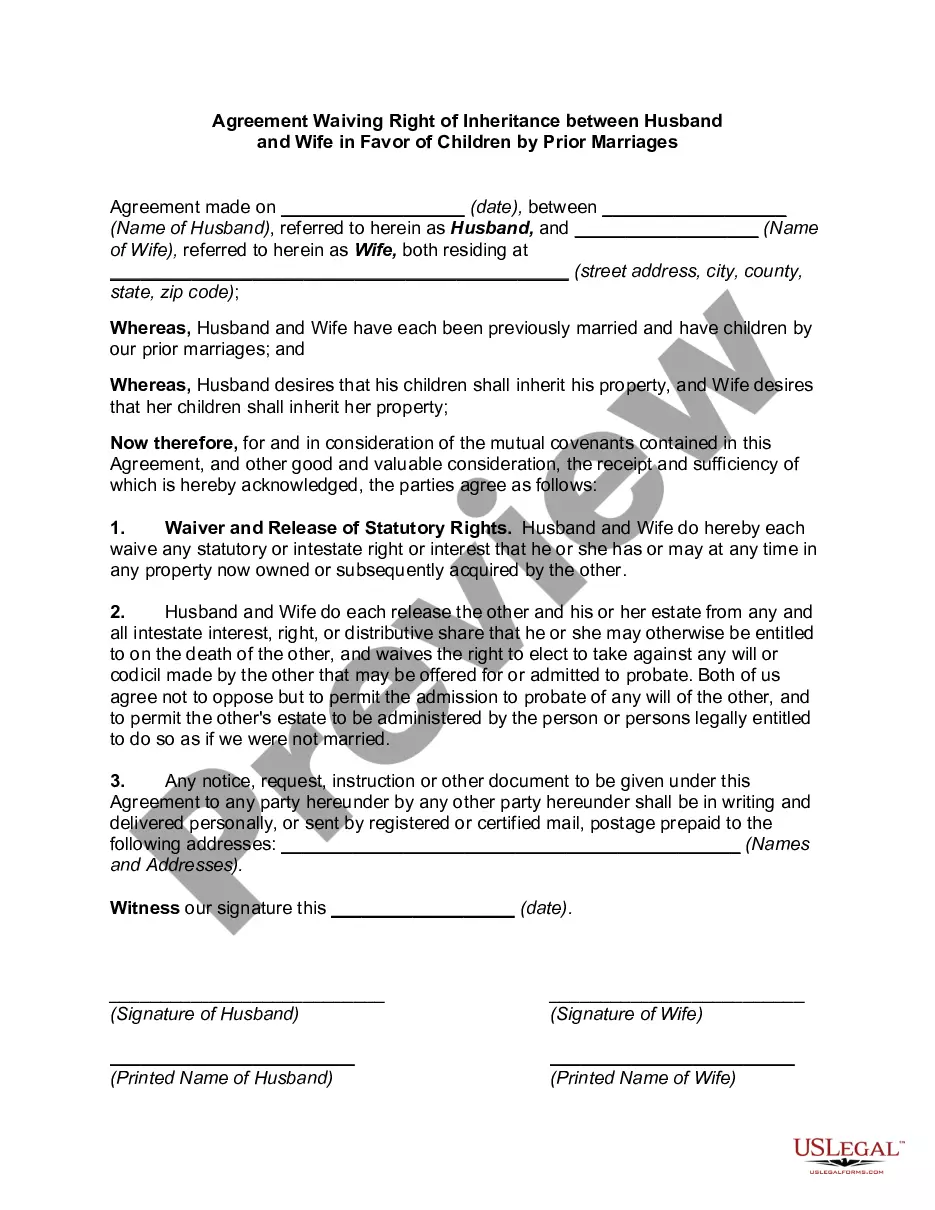
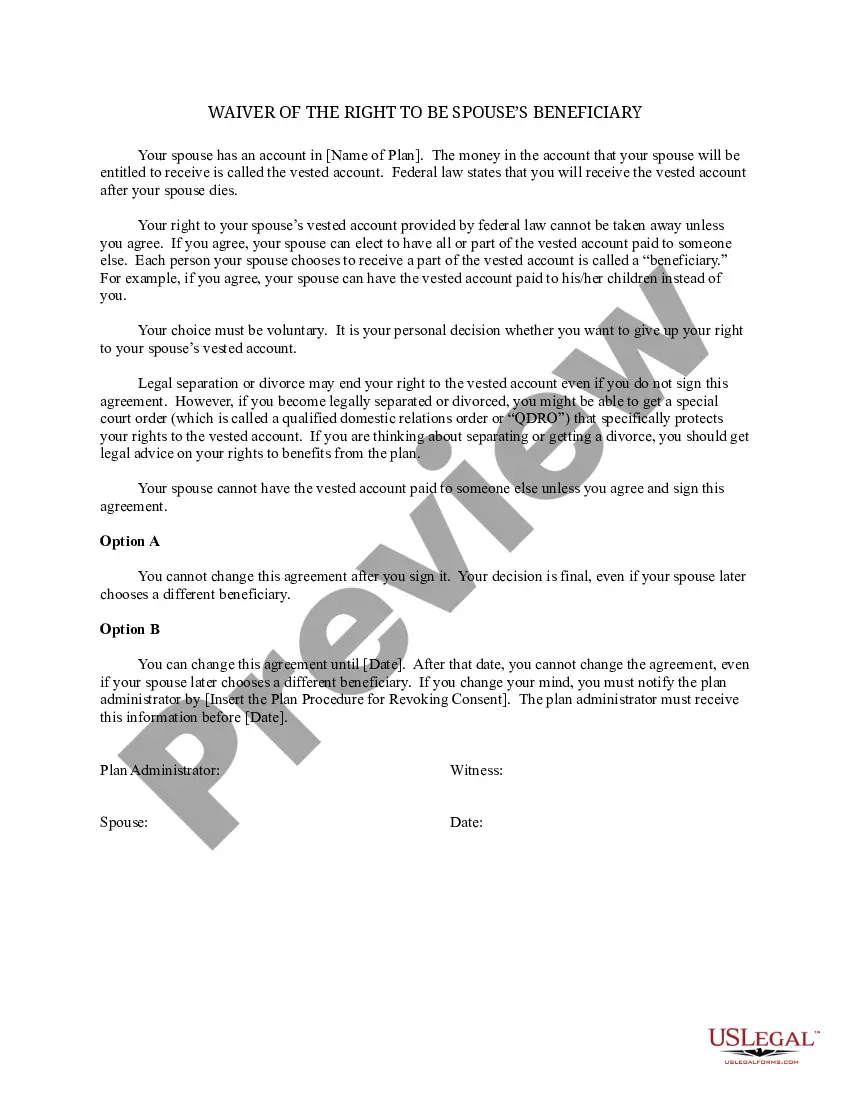
Get your form ready online
Our built-in tools help you complete, sign, share, and store your documents in one place.
Make edits, fill in missing information, and update formatting in US Legal Forms—just like you would in MS Word.
Download a copy, print it, send it by email, or mail it via USPS—whatever works best for your next step.
Sign and collect signatures with our SignNow integration. Send to multiple recipients, set reminders, and more. Go Premium to unlock E-Sign.
If this form requires notarization, complete it online through a secure video call—no need to meet a notary in person or wait for an appointment.
We protect your documents and personal data by following strict security and privacy standards.

Make edits, fill in missing information, and update formatting in US Legal Forms—just like you would in MS Word.

Download a copy, print it, send it by email, or mail it via USPS—whatever works best for your next step.

Sign and collect signatures with our SignNow integration. Send to multiple recipients, set reminders, and more. Go Premium to unlock E-Sign.

If this form requires notarization, complete it online through a secure video call—no need to meet a notary in person or wait for an appointment.

We protect your documents and personal data by following strict security and privacy standards.
Looking for another form?







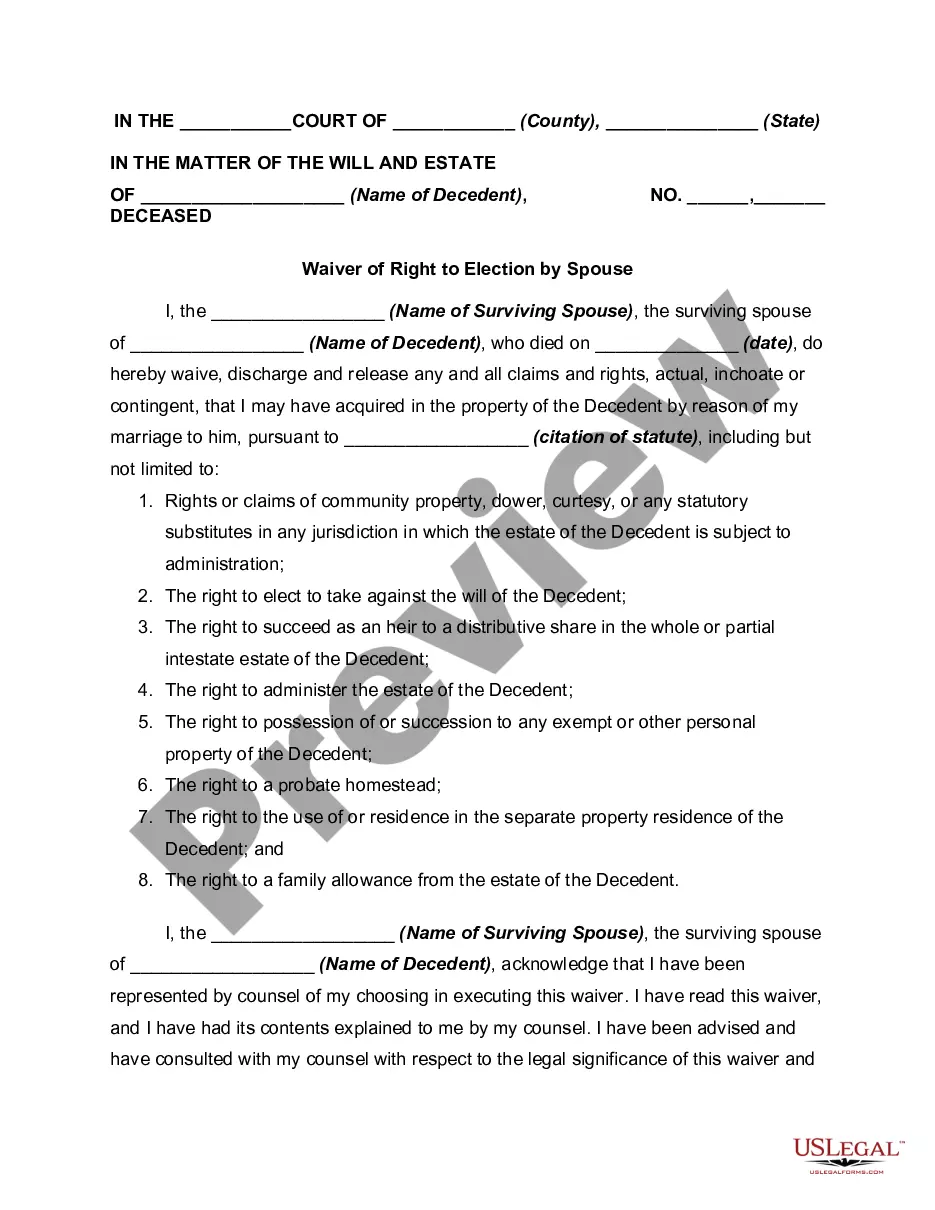
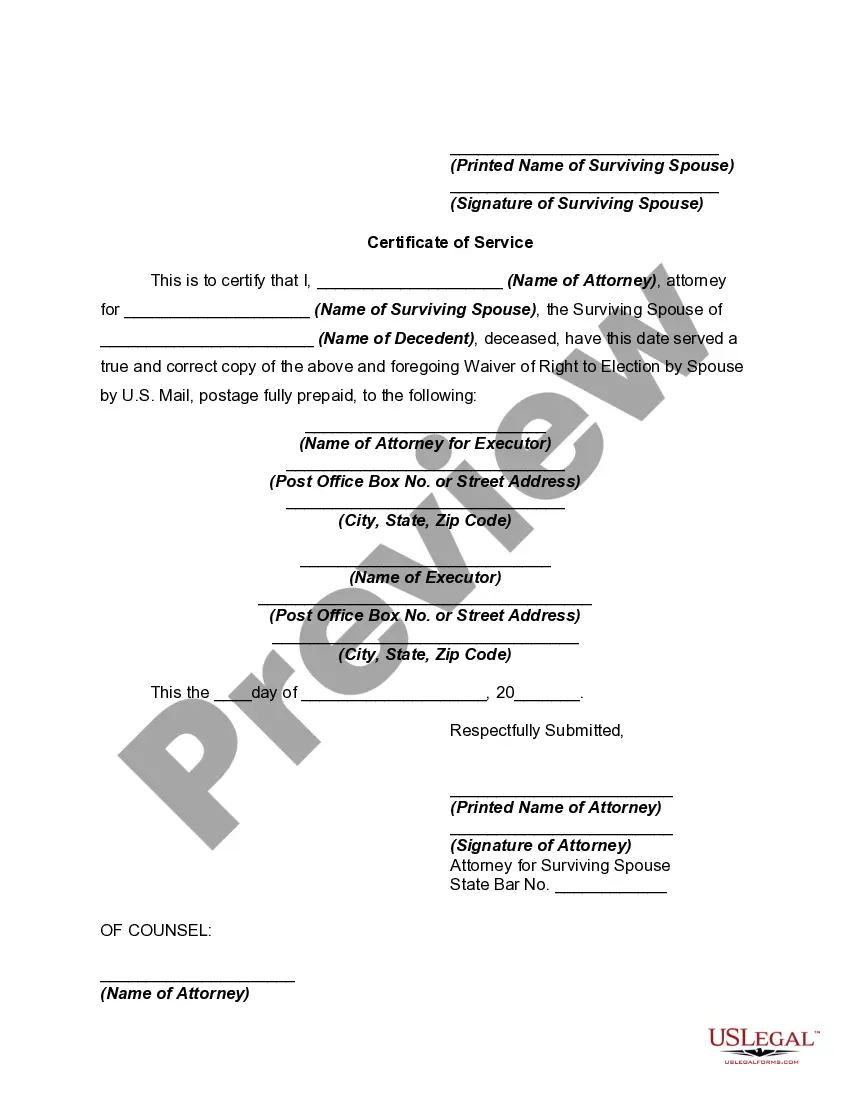
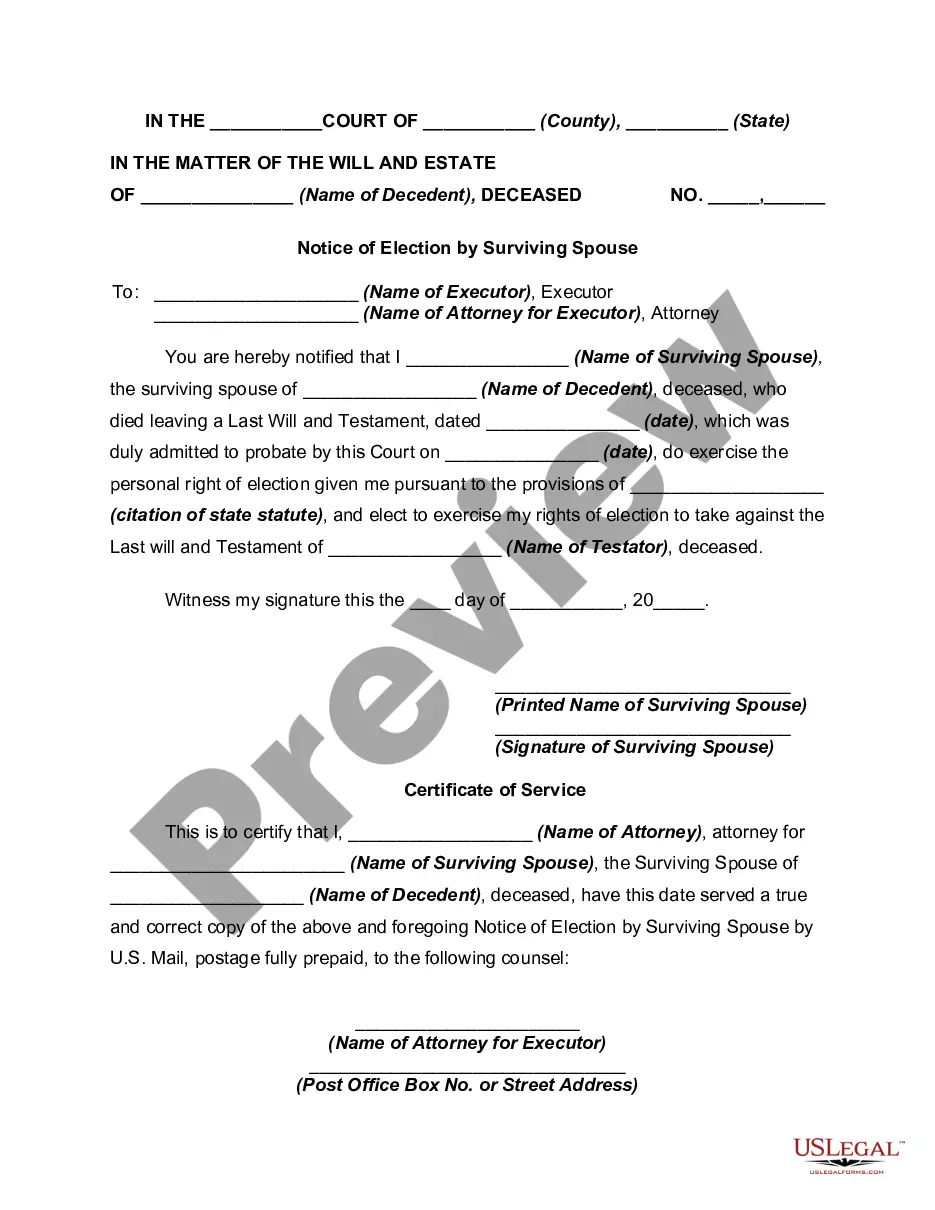
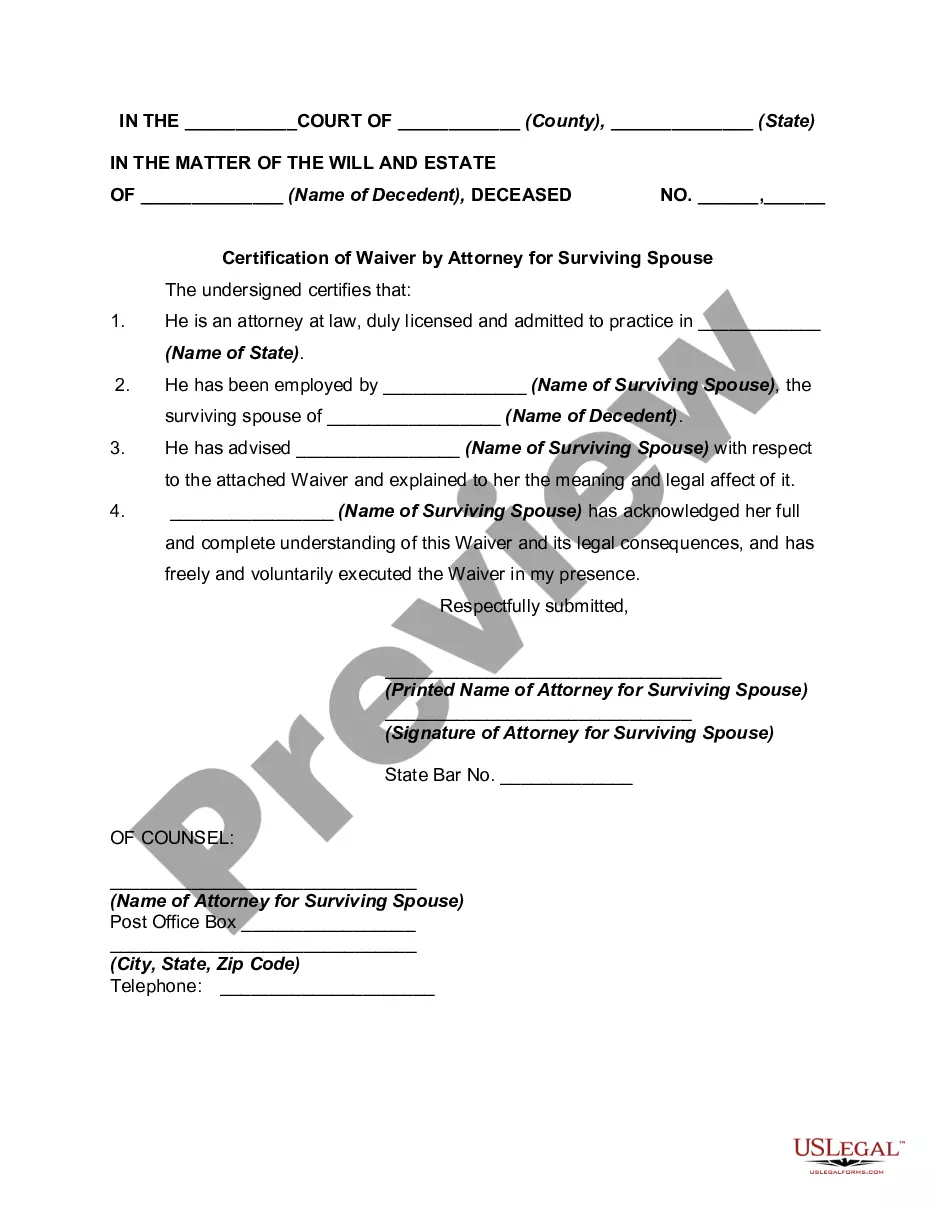
How to fill out Waiver Of Right To Election By Spouse?
- Start by visiting the US Legal Forms website and sign in if you have an existing account, or create a new account if you are a first-time user.
- Use the search bar to find the spousal privilege form you need. Review the preview and description to confirm it meets all necessary legal standards in your jurisdiction.
- If you need a different document, utilize the search feature again to find the specific form that applies to your requirements.
- Select your desired subscription plan and click on the Buy Now button to initiate your purchase.
- Complete your payment using credit card or PayPal, following the instructions to finalize your subscription.
- After purchase, download your legal form to your device and access it anytime through the My Forms section in your account.
With US Legal Forms, you leverage a powerful library of over 85,000 forms, all designed to be user-friendly and compliant with legal standards. You can also consult experts for assistance, ensuring your documents are accurately completed.
Start your journey to effortlessly obtaining legal forms now by visiting US Legal Forms and empowering yourself with the resources you need.
Form popularity
FAQ
There are several key exceptions to spousal privilege that individuals should be aware of. For instance, if one spouse commits a crime against the other or a child, the privilege cannot be invoked. Additionally, discussions that involve planning a crime or fraud may also fall outside the protection of spousal privilege, meaning these conversations could lead to legal action.
Once a divorce occurs, spousal privilege generally ceases to apply. This means that former spouses can potentially be required to testify against one another in court. However, any confidential communications made during the marriage may still retain their protection, but this can vary depending on state laws and individual circumstances.
The reason married couples cannot testify against one another lies in the concept of spousal privilege, which is designed to protect the integrity of the marital relationship. This legal doctrine recognizes that forcing a spouse to testify could harm their relationship and discourage open dialogue. By offering this protection, the law respects the trust inherent in marriage, fostering a supportive environment.
Typically, spousal privilege does not apply once the marriage ends in divorce. The underlying principle of promoting open communication evaporates when the legal bond dissolves. Nonetheless, any confidential communication made during the marriage may still remain protected unless the court decides otherwise.
Spousal privilege extends to both testimonial and communication aspects of the marriage. This means that, in many situations, neither spouse can be forced to testify against the other in a court of law. However, the scope can vary by state, and understanding these limits is crucial for couples seeking to navigate their legal rights effectively.
Spousal privilege protects certain communications between married partners from being disclosed in court. This means that anything you share with your spouse in confidence generally remains private. The intention of this legal protection is to encourage open and honest communication within the marriage, ensuring that spouses can confide in each other without fear of legal repercussions.
The federal rule for spousal privilege is outlined in Rule 501 of the Federal Rules of Evidence. It allows a spouse to refuse to testify against their partner in criminal cases, safeguarding confidential communications made during the marriage. Each state may have variations, but the core principle remains consistent across jurisdictions. Knowing the nuances of spousal privilege can significantly impact your legal strategy, and resources like USLegalForms can provide crucial guidance.
Spousal privilege exists to encourage open communication between spouses. This privilege protects private conversations from being disclosed in court, fostering trust and emotional safety. By ensuring that one partner cannot be compelled to testify against the other, spousal privilege promotes a stable family unit. Understanding spousal privilege is essential for couples navigating legal challenges.
The absolute privilege of a spouse refers to the complete protection one spouse has against being compelled to testify against the other in court. This privilege ensures that personal communications, made in trust and confidence during their marriage, remain confidential. Understanding this privilege can empower couples to communicate freely without the fear of legal repercussions.
Most U.S. states recognize spousal privilege, although the specifics can vary. States like California, New York, and Texas have established legal frameworks to protect communications between spouses. It's crucial to check local laws for detailed provisions, as these vary significantly and impact how spousal privilege is enforced.