Right Spouse Surviving Former Spouse
Description
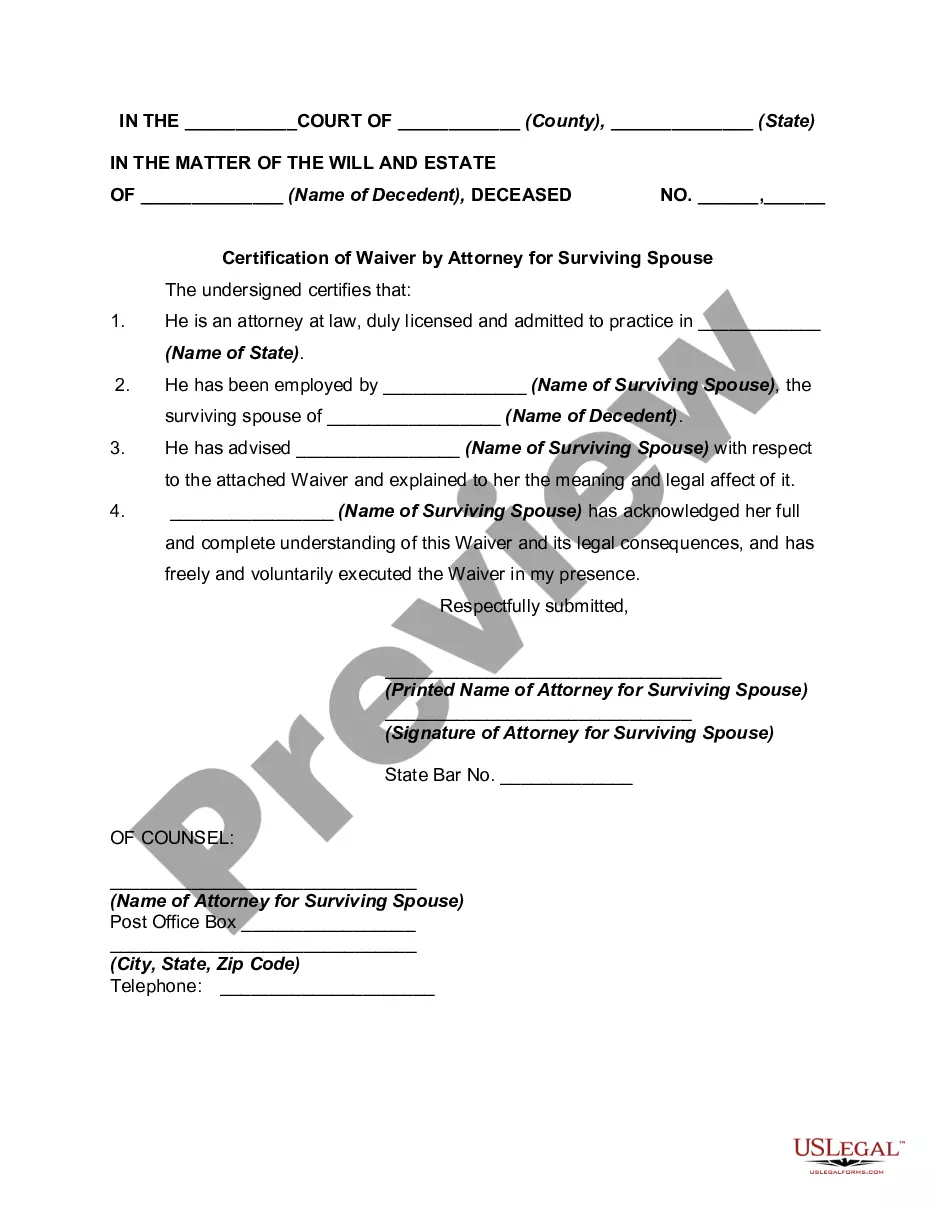
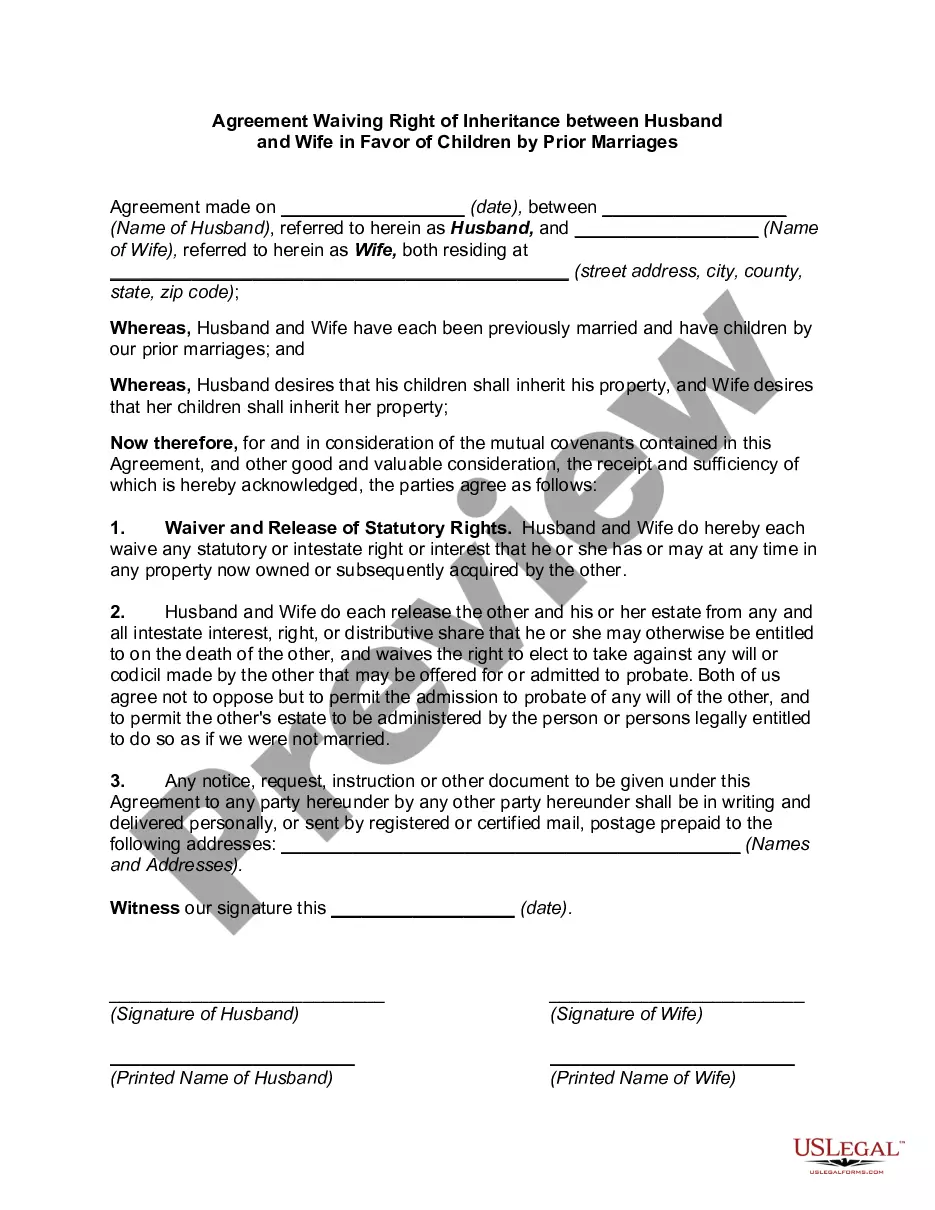
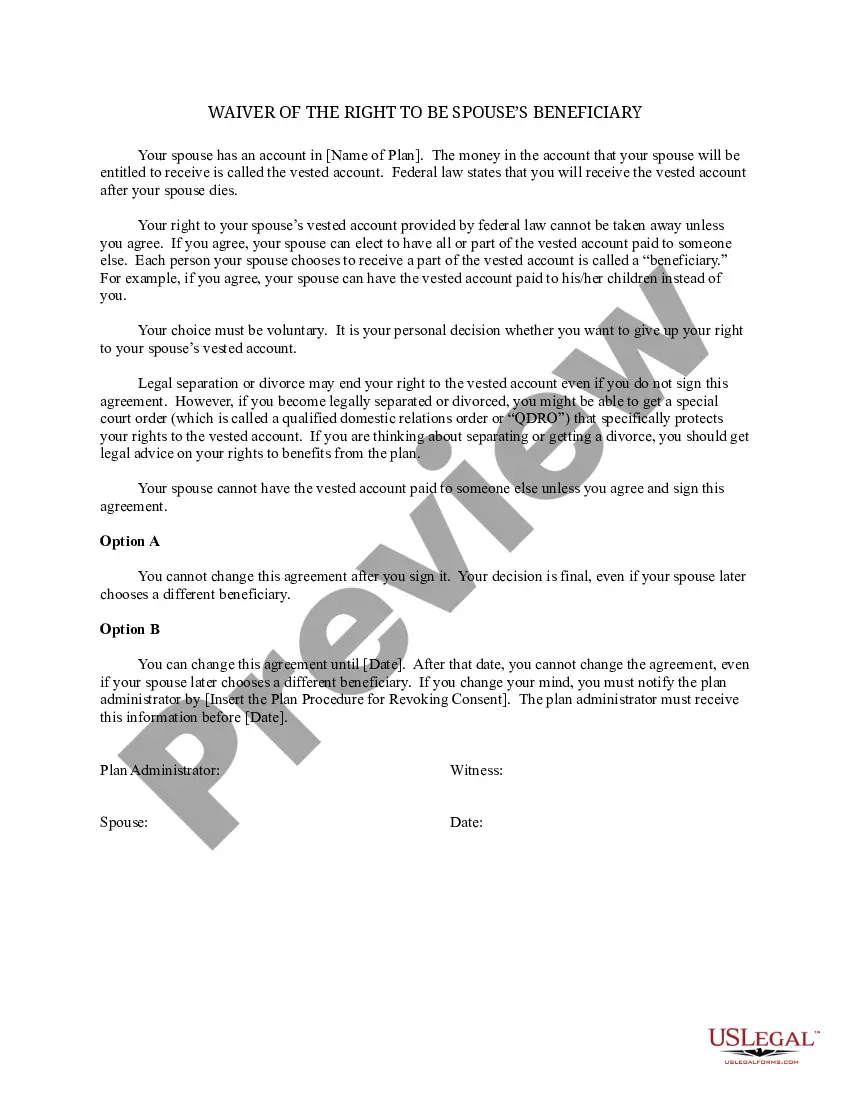
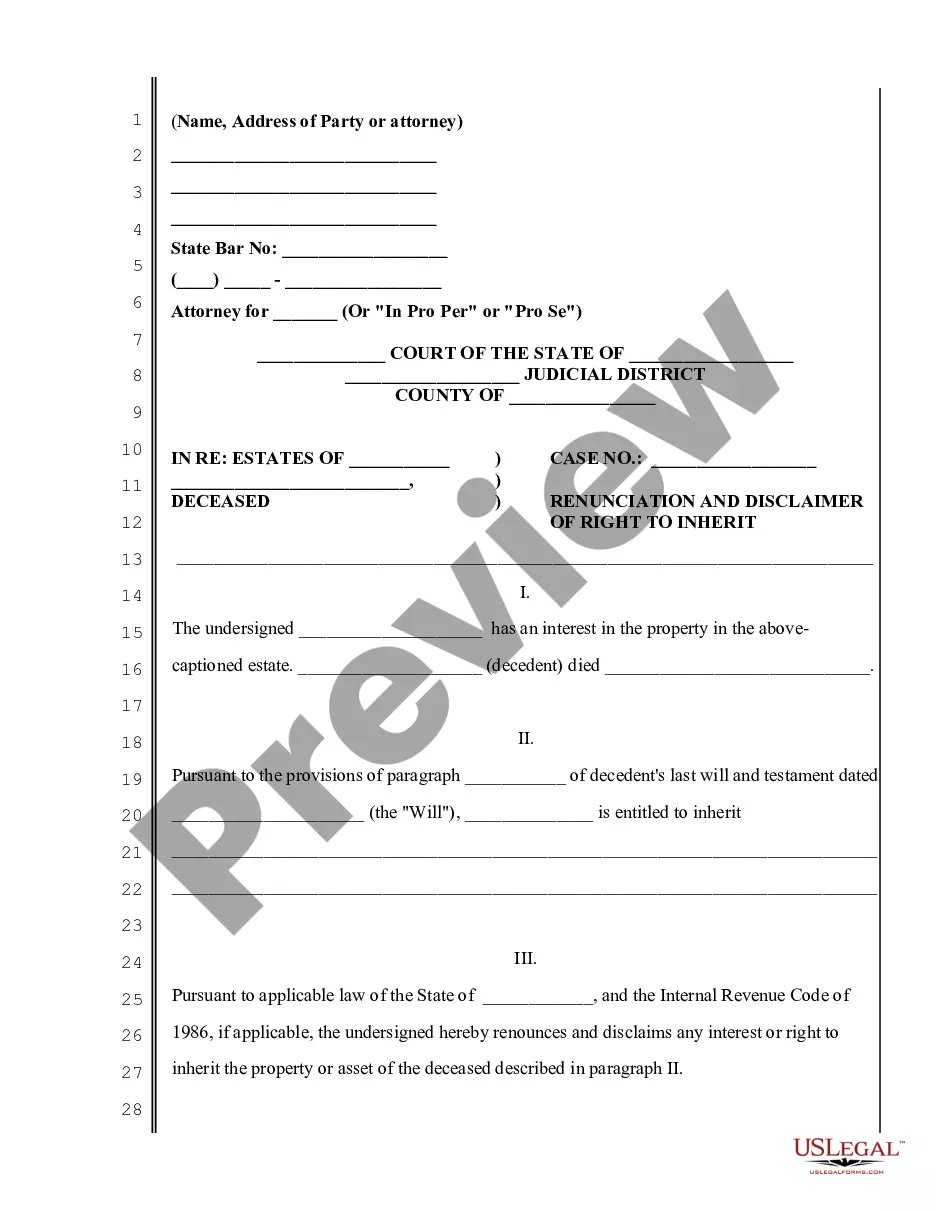
Get your form ready online
Our built-in tools help you complete, sign, share, and store your documents in one place.
Make edits, fill in missing information, and update formatting in US Legal Forms—just like you would in MS Word.
Download a copy, print it, send it by email, or mail it via USPS—whatever works best for your next step.
Sign and collect signatures with our SignNow integration. Send to multiple recipients, set reminders, and more. Go Premium to unlock E-Sign.
If this form requires notarization, complete it online through a secure video call—no need to meet a notary in person or wait for an appointment.
We protect your documents and personal data by following strict security and privacy standards.

Make edits, fill in missing information, and update formatting in US Legal Forms—just like you would in MS Word.

Download a copy, print it, send it by email, or mail it via USPS—whatever works best for your next step.

Sign and collect signatures with our SignNow integration. Send to multiple recipients, set reminders, and more. Go Premium to unlock E-Sign.

If this form requires notarization, complete it online through a secure video call—no need to meet a notary in person or wait for an appointment.

We protect your documents and personal data by following strict security and privacy standards.
Looking for another form?





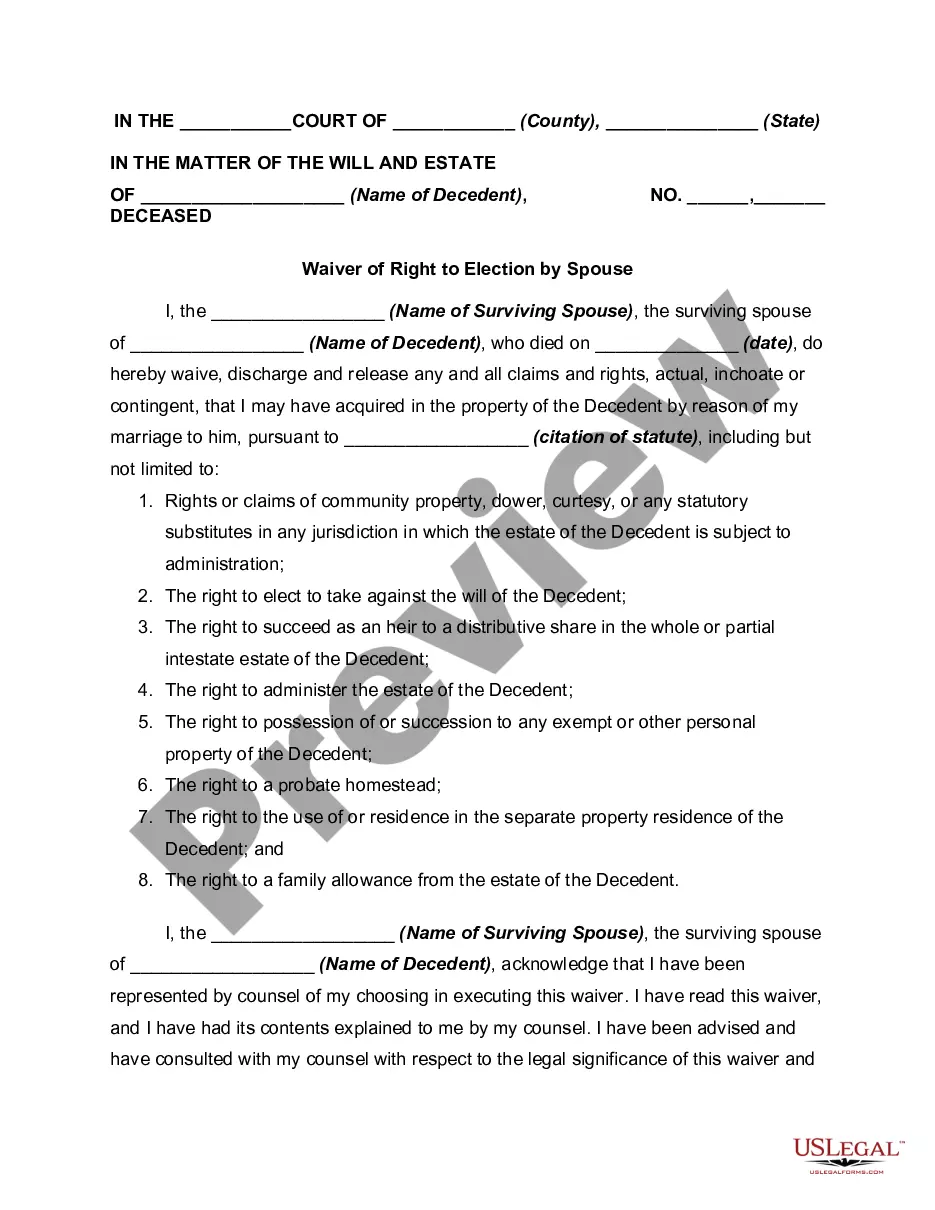
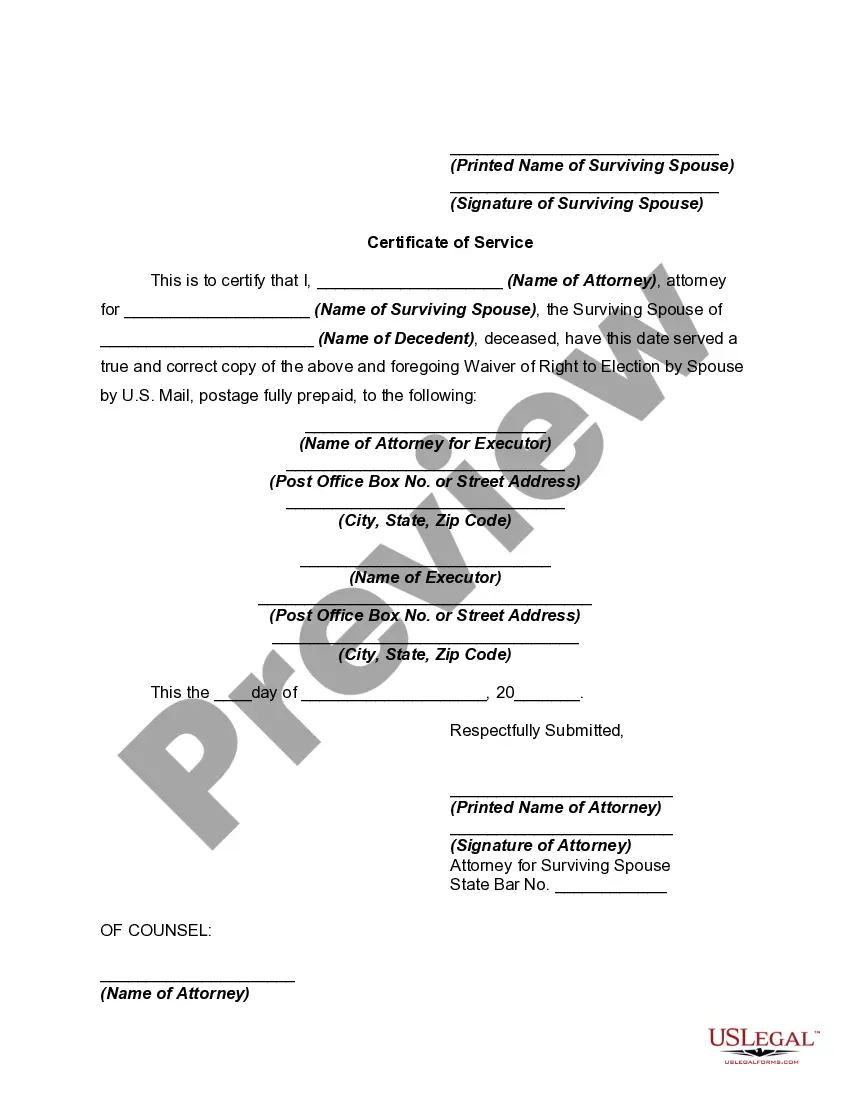
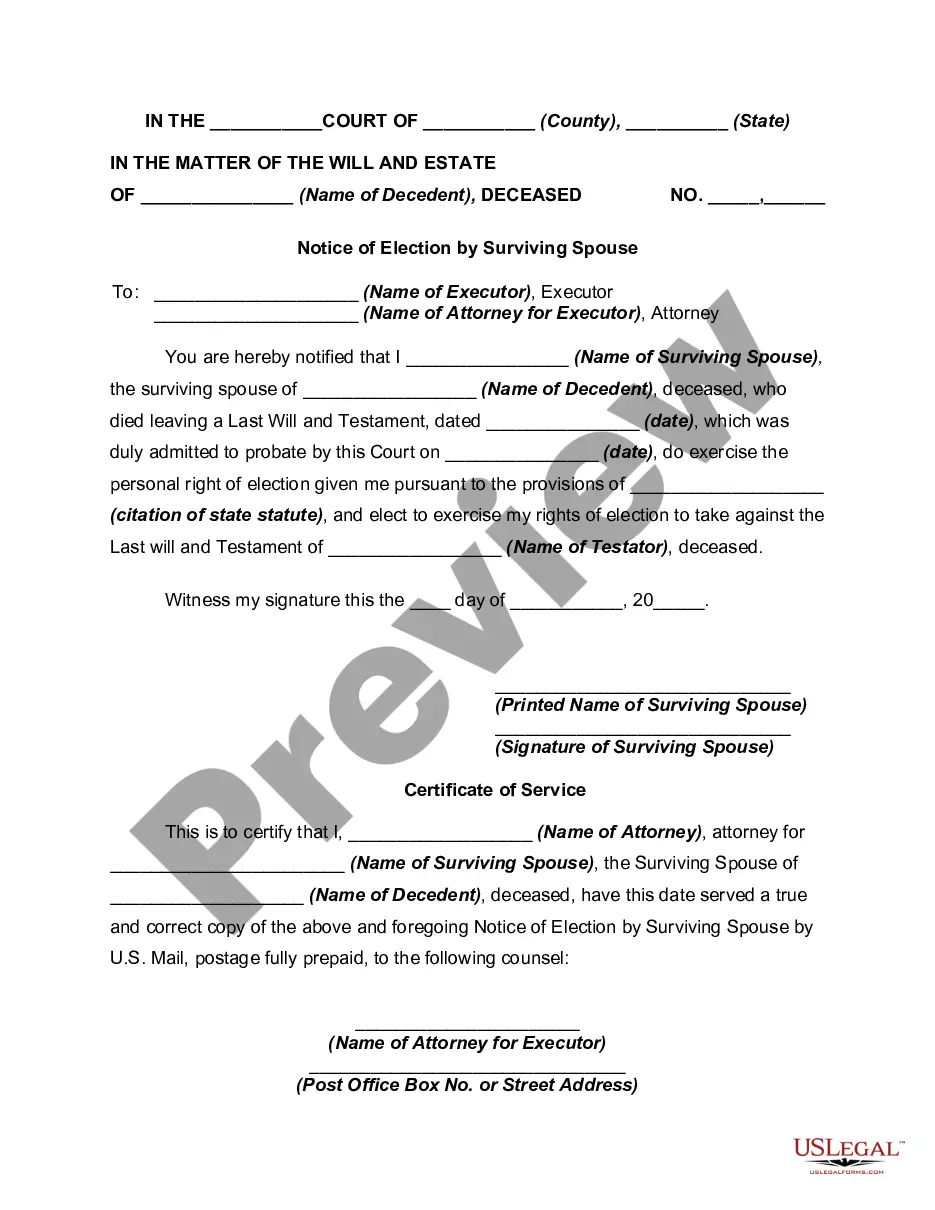
How to fill out Waiver Of Right To Election By Spouse?
The Appropriate Partner Enduring Previous Partner you observe on this page is a reusable official blueprint crafted by expert attorneys in accordance with federal and state regulations.
For over 25 years, US Legal Forms has supplied individuals, enterprises, and legal experts with more than 85,000 authenticated, state-specific documents for any commercial and personal event. It’s the quickest, simplest, and most trustworthy method to acquire the paperwork you require, as the service guarantees bank-level data security and anti-malware safeguards.
Register for US Legal Forms to have validated legal templates for all of life’s circumstances readily available to you.
- Search for the file you require and review it.
- Browse through the document you searched for and preview it or examine the form description to confirm it meets your needs. If it does not, utilize the search bar to find the appropriate one. Click Buy Now when you have identified the template you need.
- Choose a subscription plan and Log In.
- Select the pricing option that fits you and create an account. Utilize PayPal or a credit card for a quick payment. If you already possess an account, Log In and verify your subscription to proceed.
- Acquire the editable template.
- Pick the format you desire for your Appropriate Partner Enduring Previous Partner (PDF, Word, RTF) and save the sample on your device.
- Fill out and sign the documents.
- Print the template to complete it manually. Alternatively, use an online multi-functional PDF editor to swiftly and accurately fill and sign your form with a legally-binding electronic signature.
- Redownload your documents.
- Use the same document again whenever necessary. Access the My documents tab in your profile to redownload any previously obtained forms.
Form popularity
FAQ
Yes, you may be eligible to receive survivor benefits from your deceased ex-husband under certain conditions. The right spouse surviving former spouse can claim these benefits if you were married for a specific duration, usually ten years or more. Additionally, if you are currently unmarried and meet age requirements, you can apply for these benefits. It is essential to consult with a legal expert or use platforms like US Legal Forms to understand your rights and navigate the application process effectively.
When an ex-husband dies, an ex-wife may be entitled to several benefits, including survivor benefits from pension plans or Social Security. Additionally, she may have rights to a portion of the estate if there are no other claims or designations made. Utilizing platforms like USLegalForms can help clarify these entitlements and provide necessary legal documents to support her claims.
An ex-wife may have certain rights when her ex-husband dies, particularly if they were married for a significant period. These rights could include claims to survivor benefits, alimony, or a share of the estate, depending on state laws and divorce agreements. It’s advisable for individuals to consult legal resources to clarify their specific rights as a surviving former spouse.
Yes, a surviving spouse is typically considered a primary beneficiary in most legal contexts. This status often grants them rights to various benefits and assets, including life insurance and retirement accounts. Understanding the nuances of beneficiary designations can be crucial for ensuring that the right spouse surviving former spouse receives the intended benefits.
An ex-spouse may be entitled to survivor benefits depending on the circumstances of the marriage and the divorce. Generally, if the marriage lasted at least 10 years, the ex-spouse can claim benefits. It is essential to review the specific laws and regulations regarding survivor benefits to understand the exact rights of a surviving former spouse.
If you are the divorced spouse of a worker who dies, you could get benefits the same as a surviving spouse, provided that your marriage lasted 10 years or more. Benefits paid to you as a surviving divorced spouse won't affect the benefit amount for other survivors getting benefits on the worker's record.
Form SSA-10 | Information You Need to Apply for Widow's, Widower's or Surviving Divorced Spouse's Benefits. You can apply for benefits by calling our national toll-free service at 1-800-772-1213 (TTY 1-800-325-0778) or visiting your local Social Security office.
You are eligible to receive one-half (50%) of your ex-spouse's retirement benefit. If your ex-spouse should die before you, you can receive their full retirement benefit.
To qualify as a surviving divorced spouse, you must meet the conditions below: Be at least age 60. Were married for at least 10 years.